Young Europeans Moving Out Later, Housing Costs Add to the Pressure

New figures from the EU’s statistical office show that in 2024, the average age at which young people left their parents’ homes was just over 26 years. The pattern varies widely between countries: in the Nordic states, most young adults are independent by their early twenties, while in parts of southern and eastern Europe many remain at home until around thirty.

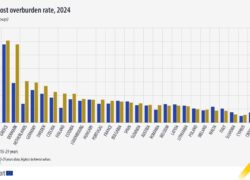
The data also point to a growing financial strain. Almost one in ten people aged 15 to 29 now live in households that must dedicate at least two-fifths of their disposable income to housing costs. This burden is heavier than for the general population, where just over eight percent face the same situation.

The combination of later independence and higher expenses underscores the challenges many younger Europeans face when trying to secure their own housing. Economic conditions, cultural expectations, and differences in national housing markets all play a role.

While the overall trend has been stable in recent years, analysts note that the affordability gap is widening for young people in several member states. This raises concerns about the long-term ability of younger generations to establish themselves independently in a period of rising living costs.

Source: Eurostat

Poland’s Labour Force: Youth Inactivity Remains High While Overall Participation Slips

New data on Poland’s workforce shows that while overall participation levels remain steady, younger age groups continue to face difficulties entering the labour market.

Figures for early 2025 place the share of people aged 15 to 89 who are either working or seeking work at just over 58 percent, a slight decline from a year earlier. Within this broad group, men are far more likely to be active than women, with a gap of more than ten percentage points.

The divide is even sharper among the youngest cohorts. For those aged 15 to 24, nearly two-thirds are outside the labour force, a reflection of extended time spent in education, limited job opportunities, and in some cases care responsibilities. Among the wider group of 15- to 34-year-olds, fewer than six in ten hold jobs, leaving a substantial portion either inactive or still in school.

These trends are a concern for economists and policymakers. High inactivity among young people risks weakening Poland’s long-term labour supply, particularly as the population ages. Analysts point to the need for stronger pathways between school and work, more targeted training, and measures to help young women in particular balance employment with family responsibilities.

Despite the challenges, unemployment has not spiked. Rates remain low by European standards, suggesting that for those who are active in the labour market, job prospects are reasonably solid. The bigger question is how to encourage greater participation, especially among young people and women, to strengthen the resilience of Poland’s economy in the years ahead.

Poland’s Labour Force: Youth Inactivity Remains High While Overall Participation Slips

New data on Poland’s workforce shows that while overall participation levels remain steady, younger age groups continue to face difficulties entering the labour market.

Figures for early 2025 place the share of people aged 15 to 89 who are either working or seeking work at just over 58 percent, a slight decline from a year earlier. Within this broad group, men are far more likely to be active than women, with a gap of more than ten percentage points.

The divide is even sharper among the youngest cohorts. For those aged 15 to 24, nearly two-thirds are outside the labour force, a reflection of extended time spent in education, limited job opportunities, and in some cases care responsibilities. Among the wider group of 15- to 34-year-olds, fewer than six in ten hold jobs, leaving a substantial portion either inactive or still in school.

These trends are a concern for economists and policymakers. High inactivity among young people risks weakening Poland’s long-term labour supply, particularly as the population ages. Analysts point to the need for stronger pathways between school and work, more targeted training, and measures to help young women in particular balance employment with family responsibilities.

Despite the challenges, unemployment has not spiked. Rates remain low by European standards, suggesting that for those who are active in the labour market, job prospects are reasonably solid. The bigger question is how to encourage greater participation, especially among young people and women, to strengthen the resilience of Poland’s economy in the years ahead.

Slovakia’s Property Investment Market Breaks Records Despite Softer Demand in Warehousing

Slovakia’s Property Investment Market Breaks Records Despite Softer Demand in Warehousing

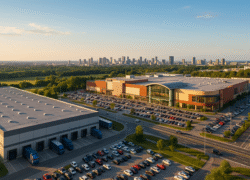
Slovakia’s commercial property sector is enjoying its strongest investment activity in years, even as parts of the market show signs of slowing. Figures for the first half of 2025 indicate that deals worth more than half a billion euros were completed, already above the full-year total for 2024.

The bulk of the money has gone into storage and manufacturing properties, which continue to be the most attractive class of asset for investors. Retail centres followed, while office buildings represented only a small share of activity.

At the same time, the warehouse market is adjusting. In the second quarter, companies leased just over 100,000 square metres of new space, but the share of vacant facilities has climbed to just above six percent. Developers continue to add to supply, with more than 300,000 square metres of new halls under construction and close to 80,000 square metres delivered between April and June.

The added capacity and a more cautious stance among occupiers are putting pressure on landlords, who are offering more flexible conditions to secure tenants. Rents in top locations remain broadly steady, though incentives are becoming more common.

Analysts point out that Slovakia’s performance contrasts with some neighbouring countries where investment has slowed more sharply. They also note that the long-term prospects remain positive, as demand from e-commerce, manufacturing projects, and the trend of shifting supply chains closer to Europe continue to support development.

Slovakia’s Property Investment Market Breaks Records Despite Softer Demand in Warehousing

Slovakia’s Property Investment Market Breaks Records Despite Softer Demand in Warehousing

Slovakia’s commercial property sector is enjoying its strongest investment activity in years, even as parts of the market show signs of slowing. Figures for the first half of 2025 indicate that deals worth more than half a billion euros were completed, already above the full-year total for 2024.

The bulk of the money has gone into storage and manufacturing properties, which continue to be the most attractive class of asset for investors. Retail centres followed, while office buildings represented only a small share of activity.

At the same time, the warehouse market is adjusting. In the second quarter, companies leased just over 100,000 square metres of new space, but the share of vacant facilities has climbed to just above six percent. Developers continue to add to supply, with more than 300,000 square metres of new halls under construction and close to 80,000 square metres delivered between April and June.

The added capacity and a more cautious stance among occupiers are putting pressure on landlords, who are offering more flexible conditions to secure tenants. Rents in top locations remain broadly steady, though incentives are becoming more common.

Analysts point out that Slovakia’s performance contrasts with some neighbouring countries where investment has slowed more sharply. They also note that the long-term prospects remain positive, as demand from e-commerce, manufacturing projects, and the trend of shifting supply chains closer to Europe continue to support development.

Mortgage Market in Czechia Grows, But Affordability Concerns Persist

The Czech mortgage market is showing signs of renewed activity after several years of slowdown, though high property prices and repayment burdens continue to weigh on households.

According to data from the Czech Banking Association’s Hypomonitor, banks and building societies issued housing loans worth CZK 37.5 billion in June 2025, up nine percent from the previous month. Of this, about CZK 29.4 billion were new mortgages, with the rest linked to refinancing and refixations. The average mortgage rate on new contracts edged down to around 4.6 percent, continuing a gradual decline since the start of the year.

The total value of new mortgages provided in 2024 reached CZK 228 billion, nearly double the level recorded in 2023. When refinancing is included, the market volume stood at approximately CZK 275 billion. Despite this rebound, overall mortgage activity remains below the peak years of 2020 and 2021, when ultra-low interest rates fuelled record demand.

Affordability remains a key challenge. Recent studies show that purchasing an average apartment in Prague requires the equivalent of 13 to 14 years of average wages, placing the city among the least affordable housing markets in Europe. Analysts point to slow construction processes, high material costs, and long permitting times as key structural barriers.

Many households continue to postpone mortgage decisions, with cost of living pressures and concerns about repayment cited as main reasons in surveys. At the same time, a significant share of existing mortgage holders face refinancing in the coming years, as low fixed-rate deals agreed during the pandemic period expire. According to the Czech National Bank, “other new mortgage agreements” — typically refixations or refinances — now make up a large share of total lending, reflecting the adjustment to higher rate conditions.

While activity is picking up and interest rates are gradually easing, market observers say a meaningful improvement in affordability will depend on both wage growth and measures to accelerate residential construction. Until then, housing finance will remain a major source of financial strain for many Czech households.

Mortgage Market in Czechia Grows, But Affordability Concerns Persist

The Czech mortgage market is showing signs of renewed activity after several years of slowdown, though high property prices and repayment burdens continue to weigh on households.

According to data from the Czech Banking Association’s Hypomonitor, banks and building societies issued housing loans worth CZK 37.5 billion in June 2025, up nine percent from the previous month. Of this, about CZK 29.4 billion were new mortgages, with the rest linked to refinancing and refixations. The average mortgage rate on new contracts edged down to around 4.6 percent, continuing a gradual decline since the start of the year.

The total value of new mortgages provided in 2024 reached CZK 228 billion, nearly double the level recorded in 2023. When refinancing is included, the market volume stood at approximately CZK 275 billion. Despite this rebound, overall mortgage activity remains below the peak years of 2020 and 2021, when ultra-low interest rates fuelled record demand.

Affordability remains a key challenge. Recent studies show that purchasing an average apartment in Prague requires the equivalent of 13 to 14 years of average wages, placing the city among the least affordable housing markets in Europe. Analysts point to slow construction processes, high material costs, and long permitting times as key structural barriers.

Many households continue to postpone mortgage decisions, with cost of living pressures and concerns about repayment cited as main reasons in surveys. At the same time, a significant share of existing mortgage holders face refinancing in the coming years, as low fixed-rate deals agreed during the pandemic period expire. According to the Czech National Bank, “other new mortgage agreements” — typically refixations or refinances — now make up a large share of total lending, reflecting the adjustment to higher rate conditions.

While activity is picking up and interest rates are gradually easing, market observers say a meaningful improvement in affordability will depend on both wage growth and measures to accelerate residential construction. Until then, housing finance will remain a major source of financial strain for many Czech households.

EU Finance Ministers Discuss Competitiveness and Geopolitical Risks in Copenhagen

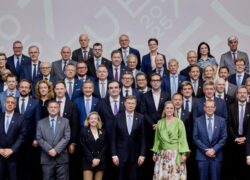
Finance ministers from across the European Union gathered in Denmark’s capital for an informal meeting focused on strengthening the bloc’s economic position and adapting to global challenges.

Talks centred on the impact of regulation on the EU economy, with ministers agreeing that while common rules are important, their complexity often places a heavy burden on businesses. Several participants stressed that simplifying legislation would make Europe more competitive without undermining financial stability or weakening consumer protections.

A joint session with central bank governors explored ways to streamline financial rules. The discussion highlighted the challenge of balancing simpler frameworks with the need to ensure confidence in the financial system.

The second day of the meeting looked outward, with ministers considering how geopolitical tensions are reshaping Europe’s economic environment. Participants underlined the importance of closer cooperation with partners such as the United Kingdom, Canada, Norway and Ukraine in order to bolster resilience and economic security.

In addition, ministers reviewed domestic reform priorities. Areas identified as essential for long-term growth included improving labour market flexibility, investing in education and research, expanding digital infrastructure and streamlining public administration.

The Copenhagen meeting forms part of a series of informal ECOFIN gatherings, where ministers exchange views on longer-term policy directions outside the framework of formal negotiations.

Source: gov.pl
Photo: gov.pl

Korona Shopping Centre Adds New Tenant and Reopens Stores After Refurbishment

Korona Shopping Centre in Wrocław has broadened its tenant mix with a new clothing retailer and the reopening of several refurbished stores.

Polish fashion brand Tatuum has opened a 152 m² unit in the centre, located next to W.Kruk and Cropp. The brand’s collections focus on natural materials and simple design.

Changes have also taken place among footwear retailers. Ryłko has returned to the centre after a pause, opening in a new 72.8 m² unit near Vistula and Jean Louis David. Wojas has reopened in a redesigned 99 m² store located next to Gatta and Tchibo.

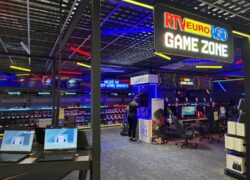
Electronics and household appliances retailer RTV EURO AGD has reopened its 1,673 m² store in an updated format. In addition to its product range, the store now includes a “Game Zone” for testing computer equipment.

Korona Shopping Centre has been operating since 1999 and continues to combine retail with leisure. The complex includes a hypermarket, cinema, fitness club and a food court with restaurants and cafés.

Passerinvest Publishes Third Voluntary Non-Financial Report

Czech developer Passerinvest Group has released its third Non-Financial Report, continuing a practice it adopted voluntarily despite the absence of a legal requirement. The report, covering activities across the group’s properties in Prague’s Brumlovka and Nové Roztyly districts, tracks year-on-year performance and highlights a consistently high occupancy rate across its portfolio.

According to the report, Passerinvest’s supplier network remains almost entirely domestic, with close to 100 percent of partners based in the Czech Republic. The group sees this as both an economic contribution to local business and a reinforcement of its focus on long-term trust and quality.

In environmental management, Passerinvest began aligning operations with the EU taxonomy in 2024 and has updated its carbon footprint analysis. Waste collection was consolidated under a single provider, which the company says has increased efficiency. The developer continues to invest in green infrastructure, including roof gardens, public parks and landscaped areas around its projects.

Employee development and working conditions are also featured. The company reports above-average pay and benefits, with staff satisfaction levels above 75 percent. On the community side, Passerinvest organised 275 events during 2024 in Brumlovka and Nové Roztyly, often in cooperation with local partners, and opened its premises to the public through regular guided tours.

The group’s buildings in Brumlovka remain 98 percent occupied, while tenant satisfaction surveys indicate approval ratings of 96 percent. Properties in both Brumlovka and Nové Roztyly hold international certifications such as BREEAM and LEED. Brumlovka has also earned a Fitwel rating of three stars, the highest level available, making it the only certified location of its kind in the EU.

Passerinvest describes the report as confirmation that sustainability forms an integral part of its long-term corporate strategy rather than a one-off initiative.

LATEST NEWS