BEOS AG Acquires 85,000 sqm Commercial Site in Neuss from Aurelis Real Estate

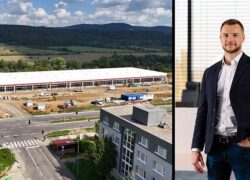
BEOS AG has purchased an 85,000 square metre commercial site in Neuss from Aurelis Real Estate for its newly launched special fund, BEOS Corporate Real Estate Fund Germany V (BEOS CREFG V). The property, situated between Jagenbergstraße and Blindeisenweg, comprises six buildings with nearly 40,000 square metres of rental space, including 29,000 square metres of warehouse and 11,000 square metres of office space. It is currently leased to 24 tenants, with a reported occupancy rate of 96 percent.

The acquisition marks the first transaction for BEOS CREFG V, which was launched in July and has a target investment volume exceeding €600 million. The fund focuses on multi-tenant commercial properties in established and growing locations across Germany. Classified under SFDR Article 8, the fund integrates environmental and social considerations into its investment strategy. Fund management is overseen by Swiss Life Kapitalverwaltungsgesellschaft mbH (SL KVG), while BEOS AG acts as the asset manager.

“The rapid acquisition of this property underlines the attractiveness of the fund and reflects our strategy to identify resilient, high-quality assets in dynamic regions,” said Michael Kapler, Executive Board member of BEOS AG and Head of Portfolio Management at Swiss Life Asset Managers in Germany.

Jochen Butz, Head of Real Estate Development Light Industrial & Commercial Region Cologne at BEOS AG, highlighted the site’s location advantages and flexibility: “With its strong transport connections near Düsseldorf, sustainable orientation and adaptable building structures, the property offers significant long-term potential.”

The seller, Aurelis Real Estate, did not disclose the purchase price.

First Property Group sells Dr. Felix 87 office building in Bucharest to Bucur S.A.

First Property Group has sold the Dr. Felix 87 office building in Piața Victoriei, Bucharest, to Bucur S.A., a company listed on the Bucharest Stock Exchange. Colliers acted as the exclusive sell-side advisor.

“Colliers acted as the sell-side advisor for this transaction, which closed on October 1, 2025. The deal highlights the growing interest of locally listed companies in income-generating real estate assets and confirms the appeal of well-positioned office buildings in established Bucharest submarkets. We are pleased to have supported First Property Group throughout this process and to have contributed to the successful completion of a deal that brings a Romanian investor such as Bucur S.A. into the spotlight. The market remains active and diverse, with sustained appetite for well located assets,” said Simina Niculita, Director | Partner | Retail Agency at Colliers.

The Dr. Felix 87 building provides 2,850 square metres of office space, fully leased to consultancy firm Vulpoi & Toader Management. Completed in 2006 and acquired by First Property Group in 2007, it is located in one of the city’s most established office areas.

Prague and State Agree on Land Transfer in Letňany for Housing and Hospital Development

Prague and the state have reached an agreement on the transfer of extensive land near the Letňany metro station, paving the way for major housing construction and a new hospital. Finance Minister Zbyněk Stanjura and Prague Mayor Bohuslav Svoboda, both from ODS, announced the deal following government approval earlier this week.

Under the plan, the state will transfer approximately 120,000 square metres of land to the city, while an additional 30,000 square metres will be made available for purchase. The land had previously been earmarked as a potential site for a government office complex during the last parliamentary term under former Prime Minister Andrej Babiš, a plan the city opposed.

In exchange, Prague has committed to developing affordable housing, civic facilities and public infrastructure. The state will secure land near the metro station for the construction of a modern hospital, a project considered a key element of the agreement.

Deputy Mayor Alexandra Udzeniya (ODS) said the city envisions a new district providing homes for up to 50,000 people. “Prague urgently needs new housing, particularly affordable rental apartments – not only for young families or essential professions, but for all residents,” she said. The plan also includes schools, healthcare and social services, jobs, green spaces, and other amenities.

The Letňany area, currently a mix of state, municipal and private land, has already attracted interest from private developers such as PPF and Kaprain, who are planning projects near the existing airport. The Letňany metro station, opened in 2008 as the terminus of line C, lies outside current residential development but is expected to become a hub of the new district.

Minister Stanjura described the government’s decision as a crucial step forward. “This agreement provides the foundation for the state to build and operate the future hospital while enabling Prague to address its acute housing shortage,” he said. Mayor Svoboda called the decision a turning point, bringing clarity after years of debate and shelving previous proposals.

Source: CTK

Consumers in Czechia Can Terminate Contracts if Energy Suppliers Lack Secured Supply

Households and small businesses in Czechia can now withdraw from fixed-price electricity or gas contracts if their supplier has not secured at least 70 percent of expected consumption. The new rule comes into effect with an amendment to the Energy Act and is designed to increase consumer protection following past supplier failures.

Under the amendment, energy traders are required to publish a so-called “security index” twice a year. The index shows what proportion of their customers’ consumption they have purchased in advance, giving consumers greater transparency when choosing a supplier. If a supplier does not publish the index on time or fails to meet the 70 percent coverage requirement, customers are entitled to terminate their contracts.

“The security index is a simple figure with two benefits. Consumers can use it as an additional factor when deciding whether to change suppliers, and they also gain protection if their supplier does not have sufficient energy secured,” said Markéta Zemanová, a member of the Energy Regulatory Office (ERÚ) board.

The index must be published by the end of March and September each year, both on the supplier’s website and with the ERÚ. The measure was introduced partly in response to the collapse of Bohemia Energy in 2021, when the company exited the market amid soaring energy prices after failing to secure adequate supply.

According to ERÚ, the new system is intended to strengthen trust in the retail energy market and reduce risks for households and small businesses relying on fixed-price contracts.

Source: CTK

Slovakia Prepares to Introduce Equal Pay Act from June 2026

The European Union’s Pay Transparency Directive, adopted in 2023, will require all member states to strengthen their rules on equal pay by 2026. The legislation aims to ensure that men and women receive equal pay for equal work, addressing persistent wage gaps through mandatory reporting, transparency rules, and enforcement mechanisms. With less than a year until the directive must be fully transposed, EU countries are at very different stages of readiness. A comparison across Central, Eastern, and Western Europe reveals diverse approaches, from building new systems to tightening already-established frameworks.

Slovakia is preparing for the most significant shift. A draft Equal Pay Act published in September 2025 is scheduled to take effect on 1 June 2026. It introduces the country’s first structured system of pay transparency, applying to both public and private sectors. Employers with over 100 employees will need to submit regular pay gap reports, and workers will gain the right to request information on average salaries of colleagues in comparable positions, broken down by gender. Gaps exceeding 5 per cent that remain unjustified for more than six months will trigger mandatory corrective actions. The Labour Inspectorate will enforce the law, with fines of up to €4,000 for non-compliance. The move is considered essential in Slovakia, which has one of the EU’s largest gender pay gaps.

Poland currently lacks a dedicated framework beyond general anti-discrimination provisions in the Labour Code. Proposals for pay transparency measures have circulated in recent years but have not advanced. To meet EU requirements, Poland will need to adopt legislation introducing structured reporting and salary transparency in recruitment. Trade unions and advocacy groups are pushing for stronger rules, but business associations have warned of administrative burdens for small and medium-sized enterprises. Debate is expected to intensify in 2026 as the transposition deadline approaches.

Czechia has taken some preparatory steps, with government discussions underway on draft legislation to transpose the directive. Current rules are limited to general equality principles under the Labour Code, leaving significant gaps on pay reporting. The proposed changes are expected to introduce employee rights to request pay data, mandatory reporting for companies above a 100-employee threshold, and sanctions for unjustified wage gaps. Analysts expect Czechia to align closely with the directive without adding stricter national requirements, in order to balance compliance with administrative feasibility for employers.

Hungary also relies primarily on existing anti-discrimination laws, with no specific pay reporting obligations in place. Experts note that Hungary has one of the widest gender pay gaps in the EU, making the directive’s transposition particularly significant. New legislation is expected to include rules on salary disclosure in job adverts and periodic gender pay gap reporting for large employers. Political debate has been limited so far, but implementation by 2026 will be mandatory.

Romania has had equality legislation since 2002, but enforcement has been weak and practical pay transparency tools are absent. To comply with the directive, the government is expected to introduce reporting obligations for larger employers and strengthen employee rights to request pay data. Advocacy groups are lobbying for robust enforcement, given Romania’s persistent structural inequalities in the labour market.

Germany already has a law in place, the Transparency in Wage Structures Act of 2017, which gives employees in firms with more than 200 staff the right to request pay information. However, its impact has been limited, as reporting is voluntary for many firms and enforcement mechanisms are weak. To meet EU standards, Germany will need to lower the reporting threshold to 100 employees and introduce stricter sanctions. Legal experts expect amendments in the coming months to close these gaps.

France, by contrast, has one of Europe’s strictest systems. Since 2018, companies with more than 50 employees have been required to publish an annual “Professional Equality Index,” which scores them on pay gaps, promotions, and gender representation. Non-compliant companies face fines of up to 1 per cent of payroll. France is expected to refine the index further to align with the EU directive, adding requirements such as salary range disclosure in job postings and more detailed reporting.

Taken together, these examples highlight the uneven landscape across Europe. Western countries such as France are largely refining existing systems, Germany is adapting its 2017 law to EU standards, while much of Central and Eastern Europe — including Slovakia, Poland, Czechia, Hungary, and Romania — is building new frameworks from the ground up.

The EU directive’s 2026 deadline leaves little time for governments to act. Employers across the continent will soon face tighter obligations, from publishing pay ranges in job advertisements to reporting gender pay gaps and correcting unjustified disparities. For workers, the reforms promise greater transparency and tools to challenge unfair practices.

While implementation challenges will differ, the underlying objective is clear: to move from declarations of equality toward measurable action. As the directive reshapes workplace rules across the EU, the coming years will test how effectively governments and employers can bridge the gap between principle and practice.

Retail Parks as a Safe Bet – OPC on Expansion, Funding and Investor Strategy

OPC has emerged as one of the most active retail park developers in Slovakia, with an increasing footprint across Central and Eastern Europe. With new projects scheduled to open before the end of this year and an ambitious pipeline stretching into 2026, the company is strengthening its role in a resilient sector of the property market. CIJ EUROPE spoke with Miroslav Tavel, Managing Partner at OPC, about ongoing developments, financing strategies, the entry of new tenants, and the wider retail landscape in the region.

CIJ EUROPE: Where do you stand with your projects at the moment and what is in the pipeline?

Miroslav Tavel: By the end of 2025, we will have completed seven retail parks. Two are already open and five more will follow in October, November and possibly early December. For 2026, we are preparing at least seven further projects in Slovakia where we already own the land. Two of those will break ground this year while the others are progressing through the permitting process and should start construction in the first quarter of 2026. Beyond Slovakia, we are advancing four sites in the Czech Republic. Although we do not yet own those plots, I expect at least two acquisitions to be finalised before the end of this year. In Romania, our entry strategy involves acquiring a development company with three retail park projects. Two of them already have zoning permits and one has a full construction permit, so we can move directly into construction once the acquisition is closed. Combining Slovakia, the Czech Republic and Romania, we expect to be working on about 12 projects in the near term.

CIJ EUROPE: Who is financing this rapid expansion?

Tavel: We work with our own equity along with several partners. Some projects are supported by J&T Bank in Slovakia, while most of the portfolio is co-financed by our JV Partner Mitiska-Reim, a Belgian fund represented by Tomáš Sifra. The cooperation is highly strategic. Mitiska-Reim has a strong presence in Slovakia and the Czech Republic, but also in Romania. Since they sold their 25 retail parks in Romania to M Core last year, they are seeking new opportunities in that market. OPC is becoming their local development partner there, which allows us to accelerate our expansion without relying solely on our own equity.

CIJ EUROPE: The broader market has been affected by a slowdown in logistics and the automotive industry. How does this influence your business?

Tavel: Some large employers are scaling down and that reduces household income in affected regions. This obviously has a knock-on effect on retail spending. However, the tenant mix in our parks is strongly anchored in discount formats and essential goods. Around 95 percent of our tenants fall into this category. These are resilient operators because their appeal is broad: from average income households to price-sensitive consumers. Even when budgets are tight, people will shop in discount chains. That is why we feel confident that our portfolio can withstand current market pressures.

CIJ EUROPE: How do you determine the size of each park?

Tavel: Everything depends on location and catchment. In towns with 7,000 to 12,000 residents, we usually build between 3,000 and 4,000 square metres. When the wider catchment includes neighbouring villages or when tenant interest is strong, the schemes can grow to 6,000 or even 8,000 square metres. Extensions are also becoming more relevant. In Skalica, for example, we are doubling an existing park from 4,200 to 8,200 square metres. In Sládkovičovo, we are adding 1,500 square metres to a park that opened at 2,800. This flexibility allows us to respond to new tenants such as Woolworth, Biedronka and Mueller, who are actively expanding in Slovakia.

CIJ EUROPE: How do you see OPC’s role within the Slovak retail park market?

Tavel: The market has been very active. Cushman & Wakefield reported that more than 53,000 square metres of new retail park space was delivered in Slovakia in 2024, and the pipeline for 2025 is even larger. Our projects are a substantial part of this growth. The entry of new retailers such as Biedronka, which just opened a store in our Revúca park, shows that Slovakia remains attractive for international discount operators. At the same time, we are mindful of challenges, particularly lengthy permitting processes and rising competition. Strong partnerships and disciplined tenant planning are essential to succeed in this environment.

CIJ EUROPE: Beyond retail units, are you adding additional services to your parks?

Tavel: Yes, wherever the site allows it. On parking lots we add EV charging points, self-service car washes or petrol stations. We also integrate parcel lockers from companies like Alza, GLS and Packeta. These generate additional revenue streams, but just as importantly they increase convenience and drive more visits. Shoppers can pick up packages while doing groceries or other errands. These additions are simple but they strengthen the value of the park.

CIJ EUROPE: What new developments within OPC should tenants and investors know about?

Tavel: The key innovation is our new investment fund. OPC has always been a developer, not a property acquirer. Through the fund, we give investors the opportunity to participate in the development margin without bearing the permitting procces. We use our equity to buy land, secure permits, sign tenants and agree on construction contracts. Only then does the fund acquire the project company and finance the part of the construction alongside with the Bank. Investors therefore know the costs and the income in advance. This structure is unique in our market and has already attracted strong interest. It will also support our expansion into Romania and the Czech Republic, as we can now scale with both our own equity and that of our institutional partners.

© 2025 www.cijeurope.com

Swiss Life Asset Managers Reports Strong 2025 GRESB Results, Confirming Upward Trend

Swiss Life Asset Managers has confirmed continued progress in its sustainability performance, reporting strong results in the 2025 Global Real Estate Sustainability Benchmark (GRESB). The company said the latest assessment validates the effectiveness of its long-term ESG strategy and reinforces its commitment to responsible investment practices across its real estate portfolio.

The 2025 results show improvements across several indicators, with Swiss Life Asset Managers noting particular gains in areas of environmental performance, governance standards, and stakeholder engagement. The company emphasised that its progress reflects not only targeted measures in energy efficiency and climate resilience, but also enhanced transparency and reporting structures.

Swiss Life Asset Managers’ real estate funds and mandates achieved above-average ratings compared with global benchmarks. The company’s portfolio managers highlighted that consistent integration of ESG criteria into investment decisions and asset management processes has become a core element of its approach.

According to the report, the positive outcome is also linked to strategic initiatives such as energy audits, retrofitting programmes, and the implementation of renewable energy solutions across properties in multiple markets. Swiss Life Asset Managers said these steps contribute both to lowering carbon emissions and to ensuring long-term value creation for investors and tenants.

Management noted that the GRESB results strengthen the company’s market position and credibility at a time when institutional investors are placing growing importance on sustainable investments. “These achievements reflect our continuous efforts to improve sustainability performance and to align our portfolio with long-term climate goals,” the company stated.

GRESB is regarded as the leading global benchmark for evaluating ESG performance in real estate and infrastructure. Participation in the annual assessment allows investors and managers to compare results internationally, track progress, and identify areas for further development.

Swiss Life Asset Managers said it plans to build on the positive momentum of 2025 by deepening its ESG initiatives in the years ahead, with a focus on decarbonisation, biodiversity measures, and tenant collaboration to further improve sustainability outcomes.

LIP Invest Expands Management Team with Appointment of Alexander Decker as Authorized Signatory

LIP Invest, a specialist in logistics real estate funds in Germany, has appointed Alexander Decker as Authorized Signatory, strengthening its management structure as part of its growth strategy. The management team, led by Managing Partner Sebastian Betz, now comprises five members, supported by additional new hires across the company.

Decker, who joined LIP in 2021, has served as Director of Asset Management for the past two years, leading an eight-member team overseeing a logistics portfolio valued at just under €2 billion. He will continue to oversee both technical and commercial asset management while taking responsibility for special projects, including the company’s photovoltaic strategy and the rollout of charging infrastructure and battery storage systems at logistics sites.

Betz praised the promotion, describing Decker as a driving force behind internal process efficiency and innovation in energy and mobility solutions. “His combination of commercial and technical expertise, along with his commitment and forward-looking approach, makes him an ideal addition to our management team,” Betz said.

The LIP Asset Management Team currently manages 63 logistics properties and recently expanded its portfolio with two acquisitions. For its ongoing Logistics Fund 5, the company aims to acquire between 10 and 15 properties with a minimum investment volume of €350 million.

Commenting on his new role, Decker emphasised the importance of continuous portfolio optimisation. “Our core properties must evolve to meet modern requirements. As specialists in logistics real estate, we are consistently developing our assets in line with user needs, from energy-efficient refurbishments to site expansions,” he said.

The expansion of the management team underlines LIP’s focus on both portfolio growth and adapting its assets to meet rising sustainability and user demands in the logistics sector.

Sonae Sierra Acquires REM Division, Becomes Germany’s Second Largest Third-Party Property Manager

Sonae Sierra has completed the acquisition of Unibail-Rodamco-Westfield’s Real Estate Management (REM) division, becoming the second largest property manager for third-party-owned shopping centres in Germany.

Following the transaction, Sierra now manages 19 centres across the country, covering almost one million square metres of leasable space and attracting more than 130 million visitors annually. The deal also brings 180 REM employees into Sierra, who will join the company’s existing German team, expanding its local platform to around 250 staff.

The portfolio includes well-known retail destinations such as Riem Arcaden and Pasing Arcaden in Munich, Spandau Arcaden in Berlin, Köln Arcaden, Düsseldorf Arcaden, and Breuningerland in Sindelfingen and Ludwigsburg. Sierra will provide centre and property management services across the portfolio, including operations, leasing, marketing, and project management.

Fernando Oliveira, CEO of Sonae Sierra, described the acquisition as a milestone for the company, highlighting the integration of a team with extensive knowledge of the German retail property market. He noted that Sierra’s international experience, combined with 25 years of activity in Germany, provides a strong basis for further growth.

Sierra currently manages 649 assets worldwide, representing more than three million square metres of leasable area. The German expansion consolidates its position in the shopping centre management segment, where it has been focusing increasingly on third-party services.

The company, headquartered in Portugal, manages assets worth around €7 billion globally and operates across more than 35 countries. Its activities span investment, development, and property services, with an emphasis on sustainability and urban transformation.

Photo (Sonae Sierra): Laut Fernando Oliveira, CEO – Sonae Sierra and Christine Hager is a member of the management board of Sierra Germany GmbH and Director of Property Management in Germany.

KINGSTONE Real Estate Completes Fundraising for Affordable Housing Vehicle

KINGSTONE Real Estate has completed fundraising for its open-ended institutional real estate fund, KINGSTONE Bezahlbares Wohnen Deutschland I. The investment vehicle, structured as a separate account mandate for a single institutional investor, raised €150 million in equity. With leverage of around 50% planned, the fund’s total investment volume will reach approximately €300 million. HANSAINVEST Hanseatische Investment Gesellschaft acts as the fund’s third-party AIFM.

The fund focuses on affordable and subsidised housing in Germany, and KINGSTONE Real Estate confirmed that preparations are already underway for a successor fund targeting the same segment. According to the company, the decision of the investor to commit to a separate account mandate was based on a strategy tailored to long-term demand in the sector.

Roughly one third of the current fund’s investment volume has already been allocated to projects in Mannheim, Nuremberg, Fürth, and Weil am Rhein, where over 200 affordable apartments are planned. Additional acquisitions are in negotiation, with KINGSTONE stating that its pipeline reflects sustained demand and strong market access.

In parallel, KINGSTONE is preparing a second vehicle with an expanded focus. Alongside housing for families, seniors, and singles, the follow-up fund aims to include student and apprentice housing, in line with the German government’s new “Young Living” programme. The intention is to broaden the scope of affordable housing provision and address different demographic needs.

The fundraising marks a further step in KINGSTONE’s strategy of concentrating on socially relevant housing projects while expanding its role in Germany’s institutional residential investment market.

LATEST NEWS