Galeria Echo in Kielce Expands Tenant Mix and Adds New Features

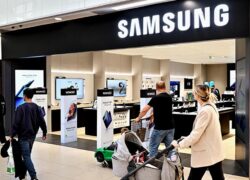
Galeria Echo, owned by EPP, is strengthening its retail offer with a mix of new and expanded tenants as it enters the new season. The shopping and entertainment centre has welcomed several new brands, including the only Samsung Brand Store in the Świętokrzyskie Province, Rituals, Castorama Design Studio, and the multi-brand retailer eobuwie, which will open later this year.

The centre has also renewed partnerships with several existing tenants. NEW YORKER has expanded its store by more than 40 percent to nearly 1,500 square metres, while other established brands such as Inglot and Apart have unveiled redesigned units. Apart, which operates the province’s only Mennica Apart point of sale, has more than tripled its retail space.

The updated tenant mix combines technology, cosmetics, fashion, and home improvement. The Castorama Design Studio offers personalised interior design support, while Rituals and Samsung introduce experiential shopping concepts focused on direct interaction with products. Other newcomers include Fale Loki Koki, Liqud Jungle, Milano Uomo, and Crazy Bubble, expanding the lifestyle and food offerings within the centre.

In addition to retail changes, Galeria Echo has introduced a new attraction: a 12-metre-high spiral slide linking levels +1 and -1. The installation functions both as a playful architectural feature and as an alternative route between floors, adding a distinct visual element to the centre’s interior.

According to EPP, the updates form part of an ongoing effort to maintain the centre’s position as the region’s leading shopping and entertainment destination, combining established brands with new experiences.

Croatia’s Property Market Steady in Late 2025 Amid New Supply and Regulation

Croatia’s property market is maintaining a steady pace in the second half of the year, as new supply enters the pipeline, credit conditions ease, and tighter rules begin to reshape investment decisions in coastal and urban areas. While the early summer months saw a strong flow of tourism and a modest increase in retail activity, housing and commercial trends suggest a gradual stabilisation rather than acceleration.

Economic growth slowed to just under 3 percent year-on-year in the first quarter, indicating that the surge seen after the pandemic has settled into a more sustainable rhythm. Yet the country continues to outperform some of its regional peers thanks to its service sector, tourism revenues, and a cautious approach to construction financing. Analysts expect Croatia’s GDP to expand by roughly 2.5 to 3 percent for the full year, supporting a broadly stable real estate environment.

Office and Logistics Markets Stay Balanced
In Zagreb, office occupancy remains tight, with rents at the upper end of Central European levels but relatively little new speculative construction. Developers are advancing several mid-sized business parks and mixed-use buildings, particularly in Buzin and Radnička, while larger projects like Matrix D and Landmark Green Towers are expected to complete through 2026.
In the logistics sector, supply is finally aligning with demand. Several regional hubs west and south of the capital have added capacity in 2025, including in Samobor and Velika Gorica. Vacancy rates are among the lowest in the region, hovering near two to three percent, and rental growth has flattened after several years of sharp increases.

Retail Supported by Consumer Spending and New Parks
Croatia’s retail market continues to draw steady investor interest, reflecting healthy household spending. Retail turnover in mid-2025 was notably higher than a year earlier, with strong non-food sales and a record number of new retail park openings in secondary cities. More than a dozen new schemes are in development across the country, adding tens of thousands of square metres to regional supply.
Prime high-street and shopping centre rents have stabilised after gradual growth through 2024, while retail parks remain a focus for domestic investors seeking long-term, inflation-resistant income.

Tourism Extends Beyond Summer
Tourism remains a pillar of the national economy. By the end of August, Croatia had already surpassed last year’s record number of visitors, with hotel occupancy stretching further into the spring and early autumn. Industry observers note that tourist spending is increasing at a faster pace than arrivals, helping to support retail, hospitality, and short-term rental markets.
New international hotel brands have expanded their presence in 2025, including openings in Zadar and on Ugljan Island, while refurbishment projects in Split and Dubrovnik continue ahead of 2026’s peak season.

Residential Prices Show Signs of Cooling
After several years of rapid appreciation, housing prices have begun to level off. Average national prices range from around €2,000 per square metre inland to over €3,500 on the coast, depending on location and amenities.
Mortgage rates eased slightly through the spring, encouraging a rebound in housing loans. Nonetheless, regulatory changes—particularly a new property tax system and stricter rules for short-term rentals in apartment buildings—are expected to slow speculative activity in popular tourist zones. Developers are also facing tighter planning frameworks in Zagreb, where a revised city plan aims to balance residential growth with infrastructure capacity.

Domestic Investors Lead, but International Interest Persists
Investment transactions in 2025 have remained concentrated among Croatian buyers, though international funds continue to watch the logistics and retail sectors closely. Institutional investors are assessing assets in Zagreb and along the Adriatic coast, drawn by solid occupancy levels and stable returns.
Advisers say yields are largely unchanged from last year, with prime offices and logistics assets attracting strong competition amid limited stock.

Outlook for Late 2025 and Beyond
As the year closes, Croatia’s property market appears well anchored. Economic growth is cooling but steady, tourism continues to expand its seasonality, and real estate development is moving in line with demand rather than speculative excess. The combination of moderate lending rates, steady domestic investment, and new regulatory clarity is likely to keep the market balanced heading into 2026.

Source: Colliers Croatia and comp.

Contractor to Developer-How STC Partners is Shaping Romania’s Green Residential Market

Adi Steiner’s career began with Strabag, one of Europe’s largest construction companies, where he spent over a decade delivering major projects across Romania and Bulgaria. By 2009, he had risen to area manager for civil construction in Bucharest, overseeing landmark schemes such as Skytower, Promenada Mall, the Mark office building, and large-scale wind farms in Dobrogea. The role gave him broad technical expertise across multiple sectors, though always from the construction side, with a focus on tenders, delivery, and handovers. Financing and long-term development strategies were beyond his remit.

By the mid-2010s, however, Steiner was ready for a new challenge. Advancement within Strabag in Romania was limited, and moving abroad was not the right choice for his family. Together with his wife Roxana, he decided to pivot toward real estate development. Spotting a gap in Bucharest’s residential market for higher-quality housing, they launched Quartier Gramont in 2019. It was a bold first step: the project was located in a protected area of the city centre, with heritage façades, but it set the tone for what would become STC Partners. Since then, the company has steadily grown, establishing a reputation for sustainable residential schemes designed with long-term value in mind.

Against this backdrop, CIJ Europe sat down with Adi Steiner to discuss the economics of building nearly-zero and zero-emission projects, how buyers and banks are responding, and what lies ahead for STC Partners.

One of the main challenges for STC Partners has been pushing beyond Romania’s minimum nZEB standard to deliver projects that approach or achieve zero emissions. At Quartier Azuga, the company introduced air-to-water heat pumps combined with photovoltaic panels, while retaining gas as a backup for hot water production during the winter months. The underfloor heating system, operating at 40–42 degrees, proved far more efficient with heat pumps than traditional systems. For the first 100 apartments, the additional cost of these upgrades amounted to about €85,000.

At Quartier Ferdinand, however, the developer made the decision to go fully gas-free. The system uses roof-mounted air-to-water heat pumps to heat water for underfloor heating, while a booster pump raises part of that water to 65 degrees for domestic use. Photovoltaic panels feed electricity directly to the heat pumps and the building’s common spaces, supported by 8,000 litres of buffer tanks that store hot water during the day for evening and night consumption. This setup acts like a thermal battery, matching peak production with peak demand. Interestingly, Steiner notes that the costs balanced out: savings from eliminating the gas connection and plant offset the investment in additional technical equipment.

Noise, often cited as a concern with roof-mounted heat pumps, has not proven problematic. Steiner points out that modern systems operate at around 35 decibels—equivalent to the minimum sound insulation required for residential windows. Located on the roof, the sound disperses upwards rather than horizontally, and during frequent site visits he has not encountered complaints. Compared with the noisier technology available two decades ago, today’s systems are much more advanced.

Buyers, meanwhile, have responded positively. STC Partners does not charge a premium for the green upgrades, instead pricing projects at market level. Offering a zero-emission building in central Bucharest, where comparable product is scarce, provides a competitive edge. “Buyers like the idea of sustainability, but few are willing to pay extra for it,” Steiner explains. “The differentiation helps us sell faster, and that’s the real benefit.”

Banks, too, are proving supportive. According to Steiner, institutions such as Banca Transilvania and BRD prefer to finance certified green projects. Independent labels like Green Homes, BREEAM, or EDGE add credibility that simple nZEB paperwork cannot, making financing more accessible and reinforcing trust with buyers.

Ensuring buildings perform to their energy targets once completed is another key focus. STC Partners equips each project with a management system that optimises efficiency, programming heat pumps to operate during the day when solar panels are producing electricity. This renewable energy is stored in buffer tanks and used in the evenings. Residents are also trained during handover on waste sorting, heating and cooling management, and other sustainability practices. Each apartment includes a smart home system linked to the intercom, allowing residents to control heating and cooling remotely. Exterior roller shutters further help reduce solar gain, often removing the need for air conditioning even in extreme heat.

The results are tangible. At one project, the photovoltaic system produced 6.3 MWh in March, with 4.56 MWh used directly on-site, 1.8 MWh fed into the grid, and 3.8 MWh purchased—mainly at night. By April, production rose to 8 MWh, and in June it delivered 7.45 MWh, with nearly two-thirds consumed within the building. Romania’s prosumer law allows overproduction in summer to balance higher consumption in winter, ensuring efficiency across the year.

Looking ahead, STC Partners is preparing its next development, Quartier Pipera, with around 500 apartments across two phases near Pipera Plaza on the border of Voluntari and Bucharest. The ambition is once again to deliver a zero-emission project. “Buyers may not always ask for this,” Steiner says, “but banks and institutional investors increasingly require it. As long as costs remain under control, this is the model we will continue to pursue.”

© 2025 www.cijeurope.com

CTP Leases 5,300 sqm to Moemax at CTPark Bucharest South

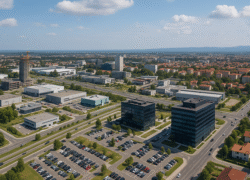
CTP has signed a lease agreement with Moemax, part of the XXXLutz Group, for a 5,300 sqm logistics unit at CTPark Bucharest South. The park is located between Bucharest’s inner ring road and the A0 motorway, the capital’s upcoming outer ring route.

Moemax selected the site for its proximity to the retailer’s new store, the immediate availability of space, and the building’s technical specifications suited to its logistics operations. The location also allows efficient access to the city and major transport routes.

Cristina Manea, Business Developer at CTP Romania, said that Moemax’s decision highlights the strategic advantages of the park’s position and its ability to accommodate diverse operational needs.

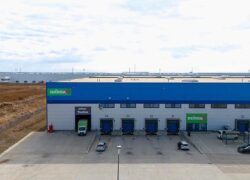
CTPark Bucharest South provides direct access to the A2 motorway, linking Bucharest with the Port of Constanța, and is accessible via two entrances from the DN4 highway. The park also benefits from public transport connections to the city. A newly built 54,000 sqm facility will be available by the end of the year as part of the site’s ongoing expansion.

CTP’s Romanian portfolio exceeds 3 million sqm of A-class industrial space across locations such as Arad, Brașov, Bucharest, Craiova, Oradea, Sibiu, and Timișoara.

WDP to Develop 32,000 m² Distribution Centre for FAN Courier near Bucharest

WDP has announced the development of a new 32,000 m² distribution centre in WDP Park Bucharest – Ștefănești for FAN Courier Group, one of Romania’s leading courier and logistics operators. The two companies already collaborate on a facility in Timișoara, and this new investment further strengthens their partnership.

The project, valued at around €22 million, will be built on WDP-owned land in northern Bucharest. Construction is scheduled to begin in early 2026, with completion expected later that year. FAN Courier will occupy the property under a 10-year triple-net lease. The facility is designed to support the company’s expanding delivery operations and will reinforce Ștefănești’s role as a key logistics hub serving the capital and surrounding regions.

According to Jeroen Biermans, Country Manager of WDP Romania, this new project deepens the company’s relationship with FAN Courier and expands WDP’s footprint in northern Bucharest. He added that the development aligns with WDP’s cluster strategy and marks the completion of the park’s first phase, which highlights sustained demand for modern logistics space in the area.

WDP Park Bucharest – Ștefănești has become the company’s largest logistics cluster, with more than 400,000 m² of leasable space. It accommodates both small units and large distribution centres and hosts tenants such as Decathlon, Auchan, LPP, and several industrial suppliers. The FAN Courier facility finalises the park’s first development phase and positions Ștefănești among WDP’s largest sites, alongside WDP Park Bollène in France.

WDP is now working to expand its Bucharest cluster through additional land acquisitions. Within the current park, another 30,000 m² of space is planned for existing clients, while a new site north of Ștefănești is under development, beginning with a 54,000 m² project for the retailer Action.

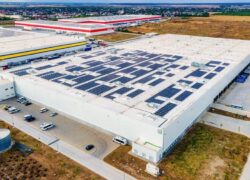
Beyond its logistics function, the park has become a model for sustainability and biodiversity in industrial real estate. It features over 12 MWp of solar panels, 10,000 trees, and 5,000 shrubs across 150,000 m², forming Romania’s largest biodiversity project of its kind. These initiatives reflect WDP’s long-term approach to integrating environmental goals into its logistics infrastructure.

BF Group and FOX Group Form Joint Venture to Finance Logistics Real Estate Developments

BF Group and FOX Group have announced the formation of a joint venture focused on financing logistics real estate projects across Germany. The new company, BF.infrastructure finance, will combine FOX Group’s development pipeline and property identification expertise with BF Group’s experience in lending and financial structuring. Senior management will include representatives from both partners.

The joint venture will create debt structures designed for professional investors, providing access to financing opportunities in logistics property development while supporting developers with tailored funding solutions. The initiative addresses the growing demand for alternative financing in the sector, as traditional banks remain cautious despite high capital needs and strong underlying demand.

According to the partners, the logistics segment offers favourable risk-adjusted returns, driven by sustained demand for modern storage and distribution space and relatively short investment horizons.

Francesco Fedele, CEO of BF.direkt AG, said the collaboration aims to fill a clear financing gap in the market. “We see a significant need for alternative lending solutions in logistics property development. Through this joint venture, we intend to make efficient and attractive financing options more widely available.”

Jörn Reinecke, Managing Partner of FOX Group, highlighted the investment appeal of the sector: “Financing logistics developments offers a compelling balance. The returns are higher than those from investments in standing properties, while the risk remains lower than with direct equity participation.”

The new venture is part of FOX Group’s broader strategy to expand its logistics real estate operations. It complements the activities of its FOX Industrial Real Estate division, which focuses on the development of big-box logistics centres, light industrial buildings, and business parks.

Images: BF.direkt AG (Francesco Fedele), FOX Group (Jörn Reinecke)

Deka Immobilien Sells Frankfurt Office Building to IMAXXAM

Deka Immobilien has completed the sale of the Lighttower office building in Frankfurt’s Ostend district. The property, formerly part of the Deka-ImmobilienEuropa open-ended real estate fund, was acquired by IMAXXAM for its German Small Asset Invest (GSAI) fund. The parties have not disclosed the purchase price.

The Lighttower offers more than 10,000 m² of leasable space and 87 parking spaces. It is nearly fully occupied by 13 tenants, with Frankfurt Economic Development as the main occupier. The property is situated on Hanauer Landstraße 126–128, close to the European Central Bank and Frankfurt Ostbahnhof railway station. Originally built in 1966, the building was extensively modernised between 2002 and 2005, including the addition of an extra floor.

The sale marks part of Deka-ImmobilienEuropa’s ongoing strategy to streamline and optimise its portfolio. According to Deka Immobilien, the property delivered a solid overall return for investors over the course of its holding period.

Europe’s Hybrid Work Reset: From Flexibility to Structure

Across Europe, the landscape of work in 2025 reveals a shared reality: hybrid work is no longer an experiment but a structured norm. The balance between home and office has stabilized, though the rhythm varies widely from country to country. The pandemic’s remote revolution has given way to a subtler, more regulated hybrid model—anchored in two or three in-office days per week for most desk-based jobs.

In the United Kingdom, the hybrid model has become standardized rather than optional. Job listings across sectors now specify office presence as a condition, with most employers expecting two to three office days per week. The ultra-flexible one-day arrangements that flourished during the pandemic have almost vanished. Analysts say the UK’s pattern reflects both cultural adaptation and the realities of collaboration—businesses want teams together, but not full-time.

In Germany, hybrid work has proven remarkably resilient. Roughly a quarter of the workforce now works from home at least part of the week, a rate that has held steady since 2024. The country’s engineering and manufacturing base still demands physical presence, but the white-collar core of its economy—finance, professional services, and IT—has embraced long-term hybrid patterns. The result is a model that prioritizes predictability over novelty, with two or three remote days seen as the practical ceiling.

France has settled into a similar rhythm. While homeworking rates dipped from the pandemic peak, telework remains embedded in corporate structures. French employees in eligible roles typically spend about two days per week at home, sustained by collective agreements that protect the right to disconnect and limit unpaid overtime. For many companies, this compromise between flexibility and structure has become part of their employment brand.

Further north, Belgium remains one of Europe’s most hybrid-friendly markets. Surveys show that most employees there work remotely one or two days per week, with Brussels—where cross-border commuting is heavy—showing even higher averages. The practice has eased traffic pressure and become part of the capital’s sustainability agenda.

Southern Europe paints a different picture. In Spain, about a quarter of the workforce teleworks in some capacity, with younger workers most likely to split their week between home and office. Italy continues to use its own “smart working” framework, though adoption varies sharply by company. Many Italian firms now treat two home days as a reasonable middle ground, while public administration and smaller enterprises have returned more firmly to traditional office setups.

In the Netherlands, hybrid working is now woven into the national culture. The Dutch legal framework grants employees the right to request remote work, and around a third of workers now exercise that option regularly. The country’s mature infrastructure and long tradition of part-time arrangements make flexibility the default, not the exception.

Sweden and its Nordic neighbours maintain similarly flexible systems. Major cities like Stockholm see regular remote work in well over 10–15 percent of jobs, and although the frequency of full-week telework has dipped, the hybrid model remains a cornerstone of professional life. Nordic firms continue to link workplace flexibility with employee well-being and productivity rather than with short-term efficiency drives.

Central Europe shows the hybrid model’s uneven integration. In Poland, surveys indicate that nearly half of employees prefer hybrid schedules, yet employers—especially outside large cities—often insist on more in-office time. Czechia mirrors this tension: hybrid roles attract far more applicants than fully on-site ones, but many firms still push for a return to three or more office days. Hungary is mid-transition, with hybrid arrangements widespread in corporate sectors but inconsistent across public and manufacturing jobs.

What unites these markets is a quiet recalibration of what “flexible” really means. The early 2020s were defined by freedom—work anywhere, anytime. The mid-decade reality is defined by expectation: how many office days, which days, and for what purpose. Europe’s capital cities have all reached the same conclusion from different directions. Too much home working risks isolation and weak cohesion; too much office time undermines retention and morale. The sweet spot, it seems, lies somewhere around the middle of the week.

Yet this convergence hides wide local contrasts. Northern and Western Europe continue to enjoy higher flexibility and better digital infrastructure; Southern and Central Europe, more hierarchical management cultures, move slower. The direction, however, is shared. Employers are not abandoning hybrid work—they are professionalising it.

If the pandemic forced remote work on Europe, 2025 marks the year when the continent truly learned to govern it.

Source: comp.

Europe Under Pressure: Security Tests on All Fronts

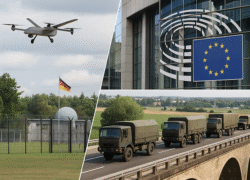
A series of incidents across Europe has deepened unease about the continent’s security and political stability. Within the span of a few days, reports surfaced of drones flying over a Belgian military base, Polish investigators uncovering a plot to smuggle explosives hidden in corn tins allegedly linked to Russian operatives, and a backlash in the European Parliament after several members met privately with Russian lawmakers. At the same time, France has proposed the creation of a new EU post — a military mobility coordinator — to ensure troops and equipment can move quickly across Europe in the event of crisis.

Each event has its own context, yet together they paint a picture of a continent facing simultaneous tests of its resilience. Belgium’s drone sightings point to the probing of NATO’s defensive infrastructure. Poland’s case reveals the ongoing shadow war being waged through covert means. The Parliament’s controversy exposes political vulnerabilities within the EU itself. And France’s call for faster military coordination underscores how slow Europe remains in translating its security ambitions into practical capability.

Belgian defence officials confirmed that roughly fifteen drones were detected over the Elsenborn training range near the German border during routine surveillance operations. The flights were described as “unusual” and “potentially coordinated,” prompting an investigation into their origin. Similar sightings have been reported in Germany and the Czech Republic in recent months, suggesting a pattern of reconnaissance activity near strategic facilities. Though no state has been officially blamed, the incidents have reignited concerns over hybrid warfare and intelligence gathering in European airspace.

In Poland, prosecutors disclosed an investigation into what they described as an attempted smuggling of explosives disguised as canned corn. The materials, reportedly of Russian origin, were allegedly meant for sabotage operations within the country. While the motive remains unclear, officials hinted that Poland’s high-profile military support for Ukraine may have made it a target. The case follows a series of arrests of suspected Russian agents earlier this year accused of plotting attacks on logistics hubs linked to Ukraine’s supply chain.

Meanwhile, in Brussels, the European Parliament is grappling with its own crisis after news broke that a small group of MEPs had met Russian Duma members despite ongoing sanctions and diplomatic restrictions. The meeting, which took place outside official EU channels, has drawn condemnation from within the Parliament. Critics say it undermines the EU’s unified stance against Moscow and risks normalising contact with officials from a sanctioned government. The controversy reflects a deeper challenge: as Europe hardens its external posture toward Russia, internal divisions continue to test the limits of its political cohesion.

Amid these tensions, France has stepped forward with a plan aimed at strengthening Europe’s operational backbone. Paris wants the EU to appoint a military mobility coordinator who would oversee cross-border movement of troops and equipment, cutting the current transit time — which can exceed ten days — down to just five. French military officials argue that Europe’s response capacity is dangerously slow, dependent on fragmented national approvals that could delay reinforcements in an emergency. The European Commission is expected to present formal proposals in November to simplify these procedures and establish dedicated “mobility corridors” across member states.

The convergence of these developments suggests a wider pattern of stress across the European security landscape. Drone incursions challenge military readiness, sabotage attempts expose domestic vulnerabilities, political outreach to sanctioned actors strains institutional integrity, and bureaucratic bottlenecks hinder rapid defence coordination. Though none of the incidents are directly linked by evidence, they collectively illustrate the complex spectrum of modern European insecurity — where the battlefield extends from the skies to the corridors of power.

Analysts see these overlapping events as signs that Europe is being tested both from without and within. Some warn that hostile actors may be using hybrid tactics to probe defences, spread confusion, and erode public trust. Others argue that the real issue lies in Europe’s slow adaptation to a new security reality that demands not only military strength but also political unity and logistical readiness.

As investigations continue in Belgium and Poland, the European Parliament weighs its internal response, and France pushes for structural reform, one conclusion is difficult to escape: Europe’s security front line no longer runs solely along its eastern borders. It now extends through its skies, its institutions, and its infrastructure — wherever resilience, coordination, and resolve are being tested.

Editorial Note: Views expressed are prospective and for information only.

U.S. Government Shutdown: Why Washington Is Deadlocked Again

The United States has entered another government shutdown, forcing many federal services to close or scale back as Congress fails to agree on new funding. The standoff, now stretching into several days, highlights deep partisan divisions and competing ideas about the role and size of government.

The shutdown began when lawmakers in the House and Senate failed to pass the spending bills that keep federal agencies running. Without these appropriations or a short-term extension, government departments lose the legal authority to spend money. As a result, hundreds of thousands of public employees are working without pay or have been furloughed, while everything from national parks to research programs and small business loan offices are shuttered.

Republicans, many aligned with former President Donald Trump’s populist faction, argue that the shutdown is a necessary confrontation over what they describe as unsustainable government spending. They want deep cuts to discretionary programs, stricter border controls, and a rollback of environmental and social initiatives passed under President Joe Biden. For Trump and his allies, this is not only about budgets but about political principle — a test of whether Washington can be forced to change through fiscal confrontation. They argue that the United States, with a national debt now exceeding $34 trillion, cannot continue on its current path.

Democrats, led by President Biden and the Senate majority, counter that the shutdown is reckless and self-inflicted. They accuse House Republicans of holding essential services hostage to ideological demands, warning that such tactics erode public trust and damage the economy. The administration’s position is that negotiations over spending should happen while the government remains open, not during a crisis. Democrats also point out that much of the contested spending includes bipartisan priorities such as defense and veterans’ programs.

The consequences are already visible. Federal workers are bracing for missed paychecks, national parks have closed, and some air traffic and border operations are being maintained only by staff working unpaid. Economists warn that a prolonged shutdown could drag on growth in the final quarter of the year, delay consumer tax refunds, and rattle financial markets. Past shutdowns have shown that while federal workers eventually receive back pay, contractors and small businesses that rely on government work often do not, compounding the long-term economic cost.

Political observers note that shutdowns rarely achieve their stated goals. In previous decades, similar confrontations ended with neither side gaining a clear advantage but with public frustration growing. The longer they last, the more likely voters are to punish whichever party is perceived as responsible.

For now, both sides appear entrenched. Republicans insist that reducing government spending is a moral and fiscal necessity. Democrats insist that stability must come first and that budget discipline should not come at the expense of essential services. Between these two positions, the machinery of government has once again ground to a halt — a symbolic reminder of how polarized U.S. politics has become, and how high the cost of political brinkmanship can be.

Editorial Note: Views expressed are prospective and for information only.

LATEST NEWS