Poland’s Foreign Trade Grew in 2024 as EU Markets Drove Exports

Poland’s foreign trade activity expanded in 2024, with data from the Yearbook of Foreign Trade Statistics of Poland 2025 showing resilient export and import growth amid stable demand from European partners.

According to Statistics Poland, total foreign trade turnover in goods and services increased compared to 2023, maintaining Poland’s strong integration within the EU single market. The European Union remained Poland’s largest trading partner, accounting for the dominant share of both exports and imports. Germany continued to hold the top position as Poland’s leading export destination and import source, followed by the Czech Republic, France, and the Netherlands.

Trade in goods with OECD countries also grew steadily, reflecting diversified industrial and consumer linkages. The United States and South Korea registered notable increases in both directions of trade, particularly in industrial machinery, transport equipment, and electronic components.

The report highlights that exports were mainly composed of manufactured goods, automotive products, and machinery, while imports were dominated by industrial inputs, electronics, and energy resources. In services, IT and business outsourcing continued to be major contributors to Poland’s export profile, supported by growing cross-border demand for digital and professional services.

The yearbook also notes an improvement in the terms of trade, indicating favourable price dynamics for exported goods relative to imports. Price indices in both exports and imports were tracked across major commodity groups using the Combined Nomenclature (CN) and Polish Classification of Products and Services (PKWiU).

In 2024, Poland’s external debt remained stable and the balance of payments showed sustained surpluses in trade in services, helping to offset moderate deficits in goods.

Statistics Poland emphasised that the data were compiled under harmonised EU methodologies through the INTRASTAT and EXTRASTAT systems, ensuring comparability across member states.

The 2025 edition marks the 60th annual publication of Poland’s foreign trade yearbook, offering detailed breakdowns by country, sector, and product category in both current and constant prices, with values expressed in PLN, EUR, and USD.

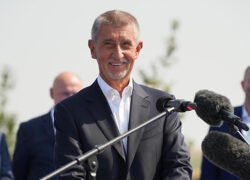
Andrej Babiš secures coalition deal to form new Czech government

Former Czech prime minister Andrej Babiš has agreed to lead a new government after signing a coalition pact with two right-wing groups, paving the way for his return to power four years after leaving office.

His movement, ANO 2011, which won the October parliamentary election, has reached an agreement with the Motorists for Themselves party and the Freedom and Direct Democracy (SPD) movement. Together, the three groups command a slim majority of 108 seats in the 200-member lower house, enough to form a government if confirmed by parliament.

The deal follows President Petr Pavel’s formal invitation for Babiš to attempt to form a cabinet after his party’s clear victory in early October. The coalition’s programme is expected to be finalised within the coming weeks, with the government likely to be sworn in before the end of the year.

Under the agreement, ANO will hold half of the cabinet posts, including the premiership and the finance, defence, and foreign affairs portfolios. The Motorists party will take responsibility for transport and energy, while SPD is expected to oversee interior, labour, and environmental affairs.

The new administration’s agenda is expected to focus on economic stability, infrastructure investment, and reduced taxation for lower-income households. It also plans to reassess elements of the European Union’s environmental and energy policies.

Foreign policy may shift toward a more cautious engagement with Brussels and a reduced emphasis on military and humanitarian support for Ukraine. Analysts warn that cooperation with two smaller parties known for their eurosceptic and nationalist views could complicate relations with the EU and NATO.

Babiš, who previously led the government between 2017 and 2021, has framed his comeback as a move to “restore pragmatic leadership” after what he described as years of weak growth and rising costs under the outgoing administration. The coalition must now prepare its policy statement and budget proposal ahead of a confidence vote expected in early 2026.

If approved, the new government will mark a significant political realignment in Prague — one that combines technocratic management with populist rhetoric and nationalist influence.

Knight Frank appoints Przemysław Piętak as Head of Industrial & Logistics Agency in Poland

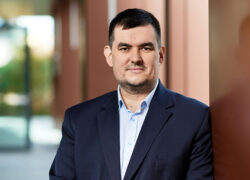
Knight Frank has announced the appointment of Przemysław Piętak as Director and Head of Industrial & Logistics Agency in Poland. The move follows the firm’s continued efforts to strengthen its advisory structure in key business areas.

Piętak has more than two decades of experience in logistics, supply chain management, and warehousing. His career includes senior positions in manufacturing with Heineken / Grupa Żywiec, in consulting at Roland Berger Strategy Consultants, and in logistics at CEVA Logistics. In recent years, he worked at CBRE, first as Supply Chain Advisory Director and later as Business Development Director in the firm’s industrial and logistics division.

At Knight Frank, Piętak will oversee the development of the company’s industrial and logistics operations in Poland. The division advises on leasing and investment transactions, with clients including Schaeffler, Aurora Logistics, and SFD. His role will also cover the expansion of advisory services related to location strategy, third-party logistics cooperation, and warehouse automation and robotics solutions.

Przemysław Jankowski, previously Head of the Industrial Agency, will take on the position of Business Development Director, focusing on client relationship management and new business opportunities.

According to Knight Frank, the appointment supports its long-term growth strategy in Poland’s industrial and logistics market, which continues to evolve with strong demand from occupiers and investors.

Phinance S.A. acquires EPRO Sp. z o.o. to expand financial and insurance advisory services

Phinance S.A., one of Poland’s largest financial advisory firms, has acquired 100 percent of shares in EPRO Sp. z o.o., a company ranked among the country’s leading life insurance distributors. The transaction, completed on 30 October 2025, marks a further step in Phinance’s strategy to strengthen its position in the Polish financial advisory market.

The acquisition follows Phinance’s shareholder change earlier this year, which brought in Vienna Life as a strategic investor. The company said the partnership with Vienna Life helped facilitate the purchase of EPRO and supports its broader growth plans in advisory and brokerage services.

Following the transaction, EPRO will continue to operate under its current name and structure. The company’s management board, led by President Piotr Grzesik, will now include Phinance representatives Paweł Kasica, Marcin Kaczmarek, Lidia Pers, and Dorota Kowalewska. Peter Grudniak, EPRO’s previous owner, will remain as a board member to assist in the transition and ongoing development.

According to both companies, the integration will allow for the exchange of expertise and the inclusion of Phinance’s financial products in EPRO’s distribution network. The combined group will focus on expanding its advisory services, developing technology-driven tools, and creating a shared product platform.

The companies stated that clients of both Phinance and EPRO will benefit from access to a broader portfolio of insurance and financial products. No changes are planned to existing customer relationships or contractual arrangements.

Phinance S.A. has operated in Poland for over two decades, offering services across investment, savings, insurance, lending, real estate, and leasing segments.

Kajima Properties Europe Expands Student Depot Poznań with 405 Additional Beds

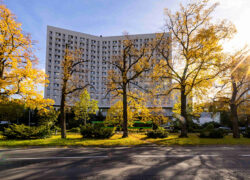
Kajima Properties Europe, a subsidiary of Kajima Corporation, has completed the expansion of its Student Depot residence in Poznań, adding 405 new beds to the existing facility. The development increases the total capacity to 871 beds, making it the largest asset in Student Depot’s Polish portfolio.

The project was completed ahead of schedule and within budget. The extension includes a range of new room types at different price points to provide students with more housing options. The existing building was also upgraded with improved communal areas, including study zones, fitness facilities, and leisure spaces such as a cinema and gaming room. As part of the works, the façade was renovated and insulated to improve the building’s energy performance.

The Poznań property, first acquired in 2014, was Student Depot’s inaugural residence. The extension marks the first time the company has expanded a fully occupied building, with construction carried out while maintaining operations for existing residents. The new facility opened in time for the start of the academic year, achieving occupancy of over 90%.

Student Depot, which operates more than 4,500 beds across nine cities in Poland, plans to add over 1,000 more in the coming years. According to data cited by Savills, modern private student accommodation remains limited in Poland, with only around 1.5% of students able to secure places in such facilities.

The platform continues to focus on purpose-built student housing (PBSA) in major academic cities such as Warsaw, Kraków, Wrocław, and Gdańsk, responding to sustained demand from domestic and international students.

“The completion of the Poznań expansion demonstrates our ability to deliver technically complex projects while maintaining quality and service for residents,” said Jan Trybulski, Head of Poland at Kajima Properties Europe. “It also reflects our long-term strategy of developing well-located, professionally managed housing in key university cities.”

Michał Obara, CEO of Student Depot, added that the project represents an important step in the company’s growth. “Expanding within a live, fully occupied building required careful planning and coordination. We are pleased to have achieved this milestone with minimal disruption to residents.”

Student Depot continues to manage all its residences in-house, providing round-the-clock staffing, controlled entry, and on-site support. With the Poznań project now complete, the company remains focused on broadening its footprint in Poland’s undersupplied student housing market.

YIT Begins Construction on Kalevala Residential Development in Brno

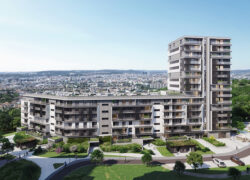
YIT has launched the first phase of its new Kalevala residential project on the border of Brno’s Vinohrady and Židenice districts. The development, created in partnership with RSJ Investment Group, will transform a former brownfield site into a modern urban neighbourhood with a focus on sustainability and community living.

The initial stage, named Ukko, will include 196 apartments and studios along with ground-floor commercial space. Construction is already underway, with completion planned for the second quarter of 2028. The full Kalevala complex will be developed in nine phases, delivering approximately 750 housing units by mid-2031.

The project aims to revitalise a five-hectare site into a mixed-use district integrating housing, services, and public areas. Energy-efficient design features will include photovoltaic panels, green roofs, and rainwater retention systems, complemented by landscaped areas and tree-lined paths.

“This is our first project in South Moravia, and we want to create a new residential district that connects the Vinohrady and Židenice areas in a natural way,” said Marek Lokaj, CEO of YIT Stavo. “Our focus is on sustainable housing that combines modern urban living with environmental awareness.”

Lukáš Musil, board member of RSJ Investment Group, added that Brno’s location and growing demand make it a key market for residential development. “We want to create a place where people will not only live but also spend time and build community.”

YIT has opened a new Brno office at Magnum Palace to manage the project and future regional acquisitions. The team will oversee construction and sales while expanding YIT’s presence beyond Prague in line with the company’s long-term growth strategy.

The Ukko building — named after the Finnish god of thunder — will feature apartments ranging from 27 to 105 square metres, most with balconies, terraces, or small gardens. Amenities will include parking, storage rooms, stroller and bike facilities, and a dedicated space for washing bicycles and pets. Selected units will offer air conditioning and underfloor heating.

Architecturally, Ukko will consist of two connected sections — a seven-storey base and a fifteen-storey tower — designed to follow the area’s natural slope. The tower will serve as a visual focal point and provide communal areas for residents.

Located between Viniční, Šedova, and Líšeňská streets, the site offers proximity to schools, healthcare, shops, and public transport links. The Brno-Židenice train station is within five minutes, and nearby green spaces such as Bílá hora and Stránská skála provide opportunities for recreation.

When completed, Kalevala will add a new chapter to Brno’s ongoing urban renewal efforts — creating a functional, energy-efficient neighbourhood designed for long-term residents and families.

Kamco Invest Strengthens Saudi Ties During FII 2025 Week

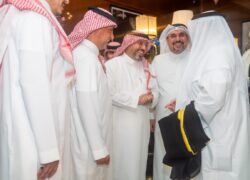
Regional investment firm Kamco Invest marked its growing presence in the Saudi market with a high-level client reception in Riyadh that coincided with the Future Investment Initiative (FII) 2025, held from 27 to 30 October under the patronage of the Saudi leadership.

The gathering brought together leading figures from Kuwait and Saudi Arabia’s financial and business communities, along with Kamco Invest executives and board members. The company said the event aimed to deepen bilateral investment cooperation and explore opportunities aligned with Saudi Vision 2030.

Kamco Invest, which recently relocated its Saudi operations to the King Abdullah Financial District (KAFD), reaffirmed its long-term commitment to the Kingdom’s market and ongoing expansion strategy. Its Riyadh-based arm manages what the company describes as the Kingdom’s largest conventional equity strategy, valued at around SAR 1.2 billion, alongside Sharia-compliant equity and money-market funds and a new pre-IPO technology fund focused on Gulf startups.

Chief Executive Officer Faisal M. Sarkhou said that participation in this year’s FII reflects the firm’s regional ambitions. “The forum provides a valuable opportunity to build strategic partnerships that support our aspirations at Kamco Invest to expand our regional presence and contribute to the development of the investment environment in the Kingdom and the region,” he noted.

While no independent media statement has yet confirmed the full details of the Riyadh reception or official patronage, Kamco Invest’s attendance at the FII 2025 and its relocation to KAFD are documented on the company’s official channels.

The event capped a week of investor dialogues in Riyadh focused on innovation, private-market growth, and cross-border collaboration—areas central to both Kuwait’s and Saudi Arabia’s evolving investment strategies.

GCC Equity Markets Sustain Momentum Amid Rate Cuts and Robust Sector Gains

The Gulf Cooperation Council (GCC) equity markets extended their positive streak into October 2025, with the MSCI GCC index rising 1.2% month-on-month, marking the second consecutive month of gains. The region’s performance reflected stronger global investor sentiment, progress in trade negotiations, and monetary easing following synchronized rate cuts by the US Federal Reserve and most GCC central banks — with Kuwait as the only exception.

Oman, Bahrain, and Dubai Lead Regional Gains

Oman emerged as the best-performing market, surging 8.3% and securing its fourth straight monthly advance. The rally, supported by sustained economic diversification and steady corporate earnings, placed Muscat’s bourse second in the GCC for year-to-date growth at 22.6%, just behind Kuwait’s 22.7%. Bahrain followed closely with a 5.9% rise, while Dubai climbed 3.8% on the back of strong performances in real estate and banking shares.

Kuwait continued to dominate regional benchmarks, with the All Share Index up 2.7% in October and breaching the symbolic 9,000-point threshold for the first time this year. Gains were driven largely by mid- and small-cap stocks, especially within financial services and energy. Saudi Arabia’s Tadawul posted a modest 1.3% gain as third-quarter earnings lifted sentiment, despite large-cap banks facing pressure over ongoing foreign ownership policy discussions.

Sector Snapshot: Diversified Financials, Energy, and Retail Drive Growth

Sector performance across the region tilted towards the upside. Diversified Financials led with a 6.6% increase, followed by Retail (+6.4%) and Utilities (+4.8%). Energy stocks benefited from higher oil prices and strong quarterly results, gaining 3.8%, while banks saw smaller advances at 0.7%. Consumer-facing industries such as apparel and hospitality lagged, recording declines between 2% and 10%.

Regional Market Highlights

In Abu Dhabi, the FTSE ADX Index rose 0.9%, buoyed by gains in financials and telecoms, even as real estate and utilities underperformed. Dubai’s Financial and Real Estate indices rose sharply, helped by strong corporate activity and continued inflows into property. The Qatar Exchange was the only market to end lower (-0.9%), dragged down by large-cap financials and real estate stocks despite solid 9M earnings from the banking sector. Bahrain’s All Share Index advanced 5.9%, supported by Aluminium Bahrain’s 22% surge and steady gains across non-oil sectors.

Meanwhile, Oman’s Muscat Stock Exchange delivered a standout performance as all sectors — led by services and financials — finished in positive territory. Rising trading volumes and the expansion of industrial activity reflected growing investor confidence.

Macroeconomic Backdrop and Policy Moves

Rate adjustments across the GCC largely mirrored the US Federal Reserve’s 25-basis-point cut in late October. Saudi Arabia’s central bank reduced its repo rate to 4%, while other regional regulators followed suit to support liquidity and maintain currency pegs. Economic data released by the IMF and national statistics agencies pointed to sustained non-oil growth across the Gulf, with Abu Dhabi’s GDP projected to rise by 6% in 2025 and Oman’s non-oil output up 4% year-on-year.

Outlook

Kamco Invest’s latest analysis underscores continued optimism for GCC equity markets heading into 2026, driven by supportive monetary policies, fiscal expansion, and improving corporate earnings. However, analysts caution that geopolitical risks, uneven oil demand recovery, and global inflation trends could influence near-term volatility.

Source: Kamco Invest, GCC Markets Monthly Report – October 2025.

EU Enlargement: Europe’s Next Generation of Members Faces a Long Road Ahead

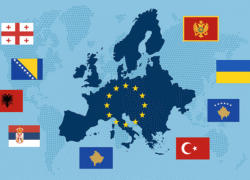
Europe is preparing for its most ambitious wave of expansion in decades, with ten nations from the Western Balkans to the Black Sea seeking to join the European Union. Their motivations are clear — stability, growth, and security within Europe’s political framework — but their progress remains uneven. Each country faces its own reform challenges, while the EU itself must confront internal doubts about its readiness to absorb new members.

Albania has emerged as one of the most determined reformers in the Western Balkans. Its government has launched a string of anti-corruption and digital governance measures, but the rule of law remains fragile. The EU continues to push for visible results in prosecuting high-level corruption and strengthening judicial independence. Despite progress, deep-rooted governance issues and uneven public trust in institutions still stand in the way of membership.

North Macedonia’s path has been blocked by political disputes that have overshadowed years of reforms. A constitutional amendment recognising the Bulgarian minority — a key precondition set by the EU — remains stalled in parliament. The deadlock has frustrated citizens who supported the country’s long-standing pro-European orientation and believe it has already delivered on most technical reforms.

Montenegro is widely seen as the closest to joining. It has opened nearly all negotiation chapters and provisionally closed several, but political instability and unfinished judicial reforms continue to slow its progress. Brussels sees Montenegro as a test case for whether the Western Balkans can deliver real change and whether the EU can keep enlargement momentum alive.

Serbia’s membership talks have lost momentum. Concerns over media freedom, judicial independence, and close ties with Russia have drawn criticism from Brussels. The EU insists that Serbia must align more closely with its foreign policy and normalise relations with Kosovo before meaningful progress can be made. Without these shifts, its accession track risks indefinite delay.

Bosnia and Herzegovina remains paralysed by internal divisions and an unwieldy power-sharing structure that makes nationwide reform difficult. Despite cooperation with the EU on border management and migration, real institutional reform remains elusive. Until the state functions more cohesively, the country’s European path will remain largely symbolic.

Moldova, on the other hand, has surprised observers with its rapid reform drive. Since being granted candidate status, it has launched judicial restructuring and anti-corruption measures while trying to reduce dependence on Russian energy. Yet its limited administrative capacity and exposure to geopolitical pressures pose ongoing risks. The EU has praised Moldova’s determination but warns that momentum must translate into measurable results.

Ukraine’s path to membership is exceptional — it is pursuing structural reform in the middle of a war. Even under extreme pressure, Kyiv has strengthened anti-corruption institutions and pursued regulatory alignment with EU standards. The challenge now is to sustain reform while defending the country militarily. EU officials link future funding and accession milestones to continued governance progress, knowing that Ukraine’s success will shape Europe’s credibility as a geopolitical actor.

Georgia’s accession hopes have dimmed. Once seen as a frontrunner, the country has drifted away from democratic norms, with its government accused of undermining media freedom and civil society. Brussels has urged Georgian leaders to return to the reform path laid out in their initial roadmap, warning that political backsliding could halt progress entirely.

Turkey’s membership process remains effectively frozen. The EU continues to cite major concerns about human rights, press freedom, and judicial independence. While cooperation on trade and migration persists, full membership is no longer viewed as a realistic prospect under current conditions.

Kosovo’s path is complicated by a lack of universal recognition. Five EU member states still do not formally recognise its independence, which makes the accession process legally and politically difficult. The EU continues to press for dialogue between Pristina and Belgrade, seeing reconciliation as essential for both countries’ European aspirations.

For Brussels, enlargement is as much a political question as a technical one. Every new member must be approved by all existing 27 states, leaving the process vulnerable to national vetoes and political bargaining. At the same time, the EU must ensure it can function effectively once new members join — a concern frequently raised by larger states wary of overextension.

The geopolitical context has made enlargement a renewed priority. Russia’s war in Ukraine and growing Chinese influence in the Balkans have transformed what was once a slow bureaucratic process into a strategic race for influence. Yet the balance remains delicate: candidate countries must prove genuine reform, and the EU must show that its promises are credible.

Europe’s future enlargement will test both sides. The candidates need to demonstrate that they can uphold European values in practice, not just on paper. The EU, for its part, must show that its door remains open in more than rhetoric. Whether this new wave of enlargement becomes another success story or another stalled process will depend on a single question — can Europe deliver on its own vision before momentum fades once again?


Foreign Workers Now Essential to Growth Across Central Europe

Central European economies are increasingly shaped by the presence of foreign labour. From factories in the Czech Republic to construction sites in Romania, international workers are helping to fill persistent staffing shortages and keep growth on track. Yet public attitudes toward their role remain mixed, reflecting a tension between economic necessity and social caution.

In Poland, the contribution of foreign employees—particularly from Ukraine—has become indispensable. Analysts estimate that their work accounts for nearly three percent of national output, a figure that underscores how deeply migrant labour is embedded in the economy. Surveys suggest that roughly half of Poles recognise this positive influence, though enthusiasm has cooled compared with the early years of the war in Ukraine. Many respondents now express more neutral or cautious views, shaped by broader European debates over migration.

The situation in Czechia is even more pronounced. Nearly one in five people employed there now comes from abroad, with Ukrainians, Slovaks, and Vietnamese among the largest groups. The country’s tight labour market means foreign workers are crucial for sustaining production, particularly in manufacturing and logistics. While employers praise their reliability, public opinion remains divided. Polling shows that Czechs are pragmatic—accepting migration as economically necessary, but wary of its social effects.

In Slovakia, foreign labour plays a smaller but increasingly visible role. The domestic workforce is ageing, and thousands of young Slovaks have moved abroad for work. Employers have turned to neighbouring countries and to refugees from Ukraine to close the gap. Many of these newcomers are now active in industrial and service sectors, helping to stabilise output. Nonetheless, surveys show that Slovaks remain among the most skeptical publics in the region when it comes to migration, reflecting a wider unease about rapid demographic change.

Romania, once known mainly as a source of emigrants, has in recent years become a destination for workers from South and Southeast Asia. Labour shortages, especially in construction, hospitality, and transport, have forced the government to expand work-permit quotas to record levels. While foreigners still make up a small share of the total workforce, their numbers are rising sharply, and employers say they are vital for keeping large projects on schedule.

Despite differences in scale, the pattern is clear across Central Europe. Tight labour markets, low unemployment, and demographic decline have created a growing need for foreign employees. Governments are adapting by simplifying permit procedures and promoting integration schemes, though some are simultaneously increasing fees and administrative hurdles.

Public sentiment, meanwhile, remains divided. Older generations and residents of smaller towns tend to be more skeptical, while younger people and those in large cities are more open. Experts note that social acceptance often follows economic experience—workplaces where Poles, Czechs, Slovaks, and Romanians collaborate with foreign colleagues tend to report more positive views over time.

The region’s reliance on migrant workers is no longer a temporary fix but a structural feature of its economies. While it would be an exaggeration to say that these economies are “based” on foreign labour, they are undeniably being sustained by it. Without continued inflows of international workers, many businesses would struggle to meet demand, and growth across Central Europe would be considerably weaker.

Source: PersonalService, CSO, GUS, UNHCR, accace and CIJ EUROPE analysis.

LATEST NEWS