Confidence in Czech economy declines among entrepreneurs and consumers in December

Confidence in the Czech economy dropped slightly in December, with both entrepreneurs and consumers expressing increased pessimism compared to the previous month, according to the Czech Statistical Office (ČSÚ). The overall confidence indicator fell by 0.5 percentage points month-on-month to 97.5 points, though it remains higher than a year ago, when it stood at 93.8 points.

Among entrepreneurs, confidence declined by 0.4 points to 96.9 points. According to Jiří Obst, head of the ČSÚ’s business survey department, this drop was primarily driven by reduced demand in the industrial sector and lowered expectations for production growth over the next three months. Confidence in the industrial sector fell significantly, by 2.4 points, while the construction sector’s confidence remained steady compared to November. Confidence in selected service sectors rose by 1.5 points, and trade confidence increased slightly by 0.4 points.

Consumer confidence also saw a decline, dropping by 1.2 points to 100.4 points in December. This marks a partial correction following three months of growth. Anastasija Neradová from the ČSÚ’s business cycle survey department attributed the decline to heightened concerns about the overall economic outlook and an increasing reluctance among households to make major purchases in 2025.

The share of consumers anticipating a worsening of the economic situation in the next 12 months rose slightly, while expectations of an improved financial situation remained largely unchanged from November. However, there was a slight decline in the number of households that assessed their current financial situation as worse than in the past 12 months. Meanwhile, the proportion of consumers who view the current time as unsuitable for large purchases increased in December.

The December data reflects ongoing uncertainty in the Czech economy, with a cautious outlook from both businesses and households as they navigate potential challenges in the year ahead.

Source: ČSÚ and CTK

Approximately 195,000 old-age pensioners work in the Czech Republic

Around 195,000 retirees in the Czech Republic continue to work, with the majority employed as workers and the rest operating as sole traders or under agreements, according to data from the Ministry of Labour and Social Affairs (MPSV). Notably, nearly 99,200 of these working pensioners are over the age of 67, making up half of the total.

The number of retirees in the workforce reached its peak in 2019, with 219,500 individuals, before declining during the COVID-19 pandemic. In 2022, the labor department recorded 194,566 working pensioners, including 163,543 employees and the remainder as self-employed or working under agreements. About 3,200 individuals combined their employment with freelance work or agreements.

Starting next year, working pensioners will no longer be required to pay pension contributions, a measure introduced as part of the government’s pension reform. This change will leave an additional 6.5% of their earnings in their wallets. For a pensioner earning CZK 20,000 gross, this translates to CZK 15,600 annually in extra income, while those earning CZK 40,000 gross would save CZK 31,200 annually.

This measure, aimed at incentivizing employment among retirees, is expected to reduce state revenues by approximately CZK 4 billion per year. However, the ministry believes the resulting increase in workforce participation and tax revenues will offset the loss.

The Czech retirement age is gradually rising, currently increasing by two months annually for men and four to six months for women. It is expected to reach 65 years by the 2030s. The pension reform envisions further increases, with the retirement age extending by one month per year until it caps at 67 years after five decades.

This gradual shift has sparked debate, with critics arguing that many people may not be able to work until such an advanced age. The opposition party ANO has pledged to reverse parts of the reform if it gains power in the next elections.

In 2022, nearly three-quarters of working pensioners were over the age of 65. Among them, approximately 53,900, or 28%, were aged 70 or older. Meanwhile, workers aged 64 and 65 numbered 25,700 and 24,200, respectively.

According to the Czech Statistical Office, the total number of working pensioners has steadily risen. The 2021 census revealed that 565,800 retirees were employed, accounting for nearly 11% of the workforce. This figure includes both old-age and disability pension recipients, more than double the number recorded in 2011.

The removal of pension contributions for retirees represents a shift in how the state supports working pensioners, replacing small periodic pension increases previously granted for continued employment. The government hopes this change will encourage more retirees to remain in or return to the workforce, thereby boosting economic activity.

Source: MPSV and CTK

Noxo Energy aims for high-speed chargers to constitute at least 50% of its network

Noxo Energy plans for high-speed DC charging stations to account for at least 50% of its network in the future, according to board member Jakub Bańkowski.

“We aim for DC stations to make up no less than half of our charging points. However, it’s hard to predict whether we’ll settle at 50% or even reach 60% of the network,” said Bańkowski.

Currently, high-speed chargers represent just 12% of Noxo Energy’s network, with 55 DC charging points out of a total 460 stations. The company has ambitious plans to expand its network next year, not only increasing the number of chargers but also diversifying their locations.

“Until now, our AC chargers have primarily been located at hotels and amusement parks, while DC chargers have been placed at shopping malls, where drivers typically spend about an hour. In 2025, we plan to install fast chargers in high-traffic areas along major routes. These won’t be on traditional motorway or expressway service stations but in places drivers already frequent, such as popular, well-rated restaurants,” Bańkowski explained.

Bańkowski emphasized the importance of balanced growth across both AC and DC charger segments. For AC chargers, the focus remains on strategic placement rather than simply increasing numbers.

“We pride ourselves on having one of the highest utilization rates for charging stations in the market. This is because we’ve been meticulous in selecting locations. Some operators placed AC stations in areas with insufficient demand, making it challenging to justify their investments. By contrast, we’ve rejected many potential locations, which has allowed us to achieve higher energy sales at certain AC stations than some competitors do with their less popular DC stations. Additionally, the investment cost for AC stations is eight times lower,” he noted.

Noxo Energy’s thoughtful approach aims to balance growth, convenience, and profitability, positioning it as a key player in the expanding electric vehicle charging market.

Source: Noxo Energy and ISBnews

GDDKiA: Kraków and Warsaw connected by S7 expressway

Kraków and Warsaw are now linked by the S7 expressway, with the Kraków metropolitan area also benefiting from the completion of the S52 route, which improves accessibility in the city’s northern areas. The General Directorate for National Roads and Motorways (GDDKiA) announced the opening of 25 kilometers of expressways, enhancing the transportation network in the region.

The newly inaugurated 13.3 km section of the S7, connecting the Widoma junction to the North Bypass of Kraków, establishes a direct expressway route between Poland’s two largest cities. The full 270 km stretch of the S7 now links Warsaw and Kraków with a modern highway. In the Małopolska region, the S7 follows a new route, diverging from the path historically designated in the early 19th century.

While the section is open to traffic, construction work is not yet fully complete. Remaining tasks include finishing junctions and fencing. For safety, the speed limit on the section is temporarily set at 80 km/h, though both carriageways are available with two lanes each. Completion of the remaining work is expected by late spring 2025.

Angela Martinez-Sarasola, head of the Polish Department for the European Regional and Urban Commission, emphasized the importance of these projects in enhancing Poland’s infrastructure and strengthening interregional connections. “The investments in S7 Widoma-Kraków and the S52 North Bypass of Kraków exemplify the role of road infrastructure in economic and social development. These projects, part of the TEN-T network, significantly improve accessibility and connectivity within Małopolska and beyond,” she said.

The European Union supported the development of the S7 expressway with a PLN 534.8 million grant from the Operational Programme Infrastructure and Environment and PLN 420.7 million from the Operational Programme European Funds for Infrastructure, Climate, and Environment. The project, costing nearly PLN 1.7 billion, was delivered by a consortium led by Gulermak.

Additionally, the 12.3 km Kraków Bypass (POK) brings Kraków closer to becoming the second Polish city, after Łódź, fully encircled by expressways. The city now has 64.5 km of bypass routes, with a final 5 km section between the Mistrzejowice and Nowa Huta junctions scheduled for completion by mid-2026.

The S52 route, financed with PLN 789.6 million from the Operational Programme Infrastructure and Environment, represents a total investment of approximately PLN 1.4 billion. This section was also constructed by the Gulermak consortium.

These infrastructure advancements enhance mobility, safety, and travel comfort while supporting sustainable development and EU integration. The newly opened expressways are expected to bolster the region’s competitiveness and foster greater cohesion within Poland.

Source: GDDKiA and ISBnews

White & Case, Schoenherr advise on €470M sale of logistics parks to Blackstone

TPG Real Estate has sold its logistics portfolio, CTRE, comprising ten strategically located parks in the Czech Republic and Slovakia, to Blackstone for €470 million. Initially launched in 2019 with a €90 million investment in partnership with local landlord Contera, CTRE has grown to approximately 500,000 square meters of logistics facilities.

White & Case advised on the transaction with a team led by Partners Petr Panek, Vaclav Kubr, and Jan Linda, alongside Local Partner Karel Petrzela, Counsels Magda Olysarova and Vladimir Ivanco, and Associates Barbora Vaculova and Katerina Hudeckova.

Schoenherr provided legal counsel with a team including Partners Vladimir Cizek, Sona Hekelova, and Michal Lucivjansky, supported by Counsels Otakar Fiala, Zuzana Hnatova, and Peter Devinsky, and a large group of attorneys and associates across their offices.

The deal underscores the growing importance of strategically located logistics assets in the region and highlights TPG Real Estate’s success in scaling its portfolio over the past five years.

Sebastian Flick named Head of CFB Funds and Investments at Commerz Real

As of December 1, 2024, Sebastian Flick has taken on the role of Global Head of CFB Funds, Structured Finance, and Investments at Commerz Real, the real assets subsidiary of Commerzbank. This division consolidates closed-end funds for private investors alongside various financing products, including real estate leasing, operator and leasing models, and participation models. Flick succeeds Martin Suchsland, who retired in autumn 2024 after an impressive 30-year career with Commerz Real.

Flick brings extensive experience in equity investment management and portfolio oversight for institutional investors. Prior to joining Commerz Real, he served at ARAG SE since 2012, where he held the position of Departmental Head of Alternative Investments & Real Estate. In this role, he managed investments in infrastructure, real estate, and private equity. Earlier in his career, Flick worked with Talanx Asset Management, HSBC Trinkaus, and the Cologne-based Kreissparkasse Köln. A graduate economist, Flick has established a reputation for his expertise in alternative and real estate investments.

At Commerz Real, Flick will oversee a diverse portfolio valued at approximately €7 billion, serving 70,000 investors. The portfolio includes investments in sectors such as shipping, aviation, solar parks, and wind farms, reflecting Commerz Real’s commitment to sustainable and diversified asset management.

Flick’s appointment signals a continuation of Commerz Real’s strategic focus on innovation and robust portfolio management, ensuring value creation for private and institutional investors alike.

Penta Real Estate unveils updated Medze project in Dúbravka

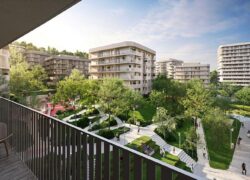
Penta Real Estate has presented a revised design for the Medze project in Dúbravka, Bratislava. The updated architectural concept, originally developed in 2020, emphasizes enhanced public spaces and increased greenery. This week, the company also submitted environmental impact assessment (EIA) documents for the next phase of the project. Construction of the first stage is expected to commence in the first half of 2026.

The updated project reflects adjustments made during consultations with city authorities regarding binding opinions for the first two stages. Penta Real Estate stated that the heights and placement of the buildings have been modified to integrate more green spaces and enhance public areas. The revisions include expanded playgrounds, workout zones, and relaxation areas, while paved areas have been reduced in favor of grass and park features.

The Medze development will be executed in three stages, situated in the northern section of the slope. It will introduce 23 above-ground structures ranging from two to 12 floors, primarily for residential use. Once zoning plan changes in the area are finalized, the project will deliver approximately 820 residential units, including apartments.

In addition to residential spaces, the development will feature amenities such as a kindergarten, commercial premises, and a central square with water features. More than 1,240 parking spaces are planned, with over 90% located underground. The first phase, set to begin in 2026, will include four residential buildings with seven to 11 floors.

The project’s subsequent phase will be located in the southern part of the area, at the border of the Karlova Ves and Dúbravka districts. Preparations for this stage included the acquisition and consolidation of land, paving the way for further development.

Penta Real Estate’s updated vision for the Medze project demonstrates its commitment to creating a vibrant, green, and community-focused residential area in Bratislava.

Source: Penta Real Estate and Trend

OECD criticizes Poland’s lack of progress on combating foreign bribery

The OECD Working Group on Bribery has expressed deep concerns over Poland’s failure to make meaningful progress in implementing the OECD Convention on Combating Bribery of Foreign Public Officials in International Business Transactions. At its December 2024 meeting, the Working Group urged Poland to urgently develop an action plan to address significant deficiencies, following an evaluation that found most of the recommendations made in 2022 remain unimplemented.

One of the primary issues raised is Poland’s lack of progress in ensuring prosecutorial and judicial independence, a requirement under Article 5 of the Convention. While a law was passed in July 2024 to ensure the majority of the National Council of Judiciary members are elected independently of executive and legislative influence, it has yet to take effect. The delay stems from a review by the Constitutional Court, initiated by the President of the Republic. Meanwhile, the Minister of Justice continues to serve as Prosecutor General, retaining considerable control over the Prosecutor’s Office and the judiciary. No measures have been introduced to curb executive influence in appointing, disciplining, or removing prosecutors. Additionally, the Minister of Justice retains the authority to disclose information on ongoing investigations for broadly defined reasons, further undermining judicial independence.

The Working Group also criticized Poland’s ineffective approach to corporate liability for foreign bribery, which requires the conviction of a natural person before corporate entities can be held accountable. This legal hurdle severely limits the application of corporate liability. Furthermore, the lack of a national strategy to combat foreign bribery and the Ministry of Foreign Affairs’ apparent disinterest in detecting or raising awareness of the issue were noted as significant shortcomings. Protections for whistleblowers under a recently enacted law were deemed inadequate, leaving those who report bribery vulnerable to retaliation without effective remedies.

Despite these criticisms, the Working Group acknowledged some positive steps. The Polish financial intelligence unit has fully implemented recommendations related to money laundering predicated on foreign bribery. Additionally, the Deputy Prosecutor General has issued guidelines to improve the investigation and prosecution of foreign bribery cases.

To address these concerns, the OECD Working Group has requested that Poland prepare an action plan outlining how it will implement priority recommendations. This marks an important escalation in the OECD’s monitoring process under its 4th Round of mutual evaluations. Poland’s action plan will be reviewed at the Working Group’s next plenary meeting in March 2025.

The Group’s call for action reflects growing frustration with Poland’s inability to address critical issues in combating foreign bribery. Failure to act could prompt the OECD to consider additional measures to ensure Poland’s compliance with the Convention.

Source: OECD

CA Immo sells Saski Point office building in central Warsaw

CA Immo has finalized the sale of the Saski Point office building in central Warsaw to an undisclosed buyer. While the transaction price remains confidential, the seller has revealed that it exceeded the property’s last reported book value. The 30-year-old multi-tenant building offers approximately 8,300 sqm of gross leasable area.

“The successful sale of Saski Point marks another milestone in the execution of our strategic capital rotation programme,” said Keegan Viscius, CEO of CA Immo. “Proceeds from this sale will be reinvested in our organic development pipeline, used to manage corporate liquidity, and potentially allocated to external investments if suitable opportunities arise.”

CA Immo acquired Saski Point in 2013 as part of a portfolio deal that included four other Warsaw office properties. The sale aligns with the company’s strategy to optimize its property portfolio by divesting assets that do not align with its core business focus in terms of asset class, location, building quality, age, or value-creation potential.

This transaction underscores CA Immo’s commitment to refining its portfolio to prioritize higher-value, sustainable assets while ensuring efficient capital reallocation.

CBRE and Greenberg Traurig, LLP served as advisors on the transaction.

ÚZSVM to hold eighth auction for Prague’s Broadway Palace in January

The Office for State Representation in Property Matters (ÚZSVM) will attempt once again to sell Prague’s Broadway Palace in an electronic auction this January. This marks the eighth attempt to auction the historic property, with the starting price now reduced by CZK 13 million to CZK 878 million, down from the previous auction in mid-September. The office announced the news in a press release, noting that while previous auctions had interested bidders who paid the required deposit, no bids were ultimately placed.

The decision to hold another auction comes after the current tenant failed to exercise its right of first refusal during previous rounds. The tenant will have another opportunity to match the highest bid in this auction.

The auction will run from January 22 to January 23, 2024. Participants must place a minimum bid equal to the starting price, with subsequent bids increasing by at least CZK 50,000. To qualify, interested bidders must pay a CZK 20 million deposit no later than one day before the auction begins.

Broadway Palace, a functionalist architectural gem from the 1930s, is located between Celetná and Na Příkopě streets, near Republic Square in central Prague. Designed by architects Bohumír Kozák and Antonín Černý, the complex consists of three interconnected buildings.

Originally constructed for Italian insurance companies, part of the property also housed apartments. In 1938, it gained a state-of-the-art cinema, now operated as the Broadway Theatre. The building later served administrative functions after modifications in the 1980s. Despite its prime location and architectural significance, the property has struggled to find a buyer.

ÚZSVM has been trying to sell the Broadway Palace since September 2021, offering it first to state institutions, none of which expressed interest. If sold at the current auction, the property could achieve the office’s highest sale to date, surpassing the CZK 790 million earned from a previous sale of premises at Republic Square.

Alongside the Broadway Palace, the ÚZSVM will also auction Štiřín Castle in Central Bohemia. Despite its historic value, the castle has similarly faced difficulties in finding a buyer. The asking price has been reduced from an initial CZK 3.3 billion to the current CZK 1.445 billion after three failed auction rounds.

Both auctions reflect the challenges of selling high-value, historically significant properties in today’s market, even as the government seeks to divest such assets.

LATEST NEWS