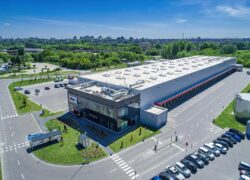
City Point Targówek sets new EU standard with triple-certified warehouse for DPD Polska

The City Point Targówek logistics complex in Warsaw has achieved a groundbreaking milestone, with its first warehouse securing BREEAM Excellent, LEED Gold, and WELL Health-Safety Rating certifications. This achievement makes it the only warehouse project in the European Union to hold all three prestigious certifications, setting a new benchmark in sustainable and health-conscious city logistics.

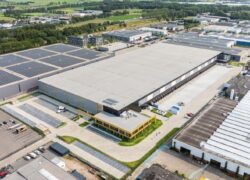
Designed specifically for DPD Polska, the warehouse spans over 7,000 square meters and integrates advanced sustainability measures, state-of-the-art environmental technologies, and a strong focus on tenant well-being. Developed under a built-to-suit (BTS) model, the facility demonstrates a commitment to high construction standards, resource efficiency, and environmental stewardship.

The project was meticulously managed by PM Services Poland, which provided certification consultancy from the conceptual phase through to completion. The general contractor, Kajima Poland, delivered the first phase of construction, while Colliers Asset Services now oversees property management.

According to Katarzyna Krześniak, ESG Project Manager at Peakside Capital Advisors, sustainability was embedded into every aspect of the project. “City Point Targówek is our flagship development, and each stage has been carefully planned to meet the rigorous standards required for triple certification. The industrial real estate sector, being a major contributor to carbon emissions and resource consumption, must adopt sustainable practices, and we are proud to lead the way,” she said.

Throughout the development, sustainability remained a guiding principle. An impressive 97% of waste generated during demolition and construction was recycled or repurposed. The warehouse also achieved a 65% reduction in potable water usage for sanitary purposes in compliance with BREEAM standards, while energy-efficient technologies helped achieve over 35% savings in operational energy costs as per LEED benchmarks.

Additional features enhancing the facility’s sustainability profile include an energy-efficient building envelope, water-saving sanitary fixtures, a 50kWp photovoltaic system, and 20 dual charging stations for electric delivery vehicles.

City Point Targówek continues to grow, with Building C2 currently under construction, set to provide over 25,000 square meters of additional space, with units ranging between 1,600 and 4,300 square meters.

The logistics hub is part of a larger portfolio acquired through a joint venture between global private markets investment firm Partners Group and Peakside Capital Advisors. The venture, which includes other strategic locations such as City Point Okęcie and Logistics Point Raszyn, aims to expand its city logistics footprint through strategic acquisitions and redevelopment opportunities.

With its pioneering triple certification and commitment to sustainability, City Point Targówek is poised to become a model for future urban logistics developments across Europe.

Germany faces growing labor shortage amid demographic shifts, migration key to economic stability

Germany is facing an escalating labor and skills shortage driven by demographic shifts and the impending retirement of the baby boomer generation. As the domestic labor force potential declines, migration is expected to play a crucial role in sustaining the country’s production capacity and economic growth.

According to recent economic analyses, Germany’s potential economic growth rate, currently at 0.4%, could plummet to zero without significant migration. To counteract this trend and restore the long-term average growth rate of 1.1% by 2029, an estimated 1.5 million additional workers would need to immigrate. This would require a total population increase of approximately two million people.

The challenge of labor shortages is exacerbated by the fact that employment growth in recent years has been driven solely by foreign nationals. Data from 2024 indicates that while the number of foreign workers in socially insured employment grew by 5.2%, the number of German employees decreased by 0.5%.

In response to this pressing issue, Germany has implemented policy measures such as the reformed Skilled Immigration Act, designed to attract qualified workers from non-EU countries. However, experts emphasize that further steps are needed to enhance the effectiveness of these initiatives. Bureaucratic hurdles, such as delays in visa processing and recognition of foreign qualifications, continue to deter potential migrants. Surveys show that many skilled professionals interested in relocating to Germany remain unaware of the recent legislative changes aimed at easing their entry into the labor market.

In addition to simplifying the recruitment process, integration measures are essential to retain foreign talent. Many migrant workers face challenges such as discrimination in housing and employment, as well as limited job opportunities for their partners. These factors contribute to high attrition rates among foreign workers, with an annual average of 838,000 leaving Germany between 2015 and 2023.

The labor market imbalance is further highlighted by the high proportion of migrants employed in low-skilled jobs, with 37% of foreign workers engaged in unskilled labor compared to 17% of the general population. Addressing this issue will require targeted training programs to align immigrant skills with labor market demands and promote career advancement opportunities.

Germany’s economic future hinges on the successful integration of foreign workers alongside domestic initiatives to increase workforce participation among underrepresented groups, such as women and older employees. Policymakers are urged to enhance childcare services, reform tax structures, and introduce incentives for extended workforce participation to maximize the domestic labor pool.

As the country navigates these demographic and economic challenges, a comprehensive approach combining streamlined immigration policies, effective integration strategies, and domestic labor force development will be critical in ensuring sustainable economic growth and social cohesion.

Authors: Angelina Hackmann, Konstantin A. Kholodilin and Teresa Schildmann – DIW Berlin

Losan Depot leases 3,500 sqm space at CTPark Bucharest North to enhance operational efficiency

CTP has announced the relocation of Losan Depot, a leading distributor of materials for the furniture and interior design industry, to CTPark Bucharest North. Losan Depot has secured a 3,500 sqm space in the park, aiming to optimize operations in a modern, sustainable facility tailored to its needs.

Losan Depot, originally established in 2005 as Losan Melapal, began as a producer of melamine-coated chipboard and countertops, well-known among furniture manufacturers. In 2013, the company rebranded to Losan Depot, transitioning into a distribution business serving the furniture and interior design sector. With seven warehouses strategically located across Romania, including Bucharest, Brașov, Craiova, Cluj, Focșani, Roman, and Timișoara, Losan Depot is committed to ensuring swift delivery, with the capability to supply products from stock within 24 hours. Its extensive product portfolio includes a variety of materials such as melamine-faced chipboard, countertops, decorative panels, MDF, HDF, HPL, compact laminates, OSB, DHF, paneling, parquet, plywood, and interior doors, among others.

The decision to relocate to CTPark Bucharest North stems from Losan Depot’s focus on optimizing space and operational processes. The company is transitioning from a 6,000 sqm facility to a more efficient 3,500 sqm unit, which will enhance productivity and align with rigorous fire safety regulations essential for their complex production and storage operations. The modern facility not only reduces operational costs but also ensures the retention of the company’s skilled workforce.

A key factor in choosing CTPark Bucharest North was its technical adaptability, including custom-sized access doors necessary for handling large kitchen countertops. The new space is designed to support both production and storage, with CTP demonstrating its ability to meet Losan Depot’s specific technical requirements swiftly and effectively. The agreement, signed for a seven-year term, underscores the company’s confidence in CTP’s ability to provide a long-term operational solution.

“CTPark Bucharest North is the perfect fit for companies seeking customized, efficient, and scalable solutions. We are pleased to support Losan Depot in optimizing their operations and contributing to their continued growth,” said Viorela Olteanu, Business Developer at CTP Romania.

The relocation process was facilitated by Simon, Iuga & Partners, with Andrei Koszti leading the advisory team.

CTPark Bucharest North offers flexible spaces ranging from 1,500 sqm to 20,000 sqm, catering to businesses in need of immediate occupancy. Strategically positioned with direct access to the Bucharest ring road, the park provides state-of-the-art infrastructure and a thriving business environment designed for long-term growth.

Spanning 21 hectares, CTPark Bucharest North is specifically designed to meet the evolving demands of companies in the e-commerce sector, providing seamless connectivity to the city and major transport routes. Its Class A warehouses, constructed to the highest CTP standards, ensure optimal operational efficiency and cost-effectiveness for tenants.

ManpowerGroup: 28% of Polish employers plan wage increases to attract talent amid staff shortages

A new report by ManpowerGroup reveals that 28% of Polish employers plan to raise salaries in response to ongoing staff shortages, a significant decrease from the 39% reported last year. As companies navigate a competitive labor market, many are shifting their focus towards alternative strategies, including employee reskilling and attracting untapped talent pools.

According to the 2025 Talent Shortage report, while salary hikes remain a key tool for retaining and attracting talent, their appeal has declined compared to the previous year. Instead, 26% of employers are prioritizing initiatives to enhance employee qualifications or transition them into new roles. Additionally, 21% of organizations are broadening their recruitment efforts to consider candidates previously overlooked.

Katarzyna Pączkowska, Director of Permanent Employment at Manpower, highlighted that Polish employers have been actively discussing workforce activation strategies for years, driven by persistent talent shortages. “Many companies are implementing programs to support women returning to the workforce after parental leave by offering additional training and flexible work arrangements. Another focus is on young professionals entering the job market through tailored internships and development programs,” Pączkowska explained.

To bridge workforce gaps, Polish businesses are increasingly looking beyond national borders. The recruitment of foreign workers—both from within the European Union and outside it—has become an essential strategy. Companies are also investing in upskilling and reskilling initiatives to equip employees with new competencies, particularly in response to automation and emerging sectors such as green technologies.

Flexibility in work arrangements is another strategy being adopted, with 19% of companies offering options related to work location and hours. However, this figure reflects a notable shift in employer preferences, as flexibility was a priority for 45% of companies in the previous year’s report. The trend suggests that while hybrid work models remain, there is a growing inclination among employers to encourage in-office work to foster collaboration and team integration.

“As in previous post-pandemic years, employee expectations continue to prioritize flexibility in working hours and location,” Pączkowska noted. “However, employers are increasingly reintroducing office-based work to enhance productivity and strengthen team cohesion. This evolving dynamic may contribute to higher staff turnover, as employees seek workplaces that align with their professional development and work-life balance preferences.”

On a global scale, the ManpowerGroup report indicates that 28% of employers worldwide are addressing talent shortages by developing employee skills or shifting career paths, while 23% plan wage increases. Meanwhile, 22% of organizations are focusing on enhancing workplace flexibility to retain and attract talent.

As companies continue to face the challenge of balancing business needs with employee expectations, 2025 is expected to be a pivotal year in aligning workforce strategies to the evolving job market landscape.

Source: ManpowerGroup and ISBnews

Orlen expands gastronomic offer across 1,900 stations in Poland by end of 2024

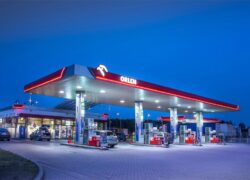
Orlen ended 2024 with a total of 1,900 fuel stations in Poland offering gastronomic services, out of a total of 1,941 stations nationwide, according to Jan Tar, Executive Director of Operations and Retail Sales at Orlen. Of these, over 1,340 locations featured the modern Stop.Cafe 2.0 format.

“The past year posed significant challenges for our company. We conducted a thorough review of planned and ongoing projects while advancing our growth strategy. This resulted in a substantial expansion of our gastronomic offer across 1,900 stations, with more than 1,340 adopting the modern Stop.Cafe format,” said Tar. He also confirmed plans for further expansion in 2025, with additional stations to be opened in Poland and internationally.

Customer feedback has been overwhelmingly positive, as highlighted in the National Auto Test survey. According to the results, 66% of customers expressed a preference for Orlen compared to an average of 32% for competing brands. Additionally, 68% of respondents felt that Orlen’s offerings met their expectations, exceeding the market average of 36%. The company’s innovation was acknowledged by 62% of customers (versus the market’s 35%), and 55% rated Orlen’s price-to-quality ratio favorably, compared to a market average of 37%.

“These results surpass those of our competitors and validate our efforts to enhance the gastronomic offer. We have introduced numerous new items, both permanent and seasonal, which have been well received by our customers. We are particularly proud of the success of our restaurant-style offerings at ILO stations, where the summer family meal sets proved to be a major hit,” added Tar.

The total number of Orlen stations in Poland increased from 1,929 to 1,941 in 2024. Orlen continues to dominate the market, maintaining more than three times the number of stations compared to the second-largest network, BP, which operates 577 stations.

“Our stations serve as testing grounds for new concepts and technologies. The industry has evolved, and we must now approach business dynamically, experimenting with new ideas and swiftly adapting based on results. This requires substantial organizational effort but delivers tangible benefits,” said Tar.

Regarding Orlen’s Bliska brand, Tar revealed that the number of stations operating under this banner had decreased to 13 by the end of 2024, down from 20 in 2023. These stations are gradually being rebranded under the Orlen name, although Tar did not specify a timeline for the complete phase-out of the Bliska brand.

“We often retain a single station under legacy brands, such as Petrochemia in Płock or CPN in Warsaw, to preserve trademarks and honor key milestones in our company’s history,” he added.

Source: Orlen and ISBnews

Bratislava’s new apartment market sees surge in sales amid stable prices and VAT changes

In 2024, the Bratislava market for new residential buildings experienced a major shift. Apartment sales more than doubled compared to 2023, despite average prices remaining stable. Reduced supply and increasing demand for affordable housing were key market drivers throughout the year. Toward the end of 2024, the anticipation of a VAT increase significantly influenced buyer behavior, prompting a surge in transactions.

The real estate market saw steady prices alongside a surge in sales activity. After a slowdown in the fall of 2022, the market for new apartments recovered more favorably than older properties. According to Vladimír Kubrický, an analyst at the Real Estate Union of the Slovak Republic, a fundamental improvement occurred last year. The average price of new apartments in Bratislava remained at €5,013 per square meter, including VAT. Despite price stability, apartment sales rose dramatically. Analysts at Bencont Investments reported that 1,664 apartments were sold in 2024, more than double the 773 units sold in 2023.

The strong performance in the fourth quarter of 2024 was largely driven by the impending increase in VAT, which encouraged buyers to finalize transactions and secure lower prices. Many buyers, particularly those investing in higher-end properties, were motivated by the potential for savings amounting to thousands of euros. “The sales surge in the last quarter of 2024 was influenced by exceptional external factors, which could lead to a temporary correction in early 2025 before the market resumes its growth trajectory,” said Rudolf Bruchánik, chief analyst at Bencont Investments.

The legislative changes that increased VAT rates to 23 percent from 2025 played a crucial role in boosting sales. Buyers rushed to take advantage of the lower tax rate, resulting in a flurry of transactions, with many deals being finalized through advance payments. Developers benefited significantly from this trend, particularly in the latter half of the year. Earlier in 2024, developers had offered incentives such as free parking spaces and kitchen installations to attract buyers. However, by the final quarter, demand was strong enough that such incentives were no longer necessary.

The supply of new apartments fell throughout the year, with only 3,353 units available by the end of 2024, spread across 96 projects. The rapid increase in sales led to a shift in the supply structure, reducing the share of completed apartments on the market. Finished apartments, which made up 43 percent of available stock in mid-2024, dropped to 37.5 percent by year’s end.

Looking ahead to 2025, analysts expect the new VAT rate to push prices higher. However, they also anticipate that increased sales will be met with a stable influx of new projects, keeping prices relatively steady. Smaller, more affordable apartments continued to dominate the market, with the average apartment size increasing to 65 square meters. The demand for compact and budget-friendly housing contributed to a slight decrease in average prices.

Two-room apartments remained the most sought-after, accounting for 44 percent of all units sold in 2024. The highest demand was recorded in Bratislava’s districts II and IV, which together accounted for 58 percent of total sales. These areas offered more budget-friendly housing options, attracting a broader range of buyers. The post-pandemic reduction in interest rates further fueled demand, making homeownership more accessible compared to rising rental costs.

Despite the robust sales figures, market experts caution that challenges lie ahead in 2025. Inflation, legislative changes, and fluctuations in demand and supply could all impact market dynamics. While developers are expected to introduce new projects to meet demand, the overall market trajectory will depend on macroeconomic conditions and buyer sentiment.

Interest rate policies by the European Central Bank (ECB) will play a crucial role in shaping market conditions. If economic growth slows down, further rate cuts could provide relief to prospective homebuyers. However, experts such as Matej Dobiš, executive director at Zlatý Kompas, warn that the market may face short-term disruptions due to ongoing administrative challenges, such as inefficiencies in the land registry system.

Overall, the Bratislava residential market in 2024 showed promising signs of recovery and stability. Buyers increasingly preferred home purchases over long-term rentals, viewing ownership as a better financial decision. This trend is expected to continue into 2025, supported by favorable mortgage rates and ongoing price appreciation.

Source: Trend.sk, CBRE and HERRYS

Clarion Partners Europe acquires two Dutch logistics assets for €80 million

Clarion Partners Europe, a real estate investment fund manager specializing in European logistics and industrial assets, has completed the acquisition of two logistics properties in the Netherlands for approximately €80 million. This strategic investment is part of Clarion’s broader initiative to expand its footprint in key European logistics hubs.

The first property, located in Helmond, encompasses 39,363 square meters and was acquired for €49.7 million from Dutch developer Next Level. Constructed in 2022, this institutional-quality warehouse boasts a BREEAM Very Good certification and is fully leased to a global wholesaler. Helmond, situated 15 kilometers east of Eindhoven, is a rapidly growing logistics and industrial hub with excellent connectivity to major arterial routes, including the N270 and A67, facilitating access to Belgium and Germany.

The second asset, a 32,000 square meter Grade-A warehouse in Waspik, Waalwijk municipality, was secured through a forward purchase agreement with Next Level. Currently under construction, this facility is expected to be completed by the second quarter of 2025 and aims for a BREEAM Excellent certification. Waalwijk is recognized as one of the Netherlands’ most established logistics hubs, characterized by historically low vacancy rates and proximity to major logistics corridors, providing direct routes to Europe’s largest ports in Antwerp and Rotterdam.

These acquisitions align with Clarion Partners Europe’s strategy to invest in high-quality logistics assets situated near major urban centers and transportation networks. Rory Buck, Managing Director at Clarion Partners Europe, commented, “The fundamentals underpinning the logistics rental growth story in the Netherlands remain compelling, with very low vacancy rates and a limited development pipeline. Our ability to provide deal execution certainty during uncertain times is enabling us to maintain our deployment momentum across our high conviction markets.”

With these investments, Clarion Partners Europe continues to strengthen its presence in the Dutch logistics market, reflecting confidence in the sector’s long-term growth prospects.

Union Investment boosts 2024 sales, strengthens liquidity for future growth

Union Investment has successfully navigated the challenging real estate market in 2024, achieving a sales volume of approximately €2.75 billion across 28 transactions. The company strategically focused on selling assets in the hotel and shopping center segments, leveraging the high quality of its real estate portfolio to bolster liquidity reserves and create flexibility for future investment opportunities. Despite market uncertainties, the sales have provided financial stability and contributed to the resilience of Union Investment’s open-ended mutual property funds.

In a year marked by cautious investor sentiment, the company maintained its commitment to long-term value creation. The properties sold delivered impressive annual value contributions over an average holding period of 11.2 years, generating returns that exceeded their book values by approximately €330 million. The overall performance of Union Investment’s funds ranged from 3.18% to -0.18%, reflecting the strategic divestment approach and proactive asset management efforts.

CEO Michael Bütter emphasized the importance of diversification across asset classes in maintaining stability amid fluctuating market conditions. He noted that the company’s focus on flagship funds with broad asset mixes, coupled with a defensive expansion strategy, has positioned Union Investment to capitalize on market shifts and continue generating value for investors.

The company’s divestment strategy in 2024 centered on hotels and shopping centers, with operator-run properties accounting for €1.4 billion of total sales revenue. Notable transactions included the sale of three hotel properties in Germany, Austria, and the U.S., totaling approximately €204 million, and four retail properties valued at €1.16 billion. The highlight transactions in the retail sector were the sales of the Fünf Höfe in Munich and the Magnolia shopping center in Wrocław.

Union Investment also made significant progress in the office sector, selling 12 properties across Europe and the Asia-Pacific region for a combined total of €633 million. While office properties have faced challenges in the current market, the company’s portfolio, particularly in prime locations, continues to attract buyers due to its high quality and long-term potential. Looking ahead, Union Investment plans to consider selective acquisitions in this segment once market conditions stabilize.

Looking forward to 2025, the company intends to focus on consolidating its portfolio rather than pursuing aggressive acquisitions. Union Investment anticipates that stronger purchasing opportunities may not materialize until 2026, pending a normalization of market conditions and further interest rate cuts. In the meantime, efforts will be concentrated on maximizing the value of existing assets and maintaining high occupancy levels across the portfolio.

Union Investment’s funds remain well-positioned, with a gross liquidity ratio of between 15% and 18% for its three open-ended real estate funds marketed in Germany—UniImmo: Deutschland, UniImmo: Europa, and UniImmo: Global—well above the statutory minimum of 5%. Despite divestments, rental income across the portfolio increased by 2.2% year-on-year, driven by strong leasing activity. In 2024, the company successfully leased or re-let approximately 1.1 million square meters of commercial space, with office properties accounting for nearly half of this total.

As part of its long-term sustainability strategy, Union Investment continues to enhance the environmental and operational efficiency of its holdings. The completion of 15 new projects in 2024, with a total volume of €2.0 billion, further strengthens the company’s earnings potential. Among the newly added assets are the Ara Almelo logistics property in the Netherlands, the 25hours Hotel Paper Island in Copenhagen, and the Aura office building in Helsinki.

Despite ongoing market challenges, Union Investment remains confident in the future of real estate investment, with institutional clients showing renewed interest in asset classes that have reached a turning point, such as hotels and residential properties. The company is also managing a major mandate from the Versorgungsanstalt des Bundes und der Länder (VBL), the largest supplementary pension institution for public sector employees, further solidifying its position as a trusted investment partner.

With a focus on financial stability, asset quality, and strategic growth, Union Investment is poised to navigate the evolving real estate landscape while delivering long-term value to its investors.

Tritax Big Box acquires Heathrow site for GBP 70 million to develop major UK data centre

Tritax Big Box REIT has acquired a 74-acre site in Heathrow, London, within the Slough Availability Zone, aiming to develop one of the largest data centres in the UK. The acquisition, valued at £70 million, includes a 50% stake in a joint venture with a leading European renewable energy provider. This strategic move ensures accelerated power delivery through pre-existing grid connections, expediting the timeline for a 147 MW data centre project.

The first phase of the project will see the development of a 107 MW facility spanning 448,000 square feet across three floors. Construction is expected to commence in the first half of 2026, with completion and income recognition projected for the second half of 2027. Tritax estimates a yield-on-cost of 9.3%, significantly exceeding the typical 6-8% return in logistics investments.

The JV partnership provides grid connections to two independent substations, enhancing power resilience while incorporating utility-scale battery storage. Tritax expects to fund the project through existing financial resources and its capital recycling program. Additionally, the company has outlined a future pipeline of data centre opportunities across the UK, leveraging access to approximately 1 GW of power.

Aubrey Adams, Chairman of Tritax Big Box, emphasized that the acquisition represents a major step into the data centre sector, capitalizing on the growing demand for cloud and AI-driven infrastructure. The project benefits from its prime London location and the strategic partnership with a renewable energy provider, positioning Tritax as a key player in the UK data centre market.

EIB grants EUR 225 million loan to Malmö for energy-efficient housing project

The European Investment Bank (EIB) has approved a SEK 2.6 billion (approximately €225 million) loan to the Swedish city of Malmö to support the construction of more than 1,500 energy-efficient apartments. The initiative aims to advance European Union climate objectives while assisting Sweden in achieving its energy-efficiency targets.

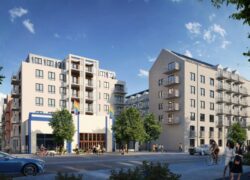
The municipal housing company MKB Fastighets AB will oversee the development of 13 residential buildings, which will provide a total of 1,547 apartments across the city. The construction is planned to take place in phases, with full completion expected by 2029. The newly built homes will meet energy efficiency standards that surpass Sweden’s national benchmarks.

EIB Vice-President Thomas Östros emphasized the bank’s dedication to sustainable urban development, stating, “This investment underscores our strong commitment to supporting sustainable and inclusive urban development across Europe. By providing long-term financing for initiatives like this, we help cities like Malmö, known as the City of Parks, lead the way in tackling climate change while improving the quality of life for their residents.”

Malmö, Sweden’s third-largest city with a population of around 360,000, is experiencing growth that exceeds the national average. The city serves as a crucial economic hub in the region, benefiting from its strategic location and its connection to Denmark via the Öresund Bridge, which facilitates collaboration with Copenhagen through a shared shipping port.

MKB Fastighets AB CEO Marie Thelander Dellhag highlighted the environmental significance of the project. “Reducing the climate impact of our new housing projects is crucial,” she said. “The financing from EIB confirms that our projects meet the high standards needed to achieve our climate goals. Efficient energy usage and ambitious climate targets are key to making MKB and Malmö more sustainable.”

The EIB’s latest financial support represents the seventh loan provided to Malmö, continuing a collaboration that began in 1995. The project aligns with EU regulations on energy performance and efficiency in buildings, reinforcing the city’s commitment to environmentally friendly development.

Claes Ramel, Head of Treasury for the City of Malmö, described the funding as a vital component in supporting the city’s expansion. “The financing facility from the EIB is an important tool in meeting the funding needs of our growing city,” he said. “It adds to Malmö’s financial platform and confirms the high environmental standards of our investments. This substantial funding allows us to pursue our development plans with confidence.”

With the EIB’s backing, Malmö is set to make significant strides in sustainable housing, enhancing its reputation as a leader in green urban living.

LATEST NEWS