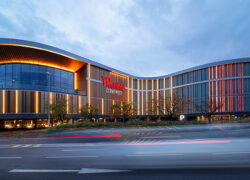
Peakside Capital Advisors Appoints Łukasz Meisner as Head of Project Management

Peakside Capital Advisors has expanded its Polish team with the appointment of Łukasz Meisner as Head of Project Management. He will oversee the company’s investment projects in Poland, including developments within the City Point, Urban Parks and Peakside Industrial logistics platforms.

In his new position, Meisner will lead the project team responsible for all stages of the investment cycle — from planning and concept preparation to construction and final handover to tenants. His responsibilities will include coordinating project execution, supervising general contractors, managing budgets and timelines, and implementing measures supporting ESG strategies and operational efficiency.

Meisner has extensive experience in project management and regulatory processes in the real estate sector. He has previously worked on warehouse, logistics and industrial developments, coordinating construction, budget oversight and technical optimisation.

“We are delighted that Łukasz is joining our team. His experience in investment project implementation and excellent knowledge of the real estate market in Poland are an important reinforcement of our operational capabilities,” said Roman Skowroński, Managing Director at Peakside Capital Advisors. “As Peakside’s investment portfolio grows, maintaining the highest standards of quality and efficiency is crucial. We believe that his expertise will support our strategic objectives and deliver value to investors and partners.”

Before joining Peakside, Meisner worked at 7R, where he coordinated investment preparation and supervised contracts with general contractors, as well as cooperation with local authorities and compliance with project and lease documentation. Earlier roles include positions at Panattoni Development Europe, Trebbi Polska, Waimea Holding, Strabag and Polimex Energetyka.

He graduated from the Faculty of Civil Engineering, Technology and Construction Organisation at the Krakow University of Technology.

SFI Europe Becomes New Tenant at P3 Ostrava Central

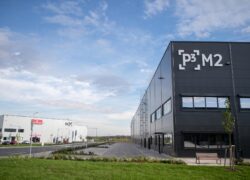
SFI Europe s.r.o., the European branch of Korean manufacturer SeAH FSI Co., Ltd., has established its first European base at the P3 Ostrava Central industrial and commercial park. The company, which produces automotive fluid systems, began operating from the site in November.

SFI Europe has leased 2,673 sqm in Hall M2. Around two-thirds of the space will be used for light production, with the remaining area serving as storage. The company is also taking 465 sqm of offices for administrative functions.

“We are delighted that SFI Europe has chosen P3 Logistic Parks, and in particular our Ostrava park, for its strategic move,” said Marek Jaskula, leasing manager at P3. “We believe that the combination of an excellent location, multifunctional halls, administrative space and the availability of a skilled workforce will enable the company to enter the European market quickly and efficiently.”

According to Sam Kim, Managing Director of SFI Europe s.r.o., the choice of location was driven by proximity to customers. “We chose the Czech Republic for our entry into the European market because of its strategic location in the center of Europe. P3 Ostrava Central offers us excellent access to labor, a tradition of industrial production and, above all, space that precisely meets our requirements and those of our clients,” he said.

The Ostrava facility will manufacture brake and fuel lines made from thin-walled steel tubes. Trial output is planned for the second half of next year, with full production expected in 2027. A testing laboratory inside the hall will support quality control. Initial staffing will be around 35 people, rising to an estimated 60 once regular production begins.

Environmental criteria played a significant role in the selection of the premises due to the requirements of SFI Europe’s automotive clients. “The building that the company will use in P3 Ostrava Central has BREEAM Excellent environmental certification and solar panels on the roof. The company will also purchase electricity from renewable sources,” Jaskula noted.

P3 Ostrava Central was developed on a former brownfield site and all buildings in the complex hold BREEAM Excellent certification. The park includes landscaped public areas with benches, bike stands and an outdoor gym, and hosts a range of occupiers including Linde Material Handling, Tefcold, Canpol babies, PNS, Zítek logistics, bezvapostele.cz and Brainmarket. SFI Europe will combine production, warehousing and office functions within its leased space.

Union Investment sells Palladium shopping centre in Prague

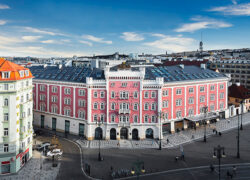
Union Investment has profitably sold Palladium in Prague, which it had acquired for UniImmo: Deutschland in 2015, to a fund belonging to the Czech REICO Erste Asset Management. The sale marks the largest property transaction ever carried out on the Czech market and is also the biggest single-asset retail transaction in CEE so far in 2025. The sales price is above the latest valuation of the property and significantly above the purchase price at the time.

“Palladium is a success story for the UniImmo: Deutschland fund, from its acquisition to its successful exit after a holding period of around 10 years. The timing of the sale at the beginning of the new market cycle is perfect. The property has generated positive long-term cash flow and a high-level of income stability for the fund over one decade and achieved high value gains.,” says Laura Roll, Senior Investment Manager Retail at Union Investment.

“We have now successfully capitalised on the renewed interest in dominant and high-quality retail assets in Europe to achieve a record high sales price, which we will use to further develop the fund’s portfolio through targeted reinvestments in European gateway cities,” says Henri Eisenkopf, Director Transaction Shopping Places at Union Investment. In line with the fund’s strategy, investments in retail, hotels, logistics and office properties are being examined in particular.

Palladium, has a total usable floor space of around 60,000 sqm, of which around 17,500 sqm is office space. The property offers above 800 car parking spaces in an inner-city parking garage. The 180 shops are predominantly occupied by strong local and international brands, including numerous flagship stores. Thanks to its easy accessibility in a central location on Náměstí Republiky square with direct links to the main shopping are between Prague’s Old Town and New Town, the iconic shopping centre attracts over 14.8 million visitors per year.

Union Investment was advised on the transaction by CBRE, Clifford Chance and TPA. The buyer was advised by Willsons, ASB, Savills and Cushman and Wakefield.

Study: Reform of EU CO₂ border rules needed to support climate-neutral and competitive industry

A new analysis by the German Institute for Economic Research (DIW Berlin) finds that the current combination of the EU Emissions Trading System (EU ETS) and the planned CO₂ border adjustment mechanism (CBAM) is not sufficient to guide Europe’s basic materials industry toward climate-neutral production while maintaining international competitiveness.

According to the study, Europe’s emission-intensive sectors face a structural challenge: conventional technologies are incompatible with long-term climate targets, while low-carbon alternatives are still more expensive and lack strong market incentives. Study author Fernanda Ballesteros argues that today’s CO₂ price signals do not fully balance differences in climate policies between regions, and therefore do not create the conditions needed for large-scale investment in cleaner production.

Gaps in the current border adjustment system

The researchers conclude that CBAM, which is set to replace the long-standing system of free emission allowances for energy-intensive industries, leaves several issues unaddressed. Important manufacturing sectors are not included in its scope, export-oriented producers receive no relief for CO₂ costs, and the system opens room for “resource shuffling,” where lower-emission goods are directed to the EU while more carbon-intensive products are sold elsewhere.

Free allowances have so far helped limit the risk of companies relocating production to regions with looser climate rules, but they have also weakened incentives to adopt cleaner technologies and reduce the use of emission-intensive materials.

Proposal: Clean Industry Contribution

DIW researchers recommend an additional instrument that the European Commission previously considered in 2021. Their proposal, called the Clean Industry Contribution (CIC), would apply a charge to key raw materials such as steel, cement, aluminium and chemicals, regardless of where they are produced. Each material would be assigned a standardised emissions value representing conventional production, making climate-related costs visible in the price of downstream products.

Karsten Neuhoff, head of DIW’s Climate Policy Department, notes that such a scheme would maintain protection against carbon leakage while restoring incentives for emissions reduction along the value chain. Because the charge would also apply to imported materials, competitive conditions with non-EU producers would remain aligned.

Exports from the EU would be exempt from the contribution. Unlike product-specific CBAM calculations, the use of standardised values allows for export exemptions that, according to the study, are compatible with World Trade Organization rules and simpler to administer. Standard values would also reduce incentives for strategic redirection of goods to the EU market.

Revenue potential and investment support

DIW estimates that applying the Clean Industry Contribution across Europe could generate about €50 billion in revenue. This funding could be used to co-finance long-term agreements supporting investment in low-carbon industrial processes and to strengthen climate-related initiatives at both national and international levels.

The researchers conclude that a reform combining CIC with the existing emissions trading framework would provide clearer cost signals, reduce distortions in trade, and create more predictable conditions for industries that must transform their production methods over the coming decades.

Source: DIW Berlin

Corwin prepares major residential district in Prague’s Vysočany

Slovak developer Corwin is set to deliver a large multi-phase residential and mixed-use project in Prague’s Vysočany district. The plan envisions more than 1,000 new homes along with commercial and community facilities, with construction expected to run for roughly eight to ten years. Representatives of the company presented the details at a press briefing in Prague.

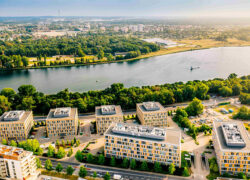
The site lies south of Českomoravská Street, on land formerly used for industrial purposes. The development, named Dvory Vysočany, will proceed in several stages. Work on the first phase is underway and includes over 200 apartments, approximately 6,000 square metres of office space and around 1,400 square metres for shops and services. According to Corwin, the second phase has already secured the necessary building permit, and preparations for the remaining stages continue.

The overall architectural concept was prepared by the international urban design studio led by Jan Gehl and David Sim, working together with the Czech firm OVA Štěpán Valouch. The vision blends new construction with selected industrial elements, and the plan includes local amenities such as a nursery, retail units and a pharmacy. The district will be linked to public transport and cycling routes, including the A5 path.

Jakub Dobrý, Corwin’s head for the Czech market, said the arrangement of streets and buildings aims to create a safe and comfortable neighbourhood, with areas where children can play and residents can meet in public spaces or cafés.

Corwin, headquartered in Bratislava and active in Slovenia through its Ljubljana office, has delivered several residential and commercial schemes in both countries, including the Einpark Offices in Bratislava and the Vilharia complex in Ljubljana. Over the past several years, the company has also redeveloped former industrial areas.

The Dvory Vysočany project is being financed through a combination of bank loans and the developer’s own capital. According to Corwin, the Hartenberg investment group, which has collaborated with the developer on earlier projects in Slovakia and Slovenia, is among the partners involved in the Vysočany scheme. Hartenberg, founded by Jozef Janov after leaving the Penta Group, invests across retail, e-commerce and healthcare and has taken stakes in several Corwin developments in recent years.

The first part of the new Prague district is scheduled for completion in the first quarter of 2029.

Atal launches new residential development in Kraków’s Bronowice district

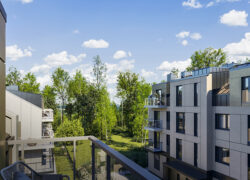
ATAL has added a new project to its Kraków portfolio with the launch of ATAL Bronowice, located on Starego Dębu Street. The development will comprise 188 apartments, with sizes ranging from approximately 40 to 80 sq m and layouts of two to four rooms. Completion is scheduled for the third quarter of 2027.

The project consists of low-rise residential buildings situated in a quiet part of the Bronowice district. According to ATAL, the design aims to integrate with the surrounding green areas and maintain a restrained, residential character.

The development’s layout is intended to accommodate a variety of households, from single occupants to families. Plans include underground garages, above-ground parking spaces, a playground and outdoor recreational areas.

The surrounding neighbourhood offers retail outlets, services, medical facilities and schools. Public transport connections provide access to the city centre, while proximity to the A4 motorway and Kraków Airport may benefit residents who travel frequently.

Recreational areas near the project include walking and cycling paths, and the district features established green spaces.

Apartment prices range from PLN 14,500 to PLN 16,500 per sq m in developer standard. Buyers can opt for turnkey finishing through the ATAL Design programme, which offers four finishing packages: Basic, Optimum, Premium and Invest.

Nepi Rockcastle reports resilient operational performance in Q3 2025

NEPI Rockcastle NV (“NEPI Rockcastle, Europe’s third-largest listed retail real estate company by portfolio value, reported stable operational results across the portfolio, supporting continued growth during the third quarter (Q3) of 2025. For the first nine months (9M) of 2025, net operating income (NOI) increased by 12.3% year-on-year to €461.3 million (9M 2024: €410.6 million). On a like-for-like (LFL) basis, NOI rose by 4.4% year-on-year, supported by indexation, rental uplifts, higher short-term income, and disciplined cost control. Performance also benefited from €9 million in revenue from the renewable energy business (+23% compared to €7.3 million in 9M 2024).

Tenant turnover increased by 3.5% LFL for the period, while footfall declined slightly (-0.6%). Average spend per visitor increased by 9% overall—supported by higher basket sizes at the two large properties acquired in Poland last year—and by 4.6% LFL. The occupancy cost ratio was 12.7% for 9M 2025 (down from 13.1% in the first half (H1) of 2025). The EPRA retail vacancy rate remained low at 1.6% at quarter-end. Collection rates were strong at 99% for the period.

Rüdiger Dany, NEPI Rockcastle’s CEO, said: “The Group’s performance over the first nine months of 2025 underscores the strength of our platform and the quality of our assets across Central and Eastern Europe. We delivered healthy rental growth, maintained very low vacancy, and continued to enhance the customer experience across our properties. The successful €500 million green bond issuance in September, which was heavily oversubscribed, further strengthened the balance sheet and supports our debt maturity strategy. Our late-2024 acquisitions of Magnolia Park and Silesia City Center in Poland have been strong contributors to growth. Our investment in the energy business is already delivering double-digit returns, with significant expansion potential in the coming years.

Looking ahead, our development pipeline, strong retailer demand, and disciplined capital allocation will support continued earnings growth and long-term value creation. We remain confident that the Group will achieve its full-year guidance.”

SOLID FINANCIAL POSITION WITH STRONG LIQUIDITY, 31.4% LTV AND €500 MILLION GREEN BOND EXTENDING MATURITIES

In September 2025, the Group completed a €500 million unsecured eight-year green bond with a 3.875% coupon and an issue price of 99.353%. Demand exceeded €4 billion from more than 200 investors. Net proceeds were used to proactively manage upcoming maturities in October 2026 and July 2027, refinancing €250 million of each tranche. Proceeds were allocated in line with the Group’s Green Finance Framework. The issue attracted broad institutional demand across the UK, France, Benelux and the DACH region.

As at 30 September 2025, the Group held €421 million in cash and €690 million in undrawn committed revolving facilities.

The Group’s loan-to-value ratio (LTV) was 31.4% as of 30 September 2025, remaining below the Company’s 35% strategic threshold (estimated LTV of 33.9% after payment of the H1 2025 distribution).

The investment portfolio was valued at €8.1 billion as at 30 September 2025, in line with June 2025, as properties are independently valued only at half-year and year-end.

EPRA Net Reinstatement Value was €7.74 per share at 30 September 2025, 4.81% higher than €7.38 per share at 31 December 2024.

OPERATING PERFORMANCE

Trading update

LFL tenant sales increased by 3.5% year-on-year in 9M 2025, while footfall decreased by 0.6%. In Q3, tenant sales grew 2.9% year-on-year, while footfall declined by 1.5%, following a strong start to the year that moderated in Q2 and edged lower in Q3. Average basket size increased by 4.6% year-on-year on a LFL basis in 9M 2025, showing resilient spending per visit despite lower footfall.

Relative to inflation, tenant sales growth was broadly in line with the Group-weighted average CPI of approximately 4.3%, while basket growth exceeded CPI. In Romania, the VAT increases introduced in Q3 2025 under new government fiscal measures tempered spending, particularly in discretionary categories.

Category performance varied: Fashion Complements (+10%), Health & Beauty (+9%) and Entertainment (+8%) showed the strongest results. Electronics (-3%) and Sporting Goods (-3%) were affected by tenant-specific factors. Fashion, the largest segment, remained broadly stable (+1% LFL). These results reflect the Group’s continued focus on tenant mix and initiatives aimed at maintaining trade densities and rental sustainability.

Leasing activity

Leasing remained active. Year to date, 1,098 leases covering approximately 243,900 m² were signed (including renewals). Of these, 353 were new leases totalling over 75,000 m², representing roughly 3.25% of the Group’s GLA. International tenants accounted for approximately 65% of GLA for new leases. The blended rent uplift on renewals was around 5.2% above indexation. Demand for retail space remained steady across CEE, with new agreements concentrated in Sport, Fashion and Health & Beauty.

Notable Q3 leases included Primark (Shopping City Sibiu, Romania), Just Gym (Pogoria Shopping Centre, Poland), Sports Direct (Shopping City Târgu Mureș, Romania), Nike (Arena Centar, Croatia), Medicine (Galeria Warmińska, Poland), and BIPA (Mega Mall, Romania).

Recent openings included Half Price (Magnolia Park, Poland), Zara (Arena Centar, Croatia; Arena Mall, Hungary), Rituals (Mammut Shopping Centre, Hungary), Notino (Arena Centar, Croatia), and Adidas (Bonarka City Center, Poland).

DEVELOPMENT UPDATE

Construction and permitting progressed as planned across several major projects.

At the Promenada Bucharest extension, 68.5% of the GLA is signed or agreed; superstructure works are underway, with completion targeted for Q1 2027. At Bonarka City Center in Kraków, works are about 85% complete across nine phases, with completion scheduled for Q1 2027. Refurbishment of Arena Mall Budapest remains on schedule, with completion expected in Q2 2028.

In Poland, the Pogoria Shopping Centre extension is advancing, with 97% of the added GLA pre-let; completion is expected in Q1 2026. In Bulgaria, Promenada Plovdiv has obtained initial permissions and a concept-stage building permit; final permits are expected by Q1 2026, with completion planned for Q3 2027. At Galati Retail Park in Romania, permitting continues, and lease terms have been agreed for 81% of the GLA.

NEPI Rockcastle completed its first greenfield photovoltaic (PV) plant in Chișineu-Criș, Romania (54 MW), now in the testing phase, with commercial operations expected in Q1 2026. Two further Romanian PV projects in Ariceștii Rahtivani (105 MW) are progressing and are expected to begin phased operations in 2026 and 2027. The Group is evaluating potential energy-storage acquisitions to enhance PV returns. The rollout of PV installations across assets outside Romania and Lithuania is also ongoing.

The Group’s development pipeline under construction or permitting totals over €870 million, including retail extensions and green-energy investments, of which €318 million had been spent by the end of Q3 2025.

CASH MANAGEMENT AND DEBT

As of 30 September 2025, the Group had €421 million in cash and €690 million in undrawn committed credit facilities. The gearing ratio was 31.4%, below the strategic threshold of 35% (estimated 33.9% after the H1 2025 distribution).

Covenant headroom remained strong:

  • Solvency Ratio: 0.37 (maximum permitted 0.60)

  • Consolidated Interest Coverage Ratio: 4.9 (minimum required 2.0)

  • Unencumbered assets to unsecured debt: 270% (minimum required 150%)

The average cost of debt for 9M 2025 was 3.1%. The portion of debt exposed to variable rates was 15%, consisting of the IFC loan.

CORPORATE EVENTS

On 6 November 2025, the Board completed its CEO succession process and appointed Marek Noetzel as Chief Executive Officer, effective 1 April 2026. Mr. Noetzel has been COO since 2022, overseeing operations across 60 properties in eight CEE countries. His leadership in leasing, occupancy strategy, asset management and Poland acquisitions were noted as key factors in his appointment.

He will succeed Rüdiger Dany, whose mandate ends on 31 March 2026. The Board acknowledged Mr. Dany’s contributions, including major portfolio acquisitions and strong earnings growth.

OUTLOOK

The Board reaffirms its August 2025 guidance that distributable earnings per share for the full year are expected to be 2.5% to 3% higher than in 2024, maintaining the 90% dividend payout ratio.

This guidance assumes stable trading conditions and does not factor in potential political or macroeconomic shocks. It may be revised if material changes occur. The guidance has not been reviewed by NEPI Rockcastle’s auditors and remains the responsibility of the Board.


Savills IM and Vestas IM secure 46,000 sq m of lease renewals in France and Poland

Savills Investment Management and Vestas Investment Management have agreed two lease extensions totalling 46,000 sq m across logistics assets in France and Poland.

In northern France, VM Building Solutions has renewed its lease for six years at Lambres-lez-Douai Logistics Park. The agreement covers 37,025 sq m in a facility rated BREEAM New Construction ‘Very Good’. The property forms part of the portfolio of the Vestas European Strategic Allocation Logistics Fund I (VESALF I), which is managed by Savills IM.

In southern Poland, Omida Solutions has extended its lease for five years at Beskid Park II, where it occupies 8,695 sq m. The park forms part of the VESALF II fund and comprises five buildings with a combined area of around 90,000 sq m, all certified BREEAM ‘Very Good’. Located in Czechowice-Dziedzice in Upper Silesia, the site benefits from access to national road no. 1 and the A4 highway. Omida Solutions, part of the Omida Group, has been a tenant since 2022.

Laurent Vouin, Head of France at Savills IM, said the renewals reflect the continued appeal of the logistics assets and their locations. Isabella Valgimigli, Portfolio Manager at Vestas IM Europe, added that the agreements highlight the importance of both sites within the firms’ broader European logistics strategies.

VESALF I, launched in 2020, is a pan-European logistics fund backed by Korean institutional investors. VESALF II, established in 2022, follows the same investment focus. Savills IM manages portfolios across France, Belgium, Luxembourg and Poland, including significant logistics holdings in both markets.

Grant Thornton extends its lease at Malta Office Park and increases its office space

Grant Thornton, the Polish member firm of the Grant Thornton International network, has renewed its lease at Malta Office Park in Poznań and decided to expand its occupied area. The new agreement, signed for five years, increases the company’s space in the complex to nearly 4,200 sq m.

Malta Office Park consists of six office buildings located next to Lake Malta, an area with long-established recreational and sports facilities as well as convenient public transport links. The surroundings include service points, retail outlets and cycling routes that connect the district with other parts of the city.

Grant Thornton, which has operated in Poland since 1993 and employs more than 1,200 people across seven locations, previously occupied close to 3,000 sq m in the complex. The expansion adds over 1,200 sq m and allows for a more flexible layout that can accommodate both individual work and collaborative tasks. Colliers advised the tenant during the renegotiation process.

Agnieszka Gola, Leasing Manager at EPP Polska, notes that the renewal and expansion reflect continued tenant interest in the complex, which the company manages. She adds that ongoing efforts focus on improving the quality of the working environment and adapting the property to current workplace expectations.

Completed in 2011, Malta Office Park has undergone a series of upgrades to align with contemporary environmental and operational standards. The complex holds a BREEAM Outstanding certification and is supplied entirely by renewable energy. It includes waste-sorting facilities and an intelligent system that tracks energy consumption throughout the day. A biodiversity plan has also been prepared for the site.

Tenants have access to various amenities, including cafés, a pharmacy, a medical clinic, a gym and parcel services, as well as outdoor areas between the buildings intended for informal use. The Piwnica Club, an on-site social space, is used for after-hours events.

EPP, which manages the complex, also organises activities for tenants, such as workshops and leisure events. According to Joanna Gieniusz-Langer, Senior Property Manager at EPP, the focus is on creating an environment that supports interaction among users in addition to providing office space.

GEMO completes expansion and modernization works at Westfield Černý Most

Construction firm GEMO a.s. has finished a major phase of work on the expansion and modernization of the Westfield Černý Most shopping center in Prague. The project, carried out while the center remained open between 2024 and 2025, adds roughly 9,100 m² of new leasable space, 32 new shops and food units, and three newly built cinema auditoriums. GEMO acted as the general contractor for the project, which involved constructing a new extension and linking it to the existing building.

The works included deep foundations for the new sections, reinforcement of parts of the existing structure, complete construction of the new areas, and various modifications to the current building. The contractor also installed new facade and roof cladding and carried out extensive adjustments to technical systems as required during the construction phases.

A notable part of the project was the effort to reuse structural elements and technologies where feasible. Some equipment, such as escalators, was refurbished and incorporated into the updated design, while elements no longer meeting current safety or fire standards—such as sections of the glass façade—were replaced with systems offering higher fire resistance and improved acoustic performance. The resulting façade and technical upgrades aim to improve comfort for users and reduce the building’s energy demand.

According to GEMO project manager Martin Koudelka, keeping the shopping center fully operational during construction required extensive organizational planning. Work was divided into phases, with night shifts and tightly coordinated deliveries used to limit disruption. Temporary fire-safety and smoke-control solutions were implemented as required. New sections were approved and handed over to the investor in stages, resulting in more than 15 separate approval procedures.

The expansion incorporated measures intended to lower material and operational impacts. These included the use of low-carbon concrete with documented environmental product declarations, consistent waste sorting and recycling, and a focus on long-life materials and reduced operating costs. The project has been designed to meet BREEAM New Construction certification at the Excellent level.

The architectural design was prepared by the London studio Benoy. Construction management was handled by RUBY Project Management, design and supervision by Obermeyer Helika a.s., and the investor is Unibail-Rodamco-Westfield through Centrum Černý Most s.r.o.

LATEST NEWS