Construction of Nový Rohan begins on Prague’s Rohanský island

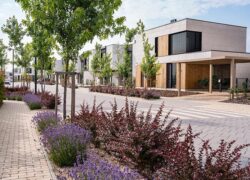
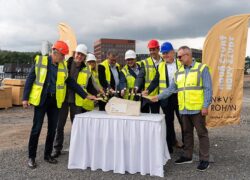
J&T Real Estate has officially commenced construction of its largest development to date, the Nový Rohan project, on Rohanský Island in Prague’s Karlín district. The launch was marked by a foundation stone ceremony on July 29, initiating work on the first three residential buildings—Prokop, Vincent, and Barbora—which are scheduled for completion in early 2028.

The project includes approximately 1,000 apartments and several mixed-use buildings combining offices, retail, and services. The total investment is projected to exceed CZK 15 billion. The urban layout is designed to ensure permeability, with public green courtyards providing access to a riverside cycle path and the planned Maniny metropolitan park.

Preparatory works, including utility relocation, began last year. Construction of the first phase was awarded to a joint venture of Metrostav DIZ and Systémy SIS, with projected costs for this stage surpassing CZK 1 billion.

The architecture of the development is the result of a competitive selection process involving multiple studios. Domestic firms such as LOXIA, UNIT, KAAMA, and under-construction are participating, alongside the Slovenian studio Bevk Perović arhitekti. The UNIT studio designed the Vincent and Prokop buildings, while KAAMA created the Barbora building. LOXIA is overseeing the overall architectural coordination of the project.

According to Jana Mastíková, LOXIA’s lead architect, the concept is based on traditional block construction adapted for modern use. The layout aims to ensure good lighting, views, and pedestrian flow, with a focus on architectural variety across the neighborhood.

The development will also include a new elementary school for 900 students, which is expected to be completed by 2029. J&T Real Estate will contribute CZK 260 million to the school’s construction, which will be carried out by the City District of Prague 8.

The location benefits from direct public transport access, with the Invalidovna metro station and tram lines nearby, and sits adjacent to a key cycling route that connects central Prague to its outskirts.

Deputy Mayor of Prague 8, Radomír Nepil, described the project as a long-term collaboration between the city, local authorities, and private investors. He highlighted the broader regeneration plan, which includes the creation of a new city park and the integration of education and public life into the district’s design.

The names of the residential buildings—Prokop, Vincent, and Barbora—are drawn from local history. They commemorate saints whose names were inscribed on church bells that were confiscated and shipped from Rohanský Island to Hamburg by the Nazis during World War II. In tribute, J&T Real Estate supported the #9801 initiative to cast a new 9,801-kilogram bell, which will be installed in the future Maniny park.

Czechs reluctant to sell property, even in times of financial stress

Czech investors view real estate as a last resort when facing financial hardship, according to a recent survey. When forced to liquidate assets, most say they would sell shares or corporate bonds first—leaving property and real estate funds untouched for as long as possible.

Josef Podlipný, partner and Chief Strategy Officer at Fichtner Wealth Managers, attributes this behavior to a mix of cultural habits and practical concerns. “Real estate and property funds hold a special place in the minds of Czech investors,” he said. “Low liquidity is a key factor—stocks or bonds can be sold in minutes, but selling a property takes weeks or months and comes with high administrative and transaction costs.”

He also noted that real estate lacks flexibility. Unlike financial assets, it cannot be sold in parts. Real estate funds, too, can give a false sense of stability because their valuations don’t reflect daily market fluctuations.

On the other end of the scale, equities and corporate bonds are the first to be sold when cash is needed. Their high liquidity and ease of re-entry into the market make them more disposable during a financial crunch. “Selling stocks or bonds is logical because they are liquid and easier to manage,” said investor Jan Skovajsa, founder of MyTimi. “Real estate is difficult to sell quickly, and doing so often means accepting a lower price.”

Still, experts caution against impulsive sales. Podlipný warns that exiting the market during a downturn could lock in losses and derail long-term strategies. Ideally, investors should maintain sufficient reserves in low-risk, easily accessible instruments like savings accounts or short-term bonds. “In an emergency, it’s best not to sell anything,” said Skovajsa. “Having a year’s worth of living expenses in liquid assets is a more strategic approach.”

If a portfolio must be reduced due to insufficient reserves, Podlipný recommends trimming it proportionally across all asset classes rather than liquidating a single one. He also suggests seeking guidance from a financial advisor to minimize tax impacts and preserve long-term goals.

The Czech preference for real estate is deeply rooted—shaped by the legacy of privatization, the housing boom, and recent inflation. But while property may feel like a safe haven, experts warn that it isn’t immune to downturns or cashflow problems. For investors lacking liquid reserves, the inability to quickly monetize property can become a serious liability.

HSF System expands KFC footprint with new roadside projects on Czech D2 motorway

HSF System, a member of the PURPOSIA Group, is currently overseeing the construction of two KFC restaurants along the D2 motorway near Břeclav in the Czech Republic. Earlier this year, the company completed a similar project in Jenišov near Karlovy Vary.

At the Ladná rest area, located at the 44th kilometer of the D2 in the direction of Brno, construction of a 320-square-meter KFC restaurant is underway. The reinforced concrete framework has been completed, with ongoing work including ceiling concreting, insulation, wall cladding, and preparation of parking facilities. A second KFC restaurant will also be built across the motorway in the direction of Bratislava, with work scheduled to begin in the coming months.

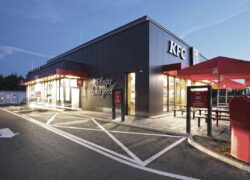
The completed restaurant in Jenišov features a single-story design with a combination roof and drive-thru lane. The building incorporates glass facades, cladding, and branded lighting elements. The scope of the project also included transport links, paved access areas, public lighting, and promotional installations such as a KFC pylon.

HSF System has previously delivered various civic and commercial buildings, including a healthcare center, sports facilities, a wellness hotel, and an elementary school pavilion. The company states that its focus as a general contractor remains on meeting investor requirements through timely delivery and consistent construction standards.

GCC inflation remains under control despite global and regional shocks in Q2 2025

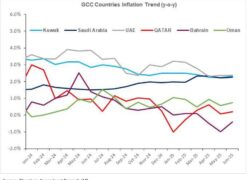
Despite geopolitical tensions and international trade disruptions, inflation across the Gulf Cooperation Council (GCC) countries remained relatively stable in the second quarter of 2025, according to the latest GCC Inflation Report published by Kamco Invest.

The report notes that average inflation in the GCC dropped to 1.7% in 2024, down from 2.2% in 2023, highlighting the region’s resilience amid rising global costs and a volatile oil market. Brent crude oil prices rose to nearly USD 79 per barrel during the recent Middle East conflict but later fell to USD 68.4, a drop of 8.3% from end-2024 levels, as OPEC+ moved to unwind output cuts .

One of the stabilizing factors was the gradual pass-through of global commodity and shipping cost increases, along with ongoing sound economic policies that helped contain inflation, unlike the sharper price pressures seen in the U.S. and Eurozone. In contrast, U.S. inflation accelerated to 2.7% year-on-year in June 2025, the highest in five months, while the Eurozone posted 2.0% inflation in the same period .

Country-Level Trends
• Kuwait recorded a 2.3% inflation rate in June 2025, driven by a 5.1% rise in food and beverages and 3.9% in clothing and footwear. Transportation costs fell by 1.8%, offsetting some of the increases .
• Saudi Arabia also saw 2.3% inflation, its highest in two years, mainly due to a 6.5% increase in housing-related costs, particularly rent, which climbed by 7.6%. Prices for meat and poultry also rose by 2.4% .
• United Arab Emirates reported 2.4% inflation in Dubai, with housing costs up 6.6% year-on-year. Transport costs, however, declined by 7.4%, helping to cap overall inflation .
• Qatar’s CPI rose by only 0.2%, as price gains in food and communications were offset by a 3.6% drop in housing costs .
• Bahrain experienced a 0.4% annual CPI decline, the lowest inflation in the region, attributed to falling prices in housing and food. The IMF projects Bahrain’s inflation to average just 1.0% in 2025, the lowest in the GCC .
• Oman posted 0.8% inflation, with a notable drop in food prices (vegetables down 8.1%, seafood down 3.8%), despite modest increases in services and transport costs .

Monetary Policy and Outlook

The inflationary outlook across the GCC remains modest, with the IMF projecting 2025 inflation rates between 1.0% and 2.5% for all member states. Central banks in the region are closely aligned with U.S. monetary policy due to dollar pegs, except Kuwait, which operates a basket-linked currency. As the U.S. Federal Reserve holds rates steady due to tariff-related inflation, the GCC has largely maintained or modestly adjusted interest rates in response .

With price stability supported by prudent fiscal policies, controlled food prices, and declining transport costs in many member states, the region is expected to maintain low inflation levels through the remainder of 2025, despite external risks.

Alesonor’s Amber vision: Building sustainable communities beyond Bucharest city

In an exclusive CIJ EUROPE interview, Alex Skouras, Managing Partner at Alesonor, provided deep insight into the philosophy, evolution, and future of the company’s landmark sustainable residential development-Amber Forest, on the outskirts of Bucharest, as well as the upcoming new project.

Alesonor has been present in the Romanian real estate market since 2003. Initially, the company was active in multiple sectors including commercial, industrial and office developments, primarily focused on central Bucharest. But in 2014–2015, the developer took a pioneering leap into the then-overlooked northern suburban area with the Amber Gardens project, the first large scale residential project in Romania with luxury green homes that integrates bioclimatic design and follows the passive house standard, developed in a 5-hectare land in Tunari. Amber Gardens was sold out entirely and is now home to numerous families. Skouras pointed out that, at that time, only 9% of Bucharest’s population lived outside the city limits—compared to 25–47% in peer cities like Warsaw and Budapest. Alesonor identified this as an opportunity to create a new kind of community, one that was integrated with nature and supported a higher quality of life.

The COVID-19 pandemic served as a turning point. “It worked like a catalyst,” Skouras said. “People realized they were spending more time at home and were dissatisfied with inadequate light, poor air quality, and a lack of space.” This shift accelerated the desire for healthier, greener, and more community-driven lifestyles—needs Alesonor had been designing for years.

Amber Gardens was built as Romania’s first residential development of net-zero energy homes. Initially, clients struggled to understand the technical innovations—photovoltaic panels, heat pumps, and thick thermal insulation—but today, the market has matured. “Now clients come in asking about heat pumps and bioclimatic design. There’s a clear shift in awareness,” said Skouras.

That feedback, as well as multiple market studies, helped shape Amber Forest, a 31-hectare development currently under construction. Beyond energy-efficient homes, Amber Forest incorporates a 360-degree ecosystem: school campus including a school, kindergarten, afterschool, and advanced sports infrastructure, sports club, co-working hub, commercial, leisure and medical facilities. “We’ve spoken with over 10,000 families, and the top reasons for choosing Amber were community and sustainability,” Skouras explained. “People want to raise their children in an environment where they share similar values with their neighbours.”

The development’s horizontal structure posed financing challenges. Skouras emphasized that banks still struggle to understand horizontal, multi-contractor development models that require heavy upfront investment in infrastructure before units are even built. “It’s like a production line,” he noted, describing how construction progresses in batches to keep timelines and quality under control.

Alesonor’s commitment to sustainability and community has been recognized through international certification. Amber Forest became the first fully LEED Platinum certified neighbourhood in Europe under the LEED for Cities and Communities scheme (LEED v4.1 Communities: Plan and Design Platinum Certification). The development includes more than 70,000 trees and shrubs, underground waste collection systems, separate dog parks for large and small breeds, and 5.5 kilometres of running and bike lanes. The developer focused on measuring and tracking outcomes in several key areas, including water savings, energy efficiency, low greenhouse gas emissions, waste management, material resource management, efficient transportation, sustainable site development, biodiversity, low-density development and high quality of life, including education, health, safety, prosperity and equitability.

Housing typologies range from row houses and townhouses to standalone villas and boutique low-rise apartment buildings. Alesonor has resisted full customization to maintain consistency and control, instead offering over 20 house and 30 apartment types that reflect market needs and family budgets. “We’re not building luxury. We’re building wellness living,” Skouras clarified.

One of the most compelling aspects of Alesonor’s vision is its focus on multi-generational living. Some buyers of Amber Gardens homes have purchased adjacent apartments in Amber Forest for elderly parents or grown children, fostering extended family networks within walking distance. This idea of “home and happy from Monday to Sunday” is central to the concept.

Looking ahead, Alesonor is exploring additional land acquisitions for future projects. “We strongly believe in the Romanian market and in the importance of developing communities, not just real estate,” Skouras said. He emphasized that community can’t be manufactured—it must be designed with intention, from infrastructure and landscaping to services and social programming.

In an era of increasing awareness around environmental impact and quality of life, Alesonor’s model could become a new standard in urban expansion. “It’s not about the house anymore,” Skouras concluded. “It’s about how people live, what they value, and how we support that through design and planning.”

Alesonor’s developments—once seen as ambitious—now stand as proof that a healthier, more connected future is not only possible, but in high demand.

© 2025 CIJ.World

Romanian real estate investment by local buyers reaches €1.8 billion over past decade

Romanian investors have significantly increased their presence in the local commercial real estate market, acquiring nearly €1.8 billion worth of assets between 2015 and mid-2025, according to data from Colliers released on 29 July 2025. This marks a ninefold increase compared to the previous decade, when Romanian capital accounted for only around €200 million in transactions.

The total volume of real estate transactions in Romania during the first half of 2025 reached just over €400 million, slightly below the €424 million recorded in the same period of 2024. However, the figure remains in line with the post-pandemic average for the first half of the year.

Colliers’ analysis indicates that Romanian buyers now represent around 20% of all commercial property transactions over the past ten years, a significant shift from the 2005–2014 period, when domestic investors contributed less than 4% to the market. According to Robert Miklo, Partner and Head of Capital Markets at Colliers Romania, this growth reflects the broader development of the Romanian economy, which has enabled more local entrepreneurs to diversify their investments into real estate.

The concentration of capital among leading domestic investors remains notable. The six largest Romanian-led transactions in the past decade accounted for nearly half of the total domestic investment volume. Even so, excluding those deals, Romanian capital has still grown more than four times compared to the previous decade, underscoring what Colliers sees as a maturing investment landscape.

Office properties have been the most favored asset class among Romanian investors, making up approximately two-thirds of total investment by local capital. Retail properties followed with about 15%, and hotels accounted for roughly 7%.

In the first half of 2025, retail assets were the most active segment, contributing more than 40% of the total transaction volume. The most notable deal was MAS REI’s sale of a retail park portfolio to UK-based M Core, estimated at €57 million. With two other acquisitions in the shopping center category, M Core became the most active investor in the Romanian market during this period, responsible for over one-third of total transaction volume.

Interest in office buildings is also re-emerging, according to Colliers, with several significant deals recorded this year. These include the sale of Equilibrium 1 by Skanska to Granit Asset Management, and the acquisition of Victoria Center by Solida Capital. Ethos House was also acquired by Romania’s Paval Holding, further highlighting increased activity from both international and local buyers.

Colliers notes that the transaction pipeline for the remainder of the year includes several major deals currently in advanced stages. Depending on how these unfold, the total investment volume for 2025 could reach between €800 million and €900 million, potentially positioning the year among the most active for the Romanian real estate sector in recent history.

Polish labour market shows stability despite slight rise in unemployment indicator

The Labour Market Indicator (LMI), which forecasts short-term changes in unemployment, rose by more than two points in July 2025, continuing its upward trend that began in December 2024. Over the past seven months, the index has increased by four points, with a single decline recorded in February. The recent trend suggests a potential increase in registered unemployment, although the overall labour market remains stable.

Several components are contributing to the rise in the indicator, particularly the sharp drop in job offers. Data from district employment offices show a nearly 50% decline in newly registered vacancies in June compared to May, representing just one-third of the volume seen in June 2024. This contraction was more pronounced than the decline observed in May. The Job Offer Barometer supports this trend, recording a third consecutive monthly drop in online job postings, indicating a broader downturn beyond administrative factors.

The inflow into employment rose by 3% in June month-on-month, while the outflow from unemployment due to hiring dropped by 12%. This discrepancy reflects weaker labour market flows overall. Seasonally adjusted data show the total outflow from unemployment fell by 35% compared to May, suggesting that the slight rise in the unemployment rate may be driven more by statistical effects than fundamental shifts.

Despite these fluctuations, structural stability persists. Layoffs for employer-related reasons increased slightly by 4% but remain historically low. At the same time, the value of unemployment benefits paid rose by nearly 4%, a modest increase given the broader context.

Recent changes to labour market regulations may also affect near-term trends. Since June 2025, unemployed individuals, including farmers, can register with employment offices based on their place of residence rather than their official registration address, altering how jobseekers engage with public employment services.

Business sentiment surveys conducted by Statistics Poland (GUS) since mid-2021 continue to show a predominance of negative assessments regarding employment expansion. Most companies intend to maintain current staffing levels, with few planning to hire or reduce staff. Although the employment outlook has improved slightly in recent months, the prevailing cautious approach suggests that a more optimistic shift in labour market dynamics is not imminent.

Source: BIEC

CEVA Logistics cuts Emissions with reusable packaging for auto supply chain

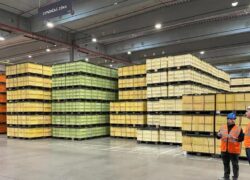
CEVA Logistics has introduced a reusable packaging management system to support a major European automotive manufacturer, eliminating the use of single-use cardboard packaging in its supply chain. The solution, implemented across multiple production sites and supplier locations, has led to an 18,000-tonne reduction in CO₂e emissions and diverted 22,000 tonnes of cardboard waste, according to CEVA.

The system is built on the use of standardized plastic containers designed for transporting components and small assembly parts from suppliers to production plants. After use, the containers are returned, cleaned, maintained, and redistributed, creating a closed-loop logistics cycle. This process is designed to optimize load space and streamline the pooling and rotation of packaging, increasing supply chain efficiency.

The initiative also involves centralized inventory management, logistical flow planning, and operational oversight across various supplier and factory locations. CEVA’s digital infrastructure enables monitoring and control of the entire packaging cycle, including ordering, distribution, cleaning, and repair operations.

CEVA has established 28 dedicated centres across Europe to manage approximately 8 million standardized reusable packaging units. The plastic containers are fully recyclable at the end of their service life, supporting the company’s broader sustainability goals.

With over 35 years of experience working with manufacturers in sectors including automotive, CEVA continues to develop logistics solutions focused on cost-efficiency and environmental impact reduction. The company notes that the switch from single-use to reusable packaging has resulted in a 59% reduction in emissions compared to conventional methods, while maintaining the reliability and security of the automotive supply chain.

Majority of Romanian employees work onsite at least three days weekly

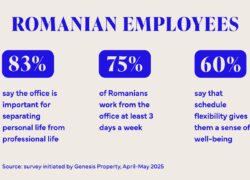
A recent survey conducted by Genesis Property indicates that more than 75% of Romanian employees currently work from the office at least three days per week. The research, conducted in April–May 2025 via the iVox platform, surveyed 1,012 internet users across Romania. The study aimed to assess working preferences and the perceived benefits of schedule flexibility among employees.

According to the findings, nearly 60% of respondents report that having flexibility in their work schedule contributes positively to their sense of well-being, offering greater balance and control over their daily lives. The survey highlights that hybrid working models, which alternate between remote and office days, remain a popular option. Employees cited several key advantages of such arrangements, including the ability to manage their own schedule, work from different locations, and allocate more time to family and personal activities.

If given the option, approximately 80% of those surveyed stated they would choose either a fully in-office model or a hybrid model that includes at least one to two office days per week. However, around 70% noted challenges in their current work arrangements, primarily citing insufficient resources—such as technology and dedicated workspace—and difficulty in maintaining a clear boundary between work and personal life.

Employees who engage in hybrid or remote work reported that returning to the office is often motivated by factors such as better separation between personal and professional responsibilities (41.7%), opportunities for in-person collaboration (38.9%), and access to a work environment more conducive to concentration and productivity (29.9%). Additionally, more than 83% of respondents believe that the office environment plays a significant role in maintaining work-life boundaries.

Genesis Property, which is continuing the development of its YUNITY Park project—designed by Liviu Tudor—has invested over €30 million in the first two stages of the campus. The next phase, the Innovation Center, is expected to launch following an additional €20 million investment.

The survey sample included over 45% female respondents, with nearly 46% reporting a net monthly income exceeding 5,000 lei. The research provides insights into shifting work dynamics in Romania and the growing importance of flexible work arrangements.

Vision Express renews lease at MLP Pruszków I logistics park

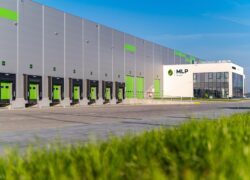
Vision Express has extended its lease agreement for 3,500 square metres of warehouse and office space at the MLP Pruszków I logistics park, where it operates its central distribution hub for more than 200 retail locations across Poland. The company, part of the EssilorLuxottica Group, has been a tenant at the site for over ten years. The lease renewal was facilitated with advisory support from Colliers.

Located 19 kilometres from Warsaw city centre and 15 kilometres from Chopin Airport, MLP Pruszków I offers proximity to major transportation routes, including the A2 motorway and the S2 expressway. The logistics park spans more than 170,000 square metres and hosts around 40 companies from various industries.

Jakub Milczarski, Product Value Chain Director at Vision Express, stated that the site has proven to be a reliable logistics base due to its location and infrastructure. The technical standard of the facility and the owner’s adaptability to operational needs were cited as key reasons for the lease extension.

MLP Group’s representative, Tomasz Pietrzak, noted that the extension reflects the park’s capacity to support long-term tenant relationships and accommodate evolving business requirements. Vision Express’s continued presence is seen as an indicator of the site’s relevance to companies operating in the Mazovia region.

The facility includes logistics infrastructure such as electric vehicle charging stations powered by photovoltaics and a city bike rental station. Vision Express employs experienced optometrists and ophthalmologists and currently operates more than 250 stores across the country, offering vision care services and optical products.

According to Michał Biegaj of Colliers, the renewed agreement demonstrates the continued demand for high-standard logistics space in well-connected locations and highlights the value of tenant-owner relationships built on long-term trust.

LATEST NEWS