Obermeyer Helika appointed general designer for Prospect project in Zlín

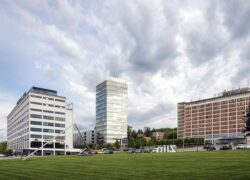
The Brno and Bratislava offices of construction consultancy Obermeyer Helika have been selected as general designers for the new Prospect development in Zlín. The multifunctional project, led by PSG investment group, is set to reshape the city’s Náměstí Práce area and introduce a 16-storey tower that draws architectural inspiration from the region’s functionalist heritage.

The development will include office space, rental apartments (1+kk and 2+kk), a three-star business hotel, and a public observation deck. The architectural design was prepared by CITY WORK ARCHITECTS under the leadership of architect Juraj Sonlajtner.

Adriána Kokoška, Sales Director at Obermeyer Helika Slovakia, noted that the firm’s experience with digital design and BIM technology contributed to solutions that align with the architectural style of the Baťa era while meeting modern sustainability criteria. The project is being designed to qualify for LEED Platinum certification.

The Prospect development is replacing a former bank building, and its design draws on the principles of Vladimír Karfík and František Lýdia Gahura, both of whom played key roles in shaping Zlín’s urban identity. A tower with a double-skin façade is planned to provide panoramic views of the city.

Ondrej Balážik, a designer from Obermeyer Helika’s Brno office, emphasized the firm’s commitment to combining respect for the city’s architectural legacy with energy-efficient construction methods. The project will incorporate full 3D modelling and BIM management throughout the design and construction process.

In addition to new office space, the development aims to address local housing needs by providing rental accommodation suitable for students from the nearby Tomáš Baťa University. A parking garage will be constructed in the basement for hotel and building users.

Demolition of the current structure is scheduled for summer 2025, with construction expected to begin by the end of the year. PSG Construction, based in Otrokovice, will serve as the general contractor.

Rental housing sector expands in Prague amid growing demand

The institutional rental housing market in Prague is continuing to expand, driven by demand for professionally managed apartments and interest from long-term investors, according to Savills’ latest report on the city’s built-to-rent (BTR) sector.

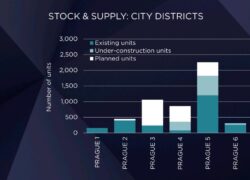
As of June 2025, there were 4,598 modern rental units across 81 projects in Prague, with the highest concentrations in Prague 9 and Prague 5. Most buildings are fully occupied, with waiting lists in place at some locations. The sector is primarily led by firms such as AFI Europe, Zeitgeist Asset Management, and the Archdiocese of Prague.

Marek Pohl, Head of Valuation at Savills, notes that rental housing is viewed as a stable, long-term asset with flexible exit options, including the possibility of selling individual units. He also highlights its role in improving access to housing for those unable to afford ownership in central urban areas.

After a high of 894 units completed in 2023, the pace of delivery has slowed. In 2024, 782 units were added to the market, and 448 more were completed in the first half of 2025. A further slowdown is anticipated, although development activity remains above pre-2021 levels.

The market continues to be dominated by smaller-scale projects. Around 70% of developments include fewer than 50 units, and only 14 buildings offer more than 100. Studios and one-bedroom apartments make up nearly 80% of available rental housing. Two-bedroom units account for 18%, while three-bedroom apartments remain scarce at 4%.

Rental prices for smaller units have remained steady, with monthly rents averaging CZK 19,900 for studios and CZK 27,400 for one-bedroom units. In contrast, larger apartments have seen increases of up to 15% year-on-year, with average rents for two-bedroom units at CZK 43,000 and three-bedrooms reaching CZK 68,000.

Looking ahead, over 1,100 new units are expected to be delivered in 2026. There are currently 1,902 units under construction, with another 3,400 expected to break ground over the next two years. Despite near-term fluctuations, the sector continues to gain traction and is playing an increasingly important role in Prague’s residential landscape.

StudentSpace secures financing for Kraków student housing projects

StudentSpace, a student housing platform, has secured PLN 177.8 million in financing from Bank Pekao S.A. to support the development of three student dormitories in Kraków. The funding will enable the construction of over 1,200 student beds across two locations, with the facilities expected to be ready by the upcoming academic year.

The three buildings—one located on 29 Listopada Alley and two on Wita Stwosza Street—are designed to address the increasing demand for modern student accommodation in Kraków, a city with a growing population of domestic and international students. The dormitories will offer residential units alongside communal areas and access to nearby academic institutions.

Since launching in March 2024, StudentSpace has focused on acquiring land and developing student housing projects. It is backed by a joint venture involving Signal Capital Partners, Griffin Capital Partners, and Echo Investment. The company’s current pipeline includes six projects with a combined capacity of more than 2,800 beds—three in Kraków and three in Warsaw.

Griffin Capital Partners serves as the investment and asset manager of the platform. The transaction was led by Artem Kovtun, Vice President Finance at Griffin Capital Partners, and Oskar Miller, Finance Manager at StudentSpace.

Ewelina Rolak joins Avison Young’s valuation and advisory team in Poland

Avison Young has appointed Ewelina Rolak to its Valuation and Advisory team in Poland, where she will serve as a Valuer.

Rolak is a certified property valuer with experience in both commercial and residential real estate. Early in her career, she focused on the retail sector, working with owners and managers of shopping centres. Over time, her work has expanded to include valuations of retail parks, warehouses, development projects, office buildings, investment land, and specialised assets such as build-to-suit (BTS) developments.

In addition to her valuation experience, Rolak has worked on the lending side, where she assessed property values for collateral purposes and reviewed construction cost estimates related to loan disbursements.

Prior to joining Avison Young, she held roles at CEETRUS, Bank Pekao S.A., and Emmerson Evaluation.

One Friary topping out marks progress on sustainable office project in Bristol

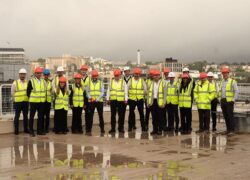
One Friary, a major office development in Bristol’s Temple Quay, has reached a key construction milestone with the completion of its structural framework. The topping out ceremony, held this week, marks a significant step forward in the delivery of the nearly 60,000 sq ft building, which remains on schedule for completion in the first quarter of 2026.

The development is owned by Danish pension fund Britannia Invest A/S, a long-term investor in Bristol since acquiring the site in 2002. Located just a minute’s walk from Bristol Temple Meads station, One Friary is positioned to meet high environmental standards, targeting BREEAM Outstanding, EPC A, and WELL Gold certifications.

Led by Catella APAM and Bankfoot APAM, and constructed by Beard Construction, the project involves a collaboration of specialists including tp bennett (architect), Core Five, Heyne Tillet Steel, and Box 20. As part of its sustainability strategy, the project retains 85% of the original concrete frame, which has resulted in an estimated 1,700 tonnes of embodied carbon being preserved—exceeding key industry benchmarks.

William Grenfell, Associate Director at Catella APAM, noted that the milestone reflects both Britannia’s long-term commitment to the city and the project team’s goal to deliver a high-performing office environment for future tenants.

Roxine Foster, Director at LSH, said the progress underscores a strong level of interest from occupiers seeking high-quality, sustainable office space in Bristol. With flexible layouts, high-spec amenities, and a rooftop terrace, One Friary is being positioned as a key addition to the Temple Quarter’s ongoing regeneration.

The building is now being actively marketed, offering floorplates between 7,500 and over 9,000 sq ft across seven floors, including a sixth-floor terrace and a double-height entrance featuring a commissioned artwork by Bristol-based artist Frea Buckler.

CA Immo sells Berlin logistics property as part of portfolio realignment

CA Immo has completed the sale of a logistics property located at Buckower Chaussee 43-58 in the Marienfelde district of Berlin. The asset comprises a site of approximately 53,000 square metres and includes a warehouse complex with around 12,000 square metres of lettable space. The property is 92% leased, generating annual rental income of €1.2 million. The transaction was concluded at a price above the most recently reported book value.

The sale aligns with CA Immo’s strategy of focusing on core office properties in prime urban locations. Non-core assets that do not meet criteria related to asset class, location, or long-term value creation potential are being divested under this approach.

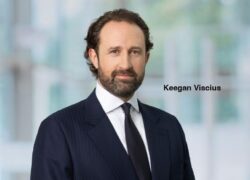
Keegan Viscius, CEO of CA Immo, stated that the sale supports the company’s portfolio optimisation objectives by removing assets that fall outside its strategic focus. The property in question was the last in the portfolio powered by oil, which also influenced the company’s decision due to sustainability considerations. Proceeds from the transaction may be allocated to general corporate purposes, reinvestment in the core portfolio, debt reduction, share buybacks, or new external investments if appropriate opportunities are identified.

Cushman & Wakefield acted as commercial advisor and broker on the transaction. Legal advice was provided by GÖRG.

Spire Global leases space in CUBE property near Munich for German expansion

Catella Investment Management GmbH and Catella Real Estate AG have signed a long-term lease agreement with Spire Global for approximately 1,200 square meters of office and light industrial space in the CUBE complex in Taufkirchen, near Munich. The space will support Spire Global’s expansion into Germany, providing facilities for offices, development, assembly, and product testing.

Spire Global, an aerospace company with operations in the US, Canada, Luxembourg, and the UK, is establishing its German branch in the CUBE property. The company operates a large network of multi-purpose satellites and will use the leased space as part of its European growth strategy.

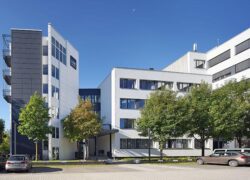
CUBE was acquired by Catella in 2014 for the special real estate fund “Immo-Spezial – Wirtschaftsregion Süddeutschland.” Originally built in 1973 and expanded in 1989, the complex includes two buildings with a total of 16,500 square meters of office and commercial space. Catella, in partnership with turn Real Estate GmbH, is repositioning the property to accommodate a wider range of uses, including medical offices, commercial housing, production, gastronomy, and educational facilities. Planned upgrades also include improved accessibility and additional shared spaces.

Michael Keune, Managing Director of Catella Investment Management, noted that the leasing agreement reflects the success of the repositioning strategy, which aims to update existing buildings without demolition. The project demonstrates how legacy assets can be adapted for modern business needs.

Spire Global CTO Gabiel Oehme stated that the new space provides the flexibility the company needs as it builds a long-term presence in the region, citing the local talent pool and proximity to other innovative companies in the aerospace sector.

Located on the southern edge of Munich, the CUBE complex benefits from access to the Taufkirchen S-Bahn station and nearby motorway connections, offering convenient transportation links to Munich’s city center and airport.

Legal and advisory support for the lease was provided by DLA Piper, while IGENUS Immobilien GmbH & Co. KG acted as the leasing broker.

GCC markets remain resilient amid mixed global signals in July 2025

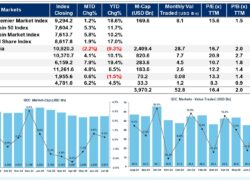
The Gulf Cooperation Council (GCC) financial markets displayed a steady performance in July 2025, as mixed global signals and regional developments shaped investor sentiment. According to Kamco Invest’s “GCC Markets Monthly Report – July 2025,” most GCC equity markets closed the month in positive territory, with Qatar, Abu Dhabi, and Dubai leading gains, while Bahrain and Oman registered declines.

Qatar’s stock market posted the region’s strongest performance in July, gaining 8.1%, driven by robust earnings and growing investor confidence. Abu Dhabi’s ADX rose 3.6%, while Dubai’s DFM gained 3.3%, supported by positive corporate results and increased trading activity. In contrast, Bahrain’s market fell 1.2% and Oman dipped 0.5%, reflecting weaker investor sentiment in those markets.

Saudi Arabia’s Tadawul index remained relatively stable, edging up by 0.4% for the month. The broader TASI index hovered near the 12,000-point mark, supported by strong earnings in the banking and materials sectors. However, trading volumes were mixed, and retail investor participation showed signs of moderation.

Market capitalization across the GCC increased by $64.1 billion in July, with Saudi Arabia accounting for nearly 80% of the total monthly gain. Year-to-date, GCC markets have added around $167 billion in market capitalization.

Sector-wise, the GCC saw strong gains in telecom, utilities, and capital goods, while the pharma and transportation sectors posted the steepest losses during the month. The telecom index led with an 11.2% gain.

In the fixed income space, GCC sovereign bond yields tracked US Treasury trends, reflecting expectations of a prolonged period of high interest rates amid persistent inflation concerns. The US Federal Reserve maintained its policy stance in July, and markets adjusted expectations for a rate cut timeline accordingly.

On the IPO front, Saudi Arabia continued to dominate GCC listings activity. The Kingdom hosted five IPOs in July alone, raising more than $1 billion. Key listings included Modern Mills Co. and Middle East Pharmaceutical Industries, underscoring investor interest in consumer and healthcare sectors.

Kamco Invest’s report suggests that while macroeconomic uncertainties and interest rate dynamics remain in focus, GCC markets are likely to benefit from stable oil prices, strong fiscal positions, and ongoing economic diversification efforts. Investor attention in the coming months is expected to remain on corporate earnings, US economic policy, and regional listing activity.

Construction begins on new City Park Warsaw building, adding 10,000 sqm of flexible space

Construction has started on the latest phase of City Park Warsaw, expanding Poland’s largest Small Business Units (SBU) complex. The new building will add 10,000 sqm of space combining warehouse and office functions, bringing the park’s total area to over 45,000 sqm upon completion.

The project is designed to meet growing demand from companies seeking operationally independent spaces that balance functionality and cost efficiency. The facility will meet BREEAM Excellent certification standards and will include energy-efficient features such as heat pumps, photovoltaic systems, water recovery infrastructure, and charging facilities for electric vehicles.

The building offers separate warehouse and office modules with ground-level access, loading docks, private entrances, and no shared areas. Office units are air-conditioned, well-lit, and delivered in a fit-out ready condition. For many users, the space will function not only as a warehouse but as a base of operations for logistics, meetings, or testing.

Ideal Idea, the project’s developer, is overseeing the entire process in-house, from design and construction to ongoing property management. The direct involvement of the developer enables quicker decision-making and responsiveness to tenant needs.

The building is situated along the S2 expressway, offering strong visibility and access from across Warsaw. Five modules remain available, each offering approximately 568 sqm of warehouse and 127 sqm of office space, with the option to lease multiple units. Flexible office layouts are also available on the upper floor. The building is scheduled to be ready for occupancy by March 1, 2026, with early access possible from February.

Ideal Idea was founded in 2008 by Andrzej Dużyński and specializes in developing urban SBU parks that combine warehouse functionality with Class A office space. The company currently manages over 100,000 sqm of gross leasable area across Warsaw and Wrocław.

GARBE Industrial establishes GARBE Regeneration to focus on brownfield redevelopment

GARBE Industrial is expanding its operations with the launch of GARBE Regeneration, a new subsidiary dedicated to identifying and redeveloping underutilised land. The new company will formally begin operations on 1 August 2025 and will focus on the revitalisation of brownfield sites, acquisition of development rights, and preparation of land for industrial, logistics, and commercial use.

The initiative responds to a declining supply of newly zoned development land in Germany and increasing constraints on land availability. GARBE Regeneration is intended to support the reuse of land that has previously remained vacant or contaminated, bringing it back into productive economic use.

The new entity will be jointly led by Maik Zeranski, currently a member of the GARBE Industrial management board responsible for development, and Rick Mädel, a specialist in brownfield redevelopment. Mädel brings over a decade of experience in the field and is the founder of Brownfield24 and chairman of the German Brownfield Association (DEBV). The management team also includes Adrian Zellner, GARBE Industrial’s Head of Business Development, who will continue in his current role while contributing to the new unit.

GARBE Regeneration will initially concentrate on industrial, logistics, and commercial projects. According to Zeranski, the redevelopment of brownfield land requires complex technical, legal, and economic coordination that benefits from being handled within a dedicated structure. The spin-off will allow for a more systematic and effective approach to such projects.

The company’s strategy is shaped by findings from GARBE Research, which indicate that in core logistics hubs like North Rhine-Westphalia, land development capacity may be fully exhausted by 2037. GARBE Regeneration is thus positioned as part of a broader effort to implement sustainable land use policies across Germany and Europe.

Rick Mädel emphasised that the reuse of brownfield land is no longer a secondary strategy but an essential element of future real estate development. By focusing on regeneration rather than expansion, the company aims to support long-term regional sustainability.

LATEST NEWS