
Soul Tech emerges as a new frontier for preserving human wisdom in the age of AI

A new white paper from Reflekta introduces “Soul Tech” – a category of human-centered AI designed to preserve and share the essence of individuals across generations. Built on advances in artificial intelligence and voice-driven interfaces, Soul Tech aims to transform personal stories, values, and lived experiences into interactive digital legacies that can comfort, educate, and connect people long after a loved one has passed.

The report warns of a “quiet crisis of memory” as more people die each year than ever before – an estimated 62 million in 2024 – taking with them vast, irreplaceable archives of human experience. Surveys cited show 74% of Americans regret not learning more about their relatives, and nearly half wish they had recorded conversations with loved ones who are no longer alive. Reflekta’s technology seeks to address this loss by creating AI avatars and interactive archives that capture a person’s voice, personality, and wisdom.

Research presented in the white paper highlights the benefits of preserving life stories. Children who know their family histories tend to have higher self-esteem and resilience, while older adults participating in life review or “Dignity Therapy” experience improved mood and reduced depression. For the bereaved, digital legacies can help maintain a “continuing bond” with the deceased, easing grief and fostering emotional resilience.

Originally part of a niche “grief tech” and “memory tech” sector, the concept has broadened. Soul Tech now encompasses identity building, intergenerational learning, cultural preservation, and ongoing emotional support. Potential applications range from dementia care to classroom history projects, with the technology envisioned as a dynamic, interactive medium rather than a static archive.

The report also addresses ethical challenges, including consent, authenticity, and data security. It warns against allowing AI personas to evolve in ways that misrepresent the original individual and calls for transparency when responses are extrapolated beyond known facts. Reflekta positions itself as an industry leader with an “Ethical by Design” approach, emphasizing empathy, privacy, and user control.

If guided by robust safeguards, the authors argue, Soul Tech could become a significant cultural and technological shift – one where the stories and wisdom of ordinary people are preserved as part of humanity’s collective heritage, enriching both future generations and the AI systems that will serve them.

Reflekta’s platform, which attracted thousands of users within days of launch, allows families to “reconnect with the voices of those you love” through emotionally intelligent, interactive memory archives. The company frames its mission as transforming grief into connection and ensuring that in the AI era, human content remains central.
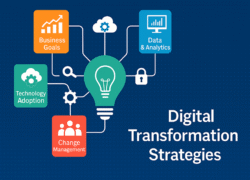

Enterprises urged to align technology and business goals for successful digital transformation

A new whitepaper has outlined a comprehensive approach for enterprises seeking to achieve meaningful results from digital transformation initiatives, stressing that technology adoption alone is insufficient without strong alignment to business objectives and organizational readiness.

The report highlights that while advanced tools such as artificial intelligence, automation, and data analytics are reshaping industries, many companies struggle to scale projects beyond the pilot phase. Common barriers include siloed operations, unclear return-on-investment measurement, and weak collaboration between IT and business units.

To address these challenges, the whitepaper calls for a structured transformation roadmap, cross-functional governance, and a renewed focus on data quality. These measures, it says, are essential for supporting analytics and AI systems that can deliver measurable impact.

Case studies featured in the paper showcase how companies in manufacturing, logistics, and financial services have successfully deployed technology to improve operational efficiency, cut costs, and enhance customer experience. Examples include automation for workflow streamlining, predictive analytics for demand forecasting, and AI-driven personalization in client engagement.

The report also underscores the role of cybersecurity, regulatory compliance, and ethical AI practices in safeguarding both operational integrity and customer trust. It notes that integrating these considerations from the outset helps reduce risk and improve long-term outcomes.

Looking ahead, the authors conclude that organizations combining technological innovation with workforce empowerment—through upskilling, training, and change management—will be best placed to secure competitive advantage over the next five years.

Assembled launches AI-human workforce orchestration platform

Assembled has introduced a new support orchestration suite that combines AI agents with workforce management tools to help customer support teams balance automation and human staffing. The platform aims to identify where AI can handle tasks, adjust staffing accordingly, and improve overall customer service efficiency.

The launch comes as many organizations adopt AI in support operations but struggle to measure returns and effectively integrate automation with human teams. According to a recent KPMG report, only 31% of leaders expect to evaluate generative AI ROI within six months, and none have reported positive returns so far. Data quality and unclear operational strategies remain major obstacles.

Assembled’s platform uses data from past support cases to identify automation opportunities and recommend where AI can reduce workload. Staffing plans incorporate AI coverage, showing over- and understaffed areas and automatically adjusting to AI performance. Real-time monitoring allows for smoother case handoffs between AI and human agents to maintain service quality.

Several companies are already using the platform. Flexcar reports that AI agents now resolve over 85% of their chat and email inquiries without human involvement. Thrasio, an Amazon aggregator, says it saved $1.8 million and improved customer satisfaction scores by 10% after adopting the system.

The new suite is available immediately, with additional features planned later in 2025.

AI data mapping boosts supply chain efficiency with test automation support

A supply chain software provider has implemented AI-powered data mapping to address delays in schema mapping and supplier onboarding. The system automates complex mapping scenarios, processes large datasets, and reduces manual intervention, resulting in an 80% reduction in data mapping time, a 50% reduction in supplier onboarding duration, and a 40% decrease in associated costs.

The improved process has also increased data accuracy, lowering the risk of errors and improving the quality of downstream analytics.

To maintain these operational gains, the company is working with TestingXperts (Tx), a provider of test automation and quality engineering services. TestingXperts offers frameworks that integrate test automation into DevOps processes, with tools such as Tx-Automate supporting self-healing automation, AI-assisted orchestration, and integration with CI/CD pipelines. These services aim to enable consistent testing coverage, faster release cycles, and cost control.

Robert Fletcher, CEO and Editor-in-Chief at CIJ EUROPE, is attending Ai4 2025 in Las Vegas to report on developments in AI, including interviews and panel discussions, for the August and Q3 issue of CIJ EUROPE magazine.

Ai4 2025 opens in Las Vegas Showcasing Latest in Artificial Intelligence

The 8th annual Ai4 Conference, one of North America’s largest gatherings dedicated to artificial intelligence, opened today at the MGM Grand in Las Vegas. More than 8,000 participants from over 85 countries are expected to attend, including executives, technologists, researchers, and policymakers, to explore how AI is reshaping industries such as finance, healthcare, retail, and manufacturing.

The event features over 600 speakers across 50 dedicated tracks, alongside 250 exhibitors presenting innovations in applied AI, generative models, regulatory frameworks, agentic systems, and sector-specific applications. The conference agenda spans three days, with sessions, keynote speeches, live product demonstrations, and networking opportunities.

Robert Fletcher, CEO and Editor-in-Chief at CIJ EUROPE, is attending the event to cover the latest AI innovations, conduct interviews, and participate in panel discussions. His reports will appear in CIJ EUROPE’s August coverage and the Q3 issue of CIJ EUROPE magazine, bringing insights from Ai4 directly to the publication’s readership across the real estate and business sectors.

Highlights on the opening day include keynote addresses from Randi Weingarten, President of the American Federation of Teachers, focusing on AI’s impact on education, and Tengyu Ma, Chief AI Scientist at MongoDB and Stanford University professor, discussing the state of Retrieval-Augmented Generation (RAG) in 2025. Press briefings will showcase product launches in areas including AI-powered 3D avatars, rare disease research platforms, agentic AI governance tools, and AI-driven inventory management.

In addition to its industry-specific tracks, Ai4 includes a Research Summit blending academic perspectives with commercial deployment strategies, pre-conference training sessions, and an expo floor featuring business-ready AI solutions. Over the next two days, keynote speakers will include AI pioneer Geoffrey Hinton, Stanford professor Fei-Fei Li, and technology leaders from Cisco, Deloitte, and Colossal Biosciences.

Since its launch in 2018, Ai4 has become a central meeting point for business leaders, AI practitioners, researchers, and policymakers, fostering discussions on real-world adoption and responsible innovation. This year’s conference continues that mission, providing a platform for collaboration, knowledge sharing, and the examination of AI’s evolving role in the global economy.

LEG Immobilien raises 2025 earnings outlook as AFFO climbs 15% in H1

LEG Immobilien SE reported a solid performance in the first half of 2025, driven by strong demand for affordable housing, portfolio integration, and growth in value-add services. Adjusted funds from operations (AFFO) rose 15.4% year-on-year to €126.6 million, prompting the company to raise its full-year AFFO guidance to between €215 million and €225 million, the upper half of its previous forecast range. This represents expected growth of around 10% compared with 2024. Funds from operations (FFO I) increased 10.7% to €241.2 million and is projected to reach €470 million to €490 million for the year, returning to pre-crisis levels.

Like-for-like net cold rent in the free-financed segment increased 3.7% in the first half of the year, while the overall portfolio saw an average rise of 3.2%, with a year-end target range of 3.4% to 3.6%. The average basic rent stood at €6.93 per sq m, maintaining the company’s focus on affordable housing. The like-for-like vacancy rate declined by 10 basis points to 2.4%.

The integration of more than 9,000 apartments acquired from Brack Capital Partners and the growth of ancillary service revenues contributed significantly to the results. Investment activity increased to €16.51 per sq m, up 7.1% year-on-year, with further growth expected in the second half.

The company’s EPRA net tangible assets (NTA) per share rose 3.9% to €130.87 as of June 30, 2025, supported by a 1.2% portfolio revaluation, exceeding prior expectations and reflecting improving market conditions. The loan-to-value ratio decreased to 47.6%, and average financing costs remained low at 1.54% with a 5.5-year average maturity.

LEG continued its sales programme, transferring ownership of 1,800 units worth €143 million in the first half and expanding planned disposals to 5,000 units, including properties from the BCP portfolio. The company also sold a housing estate in Cologne-Hoehenhaus to Sahle Wohnen GmbH, in line with its exit from project development.

The regulatory environment remains mixed, with the extension of rent control in tight markets expected to slightly limit rent growth, while planned energy efficiency reforms are seen as positive. LEG has also joined the BRYCK Startup Alliance, supporting innovation in the housing sector through federal funding and collaboration with proptech companies.

For 2025, LEG expects further improvements in operational performance, with an EBITDA margin forecast at 77% and continued progress toward its medium-term target of reducing the loan-to-value ratio to a maximum of 45%. Guidance for 2026 will be provided with the nine-month results.

Colliers report highlights steady growth and evolving role of flexible offices in Bucharest

Colliers’ latest report, Flexpansion: The Architecture of Agility, highlights the growing role of flexible offices in meeting the needs of companies navigating hybrid work models, cost constraints, and talent retention challenges. In Bucharest, flexible offices account for 2.3% of the total modern office stock, a level similar to Dublin and Prague but below the average of more mature European markets. The city has more than 50 locations run by nearly 30 operators.

Colliers notes that companies are increasingly blending traditional office space with flexible arrangements, using each for complementary purposes. Traditional offices provide stability, predictability, and long-term customization, while flexible spaces offer adaptability, quick mobilization, and cost efficiency. This approach is influencing how landlords design and operate conventional office buildings, with greater focus on shared areas, employee well-being, and integrated services.

Bucharest’s flexible office market is also competitive in terms of pricing. The average monthly rent for a private office in a flexible workspace is around €300, compared with €500 in Amsterdam, €625 in Dublin, and €850 in London. This cost advantage, along with a stable and growing office sector, positions the city as an attractive location for international operators expanding into Central and Eastern Europe.

Flexible offices, once associated mainly with freelancers and startups, are now part of the corporate strategies of medium and large companies. They are being used for temporary teams, satellite hubs, and market entry testing. Regional cities such as Cluj-Napoca, Iași, and Timișoara are also drawing attention from operators, supported by their strong IT&C sectors and openness to modern workplace models.

Across the EMEA region, flexible office stock has grown from 2 million sq m in 2010 to 8.3 million sq m by the end of 2024. The number of operators has tripled to over 1,850, with more than 80 new entrants in 2024. Models now range from community-focused shared spaces to customized corporate environments meeting WELL and ESG standards.

In Romania, Colliers’ Asset Services department manages over 500,000 sq m of office space, with attendance levels above 50% since 2024. Through its Workplace Advisory service, the company supports clients in creating work environments that promote collaboration, flexibility, and well-being in line with hybrid work realities.

Source: Daniela Popescu, Director | Tenant Services & Workplace Advisory in the Office department at Colliers Romania.

CTP N.V. reports solid H1 2025 growth with strong portfolio performance and high occupancy

CTP N.V. reported solid financial results for the first half of 2025, underpinned by stable rental income growth and an expanded portfolio. Net rental income increased to €336.4 million, up 9.4% year-on-year, driven by both acquisitions and developments completed over the past year. The portfolio grew to 12.1 million sqm of gross lettable area (GLA), with an occupancy rate of 94%.

EPRA earnings rose to €234.8 million, compared with €216.6 million in H1 2024, reflecting improved operational performance. The company maintained a strong development pipeline of 1.9 million sqm, with pre-let commitments for 77% of space under construction. Management reaffirmed its FY 2025 guidance for EPRA earnings per share in the range of €0.77–€0.79.

The balance sheet remained robust, with a loan-to-value ratio of 45.3% and €1.2 billion in available liquidity. CTP also emphasized its sustainability agenda, noting that over 95% of its standing portfolio is BREEAM-certified, with ongoing investments in renewable energy projects, including rooftop solar installations.

CEO Remon Vos stated that the company’s strategic focus on core CEE markets, coupled with selective Western European expansion, continues to deliver resilient cash flows despite macroeconomic uncertainties. CTP aims to maintain disciplined growth while capitalizing on demand for high-quality, sustainable logistics and industrial facilities.

Skechers expands presence in Warsaw’s FACTORY Outlet stores

Skechers has increased its retail footprint in Warsaw with a new store at FACTORY Annopol and an expanded unit at FACTORY Ursus, both managed by NEINVER. The Ursus location has more than doubled in size to 406 sq m, adding accessories to its range, while the newly opened Annopol store covers 236 sq m.

The expansion is part of Skechers’ global strategy to grow its brick-and-mortar network in key cities, including further development in Poland. The brand, which operates in three FACTORY centres in the country—Kraków, Annopol, and Ursus—also has outlets in other NEINVER-managed centres across Europe.

NEINVER describes Skechers as a long-standing partner within its European portfolio. Footwear and sportswear remain significant product categories in FACTORY outlets, which host other global brands such as adidas, Nike, Puma, New Balance, Asics, Vans, Converse, Clarks, Geox, and Ecco.

Skechers offers footwear and apparel for women, men, and children, incorporating design features such as Air-Cooled Memory Foam® insoles, Hands Free Slip-ins® technology, and Arch Fit® technology. The store layouts feature open spaces, bright lighting, wall-mounted shelving, gondola displays, and designated seating areas, with a neutral interior palette designed to highlight product displays.

FACTORY operates outlet centres in Warsaw, Kraków, Poznań, and Gliwice.

Poland’s retail market holds steady in Q2 2025 with strong retail park growth

Poland’s retail sector maintained steady growth in the second quarter of 2025, with over 94,000 sqm of modern retail space delivered. More than 60% of this was in the retail park segment, which continues to expand most rapidly in smaller cities where lower saturation levels support further development.

Major openings included Designer Outlet Kraków (19,000 sqm), the S1 retail park in Gliwice (15,000 sqm), and M Park Szubin (7,900 sqm). At the end of June, nearly 390,000 sqm of retail space was under construction or redevelopment, almost 80% of it in retail parks. Key projects include Przystanek Karkonosze in Karpacz, S1 Włocławek, and the Nowe Glinki complex in Bydgoszcz, with OTO Park Siemianowice Śląskie (18,000 sqm) as the largest scheme underway, due in mid-2026.

Poland’s total retail stock reached 16.6 million sqm, led by Warsaw with 2.27 million sqm. Retail saturation levels vary, with Wrocław, Poznań, and Tricity at the top, while Łódź and the Katowice Agglomeration show relatively low saturation for their population sizes.

The average vacancy rate across the largest agglomerations was 3.3%, little changed from last year. Warsaw’s vacancy fell to 3%, with Tricity and Łódź also seeing declines, while Wrocław and Kraków recorded increases. Prime rents in Warsaw’s top-tier shopping centres reached EUR 130–160 per sqm per month, compared to EUR 40–60 in other major cities. Retail park rents averaged EUR 9–12 per sqm per month.

E-commerce accounted for 8.8% of total retail sales in May, up from 8.5% a year earlier, supported by AI-driven improvements in personalization, customer service, and operations. Shopping centre activity rebounded after a weak start to the year, with April footfall up 1.9% and tenant turnover rising 5.6% year-on-year.

The first half of 2025 saw several new international brands enter the market, including GAP, Bottlery, Omichise, and Markovo Port. While retail parks dominate new supply, shopping centres and mixed-use schemes remain key in attracting foreign retailers.

Although the total development pipeline fell nearly 15% year-on-year, strong retail park growth, healthy brand activity, and rising consumer traffic indicate the market remains stable. Developers and investors are adjusting strategies to focus on local community needs and medium-sized cities, suggesting resilience and continued potential for growth in the second half of 2025.

Source: BNP Paribas Real Estate Poland

LATEST NEWS