Savills Poland completes 25,000 sqm in office lease deals in H1 2025

Savills Poland’s tenant representation team completed lease transactions totaling around 25,000 sq m in the first half of 2025, covering both Warsaw and several regional cities. The deals reflected varied client requirements and a broad geographic scope, underscoring shifting priorities in the office market.

The largest share of activity took place in central Warsaw, particularly in Śródmieście, where more than 13,000 sq m was leased. Mokotów, another key business hub in the capital, accounted for nearly 8,000 sq m of transactions. In Wrocław, the team advised on agreements for approximately 3,000 sq m. Most transactions involved lease extensions and relocations within existing office stock.

A notable deal during the period was the renegotiation of XTB’s lease in the Skyliner office building in Warsaw. The agreement, covering nearly 4,400 sq m across three floors, secures the fintech company’s presence in the tower for the coming years.

Savills advised a range of clients from sectors including finance, IT, tax advisory, light manufacturing, and healthcare. The team’s approach focused on tailoring leasing strategies to each tenant’s operational needs, with growing emphasis placed on building quality, flexible lease terms, and efficient space use—factors increasingly prioritised as workplace models evolve.

Savills’ involvement in this process enabled the development of solutions tailored to the tenant’s long-term needs, taking into account the flexibility of the agreement and the optimal use of the available space. Thanks to our support, XTB was able to make an informed decision to continue its operations in a prestigious location, which is in line with the strategy for further growth of this dynamically expanding organization, comments Karol Grejbus, Associate Director, Office Agency, Tenant Representation, Savills Poland.

“We are seeing an increasingly conscious and selective approach to office space planning by companies. The quality of the building, flexible lease terms and optimal use of space are becoming increasingly important. This is the result of the evolution of the work model and growing tenant expectations,” says Jarosław Pilch, Head of Tenant Representation, Office Agency, Savills Poland.

Outlet Park Szczecin expands with new regional brands and store upgrades

Outlet Park Szczecin, owned by EPP and the only outlet center in Western Pomerania, is expanding its fashion and services portfolio with several new and relocated tenants. Three brands – JACK & JONES, Evenemen, and premium optician OUTLY – have made their regional debut at the center. JACK & JONES, a global denim brand, has opened its first store in the province, while Polish menswear brand Evenemen has launched its first Szczecin location, offering formal clothing and accessories. OUTLY has also opened, bringing a selection of designer eyewear and on-site eye testing.

In addition to the new openings, footwear retailer eobuwie is scheduled to launch in the autumn with a multi-brand offer covering casual, premium, and sports styles. Several existing tenants have expanded their presence, including VENEZIA, TATUUM, WITTCHEN, and Pako Lorente, adding more space to their stores. Meanwhile, Lee Wrangler and German Optiker have relocated within the center, introducing refreshed interiors to better showcase their ranges.

The recent changes cover almost 1,800 sqm of retail space. According to EPP, the combination of premium brands with outlet pricing, alongside leisure and service options, has been key to maintaining high occupancy levels and ongoing tenant interest. The mix of long-standing retailers expanding their space and new regional entrants reflects the center’s strategy to strengthen its offer and maintain its position in the local retail market.

AFI Home retains 70% of tenants as demand for modern rental housing grows in Prague

AFI Home reports that 70% of tenants in its Prague rental portfolio have renewed their leases for another year, according to data for the first half of the year. The company manages nearly 900 apartments across several locations, with only 30% of units returning to the market for new tenants.

The retention rate is attributed to a combination of stability, service quality, and convenience. AFI Home properties offer 24/7 security, professional maintenance, and amenities such as supermarkets, laundry facilities, coworking spaces, and well-designed communal areas. Fully furnished apartments, available for immediate occupancy, have proven popular among expatriates, young professionals, and tenants in transitional situations.

Tenants who do leave typically do so for work-related relocations. AFI Home operates residences including AFI Home Třebešín, AFI Home Karlín, and AFI Home Kolbenova, all located with access to public transport and local services.

The company is expanding its portfolio with two major developments: AFI Home Nová Elektra, offering 291 apartments, and AFI Home V Korytech, which will add 519 units. Both projects will include additional services intended to enhance tenant convenience and meet demand for modern rental housing in Prague.

Poland: Personal liability of Management Board members in bankruptcy proceedings

In Poland, management board members can face personal financial liability if they fail to respond appropriately to signs of insolvency. This liability may extend to their private assets and arises from three key legal provisions: Article 299 of the Commercial Companies Code (KSH), Article 116 of the Tax Ordinance (OP), and Article 21(3) of the Bankruptcy Law (PU). Each establishes different conditions, burdens of proof, and possible defenses.

The obligation to act does not depend on a board member’s subjective belief but on the company’s objective financial condition. There are two main legal grounds for insolvency. The first is the inability to meet due financial obligations. This can be clear, such as when the company has no funds or financing options, or presumed when at least two debts remain unpaid for over three months. The second is when liabilities exceed assets for a continuous period of at least 24 months, taking into account both book and market values. In either case, the management board has 30 days to file for bankruptcy or initiate restructuring.

Under Article 299 KSH, board members may be liable to creditors if enforcement against the company fails. Defenses include timely filing for bankruptcy, proving absence of fault, or showing that the creditor suffered no damage. Article 116 OP deals specifically with unpaid tax liabilities and offers fewer defenses; it does not allow exemption on the basis of no damage. Article 21(3) PU concerns liability for damages caused by missing the bankruptcy filing deadline. Here, damage is presumed, and the only defenses are timely filing, opening of restructuring proceedings, or proving no fault.

These regimes differ in scope and severity. Article 299 offers the broadest defense options, while Article 116 and Article 21(3) are stricter and allow less room for argument. In all cases, liability can arise from neglect, even without intent.

Practical considerations include recognising early signs of insolvency, monitoring liquidity and liabilities, documenting board actions, understanding that responsibility is shared among all members, and acting promptly—restructuring is only effective if initiated early enough. Filing for bankruptcy does not automatically end operations; courts often appoint a temporary supervisor to assess the company’s condition, and applications can be withdrawn if circumstances improve.

Factual check:
• The legal references to Articles 299 KSH, 116 OP, and 21(3) PU are correct under Polish law.
• The 30-day deadline for filing after insolvency arises is accurate.
• The description of insolvency grounds matches statutory definitions.
• The statement on presumed damage under Article 21(3) PU aligns with established interpretation.
• What is missing is specific recent case law examples, statistical data on how often board members are held liable, and practical differences in how courts apply these provisions in tax vs. civil cases. Including these would provide a fuller picture of real-world application.

Author: Expert commentary prepared by Mateusz Haśkiewicz – qualified restructuring advisor, legal advisor, president of the management board of Haśkiewicz Dyła Restrukturyzacje Upadłości sp. z o.o.

Logistics operator leases space at Panattoni Park Koszalin

A major logistics company has opened a new branch at Panattoni Park Koszalin, leasing nearly 9,000 sqm of warehouse and operational space. The site is located 4 km from the S6 expressway and 3 km from Koszalin’s city centre, offering access to distribution networks in north-western Poland and supporting last-mile delivery operations.

The facility is Panattoni’s first multi-tenant development in Koszalin and provides over 65,000 sqm of warehouse space. It is BREEAM-certified and designed to meet modern operational and environmental standards. Its location near the S6 route linking Szczecin and Gdańsk, as well as national road 11 to Poznań, allows efficient connections to domestic and international markets. Proximity to the city and local universities also supports recruitment and workforce availability.

Following this lease, 2,335 sqm of space remains available, suitable for local businesses or logistics providers seeking a smaller distribution hub. The remaining units are ready for immediate occupancy and can be adapted for specific operational needs, including semi-cross-dock configurations.

David Štrouf joins Savills investment team as Associate Director Czech Republic

Savills has appointed David Štrouf as Associate Director in its Investment team, effective 1 August. Štrouf, who has a background in private equity and real estate consulting, brings experience from due diligence and strategic advisory work across multiple sectors. He has been involved in transactions with a combined asset value of over €1.3 billion in the CEE region.

Before joining Savills, Štrouf was part of the Prague Principal Investor & Private Equity practice at The Boston Consulting Group, where he worked on due diligence and strategy projects, including transactions such as the vendor due diligence of Packeta Group and the acquisition of Invia Group. Earlier, at Cushman & Wakefield, he participated in more than 15 commercial due diligence processes across real estate asset classes, including the 2022 disposal of Tesco’s cross-border portfolio and the structuring of a forward funding agreement between Logport and Invesco for Logport Prague West.

Štrouf holds degrees in International Management and Business Administration from the University of Economics in Prague and SUNY Empire State College.

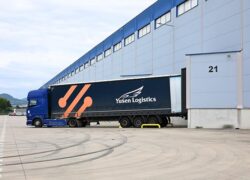
Yusen Logistics leases P3 Lovosice Cargo facility for Mondi Štětí operations

P3 Logistic Parks has leased its P3 Lovosice Cargo logistics hall to Yusen Logistics (Czech) s.r.o., which will use the space to store paper materials and manage finished product logistics for Mondi Štětí a.s., the largest kraft paper and pulp producer in the Czech Republic and one of the largest in Europe.

The P3 Lovosice Cargo facility, notable for its railway siding, spans over 43,000 m² and can accommodate trains with up to 15 wagons. On the opposite side, 25 truck gates allow for direct transfer between rail and road transport under one roof. The site also includes more than 1,100 m² of office space.

Before Yusen Logistics moved in, P3 Logistic Parks upgraded the facility’s roof, lighting, loading bridges, and selected amenities to meet the tenant’s operational needs. The building holds a BREEAM “Very Good” certification, reflecting its sustainability and energy efficiency standards.

This is Yusen Logistics’ second lease with P3 Logistic Parks in the Czech Republic, following its facility at P3 Prague D1. The railway siding was a key factor in selecting the Lovosice site, supporting Mondi Štětí’s focus on using rail transport to reduce emissions.

Located near the P3 Lovosice park, completed last year and nearly fully occupied, the cargo hall benefits from a strategic position with access to Prague, Dresden, and Leipzig, as well as proximity to an international railway hub and the Elbe River port.

AI-Powered Banking: Enhancing Client Experiences with Intelligent Automation

At the AI-Powered Banking: Enhancing Client Experiences with Intelligent Automation panel, Chief AI Office, Prashant Malhotra of U.S. Bank outlined how artificial intelligence is reshaping both digital and human interactions in financial services. His central message was clear: scaling AI successfully begins and ends with the client.

Human + Digital: A Unified Approach

U.S. Bank’s strategy builds on what Malhotra calls the “Human + Digital” model—blending personalised, high-quality digital experiences with the expertise and empathy of human bankers. Rather than replacing human contact, AI is used to enhance it, ensuring that customers receive fast, accurate answers while still having access to meaningful human guidance when needed.

This philosophy mirrors the bank’s long-standing approach to technology adoption. From being one of the first in the U.S. to introduce a Spanish-language mobile app to consistently ranking among the top in mobile banking functionality, U.S. Bank has focused on innovation that broadens accessibility and deepens relationships.

Turning AI from Hype to Real-World Value

Malhotra stressed that AI’s real power lies in moving beyond hype to practical use cases that deliver measurable benefits. He highlighted several areas where U.S. Bank is already applying AI:
• Conversational AI in the Mobile App – Customers can now speak to the app naturally to get answers about their accounts, transactions, and spending trends, without navigating menus or contacting support.
• Generative AI for Customer Service – AI assists bankers in classifying inquiries, retrieving accurate answers, and ensuring regulatory compliance in responses, leading to faster resolution times.
• Personalised Financial Insights – Using the bank’s extensive data history, AI delivers targeted, real-time insights to customers, replacing generic promotions with tailored recommendations relevant to their financial behaviour.

Malhotra emphasised that accuracy is paramount, especially in a regulated industry where “it’s money we are dealing with.” Every AI-enabled interaction must be precise, compliant, and secure.

Scaling Across Channels and Teams

The next phase for U.S. Bank is to ensure AI tools are equally effective across both customer-facing and employee-facing platforms. This means providing bankers with the same AI-driven insights and automation capabilities that customers see in their digital experiences.

By doing so, U.S. Bank is creating a 360-degree view of each client—allowing bankers to deliver more proactive service and helping the institution scale personalised experiences without compromising quality.

Looking Ahead: Trust and Transformation

While AI is a transformative capability, Malhotra underscored that in banking, relationships still matter. The goal is not to force customers into a single channel, but to ensure that whether they choose self-service or a human conversation, the experience is equally seamless and intelligent.

In his closing remarks, he described this as “an amazing time we are living in”—a moment where decades of banking tradition can merge with cutting-edge AI to deliver smarter, faster, and more personalised financial services.

Retail Rewired: Modular AI That Really Works

Ai4 Conference 2025 – Las Vegas: Retailers today face a familiar but intensifying challenge—mountains of fragmented data, siloed tools, and the pressure to make faster, smarter decisions. In the panel “Retail Rewired: Modular AI That Really Works”, industry leaders explored how plug-and-play, AI-powered solutions are helping brands forecast demand with greater accuracy, optimise pricing in real time, and personalise marketing—without the overhead of building in-house AI teams.

The discussion featured Rahul Pangam, CEO of RapidCanvas, and Santi Pierini, CEO of CJ, the world’s largest affiliate marketing platform. Moderated by RapidCanvas COO Mayur, the conversation combined practical case studies, proven adoption strategies, and a candid look at what works—and what doesn’t—across D2C, marketplaces, and omni-channel retail.

From Fragmentation to Forecasting

Mayur began by framing the retail AI landscape as one moving rapidly from experimentation to tangible ROI. “Change leaders who are using AI effectively are growing two to two and a half times faster,” he noted. These leaders tend to start in one of two ways:
1. Unlocking existing data – maximising the value of historical CRM records, market signals, and operational metrics.
2. Deploying agentic AI – augmenting human decision-making to improve efficiency and profitability without adding headcount.

He highlighted three core decision-driving use cases:
• Demand Forecasting – replacing clunky ERP tools and spreadsheets with AI models that integrate historical data and real-time market signals, leading to double-digit reductions in both overstock and stockouts.
• Targeted Marketing – using customer behaviour patterns, competitor activity, and in-market signals to create personalised outreach, improving retention and acquisition rates.
• Dynamic Pricing – adjusting prices based on sales performance, competitor moves, and margin rules to prevent losses and increase retention.

Beyond Spreadsheets: Agentic AI in Operations

The second set of examples showcased AI’s impact in back-office and support workflows:
• Finance Automation – matching invoices to payments with fuzzy logic, updating books automatically, and reducing month-end close times.
• Customer Support Triage – categorising tickets in real time to handle twice the volume without additional staff.
• End-to-End Planning Flywheel – integrating forecasting, procurement, production scheduling, and inventory tracking, delivering 90% planning accuracy and cutting spreadsheet use by 80%.

The takeaway: AI isn’t just about front-end optimisation—it can also eliminate bottlenecks in core operational processes.

Building Conviction for AI Investment

When asked how to prioritise AI opportunities, Santi Pierini was clear: “We don’t look at it as AI initiatives—we look at it as business transformation enabled by AI.” At CJ, AI is embedded across teams, from client services to engineering, with a goal of increasing productivity by 75% without diluting domain expertise.

Pierini framed AI not as a disruptor, but as a cure for the disruption retailers face from forces like retail media networks, social commerce, and shifting consumer channels. His “Dune” analogy stuck with the audience: AI can be the sandworm that consumes you, or the one you learn to ride.

In CJ’s case, riding that sandworm means managing an increasingly complex influencer and affiliate ecosystem. With tens of thousands of creators and multiple sales channels, AI is now essential for matchmaking the right product to the right campaign, measuring results, and forecasting performance.

Driving Adoption and Avoiding Pitfalls

Rahul Pangam underscored that 80% of AI projects struggle—not due to bad ideas, but because of poor implementation, adoption, and change management. His advice:
• Start small, scale fast – begin with pilots tied to high-priority business outcomes.
• Make it cross-functional – involve both business and technical teams from the outset to ensure shared accountability.
• Focus on KPIs – measure and adjust constantly to prove value.

Both CEOs agreed that success comes from embedding AI into the rhythm of the business, not treating it as a side project. The goal isn’t to showcase technology for technology’s sake, but to deliver measurable, repeatable business impact.

The Future: Trust, Speed, and Real Results

As Pierini reminded the audience, “The one thing AI can’t replace is trust.” Whether in affiliate marketing or personalised product recommendations, the consumer journey still hinges on credible, human-endorsed advice—AI’s role is to scale and sharpen that connection.

The session closed on a note of optimism. Retailers are more excited than afraid, and with modular AI, they no longer need massive in-house teams to see results. Plug-and-play solutions are helping brands cut waste, capture growth, and move at the pace of modern retail—no legacy BI required.

In a market defined by speed, complexity, and customer expectations, modular AI may not just be the future—it’s already what’s working today.

The Economic Impact of AI: Jobs, Productivity, and Future Economies

At a todays Ai4 conference in Las Vegas, the panel discussion titled “The Economic Impact of AI: Jobs, Productivity, and Future Economies”, CIJ EUROPE listened to experts from academia, industry, and government explored how artificial intelligence is reshaping productivity, labour markets, and long-term economic structures. The conversation balanced optimism about AI’s potential with caution about the transition period, stressing the importance of data-driven decision-making and strategic workforce planning.While participants agreed that AI has the potential to drive growth and innovation, they cautioned that the transition will be gradual, uneven, and dependent on both strategic adoption and workforce readiness.

Early Adoption and the Productivity J-Curve

Gregor Schubert, Professor at UCLA, opened by noting that many organisations are still in the early “J-curve” phase of AI implementation—where investment, experimentation, and workflow adjustments can temporarily slow productivity before gains emerge. He stressed that meaningful economic impact is more likely to appear over the next five to ten years as use cases mature and processes are restructured.

Schubert also argued that AI’s impact should be measured at the task level rather than assuming entire jobs will be eliminated. Most roles, he said, consist of bundles of tasks—some suited to automation, others not—leading to a reconfiguration of work rather than wholesale displacement.

Engineering, Skills, and Integration Challenges

Pavel Kolelev, CTO at a technology startup, highlighted the engineering realities of integrating AI into production workflows. While certain coding tasks can be accelerated, the technology is still maturing, and human oversight remains critical. He stressed that effective deployment depends on reskilling software engineers to work alongside AI tools, as well as overcoming organisational barriers to adoption.

Kolelev warned that productivity gains in AI-enabled coding may be overstated in public discourse, noting that integration into complex systems requires time, iteration, and cultural acceptance within engineering teams.

Data-Driven Insights on AI Use

Sarah Hecht, Head of Policy at Anthropic, emphasised the importance of empirical evidence in understanding AI’s economic role. Through the company’s Economic Index, Anthropic has tracked adoption trends across sectors, noting high usage in software, education, creative industries, and marketing.

Her research distinguishes between “augmentation” tasks—where AI assists human work—and “automation” tasks—where AI performs functions independently. Notably, she observed a recent rise in automation following the release of Anthropic’s agentic coding tools, especially among software engineers.

Hecht also flagged a significant point: AI’s first wave is affecting high-wage, white-collar jobs, such as software development—an occupational class often insulated from technological disruption. This, she said, raises important questions about reskilling and career evolution for skilled professionals.

Government Strategy and Workforce Agility

Taylor Stockman, Chief Innovation Officer at the U.S. Department of Labour, framed AI as a net-positive for job creation, particularly in three categories:
1. AI Development Roles – building and maintaining AI systems.
2. AI-Integrated Industry Jobs – roles in sectors like healthcare and marketing that embed AI into daily functions.
3. Infrastructure Roles – jobs linked to the construction and maintenance of data centres and AI-related facilities.

Stockman said the government’s priority is ensuring equitable access to these opportunities regardless of geography or income level. Initiatives include AI literacy programmes, apprenticeships, and a new AI Workforce Research Hub to monitor and adapt to labour market changes.

He also countered common displacement narratives, arguing that employers often use AI to increase output rather than cut headcount, and that workforce systems must be agile enough to meet evolving skill demands.

Beyond the Workplace: Broader Societal Benefits

Panelists agreed that AI’s economic impact extends beyond corporate productivity. Schubert noted that consumer use of AI tools for education, information access, and personal projects represents a significant but under-measured source of welfare gains.

Hecht pointed to potential high-impact domains—biosciences, education, and government services—where AI could accelerate research, personalise learning, and improve service delivery. She stressed that public sector adoption could also rebuild trust in institutions if deployed responsibly.

Skills for the AI Economy

When asked which skills will be most valuable, Stockman identified foundational AI literacy as essential “table stakes” for workers. Beyond technical capabilities, he stressed the growing importance of uniquely human competencies—such as empathy, communication, and trust-building—especially in professions like healthcare, where AI may handle diagnostics but human connection remains irreplaceable.

Shifting the Narrative

The discussion closed with a call to move the public conversation from fear to optimism. Panelists noted that AI literacy gaps, cultural hesitancy, and misconceptions about “cheating” when using AI tools can slow adoption. They urged leaders in business, government, and education to frame AI as an empowering technology that can expand opportunity—if supported by the right policies, skills, and strategic planning.

As Schubert concluded, AI is a general purpose technology—akin to electricity or the internet—with no set playbook for integration. Navigating this transformation will require coordinated effort, investment in human capital, and a willingness to adapt as both technology and economic structures evolve.


LATEST NEWS