Thursday, 8 October 2026
The cost of occupying an office can differ substantially from the headline rent quoted per square metre once service charges, energy consumption, fit-out expenditure and the amount of space actually required are included, according to Passerinvest Group. The Prague developer argues that these factors can sometimes make a newer building with a higher base rent competitive with an apparently cheaper alternative.
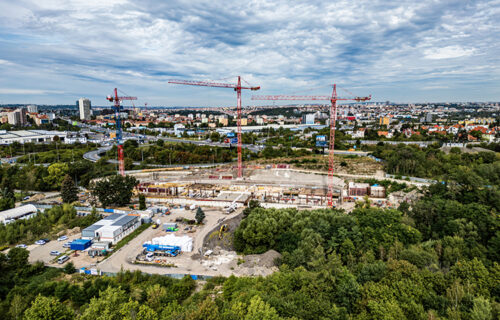
Passerinvest illustrates the calculation using Sequoia, its planned office development at Nové Roztyly in Prague. The company expects service charges at the building to be approximately CZK 87 per sqm per month in 2027, with energy consumed directly within tenant premises estimated at a further CZK 24 per sqm. Passerinvest says service charges at some higher-quality Prague offices can reach approximately CZK 120–160 per sqm per month before tenants’ direct energy consumption is included.
The difference becomes material for large occupiers. A CZK 40 per sqm monthly difference in operating expenses on a 10,000 sqm lease represents CZK 4.8 million annually, or CZK 48 million over ten years before other variables are considered. Passerinvest therefore argues that companies should compare the total occupancy cost over the lease term rather than base their property decisions primarily on headline rents.
Energy performance forms another part of that calculation. Sequoia is being designed with heat pumps, photovoltaic panels, radiant heating and cooling ceilings, external shading and automated building-management technology. Passerinvest is targeting delivered energy consumption of approximately 30 kWh per sqm annually. The project is also targeting BREEAM Outstanding certification and alignment with the EU Taxonomy, although these objectives should be regarded as targets until achieved.
The amount of private space leased can have an equally important effect on overall costs. Sequoia is planned with shared meeting facilities capable of accommodating up to 200 people, allowing occupiers to potentially reduce the amount of dedicated conference space within their own premises. Passerinvest estimates that avoiding 150–200 sqm of rarely used meeting space could reduce not only rent but also fit-out, cleaning, cooling and other operating expenses.
Moving to a new office nevertheless introduces significant upfront expenditure. Fit-out, furniture, audiovisual equipment, IT infrastructure and relocation can represent tens of millions of crowns for larger occupiers, according to Passerinvest. The developer says landlords can offset part of this through rent-free periods and contributions towards tenant improvements, while longer leases can allow some fit-out expenditure to be incorporated into the overall rental structure.
The comparison therefore depends on considerably more than whether one building commands a higher rent per square metre. Effective occupancy costs are determined by the combination of rent, service charges, energy performance, space efficiency, incentives and initial capital expenditure. For companies evaluating a relocation or lease renewal, modelling these costs across the entire lease period provides a more meaningful comparison than headline rent alone.