Thursday, 8 October 2026
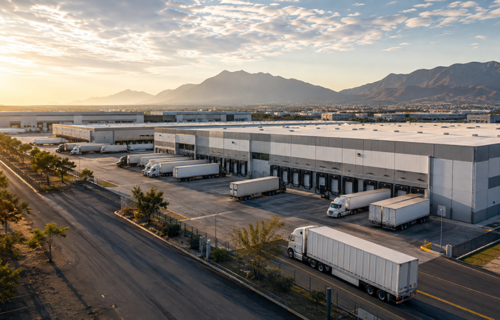
Mexico’s warehouse and industrial property market remained active during the second quarter of 2026, but the conditions that shaped the sector over the past several years are beginning to change. Companies continue to lease substantial amounts of space, while developers are reducing the pace of new construction and differences between the country’s major industrial regions are becoming increasingly pronounced. Mexico ended June with approximately 113.7 million square metres of industrial property, around 5.3% more than a year earlier, following several years of intensive construction driven by manufacturing investment, changing North American supply chains, e-commerce and growing domestic distribution requirements.
Demand remained healthy during Q2, with approximately 1.26 million square metres leased across the country, around 35% more than during the same period of 2025. More than half of this activity was concentrated in three markets. Monterrey represented approximately 24% of national leasing, followed by the Mexico City metropolitan region at around 22% and Tijuana at 11%. The increase provides an important indication that occupiers remain active despite greater uncertainty surrounding international trade and investment decisions.
Monterrey continues to benefit from its position as one of Mexico’s principal manufacturing centres. Production-related requirements accounted for the majority of major transactions during the quarter, with Apodaca and Santa Catarina remaining important destinations for occupiers and new projects. The region’s established industrial base, workforce and connections with the United States continue to support demand. Mexico City follows a different pattern. Its enormous population makes the metropolitan area primarily a distribution and consumption-driven market, with warehouses required to move goods through the capital and surrounding municipalities. Based on its share of national activity, approximately 278,000 square metres was leased in the wider Mexico City market during the quarter.
Development around the capital is increasingly moving northwards. More than one million square metres was being built across the wider metropolitan industrial market during Q2, equivalent to approximately one quarter of Mexico’s entire development pipeline. Zumpango accounted for around 60% of this construction, making the area around Felipe Ángeles International Airport an increasingly important part of the capital’s logistics map. Toluca represented around 16% of development, followed by Tultitlán at 12%, Huehuetoca at 8% and Cuautitlán at approximately 4%. The movement towards Zumpango also reflects the difficulty of finding large development sites in traditional warehouse districts, where limited land and higher prices are encouraging expansion further from central Mexico City.
Across Mexico, the amount of empty industrial property has increased as buildings started during the previous construction wave reach completion. Approximately 5.2% of national stock was vacant at the end of June, representing close to six million square metres. This remains relatively moderate but marks a significant change from the exceptionally tight conditions experienced in several Mexican markets earlier in the decade. Occupiers now have more alternatives, particularly in cities where developers added substantial amounts of new space.
The differences between individual markets are considerable. Tijuana recorded approximately 9.7% vacancy during Q2, while Monterrey and Reynosa were both close to 6.5% and Ciudad Juárez around 6.1%. Other industrial centres remain much tighter, with available space representing approximately 1% of stock in Aguascalientes, 2.1% in Puebla and 2.8% in Saltillo. Northern border markets remain important for companies supplying the United States, but their rapid expansion has given occupiers greater choice and means recently completed buildings can take longer to fill than during the period when available space was extremely limited.
Developers are already adjusting to this change. Slightly more than 3.8 million square metres was under construction nationally during the second quarter, approximately 20% below the level recorded a year earlier. The amount of development beginning during April and May was also around 25% lower than during the corresponding months of 2025. The reduction points towards a more cautious approach, with developers increasingly concentrating on locations where occupier requirements are already visible rather than relying heavily on expected future demand.
This slowdown could help restore balance during the coming quarters. Buildings already being developed will continue to increase inventory, but fewer projects beginning today should moderate the amount of additional supply reaching the market later. Rather than signalling the end of industrial expansion, the change suggests that the sector is moving towards a more measured development cycle after several years of rapid growth.
Rental levels have remained resilient despite greater availability. Average advertised industrial rents across Mexico stood at approximately USD 7.56 per square metre per month in May, almost 7% higher than a year earlier. Mexico City remains significantly more expensive at approximately USD 10.37 per square metre per month, reflecting limited land, intense distribution requirements and the value companies place on reaching the country’s largest consumer market. Tijuana followed at around USD 8.67.
The persistence of relatively high rents alongside rising vacancy indicates that occupiers are becoming more selective rather than simply reducing their requirements. Newer warehouses with efficient loading facilities, sufficient electricity, good motorway connections and proximity to major customers continue to attract stronger interest. Electricity infrastructure is becoming particularly important as larger manufacturing operations and increasingly sophisticated logistics facilities require substantial power capacity, making reliable supply an important factor in both occupier and development decisions.
Mexico’s industrial growth is also becoming broader than the relocation of manufacturing closer to the United States. Cross-border production remains important, particularly in Monterrey and northern Mexico, but domestic distribution, online retail and the logistics requirements of the country’s growing urban population are significant sources of demand in their own right. The distinction is particularly clear between Monterrey and Mexico City, with the former more closely linked to manufacturing and exports and the latter requiring enormous amounts of warehouse space to supply its population and businesses.
The market is consequently moving away from the unusually tight conditions that characterised the earlier expansion period and towards a more conventional balance between landlords and occupiers. Companies have more buildings to choose from, while owners must compete more actively for tenants in markets where supply has increased. Tijuana, Monterrey, Ciudad Juárez, Guadalajara, Mexico City and the industrial centres of central Mexico are increasingly following their own patterns of supply, construction and demand rather than moving together as a single national market.
Mexico entered the second half of 2026 with its industrial property sector still expanding, but the emphasis is changing from rapid construction towards more carefully targeted development. Leasing remains strong enough to support the market, while the reduction in new projects should give recently completed buildings time to attract tenants. Transport infrastructure, electricity, labour availability, proximity to consumers and connections with North American supply chains will increasingly determine which industrial corridors outperform.
After several years of exceptional expansion, Mexico’s warehouse and logistics market is therefore moving into a more selective stage rather than retreating. Strong occupier activity continues to support the sector, but future growth is likely to depend increasingly on building in locations where genuine demand and infrastructure can support additional supply.
Research & Analysis: CIJ.World