Saturday, 17 October 2026
Refugees in Germany continue to encounter major challenges when trying to access healthcare, particularly during the first years after arrival, according to a new study by the German Institute for Economic Research. Researchers found that long waiting times, financial pressures, travel distances and difficulties navigating the healthcare system frequently delay or prevent treatment.
The analysis, based on data from the IAB-BAMF-SOEP survey of refugees, indicates that healthcare access problems are most severe shortly after arrival in Germany. More than one quarter of refugees surveyed reported delays in receiving treatment because of lengthy waiting periods. Among refugees from Ukraine, the figure rises to around 40 percent.
Financial barriers also remain significant. Around one in five recently arrived refugees said they had forgone medical treatment due to costs, while approximately ten percent cited long travel distances as an obstacle to care. Researchers noted that these pressures gradually ease over time, although many difficulties persist.
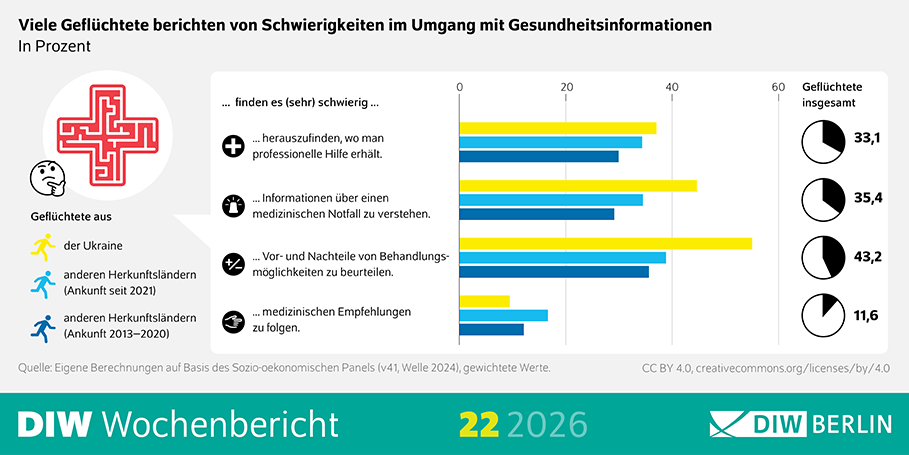
The study also highlights broader problems in understanding and navigating the German healthcare system. Around one third of respondents said they struggled to find suitable medical services, while many reported difficulties understanding essential health information, including guidance on emergencies and treatments.
Preventive healthcare appears particularly affected. Roughly 37 percent of refugees surveyed said they found information about preventive check-ups difficult to understand. Mental health support also remains challenging, with nearly 39 percent reporting difficulties accessing or understanding care related to psychological problems.
According to the researchers, delayed access to medical treatment can have longer-term consequences both for refugees and for the healthcare system itself. They argue that untreated health issues may worsen over time and ultimately increase healthcare costs.
The report calls for measures to reduce barriers to access, including improved health communication through professional interpreters and clearer information in plain language. It also recommends reducing administrative and structural obstacles linked to appointment scheduling and access to services.
Researchers further warned that proposed changes affecting the legal status of Ukrainian refugees in Germany could deepen existing inequalities in healthcare coverage by limiting entitlement to benefits under the current system.
Source: BIW