Saturday, 17 October 2026
Industry organisations and offshore wind investors in Poland say experience from countries including Denmark, Germany and the United Kingdom shows that offshore wind farms can operate alongside fisheries and tourism without significantly reducing the attractiveness or economic activity of coastal regions.
According to representatives of the Polish wind energy sector, offshore wind farm locations in Poland are selected under the country’s maritime spatial development plan, which was developed following consultations with fisheries representatives, maritime transport authorities, the military and other sea users. Environmental impact assessments and cross-border consultations were also carried out before the adoption of the plan.
The current framework allows offshore wind farms to be located exclusively within Poland’s exclusive economic zone, with projects also subject to further environmental studies before construction permits are granted.
Industry representatives state that the positioning of offshore wind projects is intended to minimise disruption to traditional fishing areas and maritime routes. Research cited by the sector, including studies from the International Council for the Exploration of the Sea (ICES), indicates that turbine foundations can function as artificial reefs, potentially increasing local biodiversity and creating habitats for marine organisms and some fish species.
Examples from projects such as the Horns Rev offshore wind farms in Denmark are frequently referenced by the sector as evidence that long-term fishing activity can continue alongside offshore wind infrastructure.
In Poland, offshore wind developers have introduced compensation schemes for fishermen affected during construction phases. These measures are intended to address potential losses linked to temporary restrictions or increased operating costs.
Oliwia Mróz-Malik, Manager for Offshore Wind Energy, Investment and Development at Polish Wind Energy Association (PWEA), said offshore wind energy and fisheries can create a shared economic environment, adding that international experience suggests marine ecosystems around turbine foundations may support fish populations over time.
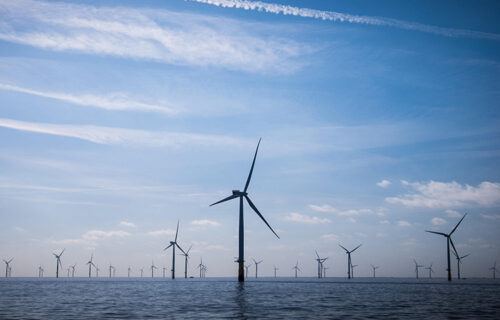
The sector also argues that offshore wind projects have not led to declines in tourism in countries where the industry is already established. Polish offshore wind farms are expected to be located at least 22 to 23 kilometres from the coastline, where turbines are typically only faintly visible from shore under favourable weather conditions.
Several community support programmes linked to offshore wind developments are also underway in Poland. In Choczewo, offshore investors including PGE Baltica, Ørsted Polska, Baltic Power and Ocean Winds are financing the “Choczewo. Wind-Powered Municipality” programme, which supports local social, educational and cultural initiatives.
Meanwhile, the “Power of the Baltic” grant programme is being implemented in Łeba, while infrastructure linked to offshore wind operations continues to develop along the Polish coast. This includes the Baltic Power service base and the offshore installation terminal in Świnoujście operated by ORLEN Group.
Michał Stachyra from the ORLEN Foundation said the organisation joined the “Sea of Wind” educational campaign to support fact-based discussion around offshore wind energy and address concerns related to tourism and fisheries.
The campaign, organised by PWEA and the ORLEN Foundation, aims to provide information on the economic, environmental and social impact of offshore wind energy projects in Poland.
Małgorzata Żmijewska-Kukiełka, spokesperson for PWEA and coordinator of the campaign, said one of the main challenges facing the sector remains public perception and misinformation surrounding offshore wind development.