Czech Construction Rebounds but Permitting Slump Looms

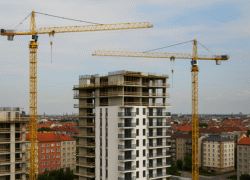
Czech construction activity accelerated in the first half of 2025, while new-home sales in the capital surged back toward pandemic-era highs. Developers and advisers say cheaper mortgages and revived household demand are bringing projects off the shelf, yet a historic collapse in building permits risks starving the pipeline over the next 12–24 months.

Official data show construction output expanding strongly into mid-year, consistent with a cyclical rebound from last year’s slump and a favourable base effect.

On the demand side, Prague’s primary market has tightened. Developers’ joint figures indicate roughly 4,300 new flats sold in the first half, up 23 percent versus H1 2024—the second-best half-year in 15 years—with average advertised prices in the city pushing above CZK 170,000 per sqm. The resurgence aligns with data from major residential players Central Group, Skanska and Trigema.

Financing conditions have improved. Banking association figures show the average mortgage rate falling to about 4.6 percent in May, and the Czech National Bank has resumed gradual easing, cutting its policy rate to 3.5 percent in May. Cheaper credit has helped unlock deferred demand and boosted reservation activity since late Q1.

Supply, however, is not keeping pace. While output is rising, the number of building permits issued in H1 2025 dropped to roughly 29,200—the lowest first-half total in 25 years and the first time below 30,000. Local business press and mortgage monitors warn that today’s sales momentum is drawing down “old” permitted stock, with fewer projects entering the pipeline.

Sector voices continue to point at administrative bottlenecks. The new Construction Act and digital permitting were intended to speed approvals, but audits of the rollout have found delays, system flaws and staffing shortfalls at authorities. A parallel reform created the Specialised Transport and Energy Construction Authority (DESÚ) to fast-track strategic infrastructure; developers argue that a similar “single-hand” approach is needed for housing to achieve scale.

The mixed picture is visible in the hard numbers. Starts and completions have lagged even as headline construction output improves, suggesting more renovation and engineering work in the near term and fewer fresh residential projects breaking ground. Data for early 2025 showed double-digit declines in started and completed dwellings versus the prior year, underscoring the pipeline risk.

For now, pent-up demand, falling borrowing costs and modest real-income recovery are supporting transactions—especially for mid-market units and well-located new builds in Prague. But unless permitting accelerates through 2026, analysts caution that the market could face a renewed scarcity of deliverable product, prolonging affordability pressures and pushing prices higher.

Bottom line: the Czech housing cycle is healing, helped by cheaper mortgages and a low comparison base, yet the sharp drop in permits is a red flag. Without a durable fix to approvals—and clearer, predictable timelines—today’s recovery risks stalling before it translates into sustained new supply.

Source: CTK

Stark Inequalities Persist Across the EU Despite Rising Incomes

A new Eurostat report on European living conditions reveals persistent divides in income distribution, material deprivation, and life satisfaction across the EU, even as overall median incomes have risen.

The 2025 edition of Key Figures on European Living Conditions shows that median disposable income in the EU stood at €21,253 PPS per inhabitant in 2024, with wide disparities between member states. Luxembourg reported the highest median income at €37,781 PPS, while Slovakia, Hungary, and Greece had levels close to €12,000 PPS.

At the same time, income inequality, measured by the Gini coefficient, remained uneven. The EU average was 29.3 percent in 2024, but disparities ranged from below 25 percent in Slovakia, Czechia, and Slovenia—among the most equal societies—to 38.4 percent in Bulgaria and 35.3 percent in Lithuania, highlighting sharper divides in parts of Eastern Europe.

The share of people at risk of poverty or social exclusion remains stubbornly high. In 2024, 21.4 percent of EU residents in cities and 21.3 percent in rural areas were affected, with only a slight improvement compared to previous years. Romania and Bulgaria showed the widest urban-rural gaps, with poverty risk 27 and 19 percentage points higher in rural areas than in cities.

Educational attainment plays a major role. More than a third of adults with low education levels were at risk of poverty, compared to just over 10 percent among university graduates. Unemployment amplified the vulnerability, with two-thirds of unemployed people at risk. According to the OECD, these disparities mirror broader global patterns where rural and low-educated populations remain more vulnerable despite overall income growth.

Severe material and social deprivation fell slightly to 6.4 percent of the EU population in 2024, but children were disproportionately affected, with 7.9 percent deprived compared to 5.1 percent of older people. Rates were highest in Romania at 17.2 percent, Bulgaria at 16.6 percent, and Greece at 14.0 percent, while Slovenia reported the lowest at just 1.8 percent. Child-specific deprivation remains a critical issue. One in three children in Romania and Greece lacked basic items such as daily fruit, proper shoes, or internet access. UNICEF has warned that persistent child deprivation undermines long-term social cohesion and economic productivity.

Despite these pressures, average life satisfaction across the EU was rated 7.2 out of 10 in 2024. Finland, Romania, and Slovenia reported the highest levels at 7.7 or above, while Bulgaria scored the lowest at 6.2. Trust in others, a key measure of social cohesion, averaged 5.8 across the EU. It was notably higher in Romania, Finland, and Poland at 7.0 or more but lowest in France, Greece, and Cyprus, which all scored below 5. The World Bank has previously linked trust levels to economic resilience, noting that countries with higher interpersonal trust tend to recover faster from economic shocks.

The report also highlights ongoing challenges for people with disabilities. Across the EU, 9.7 percent of employed people with disabilities were at risk of poverty, compared to 8 percent of those without. Meanwhile, self-perceived discrimination remains widespread: nearly 15 percent of non-EU citizens living in the EU reported severe material and social deprivation, more than double the EU average.

The findings present a mixed picture. While Europe has seen rising real incomes—Romania’s median income, for instance, has surged by 162 percent since 2010—deep divides persist between and within countries. Analysts say these figures should serve as a warning. Income growth is not enough if large sections of the population, especially children and rural communities, remain excluded. The European Anti-Poverty Network has stressed that the EU must now prioritise inclusive growth policies, combining income support with access to services and education.

Source: EUROSTAT
Image: EUROSTAT

Poland Moves to Safeguard “VAT in Return” for Importers After AIS/IMPORT PLUS Rollout

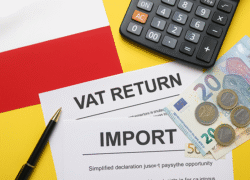
Poland’s Council of Ministers has approved a VAT deregulation bill to preserve the option for qualifying importers to settle import VAT directly in their tax return, addressing a gap created by June’s changeover to the AIS/IMPORT PLUS customs system.

The draft amendment to the VAT Act—presented as part of a wider deregulation package—targets companies authorised to use simplified customs declarations. After AIS/IMPORT PLUS went live on 19 June, the simplified declaration no longer included duty and tax data; these figures are calculated later in a supplementary notification. That sequencing left some authorised traders unable to meet the conditions for “VAT in return” (Article 33a) for imports cleared on a simplified basis. The government’s communication on the draft explicitly cites this problem and states that the new rules are intended to “allow entrepreneurs to continue settling VAT on imports directly in the tax return.”

AIS/IMPORT PLUS replaced Poland’s prior import-clearance system and introduced new JPK reporting references for importers using Article 33a. Professional advisories have warned since the switchover that, for simplified entries processed in AIS/IMPORT PLUS, the MRN and date of the supplementary customs declaration become the operative data points for VAT reporting—complicating timelines for taxpayers relying on deferred settlement in the VAT return.

According to the government, the bill restores certainty for authorised traders by adapting Article 33a mechanics to the new customs workflow, ensuring they can still reduce cash-flow strain by offsetting import VAT in the domestic return rather than paying at the border. The measure will enter into force 14 days after publication in the Journal of Laws.

Tax firms note that the proposal dovetails with other 2025 VAT adjustments tied to the AIS/IMPORT PLUS transition, including clarifications on JPK entries for imports settled under Article 33a and extensions of correction windows for taxpayers with simplified-declaration permissions and AEO status. Further guidance is expected as the bill moves through Parliament and secondary rules are finalised.

Industry reaction has been broadly positive. Trade and customs advisors say the fix should prevent working-capital shocks for compliant importers that rely on deferred settlement, while keeping Poland aligned with EU customs changes that triggered the shift to AIS/IMPORT PLUS in June.

What changes for importers now: once enacted, eligible businesses using simplified declarations should again be able to settle import VAT through their VAT return under Article 33a, using data from the supplementary customs notification required by AIS/IMPORT PLUS. Until publication, companies are urged to maintain careful MRN tracking and documentation to support JPK reporting and any subsequent corrections.

Sources: Chancellery of the Prime Minister (gov.pl) notice on the draft VAT amendment; professional updates from international tax and customs advisors on AIS/IMPORT PLUS implementation and Article 33a reporting

IREMIS Advises on Acquisition of Steigenberger Hotel am Kanzleramt in Berlin

Luxembourg-based real estate investment manager IREMIS has advised a leading U.S. asset manager on the acquisition of the Steigenberger Hotel am Kanzleramt in Berlin, one of the German capital’s flagship hospitality properties.

Situated next to Berlin’s main railway station and in close proximity to the federal government district, the hotel features 339 rooms, large-scale conference facilities, and a wellness area overlooking the Chancellery. Since opening, it has established itself as a prime destination for both international business travellers and tourists.

The acquisition marks a further expansion of IREMIS’s hotel and leisure platform, which focuses on securing and managing high-quality hospitality assets in major European cities. Beyond arranging the financing and facilitating the transaction, the firm will continue to work alongside the operator, Steigenberger Hotels & Resorts, part of Deutsche Hospitality, to strengthen the property’s positioning and support long-term value creation.

Peter Lenhardt, Head of the Hotel and Leisure Division at IREMIS, said:
“We are proud to have been involved in the acquisition of such a prestigious hotel in the heart of Berlin on behalf of a leading U.S. asset manager. This investment reflects our shared conviction in the resilience of the hospitality sector and in Berlin’s strong appeal as a leading European travel and business destination.”

The deal underscores renewed investor confidence in Europe’s hotel market, particularly in core cities such as Berlin, which continues to benefit from robust tourism demand and its role as a major business hub.

Poland’s Real Estate Investment Market in H1 2025: Industrial Leads, Retail Parks Rise

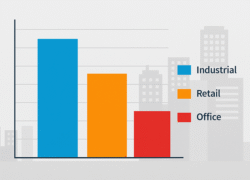
Poland’s commercial real estate (CRE) market recorded investment turnover exceeding €1.5 billion in the first half of 2025, down 11% compared with the same period last year, but supported by the highest number of transactions since 2021. A total of 61 deals were signed, reflecting a particularly active market despite lingering macroeconomic headwinds.

The industrial sector was the standout performer, generating €694 million in investment—nearly 140% more than in H1 2024. Much of this growth was driven by sale-and-leaseback transactions, which have become a key source of liquidity for corporates and an attractive long-term income product for investors. The largest deal was Realty Income’s €253.5 million purchase of two Eko-Okna factories, marking the biggest sale-and-leaseback agreement in Central and Eastern Europe. Other notable deals included the sale of LPP’s distribution centre in Bydgoszcz to Reico Long Lease Fund and Adventum International’s acquisition of four industrial assets in Silesia.

The office market remained more subdued, with total investment reaching €414 million—about half of H1 2024 levels. However, transaction activity was high, with 23 deals recorded. Warsaw accounted for 53% of the volume, led by UNIQA Real Estate’s €69 million acquisition of Wronia 31 in the Wola district. Regional cities also saw strong activity, particularly Kraków and Wrocław, where Scandinavian investors such as NIAM and Stena RE remained active. Yields for prime Warsaw offices held steady at 6.0%.

Retail saw 23 transactions worth €314 million, dominated by retail parks and smaller shopping centres. Czech newcomer MyPark acquired the A-Centrum Portfolio of 10 retail parks for €54 million, while BIG Poland expanded with the acquisition of Power Park Olsztyn. Wrocław also saw renewed investor interest, with Vastint purchasing the Arkady Wrocławskie complex from Develia for €43 million. Prime yields for shopping centres remained stable at 6.5%, while prime retail park yields compressed to 7.2%, reflecting strong investor demand.

In the living sector, activity is gathering momentum after two weak years. Xior Student Housing completed acquisitions in Warsaw and Wrocław worth nearly €70 million, while financing conditions improved following two rate cuts by the National Bank of Poland, which lowered its reference rate to 5.0% by July 2025.

Poland’s broader economy provides a supportive backdrop. GDP growth is forecast at 3.3% for 2025, inflation is expected to ease to 3.6%, and unemployment remains among the lowest in the EU at 2.8%. With financing costs declining and demand for resilient asset classes—particularly industrial and retail parks—continuing, analysts at JLL, Cushman & Wakefield, and Savills all note that Poland retains its yield premium compared with Western Europe, offering attractive entry opportunities for both regional and international investors.

Looking ahead, domestic private investors and regional capital from Central Europe are expected to remain dominant players, though a gradual return of Western institutional capital is anticipated as borrowing costs stabilise and prime assets come to market.

Trump’s UK Visit in review: Investment Pledges, Energy Tensions and Protests Shape a Divisive Week

Donald Trump’s state visit to the UK delivered headline investment pledges but also exposed deep political divisions at home and abroad.

The UK government announced a £150 billion package of U.S. investment, with projects in data centres, life sciences and advanced manufacturing that could support more than 7,000 jobs. Prime Minister Keir Starmer welcomed the figure as proof of Britain’s global appeal, though analysts noted that such packages often include previously planned capital, raising questions over how much is genuinely new.

Energy policy dominated much of the political debate. At Chequers, Trump urged Starmer to abandon Labour’s ban on new North Sea oil and gas licences, calling wind power “a very expensive joke” and urging Britain to “drill.” Starmer pushed back, insisting his government would honour its pledge of no new exploration while pressing ahead with renewables and nuclear power. The clash echoed across Westminster: Conservatives endorsed Trump’s line while the SNP and Greens condemned it, warning of backsliding on climate commitments. Think tanks including the Grantham Institute stressed that more drilling would have little effect on bills but would undermine net-zero targets.

The visit was also marked by Trump’s striking comments on Russia. He told reporters that Vladimir Putin had “really let me down” over Ukraine, admitting he once thought the war would be “one of the easiest to solve.” European diplomats welcomed the tougher tone but warned that Trump’s suggestion of using oil prices as leverage risks oversimplifying Russia’s strategy. NATO analysts said any peace framework must safeguard Ukrainian sovereignty, a point Kyiv has consistently reinforced.

Public reaction reflected the tensions. Thousands protested across London and other cities, criticising Trump’s record and Starmer’s decision to grant him state honours. Polling shows Trump remains deeply unpopular in Britain, adding domestic pressure to Starmer’s balancing act between securing inward investment and maintaining political credibility.

The visit reinforced the symbolism of the “special relationship” but also highlighted its risks. The investment pledges offer economic promise, yet trade gaps remain without a full UK–U.S. deal. Trump’s energy intervention piles pressure on Starmer’s climate stance, and his rebuke of Putin injects uncertainty into Europe’s most pressing security crisis. Whether the trip is remembered for billions delivered or political costs incurred will depend on what survives beyond the pageantry.

In the short term, the government will use the £150 billion pledge to bolster confidence in the UK economy, particularly in technology and infrastructure sectors. Yet scrutiny will intensify over how much of that sum materialises as new capital and jobs. Energy markets are unlikely to shift on Trump’s rhetoric, but the political debate on North Sea oil could sharpen, with industry lobby groups pushing harder against Labour’s licensing ban. Diplomatically, Trump’s comments on Putin will be parsed in Brussels, Kyiv and Washington, with NATO allies watching for any signs of U.S. repositioning. For Starmer, the challenge will be to convert the symbolism into concrete gains while resisting pressure that could weaken his climate credentials or alienate European partners.

Source: comp.

UK property prices slip as higher borrowing costs and rising supply cool the market

UK property prices are showing fresh signs of softening, with new-seller asking prices in September 2025 posting their first annual decline since January 2024, according to Rightmove. Average asking prices rose 0.4% on the month to £370,257 but were 0.1% lower than a year earlier, with London and southern regions dragging the national figure into negative territory. Rightmove also reported sales agreed running 4% above last year, suggesting demand remains active where homes are priced keenly.

Lender indices point to the same loss of momentum. Nationwide said prices slipped 0.1% month-on-month in August, trimming annual growth to 2.1%, while Halifax recorded a 0.3% monthly rise and 2.2% annual growth, emphasizing a largely flat market in real terms.

The official UK House Price Index showed that, on a seasonally adjusted basis, average prices fell 0.7% between June and July. On a non-seasonally adjusted basis, prices edged up 0.3% over the month and 2.8% over the year, underlining how the direction of travel depends on the measure and adjustment used. Regional variation remains pronounced, with stronger growth in Northern Ireland and parts of the North, and weaker readings in the South.

Survey evidence suggests pricing power continues to ebb. The latest RICS Residential Market Survey shows softer demand and new instructions alongside subdued near-term price expectations, a configuration that typically precedes further modest price falls where sellers resist discounting.

Economists point to three factors behind the dip: affordability still stretched after the 2022–23 mortgage shock; a higher volume of listings giving buyers more choice; and policy uncertainty ahead of the November Budget, particularly around possible property-tax changes that could weigh on higher-value southern markets. Rightmove highlighted the South and London as the main drivers of September’s year-on-year decline, while Reuters flagged the combination of softer house prices and easing rent growth as signs of a broader cooling.

The interest-rate backdrop is also pivotal. The Bank of England held Bank Rate at 4.0% on 18 September, signaling caution amid still-elevated inflation. That pause leaves many borrowers rolling off cheaper fixes facing higher repayments, reinforcing buyer sensitivity to price and pushing vendors toward realistic pricing.

Taken together, the latest data describe a market that is not in freefall but is drifting lower in nominal terms in parts of the country—and falling in real terms once inflation is considered. With stock levels up, rate cuts uncertain, and affordability constrained, agents say the homes that sell are those priced to today’s conditions, not last year’s. Expect continued regional divergence and a gentle grind rather than a sharp correction unless financing costs fall materially.

Source: comp.

Germany Confronts Fiscal Reckoning After Years of Overspending, Merz Warns

Germany is heading into a period of painful fiscal adjustment after Chancellor Friedrich Merz acknowledged the country has been “living beyond our means for years.” His comments, delivered at a party conference in North Rhine-Westphalia, signal a shift in tone from Europe’s largest economy as it confronts swelling welfare obligations, municipal debts and a widening national budget gap.

Merz pledged to launch a programme of municipal debt relief starting in January 2026, a move aimed at easing the pressure on cities and towns weighed down by legacy borrowing. North Rhine-Westphalia alone carries more than €55 billion in municipal liabilities. “We cannot continue as we have,” Merz told delegates, stressing that Germany’s welfare state in its current form is no longer financially sustainable.

The Chancellor’s stark language was widely reported, though some coverage has pushed further than his words. While British media ran headlines declaring that Germany “faces ruin,” there is no verified record of Merz using such terminology. Wire services including Reuters quoted him directly on overspending and the need for reform, but not on impending collapse. Economists also caution that while Germany faces serious fiscal strain, its credit standing remains solid and it retains ample room to legislate budgets and borrow responsibly.

The fiscal outlook is nevertheless daunting. According to the Financial Times, Germany faces a budget gap of around €170 billion by 2029, even after making use of special borrowing vehicles for defence and infrastructure. Finance ministry documents released in July confirm the scale of the challenge, warning that pensions and social security costs will keep rising sharply unless structural reforms are implemented.

Berlin has already passed its 2025 budget, which departs from fiscal orthodoxy by expanding public investment through special funds, partly to bolster economic growth and meet NATO defence spending commitments. The move demonstrates capacity to act, but it also highlights the tension between investing in future competitiveness and consolidating public finances.

Merz’s intervention reflects both political and economic pressures. His CDU-led government must steer between voters anxious about welfare security and business leaders demanding stability and competitiveness. Economists are split: some argue Germany must ease its constitutional “debt brake” to enable more investment, while others warn that loosening fiscal rules risks undermining the discipline that has long anchored the country’s economic credibility.

The Chancellor’s warning that Germany has lived beyond its means is an unusually blunt admission from a leader of Europe’s economic powerhouse. But the suggestion that the country is on the brink of ruin is overstated. Germany’s challenge is not imminent collapse but the longer-term sustainability of its social and fiscal model. Demographics, welfare costs and global competition will force difficult choices in the years ahead.

For now, Berlin is signalling that it will tighten the belt where necessary while trying to preserve its ability to invest in the economy of tomorrow. Whether that balance can be struck without undermining growth—or shaking Germany’s political consensus—will be the defining question of Merz’s chancellorship.

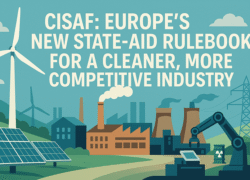
CISAF: Europe’s new state-aid rulebook for a cleaner, more competitive industry

The European Commission has adopted a permanent state-aid framework to underpin its Clean Industrial Deal (CID), replacing the crisis-era regime that carried the EU through the energy shock and early cleantech race. The Clean Industrial Deal State Aid Framework, or CISAF, applies from 25 June 2025 to 31 December 2030 and succeeds the Temporary Crisis and Transition Framework (TCTF). Brussels says the change offers a longer planning horizon and clearer pathways for supporting renewables, industrial decarbonisation and net-zero manufacturing while aligning with existing guidelines such as the CEEAG and the General Block Exemption Regulation.

CISAF’s centre of gravity is faster deployment of clean energy and flexibility. It streamlines approval for aid that rolls out renewables and storage—including hydrogen and other low-carbon fuels—and introduces a “target-model” approach to capacity mechanisms so member states can integrate more variable wind and solar without jeopardising security of supply. Designs that meet the model can obtain quicker clearance, while other formats fall back to assessment under the CEEAG.

On the demand side, the framework allows temporary electricity-cost relief for energy-intensive users exposed to global competition, provided beneficiaries invest in decarbonisation. It also opens multiple routes to support emissions cuts at existing plants—electrification, hydrogen, sustainable fuels and carbon capture—through tenders or direct aid with funding caps for very large projects, or via competitive bidding to set maximum aid levels. To anchor supply chains in Europe, CISAF lets governments back new manufacturing capacity for technologies covered by the Net-Zero Industry Act and the production and processing of critical raw materials. In defined cases, “matching aid” can be granted to counter subsidies offered in third countries, and tax measures can accelerate the amortisation of clean-tech investments.

The Commission has already begun applying the framework. In August it cleared an €11 billion French scheme to support three floating offshore wind farms using contracts for difference—one of the first large approvals aligned with the CID’s objectives and an early test of CISAF’s streamlined approach. More national schemes are expected as member states shift TCTF programmes into the new regime.

CISAF is not a blank cheque. Most measures still require prior notification and must run through aid schemes rather than one-off permissions, a constraint that some industry groups say could slow momentum. The Commission argues that predictability—and convergence on capacity-market designs—should cut approval times and reduce fragmentation across the single market. The framework also coexists with the CEEAG and the GBER, which remains available for certain green-aid categories without notification and is being revised to expand simplified options.

Whether CISAF proves to be an efficient catalyst will depend on speed and scale. If member states mobilise competitive tenders for industrial decarbonisation, use matching aid judiciously to keep strategic factories in Europe, and pair renewable build-out with robust flexibility and capacity mechanisms, the framework could give the CID real bite. Early approvals like France’s offshore wind package suggest the pipeline is forming; the next six to twelve months will show whether national budgets and Brussels’ processes can translate the rulebook into projects on the ground.

Source: CMS

Romania drafts emergency ordinance to fast-track biomethane into the gas grid

Romania is preparing a government emergency ordinance (GEO) to create a full legal pathway for producing, trading and injecting biomethane into the national gas system, a step long sought by developers as the country looks to decarbonise heating and cut landfill emissions. A draft published for consultation amends the Electricity and Natural Gas Law No. 123/2012—tightening definitions such as “biogas,” “biomethane,” “injection installation” and “guarantee of origin”—and sets out producer rights and duties broadly aligned with those for natural-gas producers. The proposal clarifies licensing, quality and odourisation requirements, metering and pressure-regulation obligations at the point of entry, and assigns connection and injection-facility costs to producers, while granting access rights to the distribution system subject to ANRE approval of technical and commercial rules.

Industry interest is high because Romania’s gas grid can move “green molecules” with relatively modest adaptations. While transmission lines total roughly 13,400 km and one major distributor alone operates about 26,000 km, recent analyses put the country’s combined gas distribution network at more than 50,000 km—ample reach to absorb early biomethane projects if interconnection standards are finalised.

The GEO lands alongside national targets that elevate biomethane from concept to policy. Romania’s Energy Strategy 2025–2035 sets a 5% biomethane share in gas flows by 2030 and 10% by 2050, with technical potential estimated at about 501 kilotons of oil equivalent from agricultural residues and waste by mid-century. The European Biogas Association and CEE market studies likewise rank Romania among the EU’s top growth candidates—around 2 bcm a year by 2030, rising toward 8 bcm by 2050—if permitting, grid access and offtake rules are streamlined.

Momentum is building at project level. In 2024, Black Sea Oil & Gas and DN Agrar announced plans for what they described as Romania’s first large biomethane plant, designed to inject into existing pipelines—an example of the “waste-to-grid” model the new ordinance aims to replicate at scale. The Ministry of Energy has also flagged the GEO as part of measures to cushion households and industry from the EU’s incoming ETS-2 costs by substituting fossil gas with renewable gas where feasible.

If adopted as drafted, the ordinance would give producers predictable interconnection rules, clarify responsibilities between plant operators and downstream system operators, and codify tariffing and easement procedures—key bottlenecks to date. The policy’s success will hinge on swift secondary regulations from ANRE and workable grid-quality standards, but Romania’s combination of feedstock, storage assets and a far-reaching gas network gives it a credible shot at becoming a regional biomethane leader.

Source CMS

LATEST NEWS