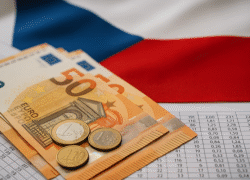
Mortgage Costs Rise as Wages Struggle to Keep Pace in Romania

Romanian households face growing pressure from mortgage repayments in 2025, as a combination of higher property prices and elevated interest rates weighs on affordability.

According to data from the National Institute of Statistics (INS), the average net monthly wage in July stood at around RON 5,517 (€1,088), only modestly higher than a year earlier. Over the same period, housing prices in Bucharest have continued to climb. Market records compiled by the National Agency for Cadastre and Land Registration (ANCPI) point to apartment prices in the capital averaging close to €1,800–1,900 per square metre, with new-build units often exceeding €2,000 per square metre.

At these levels, a typical 50 square metre apartment in Bucharest can cost between €90,000 and €105,000. Financing such a purchase with a 25-year mortgage exposes buyers to interest rates that have risen steadily since 2022. Figures from the National Bank of Romania (BNR) show that average mortgage rates on new loans hovered between 5.5% and 6.0% in mid-2025, reflecting the central bank’s decision to maintain its benchmark rate at 6.5%.

This combination of rising prices and higher borrowing costs means monthly repayments now absorb a larger share of household income. A €90,000 loan at current rates translates into repayments of roughly €580–600 per month, while a €105,000 loan requires closer to €670 per month. Measured against the average national wage, this represents over half of monthly earnings. For residents of Bucharest, where salaries are typically about a quarter higher than the national figure, the burden is somewhat lighter but still significant.

Regulators remain alert to the risks. The BNR enforces a ceiling that limits monthly debt service to 40% of net income when banks grant new loans, a safeguard introduced to reduce the likelihood of defaults. Even so, households taking on mortgages at today’s rates often need higher incomes, larger down payments, or family support to stay within the limits.

The picture contrasts with the boom years before the global financial crisis, when many borrowers were granted loans that far exceeded sustainable income ratios. Although affordability is again tightening, Romania’s housing finance market remains better capitalised and more conservative than in the past.

Looking ahead, analysts note that further wage growth and a gradual easing of interest rates would be needed to restore balance between incomes and borrowing costs. Until then, mortgage affordability will remain a pressing concern, particularly for first-time buyers in Bucharest and other large cities.
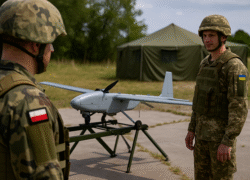

Poland and Ukraine Expand Cooperation on Drone Technology and Defence Industry

Poland and Ukraine have deepened their defence partnership with new agreements focused on unmanned systems, training, and industrial collaboration. The measures were announced during the Polish defence minister’s visit to Kyiv in mid-September.

At the centre of the package is a Joint Working Group on Unmanned Aerial Systems, designed to pool Ukrainian battlefield experience with Polish technical capacity. The memorandum commits both ministries to closer cooperation on developing and countering drones, while also setting up regular channels for information exchange. Reuters has reported that training activities will include a Polish facility in Lipa, though specific details remain under discussion.

The initiative is closely linked to the NATO–Ukraine Joint Analysis, Training and Education Centre (JATEC) in Bydgoszcz, which was launched in February 2025. JATEC’s mission is to capture Ukrainian frontline lessons—particularly in drone warfare and electronic countermeasures—and integrate them into NATO doctrine and training. By aligning with this centre, Poland aims to reinforce its position as a key hub for allied innovation and certification in counter-UAS technologies.

For the Polish Armed Forces, the cooperation offers access to tested battlefield methods such as managing drone swarms and protecting systems against electronic warfare. Defence planners argue that integrating this knowledge into procurement decisions will reduce the risk of investing in equipment unsuited for modern combat.

The ministries have also signalled intent to promote joint ventures involving Polish, Ukrainian and US companies. These ventures are expected to focus on co-design, production and servicing of equipment in Poland. Analysts note that the effectiveness of such projects will depend on how far Warsaw allows competition and private investment to play a role, rather than relying solely on state monopolies and lengthy tender processes.

The agreements reflect broader momentum among NATO members to adapt quickly to emerging threats. At the Warsaw Security Forum in late September, Ukrainian officials urged allies to build a shared “drone shield” for Europe, offering training and technology transfer as part of the effort.

For Poland, the new cooperation provides both strategic and industrial opportunities: frontline knowledge from Ukraine, a stronger position within NATO’s innovation agenda, and potential growth for its domestic defence sector. Whether it delivers long-term benefits will depend on the ability to combine battlefield lessons with open market principles to drive faster, cheaper and more resilient solutions.

Source: Warsaw Enterprise Institute (WEI)

Grieshaber Logistik Secures 31,000 sqm Lease in Rothenburg ob der Tauber

Grieshaber Logistik GmbH has taken up around 31,000 square metres of logistics and office space in Rothenburg ob der Tauber, Bavaria. The deal was arranged by real estate consultancy Logivest, with the property owned by Livos Group.

The contract logistics provider was seeking a new hub for handling white goods with direct access to Germany’s motorway network. The site on Erlbacher Straße offers connections to the A7 north–south corridor and lies about 15 minutes from the Feuchtwangen junction with the A6 east–west route, giving it strong regional and international reach.

“The Nuremberg metropolitan area, which includes Rothenburg ob der Tauber, is highly attractive for logistics thanks to its central position and strong transport links,” said Stefan Moor, Head of Industrial and Logistics Letting at Logivest in Nuremberg.

The property forms part of the Südost industrial park and sits within a larger logistics complex. It provides 24/7 secured access, multiple loading ramps and a rooftop photovoltaic installation. Grieshaber has already occupied nearly 30,000 square metres of warehouse space along with around 1,200 square metres of offices.

IntReal Luxembourg Strengthens Management with Appointment of Krzysztof Dudek

IntReal Luxembourg S.A., the Luxembourg subsidiary of IntReal International Real Estate Kapitalverwaltungsgesellschaft mbH, has appointed Krzysztof Dudek to its Management Board as Conducting Officer, effective 1 October 2025. His remit will cover compliance, risk management and outsourcing, subject to approval by Luxembourg’s financial regulator (CSSF). He succeeds Stephan Schilken, who has left the company by mutual agreement to pursue new opportunities.

Dudek brings nearly two decades of experience in the financial sector, including more than ten years in Luxembourg as a conducting officer. A graduate of the University of Gdańsk with a degree in economics, he began his career in 2005 at GE Capital as a credit and market risk analyst. He later held senior risk management positions at several financial institutions before being appointed Head of Risk Management and Conducting Officer at MUFG Lux Management Company in 2013. There, he oversaw the risk management of more than 150 fund vehicles with assets totalling about €20 billion.

In 2017, Dudek joined EQT Fund Management in Luxembourg as Risk Director and Conducting Officer, leading the company’s risk, compliance, valuation and IT functions. From 2022 to 2023 he also served as Group Risk Director for the EQT Group.

Commenting on the appointment, Andreas Ertle, Managing Director of INTREAL and Chair of the Board of Directors of IntReal Luxembourg, said Dudek’s leadership experience and international network make him a strong addition to the management team. Ertle added that the move is part of INTREAL’s broader internationalisation strategy, positioning the Luxembourg office to provide a wider range of services to international clients while leveraging the resources of the group.

Crestyl Launches New Investor Fund Backed by Flagship Prague Projects

Crestyl has introduced a new investment vehicle designed for qualified investors, aimed at raising capital for its residential and commercial developments in Central Europe. The fund will focus on projects in Czechia and Poland, spanning everything from early-stage planning to operational assets.

The company, which has been active in the market for more than two decades and manages assets worth around €1.4 billion, is positioning the fund as a way to broaden its financing base while keeping control over its own pipeline. Among the first schemes expected to benefit are Prague’s large-scale Hagibor and Savarin projects, as well as the BOKA Pankrác development.

According to Crestyl, the vehicle is structured to provide investors with a priority return of up to seven percent annually, though actual performance will depend on market conditions. Investments are expected to start from CZK 250 million per project, with the overall portfolio targeted to reach between CZK 2–3 billion.

The fund is being distributed through AVANT Investment Company, which specialises in managing qualified-investor vehicles in the Czech market. Entry levels begin at around CZK 1 million, with the recommended holding period set at several years.

For investors, the attraction lies in gaining exposure to some of Prague’s most prominent urban regeneration projects at a time when planning approvals and construction activity are beginning to move forward. Savarin, a mixed-use redevelopment in the city centre, recently cleared key permitting steps, while Hagibor, a multi-phase residential-led scheme in Prague 10, has already begun delivery.

Market observers note that while development-linked funds can offer direct access to high-profile schemes, they also carry risks tied to construction, permitting and the timing of sales. Crestyl argues that its size, established track record and diversified pipeline provide a measure of resilience as it seeks to draw institutional and private wealth into its next stage of growth.

Image: Hagibor, Crestyl

WELL PACK Expands Lease at CTPark Budapest West

WELL PACK Hungária has expanded its space at CTPark Budapest West in Biatorbágy to 5,200 square metres, strengthening a relationship with CTP that has been in place since 2018.

The additional space is part of renovated halls at the park, which carry a BREEAM “Very Good” rating. According to CTP, the buildings feature energy-efficient systems including heat pumps and are being fitted with rooftop solar panels. WELL PACK said the expansion provides both stability and flexibility for its operations in Hungary.

CTP describes the deal as another step in a partnership built on long-term growth. “The expansion of WELL PACK is particularly gratifying for us, as we are deepening our cooperation with a long-standing partner,” said András Kiss, Regional Business Development Manager at CTP Hungary.

WELL PACK is active in pallet inspection and repair as well as wider logistics services. The company applies circular economy principles at its Biatorbágy site, including re-use, repair and recycling practices. “Our relationship with CTP has proven its strength and viability many times over the past years. Now that we are expanding again, we can count on the same cooperation and flexibility,” said Petr Bělohradský, Head of Business Development at WELL PACK.

CTPark Budapest West is Hungary’s largest logistics and industrial park, strategically located at the intersection of the M0 and M1 motorways, providing connections to Budapest, western Hungary and international markets. With a built-up area of around 300,000 square metres, the park houses a wide range of tenants and continues to attract expansions from existing occupiers.

ROSSMANN to Open Largest Czech Distribution Hub at CTPark Prague North

CTP has agreed a lease with drugstore chain ROSSMANN for a new 30,000 sqm logistics centre at CTPark Prague North, with completion scheduled for 2026. The scheme will become the retailer’s largest distribution hub in the Czech Republic, designed to support both store expansion and e-commerce growth.

ROSSMANN is investing more than CZK 500 million (€20.6 million) in the facility, its biggest single outlay since entering the Czech market over 30 years ago. CTP is reported to be contributing a further CZK 750 million in construction costs.

The building will be fitted with advanced logistics technologies including AI-supported inventory management, automated pick-tower systems and goods-to-person flows, which are expected to reduce picker walking distances from around 12 kilometres to just two kilometres per shift. Sustainability is also central to the project, which is being developed to achieve a BREEAM Outstanding certification.

Situated on the D8 motorway north of Prague, CTPark Prague North offers direct links to the capital and the wider country. The park provides extensive on-site amenities through CTP’s Clubhaus concept, including a cafeteria, amphitheatre, medical point, minimarket and sports facilities.

The transaction was brokered by Cushman & Wakefield. Karol Jakubek, Managing Director of ROSSMANN Czech Republic, said the new distribution hub will serve as the heart of the company’s national network, with full utilisation expected by 2027.

EU Sends Further Recovery Funds to Czechia as Reform Progress Continues

Czechia has received another major instalment of European recovery funding, worth around €1.6 billion, after Brussels confirmed that the country had delivered on a new set of reform and investment targets. This is the fourth payment linked to Prague’s national recovery plan, which is supported by a mix of EU grants and loans.

The money follows a request submitted by the Czech government in June, which listed dozens of reforms and investment projects. These include efforts to expand renewable power, strengthen the electricity grid, and simplify the rules for connecting new capacity. Healthcare is another priority: funds will go into modernising hospitals and rehabilitation centres, alongside purchases of new equipment designed to raise the standard of patient care.

The European Commission gave its initial approval in July and, after clearing final checks with EU member states, released the money in late September. With this transfer, Czechia has now received roughly two-thirds of the money available to it under the programme, which altogether provides €8.4 billion in grants and just under half a billion in loans.

Brussels has made clear that payouts are tied to progress, rather than being automatic. In practice this means governments must prove they have met specific goals before further tranches are released. Analysts say this conditional approach has helped maintain momentum in Prague, which is seen as one of the more advanced countries in the region in drawing down the funds.

The focus on energy and health matches broader EU aims of accelerating the green transition and improving social resilience. However, observers caution that Czechia still faces the challenge of pushing reforms through a complex permitting system and ensuring that investment projects are delivered on schedule. There has also been some debate over the size of the latest disbursement, with Czech media citing figures closer to €1.8 billion depending on how the amounts are calculated, though the Commission put the net transfer at €1.6 billion.

For the government in Prague, the release of fresh funds is both a financial boost and a reminder of the work still required. More than half of the agreed milestones have now been met, but further reforms will be necessary if Czechia is to unlock the remainder of its recovery package.

Capital Edges Back Into Europe’s Real Estate Market

European property investment volumes remain well below the highs of the last cycle, but signs are emerging that capital is gradually returning to core markets and asset classes. A headline signal came in July when Union Investment completed the off-market sale of Finsbury Circus House in the City of London to DARE, a joint venture between Aware Super and Delancey. Trade press reports guided pricing around £140 million, making it one of the most significant prime office deals in London this year. For Union Investment, the disposal marked a first major transaction under Karim Esch, who joined the company’s management board on 1 July with responsibility for investment management.

Esch believes the market is entering a new phase. “Yes, a turnaround is in progress – at least in certain markets and asset classes,” he said. He argues that after a decade of artificially low rates, real estate is returning to normal conditions where it is a core component of portfolios but no longer a substitute for fixed income.

The wider market picture reflects this cautious optimism. According to Savills, European investment volumes reached roughly €95 billion in the first half of 2025, an increase of about 11 percent compared with the same period last year. BNP Paribas Real Estate, using a narrower scope, reported €76.7 billion, also slightly higher than in 2024. In Germany, CBRE tracked €14.2 billion of transactions in the first half, a two percent decline year on year. The divergence underlines the patchy recovery: while cross-border portfolios and gateway cities are seeing renewed attention, other markets remain subdued. David Hutchings, Head of Investment Strategy for EMEA Capital Markets at Cushman & Wakefield, said the market is already in the middle of a new cycle that will continue to accelerate over the course of the year. James Burke, Director of Global Cross Border Investment at Savills, added that several large portfolios brought to market over the summer had lifted confidence.

Esch sees logistics, grocery-anchored retail and hotels as sectors where buyers and sellers are already finding common ground. Residential is also moving, while shopping centres are regaining resilience as owners add food retail and improve occupancy. Burke points to renewed investor interest in retail in markets such as Spain, Italy and the Netherlands. Offices remain more selective. Space-efficient layouts, flexible fit-outs and strong ESG credentials are in demand, but secondary assets are harder to trade. “We’re seeing a kind of hotelisation of the office world, with more emphasis on community space and amenities,” Esch said.

He also believes Europe is well placed to attract international capital, particularly as some investors look for alternatives to the US. Economists abroad expect Germany to play a leading role in Europe’s recovery, and foreign capital will follow. Core and core-plus investors, including family offices and sovereign wealth funds, are increasingly active alongside opportunistic players, according to both Union Investment and Cushman & Wakefield. Hutchings noted that the market is becoming more balanced as the number of long-term holders willing to transact increases.

For Esch, the message to clients is clear: real estate remains a long-term component of diversified portfolios. “Anyone who redeems their fund units now is getting out just when property prices are rising again. It’s better to invest continuously in real estate through all cycles,” he said.

Source: Union Investment
Photo: Karim Esch, Chief Investment Officer (CIO), Union Investment Real Estate GmbH

Czech Savings Rates Hold Steady as Banks Compete With Bonus Offers

Czech households looking to grow their savings are finding little change in bank offers this autumn, with most institutions keeping rates in line with the central bank’s steady policy. The Czech National Bank has held its key rate at 3.5 percent since May, and the broader retail market has followed suit.

For the majority of savers, standard accounts return between two and three percent annually. Several banks advertise higher yields, but these are usually tied to additional conditions such as regular card payments, monthly income thresholds, or linked investment products.

Among the most competitive offers are those from banks willing to boost returns through bonus structures. Some lenders provide up to four percent interest if clients meet spending or investment requirements, though the underlying base rate is typically much lower. Other providers, such as Creditas and Česká spořitelna, combine modest headline rates with opportunities to earn extra percentage points when customers channel funds into pension savings or mutual funds.

Trinity Bank has positioned itself as an exception, promising close to three and a half percent without deposit caps or activity hurdles, but most large lenders continue to rely on incentive schemes. ČSOB, for instance, reserves its top tier of four percent for clients who combine salary transfers, card payments, and retirement contributions.

Smaller players such as Partners Banka and mBank offer just over three percent, while long-established brands including Fio and UniCredit hover slightly lower, again depending on which account package the client chooses. Moneta and Air Bank remain below the three percent threshold for their mainstream savings products, with limited chances to lift returns through bundled services.

Overall, the Czech retail market remains firmly anchored to the central bank’s rate path. Unless policymakers adjust borrowing costs, savers are unlikely to see dramatic shifts in account yields. Instead, competition is playing out in the form of conditional bonuses, leaving customers to weigh whether the extra effort is worth the marginal gains.

Source: CTK

LATEST NEWS