Taxpayers Channel Record Support to Non-Profits in Poland

Polish charities and social organisations received record financial backing this year as more people chose to divert part of their income tax to good causes. According to figures from the Ministry of Finance, almost PLN 2.3 billion was passed on to non-profit groups, an increase of roughly PLN 400 million compared with last year.

Around 12.7 million people took advantage of the option, up from about 11 million a year earlier. The average amount transferred rose as well, with independent analysis suggesting that each donation amounted to just over PLN 180. This marks a notable rise in both participation and generosity.

Officials highlighted that the strong result reflects a growing awareness among taxpayers that their annual tax filing can directly support community services, healthcare initiatives and children’s charities. The National Freedom Institute, which maintains the register of eligible organisations, confirmed that thousands of groups across the country benefited from this year’s transfers.

Many taxpayers made their contributions through the government’s online tax filing system, which allows individuals to repeat last year’s choice of beneficiary or select a new one. To receive funds, organisations must be officially registered and have a valid account recorded with the authorities.

The record amount directed to the non-profit sector in 2025 underscores the expanding role of this funding mechanism in sustaining social projects across Poland, with expectations that support will continue to grow in the coming years.

Source: gov.pl

Polish Households Gain Slightly as Companies Feel Pressure in Q2 2025

Poland’s economy delivered mixed signals in the second quarter of 2025, with household incomes showing a modest improvement while corporate profitability came under strain.

Data from the national statistics office show that households saw a slight increase in real earnings compared with the previous quarter. This was enough to support stronger spending, with per-person consumption rising more quickly. Families also put aside more money than in the first quarter, though their savings rate remains lower than a year ago. Average monthly pay continued to climb in real terms, underpinned by steady wage growth, helping to boost purchasing power.

On the business side, non-financial companies faced a squeeze. Profitability slipped compared with both the start of the year and the same period in 2024. Rising labour costs were the main driver, increasing at a pace well above inflation. Despite this, investment activity was broadly steady on a quarterly basis, although lower than a year earlier.

At the macroeconomic level, gross domestic product expanded by half a percent over the previous quarter and by 2.6 percent year-on-year. This matches other indicators pointing to moderate but continuing growth through the first half of the year.

Consumer prices in September rose at an annual rate of 2.9 percent, close to the central bank’s target. Food remained one of the strongest upward pressures, though forecasts of larger harvests in 2025 may ease price growth in the coming months.

The overall picture is one of resilience on the household side, where higher wages and steady employment are keeping consumption afloat, set against tighter margins in the corporate sector. With inflation cooling and output growth holding steady, the second half of the year will hinge on whether businesses can adjust to rising costs without cutting back investment.

Source: GUS

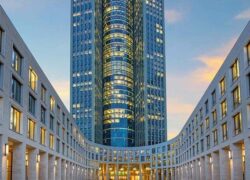
Deka Immobilien Leases Office Space in Tower 185 in Frankfurt am Main to BNY

Deka Immobilien has signed a long-term lease with BNY for office space in Tower 185 in Frankfurt am Main. The agreement covers 3,725 square metres across three interconnected floors of the building, along with 20 parking spaces. BNY plans to relocate its 250 employees in Germany to the site in August 2026.

Tower 185, located at Friedrich-Ebert-Anlage 35–37, was completed in 2012 and acquired by Deka Immobilien in 2018. With more than 100,000 square metres of leasable area, it is the largest office building in Frankfurt and one of the city’s most prominent towers at 200 metres high. Positioned between the exhibition centre, main railway station and the banking and European quarter, it accommodates a broad tenant base in sectors including finance, consulting, law and recruitment. Current occupiers include PwC Germany and HKP.

The property holds both LEED Gold certification and the DGNB Gold seal, recognising its sustainable design and operational standards.

Vastint Romania Expands Flexible Office Strategy and Deepens Tenant-Centric Vision

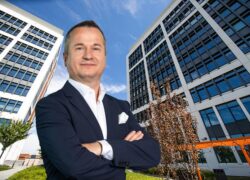
Vastint Romania is reinforcing its position in Bucharest’s office market by integrating flexible office concepts into its landmark Business Garden development. In an interview with CIJ EUROPE, Antoniu Panait, General Manager of Vastint Romania, outlined how partnerships, sustainability, and tenant-focused amenities are shaping the company’s long-term strategy.

This summer Vastint partnered with IWG to introduce 1,900 square metres of flexible workspace within Business Garden. Panait described this as a “win-win” approach: tenants can begin with short-term solutions and expand into larger, long-term leases within the same project as their needs evolve. Vastint has also developed an additional 2,000 sqm of “ready flex” space, already nearly fully leased. “It’s an incubator concept—small tenants can start with a few desks and later grow into larger spaces we provide. It creates a pipeline for our long-term occupancy,” Panait explained.

Business Garden’s appeal extends beyond workspace flexibility. Vastint has added a range of amenities, from coffee roasteries and event spaces with a dedicated stage to an IKEA plan-and-order shop and access to nearby wellness facilities. Panait stressed that creating a vibrant environment supports productivity, tenant satisfaction, and ultimately asset performance. “Companies are realizing the impact of workplace quality on employee performance. A two or three euro rent difference per square meter is negligible compared to the gains in productivity and retention — especially when weighing a CBD office against a secondary or back-office location,” he said.

On sustainability, Vastint has already delivered LEED Platinum-certified buildings with one of the highest scores in Romania—98 points. Looking ahead, the company aims to exceed 100 points at its Timpuri Noi project by eliminating gas burners entirely and expanding renewable energy use through solar panels and heat pumps. “We started with no compromise on quality, and when we saw how close we were to the highest certifications, we decided to push further,” Panait said. He added that AI tools for analysing building data may play a role in the future, further reducing energy use and carbon emissions.

Vastint is also adapting to hybrid work preferences. With more than three decades of European development experience, the company designs buildings with flexible floor plates, modern building management systems, and security solutions tailored to tenants ranging from banks to tech companies. “Our projects are built to allow any fit-out easily, from open space to specialised layouts,” Panait noted.

Looking ahead, Vastint, with six Business Garden projects already established across Europe, intends to further replicate this successful model, building a consistent brand that multinational tenants can rely on.. “Multinationals want the same quality and standards across their offices, wherever they go,” Panait said. While new sites outside Romania are under consideration, the company remains focused on completing the next phases at Timpuri Noi, which include a significant residential component and expanded amenities such as a swimming pool.

“Our philosophy is to build projects that stand for generations,” Panait concluded. “These buildings are designed to remain adaptable for decades, whether as offices, residential or even hotels in the future. That’s the legacy we want to leave: generous three-meter clear heights and an interior structure that allows future conversions without demolition.”

© 2025 www.cijeurope.com

Catella Reports Share Conversion in September

Catella AB has reported a further adjustment to its share structure following a conversion of Class A to Class B shares in September 2025.

A total of 1,212 Class A shares were converted into the same number of Class B shares, leaving the overall number of shares in the company unchanged at 88.35 million. After the transaction, Catella has 2.34 million Class A shares in issue and just over 86 million Class B shares.

Because Class A shares carry a higher number of votes than Class B shares, the conversion reduces the overall voting rights in the company. Following this change, Catella’s total voting power now stands at about 97.7 million.

The company’s articles of association give holders of Class A shares the option to convert them into Class B shares during defined periods each year. Such moves do not affect the size of the company’s share capital but alter the balance of voting rights between the two classes.

Conversions of this type have taken place on several occasions in recent years. Earlier examples include 55,000 shares converted in January 2024 and 25,500 in March 2023, reflecting an ongoing gradual shift from the higher-voting Class A stock to the more widely held Class B.

Czech Household Income Edges Up, Corporate Profits Dip in Q2 2025

In the second quarter of 2025, Czech households recorded only a slight improvement in their finances, while companies saw a small decline in profitability, according to the latest sector accounts released by the Czech Statistical Office (CZSO).

Seasonally adjusted data show that household income, including both monetary and non-monetary components, rose by just 0.1 percent compared with the previous quarter. Consumption per person increased more strongly, by 0.8 percent. The saving rate also ticked higher, with households setting aside 18.4 percent of their income, a rise of 0.6 percentage point compared with the previous quarter but still two percentage points lower than a year earlier. Real wage income from employment grew by 4.1 percent compared with the same period in 2024, and average monthly pay reached CZK 52,560, representing a 1.4 percent increase over the first quarter and a 4.1 percent gain year-on-year. Household investment slipped slightly to 10.3 percent of income.

Non-financial corporations faced rising costs and weaker profitability. The profit share fell to 43.6 percent, down 0.1 percentage point on the previous quarter and 1.5 percentage points compared with the same quarter last year. Labour costs rose by more than eight percent year-on-year, while the corporate investment rate remained steady at 26.3 percent, though this represented a decline compared with mid-2024.

At the same time, the CZSO refined its estimate of national output. Gross domestic product expanded by 0.5 percent quarter-on-quarter and by 2.6 percent compared with the second quarter of 2024.

Some discrepancies between the press release and data published on the CZSO’s official portal are worth noting. The quarterly sector accounts published on the statistical office’s website suggest household income increased by 0.3 percent rather than 0.1 percent, and that the saving rate fell by 1.5 percentage points rather than rising. Eurostat data on non-financial corporations also indicate that the scale of change in profit shares in the Czech Republic diverges somewhat from broader EU trends, where quarterly movements tend to be smaller.

Despite these inconsistencies, the overall picture remains clear: household incomes in the Czech Republic are growing only slowly, corporate margins are under pressure from rising costs, and GDP growth is steady but moderate.

Source: CZSO

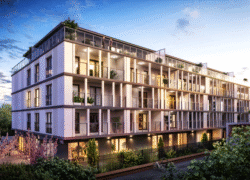
ZEITRAUM Racławicka, Kraków Expands with Nearly 200 Serviced Apartments

ZEITRAUM has opened a new wing of its Racławicka project in Kraków’s Krowodrza district, adding 182 serviced apartments to the mixed-use building. The new section, which mirrors the student residence opened earlier in the summer, will be available to tenants from 1 October.

The units are primarily studios, finished and furnished to hotel standard, and offered under a flexible rental model. Short-term stays can be arranged with services such as cleaning and linen replacement, while longer-term tenants can opt for standard leases at reduced rates. Utilities, internet and television are included in the rent, with access to parking, bicycle storage, electric vehicle chargers, a gym, yoga room and laundry facilities.

ZEITRAUM Racławicka is intended to cater to a range of residents, from students and graduates to young professionals and mobile workers. “We want Racławicka to adapt to people at different stages of their lives and give them options,” said Zdena Noack, managing director of ZEITRAUM.

Located next to the Łobzów railway station, the building is within a short train ride of Kraków Główny and is surrounded by local services, restaurants and cultural venues. The development was carried out by ZEITGEIST Asset Management, ZEITRAUM’s parent company.

Poland: How Have Flat-Building Costs and Land Prices Changed?

In recent years, investment land prices have risen sharply, adding pressure to the economics of residential development. Since 2020, the costs of building new flats have also increased, driven by higher material prices, labour expenses, and financing conditions. Regulatory changes have played an additional role in shaping final sale prices. Adjustments such as the withdrawal of strict parking standards have helped limit potential cost growth, as analysts estimate that enforcing such requirements would have made each square metre of housing significantly more expensive.

Tomasz Kaleta, Managing Director of Sales and Marketing at Develia
Over the last few years, the costs of building flats in Poland have risen steadily, mainly due to inflation, rising land prices, construction materials and labour costs. Although the pace of growth is currently slowing down, key factors such as high prices of investment plots and raw materials remain unchanged. According to data from the Central Statistical Office (GUS), in the second quarter of 2025, the average cost of constructing 1 sq m of new residential building was PLN 6,973. This is less than at the beginning of the year, but still more than in the same period a year earlier.

In view of high construction costs and limited land supply, it is important to manage the investment process effectively. Two years ago, Develia Construction was established within our group, which is responsible for the implementation of 20-25 per cent of projects. This gives us better control over the costs and quality of our investments.

For development companies, the predictability of the regulatory environment is crucial, as it enables responsible investment planning. The proposal to introduce a standard of 1.5 parking spaces per flat in many locations, especially in the centres of large cities, where the availability of land and underground space is limited, could significantly increase construction costs and limit the number of new flats. Ultimately, it was abandoned, leaving the decision to local authorities, which will increase design flexibility and allow investments to be better adapted to local conditions.

Marek Straszak, Regional Construction Manager, Matexi Polska
In the last five years, housing construction costs have undergone two significant upheavals. First during the pandemic and then after the outbreak of the conflict in Ukraine. In both cases, the key factors were disruptions in material supply chains and limited availability of workers, which translated into a sharp increase in costs. From 2020 to mid-2025, the costs of building flats increased by a total of around 50 per cent.

Legal regulations are an additional factor influencing prices. Energy efficiency regulations require the use of increasingly better technical solutions, from high-quality window frames, through more advanced insulation, to heat recovery ventilation systems. From January 2026, a regulation on emergency shelters will also come into force. In practice, this means that the underground parts of buildings will have to be reinforced, which will require significantly more steel and concrete, and thus further increase costs.

It is worth noting that the withdrawal of the so-called parking standard from the amendment to the act was crucial for the economics of many projects, especially in central locations where available plots are small. The requirement to provide 1.5 parking spaces per flat would often force developers to design up to three storeys of underground garages. This solution would increase the cost of the investment by an additional 10-15 per cent, which would translate into even higher flat prices.

Witold Kikolski, member of the management board of MS Waryński Development S.A.
In recent years, the costs of building flats have fluctuated significantly. In 2021–2022, material prices rose by more than 30 per cent year-on-year, while in 2023 the market slowed down. Currently, we are seeing stabilisation and even slight declines in many categories. On the other hand, labour costs continue to rise by 8-10 per cent annually, which means that total investment expenditure is still slowly increasing, according to data from the Central Statistical Office (GUS) – by an average of about 3 per cent per year.

At the same time, investment land prices in large cities remain high, especially in Warsaw, where demand for good locations remains very strong. This means that the difference in production costs between projects implemented in Katowice and Warsaw, for example, is as high as several per cent.

Legal regulations are an additional factor affecting costs. The new development law and stricter energy efficiency requirements have increased investment expenditure by several per cent. However, the greatest burden was borne by the regulations on parking standards, which until recently required investors to provide up to 1.5 parking spaces per flat. This meant that additional floors of underground garages had to be built, which in practice could significantly increase the cost of the entire investment. We therefore welcomed the decision to abolish the rigid standard in August 2025 and transfer the competence to local authorities. This gives greater flexibility in design and allows us to offer customers more reasonable prices, especially in well-connected locations.

Piotr Dobrzyński, Head of Operations and Technical BPI Real Estate Poland – Builder
In the last five years, the costs of building flats, and thus of construction projects, have increased by about 30-50 per cent due to inflation. Labour and material production costs have increased due to higher energy costs. Not all materials have increased in price by the same amount; some, such as steel, polystyrene, mineral wool and wood, have seen a large speculative jump – up to 100 per cent during the pandemic and at the beginning of the conflict in Ukraine. Today, material prices are at fairly low levels due to a decline in demand. Nevertheless, the overall increase in the cost of building materials since 2020 has been around +40%.

As for the impact of new building regulations on flat prices, such as parking standards, due to lower demand for flats, it can be considered that this is not noticeable at the moment. Nevertheless, higher parking standards increase the total area of a building, and thus the non-saleable area, increasing the construction costs of the entire building. With a constant amount of usable floor space, i.e. the so-called PUM, this translates into an increase in the price per square metre of PUM. The amount of the increase depends on the project, but is usually a few or several percent. In special cases, related to the size of the plot, the increased standard could make a given investment unprofitable, as it would be necessary to build, for example, another underground storey, which could result in the investment not being profitable in a given location. Contrary to appearances, the sale price of a parking space in an underground car park does not usually cover the costs of its construction.

Renata Mc Cabe-Kudla, Country Manager at Grupo Lar Polska
Construction costs have risen significantly in recent years due to inflation and the increase in labour costs. Due to the shortage of investment land, its prices are rising every year. Since 2020, we have seen a greater increase in costs than in previous years, partly due to high inflation. New building regulations and the city’s growing expectations regarding the infrastructure built by developers have a very significant impact on the increase in flat prices.

Damian Tomasik, President of the Management Board of Alter Investment
Over the last five years, construction costs have risen steadily, both in terms of materials and labour. The most dynamic growth was observed in 2021–2022, when the prices of steel, concrete and wood increased by as much as several dozen per cent year-on-year. Since 2023, the pace of increases has slowed, but costs are still higher than before the pandemic. At the same time, investment land has become more expensive, in large cities by as much as 40-50 per cent since 2020. New regulations, such as energy efficiency standards and environmental requirements, raise the entry threshold for developers, which naturally affects flat prices. If the provision on mandatory parking standards had been maintained, flats in many projects would have been up to 10-15 per cent more expensive.

Jakub Serek, Director of Construction Cost Planning at Archicom
Construction costs have changed very dynamically in recent years, with many factors influencing their level. Since 2020, we have seen a significant increase in both material prices and labour costs, especially during the pandemic and subsequent spikes in inflation. Currently, the situation is more stable, and the annual increase in costs is within the limits of inflation, which allows for more effective investment planning. However, it is not possible to talk about a single source of increases. In addition to material prices and wages, other important factors included local government obligations to develop infrastructure in the vicinity of housing estates, such as roads, recreational areas and public facilities.

In turn, changes in building regulations, often necessary from the perspective of quality and safety, also increase the costs of investment implementation. An example is the obligation to provide emergency shelters, which will come into force in 2026. Today, however, it is difficult to clearly assess its potential impact. It is therefore clear that the final price of a flat is the result of many overlapping factors, from the costs of land, labour and materials to legal regulations.

Source: dompress.pl
Photo: Develia – Vivre Wroclaw

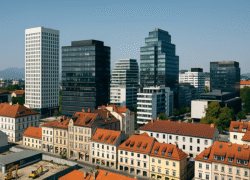
Slovenia’s Real Estate Market Holds Steady in First Half of 2025

Slovenia’s property market showed resilience through the first half of 2025, with steady activity across offices, retail, logistics, hotels and residential. Investment volumes remain modest, but several notable deals confirm continued investor interest in a small but active market.

In the Ljubljana office sector, prime rents edged around €20 per square metre per month, with vacancy staying exceptionally low at below three percent. No new schemes were completed in the first half, though a significant pipeline is moving forward. The largest projects include the Vilharia development of more than 30,000 square metres, the WestLink Campus, and offices within the long-delayed Emonika complex, now scheduled for delivery in late 2027. Market watchers estimate that roughly 90,000 square metres are in progress, underscoring the capital’s role as the focal point for occupiers and investors alike. “Ljubljana’s office market remains supply-constrained, with occupiers competing for modern space and developers focusing on a handful of landmark projects,” noted Colliers in its H1 2025 market review.

Retail remains highly developed and competitive, with activity dominated by established shopping centres and retail parks. The most prominent transaction was SES’s acquisition of the Arkadia Retail Park in Domžale. Consumer spending has been buoyed by rising wages, while retail turnover recorded a modest year-on-year increase. The Emonika project also includes a 22,000 square metre shopping component, which is expected to further reshape the retail landscape when it opens in 2027. CBRE has observed that Ljubljana’s retail market continues to show stable prime rents and yields, with new development opportunities limited, reinforcing the importance of landmark projects like Emonika.

Logistics continued to benefit from strong occupier demand, particularly around Ljubljana and at key motorway junctions. Vacancy stayed low at under five percent, while prime rents ranged from €6.5 to €8 per square metre, with the best locations achieving higher levels. The delivery of LOGspot in Logatec added more than 26,000 square metres of modern warehouse space, while further schemes are planned near Brnik airport and in Sežana. Cushman & Wakefield described Slovenia’s logistics segment as “one of the most undersupplied in the CEE region,” highlighting the potential for new development despite rising construction costs.

Tourism maintained its upward trend, with arrivals rising by about eight percent in the first half and overnight stays reaching nearly seven million. Foreign guests accounted for more than two-thirds of the total. Hotels absorbed more than half of all overnight stays, supported by both business and leisure demand. New capacity is planned at Ljubljana’s main station as part of the Emonika development, alongside a hotel project at Brnik airport.

Residential remained active, with more than 2,500 transactions in the first quarter valued at approximately €420 million. Prices were up just over three percent year on year, driven by gains in existing apartments, while new units saw a slight decline. Permits for new dwellings fell compared to last year, suggesting future supply could tighten.

On the investment side, transactions totalled about €75 million in the first half. Ljubljana accounted for nearly two-thirds of activity, with average deal size around €18 million. In addition to SES’s Arkadia purchase, Generali sold the Stekleni Dvor and Tivoli Centre office towers to Serbia’s Agromarket, while SPAR expanded its logistics capacity near its Ljubljana headquarters.

Yields across all major asset classes remain comparatively high, with prime offices and retail around seven percent and hotels slightly higher. While Slovenia’s investment market is small and often dominated by local or regional buyers, the pipeline of new developments and ongoing occupier demand underline the sector’s stability.

How Cooling Systems Are Shaping the Future of Poland’s Data Centres

Poland’s data centre market is emerging as one of the most dynamic investment destinations in Central and Eastern Europe. With more than 120 facilities already in operation, forecasts suggest national IT load capacity could approach or exceed 500 MW by 2030, nearly three times the current level. While power supply and location remain decisive, industry experts note that the real differentiator for competitiveness is increasingly found in heating, ventilation and air-conditioning (HVAC) and advanced cooling systems.

Cooling has become one of the largest components of running costs, with studies showing that it can account for around a third of a facility’s electricity demand. Although advanced systems require higher upfront capital expenditure, they can lower overall Power Usage Effectiveness ratios and reduce long-term energy bills. Investors are therefore scrutinising whether such systems can pay back within the lifecycle of a facility, which typically stretches to two decades.

The technological challenge is being driven by soaring power density. Only a few years ago, cooling a rack designed for five to ten kilowatts was standard. Now, artificial intelligence and machine learning workloads are creating demand for configurations reaching 50 to 100 kilowatts per rack. This shift is putting pressure on operators to move beyond conventional air cooling toward liquid-based solutions.

Liquid cooling is no longer seen as experimental. Global cloud operators such as Microsoft, Google and AWS have announced facilities across Europe designed with liquid cooling as standard, reflecting a wider industry forecast that as much as 40 percent of data centres worldwide could deploy such systems by the middle of this decade. The technology allows significantly higher computing capacity within the same space and provides a pathway to improved profitability.

Environmental performance is also becoming decisive in investment decisions. Operators are expected not only to disclose their carbon footprint but also to demonstrate concrete decarbonisation measures, such as the recovery of waste heat for use in district heating networks. As European Union regulations on building performance tighten, these elements are shifting from optional features to central requirements for attracting long-term tenants and contracts.

The greatest risk for investors is the rapid pace of technological change. Facilities designed around traditional air cooling may become obsolete within just a few years, prompting developers to focus on modular and upgradeable designs that allow for reconfiguration without shutting down operations. Compliance with forthcoming EU rules on energy reporting and carbon reduction strategies will also require careful planning.

With major global players already present and further capacity coming online in Warsaw, Kraków and Wrocław, Poland is consolidating its position as a regional hub. The competitiveness of its facilities will increasingly depend not only on their scale and location but also on the efficiency and sophistication of their cooling systems.

Source: Marcin Kosieniak, co-owner of the PM Projekt design office

LATEST NEWS