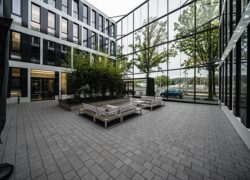
HIH Secures FSC as Tenant in Bonn Office Property

HIH Invest Real Estate has signed a lease agreement with FSC for around 4,600 square metres of office space in the “Haus der Höfe” building at Joseph-Beuys-Allee 2–6 in Bonn. With this contract, the DGNB Gold-certified property will remain fully occupied on a long-term basis.

The new tenant is expected to move in during summer 2026, once the premises have been adapted to meet its requirements. Planned works include adjustments to floor plan layouts to support collaborative and flexible workplace use. The agreement follows the early termination of the lease with the previous occupier, who is consolidating operations at another site.

The four-storey office building, constructed in 2019, provides a total of 7,927 square metres of rental space. It also includes an underground car park with 90 spaces and landscaped courtyards designed for reception and lounge use. The location offers strong transport connections, with Bonn’s main railway station, the “UN Campus” regional train station, a nearby underground station, and access to the A61 and A59 motorways all within close reach.

According to HIH, the property’s central location near Bonn’s museum mile and its modern facilities were key factors in attracting FSC. “The Haus der Höfe offers efficient, high-quality office space with sustainable certification and strong infrastructure. Working with the previous tenant, we were able to ensure a smooth handover and secure a reliable long-term occupier,” said Ken Kuhnke, Head of Major Tenant Management at HIH Real Estate.

The transaction was supported by Colliers’ Cologne office.
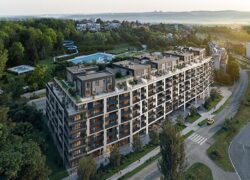
Re.Start Petynka Moves Into Construction Phase with Nearly Half of Units Sold

Geosan Development has begun construction on its largest residential project to date, Re.Start Petynka, in Prague 6. The development will bring 283 apartments to a site that has long remained unused near the Petynka swimming pool. The project is scheduled for completion in the third quarter of 2028, and around 45 percent of the apartments have already been sold.

According to Eliška Koderová, sales director at Geosan Development, early demand has come from both Slovak investors and future residents planning to live in the complex permanently. She noted a recent shift in buyer preferences toward larger and more comfortable layouts, though smaller units continue to appeal to investors. Planned later phases of the project will include premium apartments on the upper floors, such as duplexes and penthouses.

The development is designed to cater to a broad mix of buyers. Smaller 1+kk and 2+kk units are aimed at singles or young couples, as well as investors seeking rental opportunities. Larger family-sized apartments, maisonettes, and penthouses are being positioned for those seeking more space and amenities. Each unit will feature triple-glazed windows, underfloor heating, security doors, and high-quality flooring, with upper-floor apartments additionally fitted with air conditioning.

Beyond residential offerings, the ground floor will include commercial units to serve both residents and the wider neighborhood. Plans include a supermarket, smaller retail shops, and services, with the intention of integrating the development into the daily life of the surrounding community.

The site is located at the border of Břevnov and Střešovice, one of Prague 6’s most desirable areas. It combines a quiet residential environment with proximity to the city center. Nearby amenities include the Petynka swimming pool, Kajetánka and Maxe van der Stoel parks, and the gardens of the Břevnov Monastery. The district also offers a range of schools, health services, cultural venues such as the Dlabačov cinema, and shops and cafés along Bělohorská Street. Public transport links are within walking distance, and Václav Havel Airport can be reached by car in about 20 minutes.

Geosan Development has been active in the Czech residential real estate market for more than 25 years. Since its founding in 1998, the company has delivered nearly 2,350 apartments across 22 buildings. Current projects include Rezidence Radimova in Břevnov, Re.Start Petynka in Prague 6, and Benkova Rezidence in Prague’s Chodov district. The developer is also preparing projects comprising more than 1,500 new apartments in central Prague locations, alongside regional developments such as a 160-plot residential site in Choťánky near Poděbrady. In addition to its residential portfolio, Geosan entered the office property market in 2018 with the acquisition of the Nagano Park complex in Prague 3.

Central and Eastern Europe Sees Strong Growth in Short-Term Rentals

Guest nights booked through major online platforms across the European Union rose sharply in the second quarter of 2025, with Central and Eastern Europe among the standout performers. According to newly published figures, demand for short-stay accommodation continues to climb across the region, building on the rebound in travel since the pandemic.

Poland recorded an increase of more than 17 percent in overnight stays compared to the same period last year, while Germany saw close to a 20 percent rise. Slovakia reported one of the fastest growth rates in Europe, with bookings almost a third higher than in 2024.

The Czech Republic, Hungary, and Romania also experienced year-on-year gains, reflecting a wider pattern across the EU where every member state registered growth. The figures underline both the ongoing recovery of European tourism and the growing reliance on online platforms for arranging accommodation.

In Southern and Western Europe, larger markets such as Spain, France, Italy, and Portugal all recorded strong increases, highlighting the continent-wide nature of the trend. However, the sharp rise in Central and Eastern Europe is particularly notable, suggesting that international travellers are diversifying their destinations and that domestic tourism remains robust.

The data also point to seasonal effects, with April showing especially strong growth compared with last year due to the timing of Easter. Overall, the rising numbers reinforce the importance of digital booking platforms in shaping travel patterns and distributing demand more evenly across Europe’s regions.

Polish Government Tightens Tax Rules for Family Foundations and Raises CIT on Banks

The Polish government has approved two legislative proposals that tighten tax rules for family foundations and raise corporate income tax (CIT) rates for banks, while at the same time reducing the so-called bank tax. The new measures, adopted by the Council of Ministers, are intended both to close loopholes in the Family Foundation Act and to increase state revenues in the coming years.

The first draft law amends the Corporate Income Tax Act with the aim of addressing ways in which family foundations have been used for tax optimisation. According to the government, some entities have been exploiting the legal framework for purposes inconsistent with the original intent of supporting succession planning and wealth management for families. The changes include taxing income from property sales carried out within 36 months of being contributed to a foundation, taxing income earned through tax-transparent entities, and applying controlled foreign company (CFC) rules and exit tax provisions to foundations. Income from short-term rental agreements will also be taxed, and the definition of so-called hidden profits will be broadened to cover cases where loans to founders, beneficiaries, or related persons are repaid by the foundation.

The second proposal amends both the Corporate Income Tax Act and the Act on Tax on Certain Financial Institutions. It introduces a sharp increase in CIT rates for banks, rising from the current 19 percent to 30 percent in 2026, then gradually decreasing to 26 percent in 2027 and 23 percent from 2028 onwards. Banks that currently benefit from the preferential 9 percent rate will also see increases, with their CIT raised to 20 percent in 2026, 16 percent in 2027 and 13 percent from 2028. At the same time, the bank tax – currently set at 0.0366 percent of the tax base – will be reduced to 0.0329 percent in 2027 and 0.0293 percent from 2028.

The Ministry of Finance estimates that the measures will boost state revenues by approximately PLN 6.6 billion in 2026 and PLN 4.7 billion in 2027. The new tax rules are scheduled to take effect on January 1, 2026.

The government argues that the tightening of tax provisions will ensure greater fairness and close gaps in the system, particularly for family foundations. For the banking sector, the higher CIT rates are expected to be partly offset by the reduction in the bank tax, though the overall effect will increase budget revenues. The changes mark one of the most significant shifts in Poland’s tax landscape in recent years, reflecting both fiscal consolidation efforts and a response to evolving financial practices.

Czech Republic Posts 2024 Deficit of 2.2 % of GDP; Q1 2025 Shows Rising Deficit as Employment Rises

The Czech Statistical Office (ČSÚ) has confirmed that in 2024, the general government recorded a deficit equivalent to 2.2 % of GDP, with total public debt reaching 43.6 % of GDP. In the first quarter of 2025, the fiscal picture has weakened: the government posted a deficit of CZK 73.6 billion, or 3.7 % of GDP, compared to the same quarter in 2024. Meanwhile, labour market data for Q2 2025 show modest employment gains, rising economic activity, and one of the region’s lowest unemployment rates.

According to the ČSÚ’s notification to Eurostat, the 2024 budget deficit amounted to CZK 177.2 billion, down from more than CZK 285 billion the year before. Revenues grew by 6.8 % year on year, driven by increases in social contributions, income taxes and taxes on production and imports. Expenditures rose by 2.9 %, with social benefits showing the largest increases and subsidies decreasing. The central government was the main driver of the deficit, while local governments posted a surplus and social security funds recorded a deficit.

In Q1 2025, the deficit deteriorated compared to the same period in 2024 by about CZK 10.7 billion. Revenues for the quarter rose by 4.5 % year on year, reaching 39.8 % of GDP, while expenditure increased 5.5 %, to 43.5 % of GDP. The rise was largely due to higher wages for government employees, rising social benefits, and increased subsidies. Over the same period, public debt rose to CZK 3,539.1 billion, lifting the debt-to-GDP ratio from 43.1 % to 43.4 %.

On the movement in debt, the ČSÚ reports that issued debt securities contributed the most to the increase, with a year-on-year rise of CZK 144.7 billion. Both nominal GDP growth and debt issuance influenced the ratio’s increase; nominal GDP growth moderated the upward pressure, but debt growth overwhelmed it.

Turning to the labour market, the ČSÚ’s Q2 2025 Labour Force Survey reveals that employment increased by 76,200 persons (1.5 % year on year), bringing the total number of employed to 5,243,500. Interestingly, female employment rose by 122,600, while male employment declined by 46,500 — a shift influenced by structural changes and the continued integration of Ukrainian women into the Czech labour force. Older workers (60+) recorded the largest absolute gains, contributing 52,200 to the increase. The services sector accounted for most of the job growth, especially in arts, entertainment and recreation.

The survey also notes that despite the rise in unemployment figures in absolute terms, the unemployment rate remains very low by European standards. The increase in both employment and unemployment suggests that more people entered the labour force, strengthening overall economic activity.

Economists warn that the fiscal deterioration in early 2025 may test Czechia’s ability to maintain responsible public finances, especially given plans to continue supporting defence spending and public sector wages. Meanwhile, the labour market’s tightness and growth in participation provide a supporting narrative for continued domestic demand and resilience in the Czech economy.

Source: ČSÚ

Swiss Life Asset Managers Acquires Senior Citizens’ Centre in Baden-Württemberg

Swiss Life Asset Managers has expanded the portfolio of its Swiss Life REF (DE) European Real Estate Living and Working fund with the acquisition of the Bundschuh Senior Citizens’ Centre in Bruchsal-Untergrombach, Baden-Württemberg. The seller is VVA Vermögensverwaltungs GmbH & Co. KG.

The property provides more than 4,500 square metres of living space, consisting of a new building constructed to the KfW 40 energy efficiency standard and an extensively renovated existing structure. The facility includes 90 care places, organised into residential groups of 15 people per floor as well as an open-plan living model accommodating 45 residents across six floors. Additional capacity is offered through four assisted living apartments with a combined area of 286 square metres.

According to Martin Tillmann Mönch, fund manager at Swiss Life Asset Managers, the investment supports both the company’s ESG strategy and the evolving requirements of care provision. “The combination of an energy-efficient new building, long-term operator commitment and good infrastructure connections makes the property a sustainable investment in every respect,” he said.

A long-term lease has been signed with an established care operator, covering both long-term and short-term care services. The property also offers scope for future upgrades, including the potential installation of solar thermal panels.

Located in the Untergrombach district, the senior citizens’ centre benefits from local infrastructure and transport links. The S-Bahn station, within walking distance, provides a 15-minute connection to Karlsruhe, while shops and facilities for daily needs are located nearby.

Next.Move to Open Largest Branch in Prague’s Churchill II Building

The Churchill II office building in central Prague, owned by Českomoravská Nemovitostní (ČMN), will add a new tenant at the start of 2026. Fitness and wellness operator Next.Move has signed on to open its largest location to date, expanding its network across the city.

Founded in 2022, Next.Move operates four branches in Holešovice, Karlín, Vinohrady, and Smíchov, serving more than 3,000 members. The new Churchill II facility will occupy 1,200 square metres and will be the company’s most extensive space so far. It will include a fitness zone, wellness area, and features such as saunas, cooling pools, red light therapy, and a relaxation lounge. Group classes will also be offered, including Pilates Reformer sessions and training programmes linked to Hyrox competitions.

ČMN’s Vice-Chairman of the Board, Josef Eim, said the addition of Next.Move will broaden the services available to existing Churchill tenants, which include Deloitte, FEG, and Red Bull.

Next.Move’s founder, Julián Jančík, noted that the expansion reflects the company’s focus on integrating exercise and wellbeing into daily routines and extending the concept in a central business district setting.

The Churchill II building, located next to Prague’s main railway station, is recognised as a prime office address. Its accessibility and range of on-site services have attracted a mix of corporate tenants. With Next.Move’s arrival, the complex will add a health and leisure component to its existing commercial offer.

Poland’s Office Market: Recovery Deepens as Limited Supply Supports Prime Assets

Poland’s office market is moving further into recovery, with Warsaw setting the pace amid historically low new supply and firm demand for prime, ESG-compliant space. In Warsaw, new completions totalled about 85,200 sq m in the first half of 2025, led by The Bridge and Office House, underlining a development pipeline that remains tight by historical standards. Market trackers note that the first quarter of 2025 marked the lowest quarterly new supply in more than two decades, reinforcing competition for best-in-class buildings.

Vacancy in the capital stood at just under 11 percent at the end of June, but central zones were tighter, with rates below 8 percent. Leasing in Warsaw reached roughly 301,400 sq m in the first half of the year, with the city centre accounting for the bulk of transactions. Regional hubs are also active: Kraków posted 172,000 sq m of take-up in the same period, its strongest half-year on record.

Tight supply and selective demand are supporting pricing at the top end. In Warsaw’s best buildings, headline rents typically range between €25 and €35 per sq m per month, while prime office yields in Poland are around 6.25 percent in the capital, with higher levels in regional cities. Advisors note that prime European office yields showed early signs of stabilisation and even compression through the second quarter of 2025, a trend investors are watching closely in Central Europe.

On the investment side, activity has been rebuilding. In 2024, Poland recorded around €5 billion in commercial real estate transactions, with offices and retail each accounting for roughly a third of the volume and logistics making up a quarter. In the second quarter of 2025, investment exceeded €1 billion across sectors, with offices remaining active but not always dominant each quarter. The market’s recent benchmark deal remains Warsaw UNIT, sold for €280 million in late 2024, the largest single office transaction in Europe that year.

Macro conditions provide a supportive backdrop. Poland’s nominal GDP is hovering around $1 trillion in 2025, placing it among the top 20 economies worldwide. EU funds and near-shoring continue to underpin occupier expansion in business services and technology. Against this context—and with few speculative starts in the pipeline—Warsaw’s prime segment looks set to remain tight, while older or peripheral stock continues to face higher vacancy and greater re-positioning pressure.

Source: Knight Frank

Villa Bogoria Reaches Topping Out Stage in Warsaw

A topping out ceremony has been held for Villa Bogoria, a residential development located at the intersection of Długa and Stara Nalewka streets, near the Krasiński Garden. The milestone marks the completion of the building’s structural works and moves the project into the next phase of construction.

Work on Villa Bogoria began in mid-2024. The development consists of six above-ground floors and two underground levels, with a total height of 21 metres. The scheme will contain 35 apartments averaging 160 square metres, each with a net room height of three metres. In total, the building offers over 15,000 square metres of floor space, of which around 6,500 square metres will be usable.

The architectural concept, prepared by Juvenes-Projekt, draws on the historical context of Długa Street and pre-war Nalewki Street. The façade is being finished in Piedra Paloma limestone imported from Spain, with large-format windows integrated into the design.

Future residents will have access to a wellness area including a 20-metre swimming pool, sauna, steam room, cooling pool and gym, as well as a lobby and atrium. Apartments will be equipped with a home management system designed to control temperature, humidity, air quality, lighting and shading.

Sales of the apartments are being managed by Villa Bogoria’s development team. STRABAG is acting as the general contractor, with MJL responsible for investment supervision. Interior design for the shared areas is by artist Jacek Synkiewicz, known for his work on Foksal Residence.

According to the construction schedule, façade installation and interior installations are currently underway, with finishing works to follow. The project is expected to be completed in the second half of 2026.

MDC2 Expands Partnership to Support Next Phase of Growth

Polish logistics developer MDC2 has expanded its leadership team by inviting nine senior members of staff to join the partnership, a move the company says strengthens its ability to deliver sustainable and transparent warehouse projects across the country.

The new partners are drawn from all areas of the business, covering development, construction, operations and marketing. They include Development Directors Andrzej Lasocki, Adrian Winiarek and Katarzyna Dudzik; Head of Development Ewa Zawadzka; Head of Development Wojciech Kosiór; Project Director Bartłomiej Kazirod; Head of Construction Jonathan Cohen; Head of Marketing Magda Cieliczko; and Operations Manager Paula Piątkowska-Teter.

Founder Hadley Dean described the expansion of the partnership as an important step for the company. “The appointment of these nine exceptional individuals to Partner is a pivotal moment for us. It is a powerful affirmation of our strategy, the strength of our team, and our confidence in the future of the Polish logistics market. By welcoming nine new partners, we are deepening the expertise and commitment at the very heart of our business. This expanded leadership team will be instrumental in driving our ambitious growth plans and ensuring we continue to lead the market in delivering sustainable, transparent, and class-leading logistics properties for our clients.”

The newly appointed partners join the existing management team of Dean, Jeremy Cordery (Founder and COO), Maciej Madejak (Founder and CDO) and Peter Love (Financial Director, Head of Asset Management).

Ewa Zawadzka said the decision reflects MDC2’s focus on integrating expertise across disciplines into its leadership model. “Joining the partnership is not just a personal honour; it’s a powerful validation and commitment to a ‘one team’ culture. This move embeds expertise from all areas of the business—development, construction, operations and marketing—into the leadership fabric of the company. It ensures we are well positioned to grow our market share in the next phase of development.”

Founded in 2021, MDC2 is focused on modern, environmentally sustainable logistics and industrial developments in Poland. Its current portfolio includes MDC2 Park Gliwice (59,000 sqm), completed in 2023 and rated among Europe’s ten highest BREEAM-certified new construction projects at the Outstanding level, as well as projects in Łódź, Kraków and Gdańsk backed by institutional investors including Invesco, Fortress and Generali Real Estate.

The company places ESG at the core of its operations, having established an ESG committee on its Board of Directors, and emphasises the principle of “building for good” in its approach to development.

LATEST NEWS