Sanae Takaichi: Japan’s First Female Prime Minister and the Return of Conservative Power

Japan is on the verge of a political milestone. For the first time in its history, the country is preparing to swear in a woman as Prime Minister after Sanae Takaichi secured victory in the ruling Liberal Democratic Party’s leadership contest. But while her appointment breaks a barrier in Japanese politics, it also signals a return to a more traditional and nationalist era that could redefine Japan’s domestic and foreign direction.

Takaichi’s rise marks the culmination of a career spanning three decades. Born in Nara Prefecture, she first entered politics in the early 1990s, eventually holding senior cabinet roles including ministerial posts overseeing communications and economic security. Known for her disciplined image and admiration for former Prime Minister Shinzo Abe, Takaichi built her reputation as a conservative loyalist rather than a reformist outsider.

Her ascent reflects both continuity and disruption. Within the Liberal Democratic Party, she has long represented its right-leaning faction, advocating a stronger military, a more assertive foreign policy, and closer alignment with Japan’s post-war traditional values. Yet her position as the country’s first woman to lead a government that has resisted female advancement for decades brings deep contradictions. She opposes key gender reforms such as dual surnames for married couples and female succession to the imperial throne, even as she becomes a symbol of women’s political advancement.

Economically, Takaichi inherits a delicate balance. Japan’s slow growth and rising cost pressures have frustrated households, while the Bank of Japan faces scrutiny over its gradual retreat from ultra-loose policy. During her campaign, she promised direct support to consumers, including potential tax cuts and cash handouts, rather than fiscal restraint. Her critics warn that these populist measures could strain public finances in the world’s most indebted major economy, while supporters view them as overdue stimulus for an economy long trapped in deflationary caution.

On the international stage, Takaichi is expected to adopt a more assertive tone. She has argued for strengthening Japan’s defensive capabilities and revisiting the constraints of the post-war constitution, which renounces war. That stance aligns with a growing consensus inside the security establishment but risks unsettling relations with China and South Korea, both sensitive to signs of Japanese militarisation. Her record includes visits to the controversial Yasukuni Shrine, a gesture that may play well with nationalists at home but often triggers diplomatic protests abroad.

Domestically, her leadership could test the unity of a party that has lost some of its post-Abe cohesion. Moderates in the LDP have expressed concern that her hardline positions may alienate centrist voters, particularly younger urban Japanese who prioritise social inclusivity and economic reform over ideology. Yet Takaichi’s disciplined style and reputation for decisiveness may also help stabilise a government shaken by successive leadership changes.

Her challenge will be to demonstrate that Japan’s first female prime minister can deliver more than symbolism. Supporters expect her to revive economic confidence and give Japan a stronger voice on the world stage. Critics fear she will consolidate conservative power while offering little in terms of gender equality or structural reform.

The coming months will show whether Takaichi can bridge that divide. Her victory has already reshaped Japan’s political narrative; the question is whether she can reshape its trajectory. As the world’s third-largest economy faces demographic decline, security uncertainty, and social change, her tenure will test whether Japan’s future will look more like its modern ambitions—or its traditional past.

Source: comp.
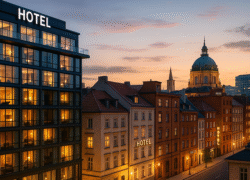
Europe’s Hotels in 2025: Higher Rates, Leaner Services, and Shifting Value Propositions

Hotel performance across Europe’s capitals remains elevated by historical standards, but the underlying product has evolved in ways that matter for both operators and investors. Since 2019, the standard definition of hotel service has shifted from full daily provision to a more balanced model shaped by sustainability, energy management, and structural cost pressures.

Daily housekeeping is no longer guaranteed in much of the mid-market. Many city hotels now clean on request or on alternating days, while luxury operators have restored full service as a brand differentiator. Plastic miniatures have disappeared almost entirely, replaced by refillable dispensers in line with EU environmental directives. These shifts, initially temporary responses to the pandemic and energy crisis, have since hardened into operating norms.

Energy remains a central driver. Since the 2022 energy shock, hotels have invested heavily in efficiency. Climate control now runs within stricter ranges, corridor lighting has been reduced, and linen reuse is promoted as standard. Behind the guest-facing changes lies a capital shift: retrofits in heating systems, solar installations, and EV charging infrastructure are now integral to hotel investment pipelines.

Digitisation has moved from optional to mandatory. Mobile check-ins, app-based room keys, and contactless payments allow operators to offset staffing shortages and improve operational margins. Breakfast service and bars, largely restored, run on shorter timetables with leaner teams. EV chargers, almost absent five years ago, are becoming as important as car parks in positioning urban hotels for demand.

Pricing remains strong. STR and HRS confirm that average daily rates across Europe rose again in 2025, albeit at a slower pace than in 2023–24. London, Paris, and Nordic capitals continue to sit at the top of the scale, while Warsaw, Vilnius, and Riga are the most affordable among major capitals. Weekend and bank-holiday stays illustrate how compressed demand drives volatility: three- or four-day breaks often trigger double-digit price lifts, especially in markets hosting events or with constrained supply.

In Southern and Eastern Europe, dynamics vary widely. Athens remains among the priciest SEE markets, with ADRs nearing €200 in peak months, further elevated by a national accommodation levy introduced this year. Bucharest has recorded rate growth well above inflation, supported by strong occupancy, while Sofia and Belgrade remain at the value end of the market. Zagreb has softened, with rates falling six percent in the first half of 2025, despite higher arrivals, while Ljubljana’s mid-market positioning is reinforced by trade fair-driven seasonality.

For investors, the outlook is clear: European hotels remain resilient, but growth is uneven and highly event-driven. Markets with diversified demand bases, such as London, Paris, and Berlin, continue to support premium pricing. Central and Eastern capitals retain their value positioning but are experiencing upward pressure as modern stock comes online and international brands expand footprints. In Southeastern Europe, policy interventions such as taxes are increasingly material to investment returns, while volatility around events is more pronounced.

Seasonality remains a decisive factor. Rates peak in spring and autumn and dip in late summer where leisure demand cannot offset weaker corporate traffic. Yet pricing discipline has become a consistent feature of the market. Even where occupancy dips, operators have largely avoided aggressive discounting, signalling structural confidence in demand.

The European hotel market of 2025 presents a redefined value proposition. Guests are paying more for rooms, but operators are delivering sustainability, digitisation, and energy efficiency rather than unlimited frills. For investors and developers, the challenge is to recognise where this recalibration strengthens margins and where it risks eroding guest satisfaction.

The sector’s ability to hold elevated rates through a period of structural change confirms hospitality’s enduring resilience as an asset class. But the balance between affordability, service delivery, and environmental responsibility will shape the next investment cycle across Europe’s urban markets.

Editorial Note: Views expressed are prospective and for information only, not financial, legal, or investment advice.

U.S. Homeowners Associations Search for Ways to Curb Rising Fees

Monthly costs for homeowners living in association-governed communities have continued to climb across the United States, prompting a wave of scrutiny and debate over whether the increases reflect genuine expenses or poor financial management.

While critics often accuse homeowners’ associations (HOAs) of inflating fees, housing and policy analysts say the real picture is more complex. Costs are being driven upward by expensive insurance markets, stricter safety rules, and rising prices for materials, utilities, and professional services. In most cases, experts argue, the trend stems less from profit-seeking and more from structural and regulatory pressures.

A growing number of professionals now point to practical reforms that could ease these burdens without undermining property standards or long-term maintenance. One approach gaining traction is regional pooling of insurance policies, allowing multiple associations to negotiate coverage together. Early pilots in states such as Florida and California have reported premium reductions of up to one quarter compared with individual policies.

Financial transparency is another recurring theme. Several states are tightening requirements for public budgets, third-party audits, and open disclosure of reserve funds. Where residents can see how their fees are allocated, disputes tend to drop and satisfaction improves. Analysts note that even small associations benefit when they follow clear accounting standards rather than relying on volunteer boards alone.

Technology is also emerging as a cost-control tool. Associations adopting shared service contracts for utilities, security, and maintenance are seeing meaningful savings, while digital energy systems are helping to reduce consumption and repair costs. New federal and state incentives—such as community retrofit grants—encourage investment in energy-efficient upgrades, easing pressure on future budgets.

In parallel, several states are experimenting with targeted loan programs and matching funds to help older buildings meet new reserve and safety requirements without imposing sudden, steep assessments on owners. These initiatives are intended to balance public safety with affordability after recent structural-failure tragedies prompted tighter oversight.

Specialists in property governance stress that improving training and accountability among HOA boards remains critical. Well-managed associations tend to maintain stable fees and higher property values, while those lacking oversight often face financial shocks and homeowner frustration.

For now, the consensus among housing experts is that fee inflation can be moderated—but not by simple caps or blanket controls. The most effective path appears to combine professional financial management, regional cooperation, and incentives for long-term efficiency.

In short, the rising cost of living in community-managed housing reflects the same pressures affecting the broader U.S. economy: insurance volatility, construction costs, and climate-related risk. Addressing these factors transparently, say analysts, is the only sustainable way to keep HOA living both safe and affordable.

Editorial Note: Views expressed are prospective and for information only, not financial, legal, or investment advice.

Service Charges in Central Europe’s Apartments: Rising Costs and Weak Oversight

Across Central Europe, residents of apartment buildings are paying more each month as service charges climb, driven by energy, insurance and renovation costs. While these increases often reflect genuine expenses, concerns remain about the lack of transparency and the potential for mismanagement in some housing associations.

Austria offers the clearest benchmark, with official statistics showing average operating costs of around €2.5 per square metre per month in 2025, roughly €165 for a mid-sized flat. In Poland, the Czech Republic, Hungary and Slovakia, no unified datasets exist, leaving residents reliant on local administrators and housing cooperatives. Charges vary widely, from Czech repair-fund contributions of 10 to 50 CZK per square metre, to Polish examples where monthly bills for a 75 m² flat can reach close to PLN 900. Hungarian common costs start around HUF 7,000–15,000, with sharper rises in buildings affected by higher insurance premiums.

Much of the recent growth stems from energy and insurance markets, along with new safety and maintenance requirements. Still, isolated corruption cases—such as investigations into Polish cooperatives by the Central Anti-Corruption Bureau—have fueled suspicion. Though case-specific, they highlight weaknesses in oversight and management practices.

Tenant organisations and consumer advocates report increasing frustration over unclear billing. Even where charges are legitimate, explanations are often lacking. In response, some governments are tightening rules. Hungary has introduced a national register of condominium managers, Slovakia and the Czech Republic legally define eligible uses of repair funds, and Austria publishes detailed cost data that allow residents to benchmark their payments.

The European Union’s climate policy is another factor shaping charges. Under the Energy Performance of Buildings Directive and the Renovation Wave initiative, apartment associations are expected to prepare for major efficiency upgrades. These measures may increase contributions today but are intended to reduce long-term energy costs.

Compared with Western Europe, Central Europe’s average charges are not unusually high, but the lack of consistency and transparency remains a challenge. Germany and the Netherlands, for instance, require detailed annual statements that can be contested in housing courts. In Central Europe, the absence of comparable standards leaves residents more exposed to disputes and uncertainty.

The outlook suggests that rising service charges will remain a feature of the region’s housing market. Experts argue that transparency, professional management and regional benchmarks are essential to protect affordability while ensuring buildings remain safe and prepared for Europe’s climate goals.

Editorial Note: This analysis reflects independent and prospective views. It is intended for informational purposes only and should not be considered financial, legal, or investment advice.

Britons Hold Cash as Budget Nears, While Political Mood and Patriotism Evolve

Households across Britain are holding record levels of cash savings ahead of the government’s next fiscal update, as speculation over changes to pension and savings tax rules fuels caution among investors.

Recent financial data indicate that deposits continue to rise despite lower interest rates, suggesting that uncertainty, rather than market returns, is driving the trend. Analysts point to lingering questions over pension allowances and savings incentives as key reasons behind the delay in new investment decisions.

At the same time, research into social attitudes suggests that while Britain’s politics often appear polarised, public opinion remains more nuanced. Studies by academic and policy institutions show that citizens share similar views on many domestic issues, even as divisions deepen around topics such as immigration, governance and national identity. Analysts note that the perceived divide is often amplified by mistrust between groups and by the tone of public debate.

Away from politics and finance, a quieter economic trend has emerged. British manufacturers producing flags and national symbols are reporting stronger demand in 2025, coinciding with an increase in political events, community celebrations and sporting fixtures. For smaller workshops, the rise has provided a steady stream of orders at a time when many industries are facing softer consumer spending.

Together, the three trends capture the mixed mood of the country ahead of the Budget. Households remain cautious with their money, voters appear divided but less sharply than headlines suggest, and a growing appetite for patriotic symbols reflects an ongoing search for shared identity in uncertain times.

Editorial Note: Views expressed are prospective and for information only, not financial, legal, or investment advice.

Europe Debates the Future of ESG: Reform or Retreat?

Once seen as the universal language of responsible business, the concept of ESG—environmental, social and governance—has entered a moment of reckoning in Europe. Policymakers, investors, and campaigners now find themselves debating whether the framework needs refinement, redefinition, or replacement.

At the heart of the discussion is a simple question: has ESG delivered measurable progress for the planet, or has it become another label diluted by marketing and regulation fatigue?

European officials warn that the risks of ignoring sustainability remain severe. “Surface water scarcity alone puts almost 15 percent of the euro area’s economic output at risk,” said Frank Elderson of the European Central Bank earlier this year. His remarks underline the central bank’s growing concern that climate and resource shocks could hit growth, financial stability, and long-term competitiveness.

Some of Europe’s largest investors agree that ESG cannot be abandoned even amid political pushback. “We are in the middle of an ESG backlash… it impacts the market, it impacts companies, it impacts investors,” observed Carine Smith Ihenacho, governance chief at Norway’s sovereign wealth fund. For her, the challenge is not whether to engage but how to keep the focus on long-term value rather than shifting headlines.

Corporate leaders, meanwhile, are calling for a more pragmatic approach. Carine de Boissezon, Chief Impact Officer at EDF, argued that rules can evolve without losing ambition: “Where there is room for smart simplification, let’s tweak the regulation, but we need to stay the course.”

Others are less forgiving of what ESG has become. Sir Douglas Flint, chairman of Aberdeen, admits the finance industry “made a huge mistake with extravagant claims about saving the world,” noting that early enthusiasm often turned into a public-relations exercise detached from measurable results.

Environmental groups warn that retreating from sustainability commitments now would be costly. “Europe simply cannot afford to dismantle the very laws that protect its people, nature and economy,” said Ester Asin, who leads WWF’s European policy office.

Across the continent, regulators are tightening disclosure standards, investors are reassessing portfolios, and firms are learning to translate broad sustainability pledges into concrete targets. Whether ESG survives in its current form—or evolves into a new framework focused more on outcomes than optics—will determine how Europe balances growth and responsibility in the years ahead.

Source: comp.

Klaus-Michael Kühne: Expanding Influence Across Europe’s Transport Sector

German businessman Klaus-Michael Kühne has become one of Europe’s most powerful private investors in logistics and transport. Through his holding company based in Switzerland, Kühne now controls significant stakes in shipping, aviation, and freight management, reinforcing his position as a central figure in the region’s interconnected trade industries.

Kühne remains the majority owner of Kuehne + Nagel, the logistics group founded by his grandfather in 1890. With operations in more than 100 countries and a workforce of tens of thousands, the company continues to rank among the world’s leading providers of sea, air, and contract logistics. Kühne Holding owns just over half of the company’s shares, securing long-term control over its strategy.

His influence also extends to Europe’s maritime and aviation sectors. He holds roughly 30 percent of Hapag-Lloyd, the container shipping line based in Hamburg, and around 15 percent of Lufthansa, Germany’s flagship airline. The investments link air, sea, and land transport under a single investor’s umbrella, giving Kühne a unique role in shaping how Europe’s trade flows connect.

While the businessman keeps a relatively low public profile, his economic footprint is substantial. He was among the first major shareholders to call for stricter management discipline at Lufthansa during the airline’s post-pandemic restructuring. His holding company’s engagement in Hapag-Lloyd has also aligned with the global container shipping boom, which expanded sharply during and after the COVID-19 period.

Beyond his commercial interests, Kühne finances a foundation that supports research and education in logistics, medicine, and the arts. The Kühne Foundation, based in Schindellegi, contributes to universities and cultural institutions in Hamburg, Zurich, and St. Gallen.

Public interest in Kühne’s fortune has recently intensified amid renewed scrutiny of how German family enterprises grew during the 20th century. Independent historians have called for continued transparency in examining how the Kühne family business developed through the wartime and post-war years.

Now in his late eighties, Kühne remains active in corporate and philanthropic affairs, overseeing one of Europe’s largest privately controlled transport portfolios. His combined holdings in logistics, shipping, and aviation give him a level of cross-sector influence unmatched in the continent’s transport economy.

Source: comp.

Construction Progresses at Panattoni Business Park Prague Airport II

Construction of a new hall at Panattoni Business Park Prague Airport II has reached its next stage with the installation of the first column of the supporting structure. The facility is being built for Kuehne+Nagel, a global logistics company that has operated in the Czech Republic since the early 1990s and employs around 400 people in the country.

The new building will provide 10,600 square metres of leasable space, including 9,000 square metres of warehouse area and additional office and mezzanine space. It is the seventh building within the industrial park and the second developed there with Accolade. Once complete, the park’s total leasable area will be close to 140,000 square metres.

Work on the site began in August 2025, with completion and handover scheduled for April 2026. A second phase of technology installation is planned to follow immediately afterwards, with full operations expected in June 2026.

The hall is designed to incorporate sustainable features, including heat pumps for both offices and warehouse areas, a rainwater retention reservoir, photovoltaic panels, charging points for electric vehicles, and measures to support biodiversity such as beehives. The project is targeting BREEAM New Construction certification at the Excellent level.

Located near Pavlov in Central Bohemia, the park is situated on the D6 motorway, about 15 minutes from Prague Airport. It is also served by a nearby railway station with direct links to Prague and local bus connections, offering employees access by public transport.

Rising Tensions Put Europe’s Security to the Test

A series of recent developments across Europe highlight how the conflict in Ukraine and its spillover effects are reshaping both military strategies and civilian security.

Reports from Western officials indicate that Russia has been modifying its short- and medium-range missile systems in ways that make them harder to intercept. The upgrades are said to involve changes in flight paths and targeting, which complicate the work of Ukraine’s Western-supplied air defense units. Analysts describe this as part of a continuing cycle of adaptation between offensive weapons and defensive systems.

At the same time, the United States is expanding its role in Ukraine’s long-range strike capability. According to people familiar with current planning, Washington is prepared to provide intelligence to help Kyiv identify and strike targets deeper inside Russia, including energy and infrastructure sites. This marks a more assertive posture compared with earlier phases of the war, when Western capitals were hesitant about enabling attacks beyond Ukraine’s borders.

Concerns about infrastructure vulnerability are also growing well beyond the frontlines. European security services have tracked Russian vessels and drones conducting surveillance of subsea cables and pipelines. These undersea connections carry much of Europe’s internet traffic and energy supply, making them potential weak points in any future escalation. The presence of Russian reconnaissance ships near key routes has revived debate over how well Europe is prepared to protect its critical networks.

Meanwhile, reports of temporary disruptions at Munich Airport following drone sightings underlined the potential risks posed by unmanned aerial systems in civilian airspace. While official confirmation of a prolonged closure was lacking, the incident reflects the broader unease in European capitals about drones being used for disruption or sabotage.

In financial circles, speculation has surfaced around how the European Union might respond to banks facing losses tied to their Russian operations. Austrian lender Raiffeisen, one of the most exposed Western banks in Russia, has been at the center of these discussions, though no formal EU policy has been announced.

Taken together, the stories reflect a common theme: the blurring line between direct battlefield operations in Ukraine and the wider set of security risks confronting Europe. Missile modifications, intelligence coordination, and surveillance of physical and digital infrastructure all form part of a contest that extends far beyond the trenches. For governments and businesses across the continent, the challenge is how to adapt quickly enough to protect both strategic interests and everyday stability.

Disclaimer: This article is based on publicly available information at the time of writing. Details may change as events develop.

Central European Central Banks Hold Rates Amid Wage Pressures and Fiscal Risks

Central banks in Central Europe are keeping interest rates steady this autumn, with policymakers emphasising caution as inflationary pressures persist alongside signs of weaker economic momentum.

In the Czech Republic, the National Bank has held its main policy rate at 3.5 percent since May. Minutes from the most recent board meeting indicate that members believe the current level, together with a strong koruna, is restrictive enough to contain price growth. The currency has been trading around 24.3 CZK/EUR, firmer than the central bank’s forecast. Board members pointed out that a stronger koruna itself dampens inflation, reducing the urgency to act. Still, wage growth running above 7 percent in the first half of the year and a widening fiscal deficit were identified as potential risks to the outlook.

Poland’s central bank has also kept rates unchanged, with its benchmark at 4.75 percent. After cutting aggressively in late 2023, the Monetary Policy Council shifted to a holding pattern in 2024 as inflation slowed but remained above target. Policymakers are weighing the effects of resilient consumer demand and government spending against a slowdown in exports. Analysts note that the zloty’s relative stability has allowed the bank to avoid further adjustments this year.

Hungary continues to operate with the highest policy rate in the region at 6.5 percent. The central bank paused its cycle of cuts in September, signalling that it wanted to consolidate stability after years of double-digit inflation and volatile market conditions. The forint has been steadier in recent months, but officials remain cautious about further moves until they see more durable disinflation.

For Slovakia, decisions are set in Frankfurt. The European Central Bank’s deposit rate remains at 2 percent after being lowered in June. Policymakers there have paused since, watching whether euro area inflation continues to converge toward the 2 percent medium-term target. Energy prices, wage settlements and geopolitical tensions are seen as key factors that could sway the outlook.

Across the region, central banks are treading carefully. Inflation has retreated from the peaks of 2022–2023, but pressures from wages, fiscal deficits and energy policy changes remain. In the Czech Republic, concerns have also been raised about the costs of new European climate rules, while in Poland and Hungary the balance between domestic spending and external demand is under close scrutiny.

Analysts expect that most of the region’s central banks will maintain their current settings at least into the end of the year, with the possibility of gradual easing only if economic growth slows more sharply and inflation continues to decline.

LATEST NEWS