State Property Office Launches Ninth Attempt to Sell Prague’s Broadway Palace

The Office for Representation of the State in Property Matters (ÚZSVM) is making yet another attempt to sell one of central Prague’s landmark properties — the Broadway Palace. The electronic auction, which begins today at 10:00 and runs for 24 hours, sets the starting price at CZK 878 million. To succeed, at least one bidder must meet or exceed this price. The current tenant retains the right to match the highest offer, should a sale be agreed.

If the auction is successful, it would mark the most valuable transaction ever completed by the ÚZSVM. The property office first acquired the building in 2016 from the former Railway Transport Administration, now known as the Railway Administration. Since no public institution expressed interest in using the property, the office has been attempting to sell it through electronic auctions since 2021. Previous rounds have drawn potential bidders, but none submitted an offer at the set price. In each case, the tenant was later offered the property at the auction’s starting price but declined.

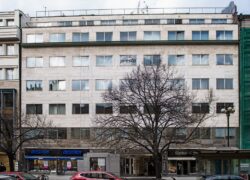
Broadway Palace, a functionalist complex designed by architects Bohumír Kozák and Antonín Černý in the 1930s, occupies a prime location between Celetná and Na Příkopě streets near Republic Square. The structure comprises three interconnected wings and ranks among the most notable examples of interwar functionalist architecture in Prague’s historic centre. Originally built for Italian insurance companies, the building also housed apartments. It was later adapted for administrative use, and its basement cinema, opened in 1938, was considered one of the most advanced of its time. Today, the site is home to the Broadway Theatre.

The ÚZSVM’s previous record sale remains the CZK 790 million transaction for a property complex at Republic Square. However, in recent years, state auctions involving high-value real estate have repeatedly failed to attract buyers. Notable examples include unsuccessful sales of the Štiřín chateau in Central Bohemia, the Veleslavín chateau, and the National House in Vinohrady, both located in Prague.

Whether the ninth attempt to sell Broadway Palace will finally attract a buyer remains to be seen — but for the state, it represents both a significant opportunity and a continuing challenge in the management of its historic property portfolio.

Source: CTK

Global Oil Prices Decline as Oversupply and Trade Frictions Offset Geopolitical Risks

Oil prices slipped to their lowest levels since spring, as markets reacted to a combination of strong production growth and renewed trade tensions between major economies. The downward trend, noted in the latest monthly market assessments, points to a fragile balance between abundant supply, uneven demand, and shifting geopolitical dynamics.

After months of volatility, crude benchmarks fell by more than ten percent in early October, with Brent crude briefly dropping below USD 63 per barrel. The decline came despite ongoing geopolitical flashpoints — including the conflicts in Ukraine and the Middle East — which had previously helped keep prices elevated. Analysts say that investors are now focused less on potential disruptions and more on the sheer volume of oil entering the market.

The United States continues to pump at record levels, while several OPEC+ countries have gradually increased production. Russia’s exports have also edged higher, even as parts of its refining network were hit by attacks. Meanwhile, global demand appears to be losing momentum, particularly in key Asian markets such as China and India, where slowing manufacturing activity and high inventories have weighed on imports.

Trade policy has become another source of uncertainty. A new round of U.S. tariffs on Chinese goods, matched by Beijing’s retaliatory measures, has unsettled markets and dented confidence in global trade flows. Shipping costs have surged as a result, compounding pressures on transport and energy prices.

While most energy analysts expect prices to stabilise around current levels over the next few months, few foresee a strong recovery. Forecasts for 2026 generally hover around USD 63 per barrel, suggesting a prolonged period of subdued pricing. The combination of ample supply and moderate economic growth is likely to keep markets in check.

For now, the global oil sector remains in a holding pattern — too well supplied for prices to rise sharply, yet too exposed to political and economic risks to settle comfortably. The coming months will test whether producers can adapt to this new normal of cautious demand and restrained optimism.

Source: kamcoinvest

Romania Moves Closer to OECD Membership Amid Push for Economic Reform

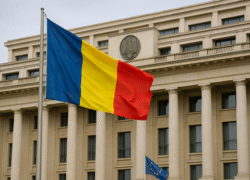
Romania’s path toward joining the Organisation for Economic Co-operation and Development (OECD) has entered an advanced stage, with government officials reaffirming their goal of completing the process by 2026. The move is widely viewed as a milestone comparable to the country’s entry into the European Union nearly two decades ago — a step that could reshape investor confidence, public policy, and long-term economic strategy.

Romania was formally invited to begin OECD accession talks in 2022, marking the start of a rigorous evaluation process across more than two dozen policy areas. These reviews, conducted by OECD expert committees, examine whether national legislation and governance practices align with the standards of some of the world’s most advanced economies. Progress has been steady: several committees have already endorsed Romania’s compliance in areas ranging from regional development to public finance, while others continue to assess reforms related to taxation, education, and environmental policy.

Officials describe the process as both demanding and transformative. Beyond the legal adjustments, OECD membership is expected to deepen Romania’s institutional credibility, signal long-term policy stability, and attract higher-quality investment. The government also sees it as a strategic anchor, reinforcing the country’s position within Western political and economic structures alongside its EU and NATO commitments.

Recent assessments from the OECD underline both Romania’s progress and the challenges that remain. The organisation has noted improvements in areas such as fiscal discipline and market openness but continues to highlight structural weaknesses in productivity, workforce training, and regional inequality. Economic growth is projected to remain modest over the next year before recovering gradually, supported by reforms aimed at boosting competitiveness and innovation.

Environmental policy and energy diversification have become central themes of Romania’s engagement with the OECD. Efforts to promote green investment and reduce dependence on fossil fuels are seen not only as climate commitments but as long-term competitiveness measures. By strengthening energy security and accelerating the shift toward renewable sources, Romania aims to align more closely with OECD priorities for sustainable growth.

Although government officials often point to the benefits of joining what is sometimes called the “club of best practices,” experts caution that accession alone will not solve the country’s economic imbalances. Membership provides a framework for reform — not a guarantee of immediate results. The real test will lie in how effectively Romania applies OECD standards to improve education, healthcare, and public administration.

Still, the symbolism and strategic weight of OECD membership are undeniable. For Romania, it represents both an acknowledgment of progress made and a commitment to the reforms still needed to secure long-term prosperity in a changing global economy.

Czech Small Businesses Lose Billions Each Year to Paperwork, Economists Warn

Small companies in the Czech Republic spend the equivalent of tens of billions of crowns each year on paperwork and compliance, according to economists and business groups calling for faster digital reforms. The figure, estimated at around CZK 41 billion annually, reflects time and resources that could otherwise be used to expand operations, hire staff, or invest in innovation.

The new estimate was presented at the launch of the second “Big Week of Small Firms”, a nationwide campaign highlighting the role of small enterprises in the Czech economy. Economists say that small companies, particularly those with fewer than 50 employees, face a disproportionate burden because they often cannot afford dedicated administrative staff. Routine tasks such as employee reporting, waste management documentation, and statistical filings consume close to 70 million hours of work per year.

Dominik Stroukal, an economist and member of the government’s National Economic Council, said that bureaucracy remains one of the largest hidden costs of doing business in the country. He pointed to slow progress in digitalisation as a major reason why entrepreneurs still spend so much time navigating regulations and filing documents.

Business representatives argue that complex procedures are not the only problem. Access to financing also remains difficult for smaller firms, which often struggle to meet the risk standards of commercial banks. Josef Jaroš, head of the Association of Small and Medium-Sized Enterprises and Crafts, said that more targeted state programmes are needed to help companies invest and modernise.

A recent survey by the Czech Chamber of Commerce suggests that bureaucracy, rising labour costs, and shortages of skilled workers remain the top concerns for Czech businesses heading into 2026. The study shows that while some firms see modest improvements compared to last year, administrative obligations continue to weigh heavily on business confidence.

The number of official obligations for entrepreneurs has continued to rise, reaching nearly 1,900 in 2024, according to the Ministry of Industry and Trade. Although about three-quarters of these duties can now be fulfilled online, many small firms say the systems remain fragmented and confusing.

Economists and policy experts have repeatedly called for a single, unified digital platform for businesses to handle taxes, permits, and employment reporting in one place — a model already implemented in several EU countries. The OECD has also urged the Czech Republic to reduce the regulatory load on small firms and simplify the procedures that discourage new business creation.

The “Big Week of Small Firms,” supported by Mastercard and the DoToho! entrepreneur programme, aims to draw attention to these challenges through open days, workshops, and mentoring sessions held across the country. Organisers say that around 1,000 companies are taking part this year, up from 600 in the first edition.

The full study detailing the estimated cost of bureaucracy to small firms is expected to be presented later this week at a roundtable discussion with government officials and representatives of the business community.

Source: CTK

Bogdan Gubandru on REDPORT’s €50M Vitality Project and Bucharest’s Changing Market

In a CIJ EUROPE Q&A, Bogdan Gubandru, Chief Operating Officer of REDPORT, discusses the company’s latest investment — Vitality, a €50 million residential project in Sector 3 of Bucharest. The launch comes at a time when Romania’s capital is witnessing sustained price growth despite a visible slowdown in transaction volumes and tightening financial conditions.

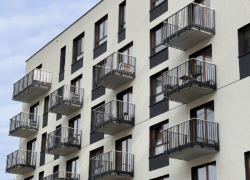
The project will be built in three phases totaling around 500 apartments. Construction of the first phase (145 units) is already underway, featuring low-rise blocks designed for modern urban living. Later stages will add mid-rise buildings with open views of landscaped green areas. Sale prices are expected to average €1,800 per usable square meter, with one-bedroom units priced around €100,000 and two-bedroom units near €130,000.

Q: How are current financing conditions shaping the Vitality development?

Bogdan Gubandru: “For Vitality, we are close to finalizing the banking component of our 60/20/20 financing model, which combines bank loans, shareholder equity, and presales. The positive aspect is that we can choose between several attractive offers. Even in a volatile market, banks remain confident in developers with a proven track record, and this consistency allows us to maintain predictability in execution.”

Sector 3 remains one of Bucharest’s most dynamic residential zones, offering strong public transport links, schools, and recreational amenities. Vitality’s location near the International School of Bucharest and the city ring road enhances its appeal for families and professionals. The project will include a Lidl supermarket, street-facing retail, and green spaces covering more than half of the site. REDPORT plans to manage construction through its own general contractor to ensure quality and cost control.

Q: With prices still rising but fewer transactions, how does REDPORT assess affordability?

Gubandru: “Vitality is designed for a broad local buyer base. The first phase’s limited size keeps supply aligned with demand, ensuring accessibility. Many residents choose the project for its connectivity and natural surroundings — factors that help them make confident, long-term decisions.”

Market data from the Romania Journal show that Bucharest housing prices rose 9.3% year-on-year in H1 2025, reaching €2,108 per sqm in Q2, while transaction volumes dropped by about 10%. Although residential completions increased 9.4% annually, new deliveries in Q2 were 58% lower than a year earlier, suggesting cautious development activity.

Q: Who are your main competitors in this area, and what sets Vitality apart?

Gubandru: “Several projects are active in Sector 3, but our reputation for reliability and attention to detail is what differentiates us. Buyers know we deliver on time and to specification — something that remains a challenge in this market.”

Sustainability is a key element of the development. Vitality incorporates energy-efficient materials, sustainable construction methods, and large landscaped zones aimed at reducing environmental impact.

Q: Will you pursue formal sustainability certification?

Gubandru: “Yes, we are evaluating internationally recognized standards that reflect the project’s energy and environmental performance. This commitment aligns with REDPORT’s philosophy of anticipating future urban needs and delivering long-term value.”

The project also attracts both individual buyers and institutional investors, reflecting Bucharest’s maturing residential market.

Q: Who are your target buyers?

Gubandru: “We see strong interest from both institutional investors and private buyers. Some investors recognize the potential of professionally managed residential stock, while local families and professionals see Vitality as a long-term home. This diversity ensures community balance and financial resilience.”

With Phase 1 under construction and completion targeted for 2029, Vitality reinforces REDPORT’s disciplined expansion strategy in Bucharest’s well-connected districts — a market still supported by strong fundamentals, selective supply, and enduring demand for quality housing.

CIJ EUROPE: As Bucharest’s residential market matures, REDPORT’s Vitality project captures a defining moment in the city’s evolution — where disciplined development, sustainable design, and financial credibility increasingly determine success. While transaction volumes may fluctuate, projects that balance affordability, location, and long-term value continue to attract both buyers and institutional investors.

Vitality reflects this shift: a development grounded not in speculation, but in confidence — signalling that Bucharest’s next growth cycle will be shaped by trust, execution, and the strength of developers who deliver on their promises.

© 2025 www.cijeurope.com

Europe’s Self-Storage Market Shows Steady Growth Amid Economic Pressures

Europe’s self-storage industry is expanding across the continent despite rising interest rates, construction costs, and economic uncertainty. Analysts say the sector’s stability reflects its growing role in urban living and small-business operations, as well as its resilience in downturns.

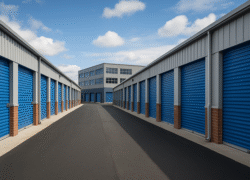
Over the past year, the number of self-storage facilities in Europe has continued to climb, reaching nearly ten thousand sites. The market remains dominated by the United Kingdom, France, Germany, and Spain, but developers are increasingly turning to Central and Eastern Europe, where public awareness is rising and competition is lower. Countries such as Poland, the Czech Republic, and Hungary are now attracting new investment and development interest.

Demand has held up even as consumers face tighter budgets. Many operators report steady rental activity, supported by people moving homes, downsizing, or using extra space for online retail and small-business storage. Although occupancy levels in some markets have softened slightly, the average income per unit of space has grown modestly, helped by more efficient management and technological upgrades.

Industry experts say the self-storage model has proven particularly resilient because it meets both personal and commercial needs. City residents continue to seek flexible solutions for seasonal goods and furniture, while entrepreneurs use storage units as low-cost extensions of their operations. This dual demand helps cushion the sector from broader economic swings.

Investment appetite also remains strong. Real estate investors view the sector as a stable long-term asset, supported by recurring income and relatively low volatility. While financing conditions have become more expensive, the long-term fundamentals of the business—limited supply in many markets and consistent occupancy—have helped sustain interest in new projects.

France has emerged as one of Europe’s fastest-growing markets, now home to more than a thousand self-storage centres. Developers are expanding rapidly in regional cities and suburban areas, where land availability and demand balance more easily. Similar growth patterns are being observed in the Benelux countries and parts of Central Europe, where new entrants are introducing modern, digitalised facilities.

Looking ahead, growth in the industry is expected to continue, though at a slower pace than in the boom years following the pandemic. Operators are focusing on improving energy efficiency and introducing contactless technology to reduce costs and appeal to environmentally conscious consumers. Hybrid models combining self-storage with light logistics or shared workspace are also gaining attention as companies explore new ways to use space.

Despite the uncertain economic backdrop, the European self-storage sector remains one of the property market’s most resilient niches. Its appeal lies in its practicality: a straightforward service that meets real everyday needs. Whether for families running out of room or small businesses seeking flexibility, the industry continues to find steady demand—and investors are taking notice.

Penta’s Špindlerův Mlýn Redevelopment Faces Local Resistance Despite Plans for a ‘Vibrant City’

Developer Penta Real Estate has launched preparations for an architectural competition aimed at redesigning the centre of Špindlerův Mlýn, one of the Czech Republic’s most visited mountain resorts. The company describes the initiative as a step toward creating a “vibrant” town centre with new public spaces, pedestrian zones, and modern amenities. However, despite the promises of improved infrastructure and better urban design, parts of the local community remain wary, expressing concern about overdevelopment, rising property control by large investors, and the possible erosion of the town’s traditional character.

At the weekend, Penta representatives held a meeting with residents at the Belmonte Hotel, where information panels and discussions outlined the company’s vision for the site. The developer, which is working in partnership with the municipality and other landowners, said the final concept will emerge through an architectural competition shaped by both expert and public input. Penta’s Jan Vodička told participants that some existing buildings will likely be demolished to make room for new structures but emphasised that the company plans to involve residents at every major stage of the process. Councillor Jitka Hronešová, representing the town, said the city intends to use its share of the land to influence the direction of the redevelopment, with hopes for a pedestrian zone, underground parking, and a public square surrounded by greenery and services.

The project has divided opinion within the community. While city officials see a chance to address long-standing problems such as traffic congestion and fragmented public spaces, many locals view the scale of Penta’s ambitions with caution. Reports from Echo24, Seznam Zprávy, and Krkonošský deník show that some residents and entrepreneurs fear the town could lose its alpine charm if large modern buildings replace older inns and family-owned properties. Concerns have also surfaced over land valuations, with some property owners claiming Penta’s offers for central plots do not reflect fair market prices. Others question whether the municipality will retain sufficient control once construction begins, arguing that major development decisions may ultimately rest with the investor.

A further source of tension lies in the town’s seasonal housing market. Critics argue that Špindlerův Mlýn already has an oversupply of short-term apartments and holiday flats, many of which stand empty outside the winter season. They warn that new residential or hotel capacity could add to this imbalance without significantly improving life for permanent residents. Supporters of the project counter that a well-planned transformation could revitalise the town centre, attract higher-quality tourism, and improve infrastructure through coordinated investment.

The architectural competition, scheduled to open in November 2025 with results expected in mid-2026, will be judged by a panel including architects Eva Jiřičná, Zdeněk Fránek, and Igor Marko, alongside city representatives and landscape designers. The competition is intended to define the area’s future form and function, determining the balance between commercial, residential, and public spaces.

For now, Špindlerův Mlýn finds itself at a crossroads between progress and preservation. The outcome of the competition will show whether the town can reconcile its mountain identity with Penta’s vision of a modern, year-round destination, or whether fears of overdevelopment will continue to shape the public debate.

Source: CTK, Echo24, Seznam Zprávy, and Krkonošský deník

Czech Apartment Prices Climb Sharply as Older Flats Gain Value Across the Country

The cost of buying an older apartment in the Czech Republic has risen markedly, with average prices now more than a fifth higher than a year ago. Real estate data for the third quarter show that the national average price reached nearly CZK 79,000 per square metre, with no major city recording a decline.

The strongest growth came from regional centres, particularly Ústí nad Labem, where prices have jumped by more than a quarter compared to last year. Ostrava, Hradec Králové, and Plzeň also saw double-digit increases, reflecting renewed demand for more affordable housing outside Prague.

In the capital, prices of older apartments continued to rise, reaching around CZK 150,000 per square metre. For an 80-square-metre flat, that translates to an average cost of almost CZK 12 million – roughly CZK 1.3 million more than a year ago. Brno remains the second most expensive market, with average prices exceeding CZK 116,000 per square metre, while cities such as Olomouc, České Budějovice, and Pilsen are also showing steady growth.

Quarter-on-quarter figures suggest the pace of increases may be slowing slightly, with growth of between one and four percent in most areas. Analysts say the slowdown could reflect a more cautious mood among buyers after months of steady price gains.

The mortgage market has also shown signs of stabilisation. Banks offered short-term discounts on lending rates over the summer, briefly pushing the average mortgage below 4.3 percent, but those offers have since ended. Current rates remain close to 4.5 percent, and experts see little chance of a significant fall before early 2026.

Recent banking data indicate that the total value of new home loans dropped in August compared to July, though overall lending remains stronger than at the beginning of the year. According to mortgage analysts, this points to gradual recovery in housing demand, supported by expectations of future rate cuts but still limited by affordability pressures.

Economists say that, despite persistent challenges, the Czech housing market is entering a more balanced phase after several volatile years. Rising regional demand, cautious credit conditions, and limited housing supply continue to shape market dynamics, but the overall trend suggests that buyers are slowly returning – particularly in cities where prices remain well below those of Prague.

With strong regional variation and ongoing pressure on supply, property experts expect prices of older flats to remain firm through the end of the year, even if the pace of growth eases slightly in 2026.

Source: CTK

Bucharest Office Market Slows as IT Sector Weakens, but Broader Demand Remains Resilient

The slowdown in Romania’s technology industry has hit Bucharest’s office market, with total leasing activity falling by roughly one-third this year, according to data from Colliers and CBRE. While the market as a whole remains relatively stable, demand from IT and technology companies—once the sector’s growth engine—has dropped to its lowest level in several years.

Colliers’ latest analysis indicates that companies leased around 150,000 sqm of office space in the first nine months of 2025, with new demand—leases contributing to actual occupancy growth—falling to below 60,000 sqm. The consultancy attributes much of this decline to weaker activity in the IT and communications (IT&C) sector, which has significantly reduced its footprint compared to the pre-pandemic years.

CBRE’s Q2 2025 Bucharest Office Figures confirm a similar trend: total leasing volumes fell 35% year-on-year, with most transactions being renewals rather than new leases. The company also reports that the “Computer & Hi-Tech” sector recorded its lowest leasing activity in the past five years, reflecting global caution in technology hiring and expansion.

Before the pandemic, IT&C companies were responsible for a substantial portion of Bucharest’s office take-up—averaging between 35% and 45% of total leases between 2016 and 2019, according to historical market data. In 2025, that share has fallen sharply, though precise figures vary between analysts.

Outside the technology sector, leasing activity has been steadier. Colliers notes that demand from financial institutions, business services, and manufacturing tenants remains close to the multi-year average. Despite the overall decline in new deals, office landlords are finding some support from companies that are increasing employee presence in the office three to four days per week, reducing the amount of sublease space available on the market.

The supply side also remains tight. Bucharest’s modern office stock stands at roughly 3.4 million sqm, with a vacancy rate of around 12.5%, according to both Colliers and CBRE. With limited new completions and a shrinking development pipeline, available prime space is expected to remain in short supply.

Both agencies highlight that the limited pipeline could place upward pressure on rents, particularly for well-located Class A buildings. Prime headline rents have already seen mild increases, and further growth is expected into 2026 as inflation and construction costs keep development expensive.

Market observers agree that 2025 is a year of adjustment rather than crisis. While weaker tech demand has cooled the market from its record highs, the overall leasing landscape remains far from the downturns seen in previous cycles. “We’re seeing an office market that is recalibrating rather than collapsing,” says Victor Coșconel, Partner and Head of Office & Industrial Leasing at Colliers. “The IT sector is cautious, but other industries continue to underpin steady demand.”

Analysts expect a moderate recovery in the coming quarters if planned large transactions materialise and as employers continue to adapt their workplace strategies to hybrid work realities.

Sources: Colliers Romania – Bucharest Office Market Q3 2025 Update; CBRE Romania – Office Figures Q2 2025; CBRE Romania Market Outlook 2025.

Czech Insurers Remain Stable Under Pressure, CNB Tests Show

The Czech National Bank (CNB) has confirmed that domestic insurance companies are well prepared to handle economic or financial shocks, following the latest round of supervisory stress testing carried out this year. The findings show that the insurance sector remains financially strong, even under simulated adverse conditions.

The central bank’s review covered data from the end of 2024 and involved 17 of the largest insurers operating in the Czech market. The exercise examined how a range of challenges — from falling asset prices to natural disasters — would affect their overall financial stability. The results indicated that Czech insurers would still maintain a healthy capital buffer even if multiple risks occurred at once.

Among the factors tested, the most significant potential impacts came from a sharp drop in the value of equity investments, changes in government bond prices, and severe flooding scenarios. Despite these pressures, the CNB concluded that insurers would have enough reserves to continue operating without breaching regulatory safety margins.

The Czech National Bank carries out these supervisory checks regularly as part of its oversight of the financial system. The goal is to measure how resilient the insurance market is to unexpected developments, such as volatility in investment markets or sudden claims surges. According to the CNB, these exercises help ensure that companies remain capable of meeting their obligations to policyholders even in unfavourable economic conditions.

Industry observers welcomed the results, noting that the Czech insurance sector has remained stable despite higher interest rates, persistent inflation, and a slower economy in parts of Central Europe. Analysts say the findings reflect conservative capital management and limited exposure to high-risk assets.

The CNB’s broader financial stability reports also suggest that the country’s banking and insurance systems are generally well positioned to absorb potential shocks. While the central bank acknowledges that no test can predict every scenario, it views the overall picture as reassuring for both investors and consumers.

The next round of insurance stress testing is expected to take place in 2027 as part of the CNB’s regular two-year supervisory cycle.

Source: CTK and CNB

LATEST NEWS