Europe Relearns the Art of Readiness

Across much of Europe, an old idea is being revived under new circumstances: the notion that ordinary citizens should know how to cope when things go wrong. From the Baltic to the Alps, governments are quietly reintroducing public guidance once associated with a more anxious age — civil defence for the modern world.

The shift began in the north. Sweden’s national agency for civil protection delivered a wake-up call several years ago with a booklet distributed to every home, explaining what to do if power, communications, or even peace itself were suddenly disrupted. Finland soon followed with its own initiative, urging households to be able to manage for three days without outside help. Norway, Denmark, and Switzerland have issued similar handbooks, complete with checklists, emergency contacts, and reassurance that preparation is an act of responsibility, not alarm.

In Germany, the message has now reached the mainstream. This autumn, the Federal Office of Civil Protection released a new national guide that broadens its focus beyond floods and storms to include more complex threats — from cyberattacks to armed conflict. Officials stressed that Germany remains one of the safest countries in the world, yet that being ready for short-term disruption is simple common sense. The publication encourages people to keep enough essentials at home for up to ten days and to think ahead about water, medicine, and communication in case of power outages.

Elsewhere, governments have begun speaking more openly about resilience as a shared civic duty. Poland has launched an awareness campaign on how to stay supplied during emergencies, while France has modernised its family safety plans to cover longer periods without utilities. Estonia and Lithuania, both with fresh memories of regional insecurity, now train citizens to recognise disinformation alongside more traditional guidance on first aid and shelter.

The reasons for this renewed attention are easy to trace. The war in Ukraine exposed how quickly the balance between peace and crisis can shift. At the same time, Europe’s energy network, food supply chains, and digital systems are increasingly interconnected — and therefore more vulnerable to interruption. Whether from conflict, cyber sabotage, or extreme weather, disruption in one country can quickly reach another.

Yet the tone of these new guides is neither alarmist nor fatalistic. Their authors speak less about fear and more about empowerment — knowing where to find reliable information, how to help neighbours, and how to reduce strain on emergency services when systems are under pressure. The advice is practical, often as simple as having a flashlight, a radio, or an extra bag of pasta.

In many ways, Europe is rediscovering something it once took for granted: that preparedness begins at home. A stocked cupboard, a plan for contacting family, and an understanding of how local alerts work may sound mundane, but in an uncertain world, these small steps add up to collective strength.

Far from signalling panic, Europe’s new wave of civil protection guides reflects a sober understanding of today’s risks — and a belief that resilience is as much about community as it is about crisis.


Disclaimer: This article is for informational purposes only. It does not constitute policy, legal, or professional advice. CIJ.World accepts no responsibility for actions taken based on this content.

Microsoft Sees Sharp Rise in Russian Cyber Activity Aimed at NATO Members

A recent Microsoft assessment suggests that Russian cyber operations against NATO countries have intensified over the past year, marking a notable increase in the scope and frequency of digital intrusions linked to state-sponsored actors.

The company observed that, compared with the previous year, Russian cyber activity directed at NATO nations has risen by roughly a quarter. While Ukraine continues to face the majority of Russia’s digital offensives, the analysis indicates that the most affected countries beyond Ukraine are all members of the Alliance.

Independent reporting on Microsoft’s findings points to the United States, the United Kingdom, and Germany among the most frequently targeted states, with smaller shares attributed to Belgium, Italy, Estonia, France, the Netherlands, and Poland. Although Microsoft’s public summary does not provide a precise breakdown by nation, it confirms that Russia’s attention has expanded well beyond its initial focus on Ukraine.

The list of countries reflects a pattern consistent with Moscow’s broader strategic interests.

The United States remains a central target due to its leadership role in NATO and its provision of intelligence and military aid to Ukraine. The United Kingdom, which maintains one of Europe’s most active intelligence networks and strong support for Kyiv, faces sustained cyber pressure on its government and financial systems. Germany, Europe’s industrial and economic powerhouse, has become a priority for operations aimed at energy infrastructure and technological industries.

Meanwhile, nations such as France, Italy, Belgium, and the Netherlands host key EU and NATO institutions, making them valuable for intelligence gathering on policymaking and defence coordination. Poland and Estonia, situated on NATO’s eastern flank, are considered symbolic and logistical frontlines — hubs for Western military assistance to Ukraine and frequent testbeds for Russian hybrid tactics.

The research shows that public institutions remain the primary focus of these intrusions. Roughly a quarter of identified Russian activity was directed at government networks, while research bodies and policy organisations were also frequent targets. According to Microsoft, the intent appears largely intelligence-related — gathering insight into political, military, and technological developments across the NATO region.

Analysts at the company have also noted a gradual shift toward less-defended entities. Smaller firms operating in countries that support Ukraine have increasingly been singled out as entry points through which hackers might access larger corporate or institutional systems.

The findings come amid heightened tension between Moscow and the European Union. Earlier this month, European Commission President Ursula von der Leyen accused Russia of waging a coordinated campaign designed to destabilise European societies and test the Union’s response. Her remarks followed several airspace violations involving drones and military aircraft over EU territory.

Microsoft’s assessment highlights how the digital dimension of the conflict continues to evolve, with cyberattacks now forming part of a broader strategy to influence, disrupt, and extract information from Western allies. The company warns that the expansion of Russian targeting requires sustained investment in cyber resilience, particularly among smaller organisations that often lack the resources to defend themselves against sophisticated state-backed threats.

Europe’s Offshore-Wind Slowdown: Rising Costs, Delayed Permits, and Shaky Confidence

Europe’s offshore-wind industry, once the continent’s clean-energy success story, is entering a period of visible strain. After years of rapid growth and record investment, the sector is now slowing under the weight of higher costs, complex permitting, and uncertain policy signals. The warning signs are multiplying: auctions are failing to attract bidders, project timelines are slipping, and manufacturers are starting to pause expansion plans. The clearest signal came this month when Denmark’s Vestas Wind Systems halted construction of its planned turbine-blade factory in Poland, citing weaker-than-expected demand for offshore wind across Europe.

For more than a decade, Europe led the world in offshore-wind technology, setting ambitious targets and building a sophisticated network of ports, shipyards, and suppliers. That momentum has faltered in recent months. Rising material and transport costs, coupled with sharply higher interest rates, have eroded project profitability. Developers that once competed aggressively for auctioned sites are now holding back, wary of financial losses. At the same time, grid connection delays and cumbersome approval processes continue to stretch construction timelines. These factors have combined to weaken near-term demand for new turbines and the manufacturing facilities that produce them.

Germany’s experience has been particularly revealing. In the country’s most recent auction for new offshore capacity, there were no bids at all — a stark contrast to the oversubscribed rounds seen only a few years ago. Industry observers said that project economics have deteriorated so significantly that some sites are no longer viable under current rules. While smaller tenders have gone ahead, the broader slowdown is forcing policymakers in Berlin to reconsider how to make auctions attractive again.

The United Kingdom offers a partial counterpoint. After a failed tender in 2023 that yielded no offshore contracts, the following year saw renewed momentum with six gigawatts of new capacity awarded, including the country’s first large-scale floating wind farms. However, even in Britain, developers caution that inflation and grid delays could postpone completion dates, limiting the immediate flow of new orders for manufacturers.

The Netherlands remains a rare bright spot. The country has managed to keep its buildout largely on track thanks to clear permitting procedures, close coordination between government and grid operator, and pre-developed project sites. Yet Dutch officials have also warned that sustained cost inflation could make future rounds more difficult, particularly if financing conditions remain tight.

Poland’s position is more precarious. The country has long sought to position itself as a manufacturing base for offshore-wind equipment in the Baltic region. Vestas’s decision to suspend its new factory near Szczecin — a project expected to employ over a thousand people — puts that vision in doubt. The facility was designed to supply blades for next-generation offshore turbines, but with developers across Europe scaling back timelines, the market outlook has become too uncertain to justify immediate construction. Political turbulence surrounding renewable-energy reforms in Warsaw has further unsettled investor confidence.

Across Europe, the pattern is the same: lofty targets remain in place, but delivery is lagging behind. The European Union’s goal of 129 gigawatts of installed offshore capacity by 2030 is now considered out of reach, with analysts suggesting that only about 80 to 85 gigawatts may realistically be achieved on current trajectories. This gap between ambition and execution is forcing turbine manufacturers to rethink production strategies and concentrate resources in regions with more reliable demand growth.

Despite the near-term setbacks, the offshore-wind sector remains critical to Europe’s long-term energy transition. Industry leaders argue that with faster permitting, better auction design, and improved grid infrastructure, the market could recover quickly. But without clear policy direction and stable investment frameworks, manufacturers may continue redirecting resources toward more dynamic markets in Asia and North America.

For now, Vestas’s decision to pause its Polish project stands as a symbol of the industry’s shifting balance. Once the heartbeat of Europe’s green transition, offshore wind is now caught between ambition and economic reality — a reminder that even the most advanced markets can lose momentum when policy certainty fades and costs rise faster than confidence.

Power Flows Across Europe Reveal New Energy Divide

Europe’s electricity grid has become more interconnected than ever, but growing differences between countries highlight a widening divide between net exporters and importers of power. As the region adapts to new energy realities and the phase-out of fossil fuels, trade in electricity is increasingly shaping Europe’s energy balance.

Data compiled for 2024 show that just over a third of European countries generated more electricity than they used, selling the surplus to their neighbours, while the majority remained net buyers. In total, the European Union exported slightly more electricity than it imported, signalling that cross-border flows are helping to stabilise supply during periods of fluctuating demand.

Sweden stood out as the continent’s leading net exporter, sending out roughly a quarter more electricity than it consumed. France followed closely, supported by the rebound of its nuclear fleet and strong hydropower output. Slovenia, Norway, Slovakia, Czechia and Austria also maintained significant export surpluses.

Among Europe’s largest economies, France and Spain continued to export modest volumes, while Germany and Italy relied increasingly on imports. Italy remained the biggest buyer of electricity in absolute terms, importing around 51 TWh in 2024, followed by Germany at roughly half that level. In contrast, France exported close to 90 TWh, consolidating its position as Europe’s top supplier.

Energy experts link these trade imbalances to the structure of national power systems. Countries with abundant hydro or nuclear generation tend to produce consistent baseload energy that can be sold abroad, whereas those relying more on variable renewables such as wind and solar often import electricity when weather conditions change.

The past two years have seen notable shifts. Germany, long a net exporter, has been importing more electricity since the closure of its remaining nuclear reactors and the rise in carbon prices that have eroded the competitiveness of coal-fired plants. In southern Europe, Greece moved from being a net importer in 2023 to a slight exporter in 2024, thanks to a sharp increase in renewable output.

Analysts say that growing integration between national grids is improving efficiency and supporting Europe’s energy transition. When solar power generation in one country declines at dusk, wind turbines in another can pick up the slack. This interconnectedness, they argue, is helping to reduce overall emissions while keeping prices more stable for households and industry.

Despite progress, the pattern also underlines Europe’s continuing dependence on imported fuels and the importance of reinforcing grid infrastructure. With electricity demand expected to rise sharply over the next decade due to electrification in transport and heating, reliable interconnections will be key to balancing the continent’s power needs in real time.

Europe’s Market Unity Debate: The Push for a Single Stock Exchange Gains Momentum—And Resistance

A proposal to merge Europe’s fragmented stock exchanges into one unified market is dividing opinion across the continent. Backed by Germany and supported by Euronext, the initiative aims to create a single European exchange capable of competing with New York and Asian financial centres. Yet while the idea carries symbolic and strategic weight, experts remain sharply divided over whether it can actually deliver the liquidity, efficiency, and investor confidence Europe seeks.

German Chancellor Friedrich Merz reignited the debate in mid-October, calling for a European stock exchange that would give continental companies more reason to list at home rather than abroad. The call quickly drew support from Euronext, whose CEO, Stéphane Boujnah, described the plan as a necessary step to end Europe’s fragmented capital markets and boost its global standing.

Supporters argue that combining the continent’s largest trading hubs—from Paris and Amsterdam to Frankfurt and Milan—would create the scale needed to keep leading firms from seeking listings in the United States. They frame the proposal as part of Europe’s broader effort to deepen financial integration and complete its long-promised Capital Markets Union. Advocates also suggest that a shared platform could reduce costs, standardise regulation, and attract international investors, strengthening Europe’s hand in the global financial system.

But critics question whether such a consolidation can fix Europe’s deeper structural challenges. Analysts point out that fewer European companies are going public, trading volumes remain low, and investors continue to view U.S. markets as more liquid and dynamic. Simply merging exchanges, they warn, won’t reverse those trends. Others highlight the political and regulatory hurdles: each member state has its own financial watchdog and laws governing securities, and handing greater oversight to Brussels or the European Securities and Markets Authority would mean surrendering a degree of national control—an idea likely to face resistance from smaller countries.

Some observers fear that the plan could benefit only the largest economies and institutions, leaving smaller national exchanges behind. They argue that Europe’s focus should be on stimulating entrepreneurship and investment, rather than restructuring market infrastructure.

Despite the uncertainty, the discussion has injected new urgency into Europe’s long-standing effort to integrate its financial systems. For policymakers, the question is no longer just about whether Europe can create a single stock exchange, but whether doing so will truly make its capital markets stronger, more resilient, and more competitive on the world stage.

If successful, the project could redefine how Europe raises and allocates capital. If not, it risks becoming another ambitious vision stalled by the very fragmentation it seeks to overcome.

Frankfurt Completes New Housing Project for Healthcare Workers

More than 150 new apartments have been completed in Frankfurt’s Praunheim district as part of a housing initiative aimed at supporting healthcare professionals. The Steinbacher Hohl development, located next to the Nordwest Hospital, has been handed over by developer Instone Real Estate to municipal housing company ABG FRANKFURT HOLDING.

Built on a 9,000-square-metre plot, the new residential complex consists of three multi-family buildings with 153 apartments, a day-care centre, and an underground car park. The project was completed on schedule and constructed to the Efficiency House 55 EE energy standard. A landscaped courtyard and preserved plane trees add to the community’s green character, while 79 parking spaces are available underground, supplemented by 30 additional spaces in a nearby public car park.

City Councillor for Planning and Housing Marcus Gwechenberger described the project as an “urban development success story” for the area surrounding Nordwest Hospital. “To attract and retain skilled professionals in the city’s healthcare system, we must also ensure access to affordable housing,” he said, noting that roughly one-third of the apartments are subsidised for low- and middle-income households.

ABG FRANKFURT HOLDING CEO Frank Junker confirmed that the majority of the units will be offered to hospital staff and healthcare workers. “These homes will help relieve the pressure on Frankfurt’s housing market while supporting those who make an essential contribution to our city,” Junker said. The first tenants are expected to move in from December 2025.

According to Sascha Querbach, Rhine-Main Branch Manager at Instone Real Estate, the project was designed to strengthen community life while meeting urgent housing needs. “Affordable housing for those who form the backbone of our healthcare system is something we’re proud to deliver,” he said. “With its day-care centre, green spaces, and proximity to the hospital, this development provides not only homes but also a social hub for families and staff.”

The project’s completion reflects Frankfurt’s broader strategy to expand affordable and workforce housing, particularly for public service employees. Healthcare professionals — including nurses, doctors, and hospital administrators — can now register for an apartment at “Praunheim – Steinbacher Hohl 72–74” through ABG’s website.

The apartments range from two to five rooms, each featuring underfloor heating, vinyl wood-look flooring, and private balconies or terraces.

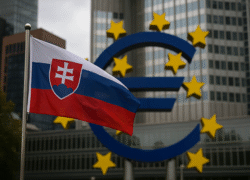
Political Rift Raises Questions for Slovakia’s Business Climate

Slovakia’s expulsion from the Party of European Socialists (PES) has sharpened concerns about the country’s political trajectory and its potential mid-term impact on investor sentiment. While the move has no direct economic consequences, it underscores a widening gap between Bratislava and Brussels that could influence how European businesses approach the Slovak market in the coming years.

Prime Minister Robert Fico’s ruling Smer-SD party was removed from Europe’s centre-left family after repeated clashes with EU partners over rule-of-law, foreign policy, and democratic standards. For businesses operating in Slovakia, the development adds a new layer of uncertainty to an otherwise stable economic environment.

Analysts say Slovakia’s isolation from key European political networks may slow the flow of EU-linked funding and complicate regulatory coordination. “This won’t stop business, but it may delay it,” one regional economist noted, referring to potential hold-ups in accessing green transition or infrastructure financing.

Domestically, Fico’s renewed confidence in nationalist and interventionist policies could signal a tougher stance toward multinationals and strategic industries. Companies in sectors such as energy, media, and logistics may face greater state oversight, while ongoing debates over profit repatriation and labour regulation could unsettle foreign investors.

Still, Slovakia retains a number of stabilising strengths: eurozone membership, proximity to major supply chains, and a skilled industrial workforce. These fundamentals continue to attract manufacturers and logistics groups seeking nearshoring opportunities within the EU’s single market. However, investors are increasingly demanding clearer legal protections and policy continuity before committing to large-scale projects.

For firms already in the market, the message is clear — maintain strict compliance standards, stay politically neutral, and monitor changes in public-sector procurement rules. For new entrants, Slovakia remains an attractive but more politically complex destination.

The country’s challenge now is to balance its domestic political posture with the need to reassure the European business community that Slovakia remains a predictable and rules-based environment. The expulsion from the PES may be symbolic, but in a region where perception drives capital, symbols can matter a great deal.

India’s Warehouse Boom Faces a Reality Check

India’s logistics landscape is transforming at a speed few could have predicted a decade ago. Warehousing, once an overlooked part of the country’s industrial backbone, has become one of its fastest-growing real estate sectors — a shift fuelled by e-commerce expansion, manufacturing growth, and the need for better supply chain efficiency. Yet, behind the record numbers lies a set of challenges that could shape the next phase of India’s growth story.

Across the country’s major cities — from Delhi to Mumbai, Bengaluru to Pune — the demand for large, modern logistics facilities has surged. Developers have raced to keep up, pushing India’s total warehouse space to well over 500 million square feet in 2025. About three-quarters of new construction now meets the higher standards expected by institutional investors and multinational tenants. Even smaller cities like Indore, Lucknow, and Coimbatore are seeing new industrial clusters emerge, signalling that logistics is no longer confined to India’s major metros.

Investors have taken notice. Global funds and local developers alike have poured money into new logistics parks and cold storage facilities, betting on the sector’s long-term potential. Capital inflows into the segment nearly tripled in 2024, with major institutional players securing large tracts of land along new expressways and freight corridors. Analysts expect India’s total warehouse capacity to cross 600 million square feet within two years if construction continues at its current pace.

Still, the rapid expansion has exposed familiar growing pains. The most pressing issue is land — not the lack of it, but the difficulty of assembling large, connected parcels near highways or ports. Prices for industrial plots have climbed sharply, and the approval process remains slow and unpredictable. Many projects stall for months due to disputes or regulatory delays, eroding the pace of development.

Even where land is available, infrastructure remains uneven. India’s main freight corridors have improved dramatically, but smaller access roads and last-mile links often lag behind. Developers frequently find themselves paying for road upgrades to make projects viable. Rising interest rates have also made financing more expensive, squeezing smaller builders who lack the deep pockets of institutional players.

Labour and training are emerging as another bottleneck. While India has a large workforce, logistics requires specialised skills in warehouse management, automation, and cold-chain operations. Many smaller cities — where new logistics parks are being built — struggle to find trained workers. Industry groups warn that unless workforce development keeps pace, operations could fall short of global efficiency standards.

Sustainability adds a further layer of complexity. Tenants increasingly demand energy-efficient, low-carbon facilities fitted with solar panels, rainwater harvesting systems, and electric vehicle charging. While this shift is positive for the environment, the cost of building “green” warehouses remains high, and many developers are still adjusting to the new economics of sustainable construction.

Despite these hurdles, the outlook for India’s warehousing industry remains overwhelmingly positive. The sector has matured rapidly, evolving from fragmented godowns into an organised, professionally managed market that attracts global investors. As the economy grows and consumption patterns shift, the need for efficient logistics networks will only deepen.

But for the sector to realise its full potential, it will need more than investment — it will need coordination. Faster land approvals, smoother regulation, and targeted skill development are essential to sustain momentum. If these structural issues are addressed, India could soon emerge as one of the world’s largest and most modern warehousing markets — not just in size, but in sophistication.


Disclaimer: Figures are approximate and provided for informational purposes only.

Institutional Investors Renew Confidence in India’s Office Property Market

India’s commercial real estate sector is showing renewed strength this year as large investors return to the office market in greater numbers. The turnaround reflects rising confidence in the country’s economic outlook, a rebound in corporate leasing, and a growing pool of domestic capital backing long-term property assets.

Data from industry trackers show that investment in offices has risen sharply in 2025, accounting for the majority of all real estate inflows. Overall, the country attracted more than four billion dollars in real estate investment by September, marking one of its strongest years since before the pandemic.

This resurgence has been driven by steady business expansion across India’s six main office hubs — Bengaluru, Hyderabad, Pune, Mumbai, Chennai, and Delhi. Demand has been strongest among technology firms, banking and finance groups, and multinational service centres that continue to expand their operations as hybrid work settles into a stable rhythm.

Indian investors are now playing a much bigger role than before. Domestic funds, pension schemes, and newly listed property trusts have stepped up their activity, reflecting both deeper market maturity and stronger balance sheets. International investors remain active but are now joined by a growing number of homegrown players able to finance large-scale developments on their own.

The pattern of growth is also changing geographically. While the traditional metropolitan markets continue to dominate, new opportunities are emerging in smaller cities such as Pune, Indore, and Lucknow, where business parks and infrastructure upgrades are attracting corporate occupiers. Pune, in particular, has seen investment activity soar compared to the previous year.

Sustainability is shaping new developments, with more than half of recently completed buildings designed to meet higher energy and environmental standards. Companies are increasingly looking for workspaces that are efficient, healthy, and aligned with global corporate responsibility goals.

Challenges remain, including currency pressures, global financial volatility, and uncertainty over trade policy. Yet the overall sentiment remains positive. Flexible workspace providers are adding further depth to the market, catering to firms that value agility while maintaining physical office space.

India’s office sector, once seen as volatile, has now emerged as a cornerstone of the country’s real estate investment landscape. With strong occupier demand, improving infrastructure, and a maturing investor base, it stands out as one of Asia’s most dynamic property markets heading into 2026.

India’s Retail Landscape Expands Beyond City Centres

India’s retail property market is entering a new phase as demand for organized shopping continues to rise across major cities while fresh opportunities take shape on the urban fringe.

In 2025, strong consumer spending and a surge of new brands helped urban malls regain momentum. Major centres in Mumbai, Delhi, and Bengaluru have seen most of their premium space fill up, with shoppers returning in numbers last seen before the pandemic. The city malls that once struggled to attract visitors are now enjoying near full occupancy, driven by food, fashion, and entertainment outlets that continue to anchor India’s urban lifestyle.

Investors are also rediscovering confidence in this sector. Long-term funds and property companies have increased their exposure to retail assets, viewing well-located malls as stable sources of income in an economy that remains one of the fastest-growing in the world.

Yet, much of the new activity is no longer confined to downtown zones. A quiet but noticeable shift is taking place in India’s suburban belts. Districts such as Thane and Bhiwandi near Mumbai, or Whitefield on the outskirts of Bengaluru, are witnessing the rise of open-air retail parks — larger plots of shops and outlets that combine everyday essentials, home furnishings, and leisure spaces. These sites cater to families and workers in growing residential areas, offering convenience and affordability outside the congestion of city centres.

This expansion reflects how India’s consumer geography is changing. As workplaces, homes, and industrial corridors spread further out, retail is adapting to follow the population. Developers are increasingly experimenting with hybrid models that blend shopping, entertainment, and community spaces to match evolving habits.

The challenge, say analysts, will be ensuring connectivity and careful planning so that these new retail clusters complement city-based malls rather than compete with them. With India’s organized retail share expected to continue rising in the coming years, the outlook suggests that both central and suburban markets will be vital to the next phase of growth.

What’s taking shape is a more diversified retail network — one that mirrors India’s own urban transformation, where everyday shopping and lifestyle experiences are no longer confined to the heart of the city but spread across its expanding edge.

LATEST NEWS