Turkish Orzax Group to Invest $40 Million in Dietary Supplement Production in Kazakhstan

Turkish manufacturer Orzax Group plans to establish a new dietary supplement factory in Kazakhstan’s Turkistan region, marking one of the largest Turkish industrial investments in the country’s health and nutrition sector.

The facility, expected to employ around 500 people, will produce a range of food and dietary supplements for both domestic and international markets. The total investment amounts to roughly $40 million, supported by a long-term loan from the European Bank for Reconstruction and Development (EBRD).

The decision was confirmed during a meeting in Ankara between President Kassym-Jomart Tokayev and Selman Alimoğlu, Chairman of Orzax Group. President Tokayev welcomed the project, describing it as a step that will strengthen Kazakhstan’s pharmaceutical base, support export diversification, and attract further foreign investment into the Turkistan region.

Founded in Turkey, Orzax Group produces more than 150 types of supplements and distributes them to 60 countries. The company’s expansion into Kazakhstan will not only increase its production capacity but also introduce new research and development initiatives focused on nutrition science and product innovation.

The new plant will be operated by Orzax Central Asia LLP, a local subsidiary established to oversee the project. The investment is part of a broader effort to modernize Kazakhstan’s industrial base through new technology and sustainable manufacturing practices.

According to project details, the EBRD is providing a €25 million loan out of a total investment of €35 million, ensuring access to financing on longer and more flexible terms than those available from commercial banks. The bank’s involvement is intended to support energy-efficient, inclusive, and environmentally responsible development.

The facility will be built to meet high energy-efficiency standards, aiming for a performance rating above national benchmarks. Orzax plans to introduce measures that reduce waste, improve resource use, and ensure responsible packaging in line with international sustainability norms.

The company also intends to create training opportunities for local workers and promote equal employment access across its operations. These commitments form part of an inclusion programme developed in cooperation with the EBRD to build local skills and workforce capacity.

Environmental assessments concluded that the plant will not pose major risks, as it will be built within an existing industrial zone. The company has committed to applying international health, safety, and environmental standards, with systems in place to manage waste, monitor suppliers, and maintain quality control under ISO 9001 and ISO 22000 certifications.

Once operational, the Turkistan facility is expected to become a regional production hub for dietary supplements, supporting local employment, expanding Kazakhstan’s export base, and deepening trade and investment links between Kazakhstan and Turkey.

IDEA Office Building in Prague’s Anděl District Now Fully Occupied

The IDEA Office Building in Prague’s Anděl district has reached full occupancy following the arrival of two new tenants: Scott.Weber Workspace and the Embassy of Japan. The addition of these organizations further strengthens the building’s position as a business address that connects both commercial and diplomatic activities in the area.

The property, part of the NEMO real estate fund, recently underwent a significant transformation. Following the departure of its long-term tenant Hello Bank!, the building was modernized and repositioned for multiple tenants. According to Českomoravská Nemovitostní (ČMN), which established the NEMO fund and manages its assets, the strategy has proved successful. The building’s BREEAM “Very Good” certification, flexible layout, and proximity to public transport have contributed to attracting new occupiers.

“IDEA Office Building has evolved from a single-tenant to a multi-tenant property and is now fully leased,” said Pavel Kadera, Asset Management Specialist at ČMN. “Anděl remains one of Prague’s most attractive office locations, especially for flexible workspace providers. Demand here has been consistently high, and our approach is to provide tenants with quality facilities and comprehensive support.”

The new branch of Scott.Weber Workspace, the leading flexible office operator in the Czech Republic, joins 17 other locations the company operates nationwide. The building also now accommodates offices for the Embassy of Japan. The arrival of both tenants reflects a wider trend in Prague’s office market, where demand for flexible workspaces has increased sharply. According to a Cushman & Wakefield report (April 2025), the total supply of flexible offices in the Czech Republic rose by nearly 30% between 2022 and 2024.

Despite high demand for office space in Prague 5, vacancy rates remain slightly above the city average. A Savills report from Q2 2025 places overall vacancy in Prague at 6.6%, with Prague 5 at 8%. The IDEA Office Building’s full occupancy stands out in this context.

Flexible offices now account for approximately 3.4% of total office supply in Prague, or about 136,000 square metres, according to Cushman & Wakefield data. Tenants increasingly expect environments that encourage creativity, provide a range of on-site services, and deliver a high level of customer care.

Kadera noted that while demand for flexible offices continues to grow, traditional leasing models remain dominant. “We expect the market to stabilise with about 80% of space in traditional leases and 20% in flexible formats. This balance reflects both tenant preferences and the requirements of investors and lenders,” he said.

The IDEA Office Building, formerly known as Anděl 16, was completed in 2005 as part of the Anděl City development. The 7,200-square-metre complex is located near the Anděl metro station and Smíchovské nádraží, offering convenient transport connections. It also features a landscaped courtyard garden, providing tenants with a quiet outdoor space within the urban centre.

Panattoni Begins Construction of New 208,000 sqm Distribution Centre for Media Expert in Łódź

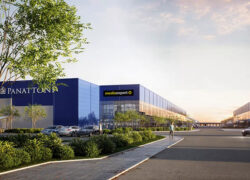
Panattoni has started work on a new 208,000-square-metre distribution centre in Łódź for Media Expert, Poland’s largest consumer electronics and household appliances retailer. The PLN 500 million project will be among the country’s largest logistics developments and will strengthen Media Expert’s nationwide supply network.

The investment will include two buildings designed to handle both store and online orders. The new complex, delivered under a build-to-own (BTO) formula, will serve as a key logistics hub for Media Expert’s omnichannel operations. Its location in central Poland, close to major transport routes including the A1, A2, S8 and S14 roads, will support efficient distribution across the country.

According to Marek Dobrzycki, Partner at Panattoni, the project continues the companies’ long-term collaboration in Central Poland. “This investment will have a lasting impact on the development of Poland’s e-commerce and omnichannel sectors,” he said. “It reflects our ongoing partnership with Media Expert, through which we are building logistics infrastructure that supports regional growth and creates new jobs.”

Media Expert, which operates more than 600 stores nationwide and the online platform MediaExpert.pl, continues to expand its logistics capabilities to meet growing demand from both in-store and digital channels. Michał Mystkowski, the company’s spokesperson, noted that logistics investments are essential to maintaining customer service standards. “Efficient distribution is a foundation for providing fast delivery and a consistent shopping experience across all sales channels,” he said.

The development also highlights Łódź’s role as a logistics centre in Poland. The city’s location at the intersection of key motorways and its expanding transport infrastructure have attracted many warehouse and production investors in recent years. Adam Pustelnik, Deputy Mayor of Łódź, said that the Media Expert project underlines the city’s importance as a logistics hub. “Łódź continues to attract major investments thanks to its location, infrastructure, and cooperative business environment,” he said.

Panattoni has already delivered nearly 2.4 million square metres of warehouse and industrial space in the Łódź region for companies such as Amazon, BSH, OBI, and Flextronics. The company’s Central European Logistics Hub in Łódź, one of the largest business clusters in the region, now exceeds 630,000 square metres.

The Media Expert complex will be developed in line with BREEAM Excellent sustainability standards. It will include energy-efficient systems, photovoltaic installations, and solutions designed to reduce water consumption. The plans also feature landscaped areas and facilities for electric vehicles and cyclists.

Construction is expected to continue through 2026, with the new centre becoming one of the largest single retail logistics investments in Central Europe.

Prime Office Supply Tightens in Prague as Vacancy Falls and Construction Slows

Demand for premium office space in Prague continues to outpace supply, with vacancy in the Czech capital reaching its lowest level in years and rents edging higher amid limited new construction. According to data from Savills, CBRE, and the Prague Research Forum, overall vacancy fell to 6.6 percent by the end of the second quarter of 2025, equivalent to roughly 259,000 square metres of available space out of a total modern stock of 3.94 million square metres.

New supply remains modest, with only around 15,000 square metres of office space delivered in the first half of 2025, primarily outside the city centre. About 212,000 square metres are currently under construction, most of which is already pre-leased. In core locations such as the city centre and Karlín, the pipeline of speculative projects remains exceptionally thin.

Prime headline rents in central Prague are now reported at €29 to €30 per square metre per month, a record level for the local market. Analysts expect further upward pressure as occupiers compete for scarce high-quality space. CBRE notes that the imbalance between supply and demand is pushing some tenants to extend existing leases rather than relocate, while others are seeking early access to projects scheduled for completion several years ahead.

While Savills’ internal data suggests that the very top tier of “AAA” offices in the city centre is almost fully occupied, no publicly available dataset confirms a 0 percent vacancy rate. Across Prague’s broader office stock, vacancy has remained below 7 percent for three consecutive quarters—one of the tightest levels among Central European capitals.

On the investment side, limited new development and continued rental growth are keeping interest in centrally located buildings high. Savills reports that prime yields for high-quality offices remain broadly stable, around 5.25 percent, as investors balance cautious sentiment with long-term confidence in Prague’s fundamentals.

The scarcity of new construction is also prompting a shift in market strategy. Many landlords are now reinvesting in older assets, upgrading building systems, and improving sustainability performance to retain tenants facing few relocation alternatives. Office projects completed in the early 2000s are entering their first major refurbishment cycle, and owners are leveraging this period of low vacancy to reposition assets toward higher environmental and technological standards.

Overall, Prague’s office market has transitioned from a phase of quantitative growth to qualitative adjustment. The shortage of central, modern buildings is steering occupiers toward flexible lease structures and longer-term planning horizons. With no substantial new city-centre completions expected before 2027–2028, the capital’s most sought-after offices are likely to remain tightly held, reinforcing their appeal to both tenants and investors.

HIH Extends Lease with State of Baden-Württemberg for 5,200 sqm in Stuttgart

HIH Invest Real Estate has renewed its long-term lease agreement with the State of Baden-Württemberg for approximately 5,200 square metres of office space at Löwentorbogen 9a in Stuttgart. The space, which spans seven floors, continues to house the Stuttgart traffic police and other departments of the city’s police force.

The property, located in the Bad Cannstatt district, offers a total of around 9,500 square metres of office space divided across two connected buildings, Löwentorbogen 9a and 9b. Built in 2002, the complex includes two basement levels with archive and storage areas and an underground car park with 45 spaces, plus 13 additional outdoor parking spaces.

Ken Kuhnke, Head of Major Tenant Support at HIH Real Estate, said the early lease renewal reflects the strength of the company’s tenant relationships. “The extension of the lease with the State of Baden-Württemberg shows how long-term and trusting partnerships form the basis for sustainable leasing success. Through close cooperation and regular contact with our tenant, we were able to secure the agreement ahead of time,” he commented.

The office property forms part of a special fund launched by HIH Invest in 2014, which focuses on office assets in prime and secondary German cities. Located in Stuttgart’s Pragsattel area, a key transport hub connecting Löwentorstraße and Pragstraße, the building offers easy access to public transport and main road links. The central railway station can be reached in about ten minutes by underground, while the airport is roughly a 30-minute drive via the B14.

Markus Leuchte, Head of Office Letting Frankfurt at HIH Real Estate, added that the renewal further strengthens the location’s role as a hub for public institutions. “With the Stuttgart police, we have secured a strong public-sector tenant for the long term at Löwentorbogen. Its accessibility and proximity to major transport routes make it an ideal site for government agencies and businesses that engage with the public. The City of Stuttgart’s recent decision to lease space in the neighbouring building, Löwentorbogen 11, underscores the ongoing appeal of this location,” he said.

HIH Invest continues to focus on maintaining stable tenant relationships and long-term occupancy within its German office portfolio, particularly in well-connected city districts suited to institutional and public-sector tenants.

Gen Z and Millennials Redefine Success: Deloitte’s 2025 Global Survey Reveals Changing Priorities at Work

Deloitte’s latest Gen Z and Millennial Survey 2025, based on responses from over 23,000 participants across 44 countries, highlights how younger generations are reshaping the modern workplace. Together expected to comprise nearly 74% of the global workforce by 2030, Gen Z and millennials are redefining what success and satisfaction mean — prioritizing learning, purpose, and well-being over traditional corporate advancement.

The study finds that only 6% of Gen Zs see senior leadership roles as their main career goal, yet 70% are actively developing career skills weekly. Learning and development rank among their top three reasons for choosing an employer, underscoring their emphasis on personal growth over hierarchy. However, many respondents feel that managers focus too much on day-to-day supervision rather than mentorship and long-term development.

Financial pressures are also shaping attitudes. Nearly half of Gen Zs (48%) and millennials (46%) report feeling financially insecure, with over 50% living paycheck to paycheck. The cost of living remains the top concern for the fourth consecutive year, followed by mental health and job stability. Despite this, more than a third of both groups have side jobs, driven not only by necessity but also by a desire to gain new skills and independence.

The survey identifies a key formula for workplace happiness — the balance of money, meaning, and well-being. Financial security strongly correlates with happiness: 60% of financially secure Gen Zs say they feel happy, compared with only 28% among those who do not. Purpose-driven work is another major factor, with 89% of Gen Zs and 92% of millennials saying that meaningful work is essential to job satisfaction. Yet about 40% admit they have left a job that lacked purpose.

Technology is also driving transformation. Over 56% of respondents already use Generative AI (GenAI) at work, primarily for data analysis, creative work, and project management. While many say it improves efficiency and work/life balance, around two-thirds worry it could eliminate jobs or limit entry-level opportunities. Despite these concerns, most see AI training and soft skills — such as empathy, leadership, and adaptability — as critical for long-term success.

Mental health remains a significant challenge. Only 52% of Gen Zs and 58% of millennials rate their mental well-being as good or very good, and about one-third say work is a major source of stress. Respondents called for better recognition, fairer workloads, and more supportive leadership to address workplace anxiety.

Environmental and ethical considerations also play a role in decision-making: nearly two-thirds are willing to pay more for sustainable products, and about one in four say they researched a company’s environmental policies before accepting a job offer.

Overall, Deloitte’s 2025 findings depict a generation seeking careers defined not by titles but by purpose, balance, and continuous learning — and urging employers to adapt. The report concludes that businesses able to deliver on these expectations will not only attract but also retain the talent shaping the future global workforce.

Source: Deloitte

Temporary Labour Market Set for Steady Global Growth Through 2030

Temporary employment, long used to fill short-term staffing needs during peak production or retail periods, is becoming a core element of workforce strategy worldwide. Analysts forecast continued expansion of the global temporary staffing industry over the rest of the decade, driven by greater demand for flexibility, advances in recruitment technology, and changing attitudes toward non-permanent work.

According to sector studies, the global staffing services market was valued at roughly USD 600 billion in 2024 and is projected to reach between USD 820 billion and USD 900 billion by 2030, implying average annual growth of around 5 percent. Within this, the temporary and contract employment segment is expected to grow at approximately 4.5 to 6.5 percent per year to 2032, depending on definitions and regional variations. Estimates published by research groups such as Consegic Business Intelligence and Verified Market Research place the temporary labour market in the mid-hundreds of billions of dollars by the early 2030s.

“The need to respond quickly to shifting market conditions and manage costs efficiently is making flexible employment an essential tool for many companies,” said Edyta Kuczys, Sales Director at Opteamic Group, a provider of process outsourcing and employee leasing solutions. “Technological advances, including AI-based recruitment platforms and automated screening systems, are speeding up candidate selection and improving job matching. At the same time, globalisation and labour mobility have blurred professional boundaries, making temporary work more acceptable to both employers and workers.”

While growth prospects remain strong, analysts also warn of potential headwinds. Economic slowdowns in major markets or tighter labour regulation could limit the freedom of staffing agencies and their clients. In Poland, for instance, the Act of 20 March 2025 on the Labour Market and Employment Services, which entered into force in June, has introduced new rules for hiring foreign nationals and increased compliance requirements for employers. Rising wage pressures and higher labour costs in manufacturing and logistics may also affect the profitability of flexible-employment models.

Despite these challenges, Kuczys said that the market in Poland still has significant room to expand. “Even with thousands of licensed employment agencies, temporary work remains underdeveloped compared to Western Europe. Global trends offer important signals for local growth. Flexible hiring is becoming a key component of cost stability strategies and a way to address persistent skill shortages,” she noted. “This is the right moment to invest in digital tools, build competencies in flexible staffing, and develop long-term partnerships based on service quality.”

Industry observers see the projected expansion of temporary and contract staffing as part of a broader reorganisation of labour markets. The ability to scale workforces up or down rapidly is increasingly viewed as a cornerstone of organisational resilience. For recruitment firms and outsourcing providers, the coming years may prove decisive — those that invest early in technology and quality standards are likely to benefit most from the structural shift now reshaping global employment.

Global Gas Markets Show Uneven Trends as Europe Stabilises and US Exports Surge

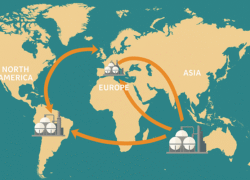
The global natural gas market displayed contrasting trends in the third quarter of 2025, as regional conditions, supply dynamics and consumption patterns shifted in different directions. While Europe enjoyed relative stability thanks to strong imports and high storage levels, the United States experienced renewed price pressure driven by robust production and record export volumes. Across Asia, demand weakened slightly as industrial activity slowed and alternative energy sources gained ground.

In Europe, steady shipments of liquefied natural gas combined with resilient Norwegian production helped to calm prices after the volatility of previous years. Consumption across the European Union rose moderately during the first eight months of 2025, though it eased in late summer due to increased renewable generation and weaker industrial use. Storage levels reached more than 80 percent of capacity by early October, providing a comfortable buffer ahead of winter. Russian gas flows continued to decline sharply, but this was offset by a surge in imports from the United States, highlighting Europe’s accelerated shift away from traditional supply routes. To strengthen its energy security framework, the EU extended its storage policy through 2027 and allowed more flexible timing for when members must meet seasonal targets.

In Asia, the picture was more subdued. China’s LNG imports fell noticeably compared with the same period last year, reflecting a combination of high inventories and slower industrial demand. Japan and South Korea also registered slightly lower gas use as utilities relied more on coal and renewable energy. The region’s overall LNG imports slipped modestly compared with 2024, although analysts expect China’s consumption to pick up again in the coming year as new gas-fired power plants come online and transport demand rises.

The United States, meanwhile, continued to expand its dominance on the supply side. Output from major shale regions increased steadily throughout the year, underpinned by new infrastructure and sustained investment. Export capacity also climbed, with large-scale terminals in Louisiana and Texas playing a central role in meeting the energy needs of Europe and Asia. These projects have reinforced America’s position as a cornerstone of global gas supply at a time when demand for secure and flexible sourcing remains strong.

In the Middle East, producers are pursuing major expansion plans designed to lift the region’s profile in the coming decade. New projects across Qatar, the United Arab Emirates, Saudi Arabia and Oman are expected to boost the region’s combined gas production by nearly one-third by 2030. Billions of dollars in contracts have been awarded this year to expand extraction, processing and export facilities, including Qatar’s North Field expansion and ADNOC’s large-scale gas development programme in the UAE. These investments are intended to ensure long-term production capacity and maintain the region’s competitiveness as global demand evolves.

Looking ahead, overall gas consumption worldwide is forecast to grow at a slower pace in 2025, as high prices, efficiency measures and milder weather temper demand in key markets. Nonetheless, expanding production in North America and the Gulf is expected to underpin global supply stability. While ongoing geopolitical tensions in Eastern Europe and the Middle East continue to pose risks to trade routes and market sentiment, Europe’s improved storage position and diversified supply sources suggest a system more resilient than in past years.


Source: Kamco Invest

Study Finds Germany’s Labour Market Transformation Goes Beyond Classic Structural Change

The evolution of Germany’s labour market over the past four decades reflects more than the familiar pattern of jobs shifting from factories to offices. A recent analysis by researchers affiliated with the German Institute for Economic Research (DIW Berlin) and the Deutsche Bundesbank shows that much of the apparent loss of industrial employment has been offset by new types of work emerging within the service economy, often involving the same skills and occupations once found in manufacturing.

The study examines employment data for West Germany from the mid-1970s to 2017 and finds that the country’s industrial workforce has contracted sharply, yet many of those who might once have worked on production lines are now employed in service-sector companies that perform similar functions. The result, the researchers argue, is a quieter but deeper transformation — one in which the boundaries between industry and services have blurred.

Over the period, roughly half of all industrial job losses were effectively absorbed elsewhere in the economy. While production plants shed workers, logistics, maintenance, quality control and technical design roles multiplied across business services, retail and technology firms. The underlying tasks remain industrial in character but are now carried out in a different environment and often require higher qualifications.

This development also points to a growing divide between low- and high-skilled workers. As automation reshapes production and data management becomes central to business processes, demand for technical expertise, engineering knowledge and digital skills continues to rise. At the same time, opportunities for less qualified workers have narrowed, particularly in traditional manufacturing regions.

According to DIW economist Thilo Kroeger, the changes reveal how “structural” adjustment today takes place not only between sectors but inside occupations themselves. The same job title, he noted, may now involve entirely different tools, workflows and responsibilities compared to a generation ago.

For policymakers, the findings underline the importance of retraining and lifelong learning. Rather than focusing only on which sectors are shrinking or expanding, economic and education policy needs to anticipate how work content is changing across the board. Preparing workers to adapt to these shifts — especially those in routine or lower-skilled positions — will be key to ensuring that the next stage of Germany’s industrial evolution remains inclusive.

The research adds to a growing consensus that Germany’s economy is entering a new phase in which services and manufacturing are increasingly interwoven. The future of work, it suggests, will depend less on where people are employed and more on what they do — and how effectively they can evolve with their tasks.

Source: DIW Berlin

RRG Real Estate Group Strengthens Governance and Advances Lakeside11 with Family-Owned Strategy

Since its transition to family ownership, RRG Real Estate Group has redefined its approach to governance, capital allocation, and project execution. Under the leadership of Pavel Kodzik, the company has introduced stronger oversight structures and more agile management systems, resulting in faster decision-making and improved cost control across its development portfolio, including the landmark Lakeside11 project overlooking Lake Străulești in Bucharest.

In an interview with CIJ EUROPE, Kodzik said that the group has established a board of directors and a dedicated project control office to oversee progress and performance in real time. Decision-making processes have become more transparent and efficient through the adoption of PMI-based project management standards and digital dashboards that track progress across all disciplines. These measures, he explained, have kept Lakeside11 on budget and slightly ahead of schedule while ensuring stronger supplier accountability through a structured procurement framework.

Lakeside11 remains on track with its original development plan. The first phase, comprising 105 apartments, is scheduled for completion by the end of 2026. The second phase, which includes 81 apartments and already holds a valid building permit, is expected to start construction next year. The project is now fully connected to the national electricity grid via its own transformer station and has secured water and sewage connections, reducing infrastructure-related risks. RRG is also working on the next stage of the Lakeside concept, which will expand the company’s focus on innovative urban design and create new spaces that encourage social interaction and community life.

The market response has been robust. Presales have reached around 50 percent, in line with the company’s business plan and ahead of expectations in several segments. Kodzik attributes the strong demand to the transformation of the Străulești area, supported by metro expansion, improved roads, and proximity to the lake. Since construction began, prices for certain apartment types have risen by up to 30 percent, with particularly high interest in larger units, such as four-bedroom apartments and penthouses with direct lake views. Two-bedroom units start from €153,000 for 68 square metres plus an eight-square-metre balcony, or €130,000 under RRG’s #InvestWithRRG financing solution. Three-room apartments are priced from €200,000 for 84 square metres plus a 15-square-metre balcony, or €170,000 with the same plan.

From a financial perspective, RRG has opted for a conservative structure in the first phase of Lakeside11, relying primarily on equity and long-term investors participating through the #InvestWithRRG model. This allows the company to maintain full control of project cash flow and respond quickly to market changes. Kodzik added that early purchasing of key materials and favorable payment terms help stabilize costs and protect against inflation. For the second phase, RRG is considering bank financing to accelerate construction and optimize its capital structure. The group’s risk management approach centers on careful planning, close monitoring of progress, and maintaining reliable partners and backup suppliers to ensure continuous quality and timely delivery.

At the core of Lakeside11’s concept lies a commitment to human-centered design. The development was conceived around two principles: the apartment as a comfortable, functional living space, and its natural extension into shared community areas. From the initial stages, RRG involved interior designers to create practical layouts that reflect real daily needs. This design philosophy gave rise to the project’s defining feature—the Float Spot concept—an elevated network of shared spaces linking the buildings. These floating platforms include a relax zone, amphitheatre, children’s playground, and gastro area, all designed to separate pedestrian and vehicle flows while encouraging social interaction. Kodzik described the idea simply: “‘Float’ stands for elevation, and ‘Spot’ for connection. Together they define the community spirit of Lakeside11.” The concept has already earned international recognition for its innovative contribution to urban design.

Looking ahead, Kodzik believes that Romania’s residential market is entering a healthier stage of development. Commenting on the removal of the reduced nine-percent VAT rate, he argued that the change will benefit both buyers and developers in the long term. Without the artificial price cap imposed by the VAT threshold, buyers can focus more on quality, comfort, and layout efficiency. Previously, developers often reduced apartment sizes to stay under the €120,000 VAT limit, resulting in smaller and less practical homes. With the constraint removed, Kodzik expects the market to encourage more diverse and better-designed products, improving both supply quality and customer satisfaction.

Through its restructured governance, disciplined capital management, and forward-looking design philosophy, RRG Real Estate Group is reinforcing its position as a trusted and innovative developer in Romania’s evolving housing market. As Lakeside11 advances toward completion, the project stands as a reflection of the company’s long-term vision—building not only homes but sustainable communities designed for modern urban life.

© 2025 www.cij.world

LATEST NEWS