North Bucharest Investments CEO Vlad Musteata on Record Sales, VAT Impact, and the Rise of the Buy-to-Let Market in Bucharest

CIJ EUROPE sat down with Vlad Musteata, CEO of North Bucharest Investments (NBI), to discuss the company’s record-breaking year, the impact of VAT changes, the growing buy-to-let segment, and what lies ahead for Bucharest’s residential market.

Q: North Bucharest Investments has reported record transaction volumes in 2025. How do these compare with official ANCPI figures, and what is the breakdown between new builds, resales, and typical unit sizes in North Bucharest?

Vlad Musteata: It has been a remarkable year, though not without challenges. The spring elections slowed investor decisions for a few months, but by mid-year we saw renewed activity, especially in Pipera. July was extraordinary due to the announced VAT changes. In just ten days, our legal and notary teams worked late into the night to finalise contracts, as buyers rushed to secure deals before 1 August.

Roughly 80–85% of our transactions are apartments in Pipera, priced between €90,000 and €150,000. Another 10–15% are higher-value units in areas like Fabrica de Glucoză, ranging from €150,000 to €250,000. Since September, we’ve also closed several deals in the €400,000–€1 million range, showing a renewed trust from larger investors.

Q: July saw a spike in sales linked to the VAT change. How much of this demand was policy-driven, and do you expect momentum to continue?

Musteata: Policy clearly played a big role. Many families who had been considering purchases for one or two years acted immediately, often making decisions within a week. By August, much of the inventory below €120,000 had disappeared. Since then, demand has shifted slightly toward larger, more expensive apartments in the €140,000–€150,000 range. July alone brought nearly 190 transactions for us, an exceptional result.

Even after the VAT-driven rush subsided, we noticed that the sense of urgency remained. Buyers are now more aware of how fiscal policy can influence timing, and that’s led to faster decision-making overall. The market has matured—clients are better informed, and financing institutions have become more agile in processing requests.

Q: NBI has also launched a rental division. How is the buy-to-let segment performing in terms of yields and demand?

Musteata: Investor demand for rentals is strong, especially in Floreasca and Fabrica de Glucoză. Many prefer to hold properties long-term, confident they will appreciate significantly over the next five years. Our rental management service emerged naturally from client requests—we assist with furnishing, tenant sourcing, and aftercare.

Current yields are in the 7–8% range, but the real attraction is capital appreciation. In northern Bucharest, values have been rising around 15% annually, which is unique in Europe right now. Tenants are typically young entrepreneurs reinvesting in their businesses, top managers from multinational companies, and foreign professionals starting operations in Romania.

What’s interesting is that the rental market is becoming more structured and transparent. Investors now expect professional management, digital contracts, and consistent reporting. At NBI, we use digital tools to monitor occupancy, yield performance, and maintenance, giving clients real-time visibility on their assets

Q: Younger generations in Europe often prefer renting to ownership. Are you seeing this trend in Bucharest?

Musteata: Absolutely. Younger people—especially those in their twenties and thirties—are financially better educated than previous generations. Many prefer flexibility, choosing to rent while focusing their resources on business or personal growth. For property owners, this is positive, as demand for quality rental apartments continues to grow.

We’re also seeing lifestyle-driven choices. Younger professionals value location, amenities, and interior design more than ownership status. This shift is gradually pushing developers to create more mixed-use projects with community spaces, co-working areas, and green zones—something we actively promote to our partners.

Q: Compared to other cities in the region, how do you see Bucharest’s pricing and opportunities?

Musteata: If you compare with markets like Chișinău, where new builds in good areas are already priced at €5,000–€7,000 per square metre, Bucharest still offers opportunities. Current prices in areas like Pipera and Floreasca are far lower than what the fundamentals suggest. In my view, over the next two years many of today’s opportunities will disappear as supply remains limited and construction costs rise.

Bucharest also benefits from a unique mix of local and foreign capital, which creates liquidity and resilience. Compared to Central Europe, our market still offers better value per square metrerelative to average income. That gap will likely narrow as Romania continues to attract multinational employers and high-skilled professionals.

Q: Looking ahead, what is your outlook for the Bucharest residential market over the next three years, and how is NBI positioning itself?

Musteata: I expect residential prices in Bucharest to grow by around 20% per year over the next three years, driven by limited supply and steady demand. The biggest risk is the low number of new permits being issued, which could further restrict supply.

At NBI, our goal is to raise standards in brokerage by providing transparency, legal due diligence, and after-sales support. We see ourselves not just as brokers, but as long-term partners—helping clients with rental management, resale strategies, and ensuring they benefit from appreciation in the years to come.

Q: Finally, what is your biggest concern at the moment?

Musteata: My only real worry is the slowdown in new residential projects. If the pipeline of permits doesn’t improve, prices will rise quickly, reducing affordability and limiting options for buyers. That said, Bucharest still has strong fundamentals, and we remain optimistic about the market’s growth trajectory.

I would also mention the importance of sustainable urban planning. A strong and active partnership between developers and local authorities—focused on transport, green areas, and utilities—is essential to ensure balanced urban growth. At NBI, we advocate for a long-term vision where residential expansion goes hand in hand with infrastructure and quality of life.

© 2025 cij.world

 

REDPORT Development Targets Institutional Growth as Vitality Project Gains Momentum

REDPORT Development is deepening its position in Bucharest’s residential market while setting its sights on becoming a fully fledged institutional housing platform in the coming years. Following the completion of its first private placement earlier this year, the developer is preparing a second round before year-end to broaden its shareholder base and prepare for a potential stock-exchange listing between 2027 and 2028, possibly in Bucharest and on a secondary European exchange.

Chief Operating Officer Bogdan Gubandru describes the capital-raising programme as the foundation for a long-term urban-transformation strategy. “Every euro we’ve attracted is being invested into land and community infrastructure,” he said. “Projects such as The Level, Infinity Nord and Vitality EST demonstrate our goal of developing landmarks that will shape Bucharest’s urban experience for decades.”

A Growing Residential Pipeline

REDPORT’s current flagship, Vitality, is a €50 million scheme in Sector 3 of Bucharest. Construction began in July 2025 with an initial 145 low-rise apartments. Once complete, the project will deliver roughly 500 units across three phases, including mid-rise buildings with park and lake views. Apartments are marketed from around €1,800 per sq m, with one-bedroom homes starting near €100,000.

The financing structure follows the company’s typical formula—about 60 percent bank debt, 20 percent shareholder equity, and 20 percent presales. These early sales provide liquidity while also demonstrating demand to lenders. Operationally, REDPORT maintains cost control through its in-house general contractor and long-term subcontractor relationships. Partnerships such as its collaboration with Mobexpert for custom furniture packages reflect a broader effort to align product design with buyer expectations.

Preparing for an Institutional Future

As REDPORT moves toward an eventual public listing, management’s aim is to evolve from a developer into a platform capable of attracting long-term institutional capital—including pension funds and family offices. Gubandru notes that this requires transparency, strong governance, and consistent delivery. “By 2027 we want REDPORT to be acknowledged not just as a developer, but as a platform for urban transformation,” he said. “That means delivering over 2,000 units, meeting IFRS standards, and maintaining resilience across cycles.”

He adds that institutional investors seek the same qualities that once drew capital to modernise great cities: “Discipline, transparency and long-term vision. Our ambition is to curate the city’s future—offering varied housing for a diverse customer base, from mid-market to premium buyers, in Bucharest’s most dynamic districts.”

Market Conditions and Affordability

With units at Vitality priced around €1,800 per sq m, REDPORT positions the scheme as accessible for middle-income, dual-earner families. The location—close to green areas, public transport and three lakes—offers features typically associated with higher-end districts. Gubandru acknowledges that rising interest rates remain a risk but stresses that phased construction and strong presales safeguard financial flexibility. “We’re determined that Bucharest’s next stage of urban growth remains broadly accessible, not exclusive,” he said.

Ambitious Pipeline Beyond Vitality

The company’s wider pipeline includes Infinity Nord, a major urban regeneration project described as one of the most ambitious in Bucharest in more than three decades. Alongside the Level residential brand, the combined portfolio exceeds €400 million in development value. Each project integrates housing with green space, education and lifestyle amenities. “It’s about more than buildings—it’s about stitching together communities,” Gubandru explained.

While REDPORT’s expansion plan remains in an early phase, its strategy—anchored in disciplined financing, in-house execution and investor diversification—signals its intention to become one of Romania’s emerging institutional-grade residential players.

© 2025 cij.world

Hagag Development Europe Expands Mixed-Use Portfolio with H Herăstrău Park Acquisition and Sustainability Upgrade

In mid-April 2025, real estate investor and developer Hagag Development Europe entered into a new strategic partnership with Niro Investment Group, the owner of Corinthia Grand Hotel du Boulevard and Bucharest Grand Hotel, acquiring a 50% stake in a mixed-use property located near Herăstrău Park, at 23–25 Ghețarilor Street. The deal, valued at €5 million, was structured based on the building’s annual rental income, expected yield, and current market conditions. Under the terms of the agreement, Hagag also assumed exclusive operational and management responsibilities for the entire property.

As of November 1, the building—formerly the Unicredit headquarters—officially re-entered the commercial market under the developer’s new brand identity: H Herăstrău Park. The move marks another step in Hagag’s broader strategy to grow its portfolio of mixed-use assets in Bucharest while revitalising existing stock to modern standards.

With a gross built area of approximately 10,000 square metres (including 6,800 sq m of leasable retail and office space and around 100 parking spaces), H Herăstrău Park is undergoing a targeted light refurbishment aimed at improving energy performance and overall sustainability.

“The building was originally delivered in 2005, so our approach focuses on retrofitting rather than rebuilding,” explained Andreea Dumitru, Chief Marketing Officer at Hagag Development Europe, in an interview with CIJ EUROPE. “Retrofitting existing buildings is a vital strategy for decarbonising the built environment and achieving net-zero targets. H Herăstrău Park is being renewed and upgraded to deliver higher energy efficiency and a reduced carbon footprint.”

The property’s façade—composed of roughly 30% ventilated ceramic panels and 70% curtain wall glass—has been largely preserved, requiring only selective replacement of damaged tiles, glass, seals, and gaskets. The mechanical, electrical, and plumbing systems have been fully replaced with Class A standard installations. Although Hagag is not primarily focused on formal certifications, Dumitru confirmed that the company is considering green certification and photovoltaic panel installation to further optimise operational efficiency.

While the current partnership with Niro Investment Group covers only the 50% stake acquired this year, Hagag has no plans to buy out the remaining share. Instead, the developer is concentrating on the building’s repositioning and lease-up to strengthen its income profile within the company’s expanding commercial division.

Beyond this project, Hagag’s broader development strategy remains consistent: to enhance mixed-use functionality across its Bucharest portfolio. “All our projects—whether residential or commercial—include complementary functions,” Dumitru said. “Examples such as H Victoriei 109, H Tudor Arghezi 21, and H Victoriei 139 feature retail components, while H Pipera Lake, H East Residence, and H Știrbei Palace integrate hospitality, retail, and lifestyle elements.”

Although the company is not currently seeking new acquisitions, it continues to hold a land bank for future development. Dumitru noted that Hagag’s focus remains on “high-value repositioning” of central and semi-central Bucharest properties that can be revitalised into modern, sustainable assets.

Through projects like H Herăstrău Park, Hagag Development Europe is positioning itself as a key player in Bucharest’s next stage of urban regeneration, combining investment with sustainability-driven refurbishment. The company’s growing portfolio reflects a long-term vision to transform underutilised buildings into dynamic mixed-use environments aligned with international ESG trends—reinforcing Bucharest’s evolving status as a competitive and livable European capital.

© 2025 cij.world

Unpaid Child Support Becomes a Growing Burden on Polish Society

Poland’s unpaid child support problem has reached alarming proportions, stretching far beyond family disputes and into the realm of social policy. According to the latest figures, maintenance arrears now exceed PLN 16.9 billion, a record high that continues to climb each year. Behind the statistics are hundreds of thousands of children left without proper financial support—and a system increasingly forced to fill the gap.

More than 288,000 parents are currently listed in Poland’s national debtor register for failing to pay court-ordered maintenance. The typical debtor owes around PLN 58,000, though in some regions, such as Mazowieckie, the average exceeds PLN 65,000. Over the past four years, the total unpaid amount has grown by roughly two-thirds, with many of these debts proving difficult to recover.

The problem is not evenly spread across the country. The highest concentration of non-paying parents is found in the north-east, in the Warmińsko-Mazurskie region. By contrast, residents of Małopolskie and Podkarpackie are among the most reliable in meeting their obligations. Experts say that these regional differences often reflect varying levels of employment stability and migration patterns rather than moral attitudes alone.

But the growing debt is not simply a private issue between parents. The financial fallout affects local governments and taxpayers nationwide. When child support is not paid, the state often steps in through the Maintenance Fund, which covers partial payments to families left without support. These payments—nearly two million a year—represent hundreds of millions of złotys in public spending. Although the number of beneficiaries has declined in recent years, this is largely because income thresholds for eligibility have not been updated. At the same time, the government has doubled the maximum benefit from PLN 500 to PLN 1,000 per child, which means total public costs are now rising again despite fewer eligible families.

Municipalities also bear the cost of pursuing unpaid debts, hiring bailiffs, and managing legal enforcement that often yields limited results. According to experts, successful collection occurs in fewer than one in four cases. Many debtors officially declare no income, work informally, or deliberately conceal earnings to avoid payment. In practice, that pushes the burden of support from the private sphere to the public one.

The situation is made worse by the fact that more than half of those who owe maintenance also have other overdue debts—loans, unpaid bills, or fines. Economists describe this as a pattern of chronic financial avoidance rather than isolated hardship. It places extra strain on social services, since children of debtors are statistically more likely to rely on public assistance or scholarships.

Families who do not meet the income threshold for state aid can still take legal steps to pressure delinquent parents. Anyone with a valid court ruling can register a debtor’s name with the national database for a symbolic fee. Once listed, these individuals face serious consequences: they can be denied loans, installment purchases, or even new mobile phone contracts. Although this sometimes prompts partial repayment, the scale of non-payment continues to grow.

Experts warn that the persistence of unpaid maintenance represents not just moral failure but a systemic weakness. A combination of slow enforcement, economic hardship, and deliberate evasion leaves thousands of children short of financial support each year. As one analyst put it, “When parents don’t pay, the cost is carried by everyone—local governments, taxpayers, and above all, the children who are deprived of stability.”

While public awareness of the problem is growing, the data show little sign of improvement. Unless collection efforts become more effective and support thresholds are modernised, Poland’s maintenance debt is likely to keep expanding—turning what should be a matter of family responsibility into a long-term social liability.

Source: BIK

IAD Investments 2025: Expanding Horizons Across Central Europe

IAD Investments, Slovakia’s oldest asset management company and one of the region’s most active real estate fund managers, has continued to strengthen its cross-border portfolio throughout 2025. The firm’s strategy this year reflects a balanced approach — combining stable income management in Slovakia, Poland, Hungary, Croatia and the Czech Republic with regional diversification into logistics and an expanding development pipeline supported by its Prvý realitný fond (PRF) and IAD Investment Real Estate Fund (IAD IRF).

In an interview with CIJ.World, Vladimír Bolek, Member of the Board and Real Estate Fund Portfolio Manager, shared how the company is reshaping its portfolio, identifying opportunities in a changing market, and preparing for the next investment cycle heading into 2026.

“IAD Investments has established itself as one of Slovakia’s most active real estate fund managers, with growing exposure across Central Europe,” said Bolek. “We made a significant strategic decision to increase the share of development projects in our portfolios, especially in Croatia and Slovakia. In the past, we were primarily a buyer of income-producing assets. Over time, we gained enough market experience and confidence to move into development — sometimes in joint ventures with established partners, and sometimes independently.”

He added that this shift represented a turning point for the company. “We also created new funds for professional investors, which have a different structure and allow us to pursue development opportunities more effectively. After two decades of building a track record in core assets, it’s time to show investors that we can also create value through development and innovative projects.”

In early 2024, Prvý realitný fond completed its first acquisition in Croatia, securing a 9.7-hectare site in Sveta Helena, near Zagreb, for the development of a new logistics park. The construction works already begun and project should be completed in 2026.

This move marked IAD’s formal expansion into an under-supplied logistics corridor benefiting from new transport infrastructure around Rijeka and along the north–south Trans-European route.

“There’s definitely cautious optimism, but also selectivity,” said Bolek. “We still see strong long-term potential in the logistics sector. Europe is rethinking its industrial and logistics base, and this transformation will continue for years. Croatia is a good example of an undervalued market — similar in size and population to Slovakia, yet with only about 1.2 million sq m of logistics space compared to Slovakia’s 4.5 million. With new corridors opening, Croatia is becoming an important link in European trade. That’s why we’ve entered this market early.”

Across Slovakia and the Czech Republic, the IAD Investment Real Estate Fund (IAD IRF) continues to anchor the firm’s portfolio with a focus on office and retail assets.

The fund manages over 200 lease contracts with built-in indexation mechanisms, maintaining stable rental income and above-average occupancy levels. Notable holdings include prime offices in Bratislava, such as Twin City C, where a new 10-year lease for 7,200 m² was signed with Kooperativa poisťovňa (Vienna Insurance Group) in May 2025. This deal pushed the building’s occupancy above 95 percent by year-end.

“We continue to see opportunities in residential assets across Slovakia, Poland, and the Czech Republic,” Bolek added. “Even with demographic shifts, demand remains strong compared to Western Europe. The main challenge lies in legal and planning complexity, which we are carefully navigating.”

IAD maintains a presence in Poland’s office market through its earlier acquisition of the D48 office building in Warsaw, purchased from Penta Real Estate. The deal, originally closed in 2020, remains a reference point for IAD’s cross-border investment capacity and continues to be cited in regional transaction analyses (CEE Legal Matters).

Reflecting on market performance, Bolek observed: “Offices remain part of our portfolio, but demand is clearly lower everywhere — from Poland to Hungary. The market is now rewarding quality. Buildings in strong locations, with good transport links and modern amenities, continue to perform well, while others are struggling. The gap between prime and secondary offices is widening fast.”

He noted that logistics continues to perform well, though at a more measured pace. “The surprise has been retail. Shopping centres recovered faster than expected. Within a year of the downturn, footfall and sales returned strongly. Retailers adapted — many now combine physical stores with e-commerce collection points, creating more interactive, service-oriented spaces.”

During 2025, IAD streamlined its fund structure by announcing the merger of its Private Investment Fund 2 into its Private Investment Fund (November 2025), following regulatory approval obtained in August. The company also published its half-year 2025 management reports, confirming continued fund growth and compliance with EU ESG standards.

On sustainability, Bolek noted: “ESG is a complex issue. I fully support responsible ownership — maintaining assets properly, managing consumption, and ensuring good working conditions should be standard practice. But sometimes the ESG framework adds unnecessary bureaucracy rather than value.

“That said, as a regulated fund, we fully comply with EU ESG legislation. We’ve integrated it into our fund rules and reporting. My personal view is that while energy performance standards are valuable, we shouldn’t lose sight of common sense and good management habits. Sustainability works best when it’s practical, not just procedural.”

Discussing cross-border capital flows, Bolek commented: “Slovak investors are increasingly looking abroad. The domestic market is relatively small, and diversification is becoming essential. The Czech Republic remains the first choice, followed by Poland and Hungary. This year we’ve seen even more Slovak capital moving across borders — partly due to market size, but also as a response to the domestic political climate.

“If you can buy a comparable asset at similar pricing in multiple countries, investors today prefer to diversify. It’s a logical, risk-balanced approach.”

IAD Investments’ activities in 2025 illustrate how a Slovak fund manager is evolving from a traditional income-focused investor into a regionally diversified, development-driven platform. The company’s logistics entry in Croatia, its core income stability in Slovakia, Poland, Hungary and Czechia, and its ESG-compliant management framework all underscore a pragmatic strategy built on experience and regional partnerships.

As Bolek summed up, “Good location, responsible asset management and long-term tenant relationships remain the key differentiators.”

© 2025 cij.world

Rob Jetten: The Centrist Who Could Lead the Netherlands into a New Political Era

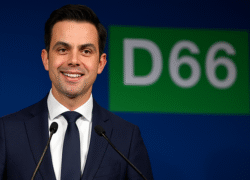
The Netherlands is on the brink of a political turning point after the country’s recent general election placed 38-year-old Rob Jetten, leader of the liberal Democrats 66 (D66) party, at the forefront of coalition negotiations. If successful, Jetten would become both the youngest and the first openly gay prime minister in Dutch history—a symbolic milestone for a nation long known for its progressive values but now emerging from a turbulent political decade.

The election, held at the end of October 2025, produced one of the tightest results in recent memory. D66 secured a narrow lead over the far-right Party for Freedom (PVV), forcing parties to immediately enter complex talks on forming a governing coalition. Analysts say the vote signaled Dutch voters’ appetite for a pragmatic, pro-European leadership after years of polarisation and political fatigue.

Jetten, known for his calm demeanor and focus on consensus, built his campaign around a message of stability and inclusion. His platform emphasised affordable housing, climate policy, and a renewed European orientation—issues that resonated with younger and urban voters seeking a more forward-looking agenda. Under his leadership, D66 managed to rebuild momentum after internal struggles and voter drift earlier in the decade.

Though his party finished first, the path to power remains uncertain. The Netherlands’ fragmented political landscape means no single party can govern alone, and coalition negotiations are expected to stretch for weeks. Observers note that Jetten will need to unite centrist and centre-left parties while keeping the far right at bay—a delicate balancing act that will test his political skill.

Internationally, Jetten’s rise is seen as a reaffirmation of Dutch liberalism and European cooperation. Brussels insiders view him as a steady and constructive partner who could help bridge divides within the EU over migration, fiscal policy, and climate goals. His record as a former minister for climate and energy lends credibility to his pledge that the Netherlands will remain a leader in the green transition.

At home, Jetten inherits a country still grappling with housing shortages, strained public finances, and social divisions that have fuelled populist movements. His challenge will be to deliver tangible progress without reigniting the political volatility that has defined recent years.

If he succeeds in forming a government, Rob Jetten would represent a generational shift in Dutch politics—one shaped less by confrontation and more by compromise. His potential premiership marks a pivotal moment for the Netherlands: a test of whether a centrist, pro-European vision can once again unify a deeply diverse society.

Homary establishes first German logistics hub in Düsseldorf harbour

Global furniture and home décor retailer Homary has leased 4,600 square metres of logistics and office space in Düsseldorf’s harbour district for its first location in Germany. The transaction was advised by Logivest, acting on behalf of Homary Technology GmbH, while the landlord was represented by RED Property GmbH & Co. KG, which handled the leasing process.

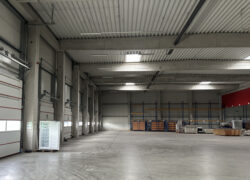
The property includes around 4,500 square metres of warehouse space and 100 square metres of offices, offering modern facilities suited to e-commerce operations. The building is fully fenced, equipped with shelving, and features six loading ramps and a ground-level access gate to ensure efficient handling of goods.

Founded in 2012, Homary operates an international online platform for furniture and home accessories. The company, originally from China and headquartered in the United States, already maintains logistics and showroom sites in the UK and France. Its expansion into Germany marks the next step in strengthening its European distribution network.

According to Luca Wagner, Consultant for Industrial & Logistics Letting at Logivest in Cologne, the Düsseldorf harbour site offers strategic advantages for the company’s operations. “The central location in the Rhine-Ruhr region—Germany’s largest economic area—enables fast distribution throughout Germany and Europe. The proximity to Düsseldorf harbour and Düsseldorf Airport provides excellent access for international online trade,” Wagner said.

The new facility is located directly on the A52 motorway, with the A57 and A46 routes also nearby, offering strong transport connectivity. Public transit links further enhance accessibility for employees and partners.

Homary officially took occupancy of the property on 1 October 2025.

Construction Progresses on Redkom Development’s Retail Park in Dzierżoniów

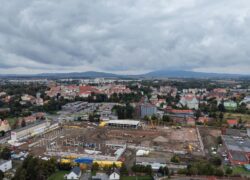
Redkom Development is moving ahead with construction of a 17,000 m² retail park in Dzierżoniów, a project expected to strengthen the city’s commercial base and expand shopping options in southern Lower Silesia.

The site, located on Batalionów Chłopskich Street near the Silesian Roundabout and the DW384 regional road between Dzierżoniów and Bielawa, offers strong visibility and convenient access for local and regional visitors.

The development will include around 30 retail and service units, anchored by a Lidl supermarket of more than 2,000 m². Confirmed tenants include CCC, HalfPrice, e-obuwie, Worldbox, Reserved, Cropp, House, Pepco, Sinsay, Big Star, Diverse, New Yorker, Rossmann, Ochnik, Dr Materac, Martes Sport, and RTV Euro AGD.

Mallson Polska is managing the leasing process, which has already reached over 85% occupancy, and is overseeing the tenant mix. The design features a simple, accessible layout with direct entrance access from the parking area and a focus on practical circulation.

Redkom Development is active in Poland’s regional retail property market, focusing on projects in medium-sized cities. Between 2023 and 2025, the company delivered more than 60,000 m² of new retail space, including the Przystanek Karkonosze retail park in Karpacz, opened in August 2025.

The Dzierżoniów retail park is expected to create new jobs and broaden the city’s retail offer, supporting local commerce and consumer choice. It also reflects the wider trend of retail park investments in regional towns, where such developments help retain local spending and contribute to balanced urban growth.

The opening is scheduled for the second quarter of 2026, after which the complex will become one of the largest modern retail destinations in the area and a key part of Dzierżoniów’s evolving commercial landscape.

Homes for London: Emergency Steps to Revive Housebuilding Across the Capital

The UK Government and the Mayor of London have unveiled a coordinated plan aimed at breaking the gridlock in the capital’s housing market. Announced on 23 October 2025, the Homes for London initiative sets out a series of short-term measures to help unstick stalled residential schemes and encourage new construction. The joint package combines targeted financial incentives, adjustments to design and planning rules, and public investment to improve project viability across the city.

At the heart of the plan is a 50 percent cut in borough-level Community Infrastructure Levy charges for qualifying brownfield developments that commit to at least 20 percent affordable housing. The relief, which excludes student and co-living schemes, is designed to reduce the financial strain that has been preventing many projects from moving forward. It will apply only to developments that start construction after the rules take effect and before the end of 2028, giving developers a defined window to benefit from the measure.

In parallel, several planning and design standards will be revised to make higher-density housing more achievable. City Hall and the Department for Levelling Up have agreed to ease certain guidelines that have constrained development layouts, such as the requirement for all homes to have dual aspects and limits on the number of dwellings accessed from a single core. Cycle parking obligations will also be relaxed to reflect the growth of shared and dockless transport options. The intention is to maintain reasonable living standards while allowing greater design flexibility and cost efficiency.

The Government and City Hall are also introducing a temporary planning route to sit alongside the existing fast-track system. Under this new route, developers delivering at least one-fifth affordable homes will be able to proceed without providing a full viability assessment. The measure is intended to streamline the planning process and reduce delays caused by lengthy negotiations over financial contributions. It will remain in place until March 2028 or until a new version of the London Plan is adopted, whichever comes first.

Further provisions expand the Mayor’s authority over significant developments. Local councils will be required to refer housing proposals of 50 or more homes to the Mayor if they are minded to reject them, rather than waiting until the 150-unit threshold currently in force. The Mayor will also gain the power to take over decisions on large developments of more than 1,000 square metres situated on Green Belt or Metropolitan Open Land. In some cases, decisions may be made based on written representations rather than full hearings, a step expected to reduce decision times by several months.

A new City Hall Developer Investment Fund will provide financial support to accelerate housing delivery on key sites. The fund, initially backed by £322 million for 2026 and 2027, will work alongside the existing London Land Fund to unlock developments that face funding or infrastructure barriers. The Government and City Hall have also indicated that they will collaborate on potential new town projects within London’s boundaries and expand access to low-cost financing for social landlords through the National Housing Bank.

A formal consultation period on the proposed measures will begin in November and last for six weeks. Some reforms can be implemented through secondary legislation, while others, including changes to planning procedures, will require parliamentary approval. If adopted, the Homes for London package would represent one of the most significant interventions in the capital’s housing system in over a decade, reflecting growing concern about the shortage of new homes and the increasing cost of delivery.

By combining temporary financial relief, streamlined planning routes, and direct public investment, the initiative aims to reignite construction activity and bring forward a new wave of housing across the city before the end of the decade.

Source: CMS

German Economic Sentiment Weakens in October as Recovery Momentum Falters

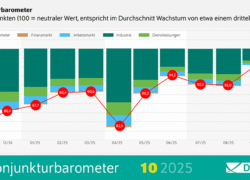
Germany’s economic outlook took a step back in October, according to new research from the German Institute for Economic Research (DIW Berlin). The institute’s monthly barometer, which tracks short-term growth signals, fell noticeably after reaching its highest point of the year in September. The drop places the indicator below the level associated with stable economic expansion, underscoring that Europe’s largest economy remains under pressure.

Analysts at DIW Berlin say several factors continue to weigh on business activity. Germany’s exporters are grappling with cooling global demand, intensified competition from China, and tensions surrounding U.S. trade policy. Domestically, companies are waiting to see whether the government’s recently announced reform agenda will translate into real economic stimulus. So far, signs of improvement remain limited.

Industry data paint a mixed picture. While incoming orders from German customers have improved slightly, foreign demand remains soft, and overall order books are still declining. After a surge in July, industrial production weakened again in August, and many firms continue to report cautious assessments of their current situation. Business expectations, however, have brightened, suggesting that confidence in future growth may be returning. Purchasing manager surveys have also edged up, hinting at tentative optimism among manufacturers hoping that fiscal support will revive local demand.

The service sector has shown small gains after a weaker summer, though the overall mood remains subdued. Inflation has inched higher again, household sentiment remains negative, and job market conditions have yet to show convincing signs of recovery. Economists note that service providers are likely to see only gradual improvement as fiscal measures begin to filter through to consumers and businesses.

Despite these challenges, DIW Berlin expects the economy to regain traction in the coming months as government investment programs start to take effect. Experts caution, however, that the rebound is likely to be uneven and heavily dependent on whether global trade conditions stabilise and domestic spending recovers enough to offset the drag from exports.

Source: DIW Berlin

LATEST NEWS