Portland Trust secures new tenants for J8 Office Park in Bucharest

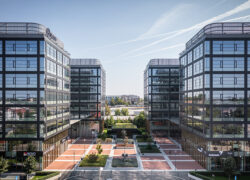
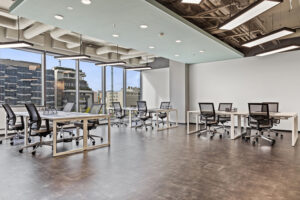
Portland Trust has signed lease agreements for a total of approximately 3,800 square metres of office space in J8 Office Park, located in the northwestern part of Bucharest. The new tenants include Teleperformance (3,100 m²), DY Nutrition (420 m²), and Samsic (300 m²).

Teleperformance, a provider of digital business services, has consolidated its operations on a single floor and plans further upgrades aligned with environmental and social standards. DY Nutrition, active in the sports nutrition sector, and Samsic, a company offering facility management services, have also established offices within the complex.

J8 Office Park is situated near Jiului metro station, offering multiple transport connections and on-site retail and service facilities. The building uses renewable energy, features modern air-filtration systems, and includes amenities such as a fitness room, medical centre, supermarket, café, and restaurants.

The office park currently reports an occupancy rate of over 90 percent. According to Florin Furdui, Country Manager of Portland Trust Romania, the latest agreements reflect stable tenant demand for modern and energy-efficient workplaces in Bucharest’s established office submarkets.

Mayflower Expands Regional Retail Portfolio as Slovakia’s Convenience Market Matures

Mayflower property development and investment continues to strengthen its position as one of the country’s most active regional retail park developers, with several new schemes completed this year and a growing pipeline ahead. In a recent Q&A with CIJ EUROPE, Partner Lukáš Šarközi said the company remains focused on meeting tenant demand, expanding in underserved areas, and preparing for a broader evolution in its development strategy.

“We delivered projects in Lučenec and Nové Zámky this year, and we will soon open the second phase in Rimavská Sobota,” said Šarközi. “Together, that will bring more than 8,000 square metres of retail space to the market. Earlier in the year, we also completed a smaller scheme in Šamorín.”

According to Šarközi, Mayflower’s success stems from a steady appetite among tenants and new brands entering Slovakia. “We just meet the requirements of tenants that want to expand,” he explained. “In the last two or three years, several newcomers have entered the market, bringing around 6,000 square metres of new space. Because of these larger-format brands, today’s projects tend to be slightly bigger.”

Šarközi said the company has a strong development pipeline planned for the coming years. “In three years, we expect to deliver about 100,000 square metres of GLA to the market,” he noted. “Within the next two years alone, we will complete around 65,000 square metres. We see a lot of potential in mid-sized cities where retail infrastructure is still limited.” He added that securing strong locations early gives developers a decisive advantage: “If you have a city of 30,000 people and you deliver a retail park of 8,000 or 10,000 square metres, you can effectively anchor the market and make it difficult for future competitors.”

Mayflower’s approach to financing has evolved as the company has grown. “We had a very good relationship with 365.invest and developed many projects together,” Šarközi said. “Now, part of the portfolio we sold to them, and part we bought back. It’s a natural life cycle of our cooperation.” Today, the company operates with a more independent structure. “Some projects we do entirely on our own, and others with senior bank financing. For future developments, we are not seeking new institutional partners. We are focusing on self-financing and maintaining flexibility with a mix of equity and bank loans.”

As the Slovak retail market matures, Mayflower is also exploring diversification. “Retail has been our foundation because we understand it well — retail is detail,” Šarközi said. “But the market is changing. We are evaluating some logistics projects, although that segment is currently slower, as is office development.” He pointed to the country’s new rental housing legislation as a promising area for future activity. “We see this as a big opportunity in the regions. We already have strong relationships with municipalities, and they face real challenges in providing accessible, quality housing. We believe rental housing supported by both government and private initiatives could be an important solution.”

Sustainability has become a core element of Mayflower’s development strategy. “This is a very important topic for modern development,” said Šarközi. “We are installing photovoltaic systems to generate energy from the sun and using VRV systems to improve energy efficiency. All our projects are developed in line with ESG standards during both construction and operation.” Community engagement is equally important to the company’s identity. “When we come to a city, we support local initiatives and sports clubs,” he said. “We often organise charity events during project openings and donate to local hockey and football teams. Giving back to the community is very important for us, especially when we can support young people through sports.”

Šarközi also recognises that changing consumer habits are reshaping the retail landscape. “Consumer spending is a little lower, and the shopping basket has changed,” he said. “People are focusing more on essentials rather than luxury or higher-end goods.” He added that new entrants are intensifying competition: “Several discounters like Woolworth and Biedronka have entered the market almost simultaneously, which means we now have more discount stores competing for the same customers. In the medium term, turnovers may decline because the wallet is not as big as the market.”

Despite this, Šarközi sees clear potential for further growth in Slovakia’s retail sector. “According to some statistics, Slovakia has one grocery store per 10,000 inhabitants, while in Poland it’s one per 5,000,” he said. “That shows we still have room to grow — but only in the right locations. We calculate each site carefully, sometimes twenty times over, to make sure the project will work long term.”

He concluded that Mayflower’s focus remains on quality, not quantity. “We have a strong pipeline of projects, but our goal isn’t just to build more — it’s to build better. We focus on large, well-anchored retail parks in cities where the retail offer is still underdeveloped. That’s how we can bring real value to both our tenants and the communities we serve.”

© 2025 cij.world

ÖGNI introduces new certification framework for sustainable construction sites

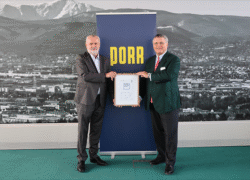
The Austrian Sustainable Building Council (ÖGNI) has introduced a new basic certificate for sustainable construction sites in building and civil engineering. PORR has become the first construction company in Austria to obtain this certification, which establishes a uniform standard for evaluating environmental and organisational practices across all of a company’s construction sites.

Until now, construction sites could only be certified on an individual project basis. The new system allows companies to receive an overarching basic certificate confirming compliance with key sustainability requirements in daily site operations.

The certification covers criteria such as site organisation, environmental risk assessment, noise and dust management, and the monitoring of energy and water consumption. Once the basic certificate has been issued, future projects by the company will only need to demonstrate compliance with project-specific or non-standardised elements, such as particular machinery or site communication procedures. The change is expected to simplify documentation and make the certification process more consistent and efficient.

The sustainable construction site standard was originally developed by the German Sustainable Building Council (DGNB) and is now applied in Austria through ÖGNI. The assessment includes environmental, economic, and social dimensions. Certification is completed in two phases: a preliminary certificate during construction and final approval after project completion.

To achieve the new basic certificate, PORR conducted a review and optimisation of all relevant processes using selected pilot sites. The company’s experience contributed to refining the framework used by ÖGNI for evaluating sustainability across active construction environments.

According to ÖGNI, the introduction of a basic certification system provides the Austrian construction industry with a more practical way to embed sustainability principles into everyday operations and to monitor their consistent application across multiple projects.

Poland moves to update foreign worker permit fees after nearly two decades

The Polish government is preparing to raise the cost of work permits and related documentation for foreign employees for the first time in almost twenty years. The change, now under public consultation, is intended to bring administrative charges in line with current economic conditions and to limit misuse of the system.

The draft regulation, prepared by the Ministry of Family, Labour and Social Policy in cooperation with the Ministry of Interior and Administration, outlines significantly higher fees for the issuance of permits and the registration of work statements. The adjustment follows a long period in which rates have remained largely unchanged despite rising administrative expenses and growing numbers of foreign workers.

Authorities argue that the increase should make it more difficult for unlicensed intermediaries to exploit the system by registering large volumes of fictitious job offers and selling documents to migrants. According to officials, a higher entry cost could discourage such practices and improve oversight of legal employment.

Employers, however, have raised concerns about the financial implications. Representatives of small and medium-sized firms say the new fees could add to existing cost pressures, especially in industries that rely heavily on migrant labour such as logistics, construction, manufacturing and hospitality.

Labour-market specialists suggest that while the direction of reform is reasonable, the success of the policy will depend on how it is implemented. Without stronger inspection and enforcement, the higher costs could ultimately be passed on to foreign workers themselves, rather than to companies or agencies responsible for recruitment.

Experts have also urged the government to consult with business groups and phase in the increases gradually to avoid disrupting sectors facing chronic labour shortages. The proposal is expected to be finalised and introduced in early 2026 following further review.

Construction begins on Nová Cihelna Kladno residential development

Construction has started on Nová Cihelna Kladno, a residential project in the Rozdělov district of Kladno, Central Bohemia. The development will include 104 apartments built to a high energy-efficiency standard, with completion planned for the end of 2027.

The project is being developed by Pierre Grafen in cooperation with IKONIX, which oversees project management and sales through Luxent – Exclusive Properties. According to the partners, around 60 percent of the apartments have already been sold at the start of construction.

The development will occupy the site of a former brickworks and aims to combine residential use with sustainable design. Plans include six low-rise buildings ranging in size from 1+kk to 4+kk, with floor areas between 35 m² and 119 m². Most apartments will feature a balcony, terrace, or small garden, and all will include a basement storage unit. Parking will be available, including spaces equipped for electric vehicle charging.

Energy-saving measures include air-to-water heat pumps, controlled ventilation with heat recovery, and photovoltaic panels on the roofs. An underground rainwater tank will collect water for landscape irrigation. The buildings are designed to achieve energy efficiency category A, the highest in the Czech system.

The project’s design reflects the industrial heritage of the former brickworks through the use of brick façades and modern materials. The site will also feature landscaped public areas, including a shared garden of about 1,000 m² with a children’s playground and seating areas for residents.

According to the developer, the new neighbourhood is intended to provide affordable, low-energy housing within commuting distance of Prague. The Rozdělov district offers existing schools, shops, and healthcare facilities, as well as good transport connections via the D6 motorway, regional buses, and train services.

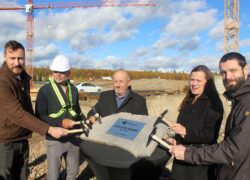
Photo: From left: Tomáš Nedbal (Arch Construct), Pavel Mácha (Pierre Grafen), Milan Nousek (Pierre Grafen), Lucie Pecková (Pierre Grafen), and Jakub Vyčítal (IKONIX).

Skanska launches fifth and final phase of Nowy Rynek in Poznań

Skanska has announced an investment of approximately EUR 74 million (around SEK 820 million) in the fifth phase of its Nowy Rynek office development in Poznań. The new phase, referred to as Building C, will mark the completion of the mixed-use complex located in the city centre.

The six-storey building will provide around 29,000 sqm of gross leasable area. According to Skanska, it is designed to achieve net zero carbon emissions in operation, using renewable energy sources and energy-efficient technologies. The scheme will include photovoltaic panels, air and ground-source heat pumps, and will operate independently from the city’s district heating network.

The ground system for heat exchange involves approximately 10 kilometres of boreholes, while construction materials with a reduced carbon footprint are being prioritised. The building will feature advanced building-management systems and automated ventilation controls.

Nowy Rynek C has received preliminary LEED Platinum and WELL certifications and is pursuing the “Building Without Barriers” standard to ensure accessibility. It will also include a rooftop terrace designed for drone-based parcel delivery — a first for an office building in Poland.

Construction of the final phase is scheduled to begin in Q4 2025, with completion expected by Q4 2027. The complex, developed by Skanska Commercial Development Europe, will complete the Nowy Rynek masterplan, which has been under development since 2017.

DBH Flex Rebuilds Around Partnership, Pragmatism, and a Post-Pandemic Vision for Flexibility

Six months after taking charge of DBH Flex, Managing Director Michael Smithing says the company is returning to its entrepreneurial roots while adapting to an office market that has changed dramatically since COVID-19. The Budapest-based flexible workspace operator, formerly known as DBH Serviced Offices, has spent the past half-year stabilising operations, re-entering regional markets, and redefining what flexibility means in Central and Eastern Europe.

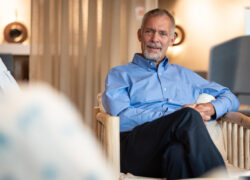
“DBH has been around since 2004, but the business needed focus,” Smithing tells CIJ EUROPE. “We’ve spent the last half-year stabilising operations and responding faster to clients. That alone has improved occupancy in Budapest.” The company’s rebranding this year from DBH Serviced Offices to DBH Flex signals a strategic shift from traditional serviced space to a more adaptive model built on realistic economics and collaboration with landlords.

After consolidating its Budapest operations, DBH Flex re-entered the Romanian market, taking the entire second floor of Skanska’s Equilibrium One in northern Bucharest. The move marks a return to high-quality, energy-efficient buildings and aligns with a broader trend across the region, where developers are redesigning new schemes to incorporate flexible-space components as hybrid working continues to reshape tenant behaviour.

Smithing says DBH Flex’s approach is about adaptability rather than scale. “We don’t tie companies into five-year leases,” he explains. “They can grow or contract as their business evolves.” One client in Budapest downsized from an entire building to a 110-desk office, while another is testing a shared-service concept with fewer than 20 desks. Such examples highlight the shift toward proof-of-concept leasing, where companies validate their operational needs before committing to larger spaces. Property advisers in Budapest and Bucharest confirm that short-term leasing demand is increasing, although overall take-up remains below pre-pandemic levels as many large occupiers continue to renegotiate existing leases.

The company’s renewed focus on partnership extends to landlords, many of whom remain cautious after several operators defaulted on rent during the pandemic. Smithing believes the answer lies in profit-sharing rather than fixed leases. “If I promise a rent I can’t pay, everyone loses,” he says. “If we share both the gain and the pain, it works.” Under this approach, DBH Flex fits out vacant offices at a lower capital cost — roughly €250 per square metre, compared to the €400–€500 typical of rent-free incentive packages — and aims to fill the space faster. Whether the model delivers “full rent within a year” depends on occupancy levels that have not been disclosed, but market analysts agree that faster cash-flow generation is attractive for landlords with empty stock.

“The real risk today lies with landlords sitting on vacant second-generation buildings waiting for a tenant to pay the valuation rent they send to their bank,” Smithing says. “We work with those who understand that success comes from cashflow and occupancy. It takes about a year to create a stable Flex centre, and during that time neither the landlord nor the operator earns much. Our job is to minimise risk and generate sustainable returns.”

The continuing rise of hybrid work has blurred the lines between permanent and occasional office use. DBH Flex reports clients rotating teams through shared desks or reserving rooms part-time. “Some of our tenants use a room twice a week; others pay per day for overflow staff,” says Smithing. “The point is that no space sits idle.” Advisors at Colliers CEE note that similar rotational models are emerging in Warsaw and Prague, allowing operators to maintain occupancy despite lower daily attendance.

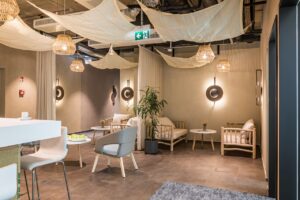
DBH Flex’s newer locations have also evolved in design. The older corridor-and-cubicle model has been replaced by open lounges, soft seating and private booths that encourage informal interaction without mimicking the event-driven coworking aesthetic. “We’re not trying to be a lifestyle brand,” says Smithing. “But people need a place where they feel comfortable stepping out of their office.”

Expansion is on the table, but Smithing emphasises discipline over speed. “Some buildings just won’t work economically,” he admits. “If fit-out costs are €800 per square metre, we can’t make the numbers add up. At €250, we can.” Market observers see this cautious approach as necessary in a region where older office stock often lags ESG standards and landlords face tightening margins.

When asked how technology might reshape the business, Smithing is both pragmatic and humorous. “AI will help us work faster and with fewer mistakes. It removes repetitive tasks and should make work more enjoyable. But our values — flexible, fun and fair — come from our people. AI can’t replace that. Although I’d love to see cleaning robots introduced sooner rather than later.”

Reflecting on the sector’s turbulence in recent years, Smithing says sustainability in the flex business is less about ESG metrics and more about survival through adaptability. “When the market is booming, we share the good times. When it’s tough, we share the pain. Some of the most visible failures weren’t caused by overexpansion but by inflexibility. Operators with fixed rents couldn’t give clients the flexibility they needed to survive, and that rigidity drove them away.”

DBH Flex’s guiding philosophy — “Flexible, Fun and Fair” — now serves as both cultural compass and operational strategy. Smithing believes that success in the Central-European flex market depends not on scale but on trust, partnerships and disciplined execution. “The market remains small and competitive, but measured growth gives us an edge,” he concludes. “There’s no algorithm for this business. You can’t automate trust. You have to earn it — one landlord and one tenant at a time.”

© 2025 cij.world

Czech manufacturing sector weakens sharply in October

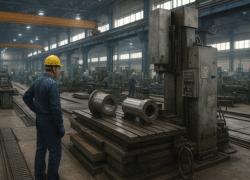
Business conditions in the Czech manufacturing sector worsened noticeably in October, according to the latest data from S&P Global Market Intelligence. The Purchasing Managers’ Index (PMI) fell to 47.2 points from 49.2 in September, marking the fourth consecutive month of contraction and the steepest decline since January.

The survey showed a sharper drop in production, new orders, and employment, reflecting subdued demand from both domestic and foreign markets. New export orders continued to fall for the 19th month in a row, while business confidence weakened to its lowest level since the end of 2024.

S&P Global senior economist Sian Jones noted that “the final quarter of the year began on uncertain ground for Czech manufacturers,” citing weak external demand and reduced order inflows. She added that although input cost inflation eased to its slowest pace in nearly two years, firms were still forced to lower output prices amid competitive pressure and limited sales growth.

Employment fell at the fastest rate in seven months, with many companies scaling back recruitment and cutting costs. Despite easing inflationary pressures, manufacturers remained cautious, reporting limited optimism about production prospects for 2026.

Some analysts said the PMI results contrast with other short-term indicators suggesting a modest improvement in industrial sentiment. Vít Hradil of Investika observed that such discrepancies are common when trends begin to shift, while Martin Kron of Raiffeisenbank warned that persistently weak foreign demand could dampen expectations for recovery in the coming months.

The October data point to a slow start for Czech industry in the fourth quarter, with firms balancing lower output and cautious investment as they await a clearer rebound in external markets.

Source: CTK

Czech state budget deficit narrows to CZK 183 billion — lowest October figure since 2019

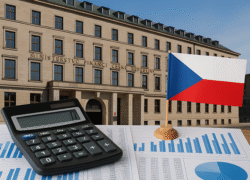
The Czech state budget ended October with a deficit of CZK 183.1 billion, according to data released by the Ministry of Finance. The gap widened from September’s CZK 153.9 billion but remains the lowest October result in six years, improving on last year’s CZK 200.7 billion shortfall.

The ministry attributed the year-on-year improvement to consolidation measures adopted under the government’s fiscal reform package, which have increased revenues faster than expenditures.

Budget income totalled CZK 1.718 trillion, up 7.2 percent compared with the same period last year. The strongest growth came from corporate taxes, which rose 15 percent, and personal income tax, up 12 percent. Value-added tax revenue grew 8.5 percent, reflecting steady household consumption.

Spending reached CZK 1.901 trillion, 5.4 percent higher than in 2024. Social benefits remained the largest expenditure item at CZK 771.8 billion, including CZK 599 billion in pensions. The state spent CZK 73.5 billion on debt servicing, a 10 percent increase, while capital investment rose 23 percent to CZK 172.5 billion, mainly through infrastructure programmes.

Finance Minister Zbyněk Stanjura said the current trend shows “revenues growing faster than spending,” describing it as a signal of gradual fiscal stabilisation.

Analysts expect the deficit to expand in the final two months of the year, but most forecasts indicate that the government could still meet its 2025 deficit target of CZK 241 billion.

The Czech Republic recorded a deficit of CZK 271.4 billion in 2024, marking the best fiscal outcome since the COVID-19 pandemic.

Source: CTK

Sanmar leases 5,500 sqm at City Logistics Łódź VI

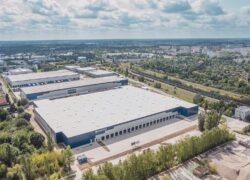
Transport and logistics company Sanmar has leased approximately 5,500 square metres of warehouse and office space at City Logistics Łódź VI, a project developed by Panattoni. The tenant was advised by Newmark Polska during the leasing process.

The facility, located on Dostawcza Street, is part of a 26,000-square-metre urban logistics park certified to the BREEAM Excellent environmental standard. The park offers flexible unit sizes suitable for e-commerce, warehousing, and light production operations.

Sanmar, established in 2006 in Poznań, operates across Poland and abroad, providing transport and logistics services for industrial clients. The company employs over 100 people, runs a fleet of 120 vehicles, and handles more than 70,000 transport orders annually. The new Łódź site will strengthen its warehousing capacity and support further business development in central Poland.

According to Panattoni, the Łódź metropolitan area remains one of Poland’s key logistics locations due to its central position, developed transport network, and availability of labour.

Newmark Polska supported Sanmar throughout the transaction, including market analysis, lease negotiation, and coordination of the technical handover.

LATEST NEWS