Sanmar leases 5,500 sqm at City Logistics Łódź VI

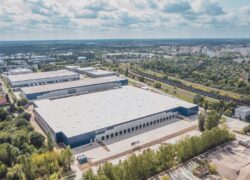
Logistics company Sanmar has leased approximately 5,500 square metres of warehouse and office space at City Logistics Łódź VI, an urban logistics park developed by Panattoni. The tenant was represented in the transaction by Newmark Polska.

The facility on Dostawcza Street forms part of a 26,000-square-metre industrial park that holds a BREEAM Excellent environmental certification. Its layout enables the accommodation of a range of business functions including storage, light manufacturing, and logistics.

According to Panattoni, Łódź continues to attract logistics operators due to its central location, transport infrastructure, and labour availability. The developer has delivered nearly 2.4 million square metres of industrial space in the region to date.

Sanmar, established in Poznań in 2006, provides national and international transport services. The company employs over 100 people, operates a fleet of 120 vehicles, and handles around 70,000 transport orders annually across nine branches in Poland. The new lease in Łódź will support the company’s plan to expand its warehousing and logistics capabilities.

Newmark Polska advised Sanmar throughout the transaction, assisting with market analysis, negotiations, and the lease finalisation. Advisor Jan Olszewski said the location offers favourable conditions for further growth, citing access to skilled labour and modern logistics infrastructure.

WING purchases mixed-use development site on Váci Road in Budapest

Hungarian real estate developer WING Group has signed an agreement with GTC for the acquisition of a development site located at 173–177 Váci Road, one of Budapest’s main office corridors. The plot spans more than 2.1 hectares and is planned for a mixed-use project that will include approximately 470 apartments and 23,000 square metres of office space.

The site is situated in the northern section of the block bordered by Váci Road, Szekszárdi Street, Madarász Viktor Street, and Szobor Street, providing direct access to metro transport and other urban services. The Váci Road corridor is the largest concentration of office space in Hungary, and WING has previously developed several projects in the area, including Atrium Park and the Kassák residential complex.

The planned development aims to add both residential and commercial capacity to the district. Construction of the residential component is scheduled to start in 2026, following the approval of a final concept design, a definitive building permit, and a town planning agreement with the local municipality. The agreement includes commitments to create public green spaces and community areas accessible to residents and workers in the neighbourhood.

WING stated that the project will be implemented in two phases, with the goal of integrating modern housing and office functions in one location. The company’s acquisition continues its long-term activity along the Váci Road corridor, an area that remains a focal point for new real estate investment in Budapest.

HSF System SK completes new XXXLutz department store in Nitra

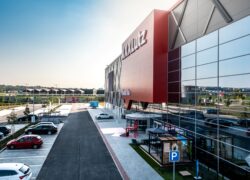
HSF System SK, part of the international construction group HSF System within the PURPOSIA Group holding, has completed the general contracting works for the new XXXLutz department store in Nitra. The property is situated in the Na Pasienkoch area, near the Sever Industrial Park. The investor, RAS Immobilien SK s.r.o., specialises in the development and management of commercial and office real estate.

The project covered the construction of a 5,092 m² retail hall along with 10,101 m² of paved areas, internal roads, and related water infrastructure. According to Tomáš Kosa, Director of HSF System SK, the work involved complex coordination and technical requirements.

The completed building has a total area of approximately 14,600 m² and features a 20-metre atrium with integrated lighting elements on the façade. The construction incorporates several energy-efficient measures, including 394 photovoltaic panels on the roof, which are expected to supply around 17 percent of the store’s annual electricity needs. Rainwater is collected and managed through pumping stations connected to the Jelšina stream and an evaporation pond with an overflow system.

Inside, the ground floor accommodates around 4,140 m² of home accessories retail space, while the first floor—covering 4,616 m²—is dedicated to kitchen, mattress, and furniture displays. The assortment of home accessories has grown by roughly 1,800 products, bringing the total offer to around 7,000 items. The site provides 129 parking spaces for customers.

According to Michal Karcol of RAS Immobilien SK, the new store offers about 50 percent more retail area than the company’s previous location in Centro Nitra. The investment has also led to the creation of 53 new jobs across retail, services, and logistics functions.

Poland’s Foreign Trade Grew in 2024 as EU Markets Drove Exports

Poland’s foreign trade activity expanded in 2024, with data from the Yearbook of Foreign Trade Statistics of Poland 2025 showing resilient export and import growth amid stable demand from European partners.

According to Statistics Poland, total foreign trade turnover in goods and services increased compared to 2023, maintaining Poland’s strong integration within the EU single market. The European Union remained Poland’s largest trading partner, accounting for the dominant share of both exports and imports. Germany continued to hold the top position as Poland’s leading export destination and import source, followed by the Czech Republic, France, and the Netherlands.

Trade in goods with OECD countries also grew steadily, reflecting diversified industrial and consumer linkages. The United States and South Korea registered notable increases in both directions of trade, particularly in industrial machinery, transport equipment, and electronic components.

The report highlights that exports were mainly composed of manufactured goods, automotive products, and machinery, while imports were dominated by industrial inputs, electronics, and energy resources. In services, IT and business outsourcing continued to be major contributors to Poland’s export profile, supported by growing cross-border demand for digital and professional services.

The yearbook also notes an improvement in the terms of trade, indicating favourable price dynamics for exported goods relative to imports. Price indices in both exports and imports were tracked across major commodity groups using the Combined Nomenclature (CN) and Polish Classification of Products and Services (PKWiU).

In 2024, Poland’s external debt remained stable and the balance of payments showed sustained surpluses in trade in services, helping to offset moderate deficits in goods.

Statistics Poland emphasised that the data were compiled under harmonised EU methodologies through the INTRASTAT and EXTRASTAT systems, ensuring comparability across member states.

The 2025 edition marks the 60th annual publication of Poland’s foreign trade yearbook, offering detailed breakdowns by country, sector, and product category in both current and constant prices, with values expressed in PLN, EUR, and USD.

Pardubice reviews redevelopment plans for Masaryk Barracks site

The City of Pardubice has paused work on the long-awaited analysis that will determine the future use of the former Masaryk Barracks, a ten-hectare brownfield area located near the city centre.

Mayor Jan Nadrchal (ANO) confirmed that progress on the study was interrupted as the city prioritised the construction of a new primary school on part of the site. Demolition of the former military buildings began earlier this year to prepare for the investment.

“The analysis was meant to guide an investor competition, but as circumstances evolved and the school project took precedence, it was necessary to adjust our timeline,” the mayor told Czech News Agency (ČTK). He added that work on the document could resume by the end of 2025, with an architectural or developer competition likely to follow.

An existing urban study envisions a mixed residential neighbourhood combining family housing, services, shops, and public spaces. According to the mayor, the city’s goal is not to maximise profit from the land sale but to support affordable housing and balanced urban growth.

The barracks site dates back to the 1920s and has been owned by the city since 2014, when Pardubice acquired it from the Ministry of Defence after several years of negotiation. Most of the property is now under municipal ownership, with only a small portion retained by the state for planned public-sector development.

Source: CTK

REDPORT Development Lays Foundations for Bucharest’s Next Urban Chapter

With construction now underway at its €50 million Vitality project in Sector 3, REDPORT Development is not only strengthening its residential footprint but also outlining a broader vision for long-term urban transformation across Bucharest. In an exclusive conversation with CIJ EUROPE, COO Bogdan Gubandru discussed the company’s expansion plans, financing strategy, and ambitions to build one of the capital’s largest new mixed-use communities.

Building Momentum with Vitality

Vitality marks REDPORT’s first development in Sector 3 — one of Bucharest’s fastest-growing residential districts — and serves as a pilot for the company’s mid-market housing model. The scheme will deliver roughly 500 apartments across three phases, beginning with low-rise blocks already under construction and expanding to mid-rise buildings in later stages. Apartments are priced around €1,800 per square metre, targeting local families upgrading from older stock and newcomers seeking access to schools, green spaces, and modern infrastructure.

The project also integrates retail and leisure amenities, including a Lidl supermarket and landscaped open areas, reflecting REDPORT’s emphasis on community-led design.

Expansion and Land Acquisition

Gubandru confirmed that the company is already pursuing additional plots in Sector 3 and evaluating larger land parcels on Bucharest’s northern and peripheral edges.

“We are choosing locations with the same kind of foresight that urban planners have used before us,” Gubandru said. “We look for areas with access to infrastructure, social facilities, and green zones — places that can evolve into mixed-use neighbourhoods. In District 3, Vitality Est benefits from proximity to Pantelimon Park and the lakes, while in the north, Străulești–Petrom City is emerging as Bucharest’s ‘New North’. These aren’t isolated projects — they’re new pieces of the city’s urban puzzle, meant to last for generations.”

Beyond its current pipeline, REDPORT is exploring a 100–150-hectare development on the outskirts of the city — a mixed-use community potentially anchored by a golf course, which would mark an unprecedented scale for the capital.

Financing an Urban Vision

Asked about the financial framework for such large-scale projects, Gubandru drew parallels with historic infrastructure investments.

“Financing a 100-hectare development is like financing a boulevard or a railway in the past — it demands multiple layers of capital and long-term vision,” he explained. “For our for-sale phases, we rely on a mix of equity, bank loans, and presales. For rental or community-led formats, we’re ready to attract institutional investors, green bonds, and forward-funding structures. Our goal is to finance not just buildings, but an entire way of life — modern, sustainable, and aligned with Bucharest’s future.”

The developer’s financing model has already been tested through a private placement completed earlier in 2025, bringing in minority shareholders, with a second round expected before the end of the year. An IPO is under consideration for 2027–2028, possibly with a dual listing in Bucharest and on a foreign exchange.

Managing Risk and Delivery

REDPORT’s leadership acknowledges that delivering large-scale, mixed-use developments in Romania presents real challenges — from zoning and permitting delays to infrastructure gaps and financing cycles.

“Every major transformation comes with obstacles,” Gubandru said. “We mitigate risks through phased approvals, early cooperation with local authorities on infrastructure, and diversified capital sources. Above all, our in-house construction capability gives us control over timing and quality. Like past urban transformations, it’s about perseverance, planning, and precision.”

A Long-Term Horizon

The proposed 100–150-hectare project remains in its conceptual phase, but Gubandru emphasised that REDPORT is already preparing for execution.

“Projects of this scale belong to a generational horizon,” he noted. “With land assembly and zoning, the first works could begin in 2027 or 2028. But this is not a single project — it’s a new district, and full delivery will unfold over eight to ten years. Our ambition is to approach it with the same responsibility Haussmann had when reshaping Paris — a coherent, sustainable plan that leaves a legacy for Bucharest.”

Evolving into an Institutional Platform

Beyond its development ambitions, REDPORT is positioning itself to attract institutional capital such as pension funds and family offices — a first step toward becoming a mature, listed real estate platform.

“By 2027 we want REDPORT to be recognised not just as a developer, but as a platform for urban transformation,” Gubandru concluded. “That means transparent governance, international standards, and a diversified portfolio that proves resilience through cycles. Everything we’ve built so far has prepared us to take this next step.”

With Vitality Est now breaking ground and a new generation of large-scale communities on the horizon, REDPORT Development is positioning itself at the centre of Bucharest’s next wave of residential and urban evolution.

© 2025 cij.world

The Next Frontier of Sustainability: Measuring Biodiversity Risk

As sustainability reporting becomes more detailed and data-driven, companies and investors are beginning to confront a new challenge: how to measure and manage their impact on nature. Biodiversity risk — once seen as a distant environmental concern — is now being recognised as a financial and operational issue, influencing supply chains, regulation, and access to capital.

Unlike carbon emissions, biodiversity loss cannot be expressed through a single universal metric. It involves many interconnected factors: land use, water consumption, pollution, habitat change, and species decline. For this reason, the process of assessing exposure to biodiversity risk requires several layers of analysis — from identifying where a company’s activities intersect with natural ecosystems, to estimating how those activities could affect business performance over time.

Across Europe, companies are beginning to adopt structured methods for doing so. The most common approach starts by mapping operations or assets that depend heavily on natural resources — such as water, soil, or local ecosystems. Once those links are established, businesses evaluate the condition of the surrounding environment and measure how their activities influence it. These findings are then translated into risk assessments that connect environmental pressure with potential financial outcomes, such as higher operating costs, stricter permitting, or supply disruptions.

Financial institutions are moving in the same direction. Banks and asset managers are testing portfolio-wide screening tools that help identify sectors most exposed to biodiversity loss, including agriculture, construction, and extractive industries. These analyses help determine where investment risks may rise as environmental regulations tighten or as ecosystems become more fragile.

Regulators are also expanding their focus. The European Union’s new corporate reporting standards require large companies to disclose not only their environmental footprint but also their dependence on ecosystems and natural services. This shift means that biodiversity risk will soon have to be measured, documented, and verified in much the same way that carbon emissions are today.

Industry advisers say this change represents a major evolution in corporate sustainability. Instead of treating nature as an abstract externality, companies are being asked to account for it as a measurable component of business performance. The data may still be imperfect, but the direction is clear: biodiversity risk is emerging as the next defining metric of sustainable value creation.

For businesses, the lesson is simple. Understanding how operations depend on and affect the natural environment is no longer just a reputational concern — it’s becoming a core element of financial strategy. Those that can measure biodiversity risk effectively will not only comply with future regulations but also gain insight into long-term resilience and resource efficiency.

Source: CMS

UniCredit and Erste Bank to reshape Poland’s banking landscape

The re-entry of UniCredit and the expansion of Erste Bank into Poland’s banking market are expected to intensify competition and accelerate digital and financial innovation.

UniCredit has finalised the EUR 376 million acquisition of Aion Bank and its technology partner Vodeno, marking its return to Poland after nearly a decade. The Italian group, which formerly owned Bank Pekao, relaunched Aion under the UniCredit brand in October 2025. Meanwhile, Austria’s Erste Bank has entered the Polish retail market by investing over EUR 7 billion to acquire stakes in Santander Bank Polska and Santander TFI.

According to Dr. Jan Gąsiorowski of Wolf Theiss, the arrival of two major European banking groups—with strong capital, digital capabilities, and experience across Central and Eastern Europe—will likely challenge established domestic players. “It will influence both individual and corporate banking, increasing competition in the large financing segment,” he said.

For retail customers, the new entrants are expected to drive lower service costs and more advanced digital products, such as integrated banking and investment platforms, real-time analytics, and AI-based financial management tools.

For corporate clients, analysts foresee broader access to international capital markets and ESG-linked financing, potentially reducing borrowing costs and increasing credit availability. Similar trends were seen in neighbouring markets such as the Czech Republic, Hungary, and Romania, where large European banks’ entries led to lower corporate margins and improved financing terms.

“Competition should translate into better access to capital for Polish businesses, especially for those pursuing international or infrastructure projects,” noted Maria Markowska-Zalewska, attorney-at-law at Wolf Theiss. She added that stronger eurozone backing could expand the scope for syndicated financing of large energy and transport developments.

Erste Bank has already been active in Poland’s project finance sector. In 2025, it joined the refinancing consortium for Varso Place in Warsaw and acted as agent in a €270 million loan to Cavatina Holding S.A.

Experts agree that while the Polish banking market is now far more advanced than during the first wave of foreign entries in the early 2000s, the effects of this new phase will unfold gradually. Over the next few years, the presence of UniCredit and Erste is expected to stimulate greater innovation, improved customer experience, and increased access to international capital, marking a new stage in the sector’s evolution.

Deka Immobilien sells two logistics assets in southern Poland

Deka Immobilien has completed the sale of two logistics properties in Poland to Hillwood, a US-based industrial real estate investor and developer. The assets were part of the WestInvest InterSelect open-ended real estate fund. The transaction value was approximately €100 million.

The properties are located in Tychy and Bieruń, within the Katowice metropolitan area, offering access to key regional transport routes, including the A4 motorway linking Dresden, Wrocław, and Kraków, and National Road 1, which connects to Warsaw, Łódź, the Czech Republic, and Slovakia.

Logistics Park Tychy, developed between 2006 and 2013, comprises around 97,000 square metres of leasable space and 818 parking spaces. It is fully occupied by multiple tenants. Logistics Park Bieruń, built in 2014 and expanded in 2017 and 2019, provides about 56,000 square metres of space, including 3,500 square metres of offices and 406 parking spaces, and is fully leased to AutoPartner, a distributor of automotive parts.

Deka Immobilien stated that the sale follows around a decade of ownership and forms part of an active portfolio management strategy for the fund. In 2025, WestInvest InterSelect has also expanded its European logistics exposure with acquisitions in Switzerland and Italy.

Chalupkova Offices by Penta Real Estate nominated for Best Office Buildup Development of the Year

The Chalupkova Offices project by Penta Real Estate has been shortlisted for the Best Office Buildup Development of the Year at the CIJ Awards Slovakia 2025. The nomination recognises the project’s forward-thinking design, strong sustainability focus, and contribution to the ongoing transformation of Bratislava’s new downtown district.

Following the acquisition of the site in 2023, Penta Real Estate redefined the project in cooperation with Jakub Cigler Architekti, one of the Czech Republic’s leading architectural studios. The result is a contemporary office building designed to meet LEED Platinum standards, with ambitions to achieve LEED Zero Carbon certification for carbon-neutral operation.

The development includes generous terraces, a rooftop area for community gatherings, and green spaces integrated throughout the design. Facilities for cyclists — including secure parking, showers, and a service station — reflect the project’s emphasis on sustainable mobility. A dedicated mobile app will enable seamless access to the building and underground parking, generate visitor QR codes, and share updates about nearby amenities and events.

The project is being delivered in two phases. The first phase, currently under construction, will provide approximately 18,400 sqm of office space and 1,500 sqm of retail units. The second phase will add a further 15,250 sqm of offices and 750 sqm of retail.

Chalupkova Offices represents the first stage of the wider Chalupkova mixed-use development, which is transforming a long-abandoned brownfield site in Bratislava’s Staré Mesto district. The area, once part of an industrial zone near a former oil refinery damaged during World War II, is being revitalised through extensive soil decontamination and environmental remediation undertaken by Penta Real Estate before construction began.

With its combination of advanced technology, urban regeneration, and human-centred design, Chalupkova Offices stands out as one of the most ambitious new office developments in Slovakia.

LATEST NEWS