Tomáš Ostatník, Holland & Company joins the jury committee for the CIJ Awards Slovakia 2024

Tomáš Ostatník, Holland & Company joins the jury committee for the CIJ Awards Slovakia 2024

Tomáš Ostatník is a Real Estate Executive at Holland & Company Slovakia. He is a seasoned professional in the real estate sector, with extensive experience in property acquisitions, sales, and development projects. Tomáš plays a key role in expanding the company’s real estate portfolio, focusing on strategic growth and value creation. He has expertise across commercial, residential, and mixed-use developments and is known for his leadership and success in real estate transactions in Slovakia. At Holland & Company, Tomáš aligns the firm’s investments with market opportunities and client needs.

The CIJ Awards Slovakia 2024, the premier event honoring excellence in real estate development, is set to take place this year on the 20th November at the Radisson BLU Carlton Hotel, Bratislava, bringing together the most influential players in the Slovak property market. As the most anticipated industry event of the year, the CIJ Awards continue to recognize and celebrate outstanding achievements in real estate, development, and property management across Slovakia.

Now in its 20th year, the CIJ Awards Slovakia is organized by CIJ Europe, the leading real estate news and event platform in Central and Eastern Europe. The awards have become a benchmark for excellence, with a reputation for highlighting the highest standards of quality, innovation, and leadership in the real estate sector.

For more information about the CIJ Awards Slovakia 2024, including details on how to enter, sponsorship opportunities, and event registration, please visit the official CIJ Awards website on the link below:

MotoBarometer 2024: Chinese electric cars set to dominate European market by 2035

Over half of Poland’s automotive industry experts (53%) believe that Chinese manufacturers will lead the electric vehicle (EV) market in Europe by 2035, according to the MotoBarometer 2024 report, conducted by Exact x Forestall (formerly Exact Systems). This sentiment is echoed across most of the 11 countries surveyed, including Germany, Spain, Turkey, and Hungary, where a majority of respondents foresee a similar future for Chinese electric cars.

While in France and Romania, European brands were seen as potential leaders, with 51% and 48% of respondents favoring local manufacturers, Poland showed less confidence in European brands. Only 32% of Polish respondents believed European companies would dominate EV sales by 2035, and just 4% predicted U.S. brands would lead.

“Although there are still more than ten years left for European electromobility to evolve, industry representatives have already passed judgment. They see Chinese manufacturers as the frontrunners in the future EV market,” said Jacek Opala, President of Exact x Forestall. “This should serve as a wake-up call for Europe’s automotive sector to formulate effective strategies to remain competitive. Time is of the essence.”

The report also highlights strong support for higher tariffs on Chinese electric car imports. In Poland, 66% of respondents favor such measures, and 73% believe further actions should be taken to limit the influx of Chinese EVs. This sentiment is widely shared across Europe, with only Slovakia and Hungary showing less than half of respondents in favor of new tariffs (48% and 46%, respectively).

While increased tariffs are seen as a way to protect Europe’s EV industry, the report warns of potential negative consequences. Nearly half of Polish respondents (46%) fear that higher tariffs could push Chinese manufacturers to relocate their factories to Europe, allowing them to bypass tariffs and continue selling cheaper vehicles. Another 39% are concerned about deteriorating relations between the EU and China, and 37% worry that higher tariffs could drive up prices for European-made cars due to the rising costs of Chinese components.

“Chinese manufacturers building factories in Europe could be a double-edged sword,” said Opala. “Countries like Poland, the Czech Republic, and Slovakia may welcome the investment due to job creation and increased importance in the automotive supply chain. However, this move could allow Chinese companies to flood the market with cheaper vehicles, further eroding the competitiveness of European brands. Price remains the most important factor for European consumers when choosing an electric car, and this is where Europe is increasingly losing ground.”

The MotoBarometer 2024 survey gathered responses from 1,001 industry representatives across 11 countries, including car manufacturers and suppliers of components such as wipers, car windows, and steering columns. The findings provide insight into the shifting dynamics of the global automotive industry as it navigates the challenges of electromobility and the growing influence of Chinese EV manufacturers in Europe.

Source: Exact x Forestall and ISBnews

KPMG Report: Economic uncertainty tops CFO concerns for 2025

Nearly 40% of CFOs in Poland have identified economic uncertainty as the biggest challenge for 2025, according to a new KPMG report prepared in collaboration with ACCA. The report, titled “Modern CFO in a Transforming Company”, highlights key concerns among finance leaders, including supply chain management, legal regulations, and talent management.

However, despite these challenges, CFOs see a silver lining in the digitization and automation of finance. According to the report, nearly half of the surveyed CFOs pointed to invoicing, payment processing, and accounting as the areas with the greatest potential for automation in the coming year. Implementing modern technologies in these processes could result in significant cost savings and improved accuracy in financial operations.

“Digital technologies are revolutionizing the finance sector. Tools like artificial intelligence (AI), machine learning, and advanced data analytics allow for more effective financial management and real-time decision-making,” said Agnieszka Jarosz, Managing Director of ACCA for Eastern and Northern Europe. “As these tools evolve, the digital skills required of CFOs are expanding. CFOs must now manage not only finances but also the technology that supports their business activities.”

Despite this optimism about automation, the report revealed that many companies still face obstacles in implementing new technologies. Two-thirds of CFOs admitted that they have not yet automated their tax processes. The most frequently cited barriers were challenges in integrating new systems with existing IT infrastructure (39%) and frequent changes in tax legislation (37%).

In the area of transfer pricing, less than 20% of companies plan to automate these processes in the next 12 months, indicating that many firms still rely on traditional solutions. The slow pace of adoption reflects the broader hesitation around technological transformation in finance.

One growing area of concern is non-financial reporting, particularly around environmental, social, and governance (ESG) standards. Although EU regulations are becoming more stringent, 42% of companies in Poland neither report nor monitor non-financial indicators. Furthermore, those that do engage in ESG reporting are primarily those required to comply with the EU’s Non-Financial Reporting Directive (CSRD). Of the companies that do report ESG metrics, 40% cited challenges with data transparency and accuracy.

Artificial intelligence is also emerging as a critical tool in financial transformation, but adoption remains slow. Only 7% of Polish companies have fully implemented AI in their financial processes, a delay compared to other digital solutions. However, 29% of companies are in the early stages of AI adoption, while 40% are either in the process of prototyping or planning to implement AI.

The primary benefits CFOs see in AI include enhanced accuracy and more complex data analysis, with 42% of respondents highlighting these as key advantages. AI also offers opportunities to automate routine financial tasks like invoicing and accounting, improving operational efficiency. Yet, many companies are held back by concerns over the transparency of AI algorithms and a lack of qualified personnel to manage these systems.

The KPMG survey was conducted in August 2024 using telephone interviews with 150 senior finance leaders across industries, including construction, real estate, energy, pharmaceuticals, IT, and logistics. The findings provide a comprehensive snapshot of the opportunities and challenges facing CFOs as they navigate a rapidly transforming business environment.

Source: KPMG

Poland: Sales in small-format stores decline by 2% year-on-year in September

The total value of sales in small-format stores, those up to 300 square meters, fell by 2% year-on-year in September 2024, while the number of transactions dropped by approximately 9%, according to data from the Polish Chamber of Commerce and the CMR Panel.

“Despite the extended summer-like weather in early September, small-format stores saw 3% fewer customers compared to August, with total turnover down by nearly 6%,” the report noted. While average temperatures in September were comparable to last year, weather-sensitive product categories faced significant declines.

Sales of beverages saw the most notable drops. In September, small-format store customers bought 12% fewer liters of beer than the previous year. Sales of sodas and energy drinks also declined by 8%, and bottled water sales fell by a similar margin. Ice cream, a popular impulse buy during warm weather, experienced a steep drop, with 20% fewer receipts showing purchases of ice cream than in September 2023. Other impulse items, like chocolate bars and wafers, also recorded significant decreases. Alcohol categories, including pure vodka, saw a 13% decline in sales, while cigarette sales dropped by 5%.

On the other hand, categories related to autumn health concerns saw increases. Sales of cold and flu medications surged by 27% compared to September 2023. Canned goods, often purchased as relief aid for flood-affected areas in southern Poland, also saw increased sales, particularly during the third week of September when the flood situation was at its worst.

Among the hardest-hit categories were “strongly expensive” butter, with sales receipts showing a 22% drop compared to a year ago, and sugar, which saw a 20% decline in volume. Customers are now paying an average of PLN 3.70 per kilogram of sugar, 30% less than in September 2023, but over PLN 1 more than prices at major discount chains. This price disparity has led some customers to shift their purchases of basic goods to larger stores.

Despite the decrease in foot traffic, the average spend per customer in small-format stores increased to PLN 24.24, an 8% rise from September 2023. Additionally, the average number of items per transaction rose by 2%, with an average of 3.8 items per cart.

Small-format stores include a range of outlets, from grocery stores under 40 m² to medium-sized stores of up to 300 m², as well as specialized alcohol shops.

Source: Polish Chamber of Commerce, CMR Panel and ISBnews

EC Będzin acquires property from EC Będzin Wytwarzanie for PLN 10.22 million

EC Będzin has announced the acquisition of property from EC Będzin Wytwarzanie for PLN 10.22 million. The deal involves the perpetual usufruct rights to plots covering a total area of 27,531 hectares, along with the buildings and infrastructure located on the land in Będzin.

“This transaction highlights our commitment to the company’s stable development. By investing in strategic assets like this property, which could serve as a site for future production sources, we are reinforcing EC Będzin’s position and supporting the energy transition toward full decarbonization,” said Marcin Chodkowski, President of EC Będzin, in a statement.

The completion of the transaction was made possible by EC Będzin Wytwarzanie’s successful negotiations, including obtaining consent from the Będzin starost to separate the purchased plots from a larger estate and establish individual land and mortgage registers for them. This enabled the finalization of the contract, as outlined in the company’s release.

The acquisition was fully financed by EC Będzin’s own funds, and the property is intended for the development of new production facilities. The purchase aligns with the company’s strategic goals of decarbonization and improving energy efficiency. This investment marks another step towards introducing modern, eco-friendly solutions in heat and electricity production.

The property transfer is expected to be completed by the end of 2024.

SourceL EC Będzin and ISBnews

Tomáš Cár, 365.Invest joins the CIJ Awards Slovakia 2024 jury committee

Tomáš Cár, 365.Invest joins the CIJ Awards Slovakia 2024 jury committee

Tomáš Cár is a real estate professional specializing in real estate transactions at 365.invest Slovakia, a prominent investment management company. With extensive experience in the Slovak property market, Tomáš focuses on handling large-scale real estate deals, including acquisitions, sales, and portfolio management. His expertise covers both commercial and residential property sectors, and he plays a key role in driving investment strategies and securing high-value assets for the firm. Tomáš is known for his in-depth knowledge of market trends, regulatory landscapes, and financial structures that impact real estate investments in Slovakia and Central Europe.

At 365.invest, Tomáš contributes to the firm’s mission of delivering sustainable and profitable investments, ensuring that clients receive tailored solutions that align with their financial goals. His ability to manage complex transactions and navigate the dynamic real estate market has established him as a respected figure in the industry.

The CIJ Awards Slovakia 2024, the premier event honoring excellence in real estate development, is set to take place this year on the 20th November at the Radisson BLU Carlton Hotel, Bratislava, bringing together the most influential players in the Slovak property market. As the most anticipated industry event of the year, the CIJ Awards continue to recognize and celebrate outstanding achievements in real estate, development, and property management across Slovakia.

Now in its 20th year, the CIJ Awards Slovakia is organized by CIJ Europe, the leading real estate news and event platform in Central and Eastern Europe. The awards have become a benchmark for excellence, with a reputation for highlighting the highest standards of quality, innovation, and leadership in the real estate sector.

For more information about the CIJ Awards Slovakia 2024, including details on how to enter, sponsorship opportunities, and event registration, please visit the official CIJ Awards website on the link below:

Growing Demand for Shopping Parks in Slovakia: Insights from Miroslav Tavel of OPC Holding

The demand for new shopping park developments in Slovakia is being driven by a convergence of factors, according to Miroslav Tavel, Managing Partner at OPC Holding in an exclusive CIJ EUROPE interview. As the first wave of retail parks in the country approaches the 12- to 15-year mark, many tenants are seeking to relocate due to outdated store concepts. Additionally, a new influx of tenants entering the market is contributing to the growing demand. Tavel notes that Retail Parks offer significantly better commercial conditions for tenants compared to traditional shopping centers, with many retailers focusing on discounted goods that attract a price-sensitive customer base.

When selecting locations for new shopping parks, OPC Holding takes a comprehensive approach. The company analyzes existing retail projects in the area to assess competition, as well as the city’s development plans from a residential perspective. By evaluating tenant interest, OPC Holding identifies regions with the most potential for retail park growth. Currently, Tavel highlights that the eastern part of Slovakia is showing the most promise for future developments.

OPC Holding is committed to designing Retail Parks that harmoniously integrate with their surroundings. Tavel emphasizes the importance of visibility from major roads, convenient parking, and an efficient internal road system. The company also engages closely with tenants to ensure a diverse tenant mix, providing customers with a wide variety of goods. This strategic approach aims to avoid saturating individual parks with multiple retailers offering similar products.

Despite the rise of e-commerce, Tavel asserts that foot traffic and sales performance at their Retail Parks have remained strong. Many tenants continue to report higher turnover within their stores. He attributes this resilience to the conservative shopping habits of Slovak consumers, who often prefer to visit stores in person to “touch and feel” products. Tavel suggests that any future changes in retail space usage will likely involve reducing sales areas while increasing storage space.

Incorporating sustainability and energy efficiency into developments is a priority for OPC Holding. Each new building features elements such as green roofs, photovoltaic systems, rain gardens, and heat pumps, with the aim of achieving a BREEAM Very Good rating for sustainability.

Tavel acknowledges that the Slovak retail market may soon face saturation, leading to a potential slowdown in new construction. He also notes that tenant consolidation may occur as the market becomes crowded with similar goods. Additionally, the economic landscape in Central and Eastern Europe, coupled with domestic political factors, could influence foreign investment in Slovakia.

As consumer behavior evolves, Tavel anticipates that Retail Parks will increasingly cater to everyday needs, while shopping centers may shift their focus to high-end goods and leisure activities. Despite the pressures from e-commerce, he believes retail parks will remain sustainable from an operational standpoint.

OPC Holding is currently progressing on nine Retail Parks projects at various stages of development, from permitting to construction, demonstrating its commitment to expanding its footprint in Slovakia’s retail market.

Foreign investment continues to accelerate the pace of expansion in Slovakia’s retail sector. Tavel points out that foreign equity plays a critical role in driving new projects, particularly in a market where domestic equity products are limited and do not fully meet investor needs. Foreign capital is often more accessible, providing advantageous interest rates and larger volumes for development.

Tavel notes that regulatory processes, such as the Environmental Impact Assessment (EIA), land acquisition from the Slovak Land Fund, and new infrastructure connections, can significantly delay projects. These factors can extend timelines by a year or longer. Additionally, potential changes in taxation could affect future developments, although the full implications remain to be seen.

As OPC Holding navigates these challenges, it remains poised to capitalize on the growing demand for Retail Parks in Slovakia, reinforcing its position in the evolving retail landscape.

Source: ©CIJ EUROPE

Prague sees surge in new flat sales: 5,350 units sold, double year-on-year

The demand for new flats in Prague has skyrocketed this year, with 5,350 units sold in the first three quarters, nearly double the number sold in the same period last year. This marks a 34% increase compared to the entirety of 2023, according to data presented by property developers today. The sharp rise in demand has also driven up prices, with the average price per square meter in a new apartment building now standing at CZK 160,720—an increase of 6.8% year-on-year and 2.5% compared to the previous quarter.

Despite a traditionally slower summer period, 1,850 new flats were sold in Prague during the third quarter alone, just 50 fewer than in the second quarter. However, compared to the same period last year, this represents a significant increase of more than 75%.

“Interest in new flats remained extremely strong in the third quarter, even during the quieter summer months. This year’s sales figures are approaching the record levels of 2021, when residential projects were nearly sold out,” said Petr Michálek, Chairman of the Board of Skanska Residential. He added that given the current market conditions, the strong demand is expected to continue in the coming months.

Developers attribute this surge in demand to several factors, including postponed purchases from previous years when the market was hindered by high mortgage rates and unfavorable macroeconomic conditions. As buyers return to the market, the increased interest has accelerated price growth beyond expectations. By the end of the third quarter, the prices of new apartments in Prague exceeded the 5% growth forecasted by the Czech National Bank for 2024.

A significant factor in the price increase is the depletion of cheaper flats, with approximately two-thirds of the available units seeing price hikes. New projects launched during the third quarter were on average 3% more expensive than previously available flats, further contributing to the upward trend in prices. Developers predict that prices will continue to rise by several percentage points in the near future, driven by high demand and limited supply.

In addition to demand pressures, developers are also facing challenges in increasing supply. At the end of the third quarter, 5,750 new flats were added to the market in Prague, a modest 1% quarter-on-quarter increase and 2.7% year-on-year growth. Despite this, the overall supply of flats has grown at its fastest rate in six years over the last two quarters.

Developers have long called for streamlined construction processes and faster permitting to keep up with demand, but they argue that the current state of digitalization and recent changes to the building law have not been helpful. Without further reforms, they warn, the pressure on prices is likely to persist.

Source: CTK

Prague airport shifts focus as Czech Airlines faces bankruptcy

Prague’s Václav Havel Airport has undergone a significant transformation following the bankruptcy and decline of its once-dominant domestic carrier, Czech Airlines (ČSA). Once a key player in the airport’s operations, providing numerous transfer connections across Europe, ČSA’s diminishing presence has forced the airport to rethink its strategy, now focusing on attracting passengers within a two-hour travel radius.

According to Jiří Vyskoč, director of air commerce development at Prague Airport, the airport has seen a dramatic shift over the past 15 years. “In 2008, ČSA controlled 43% of the airport’s market share. Today, that figure has plummeted to less than 1%,” Vyskoč told the Czech News Agency. This drop, he explained, has been compounded by the airline’s first major cuts in 2012 due to poor financial results, and later by the COVID-19 pandemic, which devastated the global aviation industry. As a result, the airport has had to rely on other airlines to fill the void left by ČSA, particularly for long-haul connections.

On Saturday, October 26, ČSA will operate its final commercial flight under its iconic “OK” flight code, marking the end of an era for the airline. From Sunday, October 27, all ČSA flights will transition to the “QS” code of Smartwings, its new parent company. Despite retaining its historic brand colors and logo, ČSA will no longer function as an independent carrier. Smartwings, which took over the majority of ČSA in a recent restructuring, will provide all operational services for the fleet.

Marketing experts fear this transition could diminish the value of the ČSA brand. “The ČSA brand holds great historical significance, but this change in the business model could be seen as the end of an era, potentially lowering the brand’s value,” commented Rozálie Kloučková of AMI Communications. The sentiment was echoed by Josef Trejbal, director of ticket sales platform Letuška.cz, who remarked that ČSA’s ambitious expansion, particularly during the leadership of Jaroslav Tvrdík, ultimately contributed to its downfall. “The final blow to ČSA came during the COVID period when the airline received no compensation for canceled flights,” Trejbal noted, adding that countries that supported their national carriers during the pandemic are now reaping the benefits.

Czech Airlines, founded in 1923 as Czechoslovak State Airlines, is one of the world’s oldest carriers. However, despite its rich history, the airline has been unable to recover from years of financial turbulence and the challenges brought by the pandemic. In May 2024, ČSA announced its transition to the Smartwings Group, effectively ending its century-long independent operations.

Source: CTK

Develia launches rre-sale for third stage of Południe Vita development in Gdansk

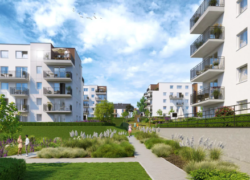
Develia has announced the pre-sale of 186 apartments in the third stage of its Południe Vita development, located in the green district of Orunia Górna-Gdansk Południe. The new phase features three-story buildings with mezzanine apartments on the top floors, surrounded by city parks and well-connected transportation infrastructure. The units are expected to be ready for delivery by Q4 2026, with prices starting at PLN 7,699 per square meter.

The Południe Vita estate offers a range of apartment sizes, from 26 to 100 square meters, all equipped with balconies, terraces, or gardens, and mezzanine spaces on select top-floor units. Residents will benefit from underground parking garages, above-ground parking spots, low-noise elevators, and additional storage rooms. The development is situated near Oruński Park and the Tri-City Landscape Park, providing access to nature while maintaining quick and easy access to central Gdansk and surrounding areas through the well-developed road and public transport networks.

“Living in the green suburbs is no longer just an alternative to the city center. Increasingly, people are seeking homes that offer proximity to nature, a tranquil environment, and convenient access to key locations. The Południe Vita estate aligns perfectly with these desires, as demonstrated by the strong demand for the previous phases of the project,” said Anna Samulak, Head of Sales at Develia.

The area around the development is rich in amenities, including schools, shops, services, and healthcare facilities. Additionally, plans for future transportation improvements, including the extension of the Pomeranian Metropolitan Railway, are set to further boost the appeal of the location.

The newly available apartments are expected to be ready by late 2026, with prices starting at PLN 7,699 per square meter.

LATEST NEWS