Czech Inflation Picks Up to 2.5% in October, Driven by Food Prices

Consumer prices in the Czech Republic rose by 2.5% year on year in October, marking a slight acceleration from September’s 2.3%, according to the latest estimate from the Czech Statistical Office. Month on month, prices increased by 0.5%, suggesting that cost pressures remain persistent despite the central bank’s cautious monetary stance.

Economists attribute the upturn mainly to higher food costs, which grew faster than anticipated and offset the continued decline in energy prices. Analysts had expected inflation to stabilise or even slow slightly, but the recent surge in food categories such as dairy and bakery products surprised the market.

Price growth for goods and services showed a mixed pattern. Goods saw modest gains compared to September, while services continued to post above-average annual increases, reflecting ongoing demand in sectors such as transport, hospitality, and leisure.

Energy costs, including fuel and utilities, remained the only major category to record a year-on-year decrease—around 3% lower than a year earlier—helped by the strong koruna and subdued global oil prices. Without energy, overall inflation would have reached roughly 3.3% in October, according to analyst calculations.

This year’s highest inflation level was observed in June at 2.9%, followed by a gradual cooling during the summer. Economists now expect price growth to edge slightly higher again toward the end of the year, reaching around 2.7% in December due to the statistical effect of a low comparison base from 2024.

Financial analysts agree that the latest data are unlikely to alter the Czech National Bank’s interest-rate policy. The key repo rate stands at 3.5%, and the Bank has signalled limited room for further cuts in the near term.

The final, detailed inflation report for October will be released by the Czech Statistical Office on 11 November 2025, confirming the structure of price movements across categories.

Source: Czech Statistical Office (ČSÚ) preliminary estimate; analyst comments from Czech News Agency and major financial institutions.

Demand for Housing Loans in Poland Rises Sharply in October 2025

Demand for housing loans in Poland continued to strengthen in October 2025, with the value of mortgage inquiries up by 34.3% year on year, according to the latest BIK Index of Demand for Housing Loans. The figure reflects higher interest in bank financing for home purchases as borrowers anticipate the impact of lower interest rates.

A total of 42,920 individuals applied for a housing loan in October, compared to 34,480 in the same month of 2024—an increase of 24.5%. On a monthly basis, applications rose 7.6% from September.

The average value of requested mortgages reached PLN 474,860, up 7.9% year on year and 0.5% month on month. Analysts note that this steady rise in average loan amounts indicates both rising housing prices and greater borrowing capacity among consumers.

“In October this year, almost a quarter more people than a year ago applied for a home loan. This confirms the growing trend of interest in bank credit for the purchase of one’s own apartment. The appetite of borrowers grows in parallel with decisions and even the Monetary Policy Council’s announcements regarding interest rates,” said Sławomir Nosal, Head of the BIK Analysis Team.

“The impact of the last 0.25-point rate cut in early October will be more visible in November’s data. If current sales and average loan values persist, we could see a record year for mortgage lending in 2025,” he added.

The BIK Index of Demand for Housing Loans measures changes in the total value of mortgage applications submitted by individual borrowers compared with the same period a year earlier, adjusted for the number of working days. The index is a key forward indicator for assessing mortgage market momentum.

Source: Biuro Informacji Kredytowej (BIK), “Indeks Popytu na Kredyty Mieszkaniowe – październik 2025.”

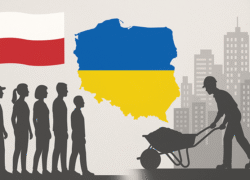
Number of Foreign Workers in Poland Exceeds One Million in May 2025

The number of foreigners working in Poland surpassed 1.06 million at the end of May 2025, according to new data from Statistics Poland. The figure marks a 4.4% increase compared with the same period in 2024, despite a slight month-on-month decline of 0.8%.

Foreigners now represent 6.5% of all people performing work in the country, reflecting Poland’s continued reliance on migrant labour amid demographic pressures and workforce shortages.

Ukrainians remain by far the largest group, accounting for 714,000 individuals, or nearly 67% of all foreign workers. Their number rose by 3% year on year but fell slightly from April 2025. Citizens from over 150 countries were active in the Polish labour market in May, though the majority continue to come from neighbouring states in Eastern Europe.

Men make up roughly 60% of the foreign workforce — a stable ratio compared with previous months and years. Both male and female employment among foreigners increased compared with May 2024, by 4.3% and 4.5% respectively.

The report also shows that 405,000 foreigners were employed under contracts of mandate or similar civil law agreements, up 3.7% from a year earlier but 1.3% below the previous month’s level.

In geographical terms, the Warszawski stołeczny region remains the primary hub for foreign workers, hosting one in five of all such employees. The Świętokrzyskie region recorded the smallest share, at below 1%.

The data were compiled using administrative records from the Social Insurance Institution (ZUS) and other sources as part of Statistics Poland’s ongoing experimental studies on the country’s labour market. Since January 2025, the figures have also included self-employed foreigners and family members working on private farms.

Source: Statistics Poland (Główny Urząd Statystyczny), “Foreigners performing work in Poland in May 2025,” prepared by the Statistical Office in Bydgoszcz.

CPD outlines plan to build PLN 1 bn property investment by 2028

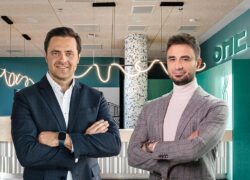
CPD S.A., a Warsaw-listed real-estate company, has unveiled a plan to assemble property holdings worth at least one billion Polish zlotys by the end of 2028.  The firm said it aims to evolve into Poland’s first modern real-estate investment trust, combining commercial and niche property assets across several markets .  To finance the expansion, CPD intends to issue up to nine million new shares, priced at PLN 3.2 each, by the end of 2025 .

The strategy, announced in late September, involves acquiring income‑generating buildings in Poland, rental apartments in Florida, technology‑related real estate such as data‑centre sites, and hotel properties around Europe .  Company chairman Rafał Kijonka said the blend of Polish stability with American growth and European quality is designed to provide investors with a resilient global property allocation .

Alongside the share issue, CPD plans to introduce a shareholder‑oriented payout policy.  Starting from the 2026 financial results, it intends to return up to 80 % of net profits to investors .  This, according to management, will help attract capital by offering both asset growth and regular distributions.

CPD, formerly known as Celtic Property Developments, has operated mainly as a developer and landlord of residential and office projects in Poland and Hungary.  The new strategy marks a shift toward a pooled investment model similar to REITs in other countries, with holdings spanning multiple sectors and regions .  The company says it will maintain its domestic focus while selectively investing abroad, aiming to deliver predictable rental income and long-term value creation for shareholders.

Office of the Future – Intelligent, Flexible, and Empathetic

According to the Walter Herz report “26 Office Trends for 2026”, the office of the future is no longer just a place of work — it is an experience and a strategic tool for organisational growth. Evolving from a cost centre into a platform for culture, innovation, and collaboration, the modern workplace reflects the intersection of three driving forces: people, technology, and sustainability.

HR and Administration departments are now emerging as strategic partners, coordinating innovation, ESG initiatives, and employee experience. Their mission is not only operational but transformational — to build a cohesive, human-centred work ecosystem.

“The office today must be adaptable — companies are seeking environments that evolve with their teams. Flexibility is not just about shorter leases; it’s about creating a framework where growth, downsizing, or hybrid work can happen seamlessly.” Michael Smithing, Managing Director, DBH Flex

Space: Office as an Experience and Brand Symbol

The modern office has become a living ecosystem — a social and creative hub that supports collaboration and strengthens company identity. Design now carries cultural meaning, merging aesthetics with function.

“Companies want workplaces that function as social hubs — spaces that attract people back to the office because they add value to their day. Mixed-use developments answer that demand by combining work, leisure, and wellbeing in one place.” Geo Mărgescu, Founder & CEO, Forte Partners

Flexibility and wellbeing remain central. Biophilic design, natural light, greenery, and acoustic comfort have become measurable productivity tools. At the same time, ESG-compliant design and environmental performance now define market standards.

“Flexibility and sustainability have become two sides of the same coin. Tenants expect energy-efficient buildings and adaptable layouts that support collaboration, privacy, and wellbeing at the same time.” Antoniu Panait, General Manager, Vastint Romania

Technology: The Digital Office Ecosystem

The office of 2026 functions as a fully integrated digital organism. AI, IoT, and smart building management systems connect every operational layer — from lighting and air-conditioning to occupancy and security. Real-time analytics drive predictive maintenance, cost optimisation, and a seamless tenant experience.

Hybrid communication is being redefined through “Bring Your Own Meeting” (BYOM) systems and AI-enabled conferencing tools that make remote collaboration effortless. Security now spans digital, physical, and sanitary dimensions.

“Multidimensional security — physical, sanitary, and digital — is becoming one of the most important aspects of property management.” – Joanna Piechota-Flinik, Grupa Impel

People and Purpose: The Humanisation of Work

Despite rapid technological progress, people remain at the core of the office of the future. Artificial intelligence complements, rather than replaces, human potential. Routine tasks are automated so employees can focus on creativity and personal development.

Leadership models are shifting from supervision to mentorship. Empathy, autonomy, and trust define the new management culture. Wellbeing, mental health, and work–life balance are now seen as performance metrics, not benefits.

“The landlord-tenant relationship is becoming a partnership. Success depends on ongoing dialogue, shared ESG goals, and a focus on tenant satisfaction — not just lease terms.” Mátyás Gereben, Country Manager, CPI Hungary

Regional Perspective: Central Europe’s New Work Paradigm

Across Central and Eastern Europe, developers and occupiers are converging on the same priorities — flexibility, ESG alignment, and tenant experience. From Budapest to Bucharest and Warsaw, landlords are reshaping assets into service-driven environments that combine digital infrastructure with social value.

“Compact mixed-use projects are redefining urban work environments. Their human scale, integrated services, and energy-efficient design make them more resilient in an uncertain market.” – CIJ EUROPE feature, “The Rise of Smaller Mixed-Use Buildings

Adaptive reuse is another emerging trend, as seen in office-to-residential conversions such as Lipowy Office Park in Warsaw. This approach reflects a shift toward sustainability through reuse — extending a building’s life cycle rather than replacing it.

The direction is clear: tomorrow’s workplace will be intelligent, flexible, and empathetic — a space where technology, design, and culture work together to create value for both people and business.

Source: Walter Herz and CIJ EUROPE Analysis Team

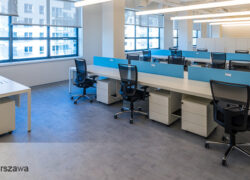
Office-to-housing transformation completed at Lipowy Office Park in Warsaw

Colliers has completed the conversion of two office buildings at Lipowy Office Park into student and co-living accommodation in just eleven months. The project, known as SHED Sky Living, offers housing for more than 730 residents and marks the first time in Poland that a relatively modern office complex has been adapted for residential use. The development is owned by 1 Asset Management, a Lithuanian investment firm.

According to Colliers, nearly half of all office buildings removed from Warsaw’s property inventory in recent years have been repurposed for new uses, often housing. The firm points to this as a growing trend driven by housing shortages, the need to shorten construction timelines, and the aim of lowering environmental impact. “Two office buildings that stood empty now accommodate hundreds of residents, demonstrating how urban resources can be reused efficiently,” said Bartosz Jankowski, Partner and Director of Colliers Define for Central and Eastern Europe.

Poland’s student housing shortage remains acute. With approximately 1.3 million students nationwide, state dormitories provide about 82,000 places, while the private sector offers only a few thousand more. The shortfall is especially evident in Warsaw, where demand for purpose-built student accommodation (PBSA) far exceeds supply. “The conversion of office buildings is one way to address this gap,” noted Michał Witkowski, Director of Living Services at Colliers.

The Lipowy Office Park buildings at 31 Żwirki i Wigury Street were adapted to create 582 rooms, offering 733 beds across 19,000 sq m. The conversion included major structural works—removing most internal walls, reconfiguring layouts, and upgrading systems such as air conditioning and acoustics. Recycled materials were used for raised floors and ceilings, and energy-efficient solutions were incorporated. Colliers Define managed the design, construction, furnishings, and visual identity of the complex.

The development now provides a mix of private rooms with kitchenettes and bathrooms alongside shared amenities such as co-working areas, kitchens, a gym, cinema, study and art rooms, and a podcast studio. Each building has its own design concept: one themed around Warsaw’s legends, the other referencing its landmarks.

1 Asset Management said the project demonstrates the value of adaptive reuse. “Transforming existing office buildings saves time—around 12 months compared to two years for new construction—and offers access to prime locations,” said Matas Mockeliūnas, Partner at 1 Asset Management. “This approach benefits both the city and our investors by creating sustainable urban housing.”

Colliers estimates that demolishing the buildings would have released around 3,500 tonnes of CO₂, emissions avoided through conversion. The project’s completion before the 2025 academic year required careful coordination, with nearly 400 workers on site at peak.

The firm sees more such redevelopments ahead, though not as a universal solution. “Conversion is not viable for every vacant office,” said Jankowski. “Each property must be assessed for technical adaptability, location, and natural light. Some may be better suited for continued office use or other functions.”

Between 2020 and the third quarter of 2025, roughly 700,000 sq m of office space was withdrawn from the Polish market, including around 500,000 sq m in Warsaw. Experts say that while not all these buildings can be converted, adaptive reuse will increasingly form part of the strategy for dealing with older stock in cities where housing demand continues to rise.

Photo: Matas Mockeliūnas, 1 Asset Management and

NEINVER Presents Redesigned Alpes The Style Outlets and Expands Modernisation Across Europe

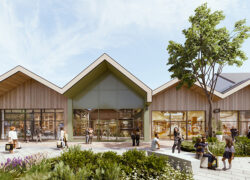
NEINVER has unveiled the redesigned Alpes The Style Outlets, its second outlet centre in France, reflecting a major step in the company’s strategy to modernise its European portfolio and strengthen its sustainability and customer experience standards.

Located on the Swiss border, 25 minutes from Geneva, the project features 20,400 m² of open-air retail space with around 95 stores and restaurants. The design focuses on natural integration with the landscape, using greenery and warm materials to create a comfortable environment for families, tourists and cross-border visitors. Sustainability is at the core of the redevelopment — a partially underground car park frees over 35,000 m² of green space, while photovoltaic roofs and solar canopies will generate renewable energy and enhance visitor comfort. The centre is scheduled to open at the end of 2027.

The new French development is part of a wider modernisation and expansion programme across NEINVER’s portfolio. In Spain, the San Sebastián de los Reyes centre (Madrid) will undergo renovation in 2026, while Viladecans The Style Outlets (Barcelona) is planning an expansion. In Italy, the Vicolungo centre will extend its Food Plaza, complementing recent upgrades across the network.

Recent refurbishments have already transformed existing properties. In Madrid, Las Rozas The Style Outlets completed a major renovation featuring brighter interiors, improved brand visibility and a new urban garden-style square. In Castel Guelfo (Italy), a former retail area has been converted into a lively food court with outdoor terraces and new communal spaces.

“We are adapting our centres to enhance the visitor experience and support our retail partners,” said Daniel Losantos, CEO of NEINVER. “With the progress of the Alpes project and the acceleration of works at other locations, we continue to raise the overall quality of our European portfolio.”

Leasing activity remains robust, with new brand entries and store expansions across multiple markets. In Spain, brands such as Rituals, Under Armour, Primor, and BIMBA Y LOLA have joined or enlarged their presence. In Poland, newcomers include Gap, Desigual, and Wellensteyn at FACTORY Kraków, alongside store expansions by Levi’s, Calzedonia, and Skechers in Warsaw and Poznań. Italy, the Netherlands, Germany and France also report strong leasing momentum, with brands such as Calvin Klein, Hugo Boss, ASICS, Puma, Pandora, and HECHTER PARIS reinforcing NEINVER’s retail line-up.

The Food & Beverage segment continues to be a growth driver, with additions such as PAUL, Costa Coffee, Alice Pizza, Billy Tacos, Grycan, and Lindt broadening the culinary offering.

“A wave of new brands, strategic expansions and modernised store formats continues to refresh our centres,” said Joan Rouras, Leasing & Retail Director at NEINVER. “Our retail partners are showing strong confidence in our European outlet network, and we look forward to further collaboration as development continues.”

GCC Inflation Holds Steady in Q3 2025 Amid Global Market Volatility

Inflation across the Gulf Cooperation Council (GCC) remained largely stable through the third quarter of 2025, despite ongoing geopolitical uncertainty and disruptions in global trade, according to Kamco Invest’s GCC Inflation Update. The report attributes this price stability to higher oil production, easing energy prices, and disciplined fiscal policies across the region.

The International Monetary Fund (IMF) projects inflation in the GCC to stay close to or below the 2% target through 2026, with rates averaging 1.7% in 2025. The easing trend is supported by lower energy costs and stronger monetary control, even as tariff changes and supply-chain adjustments continue to shape global inflation patterns.

Kamco Invest’s analysis shows that while global inflationary pressures persisted — particularly in advanced economies such as the United States, where inflation reached 3% in September 2025 — the GCC maintained relative price stability. Central banks across Saudi Arabia, the UAE, Qatar, Bahrain, and Oman followed the U.S. Federal Reserve’s 25-basis-point rate cut in October, easing borrowing conditions across the region. Kuwait, however, kept its policy rate unchanged.

Saudi Arabia’s annual inflation stood at 2.2% in September 2025, with modest month-on-month fluctuations. Housing and utilities prices rose 5.2%, while personal goods and services increased by 7.7%. In the UAE, consumer prices rose 2.9% year-on-year, driven by a 5.8% increase in housing and utility costs. Bahrain recorded the lowest inflation rate in the GCC, with consumer prices unchanged year-on-year, while Qatar and Oman each registered moderate price growth of 1.1%.

The report also highlighted stabilising trends in global commodity markets. The Food and Agriculture Organization’s (FAO) Food Price Index fell 19.6% from its 2022 peak, as falling cereal, dairy, and sugar prices offset higher meat costs. Increased oil production among OPEC+ members — up nearly 1.1 million barrels per day since February — further contributed to reduced transportation and energy costs.

Kamco Invest’s analysts concluded that the region’s inflation outlook remains favourable. Continued fiscal prudence, moderate energy prices, and the expansion of oil supply are expected to help the GCC maintain price stability through 2026, even as global economies navigate slower growth and elevated borrowing costs.

Source: GCC

Union Investment acquires logistics centre in France

Union Investment has purchased a newly built logistics property in Buchelay, France, for one of its open-ended institutional real estate funds. The seller is the French investment company Weinberg Capital Partners. The parties have not disclosed the purchase price.

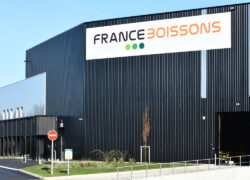
The 18,690-square-metre property, completed in 2025, is fully leased on a long-term basis to beverage distributor France Boissons. It is located in Parc d’Activité Mantes-Buchelay, a major mixed-use commercial area about one hour from Paris, with direct access to the A13 motorway connecting the capital and Normandy. The site also benefits from proximity to rail, river, and air freight routes.

According to Karim Esch, Chief Investment Officer and Member of the Management Board at Union Investment Real Estate GmbH, the acquisition aligns with the company’s investment focus on well-located, modern assets in established logistics markets.

The building consists of three units allowing flexible future use. It features a hybrid concrete, wood, and steel structure and includes a rooftop solar installation supplying electricity to the public grid. The property has received a BREEAM “Excellent” certification for sustainability.

Following a period of limited acquisition activity, the purchase marks Union Investment’s renewed investment activity on the buyer side. “The current phase of the market cycle offers opportunities to selectively expand institutional portfolios with properties that combine quality and value potential,” said Michael Kammerzell, Head of Institutional Real Estate Special Funds at Union Investment. The company plans at least two additional acquisitions for the same fund before the end of the year.

Globalworth renews Access4you® certification for Romanian office portfolio

Globalworth has renewed the Access4you® accessibility certification for all 16 office buildings in its Romanian portfolio, following an assessment process carried out with the consultancy support of Colliers. The portfolio, which totals nearly half a million square metres, is now entering its second three-year certification cycle.

All properties retained their Certified Place status, while Globalworth Tower and Globalworth Square achieved the higher Silver level, recognising additional measures that support people with visual or hearing impairments alongside those with reduced mobility. The assessment confirms that most Globalworth buildings now provide a high degree of accessibility for wheelchair users, the elderly, and people using prams, with further improvements introduced in two flagship locations.

“The 2025 recertification confirms Globalworth’s continued effort to maintain inclusive and functional workplaces,” said Roxana Isopescu, Director of ESG Strategic Advisory at Colliers. “The Silver level achieved by Globalworth Tower and Globalworth Square reflects targeted investment in facilities that meet a wider range of user needs.”

Balázs Berecz, founder and CEO of Access4you, noted that Globalworth’s approach demonstrates a long-term view of accessibility: “Their actions show that inclusion is treated as an ongoing process rather than a one-time certification goal.”

The buildings covered by the certification include BOB, BOC, City Offices, Gara Herăstrău, Globalworth Campus A, B and C, Green Court A, B and C, Renault Bucharest Connected, Tower Center International, UniCredit HQ, Globalworth Plaza, Globalworth Tower, and Globalworth Square.

Globalworth has stated that it will continue to invest in accessibility upgrades with the aim of extending the Silver level to additional buildings in the next certification cycle. The company uses renewable energy across its Romanian assets and continues to align its operations with wider environmental and social sustainability standards.

Photo: Globalworth Tower and Roxana Isopescu, Director of ESG Strategic Advisory at Colliers

LATEST NEWS