Crestyl Group welcomes new CEO Simon Johnson, founder Omar Koleilat takes on strategic role

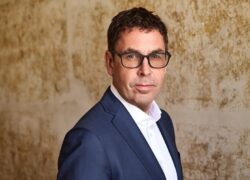
In a milestone shift for Czech developer Crestyl Group, Simon Johnson, the company’s long-serving Chief Operating Officer (COO), has been appointed as CEO, marking the first leadership transition in Crestyl’s nearly 30-year history. Omar Koleilat, the company’s founder and previous CEO, will step back from day-to-day management but remain closely involved as an owner and strategic advisor.

Koleilat, reflecting on the transition, noted, “I built Crestyl from the ground up so it could thrive without being dependent on me. This transition to professional management was essential as we grew and entered the Polish market three years ago. Today’s announcement solidifies the steps we’ve been working towards.” Koleilat also emphasized that, while he is stepping away from operational tasks, he will continue to support Crestyl’s strategic direction.

Simon Johnson, now Group CEO, brings over 35 years of real estate experience, including leadership on major developments in London, Prague, and Bratislava. Since joining Crestyl in 2011, he has driven operational growth across the group and managed Czech projects, establishing himself as a key figure in Crestyl’s expansion. Johnson remarked on the seamless transition, underscoring Crestyl’s strength as a collaborative team: “This isn’t just about me but about the entire leadership group. We’ve built a close-knit management team over many years, and there will be no change in the company’s direction or operations.”

Johnson, a UK native who has made Central Europe his professional home since the 1990s, has played integral roles in the development of Bratislava’s Eurovea Centre and Prague’s Palladium. Fluent in Czech and Slovak, he holds Czech citizenship and brings a commitment to the region’s growth. Outside of work, Johnson enjoys sports, cooking, and fine wine.

Koleilat founded Crestyl in 2005, guiding it through significant projects and expansions across Central Europe. With a background in architecture and real estate, he holds a UK RICS Postgraduate Diploma in Real Estate Investment. Known for his passion for sports, he played professional basketball before his career in real estate and now enjoys water skiing, a sport his children also compete in.

As Johnson takes the helm, Crestyl remains poised for continued success with a leadership team committed to sustaining the company’s reputation as a developer of high-quality, innovative properties across Central Europe.

Garbe Industrial Real Estate fully leases Niedersachsenpark Rieste with new logistics tenant

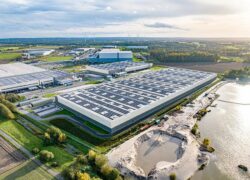
Garbe Industrial Real Estate GmbH has successfully secured a new lease for its final available plot at Niedersachsenpark Rieste, approximately 30 kilometers north of Osnabrück. The latest tenant, a prominent logistics service provider, will use an 11,500-square-meter facility within the park to manage and store automotive components, boosting local logistics and further diversifying the tenant mix at the site.

Philipp Petersen, Regional Manager for Hamburg at Garbe, highlighted the strategic success of the development: “With this leasing, we have achieved full occupancy at the Rieste site. Once again, it is clear that an excellent location combined with high-quality project development is a reliable guarantee for successful leases.” Garbe’s holdings in Niedersachsenpark now span three modern logistics properties across a total area of 91,000 square meters, all of which are fully leased.

The new logistics tenant will occupy half of a newly completed facility, which comprises 9,500 square meters of hall space, 1,500 square meters of mezzanine space, and 500 square meters dedicated to office and social areas. The other half of the 23,000-square-meter logistics building is currently leased by Schletter Solar GmbH, a manufacturer specializing in photovoltaic mounting systems. To accommodate efficient operations, the hall is equipped with 15 dock levellers and an exterior area featuring 19 parking spaces for cars and five for trucks.

Niedersachsenpark, spanning over 400 hectares, is Lower Saxony’s largest commercial and industrial zone. The park’s prime location along the A1 motorway, a major north-south corridor in Germany, enables efficient logistics and direct connections to the Ruhr area and the Netherlands. Garbe’s new facility was built to meet stringent environmental standards, incorporating high-performance photovoltaic systems on the roof and aiming for DGNB Gold certification, underscoring Garbe’s commitment to sustainable development.

Sunrise Real Estate completes Amsterdam West Development Centre with sustainability at the forefront

Sunrise Real Estate has announced the completion of its Amsterdam West Development Centre (AWDC) in the Netherlands. The state-of-the-art logistics hub, encompassing 19,660 square meters, is Sunrise’s first in-house development project in the country and boasts an array of sustainable features, positioning it as a standout in the region’s logistics market.

The AWDC is strategically located in a prime logistics park, providing seamless access to major transport hubs including Schiphol Airport, the Amsterdam Port, and the extensive motorway network that connects to Haarlem and beyond. Comprised of four units ranging from 3,785 to 7,085 square meters, the centre is already partially occupied, with furniture and interior design retailer Loods 5 and British activewear brand AYBL securing pre-let agreements for Units 1 and 2, respectively. Two additional units are still available, being marketed by Cushman & Wakefield and Colliers.

Sustainability is central to the design of AWDC, which has achieved a BREEAM Very Good rating. Key features include rooftop solar panels, green roofs, grey water recycling systems, EV charging stations, and LED lighting. In addition, Sunrise has implemented an innovative renewable energy and battery storage solution. With a 2MWp solar photovoltaic system, a 660 kW battery, and a small grid connection, AWDC will meet approximately 50% of its annual energy needs through renewable sources, catering to tenants’ growing demand for eco-friendly, energy-efficient infrastructure.

Matthew Stevens, Head of Development at Sunrise Real Estate, expressed enthusiasm about the project: “We are delighted to celebrate the construction completion of AWDC, which is our first major development delivered in-house in the Netherlands. This is a Class A asset… With its impressive environmental credentials and innovative renewable energy systems, we expect AWDC to attract the attention of occupiers on the hunt for futureproofed warehousing just 15 minutes from Amsterdam.”

The project was led by Heembouw as the general contractor, with project management by C2N.

CTPark Chomutov welcomes Czech firm BOUKAL in major expansion effort

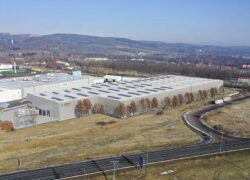
Czech company BOUKAL has joined the roster of tenants at CTPark Chomutov, where it plans to establish a comprehensive logistics and retail hub in nearly 3,500 square meters of modern space. The new facility will support BOUKAL’s wholesale and retail operations, which specialize in machinery, tools, and industrial equipment, and will create around 30 new jobs. As part of its expansion, BOUKAL’s facility will feature warehouses, offices, a showroom, and a dedicated drop-off point for online orders.

CTPark Chomutov’s strategic location on a major route connecting Prague, Ústí nad Labem, and Chemnitz, Germany, offers BOUKAL prime positioning to serve both the Czech and adjacent German markets. The company’s choice of location reflects both the park’s strong logistics connections and high visibility from the main road—key for attracting customers to its showroom and e-commerce drop-off point. CTP’s flexibility and quick adaptation of the space to BOUKAL’s specific needs further strengthened the partnership.

“We’re thrilled to welcome BOUKAL to our tenant community at CTPark Chomutov,” said Michal Přib, CTP Regional Director for the Czech Republic. “This collaboration demonstrates that CTPark Chomutov is not only suitable for large international firms but also for dynamic Czech businesses. Our modern facilities are designed to support both warehousing and commercial needs, aligning with our clients’ goals and boosting regional growth.”

BOUKAL’s new space will incorporate a sophisticated warehouse with a shelving system for small items, luxury office spaces featuring design elements like glass partitions, and a showroom for large machinery and tools. The company, which has over 30 years of experience in the industry, aims to streamline its customer service and e-commerce operations with faster order processing, delivery, and support, including warranty and post-warranty services.

Radim Boukal, owner of BOUKAL, commented, “CTPark Chomutov not only met our expectations in terms of location but also in the flexibility and responsiveness of CTP. This site allows us to enhance the quality of our showroom and optimize the entire order-to-delivery process for our e-shop customers.”

CTPark Chomutov, certified with a BREEAM Excellent sustainability rating, emphasizes green construction standards, offering an eco-conscious setting for its tenants. The site has additional shell-and-core space available, with potential for an 11,500 square meter expansion, positioning it as a premier location for future development in the region.

YIT launches new Nordic Górka Narodowa Residential project in Krakow

Finnish developer YIT has kicked off its latest project in Krakow with the launch of Nordic Górka Narodowa, a new residential development on Stefan Banach Street. The first phase of this investment will add nearly 100 apartments to the city’s housing market, with completion targeted for the fourth quarter of 2025. The project’s architecture, conceived by the UCEES studio, will be executed by general contractor Ekspres-Konkurent.

Anna Wrzecionko, Managing Director of YIT in Poland, highlighted the project’s significance in the company’s strategy for expansion in Krakow. “Following the success of our debut project, Portowa Zabłocie, we are excited to launch Nordic Górka Narodowa, which will stand out with its unique design, high construction quality, and sustainable solutions,” she remarked.

The first phase of Nordic Górka Narodowa will feature 98 units ranging from 27 to 94 square meters, all showcasing YIT’s signature Finnish design, known for its functional and aesthetic qualities. Some apartments will offer the option for a private sauna, and all units will come with access to underground and surface parking, with charging points for electric and hybrid vehicles.

Reflecting YIT’s focus on sustainability, the development will incorporate eco-friendly features such as energy-efficient LED lighting, triple-glazed windows, and green roofs with photovoltaic panels. Residents will also benefit from a rainwater storage system for plant irrigation, alongside installations supporting biodiversity, including insect houses and bird feeders.

Strategically located, Nordic Górka Narodowa offers residents easy access to a 15-minute city lifestyle, with schools, shops, restaurants, and services within reach. Proximity to a nearby tram stop ensures efficient travel to Krakow’s city center, while drivers will enjoy well-connected routes, including 29 Listopada Avenue, the Cracow ring road, and national road No. 7.

In line with YIT’s “More Life in Yards” concept, nearly 30% of the project’s area will be dedicated to green spaces. Residents will enjoy common areas designed for relaxation and socialization, while the nearby Witkowice Forest Park and Żabie Doły green spaces provide additional access to nature, blending urban living with natural tranquility.

Economists weigh mixed economic impacts for Czech Republic following Trump election

The re-election of Donald Trump to the U.S. presidency is expected to have both positive and negative economic impacts on the Czech Republic, say economists and industry representatives. The former president’s potential policies on trade tariffs and tax cuts could lead to challenges for European exports but might also lower energy costs due to increased U.S. fossil fuel production.

If Trump reintroduces high tariffs on goods, trade between the U.S. and the EU is likely to decline, analysts warn. Milena Jabůrková, vice president of the Confederation of Industry and Transport, said, “If Trump imposes an additional 20 percent tariff, transatlantic trade could suffer, potentially leading European firms to shift investments to the U.S.” This could particularly affect Czech companies involved in supply chains for larger European exporters, explained Tomáš Prouza, president of the Confederation of Commerce and Tourism.

Analysts are also concerned that Trump’s proposed tax cuts could expand the U.S. budget deficit, which could lead to inflationary pressures spilling over into other countries. For the Czech National Bank, this may necessitate higher interest rates to control inflation, potentially affecting mortgage and financing costs, noted Lukáš Raška, an analyst at Porto.

On the positive side, Trump’s expected boost to fossil fuel production could lower global energy prices, said Boris Tomčiak, a manager at Finlord. Increased production and exports of oil and LNG could benefit energy prices in Europe, easing some financial pressure on industries.

Additionally, Trump’s preference for traditional energy sources could weaken European green policies, said XTB analyst Jiří Tyleček. “If the EU relaxes some environmental restrictions, production costs could fall, potentially making energy cheaper,” Tyleček added.

Market reactions to Trump’s election were already visible in the Czech Republic. The PX index on the Prague Stock Exchange rose 0.54%, reaching its highest point since 2008. Meanwhile, the Czech koruna weakened against the dollar, trading at 23.58 CZK per dollar as of Wednesday morning, reflecting a 1.85% drop.

Cryptocurrency markets are also expected to react, with analysts predicting bitcoin could soon reach new highs. Trump’s support for cryptocurrencies during his campaign could drive further investment in the sector, potentially pushing bitcoin’s value above $100,000 by year-end, according to market forecasts.

As Trump’s policies unfold, Czech economists will be closely monitoring the global ripple effects, particularly on inflation, trade, and energy markets.

Source: CTK

Foreign solar investors prepare lawsuit against Czech Republic over subsidy reductions

Three foreign solar energy firms, Ener, Voltaic Network, and Photon Energy Group, are preparing to sue the Czech Republic over proposed subsidy changes for renewable energy sources. According to statements from the companies’ legal representatives, the planned adjustments, which would lower state support, could violate contractual obligations and disrupt the legitimate expectations of foreign investors. The firms contend that the subsidy reduction would undermine long-standing commitments made to attract foreign investment into the renewable energy sector.

The Czech government’s proposed subsidy budget for renewable energy in 2025 is set at 8.5 billion CZK—substantially lower than the original 31.2 billion CZK outlined by the Ministry of Industry and Trade under existing rules. The government’s adjustments include a proposal to evaluate the profitability of solar power plants commissioned between 2009 and 2010 and could reduce the yield percentage for plants built from 2006 to 2012 from 8.4% to 6.3%, in line with EU guidelines.

Industry voices, including the Czech Solar Association, have raised concerns that these reductions could endanger half of the country’s solar power output and lead some operators to financial collapse. The Solar Association also claims that the proposed changes contain errors and conflict with Czech law.

The three solar companies have formally notified both the Czech government and President Petr Pavel that the proposed cuts could breach international agreements. This notice is regarded as a preliminary step towards launching international arbitration proceedings, where the investors may seek compensation for potential damages resulting from reduced subsidy levels.

Finance Minister Zbyněk Stanjura expressed confidence that the changes adhere to both Czech and European law, adding that the government is merely enforcing stricter compliance measures. The subsidy adjustments, which are part of an amendment to the national budget legislation, are currently under parliamentary review.

The affected companies have significant investments in Czech solar assets: Austrian firm Enery holds 92 MW of solar capacity after acquiring assets from the China-CEE Fund and Green Horizon Renewables; Photon Energy operates plants with a total capacity of 129.7 MW across multiple European countries, including the Czech Republic; and Germany’s Voltaic Network owns and operates a 4.64 MW photovoltaic facility in Rybníček, built in 2010.

This legal action underscores the mounting tensions between the Czech government’s fiscal policies and the renewable energy sector’s calls for regulatory stability. As parliamentary debate over the proposed subsidy changes continues, the case could become a landmark in the Czech Republic’s approach to managing foreign investments in clean energy.

Source: CTK

PPF Group’s net profit declines by 10.6% in H1 2024 amid strategic shifts

PPF Group, a major investment conglomerate, reported a net profit of €634 million for the first half of 2024, marking a 10.6% decrease compared to the same period last year. The drop, announced by PPF to the Czech News Agency, was attributed in part to the previous year’s boost from the sale of its Philippine Home Credit business in H1 2023.

Despite the decline, PPF’s financial services, telecommunications, and media divisions remained resilient, forming a strong base for the group’s investment initiatives, according to PPF’s CFO, Kateřina Jirásková.

In 2024, PPF continued its push into European markets, strengthening its portfolio in Central and Eastern Europe while executing its planned exit from Asian financial services. Notable investments include increasing its stake in Viaplay to 29.29% in February, positioning PPF as one of the leading shareholders in the Swedish streaming platform. The group also became the largest shareholder of InPost, a European parcel locker company, following an April agreement.

PPF diversified further through a joint venture with ITIS Holding, acquiring a stake in German machine vision and road safety company Vitronic. October saw the completion of a partnership with the global tech group e& to form e& PPF Telecom Group, enhancing PPF’s telecommunications presence in Central and Eastern Europe.

PPF is also set to finalize the sale of Home Credit’s assets in Vietnam and India in 2025, expected to generate around €800 million. With a portfolio spanning financial services, telecommunications, media, real estate, and more, PPF’s asset base stands at €44.1 billion, employing 47,000 people across 25 countries globally.

Source: CTK

Early decision on Euro adoption needed, Czech Minister states amid ongoing debate

As discussions over the potential adoption of the euro intensify, Czech Agriculture Minister Marek Výborný (KDU-ČSL) emphasized today that any decision on joining the eurozone should ideally be made at the start of the new parliamentary term. Speaking before a cabinet meeting, Výborný highlighted the need for early political consensus to ensure the process can be completed within the term. However, Transport Minister Martin Kupka (ODS) underscored that adopting the euro is not a guaranteed path to economic growth, suggesting instead that the government should focus on other economic strategies, including reducing the budget deficit.

The coalition government, which includes ODS, TOP 09, and KDU-ČSL, began considering euro adoption at the start of the year and tasked the National Economic Council of the Government (NERV) with analyzing the potential benefits and drawbacks. Ministers reviewed NERV’s findings last week. According to Výborný, any decision on the euro requires substantial public and political support, which he noted has yet to be solidified.

Kupka reiterated the need for diverse economic tools, warning that simply adopting the euro won’t automatically drive prosperity. He also pointed to the importance of avoiding prolonged participation in the ERM II exchange rate mechanism, which is required before adopting the euro, citing potential economic risks.

In addition, Výborný raised concerns about banking integration, stressing that the Czech Republic should not be required to join the EU banking union prior to introducing the euro, due to implications for financial oversight.

A longstanding commitment dating back to 2004 requires the Czech Republic to adopt the euro eventually, though it has yet to set a definitive timeline. Among the EU countries that joined at the same time, only Poland, Hungary, and the Czech Republic have not introduced the common currency. Alongside ERM II participation, euro adoption requires meeting criteria on inflation, interest rates, public deficit, and debt ratios—targets the Czech Republic may meet this year following prior shortfalls.

Source: CTK

Increased efficiency in a recovering market

The European property market is showing signs of cautious recovery and a slight increase of transaction market activity due to improved credit terms and lower interest rates. Macroeconomic conditions are also improving with inflation now under control and lower interest rates. During the quarter, Investment Management generated balanced in and out-flows, along with new asset management mandates, which is encouraging in a relatively subdued transaction market. Our stable liquidity and capital position, coupled with strategic organisational adaptations, enhance our preparedness as the market rebounds.

The outlook on the transaction market improved slightly in the third quarter, although completed transactions did not increase notably on the European markets. The underlying sentiment is positive and there are indications that the gap between buyers and sellers’ expectations is closing, supporting increased transaction volumes going forward.

The main reason behind a brighter outlook is improved financing conditions and lower capital costs. Although transactions still take a long time to complete, market sentiment suggests that we can expect more and larger transactions looking ahead, as the market slowly but surely prices in lower capital costs.

At macro level, the outlook is also brightening with inflation under control in Europe and the US, and with key central banks in the midst of interest rate cuts. However, the outlook is not as bright in all markets, where some economies, such as Germany, continue to face challenges. In addition, the continued political uncertainty and ongoing conflicts that, besides human suffering, could lead to new inflationary pressure, increased oil prices and disruptions in logistics.

The European property market is showing signs of recovery, with some segments experiencing stabilization or even decreases in yields. This indicates that the negative trend observed over the past two years and the decline in property values may be near a turning point. Given the positive impact of increased transaction market activity across all Catella’s business areas, we are encouraged by indications from current dialogues we have across our European markets that a recovery is underway, with sellers’ and buyers’ price expectations increasingly aligning.

I recently had the opportunity to attend the property fair Expo Real in Munich with other colleagues. In comparison to just six months ago, the sentiment within the sector is markedly more positive, with a notable increase in discussing transactions based on well-founded and genuine interest.

Operating profit for the quarter amounted to SEK 19 M (32), the decrease attributable to non-recurring costs of SEK 13 M. Adjusted for this, profit was in line with the previous year, despite decreased revenue excluding commissions, assignment and production costs of almost SEK 10 M. The outcome is the result of our initiatives aimed at increasing efficiency and digitalising operations, thus reducing costs.

Balanced capital flows
The Investment Management business area takes pride in having successfully balanced in- and outflows in the core business during challenging times. The majority of capital inflows were generated in Asset Management through the growth of new mandates, where investors appoint us to manage and develop property portfolios and to reposition them in the current and future market. This demonstrates that our business model continues to generate growth opportunities even in a weaker and more hesitant market. The work associated with new investment products continued successfully in the quarter, and we are now moving out of the product development phase and towards actively seeking investments alongside new and high-profile investment partners.

During the quarter, the initiative to merge our two fund management companies – Catella Residential Investment Management (CRIM) and Catella Real Estate AG (CREAG) continued. The ultimate goal is to create a stronger, more efficient and larger fund platform in Investment Management. The merger will result in a more efficient capital raising function, improved coordination of investor relations, and stronger management and analysis capabilities.

Investment Management’s assets under management totalled SEK 151 Bn in the quarter, which represents a decrease of SEK 1 Bn compared to the end of the second quarter, primarily driven by exchange rate differences.

Planned divestments
In Principal Investments, the focus continues to be on developing and completing existing projects for divestment. In the fourth quarter, we expect to divest the French development project Polaxis. The divestments will further strengthen our liquidity and open up for new investment opportunities that meet our return requirements.

At the end of September, Kaktus Towers was awarded the prize “Europe’s Best Tall Building” by an international jury of architects at CTBUH’s (Council on Tall Buildings and Urban Habitat) conference in London. The award recognises both the building’s innovative architecture and its contribution to modern and sustainable residential concepts that satisfy the needs of today and tomorrow. We continue active dialogues with potential investors of a sale of this landmark in central Copenhagen.

Looking ahead, we are evaluating potential investments in both development projects and several European aggregation mandates with capital partners. With valuations stabilizing, we see attractive investment opportunities.

Signs of transaction market recovery
As previously mentioned above, we are beginning to see a brighter transaction market in Corporate Finance, although this has not yet translated into a notable increase in the number of transactions.

While transaction volumes in Europe were up slightly year-on-year, they remain well below the levels seen two years ago, when the downturn began. We are optimistic that the number of transactions will pick up on several markets in the fourth quarter, as this is the most transaction-heavy quarter in historical terms.

Green investments
In support of future green investments in the real estate industry, we established a Medium Term Note-program (MTN) in the quarter. In September, we issued new senior unsecured green bonds at a total amount of SEK 600 M, which attracted significant interest. The new green bonds are listed on Nasdaq Stockholm’s list for sustainable bonds. The issue is the first under our green bond framework.

In the quarter, we also continued the process associated with the implementation of CSRD (Corporate Sustainability Reporting Directive) – a new EU Directive aimed at increasing transparency and responsibility relating to corporate sustainability reporting.

Outlook
I am humbled by the confidence the Board has placed in me to lead Catella into the future during the recruitment of a permanent CEO. As indicated above, I am optimistic about the near future after more than two challenging years.

We have done and continue to do the right things. During the period of reduced activity, we have worked diligently to improve efficiency and adapt the organization. We have maintained a strong liquidity and a strong capital position and are now well-positioned to take advantage of the upturn. Our upcoming divestments will further strengthen our position. As the market improves, Catella is in a strong position to capture and capitalize on the opportunities arising, and continue to create value for our customers and shareholders in the future.

Author: Catella

LATEST NEWS