Genesis Property Drives Sustainability in Romanian Real Estate: Interview with Ioan Bejan – P2

In a recent CIJ EUROPE Q&A, Ioan Bejan, Sustainability Director at Genesis Property in Bucharest, Romania, discussed the company’s focus on sustainability. Part two.

Examples include smart building systems that leverage AI and IoT to optimize energy usage, lighting, and HVAC performance in real-time. In addition to our use of solar panels, as previously mentioned, we are also investigating new renewable energy solutions, such as heat pumps, to further reduce our carbon footprint. We are also exploring sustainable construction materials, including low-carbon concrete and recycled materials, to minimize environmental impact. Innovations in water management, such as rainwater harvesting and greywater recycling, are being considered to promote greater resource efficiency.

Currently, we are analysing software solutions to help us capture, calculate, track, and reduce our carbon footprint more effectively. Our ongoing focus is on reducing air pollution, increasing green spaces, and promoting biodiversity, which remains a top priority for us. Beyond office spaces, YUNITY Park features a 1,000-square-meter urban forest, which brings multiple benefits, such as the reduction of air pollution as well as noise pollution and the regulation of temperature in the area. It also serves as a barrier against noise and provides protection from winds.

CIJ: How do you see sustainability evolving in the real estate industry over the next 5–10 years?

Given the new economic realities shaped by recent geopolitical developments, we believe that companies cannot evolve and prosper in an environment plagued by endless crises and unmanageable, often unpredictable, risks. Despite years of corporate commitments, global carbon emissions continue to rise, which suggests that the ESG agenda has not yet delivered the expected results, and it will be difficult to achieve the goals of the Paris Agreement by 2030. For these reasons, the current ESG agenda, in its present form, has little chance of delivering the necessary results without a radical shift. A change in mindset is urgently needed, and we may need to strengthen long-term regulations or rethink certain measures to address the challenges we face more effectively.

In the decade ahead, companies must not only compete for short-term gains and market share but also focus on building long-term resilience. To conclude, new technologies will evolve significantly, and we will see the emergence of more regulations and stricter standards, particularly regarding energy efficiency in buildings and construction approvals. Additionally, tenant expectations for eco-friendly, healthier environments will push developers to prioritize sustainable, resilient buildings that are equipped to meet future environmental challenges.

CIJ: How do you stay compliant with national and international sustainability regulations and standards in your real estate projects?

Since we are not a publicly listed company, we have not been required to comply with any sustainability reporting regulations up until now. However, since 2021, we have voluntarily and transparently reported our sustainability performance in accordance with the UN Global Compact’s reporting framework. As previously mentioned, all our buildings are currently undergoing recertification to meet the stringent requirements of the BREEAM Outstanding standard.

Additionally, starting this year, Genesis Property measures and reports its ESG performance to the Global Real Estate Sustainability Benchmark (GRESB), a rigorous global assessment of real estate investments that aligns with the latest international sustainability reporting standards. While the new Corporate Sustainability Reporting Directive (CSRD) will make it mandatory for us to disclose our sustainability performance starting in 2026 (for activities conducted in 2025), we are confident that we are well on track and fully prepared to meet this objective successfully.

CIJ: How do you measure and report on the environmental impact of your developments?

One year ago, we issued our first Scope 1 and Scope 2 Greenhouse Gas Emissions Report, which was prepared in accordance with the GHG Protocol methodology. Based on this report, we registered our near-term and long-term emissions reduction commitments with the Science Based Targets initiative (SBTi). Moreover, Genesis Property has already received SBTi validation for its Near-Term Target. The next major goal for Genesis Property is to obtain, by 2026 at the latest, validation from SBTi for its long-term CO2 emissions reduction target.

Additionally, as already mentioned above, starting this year Genesis Property measures and reports its ESG performance to GRESB. All these activities are conducted entirely in-house by our team, which has acquired the necessary knowledge and skills through an intensive training program.

CIJ: What are the most significant challenges you’ve encountered in implementing sustainable practices in real estate development?

The main challenge we face is finding the right balance between ensuring short-term operational profitability and securing long-term funding to support necessary investments in new technologies, as well as adapting existing assets to meet evolving standards. Additionally, identifying and developing the new skills required in key areas such as GHG emissions management, renewable energy, and circular economy practices—while also addressing shifts in employer habits and mindsets—have posed significant challenges that we continue to navigate.

© CIJ EUROPE
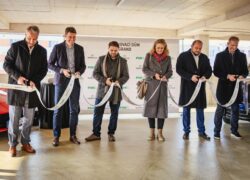
PSN advances redevelopment in Pardubice with new parking facility and Grand Centre renovation

PSN has recently achieved two major milestones in Pardubice: the successful completion of the Grand Parking House and significant progress on the restoration of the historic Grand shopping centre. These projects are part of a broader initiative to revitalize the city’s central infrastructure and enhance urban living spaces.

The newly completed Grand Parking House, located in the heart of Pardubice, offers 269 parking spaces and operates 24/7, with flexible day and night rates, weekend discounts, and long-term rental options. Designed with an eco-conscious approach, the parking facility features a green facade covered in live plants, set to flourish in the spring, creating a pleasant and sustainable urban environment. The parking house also includes designated spaces for motorcycles and wheelchair users, reflecting PSN’s commitment to accessibility.

“The construction of the parking house was a key prerequisite for embarking on the complex restoration of the historic Grand building,” shared Ondřej Heřman, Director of PSN’s Pardubice branch. “The addition of much-needed parking will benefit local residents and visitors to the Grand shopping centre alike.”

Regional construction companies under the Enteria holding were instrumental in these developments, with Marhold leading the construction of the parking house. The project required complex coordination, including the relocation of a hot water pipeline and sensitivity to surrounding historical sites, highlighting PSN’s dedication to thoughtful urban development.

Meanwhile, PSN’s restoration of the Grand building—a functionalist gem by architect Josef Gočár—aims to restore its First Republic glory while transforming it into a modern commercial hub. Scheduled for completion next autumn, the renovated space will blend historic character with contemporary design by the renowned architectural studio OVA. When finished, the centre will house over 3,500 square meters of retail space, including 29 rental units, a food hall, and an innovative coworking space, offering diverse amenities for locals and tourists.

Progress on the Grand building’s overhaul is well underway, with completed demolitions and the installation of key structural elements. The centre will also feature a stunning glass atrium connecting the Grand building to the historic Kraus Villa, an architectural highlight enhanced by a glass installation from Czech glassworks Lasvit.

The revamped Grand shopping centre will welcome back popular brands such as CineStar in a boutique cinema format, dm drugstore, and the Terranova fashion brand. A modernized BILLA supermarket will also open on the underground floor, catering to daily customer needs. Tenant handovers are slated for June 2025, with the grand reopening planned for autumn.

In these projects, PSN is not only enhancing urban convenience but also championing environmental sustainability and historic preservation, setting a new benchmark for urban development in Pardubice.

The current state of the Czech real estate market: Insights from Martin Kubanek

In a recent CIJ EUROPE discussion with Martin Kubanek, a partner at Schoenherr law firm, shared his expertise on the challenges and trends shaping the real estate market in the Czech Republic.

High interest rates are currently the most significant challenge facing the transaction area. Buyers are struggling with elevated bank financing costs, prompting them to seek discounts on properties. However, sellers so far have remained hesitant to lower their asking prices, often relying on outdated valuations. This discrepancy has created a considerable gap between offered prices and selling prices. Kubanek expressed hope that central banks will continue gradually reducing interest rates, which could lead to a revival in transaction activity in the first half of the next year if rates normalize.

The new Building Act, which took effect in July, poses considerable hurdles for developers. Kubanek described the situation as a critical citing failures in digitalization efforts and the overwhelming workload facing local building authorities. Many investors rushed to submit applications under the old regime before the new legislation was implemented, leading to a challenging interim period for both authorities and investors awaiting the outcomes of the new regulations.

While post-M&A disputes regarding earn-outs and purchase prices are still common, Kubanek noted that the rate of disputes appears stable, without a significant increase or decrease in percentage.

The new Building Act has shifted the focus towards structuring some transactions for closing at a time when a detailed project documentation is finalized and a building permit (which includes a zoning approval) is issued whereas under the old regime a zoning permit was sufficient. . Kubanek also acknowledged that most transactions are structured as share deals rather than asset deals , the specific details often require clarification from tax advisors.

Foreign investors are not facing significant legal barriers in property purchases. The Czech Republic remains welcoming to foreign investment compared to other regional countries. However, the market is becoming increasingly domestic, with many foreign investors shifting their attention to markets in Poland and Western Europe instead.

Developers continue to face legal challenges regarding zoning permits under the old regime.. Recently, the Czech government has tightened regulations on converting agricultural land to building land, complicating what was previously considered a formality. This added complexity has resulted in delays and disputes that can halt projects, as developers must now navigate the stricter rules around land requalification.

In terms of urban development, Prague still lacks a comprehensive metropolitan plan, leading to fragmented discussions between local authorities and developers. Each district is navigating its own development priorities, resulting in inconsistencies in urban planning.

Kubanek highlighted historical easements as a common complication in real estate contracts, particularly in due diligence reviews. Many easements related to state-owned companies are unregistered, which can lead to issues, especially in brownfield projects. Environmental pollution concerns are also significant, requiring thorough due diligence and indemnity agreements from sellers.

Looking ahead, Kubanek anticipates that advancements in artificial intelligence and digitalization will streamline planning and property management processes. He believes these developments will enhance efficiency in real estate development and management, with automated systems playing a larger role under human oversight.

For those navigating the evolving real estate market, Kubanek emphasizes the importance of assembling a competent team. A combination of skilled real estate agents, legal advisors, tax consultants, and technical advisors is crucial to ensuring smooth transactions and minimizing surprises.

The permitting process in the Czech Republic currently lags behind countries like Poland, largely due to bureaucratic complications and political pressure to preserve agricultural land. Many clients focus solely on Prague, overlooking potential opportunities in other regional cities like Brno and Ostrava. Kubanek suggests that a more diversified approach to investment could yield fruitful results.

Finally, the market for hotel assets in Prague has seen a surge of interest following the COVID-19 pandemic. Major hotel properties in Prague are currently for sale, attracting both domestic and international buyers. However, pricing remains a critical factor, as current high occupancy rates might lead sellers to believe they can secure peak prices. The sustainability of these occupancy levels, however, is uncertain.

As the Czech real estate market continues to evolve, Martin Kubanek’s insights reveal a landscape marked by both challenges and opportunities, with stakeholders navigating legal complexities and changing market dynamics.

© CIJ EUROPE

iO Partners Romania outlines vision and strategy for the next 3-5 Years

In a CIJ EUROPE interview with Vlad Stanislav, Managing Director of iO Partners Romania revealed the companies ambitious vision for the next three to five years, centered around sustainable growth, technological innovation, and adaptability in a transforming real estate landscape. With infrastructure development, technological advancements, ESG practices, and demographic shifts as the industry’s driving forces, iO Partners aims to leverage these dynamics to position itself as the premier choice in the CEE market.

“We’re positioning ourselves for a new real estate cycle,” stated Vlad Stanislav. “Our strategy includes geographic expansion and the introduction of new business lines to meet evolving market demands. By doing so, we aim to cement our leadership and drive long-term success.”

Setting iO Partners apart is its unique blend of local expertise and global insight, courtesy of its collaboration with JLL. This partnership has provided iO with an unparalleled edge, combining an in-depth understanding of Romania with a global reach. “Additionally, our expanding energy advisory division, which has doubled in size since last year, underscores our commitment to this growing sector, highlighting the potential we see in energy as a transformative factor in the market.”

Facing economic fluctuations and the rising demand for sustainable, ESG-compliant practices, iO Partners has enhanced its data-driven approach and invested heavily in sustainability and technological training for its team. These measures, the company noted, are designed to equip iO with the agility needed to guide clients through a complex landscape.

Reflecting on Romania’s recent growth fueled by urbanization, foreign investments, and economic expansion, iO Partners anticipates that technology integration, flexible workspaces, and sustainability will define the industry’s next phase. “Businesses are adapting to new work models, and as they prioritize environmental responsibility, innovative solutions are vital.”

The team identified digital transformation and innovation as key growth opportunities in Romania, driven by the increasing demand for smart buildings, tech integration, and flexible office spaces that meet the needs of modern clients.

Recognizing the importance of talent, iO Partners prioritizes creating an environment of openness and collaboration, with career development opportunities that emphasize innovation and professional growth. “Our entrepreneurial culture encourages team members to take calculated risks, fostering a sense of ownership and driving innovation.”

Aligned with this cultural foundation, iO Partners nurtures leadership and employee engagement by empowering managers to make entrepreneurial decisions, encouraging collaboration and personal initiative.

ESG is more than a trend at iO Partners; it’s embedded in their operations and strategy. “We integrate ESG-based solutions into our consulting and projects, prioritizing sustainable development, energy efficiency, and community engagement,” the spokesperson noted, emphasizing the importance of responsible business practices.

As nearshoring gains traction in the CEE region, iO Partners sees increasing potential in Romania. “We recently assisted Nokian in relocating operations to Romania, underscoring the appeal of our region for companies seeking proximity to core markets.” iO Partners is also investing in innovative solutions, such as 3D space planning, in partnership with Bright Spaces, to offer clients state-of-the-art services.

To remain at the forefront, iO Partners focuses on continuous learning, staying attuned to the latest advancements in smart building technologies, data analytics, and enhanced workplace solutions. “These efforts help us optimize client operations, boost efficiency, and create adaptive, future-ready environments.”

With a forward-thinking approach, iO Partners Romania is poised to drive significant advancements in Romania’s real estate market, bringing innovative, sustainable solutions that cater to the evolving needs of businesses and communities across the CEE region.

© CIJ EUROPE

New Panattoni Slovakia Regional Development Director sets focus on growth and sustainability

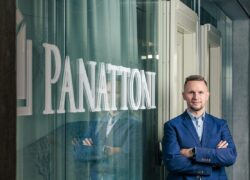
As the newly appointed Regional Development Director at Panattoni Slovakia, Marian Fridrich is stepping into a role centered on expanding Panattoni’s footprint in Slovakia and continuing the progress the company has made over the past five years. “My main objective is to build on the strong foundation Panattoni has established, driving growth by securing new locations and attracting tenants to our projects,” Marian Fridrich shared. Under his leadership, Panattoni aims to cement its reputation in Slovakia’s industrial real estate market by leveraging its unique business model, designed to deliver both profitable and sustainable growth.

Two of Panattoni’s high-profile projects, Panattoni Bratislava North I & II, are key priorities for Marian Fridrich and the team. “These projects are a significant focus for us due to existing leases and our commitment to completing construction for our tenants,” he explained. By securing strong tenant relationships and delivering state-of-the-art facilities, Panattoni is positioning itself as a preferred developer in the region.

In the face of rapid industry changes, Marian Fridrich emphasizes staying ahead by closely monitoring market trends such as carbon neutrality, shifts in automotive technology, and evolving retail and e-commerce demands. “Being well-informed is crucial. We’re constantly tracking trends, from electrification in automotive to last-mile delivery solutions. While I won’t give away all our strategies, keeping pace with these shifts is key to staying competitive,” he noted.

Sustainability and innovation, Marian Fridrich believes, are inseparable components of Panattoni’s approach. He explains, “These two go hand in hand, driving us not just to be profitable but also to be responsible developers. Our strategy embraces both, aligning with global carbon neutrality goals while focusing on the future generation’s needs.” This commitment positions Panattoni as a leader not only in development but also in environmental responsibility.

Reflecting on the challenges in the Slovak logistics market,Marian Fridrich points to the complexities in local permitting processes, which can impact developers’ flexibility. “The market’s elasticity is limited by permitting practices, making it difficult to respond swiftly to demand. Additionally, workforce availability is a growing concern as the industry expands,” he said, highlighting the need for adaptable and forward-thinking strategies in a challenging landscape.

Looking ahead, Marian Fridrich envisions steady growth for the Slovak logistics market over the next three to five years. “While it’s hard to predict, if we see a revitalization effort in Ukraine, Slovakia could play a vital role in supporting logistics needs for that reconstruction,” he added, underscoring Slovakia’s potential to become a regional logistics hub in times of geopolitical change.

With a focus on sustainable growth, strategic expansion, and market resilience, Marian Fridrich aims to lead Panattoni Slovakia into a future that balances business success with environmental and social responsibility.

© CIJ EUROPE

DHL Supply Chain launches first Central and Eastern European warehouse with autoStore system

DHL Supply Chain has unveiled its first warehouse in Poland equipped with the cutting-edge AutoStore system, marking a milestone for the company’s operations in Central and Eastern Europe. This advanced, robotized facility in Gorzów Wielkopolski is the first of its kind in the region for DHL, a global leader in contract logistics. Element Logic, a prominent global distributor of automated warehouse solutions, designed and implemented the system, bringing a new level of efficiency to Poland’s e-commerce supply chain.

The AutoStore system is an innovative automated storage solution where products are managed by a fleet of robots, each dedicated to optimizing the flow of goods. Utilizing an aluminum framework, items are stored in bins and transported throughout the facility by the automated robots, allowing the warehouse to handle hundreds of thousands of different products with enhanced precision.

In the Gorzów warehouse, 25 robots and 33,000 storage bins power the AutoStore system. The robots streamline order fulfillment, locating and transporting the correct bins to workstations where employees complete and prepare orders for shipment. This collaboration between humans and robots accelerates order processing and dispatch, driving greater customer satisfaction through faster deliveries.

“We are proud to integrate such a modern solution into our Polish logistics network,” said Hendrik Venter, CEO of DHL Supply Chain EMEA. “Our experience with nine AutoStore systems globally shows that it’s a highly profitable investment, addressing challenges such as labor costs, warehouse expenses, and environmental impact. This facility is another step in DHL’s global strategy to advance innovative and efficient logistics solutions.”

After a 12-month installation period and rigorous testing, the warehouse successfully began operations on August 21. The fully automated Gorzów facility now stands as a model of logistics innovation on Poland’s western border.

Element Logic, DHL’s partner and system provider, played a crucial role in delivering this regional first for automated warehousing in Central and Eastern Europe. “The AutoStore solution is essential for companies aiming to optimize warehouse operations. We are delighted to collaborate with DHL on this groundbreaking project,” said Anna Wiśniewska, Managing Director of Element Logic.

The benefits of AutoStore include:
• Space Optimization: A vertical layout and compact storage design maximize space, enabling higher storage capacity.
• Increased Efficiency: Automated processes minimize order-picking times and elevate throughput.
• Scalability: The system’s modular structure allows for easy expansion to match growing needs.
• Enhanced Ergonomics: Automation reduces physical strain for employees, improving workplace safety and comfort.

As e-commerce booms across Europe, Poland has emerged as a strategic logistics hub for the CEE and Northern European regions. With investments in state-of-the-art technologies like AutoStore, Polish logistics centers are reinforcing their position on the global stage.

Report: Ukrainian workers predominantly employed in Polish production and construction sectors

The production and construction sectors continue to be the main employers of Ukrainian workers in Poland, employing 41% and 24% respectively, according to the latest findings from the Polish Economic Institute (PIE). The data, published in PIE’s “Economic Week,” reveals that two-thirds of foreigners registered for pension insurance in Poland are Ukrainian, underscoring their strong presence in the Polish workforce.

The study indicates that, while Ukrainians contribute significantly to various sectors, construction faced notable shifts in Ukrainian workforce availability after the outbreak of war in Ukraine. About 9% of construction companies reported ceasing to hire Ukrainian workers due to the conflict, and Ukrainians currently have lower employment representation in retail (16%), transport and logistics (17%), and services (18%).

Compared to October 2022, the overall share of Ukrainian workers in Poland has seen a slight decline, falling by 0.3 percentage points by October 2024. The service and transport sectors experienced the sharpest decreases in Ukrainian employment, with drops of 10 and 7 percentage points respectively.

Data from the Social Insurance Institution (ZUS) shows that Ukrainians make up around 780,000 of the foreigners registered for retirement and disability insurance in Poland, including employees, those under contracts, and self-employed individuals. Their roles are most concentrated in administration and support services (20%) and industrial processing (19%), followed closely by construction (14%), transport and warehousing (12%), and retail (9%).

Over the past two years, the total number of Ukrainians registered with ZUS for pension insurance has grown by approximately 35,000, PIE noted, reflecting their continued importance in the Polish labor market despite recent challenges.

Source: PIE and ISBNews

Half of Poles now have home insurance, but weather risks raise concerns

Only half of Poles have secured their homes or apartments with insurance, despite growing concerns about extreme weather events. According to a new study by the General Insurance Institution (PZU), homeowners are particularly worried about severe storms, hail, and lightning, which pose increased risks of property damage. In contrast, urban residents in multi-family buildings show greater concern for risks like flooding, theft, and household system failures.

“Climate change is making extreme weather more frequent and intense, raising the risk of significant damage from strong winds, hail, heavy rain, and lightning,” stated PZU, Poland’s largest insurer. The survey shows that around 90% of homeowners fear these events, though only about half have ensured their policies cover these specific risks. Meanwhile, both homeowners and apartment dwellers rank fire as their top concern.

In response, PZU is rolling out a new awareness campaign to highlight the importance of comprehensive property insurance, addressing both unforeseen events and realistic asset valuation. Marta Strzyżewska, PZU’s Managing Director of Marketing and Social Involvement, stressed the need for property owners to assess the full scope of their insurance needs. “Our survey shows that people often lack awareness about the full range of risks they face, which affects their insurance choices,” she said. Strzyżewska noted that PZU’s campaign is designed to educate the public on the critical need to protect assets against potential losses.

PZU’s spokesman, Piotr Ożarek, emphasized the importance of correctly estimating a property’s value to ensure proper coverage. “When valuing a property, it’s essential to include not only the building structure but also interior elements like electronics, furniture, and sporting equipment. This approach ensures that, in case of damage, the insurance payout will restore the property to its pre-event state,” Ożarek explained.

The campaign, which began on November 5 and will run until December 8, features digital ads and 30- and 15-second video spots aimed at enhancing Poles’ understanding of property insurance and helping them safeguard their homes and valuables.

Source: PZU and ISBnews

Housing prices surge across major Polish cities despite record supply

Housing prices in Poland continue to soar across most major cities, despite an influx of new housing stock and cooling demand. This ongoing trend is highlighted in the latest Metrohouse and Credipass Barometer for Q3 2024, in partnership with RynekPierwotny.pl. The report reveals that properties under PLN 10,000 per square meter are becoming increasingly scarce in major city markets.

According to Metrohouse expert Marcin Jańczuk, while the high housing supply and limited buyer activity typically suggest conditions for price stabilization or decreases, Poland’s housing market remains surprisingly resilient. “Rather than experiencing the expected price adjustments, we’re seeing a continuation of price hikes. These are not localized increases but are widespread across most large cities,” Jańczuk noted. Only in Łódź do average transaction prices remain under PLN 10,000 per square meter for pre-owned apartments.

Mortgage availability, however, remains a limiting factor. As Credipass financial expert Andrzej Lukaszewski explains, high-interest rates and strict bank lending policies have prevented many from taking on new mortgages. This has, in turn, slowed both the housing and mortgage markets, despite relatively stable creditworthiness for most buyers. In Q3, a two-person family with a monthly household income of PLN 12,000 saw their credit limit decrease marginally to PLN 741,000, while couples without children qualified for slightly more, at PLN 766,000.

Developers also report reduced activity. Sales across Poland’s six largest housing markets fell by 13% in Q3 compared to Q2, while new listings dropped by 6%, according to RynekPierwotny.pl. Yet, housing prices remain resilient. Average prices for new units increased across each of the top six markets.

At the end of September 2024, Łódź and Poznań had the highest share of new apartments priced under PLN 10,000 per square meter, at 27.6% and 10.9%, respectively. In Warsaw, where demand is particularly strong, only 0.9% of new listings fell below this price threshold, underscoring the affordability challenges faced by potential homebuyers in the capital.

Source: ISBnews

Photon Energy raises dispute with Czech Republic over PV project policy changes

In response to recent government policy shifts, Photon Energy, alongside other investors, has issued a formal notice of dispute against the Czech Republic. The company alleges that proposed reductions in state support for photovoltaic (PV) projects violate international agreements, including the Energy Charter Treaty (ECT) and a bilateral investment treaty (BIT) with the Slovak Federal Republic and Switzerland.

The notice claims that the Czech Republic’s proposed policy changes, which target the structure and duration of state support for renewable energy projects, contradict commitments made under these treaties. Photon Energy argues that these actions infringe on the ECT’s guarantees for fair treatment of investments and prohibitions against expropriation.

Between 2005 and 2013, the Czech Republic introduced a subsidy program to support PV projects, promising predictable returns through feed-in tariffs or subsidies aligned with market electricity prices. The Czech government guaranteed this support for 20 years for PV plants commissioned between 2009 and 2010. However, recent policy changes include reduced levels of support, stricter regulations on excess return rates, and a removal of support when electricity prices fall into negative territory.

“These measures will deprive investors of expected benefits and severely impact the profitability of their PV projects,” said Photon Energy. The company insists that such abrupt policy shifts undermine investor confidence and disregard the Czech Republic’s obligations to uphold fair and stable investment conditions.

Photon Energy and its co-investors have requested a response from the Czech government to indicate whether it is open to settling the dispute amicably. If not, Photon and its partners intend to seek compensation for anticipated financial losses resulting from these new measures.

Source: Photon Energy and ISBnews

LATEST NEWS