Polish Industrial Market : Stable demand amid declining development activity

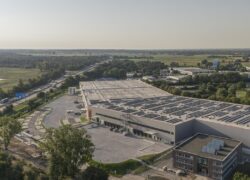
The Polish industrial and logistics market demonstrated resilience in the first three quarters of 2024. During this period, 2.1M sq m of new warehouse space was delivered, expanding the sector’s total stock to nearly 34M sq m (+9% Y/Y). Currently, 1.9M sq m are under construction (-22% Y/Y), marking the second-lowest development activity since early 2018. Despite challenges, leasing activity remained stable at 3.8M sq m, with a vacancy rate of 8.0% (+30 bps Y/Y) at the end of September 2024. AXI IMMO, Poland’s largest commercial real estate advisory firm, presents its latest report, “The Industrial Market in Poland, Q1-Q3 2024.”

Grzegorz Chmielak, Head of Valuation and Capital Markets, AXI IMMO, commented: “In recent months, the Polish commercial real estate investment sector has shown signs of stabilization and recovery. The warehouse segment, in particular, has regained momentum after a challenging start to the year. Increasing investor interest in industrial and logistics portfolios is evident in the growing number of ongoing transactions. Fully leased warehouse assets in established core markets remain the most attractive”.

Anna Głowacz, Head of Industrial, AXI IMMO, stated: “The Polish industrial market is entering a phase of stabilization, characterized by reduced development activity and a greater focus on tenant-tailored projects. Supply is adjusting to actual tenant demand, fostering more sustainable growth. While leasing volumes remain high, renegotiations account for a significant portion of transactions”.

Renata Osiecka, Managing Partner, AXI IMMO, concluded: “Despite declining development activity and challenging macroeconomic conditions, the Polish industrial and logistics market in 2024 demonstrates stability. Investors and tenants continue to recognize the potential in key regions such as Warsaw, Łódź, Upper Silesia, and Lower Silesia, maintaining stable rental rates and offering prospects for further market growth. We anticipate strong tenant activity in Q4, traditionally the best-performing quarter of the year”.

Develia secures occupancy permits for over 340 flats in Kraków

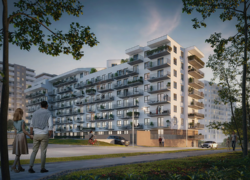
Develia, one of Poland’s leading real estate developers, has obtained occupancy permits for 345 flats in two major Kraków projects, City Vibe in Płaszów and Bochenka Vita in Podgórze Duchackie. The process of handing over keys to new homeowners is now underway, marking another milestone in the company’s contribution to the city’s residential market.

The third stage of the City Vibe project in Płaszów comprises 125 flats in the five-story River View building, offering units ranging from 30 to 80 square meters. Each flat features a balcony, loggia, or garden, with the development situated near the green expanse of the Płaszów River Garden and close to Kraków’s city center.

In the Bochenka Vita development in Podgórze Duchackie, 140 flats have been completed in an eight-story, cascade-structured building. The units, spanning 27-square-meter studios to 94-square-meter four-room apartments, come with balconies, terraces, or gardens. The project, surrounded by the scenic Drwinka River Park and well-connected by local transport infrastructure, also includes eight commercial and retail spaces.

Develia continues to strengthen its presence in Kraków’s residential market with diverse offerings catering to a range of buyer needs. Prices for the newly completed flats start at PLN 12,900 per square meter in the Bochenka Vita project, PLN 13,000 in the City Vibe development, and PLN 17,900 per square meter in the Grzegórzecka 77 estate. Across six projects in Kraków, Develia currently has 800 flats available for sale.

“Developing residential projects in Kraków presents unique challenges, particularly in balancing urban expansion with preserving the city’s historic character,” said Paweł Niedziela, Head of Sales at Develia. “Our focus is on delivering functional and comfortable homes with excellent transport accessibility, green surroundings, and integration into the city’s unique landscape. To further expand our offerings, we recently acquired land on Żabiniec Street for a new residential project of approximately 120 units.”

Develia’s projects are designed to align with Kraków’s evolving needs, addressing demand for high-quality housing while contributing to the city’s infrastructure. With developments like City Vibe and Bochenka Vita, Develia continues to set a benchmark for residential living in one of Poland’s most dynamic cities.

The new flats not only add to Kraków’s housing stock but also highlight Develia’s commitment to sustainable urban growth, blending modern living spaces with the city’s historical charm.

Bank Monitor Poland: 46% of bankers anticipate growth in housing loans within six months

The latest “Bank Monitor” report from research firm Mind & Roses reveals that 46% of bankers now expect an increase in housing loans for individual customers within the next six months, up from 40% in October. However, expectations for growth in investment loans for enterprises have slightly declined, dropping to 41% from 42%.

Consumer loans for individuals are also projected to rise, with 52% of respondents anticipating growth over the next six months, compared to 50% the previous month.

“The overall index assessing customer activity in the household credit market dropped by 8 points in November to 9 points. The balance of customer activity assessments for consumer credit declined by 6 points month-on-month and by 4 points year-on-year. Similarly, the balance of assessments for the housing loan market fell by 14 points m/m and 30 points y/y. Despite this, the three-month forecast index for the household loan market rose by 1 point to 40 points,” the report stated.

For business loans, the outlook is mixed. While 59% of bankers predict growth in business capital loans, up significantly from 45% a month earlier, expectations for investment loan growth dipped slightly to 41% from 42%.

The activity indicator for business loans climbed by 4 points to 2 points in November. Entrepreneurial activity in the investment loan market saw a 3-point m/m rise and a significant 19-point y/y increase. Conversely, the index for turnover credit market activity fell by 3 points m/m and 3 points y/y. The forecast index for the business credit market grew by 3 points month-on-month, reaching 22 points.

These insights reflect a cautiously optimistic sentiment in the credit market, with growth in some areas tempered by declines in others.

Source: Mind & Roses and ISBnews

Revolut unveils ambitious 2025 plans: Digital mortgages, AI integration, and ATM expansion

Revolut has announced a bold vision for 2025, prioritizing fully digital mortgage services, advanced artificial intelligence (AI) integration, and the launch of a proprietary ATM network across Europe. The company aims to accelerate innovation, elevate user experience, and establish itself as the first truly global bank.

Co-founder and CEO Nik Storoński highlighted the transformative goals for the coming year, describing 2024 as a milestone in Revolut’s growth. “We’ve earned the trust of millions of new customers and introduced groundbreaking services. 2025 will take this further as we revolutionize traditional banking to benefit people,” he said.

A key focus for 2025 will be enhancing the app with an AI-powered financial assistant. This tool will cater to individual user preferences, promote healthy financial habits, and simplify money management. It will launch gradually throughout the year, evolving with advancements in AI to provide even greater functionality.

Revolut also plans to enter the mortgage market, introducing a fully digital product designed for speed and convenience. The service will debut in Lithuania before expanding to Ireland and France. Customers can expect an initial decision within minutes and a final offer within one business day, contingent on asset valuation and necessary checks. This initiative will complement Revolut’s broader effort to build a comprehensive loan portfolio across Europe, potentially including overdraft services in the near future.

In addition to digital mortgages, Revolut will roll out its ATM network, starting with a pilot in Spain early next year. These modern ATMs will handle cash withdrawals, payment cards, and eventually cash deposits. To enhance security, Revolut is considering implementing facial recognition technology to verify users during transactions.

The company is also expanding its business banking offerings, introducing its first credit product for European companies and plans for highly competitive savings accounts. Revolut will target industries like gastronomy and retail, providing tools to streamline operations with its Revolut Kiosk platform. Enhanced online transaction capabilities, including Buy Now, Pay Later (BNPL) services, are also part of the company’s vision.

Since its beginnings as a currency exchange service in London in 2015, Revolut has grown into a licensed European bank with over 50 million customers worldwide, including 4 million in Poland. With its ambitious 2025 roadmap, the company seeks to redefine banking through digital innovation and a customer-first approach, solidifying its position as a global leader in financial services.

Source: IBSnews
Photo: Nik-Storonski, CEO, Revolut

Czechia: Analysts warn of uncertain energy market, advise fixing prices

The period of significant energy price reductions appears to have ended, with future market developments clouded in uncertainty. Analysts surveyed by the Czech Press Agency believe that energy suppliers are unlikely to reduce prices next year at the same pace as in 2024. They cite geopolitical risks and the potential for a harsh winter as key concerns, recommending that consumers consider fixing their energy tariffs to guard against potential price hikes.

Jiří Tyleček, an analyst at XTB, noted that the lowest energy offers have remained relatively stable in recent months. However, according to Ušetřeno.cz energy analyst Tomáš Vrňák, there remains a significant disparity between standard supplier rates and special promotions. He highlighted that consumers could save over CZK 4,500 annually on electricity and almost CZK 7,000 on gas by switching providers.

The outlook for energy prices remains uncertain, with recent increases on energy exchanges suggesting a stabilization or even a potential rise. Vrňák pointed to several factors likely to push prices higher, including the gradual transition away from coal, uncertainty surrounding gas supplies, and increasing costs of emissions allowances.

Radim Dohnal, an analyst at Capitalinked.com, expressed similar views, suggesting that the exhaustion of factors driving previous price reductions could lead to stable or slightly higher energy prices. While geopolitical tensions could exert upward pressure, a slowdown in German industry might ease costs. However, Dohnal warned that a particularly severe winter could drive demand and prices higher.

Given these dynamics, analysts widely recommend that households lock in current energy rates. Fixed-rate tariffs are now up to 20% cheaper than standard pricing, providing a buffer against potential market fluctuations. Tyleček suggested that fixing rates near current levels is a prudent move, noting that while there could be minor price declines in spring, risks such as extreme winter weather or disruptions in Russian gas supplies could lead to sharp increases. Dohnal echoed this, advising fixed rates for the next two years at approximately CZK 1,000 to 1,100 per megawatt-hour (MWh) for gas and CZK 2,400 to 2,600 per MWh for electricity.

In recent weeks, many domestic energy suppliers have announced price reductions effective from early next year. However, they caution that future developments will hinge on broader market conditions. The regulated portion of energy pricing, determined by the Energy Regulatory Office, will also play a crucial role in shaping costs. The office’s announcement of the 2025 pricing structure, expected this Thursday, is anticipated to provide greater clarity.

As the market faces an unpredictable combination of geopolitical, environmental, and regulatory challenges, fixing energy prices now may offer consumers a measure of stability amid the uncertainty.

Source: CTK

Ifo Report: German business sentiment worsens in November

Business sentiment in Germany declined again in November, with the Ifo Business Climate Index falling to 85.7 points from 86.5 in October, according to data released by the German economic institute Ifo. This drop follows a brief improvement in October, which had interrupted four consecutive months of worsening sentiment. Analysts surveyed by Reuters had anticipated a smaller decline to 86 points, underscoring the unexpectedly weak economic outlook.

The latest decline reflects a more negative assessment of the current economic situation, while expectations for future developments saw a less pronounced decrease. Ifo President Clemens Fuest described the situation bluntly, stating that “the German economy lacks strength.”

Germany’s gross domestic product grew by 0.1 percent in the third quarter compared to the previous quarter, according to the Federal Statistical Office. This final figure, slightly lower than the preliminary estimate of 0.2 percent, still represents an unexpected gain for Europe’s largest economy during a challenging period.

Sentiment in Germany’s manufacturing sector weakened further as businesses expressed growing scepticism about future developments. The services sector experienced a marked decline, with companies reporting a worsening of both their current situation and expectations. While the wholesale and retail trade sectors showed slight improvement, the construction sector recorded a significant drop in sentiment, reflecting persistent difficulties within the industry.

As the largest economy in Europe and the Czech Republic’s most important trading partner, Germany’s economic performance has substantial implications for its neighbors. Many Czech companies are deeply connected to the German market, and any sustained economic slowdown in Germany could have significant ripple effects on Czech exports and industrial output.

Despite the modest GDP growth in the third quarter, the Ifo report highlights persistent challenges across key sectors, suggesting that Germany’s economic recovery remains fragile and uneven.

Source: Ifo Business Climate Index and CTK

Middle class in Czech Republic faces growing financial strain, expert warns

The middle class in the Czech Republic is increasingly struggling financially, despite the country maintaining low unemployment and rising wages. This paradox was highlighted by the latest Social Exclusion Index, an analysis conducted by the Agency for Social Inclusion. According to Lucie Trlifajová, an expert at the agency, the systems designed to protect the most vulnerable citizens are failing, leading to greater economic pressure on middle-income households.

The Social Exclusion Index, which has been compiled since 2016, examines indicators such as reliance on living allowances and housing benefits, foreclosure rates, long-term unemployment, and educational outcomes. The findings reveal that financial hardship is intensifying even in areas typically associated with economic stability.

Trlifajová pointed out that the decline in middle-class stability is not linked to rising unemployment, as might be expected, but to a significant fall in real wages. The Czech Republic, while boasting the lowest unemployment rate in the European Union, has experienced one of the steepest declines in real wages. This has contributed to an uptick in the number of people receiving housing benefits, with the most pronounced increases occurring in areas around Prague and other major cities.

Debt is another area of growing concern. According to Barbora Halířová, a debt expert at the agency, foreclosure rates have surged in the Central Bohemian Region. Halířová noted that counseling centers are now seeing more individuals from the lower middle class, including those with higher education, seeking financial guidance—an indicator of the broader economic strain affecting previously stable households.

High inflation, soaring energy costs, and changes to social support rules have further exacerbated the situation. Adjustments to housing benefit eligibility criteria and increased income thresholds have expanded the pool of beneficiaries. However, while the number of recipients of housing and child benefits has grown, there has been no corresponding rise in the number of people receiving benefits for material distress, suggesting that the most disadvantaged are not being adequately supported.

The minimum subsistence level, a key benchmark for determining eligibility for various social benefits, currently stands at CZK 4,860 per individual. This amount was last increased in January 2023 by 5.2%, but inflation has significantly eroded its real value. Trlifajová argued that the minimum subsistence level should have been CZK 7,082 last year to keep pace with inflation. She emphasized that the erosion of this benchmark undermines its ability to provide basic survival support and compromises the effectiveness of social safety nets.

The Social Exclusion Index also highlights a growing disparity among municipalities. In 2023, 241 municipalities were classified with the highest levels of social exclusion, compared to 191 the previous year. Simultaneously, the number of municipalities with minimal exclusion has declined, further reflecting the widening economic divide.

Trlifajová stressed that the middle class’s growing vulnerability signals deeper systemic issues. “If the middle class is struggling, the situation for the poorest must be deteriorating as well,” she said. Without significant policy interventions, the Czech Republic risks exacerbating social inequalities and increasing economic instability, with consequences that will ripple across all levels of society.

Source: CTK

Prague’s proposed budget for 2025 sparks debate over priorities and investments

Prague city councillors have approved the first draft of the 2025 budget, proposing revenues of CZK 110.92 billion and expenditures of CZK 113.49 billion. The difference, amounting to CZK 2.6 billion, will be bridged using funds saved for projects like Metro D, which the city has been earmarking for years. The budget now moves to committees for review, with final approval expected at the council’s last meeting of the year on December 12.

The proposed budget allocates CZK 22.29 billion for investments, a record-breaking figure, supplemented by CZK 14 billion from unspent funds from the previous year. However, opposition parties ANO and Prague Sobě have criticized the draft, citing a lack of new projects and insufficient time for city districts to review it.

City Councillor for Finance Zdeněk Kovářík defended the schedule and budget priorities, highlighting that transport remains the largest expenditure, with CZK 30.28 billion allocated, including CZK 15.22 billion specifically for transport investments. Key projects include the construction of Metro D (CZK 6.1 billion), the Libeň Bridge reconstruction, the Smíchov transport terminal, and new tram lines on Wenceslas Square.

Education is the second-largest spending category, with CZK 28.4 billion allocated, followed by health and social services (CZK 6 billion). Significant cultural investments include CZK 1 billion for the ongoing reconstruction of the Industrial Palace and CZK 830 million for repairs to the Vinohrady Theatre.

Opposition leaders have expressed concerns over the lack of visionary projects and new initiatives. Ondřej Prokop, chairman of Prague ANO, criticized the limited scope of investments, claiming the budget overlooks ambitious plans such as the redevelopment of Prague’s main railway station and the completion of the city ring road.

Adam Scheinherrov, leader of Prague Sobě, accused the coalition of focusing solely on inherited projects from previous administrations, such as the Dvorecký Bridge and Wenceslas Square renovations, while shelving plans for future developments. “The coalition has failed to initiate critical projects like the second stage of Metro D or the reconstruction of key city squares,” he stated.

The inclusion of CZK 355 million for an ice bear pavilion at the Prague Zoo drew particular ire. Scheinherr labeled it a misstep, arguing that essential infrastructure projects and affordable housing initiatives are more pressing needs.

With record investments on the table, the proposed budget reflects Prague’s commitment to infrastructure and public services but leaves room for debate on its long-term vision. The final approval will not only determine citywide finances but also enable individual districts to finalize their own budgets, ensuring alignment with Prague’s broader objectives.

As the December 12 deadline approaches, the balance between fiscal responsibility, strategic investments, and meeting public expectations will remain a focal point of discussions.

Source: CTK

CTP secures 30,000 sqm of new leases in Germany

CTP has signed lease agreements for nearly 30,000 square meters of space at two key sites in Germany, further solidifying its presence in the region. The deals, involving logistics businesses Heinrich Hoppe GmbH and WP Holding GmbH, underscore CTP’s commitment to sustainable redevelopment and meeting modern ESG standards.

Heinrich Hoppe GmbH, an international freight forwarding and logistics service provider, has leased 12,500 square meters at CTPark Bremen in north-west Germany. Developed on a former landfill site, the park exemplifies CTP’s brownfield redevelopment expertise. With 28,500 square meters of gross lettable area (GLA), the park features innovative construction, photovoltaic panels, and air-source heat pumps, achieving DGNB Gold sustainability certification.

In Saxony-Anhalt, WP Holding GmbH has secured a newly refurbished 15,000-square-meter energy-efficient logistics building at CTPark Oschersleben. WP Holding, which specializes in integrated logistics solutions and process consulting, also has an option to expand into an additional 5,000 square meters.

Redeveloping brownfield sites and retrofitting older industrial properties have become central to CTP’s strategy, particularly in Germany, where emerging sectors such as semiconductors and clean tech are reshaping industrial demands. Occupiers are increasingly prioritizing sustainable facilities to meet their ESG goals, a trend CTP is capitalizing on with cutting-edge developments.

“We are delighted to welcome Heinrich Hoppe GmbH to CTPark Bremen and WP Holding GmbH to CTPark Oschersleben,” said Alexander Hund, Managing Director Germany at CTP. “The rapid evolution of European logistics markets, coupled with stricter energy efficiency regulations, has created exciting opportunities to redevelop and modernize sites into sustainable business parks tailored to today’s needs.”

CTPark Bremen boasts excellent connectivity via the Bremer Kreuz interchange, linking the A27 and A1 motorways. This location offers easy access to Germany’s major ports, including Bremen, Jade-Weser-Port, and Hamburg, making it an ideal logistics hub.

Meanwhile, CTPark Oschersleben is strategically located along the A14 motorway, providing direct links to Leipzig, Dresden, and international markets in Czechia and Austria. Sustainable features, such as EV charging stations for WP Holding’s fleet, enhance its appeal as a future-proof logistics center.

WING sells Honvéd Center office buildings to German investor

WING has finalized an agreement for the sale of the Honvéd Center office buildings in Budapest’s Central Business District. The property, spanning 6,500 square meters, will be acquired by Greve Honvéd Kft., a subsidiary of Hamburg-based Greve Group. This strategic transaction underscores the ongoing appeal of high-quality office assets in Budapest and is expected to close by mid-December.

Honvéd Center is a standout property in the heart of Budapest, blending historic charm with modern functionality. The project includes two distinct buildings: a classical listed structure with a restored turn-of-the-century facade and elegant, modern interiors, and a contemporary office tower offering six floors of premium workspace, underground parking, and a newly renovated reception.

Situated in proximity to Parliament, ministries, courts, and shopping and dining venues, the complex benefits from its prime location within one of Budapest’s most vibrant neighborhoods.

“This transaction reaffirms our belief in the resilience and importance of office properties as a core component of the real estate market and a modern economy,” said Noah Steinberg, Chairman and CEO of WING. “We are committed to delivering buildings that align with our partners’ needs in terms of functionality and location. The Honvéd Center exemplifies this commitment, and its successful sale highlights the value of long-term investments in quality office assets.”

The funds generated from the sale will enable WING to pursue further real estate opportunities, reinforcing its position as a key player in Central Europe’s property market, with operations spanning Hungary, Germany, and Poland.

The seller was represented by Szécsényi & Partners and iO Partners, while Taylor Wessing Braner and Ódor és Társai Ügyvédi Iroda supported the buyer.

While the purchase price and transaction details remain confidential, the sale marks a significant milestone for both WING and Greve Group, illustrating Budapest’s enduring appeal to international investors.

LATEST NEWS