Luxury high street yields remain the most stable among retail investment properties

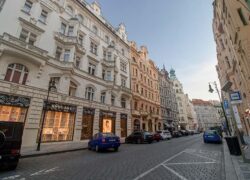
According to Savills research, European retail investment volumes reached €19 billion from Q1 to Q3 2024, reflecting a 6% year-on-year increase. Among retail property sectors, luxury high street yields remain the most favorable and stable at 4.4%, a trend also mirrored in the Czech Republic. The enduring attractiveness of high street assets was recently underscored by the acquisition of the iconic Louis Vuitton building at Pařížská 3 in Prague by Raiffeisen realitní fond, managed by Raiffeisen investiční společnost, a. s. Savills has secured the property management mandate for the prestigious asset.

“An exceptional building requires an individual and professional approach. Added value comes from proactive efforts, accountability for operational results, and meeting owners’ expectations. Our relationships, energy, and dedication are the investments we bring to property management projects. I believe strong, long-term partnerships based on trust and professionalism are key,” says Petra Gaceková, Business Development Lead, Property Management at Savills Czech Republic & Slovakia.

Retail Investment by Sector

High street retail accounted for 18% of total European retail investment volumes between Q1 and Q3 2024, while retail parks represented 28% and shopping centers 26%.
• Luxury High Street Yields: Remained stable at 4.4% year-on-year.
• Prime Shopping Centre Yields: Increased by 9 bps annually to 6.3%.
• Mass-Market High Street Yields: Compressed by 4 bps annually, reaching 5.2%.
• Prime Retail Warehouse Yields: Decreased slightly by 4 bps year-on-year to 5.9%.

With signed deals since October and transactions currently in the pipeline, Savills projects Q4 2024 retail investment volumes in Europe to reach approximately €8.5 billion. This would bring the total for 2024 to just over €27.5 billion, marking a 15% increase compared to 2023.

The stability of luxury high street yields, combined with strong investor interest, reinforces the sector’s resilience and continued appeal in an evolving retail investment market.

JSC Atsinaujinančios Energetikos Investicijos sells 66 MW solar PV portfolio in Poland

JSC Atsinaujinančios Energetikos Investicijos, a closed-end investment company managed by Lords LB Asset Management and focused on renewable energy, has successfully divested its 66 MW solar photovoltaic (PV) portfolio in Poland. The full ownership of Energy Solar Projekty Sp. z o.o. has been acquired by a UK-based investment management firm specializing in renewable energy infrastructure. The portfolio, comprising solar farms operational since 2020, marks a significant milestone for the company.

“We are delighted with this deal, as it marks the first divestment from the JSC Atsinaujinančios Energetikos Investicijos portfolio,” said Grėtė Bukauskaitė, Manager of JSC Atsinaujinančios Energetikos Investicijos. “This transaction highlights the potential of the Polish renewable energy market and completes a full investment cycle—from acquisition and construction to successful divestment.”

The solar PV portfolio was initially acquired in 2018 and fully constructed and energized by 2020. The projects operate under Poland’s Contract for Difference (CfD) scheme and were financed through a consortium led by the European Investment Bank (EIB) and Bank Polska Kasa Opieki S.A. (PEKAO Bank).

While the sale represents the first successful divestment from its portfolio, JSC Atsinaujinančios Energetikos Investicijos remains committed to the Polish renewable energy market. The company retains an existing portfolio of 190 MW of solar PV projects in Poland.

Beyond Poland, the company continues to strengthen its position in the Baltic region, where it owns and operates three wind farms in Lithuania with a total installed capacity of 186 MW. The company is also actively developing a significant renewable energy pipeline across Lithuania and Latvia, underscoring its strategic focus on expanding its renewable energy footprint.

This transaction highlights both the growing investor appetite for renewable infrastructure in Poland and the company’s ability to deliver on its long-term investment and development strategy.

Wojciech Mazur joins Savills Poland to strengthen the office agency landlord representation team

Savills has announced the appointment of Wojciech Mazur to its Office Agency Landlord Representation team.

Wojciech Mazur is a seasoned real estate expert with extensive experience in leasing and managing prestigious commercial projects. Since 2014, he has led leasing initiatives for renowned shopping centers, including Galeria Młociny in Warsaw, Galeria Echo in Kielce, and Galaxy in Szczecin. In 2019, Wojciech expanded his focus to the office real estate sector, successfully managing key developments in southern Poland, such as Brain Park and O3 in Kraków and Face2Face in Katowice.

Daniel Czarnecki, MRICS, CCIM, Head of Landlord Representation at Savills Poland, commented: “Wojciech brings not only vast experience but also deep insight into the market and its unique dynamics. His expertise will be a valuable asset for our key projects and clients. This addition marks a significant strengthening of our team and aligns with our strategy for continued growth.”

In his new role at Savills, Wojciech will focus on supporting commercial property owners through leasing processes, helping them unlock the full potential of their assets, increase value, and drive profitability. Additionally, he will provide tailored advisory services to businesses, assisting them in securing modern, functional office spaces that align with their operational needs. His primary focus will be on projects in the Kraków and Katowice regions.

With Wojciech Mazur’s appointment, Savills further solidifies its position as a trusted advisor in Poland’s dynamic commercial real estate market.

CBRE Forecast: What to expect from the commercial real estate market in the Czech Republic in 2025?

CBRE summarises this year’s developments in the Czech commercial real estate market and provides an up-to-date outlook for 2025. The report highlights anticipated investment activity and the evolution of key segments in the Czech Republic for the upcoming year.

Clare Sheils, Managing Director, CBRE Czech Republic, comments: “Supported by economic recovery, the 2025 market is expected to stabilize and grow, with investment volumes expected to rise. ESG considerations will remain a key focus for 2025 with a strong emphasis on energy efficiency, sustainable building practices, and reducing carbon footprints.”

The investment market is expected to continue its recovery
Improvement in the Czech real estate transaction market is set to continue in 2025. Key drivers will be an increase in product for sale and improved financing conditions.

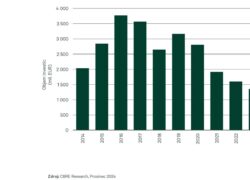
From January to November 2024, €1.36 bln has been transacted, which is already equal to the total volume for 2023. We expect to close this year with a total investment volume of around €1.5 bln. Several large transactions are currently in the final stages of negotiations, hence Q1 2025 is set to be a very strong quarter. CBRE expects total Czech commercial real estate investment volumes to far exceed €2 bln in 2025. Local investors will remain the key players, but the anticipated return of international capital could further strengthen the market.

Since mid-2022, prime yields in the Czech Republic have expanded by 60 – 135 basis points across office, retail, and industrial & logistics sectors. During H2 2024, we have monitored the stabilization of prime yields, and even the first compressions for Retail parks and High Street prime yields in Q4.

In recent years, investors have begun to place greater emphasis on portfolio diversification to minimize the risks associated with economic fluctuations. As a result, interest in investing in alternative segments such as rental residences, student campuses, or medical facilities is growing. At the same time, the sustainability of projects is gaining importance. Energy certificates and international certifications such as BREEAM or LEED are becoming key criteria when evaluating investment opportunities.

Jakub Stanislav, Head of Investment Properties at CBRE, adds: “While buyer sentiment has improved, interest rates are not expected to come down rapidly, and the room for materially improved bid prices is limited. Therefore, the recovery will be gradual, and it will take some time for investment volumes and capital values to return to their previous peak.”

Office market: Adapting to a New Era
We have seen signs of reviving office construction during 2024. There is currently more than 160,000 sq m of new office space under construction in Prague, although most of this space won’t be completed until 2027. The recovery of office construction is being led by the owner-occupied market, namely two of the largest Czech business institutions, however, we believe this may be the trigger for other projects to follow suit. We anticipate a supply gap in 2025 and 2026, during which only a total of 23,000 sq m is scheduled to be completed.

Even though some large tenants are continuing the gradual return of underutilized, secondary space, extremely low new deliveries will keep the vacancy level at below 8% next year. Cost is the main driver behind corporations reducing portfolio size, but other core aims such as quality, experience, and flexibility are also prominent.

Simon Orr, Director in A&T-Offices at CBRE, comments: “The current leasing market is slow as the market is adapting to a higher cost environment. The unanswered question for now is whether tenants will be willing to pay much higher rates for newly built offices and increase their real estate costs as a result.”

Next year we expect that around 240,000 sq m will be newly leased, slightly below the 10Y average of 280,000 sq m. There are still relatively few new occupiers entering the Prague office market. These newcomers tend to start up in flexible office space and the flex market in Prague, which continues to grow, is benefiting from that trend.

Helena Hemrová, Head of A&T – Offices at CBRE, adds: „In 2025, we expect a rise in office-based employment and clearer signs of settled working practices.”

We observe a growing gap in rental levels between secondary and prime premises. Current prime rents stand around 29 EUR/sqm/month and we expect only a marginal increase during next year. Due to slow leasing take-up we are seeing upward pressure on incentives in certain locations.

Industrial & Logistics market: Getting used to the new normal
This year, industrial & logistics take-up should stay around 800,000 sq m representing a y-o-y decrease by 15%. Next year, take-up volumes might remain at the same level, or even stay slightly below 2024 levels. In Q4, we have registered a slight revival of new demand, which is a positive sign after the cooler beginning of the year.

Jan Hřivnacký, Head of Industrial Leasing at CBRE, comments: “But only the start of 2025 will show if it is just the effect of the end of the year, or the beginning of a new trend. Currently, we are unaware of any XXL transaction that would boost the 2025 volume. We believe we cannot expect 2021 and 2022 levels of take-up to repeat again.”

Demand in 2024 has been driven by manufacturing companies, which accounted for 60% of overall take-up during the first three quarters of 2024. Automotive has been the most active subsector with a 69% share. We feel that e-commerce activity is slowly growing, however, we will only see during next year if this activity will be projected in real leasing transactions.

As of Q3 2024, there was more than 1 million sq m under construction. However, we are now seeing that new construction is slowing down. Developers are waiting for preleases and this trend will continue through 2025. This year we expect around 700,000 sq m to be newly delivered to the market, which would represent almost a 15% decrease compared to 2023.

The vacancy rate has been continuously increasing throughout the year. As of Q3, the vacancy rate stood at 3.1% and we expect to see another slight increase in Q4. We continue to monitor grey vacancies on the market, not only in the space offered for subleases but also in projects at the stage just before completion and designated as under construction until the space is leased.

In 2025, we expect the vacancy rate might slightly increase further, but not as fast as in 2024.
As a result, we might see downward pressure on prime rents to continue through 2025 in some of the most competitive regions.

Czech Retail 2025: Set for a growth
In 2024, retail development in the Czech Republic was driven mainly by retail park construction. Currently, we monitor more than 100,000 sq m in various stages of construction and planning within retail parks. In terms of shopping centre stock, we expect ca 43,000 sq m to be delivered to the market in 2025, all of which are either refurbishments or extensions of existing schemes. The vacancy rate in existing shopping centre stock remained low at around 4%.

Improved consumer fundamentals are acting positively on shopping centre performance. Retail sales increased by almost 5% y-o-y, well above the rate of inflation, and have similar dynamics to the European average. Footfall is stable, with 1% growth y-o-y.

The real retail spend growth in the Czech Republic presents a compelling narrative of recovery and resilience. Starting with a year-on-year growth of 3.9% in the first quarter, the momentum has been sustained and even surpassed expectations, reaching an impressive 5.3% by the third quarter. For the entirety of 2024, the growth rate is projected to be around 4.3% y-o-y. In 2025, growth is expected to continue at a steady pace, with a forecasted rate of 4.1% y-o-y.

Jan Janáček, Head of Retail Sector and A&T-Retail at CBRE, adds: “After several years of stagnation in the construction of new shopping centres, we see a significant trend in the modernization of existing schemes, for instance: Central Most, Varyáda, Velký Špalíček, Grand Pardubice or Forum Pardubice. With decreasing cost pressures and improving retailers’ expansion appetite, we expect an increased volume of investment in retail schemes in the coming years.”

Prime retail rents have shown a notable upward trend in 2024, driven by a surge of occupier demand and persistently low vacancy rates in prime retail locations. High street prime rents have increased by 3% year-on-year and are projected to see a similar growth of 3% in 2025. Shopping centre prime rents have experienced a more robust growth of 4% year-on-year in 2024, with an anticipated increase of 2% in 2025.

In 2024, we saw increased activity on Prague’s High Street market. In June, Máj opened adding 17,000 sq m of retail space to the Prague market and bringing new entries. In autumn, tenants such as Boss, Vasky and Tommy Hilfiger opened their stores in the newly reconstructed building 100Yards. The street 28. října has been developing and qualitatively extending Na Příkopě Street. This year, the street has been strengthened by the flagship store of Lindt, and Desigual. In the upper part of Wenceslas Square, the long-awaited revitalization has begun. This will bring a tram line from Vinohrady to the square and the construction work will last until the summer of 2027.

Zdeněk Zádrapa, Head of High Street & Tenant Representation at CBRE, adds: “The Czech Republic is increasingly recognized as a prime destination for international brand expansion. We expect the full year of 2024 to be one of the strongest years in tracked history. This trend is anticipated to continue, with further entries expected next year, reflecting the Czech Republic’s growing appeal as a vibrant market for global retailers.”


PSN enters the holiday housing market with premium apartments in Špindlerův Mlýn

PSN is expanding its real estate portfolio with a second project in the prestigious mountain resort of Špindlerův Mlýn. The Slunečný Svah residence, a thoughtful reconstruction of a former mountain guesthouse, will feature nine premium apartments and two additional units suitable for private housing for local residents. This exclusive project includes shared amenities such as a sun terrace with loungers and a barbecue area, as well as a bike and ski storage room. A sample apartment is already available for private viewings, and the project is slated for completion in summer 2025.

The Slunečný Svah residence offers a total of 11 units, including nine apartments ranging from 1+kk to 4+kk with sizes between 20 m² and 73 m², and two spacious 4+kk apartments of 108 m² and 138 m². Several units come with balconies or private front gardens, offering panoramic views of the stunning Krkonoše Mountains. Parking spaces are conveniently located adjacent to the building, with private garages available for the two largest apartments. Most units will feature modernized interiors, including renovated bathrooms, wooden floors, pre-installed kitchen fittings, and updated wiring. A shell & core option is also available for buyers wishing to customize their interiors. Nearly all units face south, ensuring abundant natural light and scenic views of the surrounding landscape.

The architectural concept, designed by Andrle Architects, blends the building’s traditional mountain character with contemporary comfort. Residents will enjoy shared spaces such as a sun terrace equipped with loungers and a barbecue, as well as a spacious bike and ski room ideal for sports enthusiasts. A relaxation zone featuring raised flowerbeds further enhances the project’s appeal, offering a peaceful retreat for residents.

“Entering the second home segment marks a significant milestone for PSN,” says Ondřej Heřman, Director of PSN’s Pardubice branch overseeing the project. “While demand for traditional holiday properties like cottages and chalets has declined, interest in high-quality apartments in prime locations remains strong. We believe that combining a premium setting, modern design, and authentic mountain charm is the right approach. Slunečný Svah is tailored to discerning clients seeking their own retreat in one of the country’s most sought-after recreational areas. A major advantage of the project is its year-round appeal, offering activities and amenities across all seasons. These apartments also present an excellent investment opportunity, given their rental potential and steady returns.”

Špindlerův Mlýn, renowned for its pristine nature and first-class amenities, is one of the Czech Republic’s top recreational destinations. In winter, future residents will benefit from immediate access to world-class ski slopes and cross-country trails just minutes from the residence. In the summer months, the tranquil Bedřichov district provides direct access to a network of hiking and cycling trails spanning dozens of kilometers.

Beyond sports and outdoor adventures, Špindlerův Mlýn offers a vibrant lifestyle with top-tier restaurants, cozy bars, wellness centers, and an aquapark. The area also boasts shops, medical facilities, and sports equipment rental and service centers. A dynamic calendar of cultural and sporting events, including winter competitions, summer concerts, and festivals, ensures year-round entertainment.

Accessibility is another key benefit. Located just two hours by car from Prague, the Krkonoše Mountains are an ideal getaway for weekend trips or extended holidays. With its combination of nature, amenities, and strategic location, Slunečný Svah is poised to attract both lifestyle seekers and investors looking for premium mountain properties.

Andor Liget residential development enhances Újbuda with an open community space

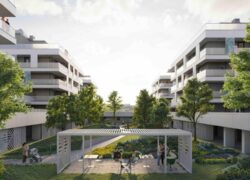
The DVM Group’s latest residential project, located on Andor Street in District XI, introduces a dynamic small-town square while offering nearly zero-energy smart homes. The Andor Liget development features six modern, five-story buildings with green roofs, loosely surrounding a private 3,000 m² inner park. Externally, the project incorporates service units and a community playground accessible to the public, fostering comfort and connectivity for both residents and the wider community.

Strategically situated in Újbuda, a suburban area with excellent city-center access, construction has commenced on the 141-apartment Andor Liget project at the corner of Andor and Pajkos Streets. The residential complex, designed in light pastel tones, includes a gently recessed façade along Pajkos Street. This architectural feature forms a welcoming small-town square that serves as both an elegant entry point and a functional hub for retail, service, and hospitality offerings. Adjacent to this space, a safe, modern playground with a rubberized surface will be available for public use.

Within the buildings, a private garden spanning over 10 tennis courts will serve as a green oasis for residents. Equipped with pavilions, seating, and dedicated community spaces, the courtyard offers an inviting environment for relaxation and social interaction. Ground-floor apartments boast private gardens, while upper-floor units feature spacious balconies or terraces.

Designed to meet contemporary buyer demands, the development provides underground parking, electric vehicle charging stations, bicycle storage, and private storage units for all property owners. The A++ energy-rated apartments meet nearly zero-energy standards, delivering minimal utility costs—an achievement that fewer than 0.5% of certified properties in Hungary can claim.

Tibor Massányi, Managing Partner of DVM Group, explained the project’s vision:
“When creating Andor Liget, our goal was to combine the benefits of nature and urban living in Újbuda’s most sought-after suburban green area. The excellent location, with its strong transport links and service-rich surroundings, perfectly complements the development. Taking market trends into account, we designed apartments that not only offer an exceptional lifestyle but also provide excellent investment opportunities. The mix includes one- and two-bedroom units that cater to rental demand and deliver predictable returns.”

Massányi further emphasized that the project benefits from DVM Group’s holistic approach: the nearly 30-year-old Hungarian-owned firm oversees every phase of the development—from planning to key handover—ensuring seamless delivery and consistent quality.

Andor Liget is set within one of Budapest’s fastest-growing districts, brimming with shopping and entertainment options. In addition to its on-site retail and hospitality units, residents will enjoy proximity to supermarkets, Etele Plaza, and Allee Shopping Center. The location also provides access to essential services, including quality educational and healthcare institutions.

For sports enthusiasts, nearby amenities include the Life1 Fitness Center, Nyéki Imre Swimming Pool, Kelen Sports Complex, Kopaszi Dam, and Tüskecsarnok. Convenient transport links such as Andor Street, the M1/M7 motorways, and Metro Line 4 ensure easy access to the city center, Lake Balaton, and other key areas. Whether by car, bike, or public transport, residents are only minutes away from the Danube River, Buda Hills, Kopaszi Dam, and the vibrant cultural scene of the Bartók Béla Boulevard.

Andor Liget seamlessly integrates sustainable living with modern convenience, offering a vibrant community space and smart homes in one of Budapest’s most desirable suburban locations.

InCity Immobilien AG announces delisting from Frankfurt Stock Exchange’s regulated unofficial market

InCity Immobilien AG has announced its decision to delist its shares (ISIN DE000A0HNF96 / WKN A0HNF9) from the regulated unofficial market (Basic Board) of the Frankfurt Stock Exchange. The resolution was approved today by the Company’s Management Board with the consent of the Supervisory Board. The formal delisting notice will be submitted to the Frankfurt Stock Exchange immediately.

Trading of InCity shares on the regulated unofficial market will cease following the standard three-month notice period, with an expected final trading date of 17 March 2025. Shareholders will continue to have the opportunity to trade their shares on the Frankfurt Stock Exchange until this date.

The decision to delist primarily reflects the costs, ongoing obligations, and transparency requirements associated with being listed, as well as the associated risks. With Realsoul Holding S.A., InCity’s permanent anchor shareholder holding a majority stake, the Company no longer relies on capital market financing. The delisting is expected to streamline operations and reduce administrative and other related expenses moving forward.

By opting for delisting, InCity Immobilien AG aims to optimize its cost structure and focus on its long-term strategic objectives.

Panattoni sells two industrial parks to leading international investor

Panattoni has successfully completed the sale of two industrial parks – Panattoni Park Ruda Śląska III and Panattoni Park Kraków East II – to a major international investor making its entry into the Polish market. The transaction, valued at approximately €70 million, underscores the robust demand for fully leased, strategically located logistics assets in Poland’s thriving industrial sector.

“These transactions reaffirm Panattoni’s leadership in delivering high-quality industrial facilities that meet the evolving needs of both tenants and investors. Strategically located parks with top-tier specifications continue to attract strong interest, demonstrating the strength of the logistics market,” said Michał Stanisławski, Co-Head of Capital Markets Poland at Panattoni.

Panattoni Park Ruda Śląska III, located in the Upper Silesian industrial region, offers 72,000 sqm of modern warehouse and logistics space. Its prime position near the A1 and A4 motorways ensures exceptional connectivity within Poland and to neighboring markets. Fully leased to key tenants, the park hosts midocean company, which operates its primary logistics and printing hub on-site.

Meanwhile, Panattoni Park Kraków East II, situated just meters from the A4 motorway near Kraków, comprises 18,540 sqm of A-class warehouse and light production space. Designed to meet diverse operational needs, the facility features unloading docks, ground-level access gates, and ample parking. It is fully leased, with major tenants such as Canpack, a leader in sustainable packaging solutions.

Both industrial parks reflect Panattoni’s focus on sustainability, incorporating features such as LED lighting, energy management systems, and EV charging stations. With BREEAM certifications, the parks align with investor priorities for environmentally responsible and resilient real estate investments.

“Our parks are developed to combine functionality and sustainability, supporting the logistics sector’s growth while advancing environmental objectives. This sale highlights the enduring attractiveness of Panattoni’s assets to leading global investors,” added Michał Stanisławski.

The transaction highlights the strength of Poland’s logistics market, where demand for modern, sustainable facilities in prime locations remains high, ensuring attractive opportunities for international investors.

Prague unveils ambitious plans for Žižkov Freight Station: Schools, Housing, Culture, and Commerce

The transformation of Prague’s historic Žižkov Freight Station, whose purchase from České dráhy (ČD) for CZK 1.43 billion was approved by city councillors, is set to begin within four years. The ambitious redevelopment will see the creation of schools, apartments, cultural spaces, commercial facilities, and offices across 50,000 m². A new headquarters for the National Film Archive is also being considered, city and district representatives announced during a site visit.

The listed Constructivist-style building, known for its two long wings designed for transshipment and underground storage of goods, remains a defining feature. The southern wing stretches an impressive 380 metres, making it Prague’s longest building. Deputy Mayor Petr Hlaváček (STAN) remarked on its scale, likening it to Italian pre-World War II architecture.

To meet heritage requirements, conservationists have permitted extending the wings by one storey in the middle sections and two storeys at the ends. Plans include an elementary school for 800 children, to be built on the site of a furniture store behind the north wing. The original structure will house a studio-style high school with apartments located on the upper floors.

The mixed-use concept will blend commerce, culture, public housing, schools, and services, with operations financed through leases. “While we don’t expect to recover the purchase price, we aim for self-sustainability without subsidies,” Hlaváček explained.

Prague 3 Deputy Mayor Pavel Dobeš (STAN) highlighted the importance of community infrastructure for the 20,000 future residents, including a planned polyclinic. Meanwhile, the National Film Archive is expected to move into a functionalist office building across Olšanská Street. “If the archive reaches an agreement with the city and Ministry of Culture, the facility will include not only offices but also cinemas and studios,” Dobeš said. He emphasized the need for the cultural and social hub to have a defined purpose and economic self-sufficiency.

A public square will be developed where the railway tracks and iconic freight elevators currently stand. Hlaváček noted it will be “half the size of Wenceslas Square but traffic-free,” creating an inviting public space.

Before work on the station begins, the city plans to extend a two-kilometre tram line, connecting Olšanská Street to Osiková Street. The Prague Transport Company aims to launch this investment next year.

Mayor Bohuslav Svoboda (ODS) is scheduled to sign the purchase agreement with ČD representatives on Monday. The station, currently 90% leased to 300 tenants, will see the city take over all existing contracts. Design work for the redevelopment will then commence, with construction expected to begin within four years.

The Žižkov Freight Station, built between 1934 and 1937 to designs by architects Karel Caivas and Vladimír Weiss, was declared a cultural monument in 2013 following public opposition to earlier redevelopment plans that included a road. The station ceased operations in 2002 and now stands as a key landmark ready to embrace a new role in Prague’s urban landscape.

Germany: Pressure on profit margins in property management intensifies amid rising demands

Property management in Germany faces mounting pressure on profit margins, exacerbated by rising demands, inflation, and increasing regulatory requirements. Despite longstanding concerns over profitability, the industry now contends with additional hurdles, including stricter energy efficiency rules and a shortage of skilled workers. Experts warn that current fee structures are insufficient to keep pace with rising costs, threatening long-term sustainability in the sector.

At an online panel hosted by RUECKERCONSULT, industry leaders discussed the challenges and potential solutions for property managers. Participants included Prof. Dr. Marco Wölfle (Center for Real Estate Studies), Thomas Junkersfeld (B&L Property Management), Marc Mockwitz (Cloudbrixx GmbH), Carolin Brandt (HIH Real Estate), and Thomas Heidelberger (REIC GmbH).

The findings of the Property Management Fees 2024 study provided a backdrop for the discussion. The report highlights an ongoing consolidation trend: the share of companies managing over 500 residential units has increased by 10% in recent years, with 27% now overseeing between 500 and 3,000 units. Properties exceeding 3,000 units, once rare, now account for 4% of portfolios and are on the rise.

“Germany’s rental housing market remains fragmented, making professional management of smaller properties cost-prohibitive,” explained Prof. Dr. Marco Wölfle. Fixed costs, including accounting and property oversight, disproportionately impact smaller properties, further squeezing margins.

Commercial property management is equally under strain. Thomas Junkersfeld, Managing Director of B&L Property Management, noted that while expectations have soared, fees have not kept pace. “Inflation, higher labor costs, and increasing regulations have all intensified pressure,” he said.

In residential management, standard fees remain modest, ranging between €27.37 and €41.65 per unit per month, reflecting only a €4 increase over two years. In commercial real estate, fees are typically tied to property costs, ranging from 3% to 6% of target rents. Despite this, special administrative services, such as modernization projects, are rarely compensated separately, although a growing number of property managers now charge 3% to 5% of project costs for additional work exceeding €5,000.

Marc Mockwitz, CEO of Cloudbrixx GmbH, sees digitalization as a solution to improve profitability. “Digital tools offer real added value for both property managers and clients, simplifying processes, increasing transparency, and driving efficiency,” he said. However, adoption remains inconsistent: while some small firms have fully digitized operations, larger players often lag due to overly complex systems or reliance on outdated tools like Excel.

“Organizing chaotic portfolios manually wastes time and money,” Mockwitz emphasized. “A digital ecosystem for storing and analyzing data is crucial for future efficiency and better margins.”

However, Carolin Brandt, Managing Director of Asset Management at HIH Real Estate, cautioned that digitalization alone cannot resolve all industry challenges. “Efficient processes are equally critical, especially for small firms that cannot afford full-scale digital solutions,” she explained.

Brandt also highlighted the issue of underpricing. “Many property managers offer unrealistically low fees to win contracts, but quality service cannot come for free,” she said. At HIH, which manages properties worth €14 billion and spanning 3.84 million square meters, cost-efficiency remains paramount, yet Brandt underscored the importance of fair pricing.

A further challenge lies in the overlapping responsibilities of facility, property, and asset managers. “It’s often unclear who is responsible for which tasks, leading to inefficiencies,” Brandt noted. Thomas Heidelberger, Managing Director of REIC GmbH, echoed this sentiment: “International companies are baffled by Germany’s practice of paying three managers to handle simple tasks, like fixing a dripping tap.”

Heidelberger called for greater transparency around fee structures, particularly in the commercial sector, where negotiations often drive fees below 3%. “Service quality determines price, and this needs to be clearly communicated,” he said.

As property managers face mounting operational demands, rising costs, and stagnant fees, panelists emphasized the need for:
1. Realistic pricing models to reflect increasing workloads.
2. Strategic digitalization to improve efficiency and transparency.
3. Clarified responsibilities to streamline overlapping roles and reduce costs.

Ultimately, the industry must balance cost control with quality, ensuring fair compensation for services while meeting evolving client and regulatory expectations. As Prof. Dr. Marco Wölfle summarized, “Property managers must adapt to structural changes and rising demands if they are to remain profitable and sustainable in the years ahead.”

LATEST NEWS