ATAL expands Osiedle Przyjemne with 111 new flats in Gdańsk

ATAL has announced the addition of 111 new flats to its Osiedle Przyjemne project, bringing the total number of units in the development to 369. Located on Flisykowskiego Street in Gdańsk, the estate offers excellent connectivity to other city districts, access to recreational spaces, and proximity to a rapidly developing retail and service infrastructure. Prices for the flats range from PLN 9,900 to PLN 12,700 per square metre in developer condition.

“In the past year, we’ve significantly expanded our offerings in the Tricity market with new stages of projects like Osiedle Przyjemne and ATAL Apollina in Kowale,” said Agnieszka Majkusiak, ATAL’s Sales Director. “We’ve also introduced premium projects such as ATAL Symbioza in Gdynia and the Gdańsk developments Galaktyczna and ATAL Zawiślanska Wille Miejskie. To support this growth, we’ve opened a second office in Gdynia.”

The latest phase of Osiedle Przyjemne will feature two modern buildings with flats ranging from 31 to 78 square metres, offering 1- to 4-room layouts. Turnkey finishing is available at additional costs of PLN 999 to PLN 1,699 per square metre, depending on the selected ATAL Design package.

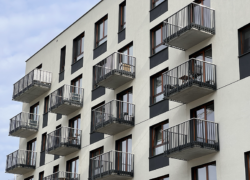
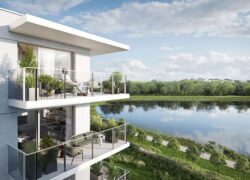
The estate includes outdoor parking spaces, underground garages, storerooms, and bicycle storage rooms. The development’s design harmonizes with its natural surroundings, featuring light-colored façades accented with mineral clinker tiles and large glazed balconies. Several buildings will overlook a water reservoir, providing residents with scenic views from their windows, balconies, and terraces.

Osiedle Przyjemne emphasizes sustainable living with rain gardens for water retention, intelligently designed green spaces, and smart lighting for safety. The estate is adjacent to the planned South Park, a 77-hectare ecological hub that will further enhance the area’s appeal. The proximity to walking and cycling paths, educational facilities, and a variety of shops, including a large shopping center and a DIY store, makes it an ideal location for residents.

The development is well-connected to Gdańsk’s city center and other districts. A nearby bus stop provides convenient public transport options, with the city center accessible in about 20 minutes. The estate is also close to major exit roads and the S6 expressway, ensuring smooth travel to other parts of the region.

With its thoughtful design, eco-friendly features, and strategic location, Osiedle Przyjemne continues to attract buyers looking for modern and comfortable living in Gdańsk.


Revitalizing History: Warsaw’s modernist heritage finds new life

Warsaw’s city center continues to evolve, blending the futuristic appeal of cutting-edge office buildings with the charm of revitalized architectural landmarks rich in historical significance. Among these, Polish Modernist gems like the Telecommunications Office at 45 Nowogrodzka Street stand out, captivating Varsovians with their simplicity, functionality, and subtle art déco details.

The Telecommunications Office, a hallmark of interwar Polish architecture, exemplifies the modernist maxim “less is more.” Designed between 1928 and 1933, the building served as a cornerstone of Poland’s communications infrastructure during the Second Republic. Its façade, adorned with a striking art déco eagle and a decorative inscription reading “INTERNATIONAL TELEPHONE – RADIOTELEGRAPH,” reflects the ambitions of a young, modern state striving for efficiency and progress.

The eagle, designed by architect and sculptor Jan Goliński, is a prime example of modernist detail. With geometric lines and minimalist elegance, it perfectly complements the building’s constructivist design. This subtle integration of art déco aesthetics into modernism highlights the era’s innovative approach to architectural detail.

The use of premium materials further enhanced the building’s aesthetic appeal. Red sandstone and noble terrazite plaster gave the façade a dynamic texture, while durable terrazzo floors in various colors added elegance to the interiors. These materials, prized for their durability and visual impact, underscored the building’s importance as a state institution.

As historian Adrian Sobieszczański notes, the Telecommunications Office was not only an architectural achievement but also a symbol of Poland’s regained independence and technological aspirations. Its revitalization today echoes the spirit of innovation and functionality that defined interwar Warsaw.

Modern Warsaw continues to embrace its historical roots while looking toward the future. The restoration of architectural icons like the “telegraph building” preserves the artistry of the past and offers a blueprint for sustainable urban development. By harmonizing modernist ideals with contemporary needs, the city is celebrating its legacy while creating a vibrant, forward-looking urban environment.

VIA Outlets retains BBB+ rating with stable outlook from Fitch Ratings

VIA Outlets, the fastest-growing owner-operator of premium fashion outlets in Continental Europe by gross lettable area (GLA) over the past decade, has had its Long-Term Issuer Default Rating (IDR) and senior unsecured rating of BBB+ reaffirmed by Fitch Ratings, with a stable outlook.

The affirmation underscores the robust performance of VIA Outlets’ portfolio of pan-European premium outlets, which have demonstrated resilience in a growing market. The ratings reflect the company’s strong fundamentals, including active management, strategic locations in dominant catchment areas, strong brand partnerships, and excellent transport accessibility.

Fitch forecasts rental growth for VIA Outlets in 2025, fueled by the recently expanded Sevilla Fashion Outlet in Spain, which recorded a 21% increase in footfall and an 18% rise in brand sales in the first half of 2024. Additional drivers include new brand partnerships, increasing visitor numbers, and built-in rent indexation and ratchet mechanisms.

The company is advancing major projects, including:
• Vila do Conde Porto Fashion Outlet in Portugal: A 4,977 sqm expansion (18% of GLA) scheduled for late 2025.
• Landquart Fashion Outlet in Switzerland: A 4,862 sqm expansion (22% of GLA) expected to complete in Q1 2026.
• Freeport Lisboa Fashion Outlet in Portugal: A major remodelling of Canal Street to enhance its appeal.

Fitch highlighted VIA Outlets’ actively managed portfolio, where turnover-based rent accounts for 20%-25% of gross rental income. This approach fosters strong tenant-landlord relationships and accelerates property valuation gains compared to traditional retail assets reliant on long-term leases.

The company’s financial stability is bolstered by fixed-rate debt at low average rates, with no refinancing requirements until 2028. VIA Outlets also maintains a low loan-to-value (LTV) ratio, providing financial flexibility for targeted acquisitions of underperforming but strategically located assets.

Peter Stals, CFO of VIA Outlets, expressed satisfaction with the ratings affirmation: “Fitch’s recognition underscores the resilience of the outlet channel and the exceptional quality of VIA Outlets’ portfolio. Consistent year-on-year operational and financial growth is a testament to our organic growth strategy, which focuses on remarketing, remerchandising, and remodelling.”

Makalu Media expands into larger office at Zabłocie Business Park in Cracow

Makalu Media, a leading e-learning company in Poland, has relocated to a new headquarters in the Zabłocie Business Park in Cracow, leasing over 1,700 square meters of office space. The move represents a significant expansion for the company, doubling the size of its previous location.

Walter Herz, a real estate consulting firm, guided Makalu Media through the relocation process, including lease negotiations, office design, and arrangement. The transition marks a key milestone for Makalu Media, known for its innovative educational solutions, including the popular platform Odrabiamy.pl.

“The decision to relocate was driven by our rapid growth and the need to adapt to evolving workplace models, especially hybrid work. The new space allows us to establish dedicated recording studios and versatile social areas, fostering greater collaboration and connection within our teams,” said Paweł Kruszelnicki, CEO of Makalu Media.

The Zabłocie Business Park complex, managed by GD&K Consulting, provided a seamless transition for the company. “The new office was tailored to meet Makalu Media’s specific needs, ensuring both functionality and quality. The handover process went smoothly, with the landlord overseeing all design and finishing work to a high standard,” added Kamil Kowalewski, Associate Director at Walter Herz.

Located in Cracow’s Podgórze district, Zabłocie has emerged as a sought-after business destination, attracting both domestic and international organizations. “Zabłocie offers extensive infrastructure and amenities, making it an attractive choice for leading companies,” said Włodzimierz Jędruszak, Leasing and Marketing Director at GD&K Consulting.

Zabłocie Business Park comprises two architecturally cohesive buildings—Building A, with 11,300 square meters of space, and Building B, offering 14,500 square meters. The modern complex features energy-efficient solutions, flexible office layouts, and high-quality finishes, along with a two-level underground parking garage.

Its central location near Cracow’s Old Town and Kazimierz district provides easy access to cultural landmarks such as the MOCAK Museum of Contemporary Art and Schindler’s Factory Museum. The area is well-connected by public transport, including bus and tram stops and the Kraków Zabłocie railway station, making it an ideal choice for businesses seeking a vibrant and accessible setting.

With this move, Makalu Media positions itself for continued growth in the education technology sector while contributing to the dynamic development of Cracow’s Zabłocie district.

Trei Real Estate invests €44.2 million in Polish retail parks in 2024

Trei Real Estate GmbH, a global developer and asset manager specializing in residential and retail properties, has completed a significant year of expansion in Poland, investing approximately €44.2 million in the development of three new Vendo Parks. The latest addition, located in Kostrzyn nad Odrą, marks the 41st retail park in Trei’s growing portfolio in the country.

The newly opened Vendo Park in Kostrzyn nad Odrą, a town near the German-Polish border in Lubusz Voivodeship, spans 6,400 square meters of lettable area. The facility is home to popular retail chains such as Aldi, dm, KIK, Action, Martes Sport, and Sinsay. Trei invested €8.8 million in this project, enhancing the retail options for the town’s population of approximately 17,600.

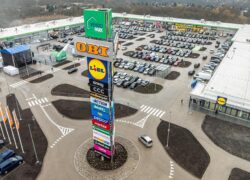
In addition to Kostrzyn nad Odrą, Trei launched two other Vendo Parks in 2024, located in Wrocław and Szczecin, bringing the combined lettable area of the three new parks to approximately 35,000 square meters. Szczecin’s site, boasting 24,000 square meters, is the largest Vendo Park in Trei’s portfolio and includes tenants like Rossmann, Media Expert, TEDi, and Jysk, alongside a Lidl supermarket and OBI home improvement store.

“Demand for retail parks continues to rise in Poland,” said Pepijn Morshuis, CEO of Trei. “Customers appreciate the diverse range of tenants, from food markets to clothing stores, which are increasingly choosing retail parks over traditional shopping centers. The strong tenant demand during the planning stages of our new Vendo Parks underscores their appeal.”

The Vendo Park in Szczecin features extensive green spaces, electric vehicle charging points, and bicycle infrastructure, reflecting Trei’s commitment to sustainability. Similarly, the Wrocław site, with 5,000 square meters of lettable area, houses retailers like KiK, MaxiZOO, Pepco, and Rossmann, supplemented by an adjacent Aldi supermarket.

Since opening its first Vendo Park in Nysa in 2013, Trei’s portfolio has grown to 41 retail parks across Poland. Looking ahead to 2025, the company plans to accelerate its investment in the Polish market, targeting the development of six additional Vendo Parks.

Trei’s continued expansion reinforces its position as a key player in Poland’s thriving retail sector, meeting both tenant and consumer demand while contributing to the country’s economic growth.

Photo: Vendo Park, Szczecin

International Campus divests major residential development in The Hague to Sustay

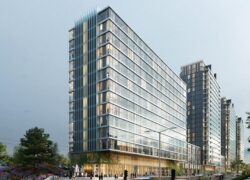
International Campus (IC) has sold the land and development rights for the Waldorp Four project, a significant residential initiative in The Hague’s Central Innovation District. Initially envisioned as 808 units, the project has been expanded to include 1,175 apartments, reflecting the evolving needs of the area.

The decision to sell follows IC’s strategic shift, with the company focusing on other priorities. “We’re proud of the progress made and the contribution this project will make to the area’s growth, but it no longer aligns with our strategy,” explained Jasper Boot, IC’s head of Acquisitions and Development for the Netherlands.

Sustay, a long-standing partner in the project, acquired the rights and land and has subsequently sold the development to end-investors DUWO, Arcade, and Greystar. The transaction was finalized on December 18, 2024.

The completed development will deliver sustainable and affordable housing, incorporating modern residential units, community spaces, and amenities designed to enrich the urban fabric of The Hague.

IC was supported during the transaction by Greenberg Traurig for legal matters and CBRE for commercial advisement.

This deal marks a critical step in the realization of Waldorp Four, ensuring its continued progress under Sustay’s leadership while reinforcing IC’s commitment to aligning projects with its evolving goals.

Photo: Paul de Ruiter Architects

Czech government approves national climate and energy plan

The Czech Government has approved the National Climate and Energy Plan, outlining key strategies for the country’s green policy and emissions reduction. Minister of Industry and Trade Lukáš Vlček (STAN) announced the decision following a cabinet meeting, emphasizing the plan’s focus on increasing renewable energy and phasing out coal.

The plan sets ambitious goals, including raising the share of renewable energy in consumption from the current 18% to 30% by 2030 and ensuring a complete transition away from coal by 2033 at the latest. The document excludes the contentious expansion of the EU’s emissions trading system (ETS 2) to households and transport, which could have led to higher fuel and heating costs. Instead, the government aims to delay and amend these measures at the European level.

The plan will require an estimated CZK 2.8 trillion in investments by 2030.

The approval follows months of delay, which prompted the European Commission to launch infringement proceedings against the Czech Republic in November. Along with 12 other EU nations, the country had missed the deadline for submitting the plan.

Originally shelved in July due to concerns over economic impacts, the plan has been revised to a more general framework. Specific targets for reducing greenhouse gases have been simplified, aligning with the EU’s Fit for 55 program. The previous version’s goal of a 59% reduction in emissions compared to 1990 levels has been replaced with broader commitments.

Key Highlights
• Renewable Energy Expansion: The government aims to increase renewables to more than 30% of final energy consumption by 2030, rejecting calls from industry groups and the EU for even higher targets.
• Coal Phase-Out: The plan confirms a coal phase-out by 2033, although energy companies predict coal usage could end by 2030 due to rising emissions allowance prices.
• Nuclear Energy: Nuclear power, alongside renewables, is positioned as a cornerstone of the Czech energy mix in the coming decades.

The revised plan has avoided measures that could impose additional financial burdens on households, such as the previously proposed ETS 2 extension. Critics had warned of potential spikes in energy costs, while the government has maintained that the plan introduces no new measures.

This updated version will inform the European Commission of the Czech Republic’s contributions to the EU’s renewable energy and greenhouse gas reduction targets, providing a framework for sustainable energy development while addressing domestic economic concerns.

With this approval, the government seeks to align with EU climate objectives while maintaining flexibility to adapt to economic and social considerations.

Source: CTK

Smaller apartments command higher prices per square meter across Czech Republic

Smaller apartments in the Czech Republic are significantly more expensive per square meter than their medium and large counterparts, according to a new analysis by Valuo.cz. Prices for apartments up to 41 square meters can exceed the average price per square meter by 10% to 70%, depending on the region. The trend is particularly pronounced outside Prague, where small apartments often reach the highest price levels.

In Prague, the average price per square meter for smaller apartments reached CZK 143,000 this year, while in Brno, it was CZK 115,000. In regional cities, the average stood at CZK 77,200, and in other areas, CZK 63,500. These figures contrast with Deloitte’s national average of CZK 101,700 per square meter in the second quarter of 2024.

“Smaller apartments in Prague are priced about 25% above the average, but in other regions, they can exceed the average by as much as 70%. This reflects a clear trend where small apartments are significantly more expensive than the average, while larger apartments are often more affordable,” said Radek Šitera, founder of Valuo.cz.

The analysis highlights that apartments over 90 square meters, particularly in Prague, are only slightly more expensive than the average price per square meter. Larger apartments, exceeding 140 square meters, often have significantly lower per-square-meter prices due to reduced demand for these types of properties.

Mid-sized apartments, measuring up to 75 square meters, are generally 10% to 15% cheaper than the national average. In contrast, smaller apartments up to 31 square meters have seen the fastest price increases. This category has attracted growing interest, especially among young investors purchasing their first rental properties.

A July survey by CEEC Research found that over two-thirds of real estate buyers in the Czech Republic view property as a long-term investment. Approximately 20% anticipate property price appreciation, 9% seek to diversify their savings, and 2% invest for regular rental income.

The popularity of smaller apartments is fueled by their appeal to first-time investors and renters, as well as their higher demand in urban areas. Knight Frank’s analysis indicates strong interest from young investors, particularly in Prague and Brno, where smaller properties are seen as ideal for rental investments.

Source: Valuo.cz and CTK

Czech living standards reach 91% of EU average, match Slovenia’s level

Living standards in the Czech Republic edged closer to the European Union average last year, with gross domestic product (GDP) per capita, expressed in purchasing power standards, increasing by one percentage point to 91% of the EU average. This places the Czech Republic on par with Slovenia and marks the highest living standard among the Visegrad Group (V4) countries, which include Poland, Hungary, and Slovakia, according to data released in the Czech Statistical Office’s (ČSÚ) Statistical Yearbook 2024.

Luxembourg retains the highest standard of living in the EU, with GDP per capita reaching 234% of the EU average, while Bulgaria continues to have the lowest at 64%. Among countries that joined the EU since 2004, the Czech Republic ranks third alongside Slovenia, behind Cyprus (95%) and Malta (105%), the only new member state exceeding the EU average.

In contrast, older EU member states Spain (88%), Portugal (83%), and Greece (67%) reported living standards below the Czech Republic’s level. Within the V4, Poland followed the Czech Republic with 80%, Hungary with 76%, and Slovakia with 73%.

Despite the rise in living standards, the Czech economy contracted by 0.3% last year, making it one of 11 EU countries to record a GDP decline. Ireland (-3.2%) and Estonia (-3%) faced the steepest declines, while Malta (+5.7%) and Croatia (+3.1%) led growth. The EU as a whole saw GDP growth of 0.5%.

The Czech Republic maintained its status as the country with the lowest unemployment rate in the EU, at 2.6% in 2023, despite a 0.4 percentage point increase. This remains significantly below the EU average of 6.7%. Poland had the second-lowest unemployment rate at 2.8%, while Spain recorded the highest at 12.2%.

The Czech Republic also performed well in long-term unemployment, which stood at 0.8% last year, trailing only Denmark, the Netherlands (0.5%), and Malta (0.7%). This rate contrasts sharply with Greece, where long-term unemployment reached 6.2%. The EU average was 2.1%.

The Statistical Yearbook 2024, the 32nd edition since the Czech Republic’s establishment in 1993, provides a comprehensive overview of economic, demographic, and social indicators, underlining the country’s resilience in key metrics despite broader economic challenges.

As the Czech Republic continues to improve its standing within the EU, the country’s performance underscores its steady progress and relative stability in an evolving European economic landscape.

Source: CTK

Poland boosts offshore wind energy sector with major factory construction in Szczecin

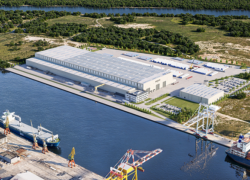
PORR has been commissioned by Windar Renovables S.A., a global leader in wind turbine tower production, to construct a cutting-edge factory in Ostrów Grabowski, Szczecin. The facility will manufacture towers, masts, and foundations for next-generation wind turbines, marking a significant step forward for Poland’s offshore wind energy industry. The project, spanning an 18-month timeline, is a testament to the growing focus on renewable energy infrastructure in Europe.

The new factory will be built on a 17-hectare site within the port of Szczecin. Central to the project is the main production building, which will span over 47,000 square meters and include four production lines dedicated to wind turbine towers. The complex will also house a warehouse for raw materials, a smaller annex for assembling interior components, and extensive outdoor storage areas. Supporting infrastructure includes access roads and parking facilities for 100 vehicles.

“The need for alternative energy sources in Europe is immense and continues to grow,” said PORR CEO Karl-Heinz Strauss. “The construction of this state-of-the-art facility reflects our commitment to supporting sustainable energy solutions.”

This construction aligns with Poland’s strategic push to expand its offshore wind energy capacity. The factory will play a crucial role in supplying components for offshore wind farms, a cornerstone of the country’s renewable energy agenda.

In addition to the Szczecin facility, PORR is constructing Poland’s first offshore wind installation terminal in Świnoujście. This pioneering hydro-technical facility will serve wind farms in the Baltic Sea and is slated to open in 2025, making it one of Europe’s most advanced terminals.

The development of these projects underscores Poland’s commitment to renewable energy and the EU’s broader sustainability goals. By investing in state-of-the-art infrastructure and tapping into offshore wind potential, Poland is positioning itself as a key player in Europe’s transition to cleaner energy.

LATEST NEWS