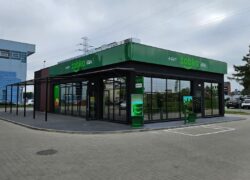
Żabka opens 11,000th store, plans to continue expanding with over 1,000 new locations annually

Żabka Polska has reached a new milestone by opening its 11,000th store in Poland, located at Moliera 8 in Warsaw, near the Grand Theatre. The company reaffirmed its commitment to maintaining an ambitious expansion rate of more than 1,000 new stores annually.

“The opening of our 11,000th store is a significant moment in Żabka’s history, marking over two decades of supporting entrepreneurship and creating opportunities for local businesses,” said Adam Manikowski, Vice-President and Managing Director of Żabka Polska. “Żabka is more than a retail chain—it’s a network that invests in people, communities, and the Polish economy. With over 9,000 entrepreneurs and 63,000 jobs created through partnerships with franchisees, our stores are a testament to combining business success with a positive environmental impact.”

Żabka’s scale of operations enables it to expand its product offerings and implement innovative solutions, boosting turnover for franchisees. Its business model, which combines low entry barriers with robust operational and technological support, has attracted over 9,000 entrepreneurs, including nearly 900 in Warsaw.

The Żabka Group also operates Żabka Nano, a chain of autonomous, cashierless stores, complementing its traditional franchise-based convenience store network. Additionally, the company offers a growing portfolio of digital services, further enhancing its ecosystem.

Żabka debuted on the Warsaw Stock Exchange in October 2024 and is part of the mWIG40 index. As Poland’s leading convenience store chain, Żabka continues to strengthen its position in the market while driving local economic growth and innovation.

Source: Żabka Polska and ISBnews
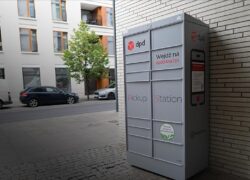
DPD Polska closes 2024 with 9,000 parcel machines, plans 3,000 more in 2025

DPD Polska has expanded its DPD Pickup network to include 9,000 parcel machines, with plans to add another 3,000 machines in 2025, the company announced.

“Reaching the milestone of 9,000 parcel machines marks a significant achievement in developing modern logistics infrastructure. This expansion allows us to meet the evolving demands of e-commerce customers and manage growing parcel volumes, particularly during peak periods,” said Łukasz Zembowicz, Sales and Marketing Director at DPD Polska. “Parcel machines are a solution aligned with modern consumer trends, offering convenience, flexibility, and personalized options. The increasing popularity of our DPD Pickup network reinforces our commitment to its consistent development. Adding 3,000 more machines next year will further enhance our ability to serve our customers effectively.”

The DPD Pickup network now spans over 1,000 towns and cities across Poland, with the highest concentrations in Warsaw and Kraków. Warsaw leads the list with over 640 parcel machines, followed by Łódź with nearly 320, Kraków with over 310, Wrocław with close to 270, and Bydgoszcz with over 190.

DPD Polska is part of DPDgroup, one of Europe’s largest international courier networks. The company’s continued investment in parcel infrastructure reflects its dedication to staying ahead in the dynamic e-commerce landscape and catering to the rising demand for efficient, customer-friendly delivery solutions.

Source: DPD Polska and ISBnews

Penta Hospitals acquires SeneCura

Penta Hospitals has signed an agreement to acquire SeneCura, a network of elderly care homes. The acquisition includes both the real estate and operational assets of SeneCura, which currently manages 17 facilities offering residential and special care services with a combined capacity of 2,250 beds. The deal, announced in a press release today, is pending approval from the Czech Office for the Protection of Competition (ÚOHS), with the transaction expected to close in the coming months.

“This agreement marks a significant milestone in our long-term effort to establish a leading provider of residential social services in the Czech Republic,” said Jan Kocián, Investment Director at Penta Investments. “Our group has seen exceptional growth in recent years, differentiating itself by integrating social services with healthcare from the outset.”

SeneCura operates facilities across most regions of the Czech Republic, including locations in Prague (Klamovka, Štěrboholy, and Slivenec), as well as regional cities in Hradec Králové, Olomouc, Pilsen, and Liberec. Additional facilities are located in Kolín, Chrudim, Humpolec, Telč, Chotěboř, Havířov, and the South Bohemian Region.

Anton Kellner, CEO of SeneCura, remarked on the transition: “After building an extensive network of elderly care homes and setting new standards of care in the Czech Republic, we are passing our business to Penta Hospitals.”

SeneCura began its operations under the Senior Holding brand in 2008 before being owned by Emeis. The company emphasized that the approval process will not affect clients or operations at its facilities.

Penta Hospitals CZ is part of Penta Hospitals International, the largest healthcare holding in Central Europe. In the Czech Republic, the group operates 10 hospitals (including facilities in Sokolov, Vrchlabí, and Roudnice nad Labem), 36 Alzheimer Home facilities, three elderly care homes, numerous outpatient services, and home care providers. Employing nearly 5,000 people, the group reported a turnover of nearly CZK 6 billion in 2023.

In addition to its healthcare portfolio, Penta Investments also manages Dr.Max pharmacies, banks, and development projects. The group’s net profit grew by CZK 500 million year-on-year to CZK 12.1 billion in 2023. The primary shareholders are entrepreneur Marek Dospiva and the family of Jaroslav Haščák.

The Czech Republic faces a rapidly aging population. By 2050, the number of people over 65 is projected to increase from 2.2 million to 3.1 million, with those over 85 doubling to 400,000. In 2023, there were 522 elderly care homes and 404 special-regime facilities catering to dementia patients, providing a total of 61,106 beds for approximately 57,800 seniors—only 3% of the population over 66.

Despite growing capacity in recent years, demand continues to outpace supply. A 2035 projection highlights a potential shortfall of 15,000 beds and 16,000 care workers, underscoring the need for continued investment. In response, the Czech government recently announced plans for 20 new elderly care homes with 2,500 beds, to be funded by the Czech Insurance Association.

Penta Hospitals’ acquisition of SeneCura positions the group as a key player in addressing this pressing social need while continuing to integrate healthcare and social services.

Source: CTK

The Grounds completes successful capital increase, secures major investment from H.I.G. Capital

The Grounds Real Estate Development AG (ISIN: DE000A2GSVV5) has successfully concluded a capital increase against cash contributions, issuing 40,551,982 new shares at a subscription price of €1.00 per share. A majority of the shares—40,000,000—were subscribed by a fund managed by H.I.G. Capital, marking a significant partnership between the two entities.

The proceeds from the capital increase will be allocated to strengthen The Grounds’ financial structure, advance ongoing real estate projects, and acquire new development opportunities. The entry of the cash capital increase into the Commercial Register and the delivery of the new shares are expected by the end of January 2025.

Jacopo Mingazzini, a member of The Grounds’ Management Board, expressed optimism about the development:
“We are pleased to have secured H.I.G. Capital as a strong and reliable partner during challenging market conditions. This capital increase positions us to capitalize on opportunities in the current market landscape and sets a solid foundation for growth after two difficult years.”

The new partnership is expected to boost The Grounds’ strategic goals, providing financial stability and resources to expand its real estate portfolio.

Ahead of the capital increase, a 2:1 capital reduction was recorded in the Commercial Register on December 10, 2024. This reduced the company’s share capital to €8,902,758, divided into an equivalent number of registered ordinary shares. The share capital will now increase to €49,454,740, divided into 49,454,740 shares following the capital increase.

The adjusted shares (ISIN: DE000A40KXL9) will commence trading on December 31, 2024, following stock market holiday adjustments. Any fractional shares arising from the reduction will be credited to shareholders as partial rights under ISIN DE000A40KXM7.

H.I.G. Capital’s significant subscription in the capital increase positions it as a majority shareholder, with a stake of approximately 81.3% in The Grounds through its managed fund. This substantial change in shareholder structure highlights the importance of this transaction for the future of The Grounds.

With a revamped financial base and new strategic partnerships, The Grounds is set to drive forward its real estate initiatives. The successful capital increase also underscores the company’s resilience and ability to attract high-caliber investors in a challenging market environment.

Deka Immobilien sells prime Paris office property to CDC Investissement Immobilier

Deka Immobilien has finalized the sale of a prominent office building in Paris’s prestigious eighth arrondissement to CDC Investissement Immobilier, the property asset management arm of Caisse des Dépôts. This transaction aligns with CDC Investissement Immobilier’s core asset strategy, which emphasizes prime properties with strong environmental credentials and exceptional locations. The sale price remains undisclosed.

The Ville l’Évêque office building, spanning 4,900 square meters of leasable space, features a spacious rooftop terrace and 75 parking spaces in an underground garage. Situated in the heart of Paris’s Central Business District, the property benefits from outstanding infrastructure and accessibility. Originally built in 1977 and refurbished in 1996, Deka Immobilien acquired the building in 2000.

From 2021 to 2023, the property underwent a comprehensive core renovation following the departure of former tenant Willkie Farr & Gallagher. The building was subsequently repositioned in the market and leased to Simmons & Simmons LLP on a long-term basis at significantly higher rents. The property has earned a “Very Good” rating from BREEAM, the British certification for sustainable construction, as well as high-performance certification under HQE Sustainable Building standards.

Deka-ImmobilienEuropa, the open-ended real estate fund managing the property, achieved a notable profit through this transaction. The sale will not only contribute additional cash inflows to the fund but also enhance its capacity to seize new investment opportunities in an evolving market landscape.

This latest sale underscores Deka Immobilien’s strategic approach to optimizing portfolio value while meeting investor expectations in a competitive and dynamic real estate market.

Accolade secures largest warehouse refinancing deal in Poland for 2024

Accolade has completed a landmark refinancing deal worth €180 million for the development of six cutting-edge industrial parks across Poland. This marks the largest financial transaction in Poland’s warehouse real estate sector in 2024 and stands as one of the most significant deals in the country’s commercial property market.

The refinancing was facilitated by a consortium of Santander Bank Polska and Germany’s Aareal Bank, each contributing €90 million. This transaction is notable not only for its scale but also for Santander Bank Polska’s dual role as both a refinancing partner and the agent for loans and collateral. The funds will support the development of six Accolade Industrial Fund properties: Białystok II Park, Bydgoszcz IV Park, Goleniów Park, Koszalin Park, Zielona Góra Park, and Bydgoszcz III Park, collectively covering more than 370,000 sqm of leased space.

“This refinancing underscores the value of our portfolio, which meets tenant demand for modern and sustainable solutions. These funds provide opportunities for further growth. In 2025, we plan to invest €53 million to align Accolade parks with EU Taxonomy standards, reinforcing our commitment to long-term sustainability goals,” said Joanna Sinkiewicz, Group Commercial Director and Managing Director of Accolade Polska.

This is Accolade’s third industrial property refinancing deal in Poland and the first executed in a consortium structure.

“The participation of trusted financial partners like Santander Bank Polska and Aareal Bank in this transaction demonstrates market confidence in our ability to meet ambitious investment targets, supported by the strength of our tenants and financial institutions,” added Jakub Leszczyński, Transaction Director at Accolade.

Santander Bank Polska emphasized its focus on sustainable investments: “Supporting key clients in achieving compliance with EU Taxonomy and sustainable investment goals is a priority for us. Acting as an agent in this transaction reflects the trust and strong relationship we’ve built with Accolade since its inception in Poland,” said Bartek Barej, Director of Corporate Finance at Santander Bank Polska.

Hubert Manturzyk, General Manager of Aareal Bank for CEE, echoed this sentiment: “We are proud to increase our loan portfolio in Poland, a country with economic growth three times higher than the EU average this year. Demand for modern warehouse spaces remains robust, and we are pleased to support Accolade’s transformation of real estate into sustainable assets.”

Accolade’s Polish portfolio now includes 29 state-of-the-art industrial parks, home to over 100 tenants. The total value of the portfolio exceeds €1.2 billion, spanning more than 1.6 million sqm of space. All properties meet BREEAM certification standards, addressing growing demand for sustainable logistics, e-commerce, and manufacturing spaces. This refinancing marks another step in Accolade’s efforts to support Poland’s industrial and environmental transformation.

Panattoni secures major fashion industry tenant at Głogów Logistics Park

Panattoni has signed a lease agreement with a prominent fashion industry player for 40,000 sqm at its Panattoni Park Głogów in Lower Silesia. This marks another milestone in the developer’s extensive presence in the region, where it has delivered 2.3 million sqm of modern industrial space.

“Lower Silesia is pivotal for logistics in Poland and across Central and Eastern Europe. The growing infrastructure around Wrocław, combined with Głogów’s strategic location and investment-friendly environment, makes it a hub for international business,” said Damian Kowalczyk, Development Director at Panattoni. “This new facility will cater perfectly to the needs of our tenant, a global leader in fashion.”

Panattoni Park Głogów, which will encompass 111,000 sqm upon completion, has already developed and leased 78,000 sqm. The park’s first facility is fully occupied, including by a logistics operator servicing a leading pet store chain. Plans are underway for a second building spanning 32,000 sqm to meet growing demand.

The park’s strategic location is a key attraction. Situated just 10 km from the S3 expressway and near the proposed S12 bypass, the facility offers seamless logistics solutions for deliveries across Poland and Central and Eastern Europe. Additionally, its proximity to Poland’s southern and western borders—approximately 110 km away—enhances its appeal for cross-border operations.

Panattoni Park Głogów exemplifies sustainable industrial development. The facility is BREEAM-certified at the Excellent level, emphasizing reduced carbon emissions, lower energy and water consumption, and cost savings for tenants. Employee wellbeing has also been prioritized, with office spaces designed to optimize acoustic conditions, thermal comfort, and natural light access.

“This investment is not only about expanding logistics capabilities but also about creating a sustainable, tenant-friendly environment,” added Kowalczyk.

As Głogów cements its position as a logistics hub, Panattoni’s commitment to sustainable and strategic development continues to drive the region’s appeal to global businesses.

MOL expands renewable portfolio with 66 MWp solar farm acquisition in Ballószög, Hungary

MOL has acquired a 100% stake in the 66 MWp solar farm project in Ballószög, Hungary, through an agreement with Optimum Vogt, a subsidiary of Ib vogt, the company announced. Construction of the photovoltaic farm is complete, with test operations scheduled to commence in January 2025.

“This acquisition is a key step in MOL’s strategy to expand renewable energy sources, meeting an increasing share of our energy demand while reducing our carbon footprint,” said MOL Senior Vice President for Industrial and Corporate Services, Peter Labancz. “With this project and ongoing organic developments, MOL’s renewable capacity will approach 200 MWp, supported by Alteo’s renewable energy assets and expertise.”

The deal aligns with MOL’s commitment to diversifying its energy mix and supporting its broader energy transition goals. The company aims to further integrate renewable assets into its portfolio, leveraging its partnership with Alteo, a company in which MOL holds a majority stake.

Source: MOL and ISBNews
Photo: Peter Labancz, MOL Senior Vice President for Industrial and Corporate Services

Poland’s economic growth: Progress, challenges, and the path ahead

Since 1989, Poland has made significant strides on its economic development journey, consistently growing except for the pandemic-affected year of 2020. While the nation has closed many gaps with Western Europe, Germany—Poland’s wealthiest neighbor and largest trade and investment partner—remains a key benchmark for comparison.

The Warsaw Enterprise Institute’s annual “Opening Balance” report sheds light on Poland’s progress and challenges in its quest for economic convergence. This year’s report introduces the Catching Up Index, a multidimensional measure of development created by Professor Krzysztof Piech of Lazarski University. The index evaluates Poland’s development dynamics across 13 components divided into four subcategories, offering a comprehensive view of the country’s progress.

Key Findings
• Economic Convergence: Poland is projected to match Germany’s GDP per capita (PPP) by 2036 and the EU average by 2034. Poland is expected to surpass Japan as early as 2027, five years earlier than previous forecasts.
• Catching Up, But Behind Peers: While Poland’s pace of catching up is commendable, it remains slower than neighboring countries like Lithuania (50.5 points) and the Czech Republic (51.7 points). Poland’s Catch-Up Index score of 45.1 places it above many transitioning nations but below the EU average.
• Room for Acceleration: Implementing the report’s recommendations could see Poland matching Germany’s GDP per capita by 2034, two years earlier than currently predicted.
• Economic Growth Perception: The notion of an “economic miracle in Poland” is overstated. In 2023, 166 countries outpaced Poland in GDP growth, compared to 63 countries the previous year.
• Life Satisfaction Leadership: Poland has surpassed Germany in life satisfaction and healthy life expectancy, with Poles enjoying 62.4 years of healthy life on average compared to Germany’s 61.1 years.

Challenges Highlighted
1. Lagging Investment: Poland ranks second to last in Europe for its investment rate, at 17.7% of GDP compared to the EU average of 22.1%.
2. Low Savings Rates: With a savings rate of just 3.3% in 2023, Poland is ahead only of Greece.
3. Innovation Deficit: Poland’s innovation index rose from 0.30 in 2016 to 0.36 in 2023, but it still lags the EU average of 0.55. Spending on R&D (BERD) increased to 0.96% of GDP in 2022 but remains well below the EU average of 1.52%.
4. Underinvested Labor: Technical armament per worker, reflecting investment in fixed assets, was 11,486 PPS in 2023, placing Poland among the EU’s bottom three.
5. Labor Costs: Polish labor remains comparatively cheap at €10.5 per hour, well below the Czech Republic (€17.0) and Slovakia (€16.0).

Despite challenges, the report underscores Poland’s potential to accelerate its economic growth with strategic investments and policy adjustments. Strengthening innovation, boosting savings, and increasing investment are pivotal for closing the gap with Western Europe and achieving greater economic and social prosperity.

Source: Warsaw Enterprise Institute (WEI)

Mixed results for Romania in 2024 with standout performances in retail, tourism, and infrastructure

Romania’s economic performance in 2024 presented a complex picture, with robust activity in infrastructure, a surge in retail sector growth, and significant strides in tourism, contrasted against underwhelming GDP growth. Colliers consultants detailed the year’s developments in a new analysis, highlighting notable trends across key sectors of the Romanian economy.

Despite optimistic forecasts earlier in the year, Romania’s GDP growth for 2024 is expected to barely exceed 1%, far below the 3% projection made at the start of the year. Challenges included slowed capital expenditures and weak external demand, offset only partially by resilient consumption. Colliers consultants warned that fiscal corrections needed to address excessive budget and external deficits could introduce tax increases and public spending adjustments, creating uncertainties heading into 2025.

Infrastructure development emerged as a significant bright spot, with over 100 kilometers of high-speed roads completed in 2024 and nearly 1,500 kilometers of motorways and expressways in various stages of preparation. Romania’s accession to the Schengen air travel area and anticipated inclusion of land borders in 2025 also boosted optimism for long-term economic growth.

Real Estate Highlights
• Retail Boom: Romania’s retail market saw record growth, driven by a 14% inflation-adjusted increase in non-food sales and high profit margins for local retailers. Several new international players entered the market, and retail developments exceeded average annual trends since 2010.
• Office Market Challenges: Bucharest’s office market experienced minimal new deliveries, with leasing activity dominated by renewals and relocations. Demand for green office spaces in prime locations remained robust, further widening the gap between top-tier and underperforming properties.
• Residential Market Resilience: While high-interest rates and reduced supply impacted affordability, transaction activity remained steady. However, a sharp decline in building permits in Bucharest signaled potential supply shortages and upward pressure on prices.
• Industrial and Logistics: Leasing activity remained strong, with the industrial sector stabilizing after record-breaking years. Rental growth eased, and rents stabilized at €4.5-€5 per square meter for prime built-to-suit projects.

Romania’s tourism sector achieved its highest levels in three decades, with approximately 25 million overnight stays recorded. Domestic leisure travel fueled this growth, while foreign visitor numbers, primarily business travelers pre-pandemic, have yet to recover fully. Investments in leisure-oriented accommodations increased to meet rising demand.

Real estate investment transactions surpassed expectations, with volumes exceeding €700 million by year-end, nearly doubling 2023’s results. The industrial and retail sectors dominated, while interest in office properties showed signs of recovery. NEPI Rockcastle, the largest retail property owner in Romania, raised over €600 million for refinancing and new projects, signaling strong financing activity.

While Romania faced economic hurdles in 2024, sectors like retail, tourism, and infrastructure showed remarkable resilience. Colliers consultants emphasized that strategic fiscal measures, coupled with sustained infrastructure development, could pave the way for stronger economic performance in 2025.

Source: Colliers Romania

LATEST NEWS