Czech gas imports shift eastward amid rising dependence on Russian supplies

The vast majority of gas imported into the Czech Republic at the end of this year originated from the East, primarily from Russia. While most of 2024 saw the majority of supplies arriving from Western sources, gas deliveries from Slovakia surged significantly in November, accounting for approximately 95% of total imports in the last two months. Experts suggest that the majority of this gas is of Russian origin. These insights are based on transport data from Net4Gas, analyzed by the Czech Press Agency. Meanwhile, domestic gas storage levels have declined to 65% capacity, compared to 88% at this time last year.

The trend of increasing reliance on eastern gas supplies, which began in November, persisted into December. Trinity Bank economist Lukáš Kovanda noted a dramatic 530% year-on-year increase in Russian gas imports to the Czech Republic. Analysts attribute this shift to a combination of economic factors, particularly the lower market price of Russian gas compared to alternatives.

Imports through Germany, historically a significant source, have become less competitive due to transit fees, which currently stand at €2.5 per megawatt-hour. However, a recent decision by the German Bundestag to abolish these fees from January 2025 is expected to reverse this trend.

Minister of Industry and Trade Lukáš Vlček (STAN) has indicated that the elimination of the German gas transit fee could encourage Czech traders to pivot back to Western sources. Vlček has repeatedly emphasized that the Czech Republic is no longer dependent on Russian gas, citing diversified supply agreements, including imports from Norway and liquefied natural gas (LNG) terminals in the Netherlands. This diversification, he argues, ensures that gas supplies remain secure even in the event of disruptions in Russian transit via Ukraine.

Experts, including Michal Kocůrek of the consultancy EGÚ Brno, predict that lower transit costs will make Norwegian and LNG gas more appealing to Czech traders. “The cost of importing gas via Germany will decrease by about 7%, making these alternatives more attractive compared to Russian gas,” Kocůrek explained. However, analysts caution that this shift is unlikely to cause significant changes in gas prices for Czech consumers.
Throughout 2024, the share of gas sourced from Germany and Slovakia fluctuated. Until November, German imports constituted 55% of the supply, with Slovakia contributing 45%. Over the past two months, this balance shifted dramatically, with 95% of gas now coming from the East. XTB analyst Jiří Tyleček noted, “Although the exact origin of the gas cannot be confirmed, there is a high probability that it is Russian.”

Meanwhile, domestic gas storage facilities are currently 65% full, housing over 2.27 billion cubic meters of gas. This represents a decline from the same period last year, when reservoirs held over 3 billion cubic meters and were 88% full. The Ministry of Industry and Trade released these figures on Friday, highlighting the reduced storage levels as the country navigates evolving supply dynamics.

As 2025 approaches, the anticipated abolition of German transit fees and continued diversification efforts could reshape the Czech Republic’s gas supply landscape. While current conditions favor eastern imports, the government’s focus on alternative sources suggests a broader strategy to stabilize the energy market and ensure long-term security.

Source: CTK

PKP Cargo signs letter of intent with Mostostal for real estate development in Warsaw and Wrocław

PKP Cargo, currently undergoing restructuring, has entered into a letter of intent with Mostostal, a Warsaw-based construction company, to explore potential real estate development projects. The agreement grants Mostostal permission to conduct due diligence on PKP Cargo properties located in Warsaw and Wrocław, aimed at assessing their legal and technical status.

This evaluation process is a critical first step, enabling Mostostal to make informed decisions regarding the acquisition of the perpetual usufruct rights to these properties. Should the findings support feasibility, Mostostal intends to use the sites for implementing construction projects, further strengthening its footprint in two of Poland’s most prominent urban markets.

The collaboration with Mostostal marks a strategic initiative for PKP Cargo as it seeks to optimize its real estate assets during its restructuring phase. By exploring the development potential of these properties, PKP Cargo can unlock value that aligns with its broader organizational goals. The potential sale of usufruct rights could provide the company with significant financial inflows, aiding its operational recalibration.

For Mostostal, this opportunity underscores its commitment to expanding its portfolio of real estate projects. Known for its expertise in large-scale construction and infrastructure development, Mostostal’s involvement in these high-profile urban locations highlights its strategic focus on contributing to the dynamic growth of Poland’s real estate market. The company’s due diligence will examine key aspects such as zoning regulations, structural conditions, and development potential, ensuring that any subsequent investments align with its long-term objectives.

PKP Cargo, a leader in freight transport and logistics, has played a pivotal role in Poland’s transport infrastructure since its inception. Debuting on the Warsaw Stock Exchange in 2013, the company operates across multiple segments, including freight transport, intermodal solutions, forwarding, and rolling stock repairs. PKP Cargo also boasts modernization facilities and transshipment terminals, securing its position as Poland’s No. 1 freight carrier and the second-largest in the European Union.

The company’s decision to explore real estate development partnerships reflects its broader strategy to diversify revenue streams and maximize the potential of its assets. Such moves are particularly critical as the company undergoes restructuring to adapt to evolving market demands and competitive pressures.

The collaboration between PKP Cargo and Mostostal is poised to have a significant impact on the urban landscapes of Warsaw and Wrocław. Both cities are key hubs in Poland’s economic and cultural fabric, offering immense potential for real estate development. Warsaw, as the nation’s capital, continues to experience robust demand for mixed-use developments, while Wrocław, a growing center for technology and business, presents opportunities for residential and commercial projects.

By enabling Mostostal to conduct due diligence, PKP Cargo is laying the groundwork for potential developments that could cater to these growing urban needs. The success of such projects could enhance property values in the surrounding areas and contribute to the broader economic growth of these cities.

Upon completion of the due diligence process, Mostostal will evaluate the findings to determine the feasibility of acquiring the perpetual usufruct rights to the properties. If successful, this partnership could set a precedent for future collaborations between logistics and real estate sectors, showcasing the value of cross-industry partnerships in driving economic and infrastructural development.

This initiative aligns with PKP Cargo’s ongoing efforts to restructure and optimize its portfolio, while offering Mostostal a pathway to expand its development pipeline. As both companies move forward, their collaboration has the potential to redefine the strategic utilization of real estate assets in Poland’s urban centers.

Source: PKP Cargo and ISBnews

Enterprise Investors seeks approval to acquire Expobud Domy

Polish Enterprise Funds SCA, part of Enterprise Investors, has submitted an application to the Office of Competition and Consumer Protection (UOKiK) to obtain approval for taking over Expobud Domy, a Toruń-based company specializing in prefabricated housing solutions. The application, received on December 20, 2024, is currently under review, as announced by UOKiK.

The potential acquisition aligns with Enterprise Investors’ broader strategy to strengthen its foothold in high-growth sectors. On December 23, Enterprise Investors confirmed its intention to invest in Expobud Domy, recognizing the company’s prominence in the prefabricated housing market in Poland.

Founded in 2011, Expobud Domy has established itself as a leading provider of prefabricated single-family homes, utilizing an innovative technology of warm ceramic walls made from keramsite. This technology is noted for its energy efficiency and sustainability, appealing to environmentally conscious homeowners. Expobud Domy is currently the second-largest player in Poland’s prefabricated housing market and a leader in its specialized segment, catering primarily to individual customers.

The company’s expertise in delivering customizable housing solutions with a focus on quality and energy efficiency has made it a sought-after name in the industry. The planned investment by Enterprise Investors aims to leverage Expobud’s strong market position to drive further growth and innovation.

Enterprise Investors is one of the most prominent private equity firms in Central and Eastern Europe, with a rich history dating back to 1990. Over the past three decades, the firm has established ten investment funds, deploying or committing EUR 2.3 billion in capital across 159 companies. To date, Enterprise Investors has successfully exited 140 investments, demonstrating its expertise in identifying and nurturing high-potential businesses.

The proposed acquisition of Expobud Domy marks another step in Enterprise Investors’ mission to invest in companies with robust growth prospects and innovative offerings. The deal is expected to enable Expobud Domy to expand its production capabilities, enhance its technological edge, and reach new customer segments.

The acquisition could significantly impact Poland’s housing market, which has been experiencing growing demand for energy-efficient and environmentally sustainable homes. With Enterprise Investors’ financial backing and strategic guidance, Expobud Domy could further cement its leadership in the prefabricated housing sector, potentially setting new industry standards.

Industry analysts note that the prefabricated housing market in Poland is poised for expansion, driven by rising consumer demand for affordable and efficient housing solutions. The potential partnership between Enterprise Investors and Expobud Domy could catalyze further advancements in the sector, benefitting both individual homeowners and the broader real estate ecosystem.

Pending UOKiK’s approval, the acquisition is anticipated to close in 2025, ushering in a new phase of growth and development for Expobud Domy. For Enterprise Investors, the deal underscores its commitment to identifying and scaling innovative businesses that contribute to economic growth and sustainability in Central and Eastern Europe.

Source: UOKiK and ISBnews

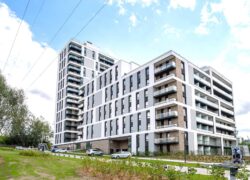
High urban flat prices and limited credit availability drive buyers to suburban estates

Are high flat prices in central city areas, combined with limited credit availability, pushing buyers toward developments on city outskirts and in the suburbs? Where can such developments be found, and at what prices? How much cheaper are these properties compared to similar flats in central districts?

Tomasz Kaleta, managing director of sales and marketing at Develia:
We have not observed a decline in interest in properties in central areas of cities, on the contrary. Our data shows that the suburbs are dominated by the credit customer (around 80 per cent of transactions in these locations with the average for the entire market at 50 per cent). The high level of interest rates has significantly reduced the purchasing capacity of this customer group, making it more difficult for them to obtain financing. In the case of properties in central city districts, this problem is less acute, as a customer with limited creditworthiness usually decides to purchase a smaller, more compact flat, but in a location that meets their criteria.

Agnieszka Majkusiak, sales director at Atal:
The location and standard of an investment are invariably the key criteria segmenting the residential market. Projects from the popular segment, located away from the city centre, are usually cheaper. Nevertheless, an important parameter is their transport accessibility and proximity to infrastructure, which we pay attention to when designing our investments outside the centres of large cities. They can be an attractive purchase alternative, especially for families looking for flats of a larger size.

The approximately 15 to 20 per cent price difference resulting from the location in the suburbs makes it possible to purchase additional square metres of flat, with the proximity of green areas being an additional advantage. However, it is also possible to find investments in our portfolio that are located close to city centres, where the price difference will no longer be significant enough to make the commuting costs worthwhile for years. An example is the excellently located Francuska Park estate in Katowice.

Atal’s offer also includes projects outside the centre, which, due to good communication and saturation with infrastructure, find numerous buyers. These include the Atal Apollina investment in Kowale near Gdansk, Żerniki na Novo in Wroclaw and Skwer Harmonia in Krakow.

Shraga Weisman, CEO of Aurec Home:
Certainly, high property prices and unfavourable credit policies make it difficult for buyers to purchase flats, especially in the centres of large cities, where the price per 1 sq m is always higher. For example, in the capital’s primary market, the average price in October 2024 was PLN 17,795 per sq m. This is why many buyers are looking for modern apartments in green districts, slightly distant from the centre, but with very good transport links.

We carry out investments in the spirit of the 15-minute city idea, offering flats in multifunctional neighbourhoods where you can get to work, a shop, a park or the office in 15 minutes. Fabrica Ursus, our investment, the next stage of which we have just launched for sale, is being developed in the dynamically developing district of Warsaw – Ursus. Its proximity to the city centre, very good rail connections (SKM, KM) and easy exit from the city via the A2 road make this location exceptionally convenient. We offer buyers spacious and compact interiors, large balconies, high windows and industrial design, all at affordable prices.

Małgorzata Mellem, member of Budlex’s Management Board:
We are indeed seeing a change in the preferences of many customers who, faced with high property prices in city centres and the more difficult availability of mortgages, are increasingly considering buying flats in the suburbs. Such locations are becoming attractive not only because of lower prices, but also thanks to the increasingly better infrastructure and greater living comfort offered by quieter neighbourhoods.

We adapt our offer to the different needs of our customers. One example is the Enclave development in Bydgoszcz, located in a well-connected but not central part of the city. The average prices per square metre in this investment are around 20 per cent lower compared to properties in central districts of a similar standard. Similarly, the Winnica Apartamenty project in Toruń offers more affordable flats.

The growing popularity of locations away from city centres is due to their attractiveness in terms of price, as well as the possibility of creating space tailored to the needs of residents. In our investments, we strive to combine an affordable price with a high standard and attention to the location, which will provide convenience and access to infrastructure.

Michał Witkowski, sales director at Lokum Deweloper:
Such a situation could take place in a balanced credit market. Then, customers with limited creditworthiness would face a choice – a smaller square metre in the centre or a larger one in an attractive location, but far from the centre. At present, however, due to the lack of any policy to support borrowers and record high interest rates with no clear prospect of them changing, only the wealthiest customers can afford to buy a flat. If they need to prop up the purchase with a loan, it is to a small extent, on top of which they have a high income that allows them to take on such a commitment.

As a result, large flats in the centrally located Lokum Porto development in Wrocław are currently the most popular in our offer. They are about 20 percent more expensive than the units available in the Lokum Verde development, located in a picturesque, green district of Wrocław, further away from the centre.

Barbara Marona, Sales Office Manager, Matexi Polska:
Location has always had, and continues to have, a key influence on property prices, as it largely determines the price of the land, which in turn translates into the final price of the flat purchased. Proximity to the centre, transport accessibility, quality of the neighbourhood and infrastructure are the main factors that influence the value of flats. In addition, external factors such as interest rates and the availability of credit have a strong influence on customers’ purchasing capacity, which may lead them to consider purchasing flats in different locations. Customers’ decision is also influenced by lifestyle changes, such as the growing popularity of remote working. More and more people, without the need to commute to work every day, are opting for flats in locations away from the centre, looking for more space and a quieter environment.

In response to these changing needs, we offer flats in a variety of locations – both in the city centre and on the outskirts. This allows us to cater to the preferences of different customer groups. We make sure that all our investments, regardless of the location, are well connected and provide the full infrastructure necessary for a comfortable everyday life.

In Kraków, we have four investments with varying standards and prices. The prices of flats in locations away from the centre are on average 30 per cent lower than in investments located in the central parts of the city. For example, the price of a three-room flat in our investment Kameralny Prokocim, located on the outskirts of the city, is about 13,000 PLN/sqm, while in the investment Apartamenty Portowa located in the central district of Zabłocie, prices of flats of a similar size start from about 18,000 PLN/sqm.

Joanna Chojecka, sales and marketing director for Warsaw and Wrocław at Robyg Group:
We do not see a trend of customers changing their preferences due to price in terms of location or looking for flats away from city centres. On the contrary, the good location of estates is one of the main decision-making factors, and proximity to the centre and good communication are the key elements that customers pay attention to. This is why we are launching new stages of such Warsaw developments as Sady Ursynów, near the Służewiec Race Track. It is an excellent location in a neighbourhood with a developed infrastructure and great communication with all parts of the city.

Our second new, excellently located investment is Rhythm of Mokotow. Dolny Mokotow is another Warsaw district after Ursus, whose possibilities we were the first to see and we started pioneering investments, discovering the beauty and changing the face of the area. There are vast spaces surrounded by greenery near Lake Czerniakowskie and the Vistula Bend. Our flagship investment near the centre of Warsaw is also the prestigious Royal Residence development in Wilanów, where we already have the last stage on sale. The fully developed area of Wilanów is the last chance to live in a unique place with full access to all amenities.

Andrzej Gutowski, Sales Director of Ronson Development:
Despite the high prices of properties in the central areas of cities and the limited availability of credit, buyers are unlikely to change their preferences in favour of developments away from the centres or located in the suburbs. Location attachment is considerable, with many people deciding to pay extra to live in their preferred neighbourhood, even at the expense of a smaller area.

Changes of location occur mainly when prices per square metre in individual districts equalise, which encourages transfers, e.g. from Białołęka to Ursus. If, on the other hand, buyers who are used to living in central districts decide on an apartment further from the centre, they usually choose to build a house. Which indicates an improvement in the financial situation of the client in question.

Source: dompress.pl
Photo: Panoramiqa, BPI Real Estate Poland

Czech Ministry of Education introduces new curriculum: English mandatory from 1st grade

The Czech Ministry of Education has unveiled new framework educational programs (RVP) for pre-school and primary education, marking a significant shift in curriculum requirements. Among the key changes is the introduction of mandatory English lessons starting in the first grade, an increase in the proficiency level of English expected at the end of primary school, and the addition of a second compulsory foreign language starting from the seventh grade. The announcement was made today by ministry spokesperson Tereza Fojtová via a press release.

The revised curriculum will be available for voluntary adoption in the first and sixth grades starting from the next academic year. It will become mandatory for these grades by September 2027. Full implementation across all grades is planned for September 2031. However, the National Pedagogical Institute, which collaborates with the Ministry on these revisions, previously stated that all grades would adopt the new curriculum by September 2029.

Education Minister Mikuláš Bek (STAN) emphasized the importance of the updated RVP in preparing students for modern challenges. “The new framework educational programs focus on developing competencies and literacy aligned with contemporary societal needs and the future of our children,” Bek stated. Schools opting to implement the curriculum voluntarily from September 2025 will provide feedback to refine the RVP and model school programs before their mandatory introduction.

One of the most notable updates is the requirement for students to begin learning English from the first grade, a shift from the current standard of third grade. Approximately half of Czech schools already offer English at this earlier stage. By the end of primary school, students will now be expected to achieve a B1 proficiency level in English, an increase from the previous A2 standard. Requirements in other subjects, such as mathematics, are also being elevated.

The new curriculum also introduces a mandatory second foreign language starting in the seventh grade. Initially, schools will have the option to offer German, French, or Spanish. However, the rollout will be gradual: beginning with seventh-grade instruction in 2034, expanding to include both seventh and eighth grades in 2035, and extending to grades seven through nine by 2036. Until now, the second foreign language was compulsory only from the eighth grade, with an output level of A1.

The RVP for pre-school education emphasizes inclusivity and personalized learning tailored to individual needs. These changes aim to create a supportive learning environment for all children. Kindergartens meeting preparatory conditions can voluntarily adopt the new curriculum starting in September 2025, with mandatory implementation set for September 2026.

Unlike earlier RVPs established in 2005, the updated framework does not dictate year-by-year learning objectives. Instead, it defines broader educational goals, specifying what students should know at various stages of their education. Schools are tasked with creating their own learning plans, which can vary to accommodate different teaching styles and student needs.

The revised curriculum emphasizes the practical application of knowledge in daily life and prioritizes the development of reading, writing, and mathematical literacy. Personal and social education, as well as environmental awareness, are also key components. The new RVP aims to simplify administrative processes for schools while fostering a more holistic approach to education.

The Ministry will release detailed documents to the public on January 14, 2025, providing further insights into the new framework and its phased implementation.

Source: CTK

NBP: Residential developers ROE stands at 23% in Q3 2024

The estimated return on equity (ROE) for residential developers from investment projects remained steady at approximately 23% in the third quarter of 2024, consistent with the previous quarter, according to a report from the National Bank of Poland (NBP).

“This level of ROE reflects the increase in transaction prices for apartments, which outpaced the rise in production costs. It also accounts for the developers’ financial strategies, including reliance on their own funds, customer prepayments, and other liabilities,” the NBP stated in its report, Information on Housing Prices and the Situation in the Housing and Commercial Real Estate Market in Poland in Q3 2024.

The report highlighted regional disparities in ROE. For investments financed entirely from equity (with a loan-to-value ratio of 0%), the ROE was 3.3% in Warsaw, 3.2% in six other major cities, and 3.1% in seven additional provincial cities. However, for projects financed 50% by housing loans (LTV 50%), the ROE turned negative, with figures of -1.3% in Warsaw, -1.4% in six major cities, and -1.6% in the remaining seven cities. Compared to the same period in 2023, this reflects a slight decline.

For highly leveraged investments (LTV 80%), the profitability dropped further, with ROE at -14.9% in Warsaw, -15.3% in six major cities, and -15.6% in other provincial cities during Q3 2024.

The NBP noted that the ROE for rental property investments funded entirely by equity showed a slight improvement. However, when financed with leverage of 50% or higher (LTV 80%), profitability remained negative.

“Returns on investments in rental apartments—excluding transaction and renovation costs as well as potential changes in property value—were lower than the interest rates offered by bank deposits and returns on 10-year treasury bonds,” the report added.

The NBP’s findings underscore a challenging environment for leveraged residential investments in Poland, with equity-funded projects maintaining moderate profitability. However, rental investments continue to struggle to compete with safer financial instruments like deposits and government bonds, highlighting the need for strategic financial planning in the sector.

Source: National Bank of Poland and ISBnews

Wirtualna Polska Media seeks UOKiK approval for Invia Group acquisition

Wirtualna Polska Media (WPM), a subsidiary of Wirtualna Polska Holding, has filed an application with the Office of Competition and Consumer Protection (UOKiK) to acquire Invia Group SE, headquartered in Prague, Czech Republic. The submission was officially received on December 24, 2024, and the case is currently under review.

The proposed transaction involves WPM gaining exclusive control of Invia Group SE through the acquisition of 100% of its shares, according to the application.

Last week, the WP Group announced that WPM had signed a framework agreement to purchase Invia Group SE for a total of EUR 239.7 million. This figure includes the purchase price of shares and the company’s existing debt at the time of the transaction. The shares are being acquired from current shareholders CITIC Europe Holding and Rockaway Capital. The transaction will be financed through a bank loan.

About Invia Group

Invia Group operates in Germany, Austria, Switzerland, the Czech Republic, Slovakia, Hungary, and Poland, specializing in the brokerage of travel and tourism services. The majority of its revenue comes from German-speaking markets. The company manages well-known brands such as Ab-in-den-Urlaub.de, Fluege.de, Invia.cz, Invia.sk, Invia.hu, and Travelplanet.pl. Over the past year, Invia facilitated travel for more than 2 million tourists, generating EUR 183 million in revenue and EUR 37 million in adjusted EBITDA.

Wirtualna Polska Holding

Wirtualna Polska Holding is a leading technology and media conglomerate engaged in media, advertising, and e-commerce. The company owns the WP portal and operates specialized sites such as money.pl, WP SportoweFakty, and benchmark.pl. It also offers subscription services through Audioteka Group and Patronite. In e-commerce, WP focuses on tourism (holiday.pl, Szallas Group, nocowanie.pl) and consumer finance (superauto.pl and totalmoney.pl).

In October 2024, nearly 20 million Poles used WP’s platforms and services. Listed on the Warsaw Stock Exchange since 2015, Wirtualna Polska Holding is part of the mWIG40 index.

Source: Wirtualna Polska Media and ISBnews

Real Estate in 2025: Trends and challenges shaping the future

The year 2025 is poised to bring transformative changes to the real estate market, marked by technological advancements, sustainability goals, and evolving workplace needs. According to Marcin Kosieniak, MEP specialist and co-owner of the project office PM Projekt, trends such as energy-efficient building systems, artificial intelligence (AI) integration, and increasing demand for certified green buildings will dominate the sector. However, challenges like high implementation costs and the lack of standardized data collection methods remain significant hurdles.

A Focus on Energy Efficiency

Energy efficiency has become a cornerstone of modern real estate, driven by rising energy costs and the push for sustainable construction. “In 2025, energy efficiency will solidify its place as a key priority in building design and operations. Every project we handle prioritizes systems that deliver both immediate and long-term energy savings,” says Kosieniak.

The emphasis on sustainability extends beyond construction to ongoing building management, ensuring reduced operational costs and environmental impact. Energy-efficient systems, coupled with innovative technologies, are becoming the norm in real estate projects.

Artificial Intelligence: A Game Changer for Real Estate

The adoption of AI is revolutionizing the real estate sector. Between 2022 and 2023, global interest in AI surged by 700%, with applications ranging from design optimization to building management. Kosieniak highlights the transformative potential of AI, particularly in managing ventilation, cooling, and heating systems.

Advanced solutions like variable airflow regulators, which adjust air supply based on CO2 levels or occupancy, are already in use. “AI allows us to design solutions that improve energy savings and user comfort. Systems can learn user behavior, optimize room temperature based on factors like sunlight, electricity prices, or upcoming events, and adapt dynamically,” he explains. This precision can significantly enhance both efficiency and the user experience.

The Challenges: Data Collection and Costs

Despite its potential, widespread adoption of these technologies faces two key obstacles: high implementation costs and insufficient data collection tools. “Data collection in real estate is still a challenge, compounded by the lack of uniform guidelines and tools. Integration of systems also remains costly,” Kosieniak notes.

While open-source models and collaborations might address these issues, the market’s dominance by large players poses a barrier. However, the growth of startups may introduce more affordable and innovative solutions in the near future.

Certified Green Buildings on the Rise

The demand for certified green buildings is increasing rapidly. According to the Polish Ecological Construction Association (PLGBC), the number of certified buildings in Poland grew by 24% in 2024, with more than 2,000 buildings now meeting these standards. “Certification not only demonstrates ecological responsibility but also significantly enhances a building’s value for investors and aligns with regulatory requirements,” Kosieniak explains.

However, he emphasizes the pressing need for standardized methods to calculate the carbon footprint of buildings. “Lack of a universal method for carbon footprint calculation remains a significant challenge for companies and specialists alike,” he adds.

Office Spaces Designed for Well-Being

As the workplace evolves, modern office design is focusing on employee well-being. “For the past two years, we’ve questioned whether hybrid or remote work would eliminate the need for offices. But the trend now is creating spaces that attract employees by prioritizing comfort, aesthetics, and functionality,” says Kosieniak.

New office designs aim to enhance the work environment, making offices not just places to work but spaces that promote health, collaboration, and productivity. This shift is transforming how companies view their office spaces and their role in employee satisfaction.

Looking Ahead

The real estate sector in 2025 will balance technological innovation with sustainability and user-centered design. While challenges like cost barriers and data standardization persist, the adoption of advanced systems and a commitment to green construction signal a promising future. As Kosieniak concludes, “The sector is at a crossroads where innovation, sustainability, and human-centric design come together to redefine the built environment.”

Source: PM Projekt

Czech regions only partially fulfill their role, says political scientist Michal Pink

The regions in the Czech Republic, created to bridge the gap between the fragmented local government of over 6,000 small municipalities and a centralized state in Prague, have only partially succeeded in their role, according to Michal Pink, a political scientist from Masaryk University in Brno. Pink highlights the structural and functional shortcomings of the regional system, which has led to disparities and inefficiencies across the country.

When the regions were established 25 years ago, there was no clear consensus on their intended function, Pink notes. Discussions at the time considered three potential frameworks:
1. Merging Districts: Proposals to create 35 units by merging two or three districts could have facilitated better health care provision.
2. Reinstating Historical Lands: Re-establishing Bohemia and Moravia-Silesia as self-governing entities, alongside a metropolitan area for Prague, might have allowed for more unified transport, emergency services, and education systems.
3. The Current Model: Ultimately, 13 regions and the capital city of Prague were established, with Prague having the same status as a region but excluded from regional elections.

This fragmented approach has resulted in uneven service delivery and the emergence of “inland peripheries” — areas within regions that are neglected due to their geographical distance from regional centers. For example, Malá Haná, spanning the South Moravian, Pardubice, and Olomouc regions, suffers from poor road quality and limited health care access. Public transport in such areas is also inadequate, with uncoordinated train and bus connections.

The regional structure has not addressed fundamental issues such as catchment areas and has led to the growth of a large bureaucratic apparatus. “In a country of just 10 million people, many functions could be managed centrally, especially with modern digital tools,” Pink argues.

The disparity in the electoral system further exacerbates regional inequalities. In populous regions like South Moravia, Central Bohemia, and Moravia-Silesia, a regional deputy requires three times more votes to secure a mandate compared to counterparts in smaller regions like Karlovy Vary or Liberec. Pink suggests that smaller regions with fewer voters should have a reduced number of councillors — around 20 instead of the current 45 — to balance representation.

Despite the challenges, Pink acknowledges some benefits of the regional system. The creation of a new political tier has cultivated a generation of regional politicians. Medium-sized regions often manage their resources effectively, maintaining roads and assets with a better understanding of local conditions. Public transport within counties is also simpler and more adaptable compared to a centralized system.

Looking forward, Pink emphasizes the need for clearer definitions of regional roles, more equitable electoral representation, and the potential centralization of certain administrative functions to improve efficiency. While the regional system has its flaws, with targeted reforms, it can better serve the Czech Republic’s citizens and foster balanced development across the country.

Source: Masaryk University and CTK

BIG InfoMonitor: 87% of Poles plan intimate celebrations for New Year’s Eve

Most Poles will ring in the New Year at home or in the company of close family and friends, with 66% opting to celebrate solely with household members and an additional 21% planning gatherings with family or friends, according to a survey commissioned by the Register of Debtors BIG InfoMonitor. These trends mirror those observed from 2021 to 2023, underscoring a growing preference for at-home celebrations amid economic uncertainty.

The survey, titled “The New Year’s Eve Plans of Poles,” revealed that the average planned spending for the holiday stands at PLN 268, comparable to last year. However, 20% of respondents intend to avoid any additional expenses altogether, highlighting a broader inclination toward saving. Of those planning to spend, 29% budget over PLN 200, while the remainder allocate even less.

“Inflation directly influences New Year’s Eve spending decisions. One in four Poles (24%) plans to spend less than last year, while 63% expect their expenses to remain stable. Only 13% anticipate higher spending, reflecting a cautious approach to financial management,” the report stated.

The study also found that extravagant celebrations have fallen out of favor. Only 4% of respondents plan to attend events at venues, cultural institutions, or outdoor festivities, and an equal proportion intends to travel. These figures highlight a shift toward more personal and cost-conscious ways of celebrating the end of the year.

This trend poses challenges for sectors like hospitality, entertainment, and gastronomy, which traditionally rely on New Year’s Eve events for substantial revenue. According to data from BIG InfoMonitor and the credit reference bureau BIK, these industries are grappling with financial difficulties. Overdue liabilities in the HoReCa sector (hospitality and catering services) have risen by PLN 151 million (7.7%) this year, exceeding PLN 2 billion by October 2024. The food services segment alone has seen unpaid debts surge by nearly PLN 195 million (22%), reaching over PLN 1 billion.

“The continued preference for intimate New Year’s celebrations reflects a broader lifestyle shift among Poles toward saving and minimalism,” said Waldemar Rogowski, Chief Analyst at BIG InfoMonitor. “This trend, driven by both financial constraints and a desire for comfort and closeness, presents a significant challenge for the entertainment and gastronomy industries. Adapting to these new preferences by offering flexible, economical, and personalized services could help mitigate long-term impacts.”

The survey, conducted using the CAWI method by Quality Watch on behalf of BIG InfoMonitor, sampled 1,061 Poles aged 18 and older in December 2024.

Source: BIG InfoMonitor and CTK

LATEST NEWS