Czech Republic closes 2024 with CZK 271.4 billion budget deficit, fifth highest in its history

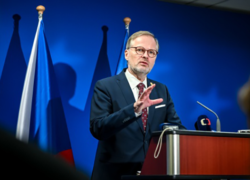
The Czech state budget ended 2024 with a deficit of CZK 271.4 billion, making it the fifth-largest in the country’s history since its founding. Prime Minister Petr Fiala and Finance Minister Zbyněk Stanjura (both ODS) presented the budget results, emphasizing that the deficit is the best since the COVID-19 pandemic. However, analysts noted that the government barely met its revised deficit target of CZK 282 billion, aided by an amendment that raised planned spending by CZK 30 billion following September’s floods.

State budget revenues totaled CZK 1.965 trillion, marking a 2.7% year-on-year increase, primarily driven by higher collections of compulsory insurance premiums and taxes. Among tax revenues, personal income tax grew the fastest. Expenditures reached CZK 2.236 trillion, up 1.6% year-on-year, with social benefits comprising the largest share at CZK 904.8 billion, including CZK 710 billion for pensions.

Capital expenditures stood at CZK 210.1 billion, maintaining last year’s level. Stanjura highlighted that CZK 15.4 billion of the budget was allocated to repairing flood damage, with the Transport Ministry alone using CZK 5.5 billion for infrastructure reconstruction.

Prime Minister Fiala commended the government for meeting its budget targets and reducing the deficit both in absolute terms and relative to GDP. He noted that the deficit as a share of GDP has dropped from over 5% when the current government took office to an estimated 2.3% in 2024.

“We inherited one of the fastest-debting economies in the EU. This year’s deficit reduction shows our progress in fiscal responsibility,” Fiala said.

Stanjura acknowledged that the floods influenced the budget outcome, adding that without them, the deficit would have been CZK 256 billion, slightly higher than the originally approved CZK 252 billion target. He attributed the deviation to increased defense spending, approved late in the year to meet NATO commitments of 2% GDP defense allocation.

Opposition leaders were unsparing in their critique. Alena Schillerová, head of the ANO parliamentary club, dismissed the budget outcome as “trivial.” She criticized the government for celebrating a deficit she described as avoidable, given the absence of pandemic-related expenses. “Raising taxes to record levels while delivering a CZK 271.4 billion deficit in a non-crisis year is cynicism of the highest order,” Schillerová said.

Economists offered a mixed assessment. While noting an improvement over 2023’s CZK 288.5 billion deficit, they highlighted risks to future budgets. David Marek, chief economist at Deloitte and an advisor to President Petr Pavel, remarked, “Although the deficit improved year-on-year, the planned deficit was exceeded due to late-year adjustments.”

Dominik Rusinko, an analyst at ČSOB, expressed caution about the 2025 budget, which targets a deficit of CZK 241 billion. “Election-year spending and an optimistic 2.6% economic growth projection could undermine the government’s plans,” Rusinko warned.

The national debt rose from CZK 3.111 trillion at the end of 2023 to CZK 3.365 trillion in 2024. The Ministry of Finance expects it to increase further to CZK 3.614 trillion in 2025. This growing debt burden has led to higher financing costs, with state debt servicing expenditures rising by CZK 20.2 billion to CZK 88.5 billion last year. These costs are forecast to climb to CZK 100 billion in 2025.

While the government highlights its commitment to fiscal discipline, challenges loom. The rising national debt, election-year spending, and potential economic slowdown may test the government’s ability to meet its fiscal targets in the coming year.

Source: CTK

Syncron Poland joins Gdański Business Center as new tenant

Savills Investment Management (Savills IM) has signed a new lease agreement for the Warsaw-based Gdański Business Center. Syncron Poland Sp. z o.o., a company in aftermarket service lifecycle management solutions, will be the latest tenant to occupy space in the state-of-the-art office complex located on Inflancka Street.

Syncron is known for its AI-powered software designed to assist manufacturers and distributors in managing aftermarket parts, inventory, and pricing while enhancing customer experiences. The company’s move into Gdański Business Center underscores its commitment to fostering innovation and expanding its footprint in Poland.

Syncron Poland will begin operations from its new office in March 2025. The company collaborated with Savills Poland to identify the location and negotiate lease terms. Savills representatives Karol Grejbus and Michał Karolkiewicz provided end-to-end transaction management. Additionally, the Building & Project Consultancy team conducted a detailed assessment of office fit-out and arrangement costs to ensure the new space meets Syncron’s technical and budgetary needs.

“We are delighted to welcome another innovative company to Gdański Business Center,” said Anna Piątek, Asset Manager at Savills Investment Management in Poland. “The complex offers top-quality services and an inspiring environment that supports creativity and business growth. Syncron Poland’s team will find an excellent space here, not just in terms of modern office facilities but also through access to eco-friendly amenities, including 4,000 sqm of greenery.”

Gdański Business Center is a cutting-edge A-class office complex located in the heart of Warsaw. Developed in two phases (2014 and 2016), the property offers 101,000 sqm of leasable space. It features a range of amenities, including a café, beauty salon, kindergarten, medical centers, a fitness club, and a landscaped public courtyard. The complex provides 1,379 underground and 76 on-grade parking spots, alongside 416 bicycle racks, changing rooms, and showers, catering to modern commuting needs.

The office park’s prominent tenants include Allianz, KPMG, Philip Morris, Dell, and Nielsen, among others. Its strategic location next to the Dworzec Gdański M1 metro station and Warszawa Gdańska railway station ensures seamless connectivity across Warsaw, complemented by nearby tram and bus stops and access to the right bank of the city via the Gdański Bridge.

Awarded a BREEAM Excellent environmental certificate and a barrier-free accessibility certificate, Gdański Business Center exemplifies modern, sustainable office design. The property was acquired by Savills IM on behalf of a global pension fund.

Syncron Poland’s move to the Gdański Business Center marks a significant step in its journey, aligning with the complex’s reputation as a hub for top-tier businesses and forward-thinking enterprises.

Blackstone acquires ten logistics parks in the Czech Republic in €470 million deal

The Czech Office for the Protection of Competition (ÚOHS) has approved the acquisition of ten logistics parks in the Czech Republic by US investment giant Blackstone. The properties, previously owned by TPG Real Estate, were purchased for EUR 470 million, equivalent to nearly CZK 12 billion. According to Bloomberg, this transaction ranks among the largest real estate deals in Europe last year.

Blackstone is acquiring logistics properties totaling half a million square meters through its Luxembourg-based entity, United Crystal. The transaction includes the purchase of four Czech companies: CTRE Fund, CTRE Development, CTRE Říčany, and Contera Real Estate.

According to ÚOHS, the acquisition will not hinder competition in the market. “The acquired companies, through their subsidiaries, are active in leasing and managing logistics warehouses and distribution centers in the Czech Republic and Slovakia. The proposed concentration will not result in a significant impediment to competition. The decision has already become final,” the authority confirmed.

The logistics parks were developed in partnership with Contera, a Czech investment and development company. Contera commented on the deal on its website, stating: “Blackstone has agreed to acquire CT Real Estate, a portfolio of ten logistics parks, from TPG Real Estate, with whom Contera has successfully partnered on its industrial portfolio since 2019. Additionally, Blackstone has committed to buy a portion of the stake directly from Contera, securing a majority stake in Contera’s industrial portfolio upon closing of the transaction.”

Despite Blackstone’s majority acquisition, Contera will maintain a minority stake in the portfolio while continuing as property manager and developer.

Blackstone, headquartered in New York, is a leading alternative investment firm with diverse portfolios across real estate and various fund types. Established in 1985 by Peter Peterson and Stephen Schwarzman, the company has grown to employ nearly 5,000 people worldwide. In 2023, Blackstone reported revenues of $8 billion (approximately CZK 191 billion).

This acquisition underscores Blackstone’s strategic focus on expanding its European logistics footprint while solidifying its position as a key player in the global real estate market.

Source: CTK

German and Czech breweries dominate Russian beer market amid controversy

German and Czech breweries were the leading suppliers of beer to Russia last year, despite the ongoing conflict in Ukraine and international sanctions. According to Russian state statistics cited by the RIA Novosti news agency, Germany retained its position as the largest exporter, while Czech exports to Russia surged. In contrast, Danish breweries, led by Carlsberg, have ceased exports entirely.

Germany shipped 105,300 tonnes of beer to Russia between January and October 2024, remaining the top supplier despite a 24% year-on-year decline in exports. The Czech Republic followed as the second-largest supplier, with its beer exports rising by 27% to 33,100 tonnes during the same period. This increase translates to nearly 62 million pints, according to the Czech Statistical Office (ČSÚ).

Russia ranked as the third most important market for Czech beer exports, trailing only Germany and Slovakia. The value of Czech beer exports to Russia in the first ten months of 2024 was slightly over CZK 819 million, a significant jump from CZK 613 million in 2019.

“Despite the invasion of Ukraine and Western sanctions, the Czech Republic exported nearly two million more pints of beer to Russia last year. For the first time ever, the value of these exports surpassed one billion crowns,” said Lukáš Kovanda, chief economist at Trinity Bank.

The surge in Czech beer exports to Russia has drawn criticism. Poland’s Rzeczpospolita daily remarked, “Czech brewers have no ethical doubts, putting profit above all else, regardless of the consequences.”

Meanwhile, Chinese beer exports to Russia have grown significantly. China, which ranked sixth in 2023, rose to third place last year, exporting 29,800 tonnes of beer—a 1.6-fold increase. Lithuania followed in fourth place with 24,300 tonnes, while Belgium dropped to fifth after reducing shipments by a third to 18,400 tonnes.

Poland, Latvia, Kazakhstan, the Netherlands, and Austria rounded out the top ten suppliers to Russia, collectively contributing to a robust beer trade despite geopolitical tensions.

Russia’s domestic beer industry is also adapting to the changing landscape. The country’s largest brewer, Baltika, was seized from Denmark’s Carlsberg by the Kremlin and has since launched a new brand targeted at the Chinese market. Similarly, Russia’s second-largest brewer is producing beer for Chinese partners at its Khabarovsk plant in the Far East.

Despite these efforts, Chinese imports of Russian beer have decreased by about 25% since early 2024, underscoring the competitive edge of foreign suppliers over Russian producers in the Chinese market.

The contrasting strategies of various beer-exporting nations highlight the complexity of the global market amid geopolitical tensions. While Germany and the Czech Republic continue to profit from their Russian beer trade, others, like Denmark, have withdrawn entirely, reflecting differing stances on ethical and economic priorities.

Source: CTK

Czech Republic’s foreign trade surplus declines to CZK 23.6 billion in November

The Czech Republic’s foreign trade balance in November 2024 reflected a combination of progress and challenges, as reported by the Czech Statistical Office (ČSÚ). The country recorded a trade surplus of CZK 23.6 billion, representing a year-on-year decline of CZK 4.2 billion. While certain sectors, such as motor vehicles and electrical equipment, contributed positively to the trade balance, others, including metal products and machinery, experienced significant setbacks.

A closer look reveals that the trade in motor vehicles was a major contributor to the surplus, with an increase of CZK 2.2 billion compared to the previous year. The oil and gas trade deficit also decreased by a similar amount, further bolstering the overall balance. Electrical equipment trade added another CZK 2.0 billion to the surplus, highlighting its growing importance in the country’s export portfolio.

However, these gains were offset by weaker performances in other sectors. The surplus in metalworking product trade narrowed substantially, decreasing by CZK 4.3 billion. Similarly, the trade in machinery and equipment suffered a loss of CZK 2.8 billion, while the deficit in base metals trade deepened by CZK 1.6 billion.

Trade relations with the European Union (EU) also showed signs of strain, as the surplus in foreign trade with EU countries decreased by CZK 3.9 billion year-on-year. Meanwhile, the trade deficit with non-EU countries widened slightly, increasing by CZK 0.5 billion.

On the export and import front, exports in November grew by 4.4% year-on-year to CZK 424.5 billion, while imports increased at a faster rate of 5.8%, reaching CZK 400.9 billion. The faster growth in imports compared to exports continued a trend observed throughout the year.

“Imports have once again grown faster than exports,” said Jana Mazánková, Head of the ČSÚ’s Trade Balance Department. “For instance, imports of metal products, mainly originating from Germany, Slovakia, and China, rose by almost 26% year-on-year. Additionally, imports of food products from Germany, Poland, and Spain grew by over CZK 2 billion compared to the previous year.”

On a month-to-month basis, after seasonal adjustments, exports increased by 0.5%, while imports fell slightly by 0.7%. These figures suggest a degree of stabilization in trade activity, albeit with continued volatility in certain sectors.

Cumulatively, from January to November 2024, the trade surplus reached CZK 219.1 billion, marking a significant increase of CZK 101.2 billion year-on-year. Over this period, exports grew by 4.7%, while imports rose by 2.3%, indicating a steady expansion in the country’s overall trade activity.

The November performance underscores the importance of closely monitoring sector-specific trends and trade partnerships. While sectors like motor vehicles and electrical equipment continue to demonstrate resilience, challenges in metalworking and machinery trade highlight the need for strategic adjustments to maintain a balanced trade outlook.

Source: ČSÚ

Between Recession and Recovery: Logivest analyzes the German logistics real estate market in 2024

The German logistics real estate market in 2024 bore the marks of economic recession, yet also displayed signs of resilience and recovery. While the letting market experienced significant declines, and logistics providers reported increased vacancies due to reduced buffer warehousing, new construction developments surpassed 4 million square meters—a modest increase compared to 2023.

Logivest, a logistics property consultancy, observed a notable uptick in speculative construction in 2024, reflecting regained confidence among developers.

“New logistics developments will exceed 4 million square meters this year,” confirmed Kuno Neumeier, CEO of Logivest. “We are also seeing a normalization of rents, with falling construction costs bringing rates down to more manageable levels. In some areas, projects with rents below six euros per square meter have reappeared, which was unthinkable last year.”

One standout project is the Log Plaza in Frankfurt Oder, developed by Alcaro without any pre-letting agreements. This speculative development underscores renewed trust in market stability. Sustainability continues to play a central role in new construction projects, with developers prioritizing energy efficiency and eco-friendly designs.

Despite positive developments, challenges remain. Increased vacancies have been reported in existing properties, with logistics service providers struggling during a subdued peak season, from Black Friday through Christmas.

“Our logistics service provider exchange, Logivisor.com, indicates that the grey market currently includes at least 2 million square meters of vacant managed storage space,” Neumeier noted. “This reflects ongoing difficulties in matching demand with available space.”

The volatile automotive sector further complicates the logistics landscape. While the new Mercedes-Benz logistics center in Bischweier—a 100,000-square-meter project—stands out as the largest development of 2024, competition from Chinese electric vehicle manufacturers continues to rise. The decline in production by German automakers could have long-term implications for space requirements in the supplier industry.

Despite current obstacles, Neumeier remains cautiously optimistic about the future: “The logistics real estate market is likely to continue stabilizing in 2025. New demand drivers, such as the expanding defense sector, are expected to play a significant role in boosting the market.”

Logivest plans to release detailed data and analysis of 2024 developments, along with a forward-looking perspective for 2025, in the upcoming Logivest Logistikimmobilien Seismographen 2024/2025, set for publication in mid-January.

The German logistics real estate market is navigating a challenging landscape marked by recessionary pressures and transformative industry shifts. However, signs of recovery and strategic adaptation—through speculative development, sustainability-focused projects, and emerging demand sectors—offer hope for a more stable and dynamic market in the coming year.

InPost achieves record growth with over 1 billion parcels delivered in 2024

InPost Group, a leading e-commerce logistics provider, has announced a landmark year in 2024, achieving record-breaking growth across its operations. The company delivered an impressive 1.09 billion parcels, marking a 22% year-on-year increase, and expanded its network with the installation of 11,500 new automated parcel machines (APMs). By the end of the year, InPost operated 46,977 APMs, a significant 33% growth compared to the previous year.

InPost’s President, Rafał Brzoska, highlighted the company’s achievements, stating, “2024 was a record year for InPost in every way. For the first time, we delivered over 1 billion parcels, installed more than 11,500 new APMs, and handled nearly 14 million parcels on a single day during the pre-Christmas period. In Poland, we expanded our network to over 25,000 machines, ensuring that nearly 90% of city residents have an APM within a seven-minute walk.”

The company’s growth was driven by strong performances across its key markets. In Poland, InPost delivered 709.3 million parcels, a 20% increase year-on-year, fueled by demand from small and medium-sized merchants, the fashion sector, and domestic and international marketplaces. In the Mondial Relay markets, which include France, Spain, Portugal, and Italy, InPost delivered 266.6 million parcels, an 11% increase. The UK market saw the most dramatic growth, with parcel deliveries doubling to 93.2 million.

The fourth quarter of 2024 was particularly strong for InPost, with 322.1 million parcels delivered, a 20% year-on-year increase. The company achieved a record-breaking day during the holiday season, processing nearly 14 million parcels across Europe. In Poland, Q4 deliveries reached 209.9 million parcels, while Mondial Relay markets handled 77.7 million parcels, an increase driven largely by a 28% rise in B2C segment volumes. In the UK, InPost delivered 27.2 million parcels, a 58% year-on-year increase, achieving its best quarterly result to date.

InPost also made significant strides in expanding its network. By the end of 2024, the company operated over 82,000 out-of-home points, with APMs accounting for 57% of the total. In Poland, the number of APMs increased by 15% to more than 25,000 machines. Research conducted by Kantar revealed that 93% of Polish online shoppers consider InPost parcel lockers their preferred delivery option. In Mondial Relay markets, the out-of-home network grew by 18% to over 31,000 locations, including nearly 4,000 new APMs. In the UK, InPost strengthened its leading position by adding nearly 3,000 APMs, bringing the total to over 9,200 devices.

Looking ahead, InPost plans to continue its strategic growth by enhancing logistics operations, improving user experience, and expanding its presence in key markets. The company remains committed to maintaining its leadership position in Poland, France, and the UK, while doubling its footprint in markets like Spain, Portugal, and Italy.

Founded in 1999 by Rafał Brzoska, InPost has become a cornerstone of e-commerce logistics, providing parcel locker services, courier solutions, and fulfillment services. Its acquisition of French logistics firm Mondial Relay in July 2021 bolstered its position in the European market. InPost has been listed on Euronext Amsterdam since January 2021.

Source: InPost Group and ISBnews

OECD Economic Outlook, Volume 2024 Issue 2

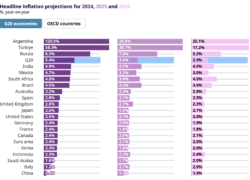
The Organisation for Economic Co-operation and Development (OECD) has released its Economic Outlook for December 2024, presenting a cautiously optimistic view of the global economy. The report forecasts a modest increase in global GDP growth, projecting a rise from 3.2% in 2024 to 3.3% in both 2025 and 2026. This anticipated growth is attributed to declining inflation rates, which are expected to bolster real incomes and consumer spending. 

In OECD member countries, GDP growth is projected to stabilize at 1.9% for both 2025 and 2026, reflecting a steady economic environment. Non-OECD economies, particularly in emerging Asian markets, are expected to maintain their current growth trajectories, continuing to be significant contributors to global economic expansion.

The report highlights a continued decline in headline inflation across most nations throughout 2024, driven by reductions in food, energy, and goods prices. This downward trend in inflation is anticipated to persist, further supporting real income growth and enhancing consumer purchasing power.

Despite these positive indicators, the OECD cautions that the economic outlook remains highly uncertain. Potential risks include escalating geopolitical tensions and the implementation of global trade restrictions, which could impede further disinflation and dampen economic growth prospects. Additionally, unforeseen shocks may lead to disruptive corrections in financial markets, exacerbated by high debt levels and stretched asset valuations.

To mitigate these risks and strengthen economic foundations, the OECD emphasizes the need for ambitious structural policy reforms. Key recommendations include enhancing education and skills development, reducing labor and product market constraints to encourage investment and labor mobility, and increasing public investment in areas with significant market failures. Such measures are deemed essential to improve productivity, facilitate the adoption of new technologies, and boost labor force participation, thereby promoting sustainable and inclusive growth in the medium term.

In summary, while the OECD’s latest Economic Outlook presents a slightly more optimistic forecast for the global economy, it underscores the fragility of this recovery and the critical importance of policy interventions to sustain and enhance economic growth.

Note: Table shows harmonised index of consumer prices for the euro area and its member states and the United Kingdom, and national consumer price index for all other countries.

Source: OECD Economic Outlook, December 2024

EBRD and EU back €200 million lending facility for Ukraine’s private sector via OTP Bank

The European Bank for Reconstruction and Development (EBRD) has unveiled a new €200 million risk-sharing facility for Ukraine’s JSC OTP Bank (OTPU). This initiative aims to bolster financing for Ukraine’s private sector amidst ongoing challenges brought by the war.

The EBRD’s unfunded portfolio risk-sharing mechanism will cover up to 50% of OTPU’s credit risk on the €200 million sub-loan portfolio. This enhancement will enable OTP Bank to extend financing to critical industries such as agriculture, energy, manufacturing, and transport, supporting businesses vital to Ukraine’s economy. The facility is backed by a first-loss risk cover funded by donors, including the European Union (EU), under the Ukraine Investment Framework (UIF).

This marks the fifth and largest facility of its kind provided by the EBRD to OTP Bank Ukraine, continuing their strong collaboration. Including this initiative, EBRD guarantees have unlocked nearly €2 billion in financing for Ukraine since the start of Russia’s invasion.

Up to 20% of the loans will focus on supporting long-term investments by micro, small, and medium-sized enterprises (MSMEs) in EU-compliant and green technologies. These projects aim to enhance the competitiveness of Ukrainian businesses both domestically and internationally. Eligible sub-borrowers will also benefit from EU-financed investment grants under the EU4Business initiative and technical assistance for their projects.

To date, the EBRD has allocated €66 million in EU grants to support MSMEs in Ukraine under the EBRD-EU4Business Credit Line, including €5 million in projects implemented through OTP Bank Ukraine.

The facility also introduces new provisions for businesses impacted by the war. Sub-borrowers affected by asset destruction, loss, or relocation, or those contributing to reintegrating veterans into the workforce, will qualify for additional investment incentives.

Source: EBRD

AFI Europe reflects on a successful 2024 and announces new projects in Prague

Developer group AFI Europe is reviewing its achievements in the Czech Republic over the past year, marking significant progress in the rental housing and office property sectors, while unveiling plans for 2025.

2024 Highlights

Among the key milestones of 2024 was the expansion of the AFI Home rental housing portfolio, now comprising 872 rented apartments with an impressive 95% occupancy rate. In March, AFI Europe launched its fourth rental property, AFI Home Kolbenova 2, which features 327 apartments and reached a 90% occupancy rate by December. The project also introduced additional amenities, including a supermarket, a laundry facility, and a coworking center designed to support remote-working tenants and foster a vibrant business community in the Vysočany district.

“A pivotal development for our rental housing portfolio in 2024 was the acquisition of two projects with 810 units from FINEP,” stated Doron Klein, Deputy CEO of AFI Europe Group and Managing Director for the Czech Republic and Romania. “AFI Home Nová Elektra is currently under construction, while work on AFI Home V Korytech is scheduled to begin mid-2025. Additionally, we are preparing the third phase of our AFI Home Kolbenova project with approximately 300 units and expect to secure building permits this year. Our goal for 2025 remains focused on growing our rental housing portfolio through further BTR (build-to-rent) project acquisitions,” Klein added.

Commercial Real Estate Achievements

AFI Europe also reported near-total occupancy across its six office projects in 2024, maintaining an impressive occupancy rate of nearly 100%. Notably, the AFI City 1 office building in Prague 9’s Vysočany district achieved full occupancy, welcoming new tenants from the automotive, logistics, and pharmaceutical sectors.

Future Residential Development

AFI Europe is also expanding its footprint in residential sales. As part of its AFI City project in Vysočany, the company is planning a residential building with approximately 300 apartments. “We aim to obtain building permits for this project by the end of 2025,” concluded Klein.

With a robust pipeline of projects and a strong performance in both residential and commercial real estate, AFI Europe is poised for continued growth and success in Prague and beyond.

LATEST NEWS