Poland: Proportion of companies raising prices drops to 55% in 2024, signaling stabilization

The proportion of companies in Poland increasing prices for products and services fell to 55% in 2024, down from 72% in 2023 and 74% in 2022, according to a study by the Polish Economic Institute (PIE). At the same time, 40% of companies kept their prices unchanged, marking a significant shift toward price stability despite lingering inflation.

The survey, conducted in December 2024 among 1,000 companies, revealed a 20-percentage-point decline in the share of businesses raising prices compared to previous years. Concurrently, the percentage of companies maintaining stable pricing increased by a similar margin, reflecting an easing of the pricing pressures seen during the height of inflation in 2022 and 2023.

Smaller enterprises were more likely than larger ones to raise prices, with 58% of small businesses reporting increases compared to 50% of large firms. In contrast, large companies were better positioned to stabilize or reduce prices due to more favorable negotiating conditions, with nearly 10% of them lowering prices in 2024, up from just 3% in the previous two years.

Retail and professional services were the sectors most likely to report price increases in 2024, with 63% and 59% of companies in these industries raising prices, respectively. This contrasts with earlier years, when businesses in accommodation and catering were the most affected by inflation and pandemic-related disruptions, with nearly 90% increasing prices during 2022–2023.

In 2024, price stabilization was most evident in industries like culture, entertainment, and recreation, as well as information and communication. In these sectors, 64% and 50% of companies, respectively, reported no changes to pricing. The shift toward stability is partly attributed to weakened household demand, which has reduced the capacity for businesses to raise prices further.

The findings highlight a notable cooling in price pressures across Poland’s economy, with businesses adapting to evolving market conditions. While smaller enterprises continue to face challenges in maintaining price stability, larger firms are increasingly leveraging their stronger negotiating positions to offer competitive pricing. The shift signals a broader stabilization in the business environment, reflecting both easing inflationary pressures and shifts in consumer behavior.

Source: PIE and ISBnews

Polish commercial real estate market surpasses €4.5 billion in 2024, poised for further growth

Investments in Poland’s commercial real estate sector exceeded €4.5 billion in 2024, a significant jump from just over €2 billion in 2023, according to Przemysław Łachmaniuk of CBRE. The market correction during the year created opportunities to acquire modern properties at more attractive prices. Interest rate cuts in the eurozone further bolstered market activity, with additional reductions expected to drive further growth in 2025.

Łachmaniuk highlighted that substantial transactions occurred across nearly all commercial real estate sectors in 2024. In the office market, notable deals included the sale of the Warsaw UNIT building to Eastnine AB, the P180 project by Skanska to INVESTIKA Real Estate Fund, and the Studio B building by Skanska to Stena Real Estate AB. However, he noted that the pool of investors for “core” assets remained relatively narrow, primarily involving entities from Scandinavia and Central and Eastern Europe, with fewer players compared to pre-pandemic levels.

The office market saw a period of correction, enabling investors to acquire high-quality properties at favorable prices. Local capital played a key role in targeting opportunities, particularly buildings with high vacancy rates or those suitable for conversion into alternative uses such as dormitories or apartments. These assets were often acquired below replacement cost, reflecting attractive valuations.

The limited supply of new office developments, coupled with cautious developer sentiment toward launching new projects, has created an environment ripe for investment. According to Łachmaniuk, this trend is expected to attract both local and international investors, particularly in Warsaw and major regional cities, with a growing presence of Polish private capital anticipated in 2025.

Warehouse and Retail Markets

The warehouse sector remained highly active in 2024, with strong competition among investors. A key transaction included the sale of the Diamond Business Park portfolio in Warsaw, Stryków, and Gliwice during Q3 2024.

In retail, numerous transactions involved retail parks, attracting international and local capital from the CEE region. Two of the year’s largest shopping center deals involved NEPI Rockcastle acquiring Magnolia Park in Wrocław for €373 million and Silesia City Center in Katowice for €405 million.

Residential and Living Sector

The Living sector also gained momentum, with transactions in rental apartment projects and dormitory developments. However, greater activity in this sector is expected as interest rates in Poland decline further. Developers are becoming more open to selling entire buildings to institutional investors, particularly in the private rental sector (PRS).

The hotel market also witnessed significant activity, including the acquisition of the Cloud One Gdańsk property on Granary Island by Invesco Real Estate.

Outlook for 2025

Łachmaniuk predicts that further interest rate reductions will lower financing costs and boost investor activity in the Polish commercial real estate market. Increased inquiries from investment funds signal growing interest, as Poland offers relatively higher returns compared to Western Europe.

Warehouse investments are expected to remain a key focus due to strong investor demand. The office market is likely to see a gradual return of capital, while the Living sector is projected to become more dynamic.

“With solid market fundamentals and favorable return prospects, 2025 could be even more active for commercial real estate investments than 2024,” Łachmaniuk concluded.

Source: CBRE Poland

Bucharest’s Office Market: Promising Investments Amid Challenges

In an exclusive interview with Costin Nistor, Managing Director of Fortim Trusted Advisors, CIJ EUROPE explored the key challenges facing the office market today.

The current state of Bucharest’s office market presents a mix of positive developments and ongoing challenges, according to industry insights. While investment volumes and tenant interest signal optimism, limited new developments and structural issues highlight hurdles ahead.

The office market in Bucharest has continued to attract significant investment. “This year, we expect to exceed €1 billion in investments, a milestone we’ve consistently approached or surpassed over the last three years,” an industry expert noted. This performance underscores the liquidity of the market and bolsters confidence among international investors.

Major transactions in 2024, including the sale of four high-value office buildings, reflect the market’s resilience. However, the delivery of new office stock remains minimal. This year, only one significant project—Afiloft, with 16,500 square meters—will be completed, representing a fraction of Bucharest’s total office stock of 4 million square meters.

The market’s vacancy rate varies significantly by location. While Bucharest’s central business district (CBD) reports a low vacancy rate of under 8%, signaling a landlord-driven market, other established areas face higher vacancies. Prime rents in the CBD have risen to €20–€22 per square meter, driven by limited supply and high demand for premium spaces.

Other parts of the city, such as the west, are expected to see increased activity in the coming years due to newer office stock and good transport connections. Meanwhile, long-standing issues in the Pipera area may require innovative solutions, including property reconversions, to address persistent vacancies.

Occupiers are adopting a “wait-and-see” approach in 2024, reflecting uncertainty about hybrid work trends and economic conditions. Many tenants are extending leases rather than committing to relocations or expansions. However, emerging trends include increased interest from medical and private educational institutions, as demonstrated by Genesis’s recent lease of 11,000 square meters from Petrom.

The push for employees to return to offices is also reshaping demand. Some companies, particularly in IT and professional services, are doubling office space to accommodate changing policies, while others are focusing on flexible workplace models.

The lack of significant new office developments in 2025 and 2026, coupled with Bucharest’s slow permitting processes, poses a challenge to its competitiveness in attracting international companies. While Bucharest remains economically appealing with a skilled workforce and growing IT&C sector, legislative and administrative inefficiencies make cities like Warsaw more attractive to investors.

However, changes are on the horizon. Local capital is expected to grow with the potential introduction of Real Estate Investment Trust (REIT) legislation, enabling smaller investors to participate in commercial real estate. This could attract more institutional investors and improve liquidity in the market.

Bucharest’s office market holds significant potential for growth and transformation. Investment levels are set to draw continued interest, and strategic legislative changes could strengthen local capital and international appeal. However, the market must address structural inefficiencies and ensure political and economic stability to fully capitalize on its strengths.

Costin Nistor concluded: “We are in a good moment, but caution and careful planning are essential for long-term success. The future holds exciting possibilities if we navigate these challenges wisely.”

©CIJ EUROPE & RPMG

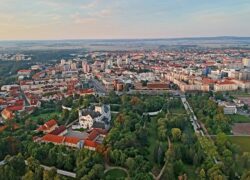
Pardubice set to approve new zoning plan by late 2025: Deputy Mayor Živný outlines progress

Pardubice is expected to approve a new zoning plan around late 2025 or early 2026, according to René Živný (Žijeme Pardubice), the city’s deputy mayor. Živný, who has overseen the zoning plan process since 2022, expressed regret over the prolonged timeline for finalizing the master plan.

“It’s unfortunate that it has taken so long to prepare the master plan. However, I won’t present the zoning plan to the deputies without prior groundwork. Recently, we had a presentation to review the progress,” said Živný.

The updated zoning plan will serve as a key document guiding land development in Pardubice for years to come. It is the primary reference for determining the permitted uses of specific land parcels. Throughout the preparation process, councillors have been kept informed via briefing notes. Before the plan’s official release, Živný intends to meet with political club representatives to further brief them, aiming to minimize extensive debate during the council’s review. “This way, we can avoid prolonged discussions at the council,” he noted.

A second public hearing on the master plan is scheduled before the summer holidays. The first hearing generated hundreds of comments, which Živný said require careful consideration. “We are working diligently to address the comments so that we are well-prepared for the second hearing. We plan to present the zoning plan to councillors at the turn of 2025 and 2026,” he said.

Živný anticipates that once the new zoning plan is adopted, there will likely be immediate requests for amendments, as has occurred in the past. The current plan, in place since 2001, has undergone more than 20 amendments, some of which involved lengthy discussions. “I expect numerous requests for changes to the new plan as well,” he added.

Source: CTK

Czech Republic to finalize D1 motorway by year-end, strengthening connection to Poland

The Czech Republic aims to open 74 kilometers of new highway sections this year, including the completion of its oldest and longest motorway, the D1. Stretching from Prague through Brno and Ostrava to Poland, the final 10-kilometer segment near Přerov is scheduled to become operational in December, ahead of initial plans, according to the Directorate of Roads and Highways (ŘSD).

Speaking in Prague on Tuesday, ŘSD Director-General Radek Mátl and Minister of Transport Martin Kupka highlighted the significance of the milestone. “The D1 motorway was the first highway built in the Czech Republic, and this year it will finally be completed in its entirety. The last 10 kilometers should open in December, marking a historic achievement,” Mátl stated. He also noted that the Brno bypass section of the D1, expanded from four to six lanes, is set for completion by spring.

Minister Kupka underscored the record budget allocated to road development in 2025, with over 80 billion crowns (more than 3 billion euros) dedicated to advancing the country’s highway network. “This year, we will not only open 74 kilometers of new highways but also begin construction on an additional 64 kilometers of highways and 45 kilometers of first-class roads,” Kupka said.

The D1 project is part of a broader vision to complete the Czech Republic’s basic motorway network by 2033. According to Mátl, approximately 350 kilometers of highways are still in various stages of preparation, with 178 kilometers of motorways and 62 kilometers of first-class roads currently under construction.

In addition to the D1, Kupka emphasized progress on other key projects, such as the Prague Ring Road and the D35 motorway, which is expected to ease congestion on the D1. He also highlighted the importance of infrastructure development for the Czech Republic’s economic growth and improved quality of life for its citizens.

Source: TASR

Slovak Parliamentary Committee to address land registry issues amid cybersecurity concerns

The Parliamentary Committee for the Control of the Activities of the National Security Authority (NBÚ) is set to investigate ongoing issues with Slovakia’s land register, including concerns over potential cyberattacks. The committee meeting, called by its chairman Roman Mikulec (For the People, KÚ), will include the participation of Roman Konečný, Director of the NBÚ, and Juraj Celler, Director of the Office of Geodesy, Cartography, and Cadastre (ÚGKK). However, the exact date for the meeting has not yet been announced.

Mikulec, addressing the issue on social media, criticized the lack of transparency from the coalition and the Ministry of the Interior. He stated that the directors would be asked to explain the root causes of the land registry’s problems, whether these issues stem from cyberattacks, and why the cadastre remains non-operational. “We will demand answers about how citizens’ data is being protected and why such a vital system like the cadastre is failing in the 21st century, leaving citizens feeling vulnerable,” Mikulec remarked.

Opposition voices have echoed these concerns. Ján Hargaš (Progressive Slovakia, PS) noted the Ministry of the Interior’s ongoing digitization project but criticized the lack of communication regarding potential cybersecurity threats. “The absence of clear communication on this matter undermines public trust in the government’s ability to protect citizens’ data,” Hargaš stated.

The Christian Democratic Movement (KDH) also called on Interior Minister Matúš Šut’ito (Voice-SD) to publicly address rumors of a cyberattack on the cadastre. Viliam Karas, Vice-President of KDH, urged Šut’ito to confirm or deny reports that hackers may have encrypted cadastral data, rendering it inaccessible to the state. “Given the serious implications for national security, the public must be informed immediately about whether their property rights are at risk and whether the government has control over the situation,” Karas said in a statement.

Meanwhile, the Presidium of the Police Force announced that the Office for the Fight Against Organized Crime (ÚBOK) has launched an investigation into suspected tampering with the cadastre’s computer systems.

The cadastre has been non-operational since Tuesday, January 7, with limited services initially promised in the following days. However, a statement on the ÚGKK website indicated that the system remained inaccessible as of Wednesday. The office further noted that a limited-service regime is expected to be in place from January 9, 2025, at cadastral departments of district offices.

Source: TASR

Hackers target Slovak Land Registry in major cyberattack, data recovery uncertain

Hackers have attacked the servers of Slovakia’s Office of Geodesy, Cartography, and Cadastre, disrupting the electronic services of the cadastre and causing significant operational challenges for cadastral departments at district offices. The attackers used ransomware to encrypt the data and are demanding a seven-figure ransom in dollars for its restoration.

The Ministry of Interior confirmed the large-scale cyberattack, which originated from abroad, labeling it one of the most severe in Slovakia’s history in terms of its impact on citizens. The office is now working to recover the encrypted data and restore cadastral services, but challenges abound.

According to reports from Živé.sk, the office lacks robust backup systems that could facilitate a swift recovery. Regular automated backups were reportedly not performed, meaning data restoration may take weeks or even months. In some cases, data might be permanently lost, forcing the state to rely on printed records or electronic versions from other systems.

It remains unclear whether the hackers exfiltrated the data in addition to encrypting it on state servers. Typically, ransomware attacks involve data theft to extort victims for both decryption and preventing the release of sensitive information.

The absence of accessible cadastral data is expected to cause significant disruptions. Proposals for entries into the cadastre may either be impossible or require manual submission. Additionally, the state cannot approve changes to land records until all data is recovered. Already authorized changes may need to be re-entered into the system, creating potential chaos as parties might only possess unverified document copies. Proving the validity of certain transactions could become a lengthy and complex process.

Experts caution against paying the ransom, citing no guarantees that the attackers will restore the data or refrain from launching further attacks.

The Ministry of Interior has announced the indefinite closure of cadastral departments while efforts to address the breach continue. Police are investigating the incident, with the Office for the Fight Against Organized Crime (ÚBOK) leading efforts to identify the perpetrators and determine the legal classification of the crime.

This cyberattack has highlighted vulnerabilities in Slovakia’s digital infrastructure, particularly in critical public services, and raised questions about the adequacy of cybersecurity measures.

Source: Živé and HNonline

Older apartment prices surge 17% in Czech Republic, with further increases expected

The cost of older apartments in the Czech Republic rose by an average of 17% year-on-year in the final quarter of 2024, reaching a median price of CZK 68,421 per square meter, according to an analysis by real estate platform FérMaklér.cz shared with the Czech News Agency. Prices have continued to climb across all major cities, with no declines observed even in quarter-on-quarter comparisons. The increases are attributed to limited real estate supply and buyers’ willingness to accept higher mortgage costs.

The most significant price hikes were seen in Ostrava and Ústí nad Labem, where older apartment prices grew by around 20% year-on-year in Q4 2024. Other cities also experienced notable increases:
• Pilsen and České Budějovice: +15%
• Prague: +12%
• Brno: +10%
• Hradec Králové: +11%

In absolute terms, Prague remains the most expensive city, with the cost per square meter rising by nearly CZK 15,000 year-on-year to CZK 136,652 at the end of 2024. Brno followed at CZK 106,865 per square meter, with the average price for an 80-square-meter apartment increasing by CZK 756,000 year-on-year.

Despite significant growth, Ostrava and Ústí nad Labem remain the most affordable, with square meter prices at CZK 53,509 and CZK 38,119, respectively. However, these cities also saw sharp absolute increases, with an 80-square-meter apartment in Ostrava up by CZK 722,000 and in Ústí nad Labem by CZK 498,000.

The rise in apartment prices is primarily attributed to a lack of available properties on the market and a continued willingness among buyers to accept elevated mortgage rates. According to data from ČSOB stavební spořitelna banka, housing loans in 2024 reached CZK 305 billion, CZK 135 billion more than in 2023. Mortgage volumes rose sharply to CZK 256 billion compared to CZK 137 billion the previous year.

While the average mortgage rate has slightly declined, reaching 5.13% in January 2025 according to the Swiss Life Hypoindex, it remains high. For a CZK 3.5 million mortgage with 80% loan-to-value (LTV) and a 25-year term, the monthly repayment was CZK 20,730 in January, down CZK 1,000 compared to the same period last year.

Experts predict continued demand for real estate in 2025, driven by a combination of low housing construction rates and restricted supply. As a result, prices of older apartments are expected to rise further, albeit at a slower pace, with single-digit percentage increases anticipated.

Rising property prices are likely to be accompanied by higher rents, reflecting limited housing availability and increasing demand across both the ownership and rental markets.

Source: CTK, FairMaklér.cz and Valuo.cz

Retail prices in Poland rose by 5.6% year-on-year in December

Retail prices in Poland increased by an average of 5.6% year-on-year in December 2024, according to a report by UCE Research and WSB Merito universities. This marks a slight rise compared to the previous months, which saw increases of 5.5% in November and 5.4% in October.

“Prices in stores continue to grow steadily. While the rate of increase has not accelerated, it remains persistent. In December, daily shopping costs rose by 5.6% year-on-year, only marginally higher than the preceding months. As in previous months, all analyzed categories recorded price increases, with the largest being in household cleaning products, which surged by 10.3%,” the report stated.

Key Price Changes

Several product categories experienced significant price hikes in December:
• Household cleaning products: +10.3%
• Fats (butter, margarine, oil): +8.8%
• Vegetables: +8.6%
• Sweets and desserts: +8.4%
• Fruits: +8.2%

On the other hand, categories with the smallest increases included:
• Pet food: +0.2%
• Dry goods: +0.3%
• Personal care products: +0.4%

“The continued price growth aligns with overall inflation trends. However, the slight slowdown in the rate of increase reflects decreased consumer demand, as indicated by weak retail sales data in Poland,” said Tomasz Kopyściański from WSB Merito University.

He also noted that pre-Christmas promotions and fierce price competition among retail chains mitigated further price increases. Retail chains reportedly reduced margins on certain products and offered additional discounts, which analysts estimate may have prevented an even higher price rise of 0.5% to 0.8%.

The report highlighted that all 17 monitored product categories saw price increases in December, ranging from 0.2% to 10.3%. This pattern was consistent with November, though the range of increases was narrower. The moderation in December’s upper price growth was attributed to the stabilization of vegetable prices, which had surged by 16.6% year-on-year in November.

The study analyzed 17 product categories, covering over 100 of the most commonly purchased items by consumers. Data was collected from more than 74,500 retail prices across nearly 35,000 stores belonging to 61 retail chains.

The findings underscore the impact of inflationary pressures on consumer goods and suggest that while price growth may be slowing, household budgets remain under strain.

Source: UCE Research, WSB Merito universities and ISBnews

Polish budget constraints hamper retail optimization efforts

Budget constraints are the primary obstacle to retail optimization for 59% of Polish retailers, according to the latest Retail Barometer by Future Mind. Resistance to change was also cited as a challenge by 32% of respondents. Despite these hurdles, 41% of industry experts believe 2025 will be a more favorable year for the retail sector, the report revealed.

According to the report, 32% of retail experts identified assortment, pricing, and promotions as the most promising areas for improving business processes. Many companies are focusing on optimization strategies to counter rising operational costs. Among these, 41% of respondents emphasized supplier negotiations, while another 41% pointed to personnel management as critical to reducing expenses.

Investment in inventory and warehouse management has yielded the highest returns on past optimization efforts. In 2025, more retailers are expected to adopt advanced technologies, such as AI-based inventory forecasting, automated replenishment systems, and electronic shelf labels (ESLs).

“Technological solutions are crucial for process optimization and boosting sales,” said Emil Waszkowski, head of strategy at Future Mind. He highlighted tools like planogram verifiers, which use image recognition to ensure proper product placement, and ESLs, which enable real-time price adjustments to enhance efficiency and margins.

Waszkowski also pointed to innovative testing by major retailers like Lidl, which is experimenting with “Scan and Go” technology in select stores. If successful, this approach could significantly reduce labor costs and be adopted by other large retail chains.

The report notes that resource planning systems (ERP) are the most widely used technology among large retailers (64%), followed by customer relationship management (CRM) and warehouse management systems (WMS) at 57%. Retailers are also increasingly deploying supply chain visibility platforms, big data analytics systems, and mobile applications for employees.

Despite the growing interest in advanced technologies like IoT, RFiD, and AI, only 6% of retailers have implemented AI for process automation. This gap is largely attributed to budget constraints, cited as the top barrier to optimization initiatives.

In response, many companies are prioritizing investments in cloud technology and data analytics, with over one-third planning to increase or maintain spending in these areas. Retailers are also leveraging digital tools to mitigate rising operational costs, with twice as many companies planning to adopt in-store technologies in 2025 compared to the previous year.

Despite the challenging economic environment, the report notes a sense of cautious optimism in the retail sector. Experts emphasize that the success of optimization efforts hinges not only on technology adoption but also on a shift in process management strategies.

“With the rapidly changing economic conditions, targeted actions to improve efficiency will be critical for the success of Polish retail,” the report concludes.

The Retail Barometer was based on a survey conducted among 34 industry experts and decision-makers in the retail sector using the CAWI method. The project was developed in collaboration with the editorial team of Wiadomości Handlowe.

Source: Future Mind and ISBnews

LATEST NEWS