Czechia: Consumer prices decline month-on-month, annual inflation at 3.0% in December 2024

Month-on-Month Overview
Consumer prices in December 2024 decreased by 0.3% compared to November, driven primarily by declines in the prices of food and non-alcoholic beverages and alcoholic beverages and tobacco.
• In the food and non-alcoholic beverages category, notable price drops included:
• Fruit: -2.8%
• Vegetables: -1.8%
• Poultry: -2.2%
• Pork: -1.9%
• UHT semi-skimmed milk: -4.0%
• Cheese and curd: -1.0%
• However, prices of potatoes rose significantly (+10.9%), as did butter prices (+5.1%).
• In alcoholic beverages and tobacco, decreases were observed in:
• Wine: -5.5%
• Spirits: -2.5%
• Beer: -1.2%

In housing, water, electricity, gas, and other fuels, natural gas prices dropped by 2.4%. Additionally, prices for personal care products and services under miscellaneous goods and services decreased by 1.1%.

Overall, the prices of goods decreased by 0.5%, while service prices remained unchanged compared to November.

Year-on-Year Comparison
Consumer prices rose by 3.0% in December 2024 compared to the same month in 2023, up 0.2 percentage points from November.

Key contributors to this acceleration included:
• Food and non-alcoholic beverages:
• Eggs: +36.3% (up from +31.7% in November)
• Oils and fats: +16.9% (up from +10.0%)
• Fruit: +5.9% (up from +2.8%)
• Chocolate and chocolate products: +28.0% (up from +15.8%)
• Transport: Slower declines in fuel and lubricant prices (-2.6% year-on-year compared to -7.6% in November).

The greatest influence on the annual price increase came from:
1. Housing, water, electricity, gas, and other fuels:
• Rentals: +6.2%
• Water supply: +10.9%
• Sewage collection: +13.4%
• Electricity: +8.0%
• Heat and hot water: +8.5%
• Natural gas prices decreased by 5.5%.
2. Alcoholic beverages and tobacco:
• Spirits: +3.4%
• Beer: +4.8%
• Tobacco products: +7.0%
• Wine prices decreased by 2.3%.
3. Restaurants and hotels:
• Catering services: +6.4%
• Accommodation services: +9.0%.
4. Recreation and culture: Package holiday prices increased by 4.9%.

Price reductions were noted in clothing and footwear, with garments down 0.4% and footwear down 2.3%.

Goods prices increased by 1.7% year-on-year, while services rose by 5.0%.

2024 Average Inflation
The average inflation rate for 2024 was 2.4%, with goods prices rising by 0.9% and services by 5.1%. Pavla Sediva, head of the Consumer Price Statistics Unit at CZSO, stated, “The year’s inflation figures reflect relatively stable developments despite challenging market conditions.”

Harmonized Index of Consumer Prices (HICP)
Preliminary data indicate that the HICP for Czechia in December fell by 0.3% month-on-month but rose by 3.3% year-on-year (up from 3.1% in November).
• In the Eurozone, the MUICP stood at 2.4% in December, with the highest inflation in Croatia (4.5%) and the lowest in Ireland (1.0%).
• For the EU27, the average HICP in November was 2.5%, with the highest inflation in Romania (5.4%) and the lowest in Ireland (0.5%).

The consumer price index, based on the 2015 average as a base period, reached 152.0% in December, compared to 152.4% in November.

This summary provides an in-depth look at consumer price trends in 2024, demonstrating the dynamics of inflation across various sectors.

Source: Czech Statistical Office
Murapol reports strong Q4 2024 performance with increased sales and handover volumes

Murapol sold 873 units to retail customers in Q4 2024, up from 840 units in the same period last year. The company handed over 1,195 units during the quarter, a significant increase from 567 in Q4 2023, it announced.

“These operating results reflect a solid performance despite challenging macroeconomic and market conditions. We have strengthened our position in both the retail and PRS (Private Rented Sector) segments, selling nearly 3,900 units in total and achieving over 4,000 booked units,” said Murapol President Nikodem Iskra. “In Q4 alone, we signed nearly 900 development and preliminary agreements with retail customers and sold an additional 948 units in the PRS segment.”

Murapol’s strategy of systematically expanding its product offerings has been key to its success. In 2024, the company made over 3,900 units available to retail customers across 16 cities. The group also entered new markets, launching its first project in Lublin and preparing residential developments in Kielce and Częstochowa.

In 2024, Murapol concluded 2,914 development and preliminary agreements with retail clients, a slight increase from 2,889 in 2023 (+0.9%). As of December 31, 2024, the company held 161 paid-up booking agreements after accounting for cancellations, compared to 142 at the end of 2023.

The PRS segment also showed robust performance, with the sale of 948 units under the design-and-build model for institutional leases.

Combined net sales in retail and PRS reached 3,862 units in 2024, up 7.8% from 3,582 in 2023. Including paid-up booking agreements, total sales reached 4,023 units, an 8% increase from 3,724 in 2023.

In terms of handovers, Murapol delivered keys to 2,915 retail units in 2024, a 4.1% rise from 2,801 in the previous year. In Q4 alone, 1,195 retail units were delivered, a remarkable 110.8% increase compared to 567 units in Q4 2023. The PRS segment accounted for 670 additional handovers.

Murapol introduced 3,911 units across 16 projects in 13 cities during 2024, a 3.7% increase from 3,770 units in 2023. Key markets included Kraków, Wrocław, Łódź, Poznań, Gdańsk, and the Silesian Agglomeration, as well as new developments in Lublin.

By year-end 2024, Murapol’s portfolio comprised 4,618 available units across 16 cities. The group was constructing 7,756 units in 101 buildings under 28 projects in 14 cities. This included 6,115 units in the retail segment and 1,641 in PRS.

Murapol also continued to expand its active land bank, which at the end of 2024 could accommodate over 19,300 units with a total usable area of nearly 822,000 sqm across 19 cities.

Source: Murapol and ISBnews
Photo: Murapol Corfa, Katowice

MCI Capital projects growth in 2025, supported by attractive dividend policy

MCI Capital anticipates a strong 2025, driven by new investments in sectors like food e-commerce and Traveltech SaaS. The company’s attractive dividend policy, offering 4% of net assets annually, is expected to enhance shareholder value, according to Paweł Borys, Managing Partner at MCI Capital.

“On one hand, we are navigating a ‘soft landing’ scenario, with stable economic growth supported by strong labor markets, rising real wages, and declining inflation. On the other hand, industry performance remains weak, particularly in the eurozone, where demand is subdued. This weak demand is partially offset by high fiscal deficits in markets like Poland and the U.S.,” said Borys.

He highlighted key economic challenges, noting that while inflation, budget deficits, and interest rates hover at high levels, GDP growth, consumption, and investment are underperforming. “This imbalance is occurring amid heightened geopolitical tensions and the most pronounced political polarization in decades. Market interest rates have also risen significantly in recent quarters, reflecting concerns over prolonged inflation,” Borys added.

Comparing the persistence of high interest rates to “cooking the frog,” Borys characterized the investment environment as challenging. He outlined two potential outcomes for 2026: a mild economic slowdown paired with stabilized inflation and normalized interest rates, or a more severe risk of recession. The first scenario remains the company’s baseline outlook.

Despite economic volatility, Borys sees opportunities in the technology sector, where MCI Capital has specialized for 25 years. “The rapid pace of technological change creates attractive investment opportunities, particularly in companies driving digital transformation, offering SaaS solutions, or developing digital brands in e-commerce,” he said.

Borys expects investment conditions in both private and public markets to improve in the coming quarters, aided by projected interest rate cuts. “In Poland, interest rates should drop to 5% by the end of this year, and stabilize at around 3.5% over the next two years,” he explained.

MCI Capital’s recent investments, including NTFY in food e-commerce and Profitroom in the Traveltech SaaS sector, reflect the fund’s strategy to focus on digital champions. These investments are aligned with MCI’s long-standing expertise in technology-driven companies, such as Mall.cz, WP.pl, and Dotpay/eCard.

“As a listed fund, we expect significant results in 2025, supported by our 4% dividend policy based on net assets. This strategy is designed to deliver dynamic value growth for MCI Capital shareholders,” Borys concluded.

MCI Capital is one of Central Europe’s largest technology-focused investment funds, investing €25–100 million in digital transformation leaders and IT infrastructure. Its portfolio includes high-profile investments in companies like Mall.cz (e-commerce), WP.pl (digital media), Invia (e-travel), Dotpay/eCard (fintech), iZettle (fintech), and ATM SA (data centers).

Source: MCI Capital and ISBnews
Photo: Paweł Borys, Managing Partner at MCI Capital

Supervisory Board of LEG Immobilien SE extends contracts of Management Board

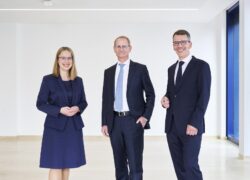
The Supervisory Board decided on the long-term composition of the Management Board of LEG Immobilien SE. It was unanimously decided to adjust and extend the contracts of all three members of the Management Board. This ensures that the company’s successful development can be continued consistently and with a high degree of personnel continuity.

Dr. Kathrin Köhling (41) has been reappointed as a member of the Management Board and Chief Financial Officer (CFO) of the company for a period of five years with effect from April 1, 2025. She has held this office since April 1, 2023.

Dr. Volker Wiegel (48) has been reappointed as a member of the Management Board and Chief Operation Officer (COO) of the company for a period of three years with effect from January 1, 2026. He has held the position since June 1, 2019.

Lars von Lackum (49) has been reappointed as a member of the Management Board and as Chief Executive Officer (CEO) for a period of five years with effect from January 1, 2026. Von Lackum was first appointed to the Management Board of LEG Immobilien SE as CDO with effect from January 1, 2019, and has been CEO since June 1, 2019.

Michael Zimmer, Chairman of the Supervisory Board: “With personnel decisions, the Supervisory Board of LEG Immobilien SE is rewarding the excellent performance of one of the youngest and most successful management teams in the housing industry and sending an important signal of continuity in times of ongoing change. We are very much looking forward to continuing our work together and have many plans for the future. As a leading housing company, LEG will continue to pursue a sustainable and value-driven course as a responsible landlord and attractive employer with its well-perceived management team.”

Trei divests two retail rarks to VALUES and GRR in Germany

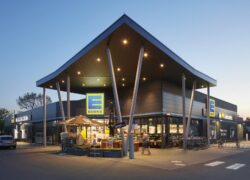
Trei Real Estate GmbH (“Trei”), an international developer and asset manager specializing in residential and retail properties, has sold two retail parks in Germany—one in Düsseldorf and another in Mönchengladbach. VALUES Real Estate, a property developer and investment manager, purchased the Düsseldorf property for a separate account mandate focusing on local convenience retail. GRR GARBE Retail Real Estate GmbH (“GRR GARBE Retail”) acquired the Mönchengladbach property, which will be added to its GRR German Retail Fund No. 4. The financial terms of the transactions remain undisclosed.

Pepijn Morshuis, CEO of Trei, stated: “We regularly review our portfolio to ensure alignment with our strategic goals. Over recent years, we have consistently sold properties outside the ‘supermarkets’ segment as part of our portfolio optimization strategy, which we aim to conclude by the end of 2025.”

Düsseldorf Property
The Düsseldorf retail park, built in 2015, spans 10,975 square meters and includes a lettable area of 3,552 square meters. Tenants comprise an Edeka full-line supermarket, a Rossmann drugstore, a Fressnapf pet supplies store, a hairdresser, and a Volksbank branch. Located near the A44 motorway, Düsseldorf Airport, and the city’s fairgrounds, the park offers convenient access for visitors.

Mönchengladbach Property
Completed in 2011, the Mönchengladbach retail park offers 3,250 square meters of lettable space across two floors. Tenants include an Edeka supermarket, a KiK clothing store, and various service providers. The site features gastronomic amenities, 96 on-site parking spaces, and spans 6,372 square meters. Its strategic location at the intersection of two major roads ensures easy access by bus and rail services.

Cushman & Wakefield acted as the agent for Trei during both sales, while legal counsel was provided by the law firm Dentons.

Polish future inflation index signals persistent pro-inflationary pressures

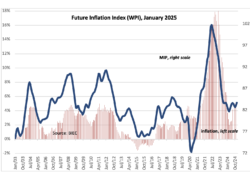
The Future Inflation Index (WPI), which predicts price trends for consumer goods and services several months in advance, rose by 0.7 points in January 2025 compared to the previous month. This marks the second consecutive monthly increase, suggesting that pro-inflationary pressures remain strong. While inflation may dip below 5% periodically, a sustained decline to align with the NBP’s inflation target is unlikely this year.

Manufacturing companies are increasingly indicating plans to raise prices, particularly in sectors producing durable and non-durable consumer goods. Industries such as food, clothing, household appliances, and electronics are leading this trend, with a net balance of around 16 percentage points more firms planning price hikes than reductions. In the vehicle manufacturing sector (excluding cars), this net balance rises to approximately 23 percentage points.

Consumer inflation expectations have remained consistent, with 84% of respondents in December anticipating price increases. However, there has been a shift in the structure of these responses: more consumers now expect prices to rise at the current pace, while fewer predict slower-than-expected increases.

Producers’ expectations, however, carry greater weight in forecasting inflation trends. Unlike consumers, who base their expectations on recent price movements, producers reflect their operational plans, which depend on market demand and their competitive position. These plans are likely to materialize if conditions allow.

Global raw material prices have shown stability in recent months, with the IMF’s commodity price index remaining relatively steady over the past quarter. However, oil prices have been rising in recent weeks due to seasonal factors, a colder-than-usual winter in the U.S. and Europe, and geopolitical disruptions affecting supply. Meanwhile, food prices have declined since November, when the FAO Food Price Index hit a recent peak.

These dynamics underline a complex inflationary landscape, where stabilizing factors such as raw material prices are offset by persistent pressures from manufacturing sectors and rising energy costs.

Source: BIEC

Challenges for Real Estate Investment Financing in 2025

The real estate investment landscape in 2025 presents several challenges, particularly regarding sustainability requirements and compliance with evolving ESG (Environmental, Social, and Governance) standards. These challenges are no longer optional but are becoming legally binding, driven by regulations such as the Corporate Sustainability Reporting Directive (CSRD) and its incorporation into national laws.

“In both the US and Europe, environmental considerations in real estate projects are increasingly pivotal, shaped by regulatory frameworks and growing client expectations,” notes Dr. Jan Gąsiorowski, Senior Associate at the Warsaw office of Wolf Theiss. “The EU Taxonomy Regulation and the Sustainable Finance Disclosure Regulation have fundamentally reshaped how financial institutions approach real estate financing.”

The Polish real estate market faces unique hurdles, especially with aging buildings. Upgrading these properties to meet new ESG standards and ensuring compliance for new developments impose significant financial strains. Starting in 2025, the Electromobility and Fuels Act in Poland will require buildings with more than 20 parking spaces to include a minimum number of charging points. Additionally, increased scrutiny on carbon footprints, including those of construction materials, is expected. The introduction of energy efficiency classifications for buildings will add to these financial pressures.

“All these factors are driving up initial investment costs,” Dr. Gąsiorowski explains. “Energy-efficient technologies, renewable energy solutions, and waste management systems significantly increase project expenses. Yet, non-compliance with ESG standards poses even greater risks, such as difficulties in securing financing or higher borrowing costs. Some foreign financial institutions have already announced plans to halt funding for projects that fail to meet minimum environmental standards.”

Investors and developers are also under growing societal pressure. Tenants are increasingly prioritizing environmentally sustainable spaces due to personal values and the nature of their businesses. According to Cushman & Wakefield’s study, Rethinking European Offices 2030: Risks and Opportunities from Obsolescence, a shift is occurring across Europe, with tenants seeking premium office spaces in city centers that align with modern sustainability standards.

“The risk of older properties becoming obsolete is rising, particularly for those not upgraded to meet current standards,” warns Dr. Gąsiorowski. “This growing risk contributes to discussions about a potential ‘carbon bubble’ in the real estate market.”

A carbon bubble refers to the overvaluation of properties that fail to account for ESG transition risks. Such properties could experience sharp value declines, leading to rental market disruptions. Cushman & Wakefield’s data highlights that up to 76% of European office buildings could become obsolete by 2030 unless significant investments are made in modernization or repurposing.

Poland may eventually follow Western economies in introducing tax incentives, subsidies, and other support mechanisms to encourage green building initiatives. In more developed markets, such policies have spurred adoption of sustainable practices, which could serve as a model for Poland to meet market demands and regulatory expectations.

In addition to ESG challenges, 2025 brings financial pressures from the European Central Bank’s decision to maintain higher interest rates. “Financing costs are now 150-200 basis points higher than developers were accustomed to just two years ago,” observes Dr. Gąsiorowski.

The office sector faces further uncertainty due to the rise of remote work. Many tenants, as their leases expire, are downsizing. Cushman & Wakefield reports that average leased office spaces in Warsaw have shrunk to around 900 sqm, compared to 1,000-1,200 sqm in 2017-2019.

Despite these challenges, Poland’s real estate market remains resilient, particularly in the ESG-compliant segment. “The key to success will lie in strategic planning that aligns regulatory compliance with financial objectives and capitalizes on public support mechanisms,” Dr. Gąsiorowski concludes.

Transaction data from BNP Paribas Real Estate Poland supports this optimism. Between January and September 2024, the Polish commercial real estate market recorded transactions worth over €2.68 billion, marking a 57% year-on-year increase.

“Poland’s market foundations remain strong,” affirms Dr. Gąsiorowski. “Those who adapt proactively to new regulatory demands will emerge as market leaders in the years ahead.”

Source: Wolf Theiss
Photo: Dr. Jan Gąsiorowski, Senior Associate at the Warsaw office of Wolf Theiss

ATAL unveils new residential investment Hipoteczna Park in Łódź

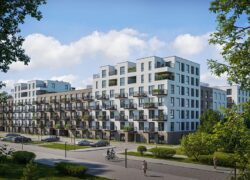
ATAL, a nationwide developer, has unveiled its latest project, Hipoteczna Park, located on Hipoteczna Street in Łódź. The development introduces 204 flats and 15 commercial premises, spread across two two-segment buildings. The project is characterized by its modern architecture, blending minimalism with functionality, and its prime location in a well-connected area of the city. Additionally, a neglected park within the project area will be revitalized into a recreational space for residents. Flats in a developer-ready condition are priced between PLN 9,400 and 11,700 per sqm.

ATAL has been investing in Łódź since 2007, playing a key role in shaping the city’s modern housing landscape. “Hipoteczna Park is another investment in the Bałuty district, which is undergoing an impressive transformation. The project caters to the needs of modern residents who value comfort and aesthetics,” said Agnieszka Majkusiak, ATAL’s sales director.

Hipoteczna Park offers a range of apartments from 32 to 106 sqm, catering to diverse needs—from compact studios to spacious four-room units. Each flat features a balcony, loggia, or terrace, while ground-floor units come with private gardens. Flexible layouts and the option for individual interior design provide residents with the freedom to personalize their spaces.

For buyers seeking convenience, ATAL offers a turnkey finishing service under its ATAL Design program, with four packages available: Invest, Basic, Optimum, and Premium.

The project includes 15 ground-floor commercial premises, ensuring residents can handle daily errands without leaving the estate. Additionally, a 24-square-metre building will be designated for community use.

A standout feature of Hipoteczna Park is the revitalization of the park at the corner of Hipoteczna and Srebrna Streets. The redevelopment includes new greenery, the maintenance of existing plants, walking paths, benches, green squares, and a children’s playground, creating a vibrant recreational space for residents.

Hipoteczna Park’s location offers proximity to green spaces like Julianowski Park and quick access to the city center and key areas of Łódź via major road arteries, trams, and buses. The project is also near the under-construction cross-town tunnel, connecting the Łódź Fabryczna, Łódź Kaliska, and Łódź Żabieniec stations. The nearest stop, Łódź Koziny, a multimodal interchange, will be just 1.5 km away, enabling fast underground travel across the city.

The area around Hipoteczna Street is rich in infrastructure, including shops, schools, kindergartens, and service points. It is also close to Manufaktura, Łódź’s largest shopping and entertainment center, offering a variety of retail, dining, and cultural attractions. Nearby landmarks like Piotrkowska Street and the Izrael Poznański Palace add historical and cultural value to the location.

Hipoteczna Park promises a blend of modern living, excellent connectivity, and vibrant surroundings, making it a highly attractive option for prospective residents in Łódź.

Jacobs Douwe Egberts extends lease at Warsaw’s Diuna complex

Jacobs Douwe Egberts PL Sp. z o.o. (JDE), the Polish subsidiary of JDE Peet’s, the world’s leading coffee and tea company, has renewed its lease agreement for nearly 1,300 square meters of office space in the Diuna complex, part of Syrena Real Estate’s portfolio. The extension ensures JDE’s continued presence in the Warsaw Służewiec district for the coming years.

JDE, with a legacy spanning over 265 years, operates in more than 100 countries and manages a portfolio of over 50 globally recognized coffee and tea brands, including Jacobs, L’OR, Senseo, Douwe Egberts, and Pickwick. The company, headquartered in the Netherlands, has been based in the Diuna complex since 2013. Colliers, a leading real estate agency, represented JDE in the lease renewal process.

“We are delighted that JDE has chosen to extend its stay at Diuna. This decision reflects the high standards of office space and services we provide,” said Ewa Lubańska, Leasing Director at Syrena Real Estate. “Our recent modernization efforts have created an even more inspiring and environmentally friendly workspace. We are proud of the positive feedback from our tenants and look forward to continuing our partnership with JDE.”

Formerly known as Marynarska Business Park, the Diuna complex has undergone significant modernization to meet current market standards. The refurbishment included revitalized outdoor areas, redesigned entrance lobbies, and the transformation of a 6,000 sq. m concrete car park into a lush, publicly accessible green space featuring 50 trees, 96 species of shrubs, a stream, and an educational pavilion.

The complex now boasts multiple sustainability certifications, including BREEAM In-Use (Excellent), WELL WSR, and WiredScore. These enhancements have made Diuna a modern, environmentally conscious workplace, attracting a diverse range of businesses.

With a total floor area of 46,000 sq. m, Diuna is home to prominent tenants such as Accord, Carrier Cooling, Colgate, Daikin Europe, Ford, Eurocash, Intrum, Oceanic, S.C. Johnson, and Business Lease. The complex also houses healthcare facilities, including a LUX MED clinic, the HARMONIA mental health clinic, and a 24-hour veterinary clinic, Veterio. Additionally, tenants and visitors can enjoy Green Caffè Nero and Gorąco Polecam cafes, alongside ample parking with 1,200 spaces across three underground levels.

JDE’s lease renewal underscores Diuna’s appeal as a top-tier office complex in Warsaw, reflecting its commitment to providing exceptional workplace environments and sustainable facilities.

CAPEXUS announces leadership changes to drive future growth

CAPEXUS, a specialist in modern commercial space development, has announced significant changes in its management team, effective January 1, 2025.

Vlastimil Vyskočáni, currently Director of the Building Energy Cluster and a member of the Board of Directors of CEZ ESCO, will assume the role of CEO and Chairman of the Board of Directors on a temporary basis. He takes over from Monika Younis, who concluded her tenure as CEO and Managing Director on December 31, 2024. The company expressed gratitude to Younis for her significant contributions in strengthening CAPEXUS’s market position.

The company’s Board of Directors will be bolstered by the addition of Alexandra Tomášková, previously Chief Commercial Officer (CCO). Starting January 1, 2025, the board will consist of three members: Vlastimil Vyskočáni (CEO), Blanka Marešová (CFO), and Alexandra Tomášková (CCO). Meanwhile, Eva Hýsková Hánová, who joined CAPEXUS during its transitional phase, stepped down from the Board of Managing Directors as planned on December 31, 2024.

In late 2024, the company also welcomed Jan Kaláb as Chief Technical Officer (CTO), succeeding Ludvík Lusk. This addition further reinforces CAPEXUS’s technical and operational capabilities.

CAPEXUS emphasized its commitment to maintaining a strong leadership team that will continue to deliver innovative solutions and achieve company goals. The organization expressed confidence that these leadership changes will pave the way for sustained growth and success in the years ahead.

These strategic appointments underscore CAPEXUS’s dedication to adaptability and excellence in the dynamic commercial space sector.

LATEST NEWS