Central Group achieves record pipeline with nearly 1,100 apartments completed in 2024

Central Group achieved significant milestones in 2024 by completing nearly 1,100 new apartments, providing homes for more than 2,000 residents. With its ambitious plans for the future, the company currently has a record-breaking 3,200 apartments worth over CZK 25 billion under construction, the highest in its history. Central Group also plans to launch the construction of an additional 1,600 apartments this year.

Preliminary figures indicate that last year’s sales of new apartments in Prague rivaled the record year of 2021. Central Group recorded a remarkable 60% year-on-year increase in sales, selling over 1,000 new apartments.

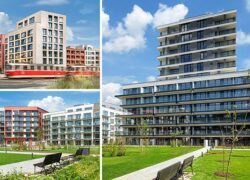
In mid-2024, Central Group completed two key projects: the Kotlaska Residence near the Palmovka metro station, featuring luxury apartments, and the first phase of its flagship project, Park Quarter in Nový Žižkov, which includes nearly 390 apartments. By the end of the year, the company delivered two more major developments: the U Hostivařské přehrady project with 290 apartments and the first stage of the Tesla Hloubětín residential district with 350 apartments. Tesla Hloubětín became the best-selling project on the Prague market last year, with over 350 units sold across all phases.

Central Group is poised for another strong year, with around 3,200 apartments currently under construction and plans to sell approximately 1,500 new units in 2025. The company’s goal is to reach annual sales of 2,000 apartments by 2026.

“Demand for housing is expected to grow even further,” said Jana Martínková, Sales Director at Central Group. “Our record level of construction ensures we can meet this demand, with 1,600 new apartments set to break ground this year. These projects will gradually become available for sale over the next two years.”

Central Group continues to expand its development portfolio through strategic acquisitions. Last year, the company finalized the purchase of a major site in Karlín, one of the largest real estate transactions in the Czech market in 2024. The developer’s pipeline now includes more than 35,000 apartments, accounting for approximately 25% of all planned residential units in Prague.

Despite high bank margins and a gradual reduction in mortgage rates in 2024, the mortgage market saw significant growth. Central Group anticipates this momentum will carry over into 2025, particularly as banks compete for clients early in the year, potentially accelerating the decline in rates.

“With improving mortgage conditions, we are optimistic that demand for housing will remain strong throughout 2025,” Martínková added. “We plan to launch around 2,000 new apartments this year, including ongoing phases of Park Quarter, the best-selling luxury apartment project in Prague, and Tesla Hloubětín, which leads the market overall. We are also preparing several smaller projects and new developments.”

Central Group’s robust development pipeline and strategic focus on high-demand areas position the company to maintain its leadership in the Czech residential market. With favorable market conditions and continued growth in demand, 2025 is set to be another transformative year for the developer and the Prague housing market.

Source: Central Group
Poland: Secondary housing market prices stabilize, small declines seen in studio apartments in Q4

Housing prices on the secondary market stabilized during the fourth quarter of 2024, with slight decreases observed in studio apartments across eight regional capitals, according to data from Nieruchomosci-online.pl. In these cities, average prices for studios dropped by a maximum of 3-4%, with most reductions falling within the range of 1-2%.

For buyers with cash or mortgage approval in 2024 who chose to wait for more favorable pricing, this strategy appears to have paid off. During the final quarter of the year, price stabilization or slight reductions were more common than increases in major provincial cities. This trend was particularly evident in listings for one- and two-room apartments, the report indicated.

In the case of one-room apartments, fewer cities continued the trend of rising prices compared to earlier in the year. In the third quarter, seven cities saw price increases, but this number fell to four in the fourth quarter: Wrocław, Rzeszów (increases below 2%), and Opole and Bydgoszcz (increases of up to 5%).

In contrast, eight cities experienced price declines for studio apartments: Białystok, Gdańsk, Katowice, Lublin, Łódź, Olsztyn, Szczecin, and Warsaw. Sellers in these cities appeared to adjust their expectations to align with more challenging market realities. The average asking prices in these locations decreased slightly, with reductions typically in the 1-2% range and up to 3-4% in some cases.

Price stabilization was also observed in Kraków, Poznań, Toruń, Gorzów Wielkopolski, and Kielce, where average rates per square meter changed by less than 1% compared to the third quarter.

For two-room apartments, stabilization dominated the market. Eight cities, including Bydgoszcz, Kielce, Kraków, Łódź, Poznań, Rzeszów, Toruń, and Wrocław, saw little change in prices. Slight decreases of 2-3% were noted in Warsaw, Gdańsk, Gorzów Wielkopolski, and Lublin, while other cities recorded small increases of 1-5%.

Rafał Bieńkowski from Nieruchomosci-online.pl noted a growing trend among sellers to adopt more realistic pricing strategies to facilitate faster sales. He commented, “Some sellers are recognizing the need to adjust their asking prices to reflect current market conditions, as fears of a real price correction are becoming more widespread.”

Despite stabilization in smaller apartments, three-room units, which are often considered more challenging to sell, continued to see price increases. In ten cities, sellers raised their expectations, with asking prices typically rising by 2-3% quarter-on-quarter.

Year-over-year comparisons reveal that housing prices remain higher across the board, despite the recent stabilization. According to Bieńkowski, “While bid prices have adapted slightly to weaker demand in some locations, year-on-year prices remain higher, with increases ranging from 3% to 13%, depending on the city and area.”

The number of property listings on the portal increased by 5% quarter-on-quarter in Q4 2024 and by 27% year-on-year. This growth is partly attributed to the natural replenishment of listings following the “Safe Credit 2%” program’s end in late 2023, which had temporarily reduced market offerings. Additionally, some investment property owners, faced with stagnating prices, may have decided it was time to sell.

“At the end of 2023, supply was limited due to the Safe Credit program, but 2024 brought a natural recovery in listings. Slower demand has also led to properties staying on the market longer, contributing to the increased volume of advertisements,” Bieńkowski concluded.

Source: Nieruchomosci-online.pl and ISBnews

State Treasury emerges as a key player in Poland’s office market

The involvement of state entities in Poland’s office sector is steadily growing, positioning the State Treasury as a significant force shaping the market. Over the coming years, administrative institutions and state-owned enterprises are expected to play an increasingly active role, not just as tenants but as investors, developers, and asset managers. This influence will drive modernization, acquisition, sale, and construction of office properties to meet public sector needs.

In Warsaw, where a supply gap is already evident, the heightened activity of public entities is poised to influence decisions regarding new office developments. Projects such as Drucianka Campus, Fort 7, and subsequent phases of The Park Warsaw are in the pipeline, showcasing the capital’s evolving landscape. Investors view this government involvement as a catalyst for unlocking resources and stimulating new projects.

Emilia Legierska, Transaction Director at Walter Herz, noted that the Polish office market remains highly resilient, driven by robust demand from the public sector. This demand, coupled with the growing emphasis on returning to on-site work, has brought leasing activity close to pre-pandemic levels. Large-scale lease agreements by government units and state-owned companies are expected to further boost transaction volumes this year.

Despite regional markets offering an ample supply of office spaces, Warsaw faces a scarcity of large, modern office areas. This shortage has driven an uptick in pre-lease agreements, which made up a significant portion of total lease volumes in the latter half of 2024. While regional markets have seen a halt in new office investments, Warsaw remains a focal point, with projects like The Bridge, Studio II, Office House, Skyliner II, UpperOne, Warta Tower, and Vena currently under development.

Strategic Investments by State Entities

Public entities have increasingly been consolidating and modernizing their administrative spaces, reflecting a more strategic approach to real estate management. Notable examples include the Greater Poland Regional Office of the National Health Fund (NFZ) relocating to a modern office in Poznań and the modernization of its facility at Chałubińskiego Street in Warsaw. Similarly, Bank Gospodarstwa Krajowego (BGK) extended its lease within the prestigious Varso Place complex in Warsaw.

Polish State Railways (PKP), in collaboration with HB Reavis, redeveloped the area around Warsaw West Station, while PKP’s Xcity Investment and Ghelamco are launching a new project near Warsaw Gdańsk Station. PKP’s decision to release land for business purposes is set to enhance Warsaw’s office market supply, with a 2.4-hectare plot near the station earmarked for a new business hub.

State-owned enterprises are also optimizing their portfolios. Bank Pekao S.A. has put its long-standing headquarters on Grzybowska Street in Warsaw up for sale, while the Institute of Environmental Protection plans to sell its office-laboratory building. Meanwhile, Polish Transmission System Operator (PSE) is constructing a 158,000-square-meter headquarters in Radom, expected to open early this year.

PZU, the state insurance company, has moved its operations to Skanska’s Generation Park Y in Warsaw and is planning to redevelop its former headquarters. The PZU Tower on Grzybowska Street is set for demolition, with plans for a modern 150-meter skyscraper to replace it.

Domestic Capital Gains Prominence

Polish capital has emerged as a growing force in commercial real estate investments. In 2024, domestic investors accounted for 10-15% of investment transactions in the office market during the first half of the year, double the share recorded in the previous year. This marked a departure from the historically low average of 2% prior to 2022.

Katarzyna Tencza, Transaction Director at Walter Herz, highlighted the resurgence of investment activity in Poland’s commercial real estate market, noting exponential growth in the office sector. Transaction volumes reached €1.6 billion in 2024, almost four times the figure from 2023.

The sale of the Warsaw Unit building for €280 million underscored the market’s strength, representing the largest office transaction not only in Poland but in Europe. Other significant transactions included the sale of the Nowy Rynek E office building in Poznań.

With anticipated interest rate cuts and attractive returns on the horizon, the office sector is set to draw further interest from investors, both in Warsaw and regional markets. These developments, coupled with the active role of state entities, signal a dynamic and transformative period for Poland’s office market.

Source: Walter Herz
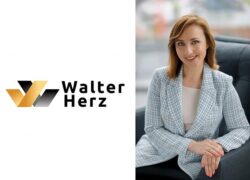
Photo: Katarzyna Tencza, Transaction Director at Walter Herz

PKO BP corporate branch gegins operations in Romania

PKO Bank Polski has officially launched its corporate branch in Romania, marking a significant step in its international expansion. The new branch, located in Bucharest, is primarily designed to support Polish companies operating in Romania, while also offering financial services to local Romanian businesses.

“The establishment of foreign corporate branches reflects our commitment to supporting Polish companies as they expand internationally. It is also a key component of the PKO Bank Polski Strategy for 2025-2027. Romanian markets are increasingly attracting Polish investors from industries such as food, furniture, construction, IT, chemicals, and household appliances. We aim to meet their needs and facilitate their operations in this market while also being open to financing local companies,” said Marek Radzikowski, Vice-President of PKO Bank Polski.

The Bucharest branch, PKO Bank Polski Varsovia, Sucursala București, is positioned to be the first choice for Polish companies operating in Romania and a bridge for Romanian companies entering the Polish market. This is the bank’s fourth foreign corporate branch, following those in Frankfurt am Main, Prague, and Bratislava.

PKO Bank Polski launched its first foreign corporate branch in 2015 in Frankfurt am Main, Germany, due to the high level of Polish business activity there. The Czech market was added in 2017, followed by Slovakia in 2021. Additionally, the bank has a presence in Ukraine through the Kredobank capital group.

PKO Bank Polski is the leading financial institution in Poland, with its shares listed on the Warsaw Stock Exchange (WSE) since November 2004, where it is a part of the WIG20 index. At the end of 2023, the bank’s total assets reached PLN 501.5 billion, solidifying its position as the leader in the Polish banking sector.

Source: PKO BP and ISBnews

CCC Group to invest PLN 200 million in a new logistics center in Polkowice

CCC Group has announced plans to construct a state-of-the-art logistics center in Polkowice to support the expanding HalfPrice network. The investment, estimated at PLN 200 million, will begin construction between the first and second quarters of 2025. The center is expected to become operational in the second quarter of 2026.

The project will be executed in two phases and includes the revitalization of the current area within the Legnica Special Economic Zone, incorporating green spaces into its design. The new HalfPrice distribution center will cover a total area of 50,000 square meters.

The facility marks a strategic move for CCC Group to support the rapid growth of its off-price brand, HalfPrice, which has already garnered significant customer interest with 150 stores in operation and plans for further international expansion. According to CCC Group President Dariusz Miłek, the logistics center is a crucial step in strengthening the brand’s development. The center will be equipped with advanced technologies aimed at significantly enhancing operational efficiency.

The Polkowice warehouse will manage logistics operations for receiving, adapting, and distributing goods across the HalfPrice network, both domestically and internationally. Preparatory work for the project, including detailed construction and technological planning, was completed in 2024.

The facility will integrate cutting-edge technologies, such as high-density storage systems for rapid pallet storage and retrieval, autonomous robots for sorting premium brands, and several kilometers of automated conveyors connecting all warehouse areas. These solutions aim to optimize inventory management, increase operational efficiency, and enhance the accuracy of large-scale order processing.

The CCC Group anticipates that the new logistics center will significantly enhance its ability to handle the growing volume of orders, ensuring effective management of operations, real-time inventory control, and resource optimization. This development underscores CCC Group’s commitment to supporting the expansion of HalfPrice while adopting innovative logistics solutions to strengthen its presence across Europe.

Source: CCC Group and ISBnews

TAG Immobilien Group secures land for PLN 1.1 Billion in 2024, land bank totals 28,000 units

TAG Immobilien Group announced the acquisition of land in Poland worth approximately PLN 1.1 billion in 2024. The Group’s current land bank now supports the potential construction of 28,000 residential units, ensuring robust development prospects for the coming years.

“The TAG Group, along with Robyg and Vantage, has significantly strengthened its investment potential in Poland by expanding its land portfolio to a total value of PLN 1.1 billion. This positions us strongly to enter new markets and consolidate our presence in existing ones,” said Eyal Keltsh, CEO of Robyg and Vantage.

“Our current land bank allows for the construction of approximately 28,000 units, securing business for the foreseeable future. However, we are not stopping here. We are planning further investments and new projects, both for sale and rent, as we continue to develop our Private Rented Sector (PRS) portfolio, which Vantage oversees within the TAG Group,” Keltsh added.

Robyg specializes in building and selling apartments, while also acting as the general contractor for Robyg and Vantage Development projects. Vantage Development, operating under the Vantage Rent brand, focuses exclusively on the PRS segment, offering apartments for rent.

Both companies are independently financed, allowing them to focus on their specific business models while contributing to the TAG Group’s broader strategy of diversifying its portfolio and expanding its footprint in Poland.

TAG Immobilien Group’s significant investment underscores its commitment to the Polish real estate market, with plans to further strengthen its position through new projects aimed at both the sales and rental markets.

Source: TAG Immobilien Group and ISBnews

Germany: Women’s representation on executive boards grows, but gender parity remains distant

The proportion of women in executive and supervisory boards in Germany’s largest companies continued to rise in 2024, but achieving gender parity remains a significant challenge. Women accounted for 19% of board members in the top 200 private-sector companies by revenue, an increase of 1.5 percentage points from the previous year, according to the DIW Berlin Managerinnen-Barometer.

In supervisory boards, women now make up one-third of members, with DAX 40 companies showing higher representation at 26% on boards and 40% in supervisory roles. Despite these gains, progress remains gradual, leaving a long path toward equality in corporate leadership.

“Progress has been positive but not overwhelmingly significant,” said Katharina Wrohlich, head of the Gender Economics research group at DIW Berlin.

Women CEOs and Gains in the Financial Sector

A notable development in 2024 was the rise in women heading management boards. Among the top 200 companies, there were 13 female CEOs, up from nine in 2023. For the first time, three women chaired boards within the DAX 40 group, though they still represented fewer than 10% of all board chairs.

The financial sector also demonstrated progress. In Germany’s 100 largest banks, the proportion of female board members increased from 14% in 2022 to 21% in 2024, outpacing other sectors. Germany now surpasses the EU average for women’s representation on both management and supervisory boards in its largest listed companies.

Obstacles Persist: Gender Stereotypes and Corporate Culture

While these advances are encouraging, the DIW study highlights that simply increasing the number of women in leadership is insufficient. Gender stereotypes and traditional views on gender roles continue to hinder women from fully applying their skills and expertise.

“Improved access to top positions is not enough if corporate cultures and societal expectations remain unchanged,” emphasized Wrohlich. She stressed the need for businesses to adjust processes and practices to involve women equitably in decision-making, rather than treating diversity initiatives as mere box-ticking exercises.

Media Reinforces Gender Stereotypes

An analysis of media coverage conducted as part of the Managerinnen-Barometer revealed that gender biases are perpetuated in how female executives are portrayed. Women board members in DAX companies were more often described using family-related terms, such as “mother” or “child,” while male counterparts were more frequently associated with leadership and economic terminology.

This skewed portrayal is inconsistent with reality. Data from the Socio-Economic Panel (SOEP) show that female managers are less likely to be married or have children than their male peers. However, media focus on family roles reinforces stereotypes, potentially discouraging women from pursuing leadership positions.

“When stereotypes about women being more family-oriented are amplified in media, it can entrench these views in society, distorting career paths for both genders,” noted DIW researcher Virginia Sondergeld.

Outlook: A Call for Holistic Change

The report underscores the need for systemic change in corporate culture, public perception, and media representation to create an environment where women can thrive in leadership roles. As the study’s authors point out, progress requires more than just fulfilling quotas—it demands a rethinking of workplace practices and societal attitudes to achieve true gender parity in the executive ranks.

Source: Deutsches Institut für Wirtschaftsforschung (DIW Berlin)

MDC² Park Gdańsk East: New logistics and industrial hub in the Tricity

MDC² has announced the launch of its latest industrial and logistics development, MDC² Park Gdańsk East, located in Koszwały near Gdańsk. The first phase of the project will include an 84,000 sq m warehouse building, strategically situated along the S7 expressway at the Żuławy Zachód junction.

As a developer specializing in sustainable industrial facilities, MDC² ensures that its projects meet at least the BREEAM Excellent certification standard under the New Construction scheme.

The Tricity region, comprising Gdańsk, Sopot, and Gdynia, is one of Poland’s key logistics markets. Its advantageous geographical location, growing port infrastructure, and proximity to international trade routes make it an increasingly attractive hub for logistics and maritime businesses. The Baltic Hub Container Terminal, located just 18 km from the Koszwały site, handled over 600 ships, including 105 ocean-going vessels, in 2023. Additionally, more than 580,000 lorries and 6,700 trains utilized the terminal in 2024, underscoring the region’s importance to global trade.

The Tricity region currently has approximately 1.65 million sq m of warehouse space, compared to 7.12 million sq m in Poland’s largest market, Warsaw. MDC² Park Gdańsk East aims to capitalize on this growing demand by leveraging its location near the Tricity agglomeration, a well-developed consumer market, and access to a skilled workforce from nearby Elbląg and surrounding areas.

“The renovation of the S7 route, proximity to Tricity, and a growing demand for logistics services make this location an ideal choice for tenants,” said Wojciech Kosiór, Head of Development at MDC².

Scheduled to break ground in 2025, the 84,000 sq m facility will offer a storage height of 12 meters, optimizing storage and operational efficiency. The park will create new job opportunities for residents of the Tricity area (760,000 people) and Elbląg (125,000 people), boosting the local economy and enhancing the region’s labor market.

In line with its commitment to sustainability, MDC² plans to incorporate energy-saving solutions such as improved wall insulation, rooftop solar panel installations, electric vehicle charging stations, and rainwater retention systems. Additionally, the development will include biodiversity areas, relaxation zones, and mini sports facilities to enhance tenant and community well-being.

MDC² Park Gdańsk East represents a significant investment in the region’s logistics and industrial capacity, further solidifying the Tricity’s role as a vital hub for international trade and maritime logistics. With its focus on sustainable development and operational efficiency, the project is expected to attract top-tier tenants and contribute to the continued economic growth of the Pomeranian region.

Czechia: Growth driven by energy-efficiency renovation loans

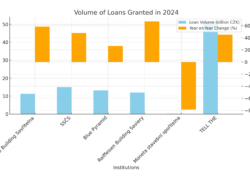
The market growth was largely attributed to successful cooperation between building societies and the state, particularly in providing loans aimed at improving energy efficiency in real estate. Michael Pupala, CEO of Blue Pyramid and First Vice-Chairman of the Association of Czech Building Savings Banks (AČSS), highlighted the impact of the “Repair House after Grandma” program. This initiative, supported by the State Environmental Fund, offered preferential loans for extensive renovations of older properties.

“These discounted loans demonstrate how collaboration between the state and the financial sector can make modern, sustainable housing accessible to more people,” Pupala said, adding that he expects continued demand for such loans in 2025.

Of the 48,076 loans issued last year, up 8% year-on-year, the vast majority—41,472 loans worth CZK 27.4 billion—were unsecured. These loans, commonly used for housing renovations, saw a 36.7% increase in volume compared to 2023.

The number of new building savings contracts signed in 2024 reached 452,637, with a target savings amount of CZK 310.4 billion, representing a 9.8% decline year-on-year.

Despite the reduction in the state contribution to building savings (from CZK 2,000 to CZK 1,000 per year), fears of a significant drop in interest proved unfounded. “The expected dramatic decrease in demand did not occur. In 2024, building societies concluded nearly the same number of contracts as in 2023, when the state aid was higher,” Pupala explained.

Building savings remain attractive due to higher returns on deposits and fixed interest rates over a six-year period, Pupala noted. Additionally, clients value the option to draw on favorable housing loans in the future, further enhancing the competitiveness of this savings product.

The strong performance in 2024 marks a recovery in the building savings market after a decline in 2023, when both new loans and savings contracts decreased. According to AČSS, last year’s downturn was linked to uncertainty about state aid and an overall slowdown in the mortgage market.

Looking ahead, the continued success of state-backed renovation loans and the sustained competitiveness of building savings products are expected to drive further growth in 2025.

Source: CTK

Czech mortgage market sees 83% growth in 2024, driven by lower interest rates

Banks and building societies in the Czech Republic issued mortgage loans totaling CZK 275 billion in 2024, marking an 83% increase year-on-year, according to the Czech Banking Association Hypomonitor. Excluding refinanced loans, new mortgage lending also rose at the same rate, reaching CZK 228 billion.

Despite rising real estate prices, the market’s real growth remained robust. The total number of new mortgages issued increased by 53%, with 62,000 loans granted in 2024. The average mortgage size grew by 20%, reaching CZK 3.7 million, and climbed further to CZK 3.86 million by year-end.

In December alone, banks issued new mortgages worth CZK 19.7 billion, reflecting an 8% month-on-month increase and a 56% year-on-year rise. However, the volume of refinanced loans declined to CZK 4.1 billion, comparable to mid-2024 levels. Refinanced loans accounted for 17% of total mortgages, down slightly from earlier in the year.

Interest rates continued their downward trend, averaging 4.88% in December, compared to 5.6% in December 2023. On average, households refinanced their mortgages at 4.72% during December, providing relief to borrowers and reducing monthly repayments.

The lower mortgage rates significantly reduced financial burdens for borrowers. “The December average rate for new loans was 0.84 percentage points lower than a year ago, reducing repayments by 2.2% of the applicant’s net income,” said Jaromír Šindel, chief economist at the Czech Banking Association. Over 2024, the average mortgage rate declined to 5.07%, down from 5.8% in 2023.

According to Šindel, these favorable rates saved applicants CZK 2,300 per month in mortgage repayments. “While rising property prices remained a challenge, the decline in rates largely offset their impact, cushioning the effect of higher consumer prices on real incomes,” he added.

Despite the positive trends, there are signs that mortgage rates may stabilize or decrease more slowly in 2025. “The December increase in interest rate swaps, a key hedging product, suggests that the pace of rate declines may slow,” noted Ondřej Šuchman, mortgage manager at Komerční banka.

The Czech mortgage market’s record growth in 2024 reflects both strong demand and the easing of financial pressures on borrowers. However, market dynamics in the coming year will depend on interest rate trends and broader economic conditions.

Source: CTK

LATEST NEWS