Norway adjusts ethical approach for its USD 1.6 trillion sovereign wealth fund

Norway has decided to temporarily scale back part of the screening process that governs which companies its sovereign wealth fund may invest in, opening the door to a review of how ethical rules should function in a more politically charged global environment.

The Government Pension Fund Global, created to invest revenue from North Sea oil production, is managed by Norges Bank’s investment division. The fund exists to safeguard national wealth and help finance future public expenditure, including pensions. Over the past two decades it has become the world’s largest sovereign wealth fund and a significant shareholder in global financial markets. According to public disclosures, the fund holds stakes in thousands of companies and owns just under 1.5% of all publicly listed equities worldwide.

Norway has long applied ethical guidelines that allow certain companies to be excluded due to environmental, social or governance concerns. In recent months, however, those rules have sparked tensions, particularly after the fund divested from firms linked to activities in politically sensitive regions. The move prompted criticism from several U.S. lawmakers who viewed the exclusions as politically motivated. During the subsequent parliamentary debate in Oslo, supporters of the rule review argued that Norway must avoid triggering diplomatic disputes through investment decisions.

The new approach does not abandon responsible investing, but it pauses some exclusion decisions while Parliament reassesses the criteria. Lawmakers argued that overly rigid rules might force the fund to sell positions in major global companies—especially in the technology sector—where the fund has some of its strongest returns.

The fund’s recent voting stance at Tesla illustrates the balance Norway is trying to strike. It holds slightly over 1% of the carmaker’s shares and voted against Elon Musk’s large pay package, citing concerns about governance and the concentration of decision-making power. Although its vote did not carry the day, the decision was consistent with the fund’s long-standing emphasis on board accountability.

Since 1998, the fund has generated an average annual return of roughly 6–7%, reinforcing Norway’s belief that responsible, long-term investing can support public finances while maintaining influence on global markets.

Judging Committee Finalises Voting for This Year’s CIJ Awards Slovakia 2025

Slovakia’s Leading Real Estate Experts Finalise Results

CIJ EUROPE is pleased to announce that the judging committee process for the CIJ Awards Slovakia 2025 has been successfully completed. The awards jury, composed of prominent figures from the Slovak real estate and investment community, has independently evaluated and scored this year’s entries, selecting the most outstanding developments, companies, and professionals operating in the market.

This year’s judging committee included respected leaders across development, investment management, brokerage, legal advisory, and media. Each member contributed deep sector knowledge and practical insight into the market performance and innovation efforts of the nominees.

Karol Sebo, CEO of UNITED Real Estate, brought expertise in complex urban redevelopment projects, particularly through the transformation of brownfield sites such as the Cukrovar mixed-use district in Trnava. Lukáš Šarközi, Partner at Mayflower, contributed his understanding of regional commercial and retail development, based on the company’s active pipeline of retail parks across Slovakia. Representing the investment side of the market, Vladimír Bolek, Member of the Board at IAD Investments, drew on his experience in real estate fund management and long-term strategic asset allocation.

Additional market insight was provided by Miroslav Tavel, Managing Director at OPC, known for his advisory experience in commercial development and investment structures. Filip Matovič, COO of ITB Development, evaluated submissions with a focus on execution quality and residential community design, reflecting ITB’s strong development presence in Bratislava. Robert Fletcher, CEO and Editor-in-Chief of CIJ EUROPE, participated both as jury chairman and industry observer, drawing on more than two decades of market knowledge across Central and Eastern Europe.

The professional advisory side of the jury included legal, brokerage, and fund-management specialists. Dominika Bajzáthová, Counsel at international law firm Kinstellar, assessed nominations based on regulatory readiness, transaction structuring, and ESG compliance. Tomáš Ostatník, Real Estate Executive at Holland & Company, provided a regional investment perspective, especially regarding cross-border buyers and the entry of new capital into Slovakia. Residential market expertise was contributed by Filip Žoldak, Partner at HERRYS, recognised for advancing professional brokerage standards and market transparency. Completing the panel, Andrej Lehocký, Head of Real Estate Funds Management at Tatra Asset Management, evaluated performance potential and long-term value outcomes from the investment manager’s perspective.

The judging process followed a secure digital voting system, ensuring independent scoring from all participants. Submissions were evaluated on measurable performance, sustainability, design quality, user benefit, and positive market impact.

The CIJ Awards celebrate measurable performance and visionary development. This year’s entries show that Slovakia continues to evolve with projects that combine strong concepts, sustainability, and execution quality, shaping the future of the market.Robert Fletcher, CEO / Editor-in-Chief, CIJ EUROPE/CIJ.World

The winners will be announced at the CIJ Awards Slovakia 2025 Gala in Bratislava. All national winners qualify automatically for the Best of the Best HOF Awards 2026 in Prague, where they will compete against award winners from 13 countries across Central and Eastern Europe.

365.invest Maintains Disciplined Growth and ESG Focus Amid Market Shifts, Says CIO Juraj Bielik

With Slovakia’s real estate fund sector surpassing €3 billion in total assets, 2025 has marked a period of growth, consolidation, and cautious optimism. In an interview with CIJ EUROPE, Juraj Bielik, Chief Investment Officer of 365.invest, outlined how the company is positioning its real estate funds to stay competitive while maintaining a disciplined, long-term investment strategy anchored in quality, sustainability, and stability.

“The growth of the real-estate landscape in Slovakia is a positive sign of maturity in our market, but signs of saturation are also emerging,” Bielik said. “For us, competitiveness is not about expanding at any cost, but about being measured, selective, and deeply analytical in how we deploy our clients’ capital.”

According to Bielik, 365.invest’s strength lies in its distribution through 365.bank and its integration with the KBC Group, providing a diversified investor base that allows for a long-term perspective.

The company’s portfolio remains diversified across retail parks, logistics, and residential development partnerships, each contributing to balanced performance despite a challenging macroeconomic environment.

“In retail parks, we focus on well-managed properties anchored by resilient tenants such as grocery stores, pharmacies, and essential service providers,” Bielik explained. “The aim is to create balanced tenant ecosystems that support community life rather than just attract occasional visitors.”

In the logistics sector, 365.invest targets strategic locations connected to major supply routes, with an emphasis on reliable tenants and long-term lease covenants. “We evaluate not only current demand but the depth of the surrounding ecosystem to ensure that properties remain relevant across market cycles,” Bielik said.

For residential investments, the company continues to form partnerships with trusted developers and selectively supports new collaborations where “the economics are sound and the project meets real market needs.” He added that the fund’s approach to housing investments remains broad but consistent in principle: “construction quality, responsible materials, ESG alignment, and economic viability.”

Portfolio Performance and Outlook

Over the first three quarters of 2025, the 365.invest Real Estate Fund remained close to its performance target, despite slightly lower year-on-year returns. Bielik said the firm completed ten acquisitions—eight for the large retail fund and two for qualified-investor funds—and executed three divestments to optimise liquidity and balance risk.

“Retail parks continued to show resilience supported by long lease terms, low tenant turnover, and occupancy above 95 percent,” he noted. The office segment, meanwhile, experienced continued lease renegotiations and tenant incentives. “Premium buildings in strong locations maintained occupancy, and we focused on extending leases and upgrading systems in line with ESG standards.”

In logistics, performance remained stable, underpinned by long-term contracts with an average lease duration of over five years. Bielik said the company had prioritised energy efficiency upgrades, including photovoltaic panels, LED lighting, and automated management systems.

“We focused on improving cash-flow predictability and planning for future reinvestment,” he said. “This year’s results are transitional and an opportunity to strengthen the foundation for long-term performance.”

Integrating ESG and Long-Term Resilience

Sustainability continues to be a key theme in the company’s investment philosophy. “Sustainability and energy performance have become meaningful factors in property selection, but they remain part of a broader evaluation framework,” Bielik explained. “We hold several BREEAM and WELL certified assets, and in both standing acquisitions and new developments, ESG considerations are integrated into our analysis.”

He added that 365.invest aims to “prioritise responsible improvements such as CapEx and operational efficiency dedicated to ESG standards rather than certification for its own sake.” The firm’s ESG roadmap for 2026–2028 includes carbon monitoring, building audits, and expanded certification under BREEAM-In-Use.

“ESG is not an overlay or a marketing label for us,” Bielik said. “It is a structural part of the investment process, applied in a way that strengthens the long-term quality and resilience of the portfolio while ensuring that financial performance remains paramount.”

Navigating Economic Headwinds

Bielik acknowledged that the 2025 investment environment remains challenging due to high interest rates, construction costs, and energy volatility. “The most tangible challenge has been maintaining attractive yields in a market where financing costs and required returns are not always aligned,” he said.

Nonetheless, he emphasised that disciplined pricing and active management have helped the company maintain stability. “Some rental renegotiations, particularly in secondary retail or older offices, reflect a more cautious stance from tenants, but this is a normal market recalibration,” Bielik noted.

He described the current market as a period of adjustment that will open opportunities for well-capitalised investors. “We see this phase as a transition that will ultimately create opportunities for disciplined investors. Our strategy remains consistent—stay selective, maintain liquidity, and focus on assets and partners that can perform across cycles. All of this, with a strong emphasis on innovation, which is our key advantage in a competitive environment.”

© 2025 CIJ EUROPE

Metropolis Bratislava: A New Benchmark for Premium Residential Living

Metropolis has officially joined the skyline of the New Downtown in Bratislava, and its arrival marks more than the completion of another residential scheme. It introduces a new standard of premium living in Slovakia — where architecture, comfort, technology and sustainability are treated as equal priorities rather than competing interests.

Developed by Mint Investments, Metropolis is now one of the most technically advanced residential buildings in the capital. Designed by architect Juraj Sonlajtner, the project consists of two slender towers rising to 63 metres, forming a striking M-shaped silhouette that now serves as a visual reference point in the evolving city centre. The geometry of the façades and the deliberate sculpting of volumes give the towers a recognisable identity, positioning the project among the city’s most distinctive contemporary buildings.

With an investment exceeding €60 million, Metropolis is the flagship residential scheme for Mint Investments in Slovakia, and the level of detail reflects that ambition. The development comprises 298 homes, ranging from compact studios to generous penthouses and five-room residences. Every unit benefits from a private outdoor space — whether a balcony, terrace or ground-floor garden — ensuring that residents maintain a tangible connection to the outdoors even in a vertical community.

Metropolis emphasises well-being through building technologies that are still uncommon in residential projects in the region. Ceiling cooling and heating systems are paired with decentralised heat-recovery ventilation, maintaining constant fresh air without losing temperature efficiency. External shading on the façades reduces heat load and helps stabilise indoor conditions, supporting energy-efficient operation throughout the year.

The interiors are finished to a standard that positions Metropolis firmly within the premium segment. Homes feature large-format porcelain tiles, solid wood parquet flooring, German sanitary equipment, floor-to-ceiling internal doors and carefully integrated hardware. The intent was not to follow trends, but to ensure that every interior element contributes to a high level of acoustic comfort, durability and visual coherence.

Metropolis also brings new urban functions to the district. The ground floor includes 20 retail units, intended to support daily urban life and activate the surrounding public realm. Between the towers, a semi-private green park offers space for residents and visitors to gather, bringing greenery to an area dominated by office towers and commercial buildings. By opening part of the space to the public, the project supports the evolution of the neighborhood into a liveable, mixed-use district rather than an isolated enclave of residential towers.

Market response has validated the concept. More than 80% of all apartments were sold before completion, demonstrating not only strong demand for premium urban living, but also confidence in both the developer and the location. Buyers cite the project’s technical sophistication, architecture and urban lifestyle as the main reasons for choosing Metropolis — elements that traditionally define success in more mature residential markets.

Metropolis signals an important shift in Bratislava’s residential sector. Instead of building solely for density or speed, Mint Investments chose to prioritise long-term comfort, efficiency and architectural quality. The project shows that downtown living in Bratislava can match the expectations of international buyers and residents looking for the standards found in Vienna, Prague or Warsaw.

With its distinctive architecture, advanced technology and comprehensive approach to liveability, Metropolis stands as a new reference point for premium residential development in the Slovak capital — not only raising the bar but redefining what future urban living in Bratislava should aspire to be.


Silverton reaches full occupancy at Meerbusch office building as new leases are signed

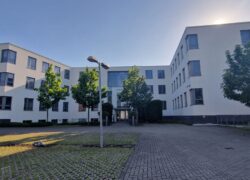
The Silverton Group has filled all remaining space at its office property on Otto-Hahn-Straße in Meerbusch after securing leases with two companies, Lehmann Natur and Bolton Deutschland. The agreements bring the roughly 3,100 sqm asset to full occupancy shortly after a previous deal with Corall Ingenieure, underscoring ongoing tenant demand for modern, efficiently managed space in the Düsseldorf region.

Bolton Deutschland, part of an international consumer goods group, will relocate its administrative operations to the property and has taken approximately 500 sqm of office space. The lease was arranged by brokerage firm Aengevelt Immobilien.

Organic food producer Lehmann Natur is also moving within the building into new premises covering around 450 sqm. The space will be tailored to contemporary workplace expectations, and the company has additionally secured auxiliary areas including storage rooms, parking, and kitchen facilities. The landlord received legal support from Dentos Europe during the agreement process.

The property belongs to the Elephant portfolio, acquired in 2019 by Silverton together with Tristan Capital Partners’ EPISO 5 fund. Silverton has overseen asset management of the building since acquisition. The property has a BREEAM Good sustainability rating and already hosts tenants such as GEL Express Logistik and Corall Ingenieure.

Sebastian Steinert, Managing Director of Silverton Asset Solutions, noted that the rapid absorption of space illustrates the effectiveness of hands-on asset management, even during more cautious market conditions. According to Steinert, upcoming small-scale investments and tailored fit-outs will continue to enhance the building’s appeal.

Completed in 2006, the three-storey building sits on a plot of around 4,000 sqm and offers both outdoor and underground parking, including charging stations for electric vehicles. The site benefits from easy access to the A44 motorway and public transport links.

Starmer Leaves COP30 Without Meeting EU Commission President

Keir Starmer and Ursula von der Leyen were present at the climate summit but did not hold direct talks, highlighting ongoing uncertainty over the next stage of UK–EU relations.

UK Prime Minister Keir Starmer and European Commission President Ursula von der Leyen both travelled to Brazil for the COP30 climate conference, but the gathering ended without a bilateral discussion between the two leaders.

People in government circles say the UK attempted to secure a short meeting with von der Leyen while both were on site. The planned conversation was expected to touch on ongoing negotiations between London and Brussels, including the financial element of possible future cooperation between the two sides. Those familiar with diplomatic planning say the European Commission pointed to a full agenda at the summit as the reason a meeting could not be secured.

The European Commission’s public diary for the summit lists climate finance sessions, speeches and several meetings with heads of state, though none with the UK prime minister. Downing Street’s communication on the conference highlights Starmer’s attendance and briefings with other leaders, but also makes no mention of talks with von der Leyen.

Both sides have avoided commenting directly on whether a meeting was formally requested or declined.

Analysis: A small moment in a larger negotiation

The lack of a meeting at COP30 does not change the overall direction of UK–EU relations, but it illustrates how sensitive the current phase of talks has become.

The UK government has made improving relations with the EU a priority, particularly in areas such as defence, industry and scientific cooperation. In Brussels, there is recognition that closer ties are useful — but only if both sides contribute financially and follow agreed rules. The EU is currently reviewing how non-member countries can participate in certain programmes, and London is pushing for access that goes beyond the trade agreement signed after Brexit.

A short conversation in Brazil may not have produced a breakthrough, but it could have helped clear the air. Instead, the absence of dialogue leaves technical negotiators to handle an increasingly political issue without the benefit of direct leadership contact.

Observers expect more structured talks in the coming months. Whether that leads to a more stable partnership — or to public disagreements over money — will depend on how much flexibility both sides are willing to show.

Source: EC, Gov.uk, FT, Reuters and CIJ EUROPE Analysis Team

Mixed-use development in Romania: where investment value now follows how people live, not how buildings look

Mixed-use development in Romania has reached a point of maturity. For many years, combining housing, retail and offices on a single site was treated as an architectural ambition. Today it is a financial strategy. The projects nominated in this year’s CIJ Awards Romania 2025 “Best Mixed-Use Buildup In-Development” category demonstrate how the concept has evolved into an institutional asset class capable of attracting international tenants, financing from major lenders and long-term investors looking for stable income.

Across the shortlist, one theme is consistent: the strongest projects are no longer designed around the square metres they can build, but around the economy of daily use. They pair revenue from housing with recurring income from offices and retail, while public space, community amenities and connectivity sustain footfall without relying on destination marketing. Their value is created not by selling or leasing space, but by shaping places to which people return every day.

AFI Park Brașov represents this model clearly. Anchored to an already successful shopping centre, the development layers modern office functions above an established retail platform. Because the first phase is fully operational and the site is zoned, future construction becomes an expansion rather than speculation. Brașov attracts both tourists and regional commuters, and that constant movement of people supports the project’s retail performance while strengthening the office leasing story. The result is predictable income and a low-risk profile for lenders.

In Bucharest, Amber Forest shows how suburban development can become economically resilient when the lifestyle component is embedded from the beginning. The homes, school, wellness facilities and local commerce are designed as a single ecosystem rather than independent parcels of land. Most housing units are already sold, which reduces the financing burden and protects the commercial stage from market volatility. Demand is driven not only by proximity to Bucharest’s wealthiest residential corridor, but also by access to a natural green belt — a feature that increasingly commands a pricing premium.

Brașov’s Coresi district demonstrates what happens when mixed-use succeeds at district scale. Built on a former industrial platform, the area has become a fully functioning urban quarter. The variety of uses, from residential to retail and offices, generates continuous activity through morning, daytime and evening. Because tenants and residents overlap and feed into each other’s presence, vacancy exposure is significantly reduced. Coresi illustrates how placemaking results in financial defensibility: demand is anchored not to a building, but to a neighbourhood.

In Timișoara, Paltim takes a boutique and heritage-focused approach. Its appeal lies not in volume, but in scarcity. Restoring historic structures and integrating them into a modern residential and retail layout is capital intensive, yet once completed the asset is difficult to replicate. The emotional value of heritage and the scarcity of similar opportunities in prime locations give the project long-term pricing power and protect it from competing supply.

Promenada in Bucharest continues the evolution of an urban retail centre into an integrated commercial hub. Significant new investment and strong pre-leasing before construction completion signal market confidence. Major retailers are increasing their footprint in the project, a clear indication that the location retains strategic relevance for brands targeting Bucharest’s most affluent catchment.

Cluj-Napoca’s RIVUS, led by Iulius and Atterbury, is the largest of the nominations and has the most transformative effect on its host city. It turns a former industrial site into a major commercial district. Cluj’s above-average purchasing power and young workforce support the project’s retail and office demand, while public infrastructure upgrades around the development demonstrate alignment with the city’s long-term mobility strategy. In investment terms, the scheme has the potential to become a self-sustaining commercial destination.

In Bucharest’s Obor district, the SkyLight project follows the momentum of an area undergoing rapid regeneration. Demand in the neighbourhood already exists due to a major transport interchange and established retail centres, meaning the project enters a rising market rather than creating one from scratch. The long-term success of the commercial element depends on residential absorption, yet the location’s demographic shift provides a solid foundation.

Another Bucharest project, Timpuri Noi Square 2, shows how sustainability is now part of financial modelling. Designed to operate with low carbon emissions and future EU regulatory requirements in mind, it positions itself as a long-term tenancy choice for corporations that must comply with ESG standards. Energy-efficient operations reduce occupancy costs and strengthen leasing prospects.

U•Center 3 by Forte Partners reflects the value of historical performance. The previous stages of the same development reached full occupancy before delivery, which gives the final phase credibility. Proximity to one of Bucharest’s main parks and strong public transport access further increase its appeal for employers competing for talent.

Across all nominations, a new economic logic is visible. The projects with the strongest financial resilience are those that create permanence of use. They generate continuous reasons for people to interact with the space — to work, to live, to study, to shop, to exercise. They diversify revenue streams across several asset classes and reduce exposure to market cycles. They secure land early and resolve zoning issues before construction begins, which protects lenders from regulatory risk. And they position community infrastructure — schools, parks, leisure or wellness facilities — not as decorative amenities but as stabilisers of long-term income.

Mixed-use, in this market, is no longer a matter of combining functions. It is a matter of creating value through integration. The most successful projects in this year’s nominations do not attract people. They retain them. And in real estate, retention is more powerful — and more bankable — than attraction.

Source: CIJ EUROPE Analysis Team © 2025 cij.world

Banks head into 2026 forced to make hard strategic choices as digital money, AI and fraud risks accelerate

Banks are approaching 2026 with healthy capital positions but far less certainty about the year ahead. A new industry outlook from Deloitte signals that the next 12 months will be less about experimentation and more about execution, as lenders face pressure from shifting monetary conditions, rapid advances in financial technology and rising compliance expectations.

According to the analysis, economic growth in the United States — the world’s largest banking market — is expected to cool in 2026 after a stronger 2025. Bank earnings, the report suggests, will depend on lenders’ ability to defend margins while expanding other income streams, particularly in payments and digital services. Slowing credit demand and softer consumer sentiment could make revenue growth harder to capture, even as banks remain well-capitalised.

The most disruptive force highlighted in the report is the arrival of regulated digital cash, including payment tokens issued by private companies. With new legislation in the US now offering a framework for so-called tokenised money, Deloitte says deposit competition could intensify. If digital cash gains traction with consumers and merchants, banks may lose a source of cheap funding unless they develop offerings of their own or form partnerships with fintechs already active in the space.

Artificial intelligence is the second pressure point — not because the technology is experimental, but because banks have not yet reorganised themselves to use it at scale. Many institutions have completed pilot projects, but Deloitte argues that progress now depends on whether banks can build cleaner, better-integrated data systems. Without that, models may produce inconsistent results or sit unused because they cannot connect into day-to-day operations.

Financial crime has become more complex as well, and the report warns that criminals are already using sophisticated automation tools to move money quickly, exploit weaknesses in fragmented systems and disguise identities. Banks are being pushed by regulators to respond with end-to-end monitoring, better data consolidation and clearer accountability for compliance decisions. The cost of not modernising these defences — including regulatory penalties — is becoming harder to ignore.

Deloitte’s message is that 2026 will reward banks that decide on a direction and commit resources to it. Whether it is investing in digital cash capabilities, restructuring data around a single source of truth, or redesigning compliance systems, half measures will not be enough.

In essence, the outlook sees the sector at a turning point. The structural forces shaping banking — digital payments, AI and heightened oversight — have been building for years. In 2026, they converge. Banks that connect their strategy to clear, measurable delivery may benefit from the change. Those that delay may find that the market moves without them.

Source: Deloitte

Designed for Tomorrow: How Romania’s Leading Developments Are Raising the Residential Benchmark

Romania’s premium residential market has matured into a structured, investment-grade segment, shaped by trusted developers, strong locations, and a clear shift toward full community ecosystems rather than stand-alone buildings. The projects nominated for Premium Residential Development of the Year at the CIJ Awards Romania 2025 illustrate this evolution, with lifestyle, convenience, and long-term value now prioritised over speculative development.

The nominations share a common formula. The developments are anchored in desirable districts or in the northern metropolitan arc, led by developers with a proven history of delivery. Amenities such as landscaped parks, wellness facilities, retail elements, co-working spaces and international-grade design are no longer bonuses but baseline expectations. The new premium buyer is informed, mobile, and interested in what the property will feel like to live in on a daily basis—and how well it will retain value later.

AFI Home North, located in Bucharest’s main business district, shows how the rental-driven, institutional residential model has finally established itself in Romania. The project is placed at the centre of one of Bucharest’s strongest employment and mobility nodes, surrounded by retail and Metro transport. AFI’s regional experience is immediately evident in the level of services provided, from co-working spaces to onsite management and furnished turn-key units. The result is not just a building, but a professionally operated residential product designed for long-term occupancy rather than speculative resale. In an area where demand from corporate tenants consistently outweighs supply, rental stability is almost built in.

Amber Forest in northern Bucharest represents a different lifestyle model altogether. Instead of density, it focuses on land, greenery and neighbourhood cohesion. Schools, retail and sport facilities are being introduced not at the end of the project, but concurrently with residential delivery. The location, close to natural reserves and low-rise surroundings, presents both emotional appeal and investment logic. A large number of homes were sold early in the development timeline, which shows buyer confidence and shifts risk away from the developer. Because developable land in this part of Bucharest is scarce, the neighbourhood has strong prospects for long-term value retention.

Nusco City Phase II continues to expand an already functioning urban district in Bucharest’s north. Unlike standalone towers, this development benefits from being part of a multi-phase plan with integrated services, commercial spaces and community infrastructure. Buyers are not only purchasing an apartment, they are entering a district. Nusco’s long presence in the area gives the project credibility and the location is part of a well-established corridor with rapid price appreciation.

Within the same developer group, Nusco Green Homes takes a contrasting approach. It offers low-density living through a gated villa compound, tailored for residents who prefer privacy and individual land plots over vertical density. Villa compounds historically maintain value well because of limited supply and controlled neighbourhood character, and the developer’s track record removes the uncertainty often associated with new housing zones.

THE IVY from SPEEDWELL is positioned at the boundary where city life meets nature. The forest-side location provides a lifestyle advantage that is difficult to replicate. Buildings are designed with generous outdoor spaces, and the architecture emphasises wellbeing and comfort. SPEEDWELL’s strong delivery record across both mixed-use and residential developments reinforces confidence that the project will be completed at the same quality level as marketed. Premium in this case is defined by serenity and access to green space, not just finishing materials.

The Level Apartments III by REDPORT offers an entirely different proposition: exclusivity through scale. With fewer units and carefully curated interiors, it appeals to buyers seeking something more intimate than a large masterplan. High-quality lobby finishes and generous terraces emulate the feel of boutique hospitality. For resale, scarcity plays a major role—rare products in protected areas tend to retain value even during market corrections.

The Meadows, also by SPEEDWELL, is unique for its waterfront site. The development uses the existing lake and landscape as its central identity element. Low-rise architecture and the absence of heavy traffic prioritise walkability and calmness. Waterfront land near Bucharest remains extremely limited, which supports long-term price resilience. The natural landscape becomes an economic advantage, not just an aesthetic feature.

Each of these projects illustrates the same conclusion from different angles: the market is leaving behind the era of square-metre selling and embracing a new product class defined by experience, operational quality and community integration. Buyers are choosing neighbourhoods rather than just buildings, and investors are looking for developments that will remain desirable in ten years, not merely profitable at handover.

Premium residential real estate in Romania is no longer interpreted as luxury décor. It is now defined by the strength of the location, the reputation and financial discipline of the developer, and the depth of lifestyle features that sustain value over time. The strongest projects accelerate both city development and asset appreciation, proving that premium is not about excess—it is about intent, quality, and longevity.

Source: CIJ EUROPE Analysis Team © 2025 cij.world

Hotels With Purpose: How Romania’s New Developments Are Redefining Feasibility and Return on Investment

Romania’s hotel investment market has shifted into a phase defined by brand consolidation, mixed-use integration and the repositioning of landmark sites. This year’s CIJ Awards Romania 2025 nominees in the category Best Hotel Build-Up Project of the Year showcase developments that are not merely adding rooms to the country’s capacity but reshaping the hospitality landscape through international operators, new service models and destination-driven concepts. Across all projects, three elements determine performance and risk exposure: market demand and feasibility, financial strength and cost discipline, and the ability to deliver and operate at an international standard after opening.

The entry of Hyatt into Bucharest through Hyatt Place & Hyatt House, part of the wider Nusco City regeneration, is a strategic response to demand created by new corporate tenants and high office density in the northern business district. The mixed-use context directly supports feasibility: retail, residential and offices feed demand throughout the week, reducing reliance on seasonal peaks. By securing two complementary brands under one roof—one aimed at short-stay corporate travellers, the other at extended-stay guests—the project broadens its revenue profile and stabilises occupancy throughout the year. The investment commitment exceeds tens of millions of euro, signalling strong balance-sheet capacity from the developer, while the location within a growing urban district supports long-term asset resilience. From an operational risk perspective, the main challenge will be synchronising hospitality operations with a multi-phase district still under development, though affiliation with an experienced global operator mitigates the learning curve.

On the coast, Radisson Blu Hotel & Residences Mamaia tackles a different market challenge: seasonality. The northern edge of Mamaia has traditionally suffered from fragmented development, short tourist cycles and limited all-year operations. By introducing a premium, internationally recognised brand with a wide suite of amenities—spa, wellness, upscale dining and event spaces—the developer aims to shift the local business model from a ninety-day peak season to year-round monetisation. Financial feasibility depends on achieving premium rates and attracting off-season corporate and leisure events. The capital allocation is significant, and the return model will rely heavily on the property becoming the beach destination of choice, not just another hotel. The developer’s strategy, emphasising quality and service rather than speculative volume, suggests that the business case is driven less by unit sales and more by recurring hotel performance.

Further south, Rivaz Hotel Olimp, developed by the Alpin Group, focuses on lifestyle hospitality and premium leisure experiences. Unlike the Radisson Blu, Rivaz positions itself as a signature property within the developer’s expanding portfolio, and the group is financing the concept largely through internal resources and reinvested earnings from existing operations. This lowers exposure to external financing volatility and demonstrates confidence in the long-term performance of the coast. Amenities include a rooftop infinity pool, spa and private beach access, creating a resort model that commands high room rates and diversifies revenue across food, beverage and wellness. The operational plan benefits from the developer’s existing experience running one of Romania’s largest mountain resorts. The main risk lies in market over-reliance on premium domestic tourism; however, if the developer succeeds in positioning Olimp as a leisure destination rather than a summer-only alternative, Rivaz could help reset the narrative of the Romanian coastline.

Back in the capital, The Julius Bucharest is the most complex project from a risk and execution perspective. It involves the transformation of a historic building—formerly the Ambasador Hotel—into a contemporary hospitality destination. Heritage redevelopment heightens the risks: unforeseen structural requirements, heritage approvals and cost overruns are common in projects that involve both preservation and new systems installation. However, the reward is structurally different from new construction. A repositioned landmark brings instant brand equity, and hotels placed in cultural urban arteries typically outperform in occupancy and rate, particularly when supported by strong retail or café activation at the ground floor. The developer’s partner, a specialist project management company, reduces execution risk by integrating design, permitting and construction oversight within one coordinated process, which is crucial given the technical and financial sensitivities of restoring a protected façade. The feasibility here relies not just on room revenue, but also on capturing local spending through cafés, restaurants and event spaces—a hospitality model built equally on community and tourism.

Taken together, these nominations show a hotel sector investing not just in capacity, but in identity. Each project selects a distinct strategy. Nusco City leverages corporate density and mixed-use synergies. Radisson Blu Mamaia seeks to lead a regional transformation at the seaside. Rivaz Olimp introduces the lifestyle resort model to an area in need of reinvention. The Julius Bucharest uses heritage as an asset to attract both guests and locals.

Financial viability across the category is strengthened by the presence of experienced developers with access to financing and, in three cases, international hotel brands known for disciplined operating models and centralised distribution. Operational risks vary: mixed-use integration requires careful phasing, seaside resorts depend on market repositioning, and heritage redevelopment demands precise execution. But all projects share a clear and confident thesis. Demand exists, capital is committed and the operational frameworks are serious enough to sustain performance past opening night.

These developments are not simply new hotels. They signal a market that is finally valuing hospitality as an urban infrastructure asset—an anchor for neighbourhood identity, tourism growth and long-term return on investment.

Source: CIJ EUROPE Analysis Team © 2025 cij.world

LATEST NEWS