Average Czech mortgage rate drops slightly to 5.11% in February, lowest since 2022

The average mortgage rate in the Czech Republic edged down slightly at the start of February, decreasing by 0.02 percentage points to 5.11%, its lowest level since spring 2022. This data, released by the Swiss Life Hypoindex, reflects the average mortgage offer rate for loans covering 80% of a property’s value.

According to Jiří Sýkora, mortgage analyst at Swiss Life Select, the current trend aligns with predictions of a slight decline or stagnation in rates at the beginning of the year. “New mortgage deals can be arranged with rates approximately three-quarters of a percentage point lower for certain fixations and estimated property values. However, there are still offers on the market with double-digit rates,” he noted.

Sýkora anticipates a more significant drop in mortgage rates in the coming months, as banks introduce spring special offers featuring reduced interest rates.

Market experts highlight the importance of actions taken by major mortgage lenders, including Česká spořitelna, ČSOB, and Komerční banka. “Competition among banks is a key factor that could drive mortgage prices lower. While some banks have already made modest cuts, the impact could be more significant if other players follow suit,” said Tom Kadeřábek, head of the Swiss Life Select product department.

Rising mortgage rates pose challenges for households whose fixed-rate loans are set to expire this year. Many borrowers secured rates around 2% five years ago, while today’s average is approximately 5%. In 2020, mortgage rates hovered around 2.4% in early months and dipped to around 2% by December. The difference in interest rates now translates into thousands of crowns in additional monthly payments.

For instance, a CZK 3.5 million mortgage with an 80% loan-to-value ratio and a 25-year term at the current 5.11% rate results in a monthly installment of CZK 20,692 in February. Compared to February 2024, when the average rate was 5.6% and the monthly installment stood at CZK 21,703, borrowers today save more than CZK 1,000 per month.

Source: CTK

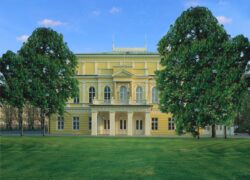
Czech court rejects NKL Agency’s lawsuit in Žofín Palace lease dispute

The District Court for Prague 1 has dismissed a lawsuit filed by the NKL Agency against the Prague 1 City Hall regarding an amendment to the lease agreement for Žofín Palace. NKL Agency spokesperson Karolína Šnejdarová confirmed the ruling to the Czech News Agency.

The legal dispute revolves around the lease of the historic palace, with Prague 1 asserting that the contract expired on December 31, 2024, while NKL Agency maintains that it exercised its renewal option and extended the lease for another ten years. Despite the court ruling, the agency refuses to vacate the premises and continues to organize events.

“The court ruled in the first instance that Prague 1 was not obligated to sign an amendment extending the contract with NKL Agency, confirming that the lease agreement officially ended on December 31, 2024,” Šnejdarová stated.

However, NKL Agency argues that the ruling did not examine whether the renewal option was properly exercised, focusing instead on whether the city district was required to sign a contract amendment specifying rent. “We will await the written reasoning and consider our next legal steps, including a likely appeal,” said NKL Agency’s legal representative, Kolářová.

The agency also confirmed it will not vacate Žofín for now. “Last week, Prague 1 informed us that it had filed an eviction lawsuit, which will determine whether the lease was legally extended. We have not yet received an official summons,” Kolářová added.

Meanwhile, Prague 1 is preparing for a smooth transition to a new tenant, expected to be the Zátiší Group, as decided by the municipal council.

The long-running lease dispute over Žofín Palace has been a controversial issue for Prague 1. The lease was previously extended by the ODS-led city hall just before the 2010 municipal elections. Subsequent extensions, including a proposed ten-year renewal ahead of the 2018 elections, were met with opposition and ultimately rejected.

Source: CTK
Photo: Žofín Palace

Sheraton Hotel set to anchor Ostrava’s future tallest skyscraper

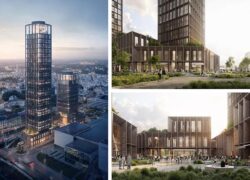
The Ostrava Towers Complex, set to become the tallest building in the Czech Republic, will feature a Sheraton hotel from the Marriott International chain, following a recently signed agreement between the RT TORAX Group, the project’s investor, and the global hotel brand. The development team is also in discussions with service providers and advancing preparations for the high-rise construction.

The landmark project, located in the Slza area near Forum Nová Karolina, emerged from an international architectural competition, with the winning design by Danish studio ADEPT. Construction is slated to commence in 2029, with the towers expected to be completed and operational by 2032. The complex will consist of two towers, with the Sheraton hotel, a restaurant, wellness center, and other premium services housed in the lower one.

Jindřich Vaněk, spokesman for RT TORAX, confirmed that negotiations with the Sheraton brand followed several months of discussions between investors and international hotel operators. “The Ostrava Towers Complex is progressing rapidly. We are finalizing agreements with service operators and working with technical experts on key aspects such as structural integrity, foundation planning, and energy efficiency,” stated Tomáš Häring, founder of RT TORAX.

In parallel with the architectural and investment aspects, RT TORAX is conducting a traffic study to assess the project’s impact on Ostrava’s infrastructure. The findings will be submitted to the city’s Transport Department for review.

Mayor Jan Dohnal (Together) emphasized the city’s active role in ensuring that the skyscraper harmonizes with Ostrava’s urban fabric. “We are not only interested in the building’s architectural prominence but also in how it integrates into the daily life of the city. The transport connectivity, its relationship with surrounding public spaces, and its accessibility for residents are crucial aspects,” he said.

Dohnal also underscored the importance of attracting a five-star hotel to Ostrava. “Our city has long lacked a high-end hotel that can accommodate international guests for major events and festivals. The inclusion of a Sheraton hotel within this new city landmark is a significant development,” he added.

The Ostrava Towers Complex has undergone multiple revisions since its inception. Initially, the project featured only one tower, but later iterations expanded the vision into a dual-tower design. While some city officials previously criticized the project as unnecessary, the recent developments signal a major step forward in positioning Ostrava as a modern urban hub with world-class hospitality and business infrastructure.

Source: CTK
Photos: RT TORAX

Companies founded in the early 1990s among the most stable in the Czech market

Companies established in the early 1990s have proven to be the most economically stable in the Czech market, particularly those with an annual turnover exceeding CZK 30 million, according to an analysis by CRIF – Czech Credit Bureau. Recognizing business stability as a key factor for economic success, CRIF has introduced two new certification programs, TOP Stable Company and Stable Company, aimed at distinguishing reliable businesses from those with weaker financial standings.

The certifications are based on the CRIBIS Index, which evaluates companies using nine financial ratios derived from their two most recent financial statements. Additionally, non-financial factors such as foreclosures, unpaid debts, VAT non-compliance, and insolvency proceedings influence the final rating. “Our assessment helps businesses minimize risk when selecting partners without the need for exhaustive registry checks. This certification serves as an assurance that a company is financially stable and free from outstanding liabilities,” explained Petr Kučera, Executive Director of CRIF – Czech Credit Bureau. To qualify, businesses must also have no records in the Central Register of Executions or AML sanction lists.

The CRIBIS Index assigns 10 stability grades, with companies rated a1 to b2 receiving the TOP Stable Company certification, indicating exceptional financial strength. Of the 45,555 companies with annual turnovers exceeding CZK 30 million, 25% meet the highest stability standards.

Data reveals that companies founded between 1991 and 1995 show the greatest financial resilience, with 40% of businesses from this period receiving the top certification. Specifically, two-fifths of firms founded in 1992 meet the highest criteria, followed by 1991 (39%) and 1993 (38%). “The longevity of these companies demonstrates their strong competitive position and ability to maintain market stability over time,” noted Pavel Finger, a member of the CRIF Board of Directors.

Conversely, companies founded after 2004 exhibit lower financial stability, with the percentage of firms meeting top criteria declining from 32% in 2004 to just 15% in 2021. Finger attributes this to increased market competition and regulatory changes following the Czech Republic’s EU accession. Businesses established in the last decade show the lowest stability levels—only 23% of companies founded in 2015 meet the strictest requirements, while for 2020-founded businesses, the figure drops to just 14%.

Regionally, Vysočina emerges as the top-performing region, with 35% of its companies receiving the highest ratings. Close behind are Ústí nad Labem and Hradec Králové, both at 34%. At the other end, Prague has the lowest percentage of stable companies (24%), likely due to higher market competition and dynamic economic conditions. However, Prague remains the dominant business hub, with 17,000 firms generating over CZK 30 million in turnover, representing 36% of all assessed companies.

Sector-wise, the mining and quarrying industry has the highest proportion of financially stable companies, with 42% meeting the top criteria. This sector also boasts one of the lowest bankruptcy rates and a strong asset-to-liability ratio, with loans accounting for just 18% of company deposits.

Conversely, the real estate management sector ranks lowest, with only 15% of firms qualifying for top stability rankings. Many real estate businesses operate with high debt levels, as borrowed funds exceed deposits by 79%, making them more vulnerable to financial instability.

Source: CRIF – Czech Credit Bureau

Revetas Group completes sale of Park Center Sofia to TSH Investment

Revetas Group has successfully finalized the sale of Park Center Sofia to TSH Investment, a joint venture between Trinity Capital AD and HUS Invest AD. The financial terms of the transaction remain confidential.

Eric Assimakopoulos, Founding & Managing Partner at Revetas, emphasized the significance of the sale, highlighting the company’s role as a strategic investment manager since acquiring the shopping center in 2014. “During our tenure, we navigated multiple challenges, from the Global Financial Crisis and COVID-19 to inflation and debt restructuring, while successfully preserving and enhancing the asset’s value for our investors. This transaction marks not only a financial achievement but also a testament to the impact Park Center Sofia has had on the local community over the past two decades as Bulgaria’s first modern shopping mall,” he stated.

Vlad Dragoescu, CEE Head of Portfolio Management at Revetas, described the deal as the culmination of over two years of strategic planning and complex negotiations. “Through senior debt restructuring and innovative deal structuring, we transformed challenges into opportunities. This successful exit reinforces our momentum as we look forward to further milestones in 2025,” he added.

Opened in spring 2006, Park Center Sofia holds a historical position as Sofia’s first modern shopping mall, spanning 22,000 sqm of gross leasable area (GLA) across two underground and four above-ground levels. Strategically located at the intersection of Arsenalski and Cherni Vryh boulevards, the center continues to be a key retail destination, featuring a mix of leading local and international brands.

Legal advisory services for the transaction were provided by Schoenherr for the seller and Kinstellar for the buyer.

Crescon begins construction of Zahrádky 1000 mountain apartments in Pec pod Sněžkou

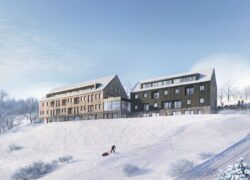
Developer Crescon has officially launched the construction of Zahrádky 1000, a premium mountain apartment complex situated directly on the Zahrádky ski slope in Pec pod Sněžkou. The project, set for completion by the end of 2026, will feature 33 fully furnished apartments, offering luxury living, investment potential, and year-round recreational opportunities.

The development is replacing an outdated six-story chalet with a modern, architecturally integrated residence designed by Labor13 Studio. The new rustic-style complex, comprising two interconnected buildings, is tailored to blend seamlessly into the Krkonoše mountain landscape. Construction work is set to begin in Q3 2025, following the demolition of the existing structure, which is dependent on weather conditions. Ječmínek Construction Company has been selected as the general contractor.

The Zahrádky 1000 residence offers a mix of 1+kk to 4+kk apartments, most of which will include loggias or terraces, while selected units will feature pre-installed sauna connections. High-quality materials such as wooden flooring and large-format tiles will be standard. The apartments will be heated via energy-efficient underfloor heating powered by gas boilers.

Designed as both a luxury holiday home and a profitable investment, the apartments are expected to yield an annual return of 6% to 9%, factoring in both rental income and property appreciation. The rental management will be handled by a local hotel operator, ensuring professional service and high occupancy rates throughout the year.

Radek Zábrodský, Director of Crescon, highlighted the growing demand for high-quality accommodation in mountain resorts, citing Pec pod Sněžkou as one of the Czech Republic’s most sought-after destinations. He noted that rental occupancy remains high year-round, driven by both winter sports and summer tourism. Investors can anticipate a 3% to 4% rental yield at 40%–60% occupancy, with property values in the Krkonoše region growing at an annual rate of 3% to 5%, outperforming even Prague’s real estate market.

Residents and visitors will enjoy a range of shared facilities, including a wellness area with a sauna, relaxation space, and whirlpool, as well as a communal lounge with panoramic views of Sněžka. Additional features include a ski and bike storage room, private cellars, and a reception area. During winter, the onsite manager will provide transport services for residents.

Panattoni Income Fund strengthens leadership team with key appointments

Panattoni Income Fund has expanded its leadership team with the appointment of Olaf Bruns as Managing Director Business Development DACH and Piotr Boruc as Head of Finance and Reporting. These strategic hires reinforce the fund’s commitment to institutional investor relations and financial excellence as it continues its growth in the pan-European industrial and logistics real estate market.

Olaf Bruns brings over 25 years of experience in real estate and renewable energy investment, with a strong track record in fund and portfolio management, international business development, and institutional investment strategies. Before joining Panattoni Income Fund, he served as Managing Director of BRAWO Fund Management, overseeing fund operations for BRAWO GROUP and Volksbank BRAWO. His career includes leadership roles at GARBE Industrial Real Estate, UBS Global AM, CBRE Global Investors, and Warburg-HIH Invest Real Estate, managing assets exceeding €20 billion and transactions worth over €6 billion.

In his new role, Bruns will focus on expanding and strengthening relationships with institutional investors and leading investment structuring and transaction management in the DACH region. His expertise aligns with Panattoni Income Fund’s strategy of delivering high-quality investment solutions in the growing logistics real estate sector.

Piotr Boruc, who joined earlier this year, brings more than 25 years of experience in finance, banking, and auditing, with 17 years focused on real estate and fund management. He has held senior finance roles at Mapletree, Urban Partners, and NREP, where he played a key role in setting up and managing financial platforms. As Head of Finance and Reporting, he will oversee financial strategy, reporting, and transparency, ensuring alignment with Panattoni Income Fund’s long-term investment objectives.

Panattoni Income Fund, headquartered in Luxembourg, operates as an open-ended, evergreen investment vehicle, offering investors exposure to the dynamic pan-European industrial and logistics real estate sector. The fund focuses on acquiring stabilized assets and forward-purchasing pre-let developments, maintaining high sustainability standards. Investments span key markets where Panattoni operates, including Central and Eastern Europe, Germany, the Netherlands, France, the UK, Italy, Spain, Austria, and Scandinavia.

PSN to launch major Brno One development, transforming brownfield site in Plynárenská street

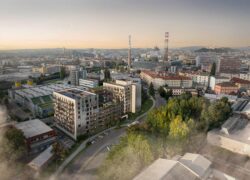
PSN is set to begin construction on its first major project in Brno, transforming a brownfield site on Plynárenská Street into Brno One, a modern mixed-use urban district. The project, spanning several years, will integrate residential, commercial, and leisure spaces to revitalize the area.

The first phase of construction will introduce a multifunctional building with two landmark towers, Neon and Xenon, designed by the A8000 architectural studio. This stage will include 188 residential and accommodation units, complemented by five commercial spaces. The development will also feature communal amenities such as bike storage, laundry facilities, and rooftop terraces. Construction is set to begin in the third quarter of 2025, with completion expected by the fourth quarter of 2027.

Brno One is part of a larger urban transformation initiative aimed at revitalizing the Cejl-Křenová district, an area identified as a strategic growth hub. The 4.5-hectare site is ideally located near Brno’s city center and has the potential to become a vibrant new residential and commercial district. According to Petr Pospíšil, Director of PSN’s Brno branch, the location has immense potential to evolve into a lively urban quarter of Brno. He believes Brno One will bring positive change to the area, similar to the transformations seen in the former Vlněnka and Vaňkovka districts. The project aims to provide high-quality housing that benefits both future residents and the local community.

PSN is currently in discussions with the city to integrate the project with the nearby Svitava River embankment, transforming it into an attractive public space inspired by modern European urbanism, similar to Copenhagen’s waterfront developments.

The first phase of Brno One will focus on smaller, high-demand apartments, particularly one-bedroom and two-bedroom layouts, catering to young professionals, students, and first-time buyers. The top floors will feature larger units, and most apartments will include balconies or private gardens. The project will also provide ample parking and storage space. Pospíšil anticipates strong demand for these apartments, particularly from young professionals and investors. He sees Brno One as a high-quality urban space with significant growth potential, making it an attractive opportunity for buyers and investors alike. Future phases of the project will introduce family and rental housing, further enhancing the diverse residential offering.

Residents will benefit from premium communal spaces, including bike storage, stroller rooms, and laundry facilities in each block. Two rooftop terraces will serve as social and leisure areas, one featuring a workout zone and urban gardening beds, and the other designed as a relaxation space with an outdoor kitchen, barbecue area, and panoramic city views. The project will also include retail spaces, featuring shops, cafes, and services for both residents and the surrounding community. The development will be designed to prioritize safety and accessibility, with well-lit pedestrian-friendly streets and CCTV surveillance.

The A8000 architectural studio has designed Brno One to blend industrial heritage with contemporary design. The eight-story residential buildings will incorporate corrugated metal, glass facades, and light blue copilite panels, referencing the site’s industrial past while embracing modern aesthetics. Anna Vršková of A8000 explained that their design integrates industrial elements with contemporary urban living, ensuring a dynamic yet harmonious residential environment. The project’s material choices, including dark-framed windows inspired by Brno’s functionalist architecture and a balance of concrete and greenery, contribute to the distinctive character of the development.

Beyond housing, the Brno One development will include office spaces and additional retail units, with future plans for a hotel. The project is also designed with sustainability and energy efficiency in mind, achieving Category A energy certification. Eco-friendly features include solar panels on rooftops to power communal areas, electric vehicle charging stations in underground garages, and heat recovery systems in select apartments. The project will also incorporate rainwater collection for irrigation and bike-sharing stations with surrounding green spaces.

Located along the Svitava River, Brno One benefits from excellent transport connections, providing quick access to Brno’s city center, public transit hubs, and the main train station. The city’s new master plan includes a future urban avenue with a tram line, further enhancing accessibility. Plans to develop a river promenade and new cycling infrastructure will also contribute to the district’s long-term transformation.

With construction set to begin later this year, Brno One represents a landmark project in Brno’s urban redevelopment, offering modern, sustainable living in a dynamic and rapidly developing district.


Revetas Capital secures lease extension with VSoft at B4B in Krakow

Revetas Capital has announced the lease extension of Polish IT company VSoft at the Bonarka for Business (B4B) office complex in Krakow. VSoft, a leading provider of financial sector solutions, will continue to lease 1,777 sqm of office space in Building E, reinforcing its nearly decade-long presence at B4B.

VSoft, a Polish joint-stock company with 29 years of experience, specializes in developing IT solutions for the financial industry. The company’s decision to extend its lease reflects its commitment to maintaining a high-quality work environment for its employees.

“Renewing our lease at Bonarka for Business is a natural step for us,” said Jakub Głąb, Vice-President of VSoft SA. “The office space meets our expectations in terms of work comfort and employee amenities. Additionally, the central location in Krakow allows us to seamlessly integrate modern technologies while remaining closely connected to the local community. We are proud to continue growing our company in a space that aligns with our organizational culture.”

Revetas Capital, the fund manager of B4B, emphasized the value of long-term tenant relationships and the quality of amenities at the complex.

Antonio Pomes, Director – Country Head of Portfolio Management at Revetas Capital, commented: “We greatly appreciate the trust VSoft has placed in B4B as its preferred workspace. The amenities and building standards have played a key role in their decision to stay. This success is the result of strong collaboration between Revetas Capital, property manager CERES, and leasing manager TriGranit, all working together to maintain high-quality office spaces and services.”

Anna Krztoń, Leasing Director at TriGranit, highlighted the strength of the partnership with VSoft, noting that this marks the second lease renewal since 2015.

“We are excited to continue our nearly decade-long collaboration and remain committed to supporting VSoft’s success and future expansion,” Krztoń added.

With this lease extension, B4B further cements its position as a premier office location in Krakow, offering top-tier facilities, a strategic location, and a business-friendly environment that continues to attract and retain leading companies.

Prague’s housing deficit deepens as property prices accelerate

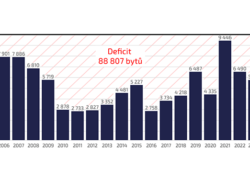
Prague’s housing shortage continues to worsen, despite a significant increase in the number of permitted flats last year. According to the Czech Statistical Office, a total of 8,191 flats were approved for construction in 2024, including 6,967 in apartment buildings. While this represents a 43% and 64% year-on-year increase, respectively, the rise is primarily attributed to the low comparison base of 2023 rather than a genuine acceleration in housing development.

Crucially, the number of permitted flats remains below the required 10,000 units per year—a threshold that has not been met since 2006. As a result, Prague’s housing deficit has grown to nearly 90,000 units over the past two decades, further straining affordability.

The persistent shortage of new housing is the primary driver of soaring property prices. Over the past decade, the price of new flats in Prague has surged by more than 160%. In 2024 alone, prices increased by 7%, exceeding expectations set at the beginning of the year.

The situation is exacerbated by record levels of demand, which is expected to intensify further as mortgage rates continue to decline. The Czech National Bank (CNB) may introduce additional rate cuts, further stimulating housing demand and price growth.

Despite the urgent need for housing, permitting delays and complications with the new building law and digitalization continue to hinder development. Without meaningful reforms, analysts predict that Prague’s housing prices will continue to rise by at least 5-10% annually in the coming years.

With no immediate solutions in sight, the housing crisis in Prague is set to persist, pushing affordability further out of reach for many residents.

Source: CENTRAL GROUP
Photo: calculation by Central Group, number of permitted flats in Prague according to the Czech Statistical Office

LATEST NEWS