Accolade Industrial Fund expands with new acquisitions and tenant growth in Q4 2024

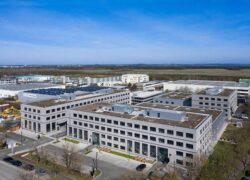
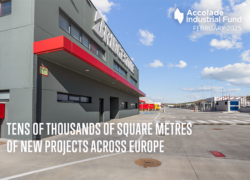
Accolade Industrial Fund closed 2024 on a strong note, significantly expanding its portfolio across multiple European markets. In the fourth quarter, the fund added two new industrial parks in the Czech Republic and Spain, valued at over EUR 61 million, while also increasing its Polish holdings by 80,000 square meters. The fund welcomed five new tenants across manufacturing, logistics, and e-commerce, resulting in an overall portfolio expansion of more than 141,000 square meters.

Despite this growth, the fund also saw the departure of Bama, a shoe care product supplier, from its Gorzów Wielkopolski Park in Poland following its bankruptcy. Negotiations are already underway for new tenants to occupy the 5,000-square-meter space left vacant, which represents just 0.25% of the fund’s total leasable area. Meanwhile, lease extensions and new contracts across Polish parks exceeded 40,000 square meters in Q4, reinforcing strong demand for industrial spaces.

New Acquisitions: Strengthening Presence in Spain and the Czech Republic

Park Burgos (Spain)

The 43,000-square-meter industrial park in Burgos, northern Spain, strengthens Accolade’s foothold in a key transportation hub. The Japanese tire manufacturer Bridgestone has fully leased the facility, reinforcing its strategic expansion in Europe. With easy access to Madrid, Barcelona, Paris, and Lisbon, Park Burgos is set to become a vital asset in Accolade’s growing Spanish portfolio.

Park Ostrov North (Czech Republic)

Accolade has also invested in Park Ostrov North, a 20,000-square-meter facility in the Karlovy Vary Region, near Germany. This site is a brownfield revitalization project built on the grounds of the former Škodovka plant. The facility has already secured two major tenants:
• Amphenol (Germany) – A global manufacturer of connectors, chip card readers, and cable harnesses.
• Kokiska (Czech Republic) – A family-owned e-commerce retailer specializing in home and garden products.

The park aims to achieve BREEAM Excellent certification, reflecting Accolade’s commitment to sustainability.

Expansion of Existing Parks in Poland

Park Koszalin

Koszalin, a key industrial center in Pomerania, added 46,000 square meters to the fund’s portfolio in Q4. The park now houses six new tenants, including heating equipment producer Kospel and electronics retailer RTV EURO AGD. Additionally, several existing tenants, including Autostore, Inpost, DPD, and logistics provider Röhlig, expanded their footprints.

Park Goleniów

Located within the Szczecin agglomeration, one of Poland’s fastest-growing industrial hubs, Park Goleniów added 32,000 square meters in Q4. The site remains a key logistics hub, with tenants such as DSV and Fiege, two major players in freight transport and supply chain management.

A Promising Outlook for 2025

Accolade’s latest investments underscore its continued expansion strategy in high-demand logistics and manufacturing hubs. With a strong pipeline of lease agreements and a growing footprint in Spain, the Czech Republic, and Poland, the fund remains well-positioned for further growth and value creation in 2025.

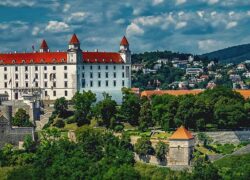
CIJ EUROPE Q1 2025 magazine now available

The Q1 2025 edition of CIJ Europe Magazine provides an in-depth overview of the Central and Eastern European real estate market, highlighting major trends, key developments, and expert insights.

The regional section features market updates, corporate news, and a special focus on the Timpuri Noi Square Phase Two project. Key industry leaders share insights into market shifts and sustainability strategies.

In Czech Republic, the magazine includes an interview with Martin Kubanek, discussions on Panattoni’s industrial real estate strategy, and an overview of the CIJ Awards Czech Republic 2025. Other highlights include an analysis of the growing logistics sector and rising residential property prices.

Hungary’s real estate landscape is covered through a review of its awards ceremony and market briefings on office and industrial developments.

In Poland, the report examines the growing luxury real estate market across Europe.

Romania’s real estate sector sees extensive coverage, including a deep dive into Bucharest’s office market, WDP’s sustainability focus, and Iulius Mall’s 25-year milestone. The Romanian CIJ Awards also feature prominently.

Slovakia’s market update discusses ITB Development’s new standards, the demand for shopping parks, and 365.invest’s investment strategies. The section also explores the industrial real estate sector and CIJ Awards Slovakia.

The magazine further provides updates on major investment projects, company expansions, and insights from legal and financial professionals regarding tax changes and market trends.

With expert commentary, in-depth analyses, and award recognitions, CIJ Europe Q1 2025 serves as an essential resource for real estate professionals across the region.

Use the link below to download your complimentary issue:

Slovakia drops in global corruption perception index

Slovakia has dropped 12 places in the 2024 Corruption Perceptions Index (CPI), ranking 59th globally with a score of 49 out of 100, according to Transparency International (TI). This marks a significant decline from 2023, when Slovakia achieved its best historical ranking at 47th place with a score of 54 points.

Denmark, Finland, Singapore, and New Zealand topped the rankings as the world’s least corrupt countries. Meanwhile, crisis-stricken nations such as Syria, Venezuela, and Somalia occupied the lowest positions, with South Sudan scoring the worst globally. The CPI, compiled annually by TI, evaluates corruption levels based on 13 independent institutional indices over the past two years.

Impact of Political Changes on Slovakia’s Decline

TI attributes Slovakia’s sharp decline to legislative changes introduced under Prime Minister Robert Fico’s government, which have weakened anti-corruption measures and reduced public oversight. Key concerns include the dissolution of the Special Prosecutor’s Office and the National Crime Agency, both of which were instrumental in tackling corruption and serious crime.

Slovakia’s ranking now places it below Austria, the Czech Republic, and Poland, but above Hungary and Ukraine. Across the European Union, the average CPI score fell by two points to 62, reflecting growing concerns over corruption and weakening institutional oversight across the bloc.

Global Trends in Corruption

According to Transparency International, more than two-thirds of countries scored below 50 points, signaling persistently high levels of corruption worldwide. The organization warns that global anti-corruption efforts are weakening, limiting the ability of nations to tackle pressing issues such as the climate crisis, governance failures, and institutional inefficiencies.

Despite ongoing efforts in some regions, the CPI results highlight a concerning global trend, with many governments failing to implement effective anti-corruption strategies. In Slovakia, the recent political shift has led to fears of further regression in transparency and accountability, raising alarms among civil society and watchdog organizations.

Source: Transparency International and TASR

Corruption impedes global progress towards sustainability

The 2024 Corruption Perceptions Index (CPI) has revealed that corruption remains a critical global issue, obstructing sustainable development and environmental efforts. Despite some positive changes in 32 countries since 2012, corruption levels have stagnated or worsened in 148 nations. The global average score of 43 has remained unchanged for years, with over two-thirds of countries scoring below 50.

Corruption is also a major threat to climate action, hindering both greenhouse gas reduction initiatives and adaptation strategies. Misuse of funds meant for climate protection is widespread, and undue influence from powerful industries weakens environmental policies, leading to further ecological damage.

Illicit financial flows remain a significant concern. Many high-ranking CPI countries possess the resources and influence to lead global anti-corruption and climate protection efforts. However, several of these nations prioritize the interests of fossil fuel industries and house financial hubs that attract illicit funds linked to corruption and environmental destruction.

François Valérian, Chair of Transparency International, stressed the urgency of addressing corruption, stating: “Corruption is a growing global threat that not only hinders development but also fuels authoritarianism, instability, and human rights violations. Tackling corruption must be a top priority for every nation and the international community to ensure a peaceful, free, and sustainable world. The dangerous trends revealed in this year’s CPI highlight the need for immediate and concrete action.”

The CPI assesses 180 countries and territories, ranking them based on perceived levels of public sector corruption. Scores range from 0 (highly corrupt) to 100 (very clean), offering a comprehensive overview of global transparency and governance.

Make Europe Great Again: Addressing economic challenges with a unified strategy

The German economy is facing significant challenges, with the federal government recently slashing its growth forecast for 2025 from 1.1% to just 0.3% in real terms. The decline is evident across industries, as nearly one in three German industrial companies is either relocating its research and development operations abroad or considering doing so. Meanwhile, Germany’s attractiveness as a production hub continues to diminish due to rising energy and labor costs, stringent regulations, and bureaucratic inefficiencies. These pressures are now also being felt in the logistics real estate market.

In late January, over 100 associations and businesses joined forces for “Economic Warning Day,” calling attention to the dire state of the economy. However, political responses have been muted. Meanwhile, the re-emergence of Donald Trump as a major political force in the U.S. introduces another disruptive factor. His threats of import tariffs and tax incentives to lure companies to the United States pose a serious risk to European industries, particularly those reliant on exports, such as mechanical engineering, automotive, and pharmaceuticals.

To counteract these threats, a comprehensive strategy is required—not just for Germany, but for all of Europe. Former Siemens CEO Joe Käser recently highlighted the problem, noting that while Europe is committed to doing the right things, it lacks focus, execution, and, most critically, speed. The solution must be a unified effort—what could be called a MEGA project: “Make Europe Great Again.”

Germany urgently needs an economic turnaround. However, standing strong against increasing competition from Asia and the U.S. will require more than isolated national efforts. Instead, a united European approach is essential to revitalizing the domestic economy and ensuring long-term economic stability.

Source: Analysis of the Current Economic Landscape by Kuno Neumeier, CEO of Logivest and Spokesperson for the Logistics Real Estate Theme Group at BVL

SCOTT SPORTS Germany signs long-term lease at GIESSEREI Garching commercial campus

BEOS AG has secured a long-term lease agreement with SCOTT SPORTS Germany for approximately 3,200 square meters at the GIESSEREI Garching commercial campus, located in the north of Munich. The global sporting goods company, known for its innovation in sports and leisure products, will occupy 2,000 square meters of office space and 1,200 square meters of hall space in the west wing of the campus. The move is scheduled for 1 June 2025, following the completion of interior finishing by BEOS.

“This lease agreement underscores the appeal of the GIESSEREI campus and its prime location,” said Sabine Remley, Senior Project Manager at BEOS AG. “SCOTT SPORTS Germany is a creditworthy and forward-thinking tenant that will enhance the diverse business community on-site. Since its completion in 2023, our flexible and innovative campus in Garching has attracted several leading companies, reinforcing its reputation as a hub for dynamic businesses.”

SCOTT SPORTS Germany sees the move as a significant step in its expansion strategy. Hans Holzinger, Branch Manager of SCOTT SPORTS Germany, commented: “Our new office and service space in the GIESSEREI Garching is a milestone for our company. It provides a modern, inspiring working environment that will foster collaboration and optimize our operational workflows. At a time of rapid change in the sports and cycling industry, this investment in our infrastructure is crucial for us to continue delivering the best products and services to our customers while staying true to our passion for sport.”

BEOS AG acquired the 2.5-hectare site of a former aluminium foundry in 2019, transforming it into a state-of-the-art commercial campus that is pursuing DGNB Gold certification for sustainability.

Located in Garching-Hochbrück, a key hub for technology, research, and business, the GIESSEREI campus is home to industry leaders such as BMW, BASF, SAP, and the Fraunhofer Institute. The campus has already attracted tenants including mobility service provider in-tech GmbH and semiconductor equipment supplier SUSS MicroTec SE, further solidifying its position as a strategic business location.

EU Commission warns of retaliation over potential U.S. tariffs on steel and aluminium

The European Commission has stated that it will take action if the United States imposes additional tariffs on steel and aluminium imports from the European Union. While no official announcement has been made by Washington, EU officials have signaled a strong response should such measures be introduced.

EU Trade Representative Olof Gille confirmed that the Commission has not yet received formal notification regarding any new tariffs on EU goods. “Without details or written explanations, we will not respond to general notices. The EU sees no justification for imposing tariffs on its exports, and we will act to protect European businesses, workers, and consumers from unjustified measures,” a European Commission statement read.

The Commission warned that any new tariffs would be “unlawful and economically counterproductive”, citing the deep economic ties between the EU and the U.S. “Given the integrated supply chains established through transatlantic trade and investment, imposing tariffs would disrupt production and harm businesses on both sides,” the statement added.

Brussels also emphasized that tariffs function as taxes, directly impacting U.S. businesses and consumers. “By imposing tariffs, the U.S. would effectively tax its own citizens, increase business costs, and fuel inflation. Moreover, such measures would raise economic uncertainty and weaken global market integration,” the Commission argued.

The warning comes amid growing trade tensions, with the EU signaling its readiness to retaliate should Washington move forward with the proposed tariffs.

Poland’s Economic Breakthrough: PM Tusk unveils ambitious 2025 investment plan

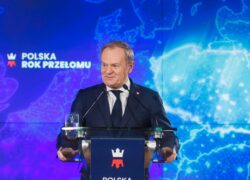
Polish Prime Minister Donald Tusk has outlined an ambitious economic plan for 2025, aiming for a historic investment of PLN 700 billion, the highest in Poland’s history. Speaking at the Stock Exchange alongside Finance Minister Andrzej Domański, Tusk emphasized that investment will be the driving force behind Poland’s economic growth, setting the stage for a breakthrough year.

Record Investment and Economic Growth

The government’s plan revolves around six key pillars: science and technology investment, energy transition, infrastructure development, capital market expansion, logistics and port modernization, and business deregulation. With more than PLN 650 billion earmarked for investment, Poland is expected to consolidate its position among Europe’s economic leaders. GDP growth is forecasted to approach 4% in 2025, a significant improvement from 0.1% in 2023.

Key Pillars of Growth
1. Investment in Science and Technology – Poland will continue supporting higher education and research, with funding for universities and scientific institutions. The government has pledged PLN 200 million for an AI factory and PLN 140 million for a new supercomputer, reinforcing the country’s standing as a hub for IT talent.
2. Energy Transition – Investments in renewable energy, nuclear power, and infrastructure will be key. Plans include PLN 65 billion for energy networks, nuclear plant development, and increased support for biogas and district heating.
3. Infrastructure Development – The government plans to triple port transshipments by 2030 and invest PLN 180 billion in railway modernization, improving transport links between Poland and key European markets.
4. Capital Market Expansion – A reduction in capital gains tax aims to attract more investors, mobilizing an additional PLN 10 billion for economic innovation.
5. Logistics and Transport – Poland is positioning itself as a major European logistics hub, with investments in rail, road, and maritime transport to strengthen global trade connections.
6. Business Deregulation and Support – The government is simplifying reporting obligations, increasing the VAT exemption limit to PLN 240,000, and establishing an Economic Council to ensure direct input from entrepreneurs and industry leaders.

A Bold Vision for Poland’s Future

Tusk’s plan aims not only for economic growth but also for increased societal well-being, aspiring to place Poland among the top 10 happiest nations. The government is focused on building a strong, modern, and prosperous country, leveraging strategic investment, collaboration with global tech giants, and regulatory reforms.

The success of this strategy will depend on cooperation between the government, business, and society, ensuring Poland remains at the forefront of Europe’s economic transformation.

Czech Republic slips in Global Corruption Perception Index

The Czech Republic has dropped five places in the latest Corruption Perceptions Index (CPI), ranking 46th out of 180 countries, with a score of 56 out of 100—one point lower than last year and six below the EU average. Transparency International Czech Republic (TI CR) attributes the decline to the government’s lack of a clear anti-corruption strategy, delays in systemic reforms, and low political integrity.

TI CR criticized Prime Minister Petr Fiala’s government for only enacting anti-corruption legislation under external pressure from EU institutions and international bodies such as GRECO. “The ruling coalition has failed to tackle conflicts of interest in media ownership and subsidies, and it has also blocked necessary reforms in public procurement laws,” said David Kotora, TI CR’s director.

Among key concerns is the delayed reform of the State Prosecutor’s Office, which was only passed after sustained pressure from civil society and international institutions. Additionally, the legal framework for lobbying, required under the National Recovery Plan, remains incomplete, putting EU funding at risk.

The report also highlights high-profile corruption scandals, such as the Dozimetr affair, the ROP Severozápad case, and the Brno city flats scandal, as further evidence of unfulfilled promises of political accountability.

Regional and Global Trends: Slovakia, Hungary, and Russia Struggle

The Czech Republic’s decline follows a larger drop in Slovakia, which fell 12 places to 59th, with a five-point decrease in its CPI score. Transparency International warns that under Prime Minister Robert Fico, Slovakia’s anti-corruption reforms have been systematically weakened.

Hungary remains the worst-performing EU country, ranking 82nd with a score of 41. TI notes that the U.S. recently sanctioned Hungarian Prime Minister Viktor Orbán’s chief of staff, Antal Rogán, over corruption allegations.

Russia, ranked 154th, saw one of the biggest declines, dropping 13 places as state institutions were further dismantled to secure authoritarian rule. Ukraine, despite ongoing war with Russia, dropped just one place to 105th with a score of 35 points.

Global Leaders and Laggards

Denmark (90 points) retained the top spot as the least corrupt country, followed by Finland (88), Singapore (84), and New Zealand (83). Other top-ranking nations include Luxembourg, Norway, Switzerland, Australia, Iceland, and Ireland.

The United States fell four places to 28th (65 points), while China remained at 76th place (43 points).

Czech Republic’s Regional Standing

Among its neighbors, the Czech Republic is outperformed by Germany (15th), Austria (25th), and Poland (53rd), though it remains ahead of Hungary. Germany fell six places, while Austria and Poland each dropped five places in the ranking.

Transparency International warns that without concrete reforms and stronger political will, the Czech Republic risks further decline in future corruption rankings.

Source: Transparency International Czech Republic and CTK

Czech Republic’s unemployment rises to 4.3% in January amid labor market slowdown

Unemployment in the Czech Republic rose to 4.3% in January, up from 4.1% in December, with the total number of unemployed reaching 320,516—an increase of 14,038 from the previous month. The number of job vacancies also declined, with 83,323 positions available, down 163,250 compared to December 2024, according to data released today by the Czech Labour Office.

The labour market cooling is cited as the primary reason for the increase in unemployment, analysts say. The drop in job vacancies, however, is also partially influenced by a new measure introduced in early 2025, which removes listings older than six months from the register to ensure a more accurate job vacancy supply. This does not apply to roles requiring work permits, employment permits, or blue cards for foreign workers.

Regional Differences in Unemployment Rates

Unemployment rose in all regions except Prague, where the job market remained relatively stable. The highest unemployment rate was recorded in the Ústí nad Labem region (6.4%), followed by the Moravian-Silesian region (6%). Prague had the lowest unemployment rate at 2.8%.

Among individual districts, Most, Karviná, and Bruntál reported the highest unemployment rates, exceeding 8%. Conversely, the lowest rates—below 3%—were recorded in Prague-East, Prague-West, Rychnov nad Kněžnou, Pelhřimov, Benešov, Zlín, and Mladá Boleslav.

Labour Market Trends

On average, there are 3.8 job seekers per job vacancy across the country, with the highest competition for jobs in Karviná, Sokolov, Děčín, and Hodonín. Employers continue to seek candidates with primary or lower education for 72.3% of available positions, and 68.6% of vacancies remain open to foreign workers.

Over the past 12 months, the composition of job seekers has shifted. The proportion of short-term unemployed (less than three months) decreased by 3.6 percentage points to 33.2%, while the number of long-term unemployed (over a year) rose by 2.3 percentage points to 30.7%, totaling 98,386 people.

Additionally, the average length of unemployment registration slightly improved, decreasing by 15 days to 469 days compared to December 2024.

With economic conditions fluctuating and structural adjustments in the job market, analysts will closely watch labour trends and government measures aimed at stimulating employment in 2025.

Source: Úřad práce ČR and CTK

LATEST NEWS