HIH Invest sells Ronnenberg retail park to Deutsche EuroShop Fund

HIH Invest Real Estate (HIH Invest) has finalized the sale of a retail park in Ronnenberg, near Hannover, to the 15th special fund of institutional investor Deutsche EuroShop. The transaction marks a strategic divestment for HIH Invest, capitalizing on improving market conditions and sustained investor interest in core and core+ retail assets.

The retail park, built in 2011, encompasses approximately 8,200 square metres of leasable space and 337 parking spots. The fully let property has a diversified tenant mix, anchored by an E-Center operated by EDEKA-MIHA, which occupies around 4,850 square metres. Other prominent tenants include Rossmann, Apollo Optik, Ernsting’s Family, and the city of Ronnenberg’s community centre. The weighted average unexpired lease term (WAULT) exceeds six years.

“Since the start of the year, we’ve seen growing investor demand for core and core+ retail parks, signaling that the price correction phase is largely behind us,” said Jens Nagelsmeier, Head of Transaction Management Retail & Healthcare at HIH Invest. “With an improving market environment and a highly rated buyer, we achieved an excellent sales outcome for our investors.”

David Sanders, Head of Fund Management/Multi-Manager Business at HIH Invest, emphasized the strategic timing of the sale. “This transaction allowed us to streamline the portfolio at an opportune moment. Our investors have benefited from an above-average return on this asset over the past years,” he noted.

Situated in the Hannover region, the retail park boasts a prime location with convenient access to underground and suburban railway networks. The area’s strong purchasing power enhances the property’s appeal, while its sustainability credentials further strengthen its investment case. The asset features an operational photovoltaic system installed since its completion, newly added fast-charging stations for electric vehicles in 2024, partial integration with the district heating network, and predominantly LED lighting.

Baker Tilly provided legal and tax advisory services for the transaction, while Enviro Sustain handled technical due diligence. BNP Paribas Real Estate managed the marketing process.

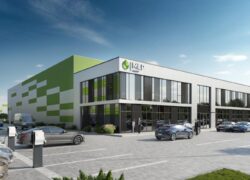
MLP Group reports record-breaking year in 2024 with unprecedented leasing growth

MLP Group, a European logistics and industrial real estate platform, has reported its strongest leasing performance to date in 2024. The company leased approximately 305,000 square meters of space, marking a significant milestone in its growth trajectory. Of this total, 225,000 square meters were secured under new contracts, representing an 82% year-on-year increase. The Group welcomed 22 new clients, while 20% of leasing activity came from existing tenants, further reinforcing its market strength.

The fourth quarter of 2024 was particularly robust, with the company signing a record 95,000 square meters in leases with new tenants—nearly double the volume reported in the same period of 2023. This leasing surge contributed to a notable drop in MLP Group’s vacancy rate to just 5%, down from 8%, well below the market average of approximately 8%.

“Both the final quarter and the full year were record-breaking for us, even though we do not chase volume for its own sake,” said Agnieszka Góźdź, Member of the Management Board and Chief Development Officer at MLP Group S.A. “As a developer, we focus on expanding exclusively in core locations across Europe, ensuring long-term and sustainable growth. We do not engage in opportunistic projects outside our strategic markets. This disciplined approach has enabled us to achieve record leasing results while extending the average lease term to 8 years—a testament to the success of our growth strategy.”

Leasing activity was concentrated in MLP Group’s logistics parks across Europe’s “Big Five” markets, with leased spaces ranging from 1,000 square meters to nearly 25,000 square meters. The average transaction size exceeded 7,000 square meters, reflecting strong demand from a diverse tenant base.

Looking ahead to 2025, the company remains optimistic about its continued expansion. “We will maintain our focus on growth in major metropolitan areas, which remains our strategic priority,” Góźdź added. “At the turn of the year, we launched projects totaling over 300,000 square meters in leasable space, with 30% already pre-leased under 10-year average lease terms. This significantly increases the likelihood of achieving full commercialization before construction is completed.”

MLP Group’s record performance is underpinned by its expanding portfolio and tenant-centric approach, which allows for customized, built-to-suit solutions. The company has also continued implementing its sustainability strategy, integrating environmentally friendly solutions and advanced technologies to enhance the long-term value of its assets.

In line with its “build & hold” strategy, MLP Group retains ownership of its logistics parks upon completion and manages them directly. All Group projects are characterized by prime locations, sustainable designs, and comprehensive tenant support, ensuring long-term stability and growth.

With its record-breaking 2024 performance and strong pipeline for 2025, MLP Group is poised to further solidify its position as a leader in the European logistics and industrial real estate sector.

KURA restaurant opens at LIXA City Gardens

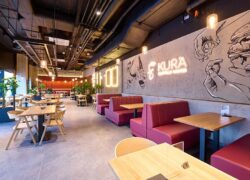
Warsaw’s LIXA City Gardens has welcomed a new addition to its vibrant food court with the opening of KURA, a highly popular restaurant specializing in American cuisine with an Asian touch. Known for its famous fried chicken and comfort food concept, KURA has moved from its original location on Nowolipki Street to a new, 280-square-meter space on the ground floor of LIXA E, accessible from Kasprzaka Street.

Located in Warsaw’s Wola district near Rondo Daszyńskiego metro station, LIXA City Gardens integrates premium office space with cafés, restaurants, and retail outlets. The development’s 150-metre-long public walkway and 4,000 square meters of ground-floor service space have attracted a range of food and retail tenants, with KURA joining recent openings such as Rico, Street, Ramenownia, Szum, Gorąco Polecam, and Batida.

KURA’s relocation to LIXA marks an exciting new chapter for the brand, which has built a strong following in Warsaw. The restaurant specializes in classic American dishes such as Buffalo wings, breaded wings, sirloin strips, and crispy chicken sandwiches, complemented by a wide selection of signature dips and dressings. With a focus on Slow Food principles, all dishes are made from high-quality ingredients and cooked from scratch to ensure an exceptional dining experience.

The new space at LIXA E is designed to blend industrial aesthetics with a warm and inviting atmosphere, offering a cozy yet modern dining environment. Whether for a casual meal or a lively gathering with friends, KURA aims to provide a welcoming space where customers can relax and enjoy quality food.

Developed by Yareal Polska, LIXA City Gardens is a key part of the LIXA campus, the largest project in Yareal’s office portfolio. The mixed-use development, designed by HRA Architekci, consists of five buildings covering a total area of 77,000 square meters. The campus offers a modern business environment, seamlessly integrated with lifestyle amenities, including showrooms, retail stores, medical facilities, and beauty parlours.

With its strategic location and growing lineup of top-tier dining and service options, LIXA City Gardens continues to enhance Warsaw’s business district, providing office tenants, residents, and visitors with a diverse and high-quality urban experience.

Optegra opens flagship laser vision correction clinic at Warsaw Trade Tower

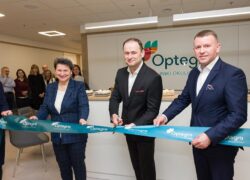
The Warsaw Trade Tower (WTT), a skyscraper in Globalworth’s portfolio, has expanded its tenant mix with a new medical addition. On February 10, 2025, the Optegra laser vision correction clinic officially opened on the first floor of the building, marking the twelfth facility of the Optegra network in Poland and its third clinic in Warsaw.

The opening of the flagship Optegra Warszawa Centrum clinic enhances WTT’s role as a mixed-use office space, offering high-quality medical services to both office tenants and the wider Warsaw community. As a leader in laser eye surgery, Optegra has been operating in Poland for over 25 years and has chosen WTT’s prime location to introduce its most advanced facility yet.

Spanning over 500 square meters, the new clinic has been designed to meet the highest European medical standards, providing a modern, patient-friendly environment. The facility features nine specialized rooms, including two doctor’s offices, five optometric surgeries, two diagnostic rooms, and a treatment room.

Equipped with cutting-edge Zeiss technology, the clinic offers internationally recognized SMILE/Lentivue laser vision correction procedures. A team of experienced surgeons and optometrists ensures that all treatments meet the highest safety and precision standards.

“Warsaw Trade Tower is the perfect location for our flagship project in the capital. The clinic was designed as a ‘perfect space’ in every aspect, with a location that offers easy access from all parts of Warsaw,” said Agnieszka Szpara, President of the Board of Optegra Ophthalmic Clinics. “Warsaw Centrum meets the highest European standards, featuring the ‘golden standard’ of technology, advanced correction methods, patient safety protocols, and a dedicated team of specialists.”

The clinic was developed in under five months, requiring extensive coordination to meet strict ISO and sanitary standards. The project involved adapting WTT’s existing infrastructure to accommodate the clinic’s needs, including integrating specialized air conditioning systems within the operational office tower.

“Medical tenants have unique design and fit-out requirements, particularly for high-tech clinics. Our team successfully delivered a space that meets the highest expectations of both the clinic and its patients,” said Mateusz Szpala, Project Manager at Workplaces, Globalworth Poland.

The addition of Optegra reflects Globalworth’s strategy to diversify its tenant portfolio by integrating high-quality medical services within office buildings. The company has already partnered with Medicover, LuxMed, Enel-Med, and PolMed, reinforcing the trend of premium office spaces evolving into mixed-use hubs that combine business, healthcare, and social functions.

“Medical facilities increasingly prefer office buildings that offer not only business advantages but also excellent accessibility and services,” said Weronika Maria Kuna, MRICS, Asset Management and Leasing Manager at Globalworth Poland. “We are proud to strengthen our collaboration with the healthcare sector at Warsaw Trade Tower.”

Colliers provided transaction advisory services for the lease agreement. With a growing mix of corporate and medical tenants, Warsaw Trade Tower continues to evolve as a premier, multifunctional business destination in the heart of the Polish capital.

Atradius forecasts minimal economic growth for Germany in 2025 amid political and trade uncertainty

Germany’s economy remains fragile as Atradius predicts only slight growth in 2025, with ongoing industrial stagnation and global trade tensions dampening prospects. A new government set to be elected on 23 February will face the challenge of preventing a third consecutive year of economic contraction, according to Frank Liebold, Country Manager Germany at Atradius.

Slow Recovery Amid Economic Challenges

Germany’s economic struggles are reflected in declining exports and weak investment levels. In 2024, exports fell by 0.7%, while investments dropped by 2.7%, marking a continued downturn across key industries such as electrical equipment, mechanical engineering, and automotive manufacturing. Industrial production is forecast to decline by 2% in 2025, with consumer sector growth expected to remain sluggish at 1.3%, weighed down by persistent inflationary pressures.

While Atradius expects Germany’s economy to return to positive growth at 0.4% in 2025, Liebold warns that this marginal increase is far from guaranteed. “Even if the outlook for 2025 and 2026 seems rather bleak, it is not entirely without hope. The new government has the ability to improve conditions for German businesses, but decisive action will be required,” he stated.

Trade Tensions and Industrial Uncertainty

The German automotive industry, a key pillar of the country’s economy, is projected to grow by just 2% in 2025 after shrinking 4% in 2024. Meanwhile, construction output, which fell by 3% last year, is expected to stabilize at a low level, while engineering output remains in negative territory following a 6% decline in 2024.

Further uncertainty stems from U.S. trade policy, which could exacerbate Germany’s economic woes. The return of President Trump has brought renewed threats of tariffs on German cars and EU imports. Recent U.S. tariffs on steel and aluminum have had limited impact, but a proposed 10% tariff on all EU exports could reduce Germany’s GDP growth by 0.3 percentage points in 2025 and 0.4 points in 2026, according to Oxford Economics.

Liebold warns that these trade barriers come at a particularly vulnerable time for Germany’s export sector, which is already struggling to compete with cheaper Chinese products on the global market. “The risk of nearly zero economic growth is increasing, and the German economy cannot afford further stagnation,” he said.

German Businesses Want ‘America First’ Approach for the EU

A recent Atradius survey of 500 German companies found that 52% support an ‘America First’ policy for Germany and the EU, advocating for protectionist measures to shield domestic industries. However, 48% of respondents opposed such policies, arguing that economic isolationism is not a viable strategy in today’s interconnected world.

Instead, businesses are calling for bureaucratic reductions, lower energy costs, tax relief, stable political policies, and solutions to the skilled labor shortage. While many favor protectionist policies, critics argue that Germany’s economic success depends on global trade and cooperation rather than isolationist strategies.

All Eyes on Germany’s Upcoming Election

With the early parliamentary elections on 23 February, Germany’s economic future hangs in the balance. The CDU/CSU leads in the polls, but forming a stable coalition will be key to political and economic stability. Potential partners could include the liberal FDP, the left-wing populist BSW, or the Left Party, depending on their ability to pass the 5% threshold for Bundestag representation.

“The new government will likely be less divided than the previous coalition, which could improve decision-making,” Liebold noted. “However, major structural reforms or economic stimulus measures are unlikely in the short term, meaning that those expecting a rapid turnaround may be disappointed.”

Uncertain Future Despite Necessary Reforms

While cross-party proposals exist to reduce bureaucracy and cut costs, implementation remains the biggest challenge. Economic headwinds, political constraints, and rising populism are limiting Germany’s ability to enact major reforms.

“The need for decisive action is becoming increasingly urgent,” Liebold emphasized. “But whether these measures will actually be implemented remains uncertain. Germany’s democratic parties must work together constructively to address the country’s economic challenges—especially in the face of rising right-wing populism.”

As Germany heads to the polls, the country faces a pivotal moment that will determine whether it can break free from stagnation or face another year of economic struggles.


Panattoni secures €17.3 Million financing from Santander Bank Polska for Gdańsk logistics project

Panattoni has secured €17.3 million in financing from Santander Bank Polska for its latest investment in the Pomerania region—Panattoni Park Gdańsk City Airport. The development, consisting of two speculative distribution halls, is set to enhance the region’s logistics infrastructure by capitalizing on its strategic location near Gdańsk Lech Wałęsa Airport.

“Gdańsk is a key logistics hub in Poland, and our project addresses the increasing demand for industrial space in the region, where vacancy rates are among the lowest in the country,” said Emilia Taczewska-Trojańska, Head of Debt Finance Poland at Panattoni. “Thanks to this loan from Santander Bank Polska, we can further strengthen our presence in Pomerania, where we have already delivered nearly 700,000 square meters of modern industrial space. This new investment will allow tenants to take advantage of a unique combination of air, land, and sea transport solutions.”

Panattoni Park Gdańsk City Airport is situated adjacent to Gdańsk Lech Wałęsa Airport, just 3 km from the Tricity bypass, ensuring seamless connectivity to Baltic Hub (20 km) and Gdańsk city centre (13 km). The 19,400-square-meter logistics park comprises two modern halls of 14,800 square meters and 4,600 square meters, designed to accommodate a variety of industrial and distribution needs.

In line with Panattoni’s commitment to sustainability, the development will adhere to BREEAM Excellent certification standards. The project incorporates energy-efficient technologies and water-saving solutions, reducing operational costs for tenants while promoting eco-friendly business practices.

With this latest investment, Panattoni continues to expand its footprint in Poland’s dynamic logistics sector, reinforcing Gdańsk’s role as a critical gateway for international trade and distribution.

Germany’s Low-Wage Sector Shrinks as Poverty Risk Declines, Especially in Eastern States

Germany’s low-wage sector has been shrinking, particularly in eastern Germany, while the at-risk-of-poverty rate is also falling, marking a potential turning point after years of rising inequality. These findings come from the latest income survey conducted by the Socio-Economic Panel (SOEP) at DIW Berlin, which collects data from around 30,000 respondents annually.

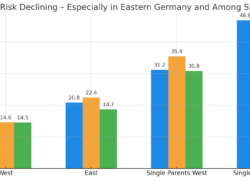
Despite real wage losses due to inflation in 2022, the lowest wage group saw relative gains, largely driven by a sharp increase in the minimum wage. As a result, the proportion of low-wage earners nationwide fell from 23.4% to 18.5% among dependent employees, while in eastern Germany, it declined from 38% to 24% since its peak in 2007.

“This is a particularly encouraging trend in eastern Germany. Both the low-wage sector and the at-risk-of-poverty rate have dropped significantly, although they remain above the levels seen in western Germany,” said Markus M. Grabka, author of the SOEP study.

Poverty Risk Declines, Particularly Among Youth and Single Parents

Although overall household income has increased significantly in the long term, rising by 35% since 1995 after adjusting for inflation, the lowest-income households have seen little improvement. In contrast, the wealthiest households have experienced a 58% income increase.

However, recent data suggests a potential shift in poverty trends. For the first time in years, the at-risk-of-poverty rate has begun to decline, particularly in eastern Germany, among children and young people, and within single-parent households.

The poverty rate for single parents has fallen from a peak of 37% in 2018 to 31% in 2022, with an even steeper drop in eastern Germany, where it declined from 43% to 32% over the same period. Government support measures, including expanded maintenance payments and increased tax relief for single parents, appear to have contributed to these improvements.

“The drop in poverty risk is encouraging, but sustained efforts are needed to confirm a lasting trend reversal,” Grabka noted.

Education as a Key to Breaking the Cycle of Poverty

While recent progress is promising, experts warn that targeted investments are needed to further reduce poverty, particularly among children and young people. The rate of early school leavers has increased, heightening concerns about long-term social mobility.

“Without a recognized educational qualification, poverty in adulthood is highly likely,” Grabka cautioned. He recommended greater public investment in education, potentially funded by higher taxes on wealth, to address the structural causes of poverty and provide better opportunities for future generations.

As Germany grapples with economic shifts and inflationary pressures, the latest data offers hope for gradual improvements in income equality and poverty reduction—provided that policymakers continue to prioritize social and economic reforms.

Source: DIW Berlin

Roche invests over €600 Million in cutting-edge diagnostics manufacturing centre in Bavaria

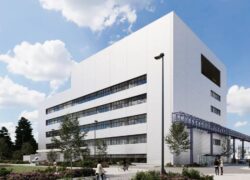
Roche is making a major investment in its Life Science Competence Center in Penzberg, Upper Bavaria, with the construction of a state-of-the-art diagnostics production centre. Spanning 23,500 square meters, the new facility will enhance global diagnostic test production and strengthen Roche’s position as a leader in the healthcare sector. The €600 million investment will ensure that growing demand for diagnostic solutions is met across Germany and Europe.

The foundation stone for the new diagnostics manufacturing centre was laid at the end of last year, marking a significant milestone for Roche’s expansion. The event was attended by key stakeholders, including German Chancellor Olaf Scholz, Bavarian Prime Minister Markus Söder, Penzberg Mayor Stefan Korpan, Roche CEO Thomas Schinecker, and Roche Germany management. Also present were construction project manager Paul Wiggermann, Roche construction project manager Ludger Dierkes, and Drees & Sommer project manager Stefan Schweitzer.

Roche currently produces 80% of all diagnostic substances used worldwide at its Penzberg campus, supplying 1,900 different elements essential for medical testing. In 2023 alone, 29 billion diagnostic tests using Roche’s analytical systems were delivered to customers globally. The new facility will increase production capacity for 450 different diagnostic substances, supporting faster and more reliable testing in infectious diseases, neurology, cardiology, oncology, and diabetes.

“Penzberg is a key location for the global healthcare industry and a hub of innovation for diagnostics and pharmaceuticals,” said Paul Wiggermann, Roche’s Head of Construction. “With over 50 years of expertise in chemistry and biotechnology, this campus has become one of Europe’s largest biotechnology centres. The fact that 80% of Roche’s diagnostic substances come from Penzberg underscores its significance as a global centre of excellence.”

The construction of this complex facility is being overseen by Drees & Sommer SE, a leading consulting firm in real estate, infrastructure, and industry. Stefan Schweitzer, Associate Partner at Drees & Sommer, is heading the project, ensuring cost, schedule, and quality control, as well as risk and change management.

“For a highly complex construction project like this, precise cost management and financial oversight are crucial,” Schweitzer explained. “We continuously monitor and adjust the budget to mitigate potential risks while maintaining close collaboration with all project participants. Additionally, the facility is being built with flexibility in mind, allowing for future modifications or expansions without disrupting operations.”

The new centre is expected to be operational by 2028, bringing 200 Roche employees under one roof. These employees, currently spread across various buildings within the Penzberg campus, will benefit from enhanced collaboration and streamlined workflows, further improving efficiency in diagnostic production.

With this investment, Roche continues to expand its capabilities in diagnostics and life sciences, reinforcing Germany’s role as a leader in medical innovation.

Panattoni expands Czech industrial land portfolio to 1.5M sqm in 36 months

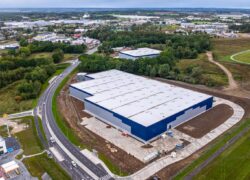
Panattoni has significantly expanded its presence in the Czech industrial real estate market, reaching 1.5 million square meters of development land acquired in just 36 months. The latest milestone was achieved with the acquisition of 38 hectares near Leoš Janáček Airport in Mošnov, allowing the company to develop nearly 600,000 square meters of modern industrial space. This expansion is expected to generate over 8,000 new jobs, further strengthening the Czech Republic’s position as an attractive destination for industrial investment.

As Germany faces economic stagnation, rising energy costs, and increasing labor expenses, Czech industry is positioning itself as an alternative destination for companies looking to relocate production. The country’s skilled workforce, lower operational costs, and strategic location make it an attractive option for industrial firms seeking to maintain proximity to Western European markets while reducing expenses.

“The challenging situation for many German companies presents a growth opportunity for the Czech economy,” said Pavel Sovička, Managing Director of Panattoni for the Czech Republic and Slovakia. “With a sufficient supply of prepared industrial zones, the Czech Republic can gain a competitive advantage over neighboring countries in attracting new investments.”

Panattoni has been actively acquiring land nationwide, with major projects including:
• Panattoni Park Ostrava Airport – Developed in cooperation with the City of Ostrava, this industrial park will accommodate manufacturing and logistics companies with international reach, supporting the economic transformation of the Moravian-Silesian Region. The project is expected to create over 2,000 jobs and strengthen the region’s industrial competitiveness.
• Panattoni Park Pilsen West III – Located in Úherce, near the German border, this site offers exceptional transport accessibility, including direct access to the D5 motorway, making it a prime location for high-end manufacturing and logistics companies.
• Kladno-South Industrial Zone – Utilizing Panattoni’s Blue Solutions for a Green Future approach, this project enabled Hanon Systems to reduce its carbon footprint, meet EU taxonomy requirements, and upgrade facilities through a leaseback model.

“The acquisition of Panattoni Park Ostrava Airport was not just another major step in regional development but also a milestone that pushed us past the 1.5 million m² mark in just three years,” said Vladimír Kosek, Panattoni’s Acquisitions Director for the Czech Republic and Slovakia. “We plan to acquire another 500,000 m² for development in 2025, further strengthening our position in the market.”

Panattoni’s rapid expansion has been supported by major capital partners, including Accolade, AEW, RSJ, and Wood & Co. Their investments have facilitated land acquisitions, accelerated project implementation, and created a foundation for long-term economic benefits. The strategic collaboration between Panattoni and its financial backers is playing a key role in integrating the Czech Republic more deeply into European production and logistics networks.

The newly acquired industrial sites are expected to generate thousands of jobs, ranging from technical and manufacturing roles to administrative and management positions. These projects will also stimulate local economies by boosting wages, tax revenues, and municipal growth. Property tax revenues, in particular, will directly benefit local communities, providing financial resources for further infrastructure improvements.

With its aggressive expansion strategy, Panattoni is positioning the Czech Republic as a major hub for industrial development, ready to welcome companies relocating from Western Europe while fostering regional economic growth.

HSF System Group building OC Klokan shopping centre in Žilina

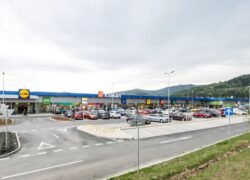
A new modern and environmentally friendly shopping centre, OC Klokan, is under construction in Žilina, bringing an enhanced retail experience to the city. The project, located in a prime area next to the football stadium and near the railway station, is being developed by KLM Real Estate a.s. with HSF System SK, part of the PURPOSIA Group, serving as the general contractor. The shopping centre is set to be completed by autumn 2025.

HSF System Group has extensive experience in retail construction, having successfully delivered four Klokan shopping centres across the Czech Republic and Slovakia. “Klokan shopping centres focus on accessibility, functionality, and sustainability. In Žilina, we will apply our expertise to ensure the project meets the latest trends in retail development,” said Tomáš Kosa, Director of HSF System Group.

The OC Klokan project will feature two main buildings with retail spaces, technical facilities, and supply areas, alongside four additional standalone structures for fast food outlets, a flower kiosk, and a self-service car wash. The centre is designed to offer a wide variety of shops and services to cater to local residents and visitors.

Convenient surface parking will be integrated into the development, ensuring easy customer access from two main entry points. The project will seamlessly connect to existing and newly built transport infrastructure, enhancing accessibility.

OC Klokan aligns with the broader vision of Kangaroo Shopping Centres, which aim to create accessible, practical, and sustainable retail parks. These centres prioritize easy access to retail units, ample adjacent parking, and a diverse tenant mix.

“We want Kangaroo Shopping Centres to not only provide a modern and convenient shopping experience but also contribute to the local community by creating new job opportunities and improving transport access,” said Michal Kozáček, Board Member of KLM Real Estate a.s. “In Žilina, we aim to demonstrate once again that retail parks can be both effective and sustainable elements of urban development.”

With its strategic location, modern infrastructure, and focus on sustainability, OC Klokan Žilina is poised to become a key retail destination in the region upon its completion in 2025.

LATEST NEWS