Slovakia’s Inflation Slows to 3.7% in October, Matching the Year’s Lowest Level

Inflation in Slovakia eased to 3.7% in October, matching April’s level as the lowest recorded so far this year. Consumer prices rose only marginally month-on-month, increasing by 0.1%. Year-on-year inflation dropped below 4% for the first time in five months.

Month-on-Month Developments

Prices increased in nine out of twelve expenditure categories compared with September. The strongest monthly growth was recorded in recreation and culture (+0.7%), driven mainly by higher prices for package holidays. Personal care products and insurance contributed to a 0.4% rise in miscellaneous goods and services. Housing and energy costs, the largest component of household spending, increased by 0.1%, while clothing and footwear rose by 0.6%.

Transport prices fell by 1.5%, mainly due to cheaper air travel and lower fuel prices. Food and non-alcoholic beverages remained stable overall, as price declines in meat, fruit and selected delicacies balanced increases in vegetables, confectionery and fish. Non-alcoholic beverages became cheaper for the first time this year.

Year-on-Year Developments

All twelve expenditure categories recorded higher prices compared with October 2024. The strongest increases were in education and in restaurants and hotels, both up by 8.9%. Growth accelerated noticeably in miscellaneous goods and services (+6.7%), recreation and culture (+5.4%) and alcoholic beverages and tobacco (+6.1%).

A key factor easing overall inflation was the slowdown in food and non-alcoholic beverage prices, which rose by just 1.4% year-on-year—the lowest rate since June 2024. Several food categories recorded price declines, including vegetables (down more than 10%), meat, fruit, oils and fats, and sugar and confectionery. Prices increased in categories such as milk, cheese, eggs, bread and cereals. Non-alcoholic beverages continued to rise, although at a slower pace.

Housing and energy prices increased by 2.5%, the same rate as in September, driven mainly by higher rents. Transport inflation eased to 3.4%, reflecting slower fuel price growth and lower motor-vehicle prices.

For the first ten months of 2025, consumer prices were up 4% year-on-year.

Core and Net Inflation

Core inflation stood at 3% in October, while net inflation—excluding food prices—was 3.4%. Both indicators increased by 0.1% compared with September.

Source: Statistical Office of the SR 

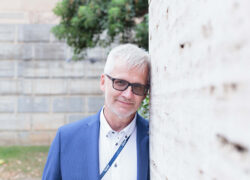
Sustainability, Identity and Future-Proof Design: A Conversation with Szymon Wojciechowski of APA Wojciechowski Architects

APA Wojciechowski Architects has become one of the most influential architectural studios in Central and Eastern Europe, known for projects that combine sustainability, urban sensitivity and modern functionality. With developments such as Riverview in Gdańsk, Skyliner in Warsaw, Elektrownia Powiśle and UNIT.City in Kyiv, the practice has built a consistent record of delivering architecture that balances commercial efficiency with social and environmental responsibility.

In this interview, Szymon Wojciechowski – CEO, Co-Owner and Architect-Partner at APA Wojciechowski Architects – discusses how the studio is advancing its sustainability agenda, approaching historic revitalisation, building regional identity into design, anticipating future workplace trends, and scaling its capabilities for large mixed-use urban projects.

APA Wojciechowski’s projects regularly achieve leading environmental certifications, from LEED Gold at Riverview to BREEAM Excellent at The Park Warsaw. According to Wojciechowski, this focus is embedded in the firm’s ethos.

“Sustainable architecture has been deeply ingrained in our studio’s DNA for many years. We are fortunate to collaborate with conscious investors who share our environmentally friendly values, enabling us to grow and strive for excellence in this field.”

He notes that the broadening of certification—from the traditional office and retail sectors into the residential market—is an encouraging shift.

“This is quite optimistic and shows that end users of the apartments also care about living in a healthy environment. Of course, the flagship example of this is the Riverview project, but let’s not forget about mix-use projects such as Elektrownia Powiśle in Warsaw or UNIT.City in Kyiv, which are examples of environmentally friendly developments created in the spirit of the 15-minute city.”

The firm is now aiming even higher on upcoming office schemes.

“When it comes to office projects, together with our clients, we are constantly raising the bar: the Skyliner II and LightOn projects will hold BREEAM certificates at the Outstanding level.”

APA Wojciechowski has gained a reputation for breathing new life into historic industrial sites—from the ongoing transformation of Cukrownia Pruszcz Gdański to the award-winning Elektrownia Powiśle. Revitalisation, Wojciechowski emphasises, demands precision and adaptability.

“We approach each project individually, which is particularly important in the case of historic redevelopment projects. The architect’s vision must incorporate the requirements of the heritage conservator, the client’s expectations, as well as local regulations and commercial standards.”

Preserving authenticity requires strong cooperation between all stakeholders.

“The synergy of all people and companies involved in the project and good cooperation are extremely important, as working on historic properties is often like operating on a living organism. An architect should strive to incorporate the unpredictable into a design. For various reasons, this sometimes requires a specialized approach and ongoing modifications to our vision.”

He sees rising interest in revitalisation across Poland—and not only for century-old buildings.

“We see a growing interest among our clients in revitalization projects in Poland, which is probably due to the large number of success stories to which we have had the honor of contributing. Let’s remember that even relatively new buildings can be given a second life, as exemplified by the V Tower in Warsaw.”

The studio’s Kielecka 2 office building in Gdynia incorporates subtle references to the city’s modernist and maritime heritage, reflected in its façade and form. Wojciechowski explains that such regional accents result from careful research and internal exploration.

“We often try to ‘smuggle’ local accents into the buildings we design, each time preceded by thorough research. One way to confront diverse ideas is through internal architectural competitions within our studio, sometimes within the design team.”

The diversity of the studio shapes this process.

“Thanks to the fact that our team includes people with very different experiences, from different countries, very custom ideas often emerge, which are then confronted with market standards and client expectations.”

Timelessness remains a priority.

“Of course, we also strive to ensure that the design solutions we use are timeless, so that the buildings we design stand the test of time and remain vibrant for many, many years.”

For Kielecka 2, the connection to place emerged naturally.

“Kielecka 2 was designed by our Tricity team, whose office is located in Gdynia – there is nothing more enjoyable than the opportunity to co-create the space that surrounds us. Referencing local modernist and maritime architecture was a natural progression, emerging from the very beginning of our design process. Ultimately, a building was created that enjoys constant recognition among its tenants.

As workplace models shift toward hybrid structures and wellness-led environments, APA Wojciechowski has increasingly prioritized flexibility in its commercial buildings.

“A building’s form cannot be closed, but rather open to permanent changes, short-term forms, and radical spatial transformations. Therefore, the process of creating a design that is as future-proof as possible begins at the earliest design stage.”

Future resilience is considered even for headquarters designed for single tenants.

“Even if our goal is to design a client’s headquarters, we consider various possible scenarios that may arise in the future—for example, the decision to lease the space or part of it commercially.”

Skyliner illustrates this adaptability.

“Taking into account the latest trends that are changing is, of course, one of the next stages of our work. A prime example of flexible design is the Skyliner, whose top floors feature a vibrant event space. And its lobby hosts both business and private meetings.”

Large mixed-use schemes require coordination across many disciplines and stakeholders. Wojciechowski believes these developments represent the next phase of urban evolution.

“Undoubtedly, mixed-use projects that connect multiple industries and engage the community are the future of the real estate market. They require from us a personalized and holistic approach, as well as openness. Openness to people’s needs and the ability to change the initial design concept.”

He notes that architects must increasingly assume broader responsibilities.

“The role of architects extends beyond their usual duties: we must be skillful and responsible project managers.”

Looking ahead, technological advances will reshape the profession.

“While it is difficult to predict the future, we know that innovations, including those in the field of artificial intelligence, will play a significant role in it.”

APA Wojciechowski Architects continues to shape the evolution of Polish and regional architecture through sustainable design, adaptive reuse, contextual sensitivity and forward-thinking workplace concepts. As urban environments grow more complex, the studio’s ability to integrate technical, social and environmental priorities positions it at the forefront of contemporary architectural practice.

© 2025 cij.world

Construction Begins on Konstanta Karlín Residential Project in Prague

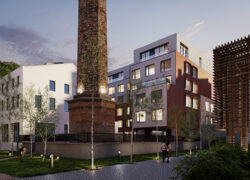
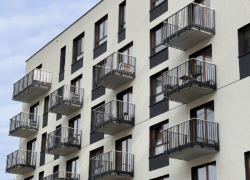
CASPYAN has begun construction on the Konstanta Karlín residential project following the completion of demolition and site preparation works on Kollárova Street, near the Křižíkova metro station. The development will deliver 44 apartments in layouts from 1+kk to 3+kk, along with three ground-floor commercial units. Apartment sales are currently under way through the CASPYAN FUND SICAV.

The project is being developed by IKONIX, with Arch Construct appointed as the general contractor. The architectural design is by Karlínblok. Completion is planned for the second quarter of 2027.

Konstanta Karlín is designed as a multi-functional urban building with a connection between Kollárova Street and an internal courtyard. The scheme includes an active ground-floor frontage and a mix of residential units, including a top-floor 351 m² apartment with a private lift. The building’s Corten façade references the industrial history of the surrounding area.

The project forms part of the ongoing redevelopment of Karlín, which has seen the regeneration of former industrial sites and significant residential and commercial investment. The location offers direct access to public transport, including the nearby Křižíkova metro station and local tram lines, with Florenc and the Main Railway Station reachable within minutes.

OBERMEYER Helika delivers design work for the expansion of Westfield Černý Most

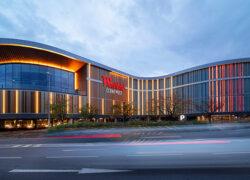
OBERMEYER Helika has served as the general designer for the latest expansion of Westfield Černý Most, a project carried out by Unibail-Rodamco-Westfield (URW). The second phase of the centre’s development adds more than 9,100 sqm of retail and leisure space, accommodating over 30 additional units including shops, food and beverage outlets, cinemas and related services. With this extension, the shopping centre now covers approximately 94,100 sqm, making it the second-largest retail complex in the Czech Republic.

The design process required detailed phasing to allow the existing building to remain operational throughout construction. According to the project team, previously undocumented building components and installations were uncovered during the works, requiring on-site adjustments and updates to the documentation. The project was delivered using BIM workflows in Revit to coordinate engineering disciplines and manage design changes.

Part of OBERMEYER Helika’s scope involved proposing space-efficient layouts for new tenants within the limited footprint of the extension and preparing full technical documentation, including a revised food court concept. The firm also developed a reuse strategy for selected structural and façade elements from the original building, in line with URW’s objectives to reduce construction-related emissions. Materials such as cladding components, railings and aggregate layers from demolished sections were incorporated into the design where feasible.

Structural solutions for reinforced concrete, steel and timber elements were designed as part of the wider expansion works. The project has been prepared to meet BREEAM sustainability requirements.

Westfield Černý Most originally opened in 1997 and was among the first large-scale shopping centres in the post-1993 Czech Republic. Earlier expansion stages began in 2000. The architectural concept for the most recent extension was developed by London-based studio Benoy.

Major logistics tenant leases 80,000 sqm at new CTPark Budapest–Érd

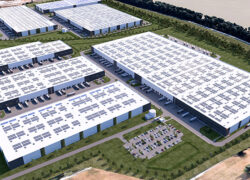
CTP has secured an 80,000 sqm build-to-suit lease with a large international logistics company at the newly launched CTPark Budapest–Érd. The facility, tailored to the tenant’s operational requirements, is scheduled for handover in the first quarter of 2027.

The occupier will consolidate its activities into the new site, which was selected for its access to the M6 motorway, proximity to the M0, M1, M6 and M7 transport corridors, and availability of local labour. The park, located on a 70-hectare plot at the border of Érd and Budafok-Tétény, is CTP’s sixteenth industrial location in Hungary.

Development of CTPark Budapest–Érd began in January 2025. The project is planned to provide approximately 250,000 sqm of Grade-A industrial and logistics space once fully built out. The 80,000 sqm agreement, together with the initial 75,000 sqm phase, reflects continued pre-letting activity in the area.

The park’s masterplan includes service facilities, green areas, and connections for pedestrians and cyclists, including links to the Tétényliget railway station and the EuroVelo 6 cycling route. CTP states that all buildings will feature energy-efficient design elements such as improved insulation, LED lighting, and photovoltaic panels. Green façades and newly planted forest areas along the Danube form part of the site’s environmental measures, supported by cooperation with the Hungarian Garden Heritage Foundation.

According to CTP Hungary, the project aims to integrate with the surrounding landscape while meeting modern logistics standards. CTP continues to expand its CEE industrial network, with a significant share of its annual leasing activity coming from existing tenants across its parks.

Sweden’s Property Market Rebounds as Investor Confidence Returns

Sweden’s real estate market showed clear signs of recovery in the third quarter of 2025, supported by improving financing conditions, stronger investment flows and sustained occupier demand across key sectors. Total property transactions reached approximately SEK 33 billion during the quarter and SEK 104 billion for the first nine months of the year — about 27 percent higher than the same period in 2024.

Foreign investors were notably active, accounting for around a quarter of all investment volume, well above the historical average. Industrial and logistics properties led the market, followed by residential and office assets. Major deals included Alecta’s sale of its 50 percent stake in Ancore to ICA Fastigheter, Vasakronan’s purchase of Solna United from DWS, and Hines’ acquisition of an eight-asset logistics portfolio from Blackstone covering Stockholm and Gothenburg.

The Riksbank’s decision to lower the benchmark rate to 1.75 percent, after a series of cuts since mid-2024, has started to ease pressure on financing and stimulate renewed investor interest, particularly in sectors that had been constrained by higher borrowing costs. Analysts expect that the downward trend in interest rates will continue to stabilise valuations and gradually lift transaction volumes through 2026.

In the housing market, activity increased moderately as buyers and investors responded to improving credit conditions. Residential transaction volumes rose by roughly seven percent year-on-year, reaching SEK 9.9 billion in the third quarter, while the number of deals climbed by more than a quarter. Several high-profile transactions underscored renewed confidence in the sector, including Familjebostäder’s acquisition of 14 apartment buildings in Hjulsta and KKR’s forward funding of a new residential development in Täby.

Rental demand remains strong across Sweden’s largest cities, but construction has slowed significantly. The number of new apartment completions in 2025 is expected to fall by nearly half compared with two years earlier, limiting supply at a time of steady population growth and housing need. Although smaller municipalities have reported isolated cases of increased vacancy in new developments, the main metropolitan regions continue to experience structural undersupply.

The logistics and industrial segment remains one of the country’s most dynamic asset classes. Leasing activity accelerated in Q3 to nearly 240,000 sqm, driven by expansions from occupiers in e-commerce, manufacturing and pharmaceuticals. Notable transactions included major new leases by Hitachi, Epiroc, AstraZeneca and Salix Group. Despite a slight increase in vacancy due to a wave of new completions, demand for sustainable and strategically located warehouse space continues to outpace supply in most regions.

Investment in logistics assets accounted for around one-third of Sweden’s total property market turnover in the third quarter, almost doubling the level recorded a year earlier. Yields remained stable, reflecting ongoing competition for prime assets and a cautious but confident outlook among investors.

Across all property sectors, Sweden’s market is showing stronger fundamentals than at any point since the peak of the rate-hike cycle. Lower borrowing costs, rising international participation and a gradual return of development activity point toward a measured but broad-based recovery as the country heads into 2026.

Norway’s Property Market Remains Stable as Investors Focus on Core Assets

Norway’s commercial property market showed steady performance in the third quarter of 2025, following a strong first half of the year. Investment activity slowed slightly during the summer months, reflecting seasonal trends, but remained consistent with broader regional patterns across the Nordics.

Total real estate transactions in Norway during the first nine months of the year reached close to NOK 47 billion. Although this represents a modest decline from the same period last year, the number of deals has increased, indicating that market interest remains resilient even under tighter financing conditions.

Activity was led by residential and retail properties, both of which saw increased investor focus. Housing assets accounted for nearly a quarter of total transaction volume this year, while retail investments expanded after several quarters of subdued performance. Among the notable transactions were the sale of a shopping centre in Bergen and the acquisition of major office and mixed-use properties in Oslo, underlining continued appetite for well-located assets.

Interest rates and borrowing costs remain key factors shaping investment strategy. The central bank reduced its policy rate earlier this year, but longer-term lending rates have edged higher, keeping financing conditions relatively demanding. Despite this, property values and yields have remained broadly stable, supported by equity-backed investors and selective acquisition strategies.

In the Oslo office market, rental levels and occupancy have stabilised after recent fluctuations. Demand continues to be driven by modern and energy-efficient buildings in central locations, while older premises face greater competition for tenants. Vacancy in the capital region has stayed within a moderate range, and new construction remains limited, helping to maintain balance between supply and demand.

Market analysts note that investors and occupiers alike are focusing on quality and sustainability. Developers are prioritising energy performance and adaptability in new projects, while investors are concentrating on long-term value rather than short-term yield shifts.

Overall, Norway’s property market continues to show resilience. With stable pricing, selective investor engagement and consistent tenant demand in prime locations, the sector appears to be moving through a period of consolidation rather than contraction as 2025 draws to a close.

Source: CBRE

Finland’s Real Estate Market Shows Broad Signs of Recovery in Q3 2025

Finland’s property market recorded a steady upturn in activity during the third quarter of 2025, with investors showing renewed interest across several key sectors after a subdued 2024. The rebound was driven by stronger demand in the residential and healthcare segments, alongside stable conditions in offices and industrial assets, according to new data from CBRE Finland.

The total value of property transactions in the quarter reached more than €700 million, a marked improvement from the same period last year. Housing-related assets accounted for the largest share of investment, supported by one of the biggest deals of the year—the acquisition of a nationwide residential portfolio by SATO from OP Rental Yield Fund. The healthcare sector also saw heightened activity, including the sale of a major wellbeing centre in Helsinki to an institutional investor.

While the overall investment volume has yet to return to the record highs seen earlier in the decade, the Finnish market is clearly regaining momentum. Investors remain focused on stable, income-producing assets in prime locations, with the Helsinki Metropolitan Area continuing to attract both domestic and international capital. Pricing across most asset classes has remained steady, and confidence in the country’s real estate fundamentals is strengthening.

In the office market, activity concentrated on high-quality buildings in central Helsinki, where modern and energy-efficient workplaces continue to attract occupiers. Although total leasing volumes remain below pre-pandemic levels, the market has shown clear signs of stabilisation. Tenants are prioritising well-connected buildings that meet sustainability standards, while older and less efficient stock continues to experience weaker demand.

The industrial and logistics sector continues to perform well, benefiting from Finland’s role as a northern logistics hub and ongoing supply-chain modernisation. Demand from e-commerce, manufacturing and data-centre operators has helped maintain low vacancy rates in the most accessible regional locations. Rental levels have remained firm despite rising development costs and a slowdown in speculative construction.

In the residential sector, investor confidence is gradually returning. The slowdown in new housing completions has created a more balanced market, particularly in the Helsinki area and university cities. Investors are increasingly targeting affordable and energy-efficient housing as long-term rental demand remains stable.

Healthcare properties have become a notable area of focus for institutional investors seeking dependable returns. The combination of ageing demographics, long lease terms and strong tenant covenants has made the sector an attractive alternative to traditional commercial assets.

Across all segments, CBRE reports that prime yields were largely unchanged in the third quarter, with minor downward adjustments in some retail categories and logistics properties. Market sentiment has shifted toward cautious optimism as investors and developers adapt to a more stable financial environment and modest improvements in financing conditions.

Overall, Finland’s real estate market appears to be entering a new phase of recovery, characterised by selective investment, sustainable development priorities and an emphasis on long-term value creation.

Source: CBRE

Prague’s New Apartment Supply Remains Tight as Permitting Slowdown Deepens

The supply of new apartments in the Czech capital continues to stagnate despite developer pipelines holding tens of thousands of planned units. Market data from leading residential developers shows that Prague currently has roughly 5,700 new-build apartments available for sale, a level that has changed little over the past year.

The distribution of units remains uneven. Central districts, particularly Prague 1 and Prague 2, continue to show the most limited availability, while Prague 9 accounts for the largest share of the market and remains the city’s most active development area. The district has seen the transformation of several former industrial zones and today represents one of the main hubs for new residential projects.

Market activity continues to be dominated by 2+kk units, which represent around 40% of both supply and transactions. Developers report a longer-term decline in the share of studio apartments, which has fallen to below one-fifth of the market as buyers prioritise slightly larger units with more flexible layouts.

Developers are adjusting to these trends by adding projects aimed at smaller, more affordable units. Central Group recently launched another phase of its Harfa Living development, designed to meet ongoing demand from both owner-occupiers and private investors seeking compact apartments with lower entry prices.

Permitting at a standstill

The key challenge facing the market remains the slow pace of permitting in the capital. According to publicly available development data, less than 4,000 apartments were approved in the first three quarters of 2025, leaving the city far from meeting the estimated annual demand of around 10,000 units. Approvals recorded in the third quarter were among the lowest in recent years, continuing a long-running trend of administrative delays.

Despite continued year-on-year growth in the Czech construction sector as a whole, Prague’s approval pipeline has increasingly failed to keep pace with demand. Developers warn that prolonged delays, combined with ongoing shortages of skilled labour and limited availability of raw materials, may further constrain future construction activity.

Government pledges reform

The newly formed government has identified housing as a strategic national priority and has signalled its intention to accelerate the approval of residential projects. Planned measures include wider implementation of digitised permitting procedures, reducing regulatory overlap, and classifying key housing developments as strategic projects to speed up their processing.

Industry representatives note that if these measures are implemented effectively, they could help unlock a significant portion of the residential pipeline. Developers collectively hold planning projects amounting to over 100,000 units that could enter the market more quickly under a streamlined approval system.

Only a sustained increase in the pace of new construction, combined with a more efficient permitting process, is expected to ease the longstanding pressure on housing availability and affordability in the capital.

PSN starts construction on JITRO residential project in Prague’s Vršovice

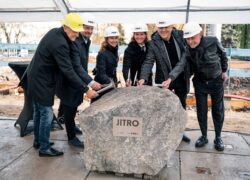
PSN has commenced construction of its new residential development, JITRO, located on Litevská Street in Prague’s Vršovice district. The project was officially launched with a foundation stone ceremony attended by representatives of the developer, the architectural studio, and the city district.

JITRO will deliver 144 apartments in a residential building and 35 townhouse-style units. The architectural design is by QARTA Architektura, while PRŮMSTAV is responsible for construction. According to the developer, the project is intended to complement the existing urban fabric of Vršovice with contemporary housing focused on durability, functionality, and everyday comfort.

The development will feature units ranging from compact studios to larger family layouts. Shared amenities include a community roof terrace, wellness area with sauna, gym, bicycle storage, and laundry room, along with landscaped outdoor areas.

The location offers a full range of urban services and public transport options. Completion and final inspection are scheduled for the second half of 2027.

LATEST NEWS