Poland prepares stricter construction products law amid concerns over material quality

Work is progressing on a new Construction Products Act designed to strengthen market supervision and raise the quality of building materials sold in Poland. The revision follows years of industry concerns about non-compliant products, as well as findings from recent inspections carried out by the General Building Control Office.

“The quality of building materials in Poland still often fails to meet the required standards. The declaration to increase financial penalties and extend controls to online sales is a clear sign that the state intends to actively combat irregularities in the trade of construction products,” says Jan Pruski, Associate in the Real Estate and Construction Law team at Wolf Theiss.

Official data from the inspection programme in 2024 shows that authorities checked 2,457 products—exceeding the initial plan of 2,302. Of the 259 samples tested, around 30% failed to meet manufacturers’ declared performance characteristics. The most frequent irregularities were identified in thermal insulation materials, cements, building lime and other hydraulic binders.

“Inspections by building control authorities in 2024 resulted in 38 decisions on financial penalties in the first instance. On the one hand, this demonstrates the willingness of manufacturers to cooperate in order to eliminate irregularities, and on the other hand, it shows the rather cautious approach of the authorities in this area. So will increasing the severity of these penalties be an effective preventive tool in the future?” asks Jan Pruski.

Tougher penalties proposed

The new draft law introduces higher sanctions for companies that place non-compliant construction products on the market, fail to label them properly or bypass required procedures. Financial penalties would increase by up to 50%, a change justified by inflation and the fact that fines have not been adjusted for more than a decade.

Current penalties of PLN 100,000 would rise to PLN 150,000 under the proposal. The new framework would also apply to online sales, including offerings from foreign sellers targeting the Polish market. According to the draft, sanctions should become not only stricter but also easier to enforce. The reform aligns with EU requirements that Member States apply proportionate, effective and dissuasive penalties.

“The tightening of sanctions is not just a formal change – it is a clear signal that the state intends to actively combat irregularities in the trade of construction products. In light of the numerous irregularities detected during inspections, the new regulations are intended to serve as a preventive measure and encourage manufacturers and distributors to take greater responsibility for the quality of the products they offer,” emphasises Jan Pruski.

Balancing higher quality with added formalities

The legislative overhaul also seeks to bring Polish regulations more closely in line with EU standards by harmonising definitions, streamlining the process for placing products on the market and strengthening supervision—including of products sold online. The aim is to address gaps highlighted by market surveillance authorities, entrepreneurs and National Technical Assessment Bodies.

“One of the significant changes will be the obligation for the authority to carry out a risk analysis before deciding to carry out an inspection. Economic operators will also be required to provide detailed information on the supply chain, distribution network, number of products available on the market and other product models with the same technical characteristics. All these measures are aimed at increasing the effectiveness of supervision and improving the quality of construction products available in Poland,” adds Jan Pruski.

While the proposals introduce new reporting and compliance obligations, they may also reduce the use of non-compliant materials by increasing transparency and improving access to data on product characteristics and origin. Tighter control over online sales is expected to bring more consistency and reliability to the sector.

“The increased emphasis on product quality and safety, as well as tougher sanctions, may translate into greater consumer and investor confidence, which in the long term may strengthen the position of reliable manufacturers on the market. The new regulations, which also cover online sales, are intended to bring order to the online sales segment, which has so far remained outside effective supervision,” summarises Jan Pruski.

The bill is expected to be adopted in the third quarter of 2026. Public consultations opened on 21 October, with feedback accepted for 30 days following the publication of the draft.

Photo: Jan Pruski, Associate in the Real Estate and Construction Law team at Wolf Theiss

Union Investment secures six new office tenants at The Pulse in Amsterdam

Union Investment has added six new office tenants to The Pulse, its mixed-use development on Amsterdam’s southern axis. Cushman & Wakefield has signed a lease for just under 2,000 m², while energy company S4 Energy has taken approximately 550 m² for its marketing suite. Dutch energy group One Dyas has leased around 2,300 m² across two floors. Fast-growing internet platform Manychat has committed to 1,132 m² on the 14th floor, and Liberty Global, the world’s largest broadband provider, is taking just under 2,300 m² on two floors. In addition, trading company Pinley has leased approximately 3,500 m² on the fifth floor.

Union Investment purchased the development in 2021 for around €400 million. After completion in November 2024, the scheme was transferred to the open-ended real estate fund UniImmo: Deutschland.

Residential leasing has progressed steadily, with all 164 mid-range apartments now let, alongside most of the units in the free-market segment, including penthouses. Overall, around 96% of all apartments and 85% of the office space are currently leased.

Leisure and gastronomy components are also taking shape. Cinebeat boutique cinema has completed its soft opening, and the restaurant-bar-café Lucy—operated by the owner of Amsterdam’s well-known De Ysbreeker—opened on 7 November 2025.

“Just one year after completion of the quarter, 86 per cent of all space has already been let, mostly on significantly better terms than originally planned. This is a major success for our asset management team and shows that high-quality space in good locations remains attractive, particularly in the office sector. We are already in talks with other potential tenants,” says Henrike Waldburg, Head of Asset Management and member of the Management Board of Union Investment Real Estate GmbH.

The Pulse offers around 36,000 m² of lettable office space and 200 apartments totalling approximately 9,600 m². It also includes about 1,600 m² of retail and restaurant space, as well as a 2,700 m² boutique cinema. Public areas such as a park, an elevated urban forest on the eighth floor, and several roof terraces provide additional amenities for residents and office users.

Skanska invests SEK 450M (approx. EUR 39.5M) in new residential project in Solna

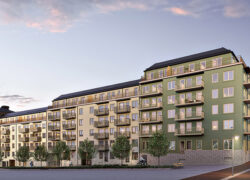
Skanska has announced an investment of approximately SEK 450 million (EUR 39.5 million) in the Ängsklockan condominium project in Järvastaden, Solna, just north of Stockholm. The development will deliver 119 apartments, ranging from one- to five-room units with kitchens. A garage beneath the buildings will include infrastructure for electric-vehicle charging.

Located centrally within Järvastaden, Ängsklockan is designed around an internal courtyard featuring greenery, a pergola, and shared spaces intended to encourage play, community interaction, and local biodiversity. Residents will also have access to a shared bicycle pool offering several types of bikes.

Sustainability features prominently in the project’s design. The buildings will be equipped with rooftop solar panels, and energy consumption is planned to be below national building-code requirements. Facades will be energy-efficient, and construction materials have been selected to reduce climate impact. As with all Skanska-developed homes in Sweden, the project will be certified under the Nordic Swan Ecolabel.

Construction is scheduled to begin in Q4 2025, with full completion expected in Q1 2028.

HIH Invest secures long-term lease with Action at Lehrte retail park

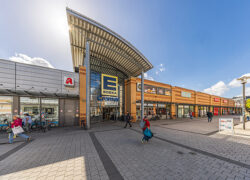
HIH Invest Real Estate has signed a new long-term lease with non-food discounter Action for approximately 1,000 sqm of retail space at Zuckerpassage 6–37 in Lehrte, Lower Saxony. The retailer is scheduled to open its store on 29 November 2025.

The agreement follows recent lease extensions with anchor tenants EDEKA and Expert, both of which have operated at the location since the scheme opened. Their renewals secure continued full occupancy at the retail park, which HIH Invest acquired for an investment fund in 2018.

Developed in 2004, the scheme comprises more than 20 units and a fitness studio across roughly 14,500 sqm of lettable space, supported by 450 customer parking spaces. The tenant mix includes several national chains alongside local operators.

According to Milan-Kristoffer Otte, Head of Asset Management Retail & Logistics at HIH Real Estate, the addition of Action broadens the centre’s offer and supports sustained footfall. Otte noted the site’s central positioning within Lehrte, its transport accessibility, and ongoing collaboration with tenants on improving the visitor experience, including coordinated promotions and service initiatives.

Lehrte, a town of around 44,400 residents located approximately 20 km from Hanover, benefits from strong regional connections. The retail park sits within the town centre, close to other retail and dining options. A bus stop is situated directly in front of the property, while Lehrte’s main railway station is within walking distance. The A2 and A7 motorways are around seven kilometres away, providing wider accessibility.

Ukraine Faces Major Graft Probe in Energy Sector Amid Wartime Pressures

Ukraine’s anti-corruption authorities have uncovered a large-scale kickback scheme linked to state energy contracts, prompting ministerial dismissals, public criticism and renewed scrutiny of the country’s governance standards during wartime. While no charges have been brought against President Volodymyr Zelenskyy, the investigation has reached senior current and former officials as well as individuals close to his administration.

The National Anti-Corruption Bureau (NABU) and the Specialised Anti-Corruption Prosecutor’s Office (SAPO) allege that executives and officials connected to Energoatom, the state nuclear energy operator, solicited kickbacks worth an estimated USD 100 million from suppliers. The contracts under investigation relate to the protection, servicing and repair of critical energy infrastructure targeted by Russian strikes.

Raids carried out in October and November led to the seizure of significant amounts of cash found in properties belonging to several suspects. The searches also extended to associates of the political leadership, intensifying public pressure on the government to demonstrate that anti-corruption institutions can act independently, even at the highest levels.

The fallout has already resulted in personnel changes. Former energy minister Herman Galushchenko — now serving as justice minister — was dismissed following the opening of proceedings, and Energy Minister Svitlana Hrynchuk has also been removed from her post. Both deny wrongdoing and have pledged to cooperate.

The scandal has generated strong public reaction within Ukraine, where the wartime environment has heightened expectations of accountability. Civil-society groups, veterans’ organisations and opposition figures have called for full transparency as the investigation continues.

International partners are also watching closely. The European Commission and several EU member states have reiterated that robust anti-corruption enforcement remains a core condition for Ukraine’s EU accession progress and for maintaining long-term financial and military support.

Zelenskyy has publicly endorsed the work of the anti-corruption authorities, stressing that graft in wartime is “unacceptable” and that investigations must proceed “without exception.” The case remains ongoing, with further charges expected as prosecutors review evidence gathered during the raids.

Source: Reuters, The Times, The Guardian and CIJ EUROPE Analysis Team

Atradius Warns of Rising Insolvencies and Record Bad Debts in Germany

Corporate insolvencies in Germany are expected to continue rising amid ongoing structural and economic pressures, according to the latest outlook from international credit insurer Atradius. The organisation forecasts that the number of insolvencies could reach up to 30,000 cases in 2026, compared with an estimated 25,000 cases in 2025.

More significant than the increase in insolvency filings is the expected rise in the volume of bad debts. Atradius anticipates that losses from unpaid invoices could climb to €65 billion in 2025, up from approximately €56 billion in 2024, marking the highest level recorded in recent years.

Frank Liebold, Country Director Germany at Atradius, described the situation as a “U-shaped crisis” rather than a short-term downturn. According to him, many of the risks facing German companies will remain for an extended period. These include persistently high energy and raw material costs, weak domestic demand, elevated interest rates, supply chain constraints, competitive pressure from low-cost imports, and geopolitical uncertainty.

“These structural challenges are affecting nearly every sector,” Liebold said. “Automotive manufacturers and suppliers, the steel and metal industries, and construction are among those under the greatest strain.”

Improved restructuring processes

Despite the difficult environment, Atradius notes that insolvency proceedings in Germany have become more transparent and more professionally managed in recent years. The increasing use of digital tools, improved coordination between stakeholders, and new legal frameworks—such as the StaRUG restructuring procedure—have supported a greater focus on business recovery rather than liquidation.

“Our goal is not simply to manage the end of a company’s operations, but to help return viable businesses to a stable path wherever possible,” Liebold said.

Importance of early risk detection

Atradius highlights the value of early warning indicators for suppliers and creditors, including changes in payment behaviour, requests for extended terms or higher credit limits, management turnover, and declining staff morale. For medium-sized companies, the insurer recommends leveraging professional credit assessments, consolidated ratings, and risk analysis to better manage potential exposures.

Retention of title arrangements, robust general terms and conditions, and cooperation within supplier pools can also help reduce losses and support recovery efforts.

Long-term opportunities despite pressures

Claudia Kaiser, Director of Risk Services for Germany, Austria and Switzerland, emphasised that alongside the challenges, there remain positive prospects for German industry, particularly in high-technology fields.

“Germany still has many innovative and competitive companies, and the transformation under way in areas like artificial intelligence, robotics, chip design and quantum technologies offers long-term growth potential,” Kaiser said. “The connection between research, science and industry remains strong, and this foundation continues to support innovation.”

Master Management Group Opens Brama Jury Shopping and Entertainment Centre in Zawiercie

Master Management Group has opened Brama Jury, a 16,400 sqm shopping and entertainment centre in Zawiercie. The project combines elements of a retail park and traditional shopping mall and includes more than 40 tenants across fashion, services, health and beauty, home goods, and leisure. It is also the first development in the city to introduce a multiplex cinema and a modern fitness club.

The centre, located on Zagłębiowska Street near key local transport routes, aims to serve everyday retail needs while providing new leisure options for the region. Construction took just under two years and involved a broad range of local contractors. The scheme now supports employment across retail, food service and entertainment.

Brama Jury’s tenants include well-known Polish and international brands in fashion, sportswear, electronics, cosmetics, home furnishings and pet supplies. The food and beverage offer features a restaurant and cafés, alongside a selection of smaller dining concepts. Everyday shopping needs are supported by an Intermarché supermarket.

The development features a four-screen Planet Cinema multiplex and a One Gym fitness club. Parking for 525 cars is available on site. The project was designed by APA Via, with SPEC BAU Polska serving as general contractor.

Czech Mortgage Market Sees 3% Rise in October, Rates Edge Lower

Mortgage activity in the Czech Republic continued to grow in October, with banks and building societies providing loans totalling CZK 38.8 billion, according to the latest data from the Czech Banking Association’s Hypomonitor. The result represents a 3% increase compared with September, reflecting ongoing strong demand despite elevated market interest rates.

New mortgages excluding refinancing amounted to CZK 29.4 billion, a slight month-on-month decline. The average mortgage rate on new loans fell to 4.48%, down from 4.52% in September, continuing the modest downward trend recorded since mid-2024.

“The market remains robust even after the October correction,” said Jaromír Šindel, chief economist of the Czech Banking Association. “This year’s figures are likely to exceed last year’s totals by roughly a quarter. Higher property prices have also contributed to pushing up the total volume of new loans.”

The number of newly granted mortgages fell slightly to around 6,800, though this remains approximately 18% higher than a year earlier. After seasonal adjustment, the association estimates around 6,700 new loans in October, broadly in line with recent months.

Refinancing activity continued to increase. The volume of refinanced or internally adjusted loans reached CZK 9.4 billion, significantly higher than this time last year and well above the averages seen in 2023, when refinancing activity was subdued due to high interest rates. Refinancing accounted for 24.2% of all mortgage volume in October, compared with an average of around 17% over the previous three years.

Although rates have eased since 2024, market interest rates in the Czech Republic remain elevated and continue to limit the scope for a more pronounced decline in mortgage pricing. The October rate is approximately 0.42 percentage points below that of a year earlier. According to Hypomonitor, the reduction translates into a monthly payment that is roughly 1.1% lower relative to the average applicant’s net income.

The average size of a new mortgage declined slightly to CZK 4.34 million in October. Despite the monthly drop, this remains about 15% higher than a year ago, reflecting both rising property prices and increased borrowing capacity. The combination of larger loan sizes and slightly lower rates has resulted in an average monthly mortgage payment around CZK 2,300 higher than the 2024 average.

Source: CTK

Skanska Sells Second Phase of Centrum Południe in Wrocław for EUR 62 Million

Skanska has completed the sale of the second phase of the Centrum Południe office scheme in Wrocław, transferring the asset to INVESTIKA Real Estate Fund in joint venture with BUD HOLDINGS. The deal, valued at EUR 62 million (approximately SEK 680 million), will be recognised in Skanska Commercial Development Europe’s Q4 2025 results, with the ownership transfer taking effect immediately.

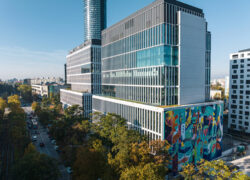
The 15-storey building provides around 21,500 sqm of office and retail space along with 215 parking spaces. Located near Wrocław’s main railway station, the project is served by a range of public-transport options and forms part of Skanska’s multi-phase development in the city.

Centrum Południe’s second phase includes tenant loggias on each floor and features a public basketball court. The scheme was developed in line with ESG standards and is powered by electricity from renewable sources. It holds LEED Platinum, WELL Gold and Object Without Barriers certifications. The entire office component is leased to BNY, while Luxmed occupies the retail space. BNY has additionally secured LEED Commercial Interiors Platinum for its fit-out.

Construction began in 2021 and concluded in 2023.

MLP Group Posts 28% Increase in FFO and Steady Growth After 3Q 2025

MLP Group has reported strong financial and operational performance for the first nine months of 2025, with results showing continued stability across its logistics and industrial real estate portfolio in Poland, Germany, Austria and Romania. The company recorded a 28% year-on-year increase in Funds from Operations (FFO), supported by higher revenue, rising EBITDA and sustained leasing activity.

Financial Performance

Consolidated revenue for the period reached EUR 72.5 million, up 12% compared with the same period in 2024. EBITDA excluding revaluation gains rose 14% to EUR 37.6 million. The fair value of investment properties increased 9% to EUR 1.41 billion versus December 2024, while Net Asset Value grew 3% to EUR 663.3 million, equivalent to EUR 27.6 per share.

Net profit amounted to EUR 21.2 million, down from EUR 61.6 million a year earlier due to lower revaluation effects.

Commenting on the results, Radosław T. Krochta, President of the Management Board, said: “Performance, stability and steady growth are the values that best define our business. The 28% increase in FFO confirms the Group’s strong foundations and the ability of our properties to generate stable, recurring cash flows. Our strategy is built on a high-quality portfolio, long-term tenant relationships and effective risk management. Our business is highly predictable, and we consistently focus on what remains constant – tenant satisfaction, growth in asset value and sustained cash-flow expansion, which form the foundation of MLP Group’s success. Following a very strong third quarter, we expect record leasing volumes in the fourth quarter – the market outlook is very positive.”

Portfolio and Leasing Activity

MLP Group signed lease agreements for approximately 189,000 sqm of space since the beginning of 2025. The company’s total leased area now stands at around 1.3 million sqm across 195 tenants. The occupancy rate reached 91%, broadly in line with last year, while 98% of rents were paid on time. The tenant retention rate remained exceptionally high at 99%.

At the end of September, the group had 326,800 sqm of space under construction or in preparation. Its landbank, including secured options, supports more than 2.4 million sqm of future development. To date, over 1.3 million sqm of modern logistics space has been delivered, with 90% of assets built in the past 10 years.

Outlook

MLP Group maintains that its prudent financing structure and stable cash-flow base continue to support its development pipeline. The company’s focus remains on the delivery of Class A logistics parks and urban last-mile facilities built to ESG standards.

LATEST NEWS