CTP completes 65,000 sqm e-commerce warehouse for LPP Logistics at CTPark Bucharest West

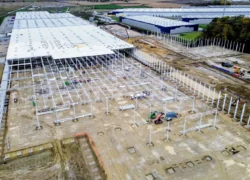
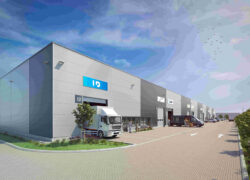
CTP has delivered a 65,000 sqm e-commerce fulfilment centre for LPP Logistics in CTPark Bucharest West. Construction began in March 2025 and was completed within six months. The facility was designed to meet LPP Logistics’ operational requirements and will support the company’s online retail activities across several Southern and Eastern European markets.

LPP Logistics expanded its operations in Romania as part of its long-term regional strategy. The new warehouse was commissioned and adapted in time for the first customer orders to be dispatched at the end of October. It now serves Romania, Bulgaria, Serbia, Bosnia and Herzegovina, Greece and Hungary.

“We are pleased with our long-standing and fruitful collaboration with LPP Logistics and with their decision to further expand their operations in the region. The new state-of-the-art fulfillment centre in CTPark Bucharest West stands as another great example of how we can support our clients’ growth with tailor-made, sustainable logistics spaces,” said Ionut Anghel, Regional Development Manager, CTP Romania.

The building incorporates automation and robotics aimed at improving processing efficiency and increasing order throughput. The warehouse offers storage for up to 7.5 million items and can handle more than 80,000 orders per day. A goods-to-person picking system delivers items directly to workstations.

Key technical specifications include a 12-metre clear height, mineral wool façade panels, enhanced roof insulation, ESFR sprinklers, LED lighting and a double-slab concrete floor with a 7 t/sqm load capacity. Fire detection systems have been adapted to support automated operations.

Sustainability features include grey water installations, high-performance insulation, LED lighting, natural roof lighting, and treatment systems for air, water and oil. The facility is targeting BREEAM Excellent and A-class energy certification.

CTPark Bucharest West is located along the A1 motorway, providing access to Bucharest’s ring road and regional transport routes. The park also includes CTP Clubhaus, which provides on-site amenities such as food services, meeting areas, fitness zones and a medical office for employees.

Panattoni begins next phase of Wrocław Campus 2 as DSV becomes first tenant

Panattoni has started construction of an additional 102,000 sqm at its Wrocław Campus 2 logistics complex in Krzyżowice, near Wrocław. DSV – Global Transport and Logistics will lease 45,000 sqm in the new phase, with the remaining space developed speculatively.

Poland continues to attract logistics operators expanding their contract logistics operations. DSV’s decision to increase its presence in Krzyżowice reflects ongoing demand for distribution capacity and the steady performance of the Polish economy.

“High service quality and flexibility combined with competitive costs and an excellent geographical location are Poland’s key advantages. From Lower Silesia, we can deliver shipments to customers in Germany and other Western European markets within 24 hours,” says Piotr Wojtkowski, Sales and Marketing Director at DSV – Global Transport and Logistics. “At DSV, we respond to both current and future expectations of our clients and the market. The investment in new space in Krzyżowice is a perfect example of this approach. We continuously analyse opportunities for further warehouse investments – both through leasing and self-developed projects.”

Wrocław Campus 2 is the second stage of one of Panattoni’s larger developments in Lower Silesia, where the company has completed 2.36 million sqm of industrial space. The first phase of the project, totalling around 54,000 sqm, is fully leased. Construction of the final phase is now underway, with DSV expected to begin operations in 2026.

“Following its recent acquisition of Schenker, DSV has become the world’s largest logistics operator. In Poland, the company has long been one of the key players in the logistics services market and continues to strengthen its offer,” says Damian Kowalczyk, Regional Managing Director, Lower Silesia, Panattoni. “Over the past 20 years, we have provided DSV with more than 300,000 sqm of space. This latest collaboration in Wrocław once again confirms that we are a trusted partner for the world’s largest players.”

The property will be developed to BREEAM Excellent standards, with systems supporting insulation performance, heating and cooling management, and additional technical adaptations for DSV’s operations.

DSV was advised by JLL during site selection and lease negotiations. “When developing the concept for DSV’s new space, the main focus was on tailoring the facility to the pace of operations and the scale of handled shipments,” says Mateusz Iłowiecki, Senior Director at Industrial Agency, JLL. “Wrocław Campus 2 will deliver on these expectations, thanks to numerous solutions customised for the operator’s needs.”

According to JLL, Poland’s position as a warehousing and manufacturing hub continues to support demand for logistics facilities, driven by supply-chain diversification and foreign investment.

Wrocław Campus 2 is located in an established industrial zone 20 km from central Wrocław, with access to the A4 and A8 motorways. When completed, the complex will total around 160,000 sqm. The previously developed Wrocław Campus 1, comprising 185,000 sqm, was sold in 2023.

LIP Invest extends cooperation with Goldbeck Property Services for new logistics fund

LIP Invest is continuing its partnership with Goldbeck Property Services as the company expands its logistics real estate portfolio in Germany. Following the acquisition of the first asset for its newest logistics fund, LIP has again commissioned Goldbeck to provide comprehensive property management services. The mandate covers what is now LIP’s fifth fund.

‘We awarded the first mandate to Goldbeck Property Services in September 2018 for a distribution center in Braunschweig covering around 36,000 square meters,’ recalls Johannes Otti, Head of Commercial Asset Management. ‘Since then, the close cooperation has proven beneficial for both sides. We value Goldbeck as a reliable partner and are pleased to be able to rely on the property management team to support with our new logistics fund as well.’

LIP’s asset management division has expanded steadily since that initial mandate. The team now includes Alexander Decker, Authorized Signatory and Director of Asset Management, Commercial Director Johannes Otti and Technical Director Alexander Eisfeld, supported by an eight-person team managing around 1.5 million m² of space. With a nationwide portfolio of 63 properties across five funds, LIP’s focus remains on strategic asset management, structural upgrades, ESG optimisation and the implementation of its leasing strategy.

So far this year, the team has concluded eight new leases and let approximately 300,000 m² of logistics space. The company’s portfolio includes distribution centres, production warehouses, cold storage facilities and transshipment halls. Goldbeck continues to handle the exclusive technical and commercial property management of these assets.

‘We are happy about the new mandate and the continued trust placed in us. We will continue to support LIP with all our energy and our proven expertise in commercial asset property management, freeing them up to focus on strategic asset management,’ says Jan Majer-Leonhard, Managing Director of Goldbeck Property Services. ‘At Goldbeck, we see ourselves as a life cycle partner and are committed to collaborative partnerships – together, we can effectively achieve our goals and continuously develop the real estate portfolio.’

Logivest brokers new logistics lease in Lüneburg for Siegmann + Schröder

Logivest has advised Siegmann + Schröder GmbH on securing a long-term lease for a logistics property in Lüneburg, Lower Saxony. The deal covers approximately 5,000 sqm of logistics space and 350 sqm of office space at Elso Klöver Straße 9 + 9a. The landlord is the locally based Porth Group.

Siegmann + Schröder, founded originally as an electronics repair company and now operating as a logistics and service provider for online retail, sought a location that would support more efficient and modernised processes. Logivest identified a site roughly 50 kilometres southeast of Hamburg that met the company’s operational and layout requirements, enabling logistics activities on a single level.

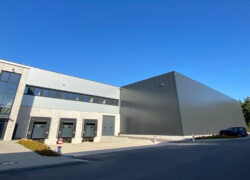
The property, completed about a year ago, was developed to current sustainability standards. It includes a rooftop photovoltaic system, a heat pump and underfloor heating, while wide skylights provide natural light. The fully fenced site offers added security, a key priority for the e-commerce service provider. It also features three loading ramps and a ground-level gate.

Transport connections include direct access to federal highways B209 and B216, with links to the A39 motorway. Public transport is also available, with a bus stop located next to the site.

“The new, perfectly tailored logistics property is ideal for Siegmann + Schröder, as it allows modern logistics processes to be integrated. Its location between the metropolitan areas of Hamburg, Hanover and Wolfsburg/Braunschweig is also extremely interesting for logistics,” said Marvin Hesse, Head of Industrial & Logistics Letting at Logivest in Hamburg.

Siegmann + Schröder has now taken occupancy of the facility.

Sabotage on strategic Warsaw–Lublin rail line raises security concerns

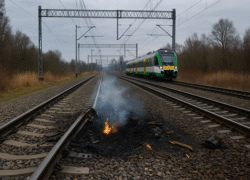
Over the weekend, Polish authorities confirmed an act of sabotage on the Warsaw–Lublin railway line, a key route for civilian and military traffic towards Ukraine. An explosive device detonated near the village of Mika on line no. 7, damaging a section of track. Prime Minister Donald Tusk described the incident as an “unprecedented act of sabotage” and warned that it could have led to a serious rail disaster.

Local residents reported hearing a loud explosion, and a train driver later noticed a section of track damaged over roughly one metre, prompting an emergency brake application and closure of the line. In a separate incident on the same route, damage to overhead power lines and objects placed on the track forced a Świnoujście–Rzeszów train carrying 475 passengers to stop; no one was injured.

Line no. 7, which links Warsaw with Lublin and onward to the Ukrainian border, has become a strategic transport corridor in recent years, including for military aid and logistics to Ukraine. Polish prosecutors are investigating the damage as sabotage and potential terrorism. Senior officials, including the security services minister, have indicated a strong likelihood that those responsible acted on behalf of a foreign intelligence service, though the investigation is ongoing.

The incidents highlight how attacks on critical infrastructure can be used in hybrid operations to disrupt logistics and undermine public confidence in the state’s ability to provide security. Even without causing mass casualties, such acts can erode trust if they create a perception that key transport routes and supply lines are vulnerable.

In response, officials have announced stepped-up inspections of vital railway lines and greater involvement of the military in securing infrastructure. Experts argue that beyond public statements, Poland will need stronger monitoring of linear infrastructure, improved technical detection systems, and closer cooperation with local communities, who are often the first to notice unusual activity near tracks.

Ultimately, the resilience of infrastructure depends not only on technology and services, but also on informed, engaged citizens and a state capable of reacting quickly and decisively to emerging threats.

Source: WEI

Catella Investment Management acquires 37-unit residential project in Berlin’s Weitlingkiez

Catella Investment Management GmbH (CIM) and Catella Real Estate AG (CREAG) have acquired a newly built residential building in the Weitlingkiez area of Berlin-Lichtenberg for the Catella European Residential (CER) fund. The seller is OTTO WULFF Projektentwicklung GmbH.

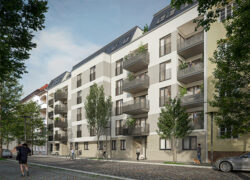
The six-storey development includes 37 apartments with a total of around 3,000 sqm of living space. Units range from 55 to 110 sqm and are configured as two- to four-room layouts. Each apartment has a private outdoor area—balcony, loggia, or roof terrace—along with underfloor heating and a fitted kitchen. The scheme also includes an underground garage with 21 parking spaces, 106 bicycle spaces and is scheduled for completion at the end of 2025.

Michael Keune, Managing Director of CIM, said: “With this purchase in Berlin-Lichtenberg, we are investing in a modern, energy-efficient residential project in one of Berlin’s most neighbourhoods for Catella European Residential. The fund deliberately focuses on energy-efficient new buildings in established urban districts with a high quality of living and a stable rental market environment. The acquisition underscores our strategy to secure high-quality, ESG-compliant residential assets in dynamic urban locations for the long term.”

The building is designed to meet the EH 55 (KfW 55) energy standard and is connected to district heating. A rooftop photovoltaic system will provide part of the building’s energy supply, and around half of the apartments will be barrier-free. The underground parking area is pre-equipped for future EV charging points.

Benjamin Rüther, Head of Fund Management Residential at Catella Investment Management, said: “The apartment building impresses with its quiet yet well-connected location in the heart of Lichtenberg. In recent years, the Weitlingkiez neighbourhood has developed into one of the most sought-after residential areas in eastern Berlin, characterized by a lively community, Wilhelminian-style architecture, and a diverse infrastructure. The project offers exactly the blend of urban living and sustainable construction that makes Berlin such an attractive place to live.”

Tim Obermann, Head of Project Development Berlin at OTTO WULFF, added: “The Weitlingkiez is one of the most exciting neighbourhoods in eastern Berlin – characterized by an established community, excellent public infrastructure, and direct train connections to Alexanderplatz. For us, this was a special project because we are creating modern living space that integrates harmoniously into the historic Gründerzeit surroundings, becoming part of the identity of the popular neighbourhood around Archenholdstraße. Barrier-free designs, sun-filled south-facing balconies, and a beautiful courtyard complete the concept. We are pleased about the sale of the project to Catella. With them, we have found a partner who values the quality of the location and its long-term potential just as highly as we do.”

Weitlingkiez is located in eastern Berlin’s Lichtenberg district, with Lichtenberg S-Bahn and U-Bahn station an eight-minute walk away, offering direct connections across the city and to BER Airport. The neighbourhood includes shops, cafés, medical services, schools and daycare centres, while parks, playgrounds and the nearby Berlin Zoo provide additional leisure options.

Poland: How Would Taxing New, Unsold Flats Affect Prices?

Following the decision in Katowice, several other cities are now considering the introduction of a commercial tax rate on newly built but unsold flats. The move has prompted questions from across the real estate sector: how do property developers perceive this proposal, what potential impact could such a measure have on the market, and is there a risk that it will ultimately be reflected in flat prices? These issues are addressed in the statements from developers included in the full text, offering insight into how the industry views the possible consequences of such taxation.

Joanna Chojecka, Sales and Marketing Director for Warsaw and Wrocław at the Robyg Group

We are concerned about the proposals for new tax burdens on developers, including local levies on unsold flats. Ideas such as an economic tax rate on properties remaining on offer may result in a deterioration in project profitability and a reduction in new supply.

The result will not be a fall, but a potential increase in flat prices, as the growing risks and costs will have to be taken into account in pricing policy. Such solutions are contrary to the goal of increasing the availability of flats and may have a negative impact on the entire market, including the dynamics of investment in new locations.

Andrzej Gutowski, Sales Director, Ronson Development

Taxing completed and unsold flats at the commercial rate would be an additional burden and a kind of punishment for developers for the more difficult market situation. It would lead to more cautious investment planning and a reduction in the number of properties entering the market, which would ultimately reduce supply and possibly increase prices. This is all the more so because it is now easy to verify which flats are for sale, as developers are required to publish price lists and their full offer.

In practice, this would force us to carry out investments with almost full pre-sales, introduce smaller pools of flats and suspend subsequent stages in the event of a slowdown in demand, which would undoubtedly have a negative impact on the availability of new properties.

Wojciech Zhang-Czabanowski, President of the Management Board of Waryński S.A. Holding Group

In the current market reality, taxing unsold premises at the commercial rate would be a particularly risky solution, both economically and systemically. Premises that have not yet been separated and sold are in fact a ‘work in progress’ and not an investment held in the portfolio for capital purposes. It is difficult to justify taxing a developer for a stage that is an integral part of the production process.

In addition, today’s sales are no longer booming as they were in previous years. Customers compare a wide range of offers, increasingly making their decision only after the building has been completed, and finished flats have become an alternative to ‘holes in the ground’. Unsold stock is therefore primarily a result of a slower decision-making process and high supply in cities such as Katowice, rather than intentionally maintained stock.

Imposing a tax at this stage of the cycle would increase operating costs and directly translate into flat prices, ultimately burdening buyers. At the same time, it could discourage developers from starting new projects at a time when the market is normalising anyway, which in the long run would limit supply instead of stabilising it.

Damian Tomasik, President of the Management Board of Alter Investment

The idea of taxing unsold flats at a commercial rate is a risky and short-sighted approach. Such solutions may lead to an artificial reduction in supply and an increase in prices, rather than solving the problem of housing availability.

Instead of punishing developers for supplying ready-made flats to the market, the state should simplify the planning and administrative processes, which currently take several years and block new investments. From Alter Investment’s point of view, such regulations will not directly affect the land market, but they may reduce the activity of developers buying land, thus slowing down the investment process throughout the value chain.

Tomasz Kaleta, Managing Director of Sales and Marketing at Develia

Development companies strive to sell their properties as quickly as possible, and holding on to finished flats means tying up funds and incurring additional costs. We agree with the position of the Polish Association of Developers, according to which the proposal to introduce higher taxes on completed flats that have not yet found buyers is unjustified and could have a negative impact on the market. Such a solution would hit smaller entities the hardest, as they are unable to lower flat prices due to, for example, loans and other financial obligations.

We do not expect that the introduction of commercial taxation on completed and unsold flats will translate into price increases. Our experience shows that well-prepared investments sell already at the construction stage, which is why the share of finished flats in our offer does not exceed 1-2%. This is significantly less than the market average, which ranges from 10 to 20% depending on the city.

Dawid Wrona, Member of the Management Board – Chief Operating Officer at Archicom

As a market participant, we closely follow any potential legislative changes that may affect the housing sector. That is why we are watching with interest the discussion around the idea of introducing an economic rate for unsold flats. We understand that local governments are seeking new sources of revenue and tools to support the sustainable development of local markets, but any decision in this regard should be preceded by a thorough analysis of the consequences, both for cities and for the property development industry.

Maintaining a certain number of completed, unsold flats is a natural part of the investment cycle and results from sales dynamics, not speculative activities. Market data shows that the scale of the phenomenon is limited, e.g. in Łódź, the share of ready-to-move-in flats is currently around 20%, and in the Tri-City around 11%. Our estimates show that the potential revenue from such a tax would be rather small, reaching a maximum of several million PLN.

At the same time, it is worth remembering that market conditions vary depending on location. In cities with a large supply of flats, such as Katowice, the discussion about additional regulatory instruments may be justified, while in agglomerations with limited availability of flats, such as Kraków, similar solutions could in practice hamper new investments and contribute to further price increases.

Mariusz Gajżewski, Head of Sales, Marketing and Communication, BPI Real Estate Poland

By definition, every developer wants to sell flats while they are still under construction. Flats that are ready to move into but have not been sold, which are in the developer’s portfolio, generate additional costs in themselves, such as community fees and utility charges (e.g. heating). Therefore, I believe that the idea of introducing a tax on unsold properties, which will be another additional cost, is misguided. I do not think it will lead to faster sales of properties.

Andrzej Swoboda, Vice-President of the Management Board, CTE Group

The idea of taxing unsold flats at the rate applicable to commercial properties raises serious doubts. From the perspective of the development industry, such a solution would be disadvantageous and could have the opposite effect to that intended. Unsold premises are a natural part of the development business – the sales process often takes many months after completion of construction, and maintaining a certain market offer is necessary to maintain supply liquidity and price stability. The introduction of higher tax rates could lead to a reduction in investment in new projects and, consequently, to a decline in the supply of flats on the market. This, in turn, would have a pro-inflationary effect and could contribute to further price increases.

Instead of supporting the availability of flats, such a financial burden could paradoxically reduce it. In our opinion, it would be much more effective to support housing investment and create stable conditions for its financing, which in the long term would benefit both buyers and the economy as a whole.

Zuzanna Należyta, Commercial Director at Eco Classic

Just as reporting flat prices has not and will not lead to a reduction in prices, raising the tax on unsold flats will not increase their availability, because I am not aware of any situation in which a developer would build and ‘hide’ flats in order not to sell them. For two years now, we have had a significant oversupply, as evidenced by numerous promotions and discounts, so no developer wants their flats to remain unsold. If this happens, it is solely due to the lack of purchasing power of customers.

Source: dompress.pl

Klub Fantastyki Druga Era becomes first owner at UrbanBox Park Komorniki

Klub Fantastyki Druga Era, a nationwide fantasy enthusiasts’ organisation, has purchased a 170 sq m business unit at UrbanBox Park Komorniki near Poznań, becoming the first buyer in the development. The project’s developer, ILD, appointed AXI IMMO to manage the sale of the business units.

Druga Era, founded in 1997 as a student organisation at the University of Economics in Poznań, has since expanded into a nationwide community of fantasy fans.

“Purchasing a business unit at UrbanBox Park Komorniki is a milestone for us. It gives us greater independence, room for flexible growth, and the ability to shape the space in which we operate. We can wholeheartedly recommend this model to other organizations looking for compact real estate solutions with strong potential,” said Piotr Derkacz, Klub Fantastyki Druga Era.

“Congratulations to the first owner on this important step. The purchase confirms that UrbanBox Park Komorniki is a perfect solution for SMEs that require flexible, modern, and scalable facilities to conduct their operations,” added Piotr Wawrzyniak, Country Manager Poland, ILD.

“UrbanBox Park Komorniki offers practical solutions, giving owners access to professional space that can be adapted for office, service, retail, or warehouse needs,” commented Piotr Roszkowski, Associate Director, Industrial & Logistics, AXI IMMO.

UrbanBox Park Komorniki is a warehouse and business park located in an expanding industrial area a short distance from central Poznań. The site offers access to the A2 motorway and the S5 and S11 expressways. Once complete, the development will include 24 units starting from 167 sq m, with the option for owners to tailor space to specific operational needs.

The first phase, consisting of eight completed units, is now available. Standard features include dust-free floors with a 5 t/sq m load capacity, insulated roofing, electric ground-level gates and skylights to improve natural lighting. The project is being developed by ILD, a European company active in industrial and logistics development across Western and Central Europe.

Photo: Piotr Roszkowski, Associate Director, Industrial & Logistics, AXI IMMO

AstraZeneca extends lease for nearly 21,000 sq m at Postępu 14 in Warsaw

AstraZeneca Pharma Poland has renewed its lease for close to 21,000 sq m of office space in the Postępu 14 building in Warsaw’s Mokotów district. Colliers advised the company during the renegotiation process. According to the advisory firm, this is the largest lease transaction on the Warsaw office market in 2025 involving a consulting company.

“Thanks to our cooperation with Colliers, we had a complete overview of office space lease offers from all over Warsaw. The offer from the owner of Postępu 14 was the most advantageous, among other things because it gives us the opportunity to increase the space we occupy as our company continues to grow in Poland. The office is well connected, surrounded by good quality residential and service infrastructure, and meets our high requirements for working and relaxation conditions for several generations of employees. The fact that by staying at Postępu 14, we can continue our operations without having to plan the relocation of several thousand people was also important,” says Michał Janik, Site Executive Director, AstraZeneca Pharma Poland.

According to Colliers representatives Marcin Sabowicz, Aleksandra Baran and Paweł Proński, the decision to remain in the building was influenced in part by ongoing upgrades carried out by the property owner. These include modernisation of common areas such as the reception, the introduction of environmentally friendly solutions and the pursuit of environmental certifications including BREEAM.

“Together with AstraZeneca, we have set a new, highest standard of cooperation between tenants and the building owner in recent years. Our goals in terms of sustainable development and creating a friendly, open working environment are very similar, which is conducive to joint activities and building a lasting relationship. In addition to caring for the technical and functional standards of the office building, we attach great importance to community building initiatives for the Postępu 14 community, which is appreciated by companies such as AstraZeneca. We are therefore all the more pleased with our partner’s decision to extend the lease,” says Dawid Wątorski, Senior Leasing Manager at CA Immo in Poland.

AstraZeneca is a global biopharmaceutical company focused on therapies in oncology, cardiology, pulmonology and neurology. It employs more than 80,000 people worldwide, including around 3,000 in Poland. Warsaw hosts one of the company’s six global clinical research operations centres.

Postępu 14 is a Class A office building in the Mokotów business district, offering more than 34,000 m² of space across ten floors. The property provides over 700 parking spaces and features such as a canteen, café and electric vehicle charging stations. It holds BREEAM certification and has undergone technical and functional upgrades in recent years.

Average Debt Levels in Poland Continue to Rise

The financial burden carried by indebted consumers in Poland continues to grow, according to the latest joint analysis from BIG InfoMonitor and the Credit Information Bureau (BIK). The data indicates that the average consumer with overdue credit or non-credit liabilities now owes PLN 34,477, reflecting a broad spectrum of financial difficulties across the population.

The report highlights that more than 2.45 million individuals were listed in the BIG InfoMonitor and BIK databases at the end of September as unable to meet their payment obligations. A significant group—over 405,000 people—are struggling simultaneously with both credit-related and non-credit debts, signalling more complex and entrenched financial challenges.

Credit liabilities remain the largest burden

Long-term bank loans continue to account for the bulk of overdue debt. Mortgage arrears are the highest, with an average overdue balance of PLN 262,566, underlining the impact of large, long-term credit products on household budgets.

Consumer loans follow with an average arrears of PLN 27,410. These products are often used to cover earlier shortfalls, contributing to a pattern of borrowing that increases exposure to further repayment risks. At the lower end of credit debt are overdue credit card balances, averaging PLN 5,597, which may reflect early signs of tightening household liquidity.

Non-credit arrears: widespread and socially significant

Average overdue non-credit liabilities stand at PLN 24,349. Within this category, unpaid alimony remains the highest, reaching an average arrears level of PLN 58,607 per case. According to the data, this category also reflects one of the most persistent sources of outstanding obligations in the country.

Other common non-credit arrears include amounts arising from court enforcement titles (PLN 14,645) and debt collection cases (PLN 12,487), indicating advanced stages of recovery procedures.

BIG InfoMonitor President Paweł Szarkowski notes that individuals in this stage of debt collection often benefit from early contact with creditors and the establishment of realistic repayment arrangements.

Smaller unpaid bills signal early financial stress

The report also highlights low-value arrears that commonly appear at the beginning of a borrower’s financial difficulties. These include telecommunications bills (PLN 3,807) and penalties for travelling without a valid ticket (PLN 308). Although relatively small, such overdue amounts can lead to negative listings that restrict access to traditional bank financing. This often directs consumers toward more costly non-bank credit, increasing their overall repayment burden.

Financial discipline and early intervention remain essential

According to Szarkowski, the data reflects a broad pattern in which overdue mortgage liabilities represent long-term financial strain, while growing arrears in alimony cases point to significant social issues. Meanwhile, smaller unpaid bills and consumer credit arrears often mark the early phase of a developing debt problem.

Financial experts recommend detailed household budgeting, ongoing monitoring of spending, and timely repayment of even small obligations to prevent escalation. When repayment difficulties arise, swift communication with creditors is viewed as a key strategy to avoid deeper indebtedness.

LATEST NEWS