Garbe Industrial Real Estate tops out 16,000 sqm logistics facility in Rüdenhausen

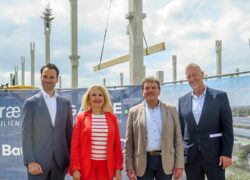
Garbe Industrial Real Estate GmbH has marked the topping-out of its logistics project in Rüdenhausen, Bavaria, approximately 35 km east of Würzburg. The 16,000 square metre development is progressing on schedule and is expected to be completed in the fourth quarter of 2025. The project is being developed in partnership with BentallGreenOak (BGO), with a total investment of approximately €25 million.

The new facility is being built on a 31,000 square metre site that previously housed a garden centre. Garbe acquired the brownfield plot from Terrae Immobilien GmbH and, as co-developer, managed the establishment of planning rights and the preparation of the construction site, including demolition of existing structures and floor refurbishment.

The logistics building will feature approximately 15,000 square metres of hall space and storage mezzanine, in addition to around 1,000 square metres of office space. It will include 12 dock levellers and two ground-level sectional doors to facilitate truck loading and unloading. The property has been designed to accommodate two separate tenants. General contracting for the construction has been awarded to List Bau München.

Sustainability features are central to the design. The building is being developed in line with ESG standards, with the aim of securing certification under the German Sustainable Building Council’s Gold Standard. A rooftop photovoltaic system is planned to provide renewable energy, while parts of the roof will be greened. The building will be heated using air-source heat pumps. Biodiversity initiatives include installing nesting boxes for birds and bats both in the outdoor area and on the building façade.

Located near the A3 motorway and just one kilometre from the Wiesentheid junction, the logistics site offers direct access to major transport routes connecting Frankfurt am Main and Nuremberg. The property is intended primarily for medium-sized enterprises seeking modern logistics and warehouse space in the Würzburg economic region.

Garbe Industrial Real Estate is also planning a second logistics development in Rüdenhausen. Construction of the 19,000 square metre project is expected to begin in the third quarter of 2025.

Develia reports PLN 65.2 million net profit in Q1 2025 amid lower revenues

The Develia Group posted a net profit of PLN 65.2 million in the first quarter of 2025, down from PLN 84.4 million in the same period of 2024. Sales revenue for the quarter reached PLN 253.5 million, reflecting a 37% year-on-year decline, primarily due to a lower volume of apartment handovers.

From January to March, the developer sold 951 residential units, slightly below the 1,038 units sold in the corresponding period last year. A total of 524 apartments were handed over during the quarter, representing a 12% decrease year-on-year. According to the company, the majority of deliveries are scheduled for the final quarter of 2025, with full-year handover targets set between 2,900 and 3,100 units.

Gross profit from development activities for the first quarter stood at PLN 79.2 million. EBITDA reached PLN 47.5 million, while adjusted EBITDA was PLN 49.6 million. The group’s return on equity (ROE) declined to 3.65% from 5.16% in Q1 2024.

As of the end of March, Develia held PLN 682.5 million in cash and short-term financial assets, down from PLN 840.6 million at the end of 2024. Financial liabilities amounted to PLN 893.2 million, compared to PLN 915.0 million at year-end 2024.

Joint venture projects, particularly those conducted with Grupo Lar Polska, had a significant impact on results. In Q1 2025, 30% of all units handed over were part of these joint ventures. The profit contribution from joint ventures amounted to PLN 13.3 million, a reversal from a PLN 0.7 million loss in the same period last year. These results are not included in sales revenue or EBITDA due to equity accounting.

In terms of development activity, the group’s most active projects during the quarter included Aleje Praskie and Bemowo Vita in Warsaw, Traugutta Vita and Orawska Vita in Wrocław, and Południe Vita and Przemyska Vita in Gdańsk. Other ongoing developments included Centralna Vita and City Vibe in Kraków and Królowej Jadwigi in Poznań.

In April 2025, Develia signed a preliminary agreement to acquire 100% of Bouygues Immobilier Polska for EUR 66.5 million (approx. PLN 283.6 million). The acquisition would expand Develia’s pipeline by adding approximately 1,300 apartments currently under construction or preparation and a further 2,800 units on land under preliminary agreements. The transaction is expected to close by 30 June 2025, subject to approval from the Office of Competition and Consumer Protection (UOKiK). Develia plans to finance the purchase with its own funds, with a potential option for refinancing through bank credit.

In commercial real estate, Develia is preparing for the sale of Arkady Wrocławskie, with demolition of the existing facility already underway. The transaction is planned to conclude by the end of August.

The group is also expanding its presence in alternative residential segments. In January, Develia acquired land at Orląt Lwowskich Square in Wrocław for PLN 40.6 million, where it plans to develop a purpose-built student accommodation (PBSA) facility with approximately 600 rooms and two commercial units. Construction is scheduled to begin in 2026, with completion targeted for 2028.

To support its financial strategy, Develia issued PLN 160 million in 4-year bonds in February 2025, with an interest rate based on WIBOR 3M plus a margin of 2.4%.

Vice-President Paweł Ruszczak noted that the financial performance in Q1 reflected the timing of deliveries and highlighted the group’s strong liquidity position, which enables it to fund strategic acquisitions. He also confirmed the management board’s recommendation to distribute PLN 265.5 million in dividends, equivalent to PLN 0.58 per share, marking the highest dividend in the company’s history.

HelloParks expands sustainable warehouse portfolio to 352,000 sqm in Hungary

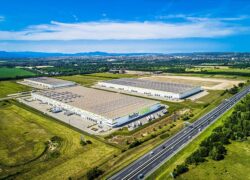
HelloParks has expanded its portfolio of sustainable industrial properties in Hungary, reaching a total of 352,000 square metres of certified space. All of the company’s warehouse buildings now meet the criteria of the EU Taxonomy for environmentally sustainable economic activities, marking a first for logistics developers in the country.

As of May 2025, HelloParks has added 188,000 sqm of industrial space certified BREEAM “Outstanding” in the New Construction category, bringing the total certified stock to include six warehouses across its parks in Páty, Fót, and Maglód. The latest certification was awarded to the PT3 warehouse at Budapest West – Páty. All eight of the company’s operational facilities now meet both BREEAM Outstanding or Excellent standards and EU Taxonomy requirements under Regulation (EU) 2020/852.

The EU Taxonomy certification confirms that HelloParks’ developments meet sustainability standards related to climate change mitigation, energy efficiency, pollution control, water and biodiversity management, and circular economy principles. These classifications are becoming increasingly relevant for companies and investors seeking to align with long-term environmental objectives.

The certification process was supported by ABUD Engineering, EY denkstatt, and Realiscon. According to the developer, only a small percentage of buildings worldwide meet the BREEAM Outstanding criteria, which evaluate sustainability across a building’s lifecycle, from material sourcing to long-term operation.

The PT3 warehouse features construction innovations that have reduced its carbon footprint compared to previous developments. These include the use of fibre-reinforced industrial flooring, recycled steel for reinforcement, and low-carbon concrete. HelloParks reports that over 85% of construction waste was selectively collected and recycled during development, and that ISO 14001-certified materials were used throughout the process.

Operational buildings are equipped with solar panels, heat pump-based HVAC systems, and smart lighting. Outdoor areas include electric vehicle charging stations, and tenants can access additional services through HelloParks’ mobile application.

As part of its broader ESG strategy, HelloParks has committed to a 2035 climate neutrality roadmap. This includes reducing embodied carbon in its new developments by 25% in 2025 and by 50% by 2030, relative to its initial projects. Since January 2025, the company has covered 100% of its electricity demand with energy from renewable sources, including on-site solar generation and certified green energy providers.

HelloParks plans to continue expanding its portfolio of environmentally certified logistics properties in Hungary, with sustainability as a core element of its development model.

WING delivers fourth logistics hall at East Gate PRO Business Park in Fót, north of Budapest

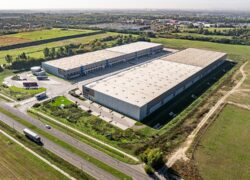
WING has completed the fourth logistics hall at East Gate PRO Business Park in Fót, north of Budapest. The newly delivered building, identified as Hall B2, adds 9,000 square metres of leasable industrial space and is occupied by the Hungarian subsidiary of Packeta Group, a parcel logistics company active in Central and Eastern Europe.

The project was carried out under a built-to-suit (BTS) pre-lease arrangement, with construction executed by Weinberg ‘93 Építő Kft. and financing provided by UniCredit Bank. The facility has received a “Very Good” rating under the BREEAM certification system, aligning with the park’s existing sustainability standards.

Packeta’s new Hungarian hub has been designed to meet specific operational needs. The hall includes expanded office space, cross-docking infrastructure, a heat pump-based climate control system, and enhanced logistics areas. According to WING, the building was developed in close coordination with the tenant to ensure functional suitability for current use and anticipated growth.

East Gate PRO Business Park is strategically located at the junction of the M0 and M3 motorways and is accessible via public and private transport. The park now comprises four completed halls, with plans for a total of six buildings and approximately 60,000 square metres of leasable industrial space.

WING Industrial, the logistics and industrial development division of WING Ltd., focuses on delivering customised facilities to meet tenant requirements. The East Gate PRO expansion is part of the company’s broader effort to support logistics infrastructure in the northern Pest region.

AGISTA secures ASF authorization as an alternative investment fund

AGISTA, a Romanian alternative investment fund focused on growth equity and backed by private capital, has received official authorization from the Financial Supervisory Authority (ASF). This regulatory approval allows the fund to operate as an authorized alternative investment fund, providing it with a formal legal status under Romanian and European capital market standards.

With this authorization, AGISTA aims to expand its ability to support Romanian small and medium-sized enterprises (SMEs), particularly those with strong growth potential and strategic relevance. The fund targets investments in sectors such as information technology, healthcare, cybersecurity, and other niche areas. It typically provides investment tickets ranging between €2 million and €5 million, alongside advisory support in business development and strategic planning.

AGISTA is led by a team of Romanian professionals with experience in investment and management. Key board members include Anca Manițiu, Andrei Cionca, and Dragoș Dărăbuț. The authorization process was managed by Alexandra Zipiș, Senior Legal Advisor, who emphasized the importance of operating under a stable and transparent legal framework in compliance with regulatory standards.

The fund operates as a strategic minority investor, seeking to contribute to the growth of local businesses by combining financial backing with operational and strategic guidance.

Recent activity includes increasing its equity stake in the Romanian cybersecurity firm Fort and acquiring a significant minority interest in the medical services provider Centrokinetic in late 2023. Since then, Centrokinetic has expanded its network with five new clinics, reaching a total of eight locations across major Romanian cities.

Since its inception, AGISTA has made investments in several Romanian companies, including Eplus Smart Energy, Dendrio Solutions, Fort, Top Tech, Bittnet Group, and Centrokinetic.

Redkom Development begins expansion of Ozimska Park in Opole

Redkom Development has commenced the second phase of construction at Ozimska Park in Opole, which will add 1,200 sqm of new leasable space to the retail complex. The expansion will include new stores from established brands such as CCC, Worldbox, and Dr Materac.

Completion of the construction and the opening of the expanded retail space is scheduled for the fourth quarter of 2025. Once finalized, Ozimska Park will offer more than 18,000 sqm of gross leasable area.

Located at 72 Ozimska Street, the retail park is situated in a commercial zone near the city center of Opole, directly next to Provincial Road No. 423. It benefits from strong accessibility, including a network of 11 bus lines and a parking area for approximately 500 vehicles.

Ozimska Park originally opened in November 2023 and is currently home to a variety of national and international tenants, including Jula, Vive Profit, Woolworth, Kaufland, NKD, Media Expert, Orange, Hendi, TEDi, Pepco, Dealz, Sinsay, Przyjazna Apteka, Carry, Itaka, Rossmann, Żabka, Piekarnia Hert, and Sphinx.

The property is owned by Newgate Investment, which acquired Ozimska Park from Redkom Development in 2024. Newgate Investment manages a portfolio of 35 retail parks across Poland, focusing on long-term asset management and value generation within the retail real estate sector.

Kosovo completes IMF support programs with strong economic performance and reform progress

Kosovo has successfully concluded its Stand-By Arrangement (SBA) and Resilience and Sustainability Facility (RSF) with the International Monetary Fund (IMF), marking a pivotal milestone in its macroeconomic stabilization, fiscal reform, and green transition strategies. The final review by the IMF Executive Board in May confirmed that all program targets had been met, enabling the disbursement of approximately €25.4 million across both arrangements. This positive conclusion reflects Kosovo’s commitment to prudent fiscal management and structural reforms, even amid geopolitical uncertainty and external economic headwinds.

The SBA, which the authorities treated as precautionary, was instrumental in anchoring Kosovo’s macroeconomic framework. It supported the country in maintaining low fiscal deficits and public debt while enhancing fiscal transparency and crisis preparedness. Simultaneously, the RSF facilitated reforms aligned with Kosovo’s 2030 climate targets and broader energy transition plans, including investments in renewable energy and efficiency improvements .

Strong Macroeconomic Fundamentals in 2024

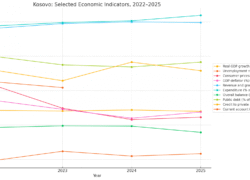
Kosovo’s economic performance in 2024 was notable. Real GDP expanded by 4.4%, supported by robust private consumption, real wage growth, and dynamic credit expansion. Household consumption alone contributed nearly five percentage points to GDP growth, while increased public and private investment, particularly in real estate and infrastructure, added further momentum .

Inflation, a concern in previous years, decelerated significantly. Average consumer price inflation fell to 1.6% in 2024, down from 4.9% in 2023 and 11.6% in 2022. This decline was largely attributed to lower food and energy prices. However, a slight rebound in inflation was recorded in early 2025 due to higher food prices and a 16% increase in electricity tariffs .

Despite these achievements, Kosovo’s current account deficit widened to 9% of GDP, driven by rising imports and slowing remittance inflows. Export performance was dampened by weak external demand, particularly in minerals and metals. The fiscal deficit remained modest, and public debt declined to 16.9% of GDP in 2024, well below regional averages .

Fiscal Discipline and Investment in Human Capital

The fiscal strategy under the SBA emphasized sound budgeting, targeted investment, and enhanced revenue collection. Stronger tax administration, including measures to reduce smuggling and improve compliance, led to higher revenues. Non-tax income also rose due to increased central government fees. Capital investment execution improved significantly, reaching 76% of planned allocations, compared to 65% in 2022 .

Social support measures were balanced with fiscal prudence. While there were increases in pensions and a one-off child allowance, current expenditures were carefully managed. Public investment in infrastructure and human capital continues to be prioritized to meet Kosovo’s long-term development goals .

The IMF praised Kosovo’s adherence to its rules-based fiscal framework and called for its continued alignment with EU norms. Efforts to reform compensation systems, increase targeting of social benefits, and strengthen public investment management remain central to medium-term fiscal planning .

Advancing Financial Sector Reforms

Kosovo’s financial sector remains stable, with banking institutions showing solid capitalization, profitability, and liquidity. Private sector credit grew by 18.3% in 2024 and is expected to continue expanding in 2025, though at a slightly slower pace. The Central Bank of Kosovo (CBK) has improved risk monitoring capabilities and is developing tools to address systemic liquidity and macroprudential concerns .

Under the SBA, the CBK adopted a Supervisory Review and Evaluation Process (SREP) to assess the risk profile of financial institutions. It also supported financial inclusion by encouraging commercial bank expansion in northern Kosovo. The number of bank branches in the region rose from four to twelve within a year, enhancing access to finance .

Efforts are underway to integrate Kosovo’s financial system more closely with European frameworks. In late 2024, Kosovo submitted its SEPA pre-application and joined the regional instant payments initiative (TIPS Clone) led by the Bank of Italy, aimed at enabling seamless cross-border transactions in the Western Balkans .

Green Transition and Climate Resilience

A hallmark of the RSF arrangement has been Kosovo’s progress in accelerating its green transition. Two major renewable energy auctions—150 MW of wind and 100 MW of solar—are set to double the country’s renewable generation capacity. These projects, alongside the integrated electricity market with Albania (ALPEX), position Kosovo as a regional player in clean energy .

The government’s 2022–2031 Energy Strategy and new climate law establish the framework for emissions reductions. Kosovo aims to cut emissions by 16% by 2030 and cover 35% of electricity consumption through renewables. Implementation of EU-aligned carbon policies and the Carbon Border Adjustment Mechanism (CBAM) preparedness have been supported with IMF technical assistance .

Energy efficiency is also a priority. The Kosovo Energy Efficiency Fund (KEEF), backed by €86 million in donor and institutional funding, is scaling up residential and public building retrofits. Reforms to improve pollution control at coal plants and launch new clean energy laws further illustrate the country’s commitment to climate goals .

Institutional Reforms and Governance

Kosovo’s structural reform agenda has expanded to improve public sector governance, boost competitiveness, and align with EU accession benchmarks. Actions include enhancing the integrity of the judiciary, implementing digitalization across public services, improving tax administration, and reducing informality in the economy .

To enhance policymaking, Kosovo is upgrading its statistical capacity. The IMF is assisting the Kosovo Agency of Statistics (KAS) to strengthen GDP measurement, produce a Residential Property Price Index, and move toward accrual-based government finance statistics aligned with EU standards .

Efforts to foster inclusive growth also continue. Initiatives to close gender gaps, raise labor force participation—especially among women—and invest in education and health are aligned with IMF recommendations. Reforms in human capital development are expected to improve employment prospects and long-term productivity .

Risks and Outlook

While the medium-term economic outlook is favorable, the IMF noted several downside risks. These include prolonged delays in government formation following the February 2025 elections, rising geopolitical tensions in the region, and external shocks such as higher global commodity prices or a slowdown in major European economies .

Inflation is expected to stabilize around 2.3% in 2025. Growth will likely remain robust, projected at 4% for the year. However, the current account deficit, while narrowing slightly due to lower commodity prices, remains structurally high. Sustained reform momentum and foreign investment, especially through EU integration, will be critical to mitigating vulnerabilities .

The IMF emphasized that Kosovo’s continued access to international financing, including diaspora capital, and resilience-building reforms will help safeguard economic stability. A potential financing gap of €50 million was identified under an adverse scenario involving energy or food price shocks .

Conclusion

The completion of Kosovo’s SBA and RSF reviews marks a significant achievement for the country’s macroeconomic stability and reform agenda. With fiscal prudence, ambitious climate action, and institutional strengthening, Kosovo is better positioned to address both its developmental needs and regional integration ambitions.

Looking ahead, the IMF’s engagement with Kosovo will continue through surveillance and capacity development. The Fund’s support has laid the groundwork for future growth, while reinforcing Kosovo’s ability to navigate global economic uncertainty and deliver inclusive, sustainable progress.


Atenor raises €45.3 million to support strategic plan and strengthen balance sheet

Atenor has completed a capital increase of €45.3 million through an accelerated private placement, issuing shares at €2.62 each. The capital injection aims to reinforce the company’s balance sheet and improve financial flexibility, supporting the implementation of its three-year strategic plan in a challenging real estate environment.

Announced earlier this year, Atenor’s 2025–2027 plan centres on three key priorities: advancing its residential and mixed-use development pipeline, consolidating its core office portfolio in major urban centres, and gradually reducing its exposure to the Central European office market.

The company reports progress in debt reduction, strategic project execution, and repositioning of its portfolio, aligning with its long-term objectives.

Atenor CFO Caroline Vanderstraeten stated that reducing debt remains a central objective as the company strengthens its financial structure to support its ongoing transformation. CEO Stéphan Sonneville noted that the early months of 2025 have confirmed the company’s direction, with a focus on strategic clarity and financial discipline to support renewed growth and long-term value creation.

NEMO Fund adds Panorama Business Center to Prague office portfolio

The NEMO Fund, a Czech investment vehicle focused on high-quality office properties in Prague, has expanded its portfolio with the acquisition of the Panorama Business Center. The office building, prominently located opposite the National Museum in the city centre, marks the fund’s ninth real estate investment and reflects its continued strategy of targeting stable, long-term income-generating assets.

The eight-story building offers direct access to the Muzeum metro station, serving lines A and C, along with convenient tram connections and proximity to Prague’s main railway station. The site also includes underground parking, adding to its accessibility and appeal for corporate tenants.

Key occupants of the Panorama Business Center include Všeobecná zdravotní pojišťovna (VZP), Takeda Pharmaceuticals, Kuroda Electric, and Sumitomo Corporation, among others. The building’s central location and high occupancy rate under long-term leases provide the fund with predictable rental income and reinforce its position in the Prague office market.

The transaction follows a period of growth for the NEMO Fund, which saw a 10.2% year-on-year increase in the number of investors. The rising interest has enabled the fund to secure additional capital, which it has deployed to expand its real estate holdings in line with its focus on stable returns from well-located office properties.

With this acquisition, the total value of the fund’s property portfolio rises to CZK 5.6 billion, covering a total leasable area of approximately 75,900 square metres. The fund now counts over 13,000 shareholders, reflecting growing confidence in its investment strategy amid a dynamic commercial real estate environment.

The addition of the Panorama Business Center further diversifies the NEMO Fund’s holdings while reinforcing its emphasis on prime assets with strong tenant profiles and reliable cash flow.

Colliers: Bucharest among the EU’s most dynamic industrial and logistics markets

Bucharest has emerged as one of the most dynamic industrial and logistics markets in the European Union, ranking 7th in terms of market activity and 5th for growth over the past decade, according to new data released by real estate consultancy Colliers. The city’s modern stock of leasable industrial and logistics space has grown from around 900,000 square metres in 2015 to over 3.6 million square metres in 2025, with the potential to reach 4 million by year-end.

This expansion places Bucharest alongside leading growth markets such as Szczecin, Gdansk, Kraków, Łódź, Stockholm, and Gothenburg. Despite broader economic uncertainty, the industrial and logistics sector continues to perform strongly, with the first quarter of 2025 recording a 50% increase in leasing activity compared to the same period last year.

“The industrial and logistics segment has become one of the most resilient and active areas within Romania’s real estate sector,” said Victor Coșconel, Partner and Head of Leasing for Office and Industrial Agencies at Colliers. He noted that while the western and north-western peripheries of Bucharest have historically been the centre of logistics development, interest is now shifting to the southern and eastern parts of the capital. These emerging areas offer lower land costs, improved labour availability, and increasingly favourable infrastructure.

Nationwide, Romania’s stock of modern industrial space has expanded significantly over the past decade, increasing from 1.6 million square metres in 2015 to more than 7.6 million in 2025. Much of this growth has taken place outside Bucharest, where the market has expanded from 700,000 square metres to nearly 4 million. Regional industrial hubs in Transylvania and southern Romania are benefiting from growing interest among manufacturers and logistics operators, who are drawn to these locations by competitive wages, larger labour pools, and ongoing infrastructure improvements.

Coșconel explained that the post-pandemic period has widened the growth gap between Bucharest and the rest of the country. “The expansion of manufacturing activity in regional cities has accelerated demand for modern logistics facilities, particularly in areas with strong road access and workforce availability,” he said.

Despite rapid development, Romania still offers room for further expansion compared to more mature regional markets such as Poland, the Czech Republic, and Hungary. One of Romania’s advantages is the high intensity with which it uses its industrial and logistics infrastructure. Colliers data shows that Romania exports over 7 million tonnes of goods for every 1 million square metres of leasable logistics space, compared to 6 million tonnes in Poland and 5 million in the Czech Republic.

In the first quarter of 2025, publicly recorded industrial and logistics leasing transactions totalled approximately 156,000 square metres. Notable deals included Delamode’s renegotiation and expansion of its 30,000-square-metre lease at CTPark Bucharest West, a 20,000-square-metre lease by automotive parts distributor NRF at MLP Bucharest West, and a 40,000-square-metre lease by Dutch retailer Action at WDP Dragomirești, marking its entry into the Romanian market.

Logistics firms accounted for more than half of the total leased space in Q1, followed by companies in the retail and automotive sectors. The steady demand from core logistics operators reflects confidence in the long-term potential of Romania’s strategic location, competitive costs, and access to the EU’s large consumer base.

Colliers cautions that while the outlook for the industrial and logistics segment remains strong, the market is not without risks. A mix of domestic and international uncertainties could affect short- and medium-term performance. Nevertheless, Romania’s core advantages—favourable labour productivity relative to wage levels and strategic proximity to key European markets—position the country well to continue attracting investment in the sector.

As developers and investors look ahead, Colliers expects Romania’s logistics landscape to remain one of the most active in the region. Strong fundamentals, ongoing infrastructure improvements, and rising domestic consumption are likely to support continued growth across both Bucharest and regional markets.

LATEST NEWS