U.S. tariffs weigh on imports, but global trade adjusts and persists

While U.S. tariffs have led to a significant decline in imports from China and Canada, international trade continues to function through redirection and adaptation, according to the latest economic commentary from the Institute of Financial Policy (IFP) under the Slovak Ministry of Finance.

U.S. imports from China dropped nearly 42% year-on-year in May, amounting to a nominal decline of $14.5 billion. This figure represents roughly 0.4% of annual U.S. imports and 0.1% of China’s GDP. Imports remained subdued in June, down more than 16% compared to the same period last year. Despite this, China’s overall exports continued to grow by an average of just over 5% in May and June, suggesting that Chinese exporters are finding alternative markets or routing products through third countries to circumvent tariffs. However, export volumes to the EU have recently stagnated, prompting China to shift more attention to other Asian markets.

At the same time, the weakening of the U.S. dollar has yet to yield a positive effect on the country’s trade balance. A lower dollar typically helps domestic production by making imports more expensive and exports more competitive. Since the beginning of the year, both the euro and the Japanese yen have strengthened against the dollar by more than 8%. This shift has not curbed the growth of European and Mexican exports to the U.S., which continue at a stable pace.

Despite a temporary improvement in April, the U.S. trade deficit remained high in May. Analysts suggest that the ongoing dollar depreciation, coupled with growing uncertainty, could lead to a slowdown in imports from Europe. The sharp weakening of the dollar in recent months may reflect a loss of investor confidence in U.S. fiscal policy. This is evidenced by the recent divergence between interest rates and exchange rates, as well as a disconnect between the performance of stock markets and bond yields.

Traditionally, countries offering higher bond returns attract more capital, thereby strengthening their currencies. U.S. bonds still offer higher interest rates than their European counterparts, yet the dollar continues to lose ground. This contradicts the usual pattern seen during global market volatility, where the dollar acts as a safe haven.

The IFP concludes that recent developments, including persistent budget deficits and fiscal strategies viewed as unsustainable, are undermining investor trust and contributing to the dollar’s weakness, even in the context of rising U.S. interest rates.

Source: TERAZ

Slovak Post cancels plan to close hundreds of branches, confirms franchise shift in rural areas

Slovak Post has officially refuted claims that it plans to close hundreds of post office branches across the country. In response to criticism from opposition party Progressive Slovakia (PS), the company confirmed that only 26 regional branches will cease operations, alongside 29 district branches, which will be replaced by upgraded facilities offering extended services and improved accessibility.

“The Slovak Post will not close hundreds of branches,” said spokeswoman Eva Peterová. “We’ve been transparent for weeks about the closure of 26 regional and 29 district branches. These will be replaced by branches with longer opening hours, more service windows, improved access via public transport, and better parking options. The new locations will be within 850 meters to 3.5 kilometers of the original branches.”

Peterová added that rural branches will not be closed but instead gradually converted into franchises, with discussions underway in cooperation with local municipalities.

The company highlighted that many traditional post office functions, such as paying pensions, bills, or sending parcels, are now handled by postal delivery personnel. Additional services, including online shipment processing, parcel redirection, and delivery rescheduling, are available through the Slovak Post’s website and mobile app.

Slovak Post pointed out that its services remain accessible in nearly 2,000 municipalities that have never had a physical post office. The company noted a shift in public behavior, with fewer people visiting branches in person as more customers turn to delivery services, couriers, and digital tools.

The opposition PS had warned that beyond the closures in regional and district centers, further branch shutdowns in rural areas would force residents to travel long distances to access basic postal services. The party criticized the plan, arguing it would reduce service accessibility in smaller communities.

Slovak Post maintains that the reorganization is aimed at modernizing services and improving efficiency without reducing access for customers.

Source: TERAZ.SK

Over 10% of Polish courier firms listed as debtors, industry debt tops PLN 106 million

The Polish courier sector continues to expand, fuelled by rising e-commerce demand and changing consumer habits. According to the latest data from the Register of Debtors BIG InfoMonitor and the BIK database, however, this growth is not without financial strain. Despite handling more than 1.2 billion parcels annually and generating nearly PLN 13.7 billion in revenue in 2024, over 10% of courier companies are now listed as unreliable payers, with overdue liabilities surpassing PLN 106 million.

Figures show a slowdown in the rate of debt accumulation compared to previous years, but the total value of arrears still rose by 3.3% year-on-year as of May 2025, and by nearly 42% over the past five years. Much of the financial pressure stems from rising operational costs, such as fuel and infrastructure investment, alongside stagnant income. The average net revenue per parcel has remained around PLN 11 for years, while consumer expectations for free shipping continue to mount.

Although Poland’s courier industry is dominated by a few major operators accounting for over 99% of total revenues, thousands of small subcontractors operate under these brands. For these smaller firms, the average outstanding debt of PLN 58,456 can significantly impact liquidity and long-term viability.

Waldemar Rogowski, Chief Analyst at BIG InfoMonitor, notes that even minor payment delays can trigger broader cash flow disruptions across the KEP (courier, express, and parcel) sector. A notable portion of industry debt also originates from unpaid invoices owed by clients. Rogowski emphasizes the importance of proactive risk assessment, including the use of business information services to vet partners and respond early to warning signs.

Looking ahead, the Office of Electronic Communications (UKE) projects courier volumes will exceed 1.65 billion shipments by 2027, driven primarily by continued growth in e-commerce. While volume growth may put pressure on margins, operators that actively manage liquidity and mitigate payment risks are well positioned to benefit from the sector’s overall expansion.

Source: BIG InfoMonitor

Trump announces trade deal with Japan including 15 percent tariff

On Tuesday evening, U.S. President Donald Trump announced the conclusion of a new trade deal with Japan. The agreement includes a 15 percent tariff on Japanese goods imported into the United States and outlines plans for Japan to invest $550 billion in the U.S. economy. As part of the deal, Japan will also open its market to a range of American products, including passenger vehicles, rice, and agricultural goods.

Trump made the announcement on his social media platform Truth Social, referring to the outcome as a “massive deal” that will strengthen U.S.–Japan relations and create “hundreds of thousands of new jobs” in the United States. He emphasized the enduring nature of the partnership between the two countries.

While Trump did not specify tariff changes on Japanese automobiles—one of Japan’s key export categories—Japanese public broadcaster NHK reported that both countries agreed to reduce the previously proposed 25 percent tariff on Japanese car imports to 12.5 percent. Combined with the existing 2.5 percent tariff, this results in a final duty of 15 percent. Reuters confirmed the details through five separate sources.

The announcement marks the most notable agreement in a string of bilateral trade negotiations the U.S. has been pursuing in recent weeks. Earlier this month, Trump had threatened to impose 25 percent tariffs on imports from both Japan and South Korea unless new terms were reached by August 1.

Trade in goods between the U.S. and Japan amounted to nearly $230 billion last year, with Japan posting a $70 billion surplus. According to the U.S. Census Bureau, Japan ranks as the fifth-largest U.S. trading partner.

Japanese Prime Minister Shigeru Ishiba welcomed the agreement, stating that the final duty level was the most favorable among countries with trade surpluses with the U.S. However, Ishiba faces mounting political pressure following his coalition’s loss of its majority in the upper house in recent elections. Local media reports suggest he may announce his resignation before the end of August.

Japanese government envoy Ryosei Akazawa traveled to Washington on Monday to negotiate the final terms. Trump’s announcement followed Akazawa’s meetings at the White House and with U.S. Commerce Secretary Howard Lutnicko and Treasury Secretary Scott Bessent. After the talks concluded, Akazawa posted “#Mission completed” on social media.

The announcement had an immediate impact on financial markets. Japan’s Nikkei 225 index rose nearly four percent before market close. Shares in major Japanese automakers, including Toyota and Honda, recorded double-digit gains. The yen initially strengthened against the U.S. dollar but later weakened amid reports of Ishiba’s possible resignation.

Economists interviewed by Reuters noted that the 15 percent tariff represents a more favorable outcome for Japan than earlier scenarios threatened by the U.S. administration. The agreement, they said, could help Japan avoid slipping into a recession.

Source: Reuters

Seventy years on, Warsaw’s Stalin-era skyscraper remains a source of debate

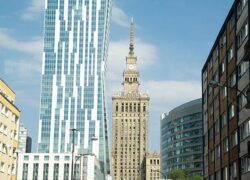
Seventy years after its official opening, the Palace of Culture and Science in central Warsaw continues to provoke mixed emotions among Poles. The iconic structure, a towering gift from Soviet leader Josef Stalin during Poland’s time under Soviet influence, still stands as a symbol of a complex and contested history, reports Reuters.

When the palace was completed in 1955, it was seen as a display of Soviet dominance, with its imposing height and visibility from kilometers away. Originally named after Stalin, it served as a visual statement of power in the heart of the capital.

“If you place such a massive building in the center of the city, visible from 30 kilometers away, you’re making a statement,” said Dorota Zmarzlak, a member of the palace’s board. She noted, however, that younger generations tend not to associate the building with its original political symbolism.

After the fall of communism in 1989, Poland removed many Soviet-era monuments and renamed numerous streets. Yet the palace remained, even as political figures like Radosław Sikorski, now Poland’s foreign minister, called for its demolition as early as 2007.

Over the decades, the building has been repurposed as a cultural venue. It has hosted concerts, political events, exhibitions, and fashion shows. Performers like Andrea Bocelli and José Carreras have appeared on its stage. When the Rolling Stones performed there in 1967, tensions erupted into riots—an unusual event during the communist era.

For some, the palace holds personal significance. Zygmunt Kowalski, an 89-year-old retired railway worker, moved to Warsaw just a month after the palace opened. He recalls taking his daughter to swim in its pool and attending concerts and films there. “Everything can be demolished, but this should stay,” he said. “Let it serve as a reminder of what once was. Future generations will understand that communism existed here.”

Today, the palace houses four theaters, a cinema, several museums, and regularly hosts exhibitions. Its concert hall is currently undergoing renovation.

Younger residents increasingly view the palace as a key part of the city’s identity, rather than as a Soviet relic. “For me, it’s a symbol of Warsaw,” said Karol Los, a 23-year-old student. “I think young people see it completely differently than the older generation.”

Others see architectural and historical value in the structure. Valerij Shcherbak, a 32-year-old architect from Ukraine, praised its detailed design and ongoing popularity with visitors. “This is history, and we must respect it,” he said, noting that many Soviet-era buildings in Ukraine have been lost. “What happened in the past should be preserved, not erased.”

Source: CTK

Redkom Development expands project management team

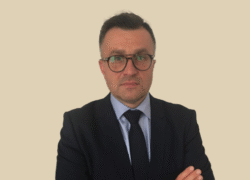
Redkom Development has appointed Michał Szwedzicki to its Project Management team as part of its continued structural growth. Szwedzicki brings over two decades of experience in managing investment processes and holds an engineering degree. He has previously worked with Echo Investment, Tesco Polska, Tacit Investment, OTB, and Napollo, overseeing various commercial and multifunctional projects from planning to completion.

His appointment supports the company’s ongoing expansion in the retail park segment, with several projects currently under development across Poland and others in advanced planning stages.

Between 2023 and 2024, Redkom Development launched three retail parks—Park Glinianka (now BIG Łubna), Ozimska Park, and Comfy Park Bielik—offering a combined gross leasable area (GLA) of over 46,000 sqm. The company is scheduled to open Przystanek Karkonosze in August 2025, a 16,000 sqm retail project. Additional developments are planned in Bydgoszcz, Świderek (Otwock), Dzierżoniów, and Białystok by 2026.

The Project Management department currently includes Mateusz Miszczyk, Andrzej Chodacki, Marcin Nalepa, Marek Łabaszewski, and Michał Szwedzicki, who are responsible for coordinating construction and project

Poland: How developers are shaping sustainable housing trends -p2

Dariusz Pawlukowicz, Vice-President of the Management Board of Vantage Development S.A.
Vantage Rent, a rental apartment brand owned by Vantage Development, strives to improve the quality of life of its tenants without forgetting about the environment. Its mission is based on creating modern, functional buildings that meet the needs of large city residents, while implementing innovative, low-emission technologies.

The company consistently implements its ESG Strategy for 2024–2028, based on three main pillars: environment, society and corporate governance. An integral part of these activities is the Green Standard – a comprehensive set of design and implementation guidelines aimed at reducing environmental impact, protecting biodiversity, managing resources efficiently and improving the quality of life of tenants.

The standard is audited and updated annually, allowing it to be adapted to rapidly changing environmental and social conditions. It is based on four key pillars: implementing low-carbon solutions, including those supporting electromobility and micromobility; protecting biodiversity; rational water management and supporting small-scale water retention, as well as promoting the Human Balance Standard and the 15-minute city concept. Importantly, all investments completed by Vantage in 2024 fully comply with the Green Standard requirements.
As part of the adopted ESG Strategy, green roofs and electric car charging stations are being implemented in Vantage Rent buildings. An important part of the brand’s activities is also caring for the well-being of its tenants and, consequently, promoting a healthy lifestyle among them. Through the pioneering Vantage Club programme, free bicycle inspections are organised, and this spring, the first private gym was launched as part of the Vantage Active zone, available free of charge to tenants.

By creating the Vantage Rent brand, we are raising standards in the PRS market, creating spaces that combine tenant comfort with responsibility towards the environment and society. Our customers, mainly young, climate-conscious tenants, appreciate pro-environmental initiatives, especially those that directly translate into their everyday comfort and savings.

A prime example of our implementation of environmentally friendly solutions is the Braniborska 58 investment in Wrocław, which was completed last year. We have installed a photovoltaic system on the roof, which allows the use of renewable energy sources. The flats are also equipped with a Smart Home system (intelligent thermostats, light switches, flood sensors), which optimises energy consumption and increases the comfort and safety of our tenants. During the holiday season, when residents go on vacation and, for example, forget to turn off the lights, they can do so remotely using an app. This gives them real control over energy consumption in their apartment.

Piotr Jakubowski, Project Director, BPI Real Estate Poland
Our goal is to implement increasingly sustainable investments that are created with the comfort of current users and future generations in mind. Our clients are people who are familiar with current trends, closely watching how the Polish market is adapting to European standards, and aware that more sustainable projects not only retain their value over time, but also have lower operating costs.

The principles of sustainable development are embedded in our company’s DNA, which means that every investment, in accordance with our internally developed standards, is designed with energy efficiency, reduced demand for non-renewable energy and lower operating costs for residents in mind. This distinguishes our projects and makes them very attractive. When creating city-forming projects with the needs of future generations in mind and using eco-friendly solutions, we decided to go one step further. We have decided to carry out a number of investments in accordance with the requirements of BREEAM certification, one of the world’s most recognised methods of assessing sustainable buildings. We are applying for BREEAM certification at the Very Good level for two of our investments, Bernadovo in Gdynia and Chmielna Duo in Warsaw. This certification not only defines best practices in the design, construction and use of buildings in accordance with the concept of sustainable development. In addition, as a developer, we are required to use certified materials, monitor water and energy consumption, and protect local flora and fauna.

In our investments, apart from solar panels, we use many ecological solutions, such as extensive vegetation and infrastructure supporting biodiversity, green and white roofs, light-coloured facades, heat pumps, specially designed water retention systems using rainwater, drip lines for watering plants, electric car charging stations, and bike racks, service stations and washers.

We take into account the implementation of ESG principles in order to significantly reduce the carbon footprint generated by the real estate sector, but also to ensure that our projects retain their value in the future and have lower operating costs. We plan to continue developing premium residential properties in Poland in line with ESG guidelines. We are currently implementing green solutions in all our projects in Poland and are intensively preparing to launch new, increasingly sustainable investments in the future.

In our investments, we are increasingly turning to innovative solutions such as green concrete, structural timber and prefabricated elements, which have a lower carbon footprint and high efficiency. At the same time, we are examining the carbon footprint of our projects with a view to reducing it, and we are ready to invest more in the quality of our investments because we are aware of their impact on the lives of future generations.

Michał Witkowski, Sales Director, Lokum Deweloper
We are seeing growing interest among our customers in issues related to eco-friendly and energy-efficient solutions used in residential developments. Buyers are not only motivated by concern for the environment. They also recognise specific benefits, such as greater comfort in everyday life and lower operating costs. They pay particular attention to the standard of finish of the flats and common areas in terms of energy efficiency. The number and layout of green areas, taking into account their character and diversity of vegetation, as well as infrastructure supporting eco-friendly mobility, are also important to them.

Our goal is to create housing estates that combine high quality workmanship, modern technologies and care for the environment. That is why we use solutions such as energy-efficient LED lighting, motion and twilight sensors, modern thermal insulation and triple-glazed windows, which increase the energy efficiency of buildings. We build housing estates to ensure maximum biologically active space. We design varied green areas filled with rich vegetation, flower meadows and green walls and roofs, which improve the microclimate and air quality. We also implement rainwater retention systems.

We also know how important it is to promote and support eco-friendly mobility, especially in large cities such as Wrocław. That is why we provide practical amenities for the residents of our housing estates – we create parking spaces for electric cars and charging stations, and we are expanding the cycling infrastructure with walking and cycling paths, numerous bicycle racks and repair stations. We plan to expand the range of eco-friendly solutions in our future projects.

Renata Mc Cabe – Kudla, Country Manager at Grupo Lar Polska
We pay close attention to solutions that promote environmental protection. Our latest projects are being developed to obtain BREEAM certification. Of course, green solutions have a slight impact on apartment prices, but we believe that in the long term they are beneficial for the customer.
Wojciech Wilhelm Zhang-Czabanowski, President of the Management Board of Waryński S.A. Holding Group
In response to the growing importance of sustainable construction and increasing consumer awareness, we are actively implementing technological and environmental solutions that promote operational savings, improve living comfort and support environmental protection. A number of modern ecological solutions have been used in the Stacja Ligocka investment project in Katowice. These include photovoltaic installations powering common areas and garages, energy-efficient windows with enhanced insulation (thermal and acoustic) parameters, LED lighting with motion sensors, and green terraces and gardens that support water retention and the microclimate of the estate.

In parallel with the implementation of specific technical solutions, we are working on our own internal environmental standards, inspired by, among others, the Warsaw Green Building Standard. The aim is to systematically improve the quality of projects in terms of energy efficiency, the use of renewable energy sources, and the creation of functional and green common areas.

Although the use of green technologies may slightly increase the cost of the investment, in the long term it translates into lower maintenance costs and higher property values. Customers are increasingly recognising these benefits. They pay attention not only to energy efficiency and green surroundings, but also to modern amenities, such as a master key system that increases the convenience of everyday life. The Stacja Ligocka investment meets these expectations. It is a project that combines modern architecture with intimate buildings, green spaces and convenient access to urban infrastructure

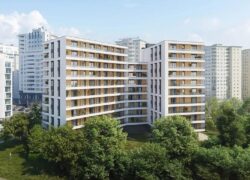
Photo: Bukowinska, Matexi Polska
Source: dompress.pl

Poland: How developers are shaping sustainable housing trends -p1

As sustainability becomes a growing priority in real estate, new residential developments are increasingly incorporating environmentally friendly technologies and cost-saving solutions. This article explores whether developers are introducing their own ‘green standards’, how such initiatives impact flat prices, and to what extent buyers consider these features when making purchasing decisions. Insights and comments from industry experts provide a closer look at the current trends shaping eco-conscious housing projects.

Tomasz Kaleta, Managing Director of Sales and Marketing at Develia
In our investments, we use, among other things, heat pumps, photovoltaic panels, rain gardens and grey water recirculation systems. We strive to increase the number of such solutions in new projects. Our commitment to this is set out in the ‘Develia Group’s Sustainable Development Strategy for 2025-2030’ published in February this year. Among other things, we are working to ensure that our buildings are as energy-efficient as possible and meet energy consumption standards of 58 kWh/sq m by 2030.

The use of environmentally friendly solutions in our investments is confirmed by the BREEAM certificate, which was awarded to our Warsaw projects Bemosphere (Central and City buildings) and the completed stages of the Aleje Praskie housing estate. Although the use of low-emission and energy-efficient solutions increases investment costs, it can translate into lower operating costs during the use of the apartment and also increases the attractiveness of the property and, consequently, its value.

Agnieszka Majkusiak, Sales Director at Atal
Price and location remain the key parameters when choosing a property. However, our investments in ‘green’ and ‘blue’ infrastructure, such as heat pumps, photovoltaics, rain gardens and twilight sensors, are very well received by customers. This is because there is a growing awareness of eco-trends, and the rising costs of maintaining flats are generating increasing interest in this type of solution.

They increase the attractiveness of the housing estates we build and emphasise their modern character. Buyers appreciate these elements, which reflect our comprehensive approach to space design, our commitment to sustainable development and our concern for comfort and well-being in the place where they live. In addition to their marketing and image benefits, ecological aspects also have a practical side, as they contribute to reducing resource consumption, including the costs of maintaining common areas.

Residents therefore also benefit from these solutions as members of the community. We receive a lot of enquiries about the possibility of charging electric vehicles, either as standard infrastructure in the form of ready-made stations or as an option for future connection.

A separate segment, indirectly related to ecology and resource management, is advanced smart home systems, which are often requested by customers. To meet these expectations, we are offering this option in an increasing number of buildings. It allows remote control and minimisation of media consumption in the apartment during absence and signals any malfunctions.

Marek Straszak, Regional Construction Manager; Matexi Polska
Eco-friendly technologies are becoming increasingly prevalent in residential construction, and investors are increasingly following the expectations of customers for whom sustainable development is becoming an important criterion when choosing a property. In our projects, we are already implementing a number of pro-environmental solutions, such as green roofs, photovoltaic installations, rainwater recovery systems and electric car charging stations. We also attach increasing importance to the quality and functionality of green areas. We design them in such a way that they not only improve the aesthetics of housing estates, but also have a real impact on the microclimate and comfort of residents, for example by reducing the urban heat island effect.
We operate in accordance with the internal Matexi Sustainability Matrix standard, which defines our approach to designing investments in the spirit of sustainable development. This allows us to consciously select ecological solutions, taking into account their effectiveness, environmental impact and the expectations of future users. Although we do not rely directly on external documents such as the Warsaw Green Building Standard, our approach remains consistent with it and corresponds to the direction set by local authorities.

Although ecological solutions may affect the cost of an investment, in the long term they bring measurable benefits to residents. First and foremost, they reduce media consumption, which translates into real savings in the everyday use of a flat. An example of this is the heat recovery system used in our investment at 11A Sokratesa Street, which recovers heat from the air removed from the flats and reduces heating costs by up to 20 per cent compared to traditional solutions. Buyers are increasingly paying attention not only to specific technologies, but also to the developer’s overall philosophy of responsible construction.

Joanna Chojecka, Sales and Marketing Director for Warsaw and Wrocław at the Robyg Group
The introduction of ‘green standards’ is associated with a certain increase in investment costs, but from the buyers’ point of view, it is an investment in the future – both in terms of their comfort and the value of the property. We are increasingly observing that customers are consciously paying attention to environmental aspects such as energy efficiency, access to green spaces and solutions that reduce water and electricity consumption. We are convinced that the future of residential construction lies in the harmony of technology, ecology and high quality of life. That is why we are consistently developing our offer in line with these values, adapting it to the growing expectations of the market and the needs of our customers.

In order to reduce our impact on the environment, we implement modern, environmentally friendly solutions that allow us to care for the environment and reduce the costs of everyday life, as well as a set of design standards and guidelines for architects, designers and subcontractors. Most of our housing estates are equipped with at least five low-emission solutions, such as LED lighting in common areas, triple glazing, heat exchangers, installation control systems, lifts with heat recovery, motion and twilight sensors, and green roofs. In addition, each of our housing estates features extensive green areas, rain gardens, playgrounds, gyms and HD video surveillance. Special walking areas, birdhouses and insect houses have been prepared. We also use facade paints and anti-smog paving stones that absorb pollution. We are actively promoting micro and electromobility by installing electric car chargers and solar benches, as well as building cycling infrastructure in the form of bike racks and bike repair stations. All these solutions help to reduce the carbon footprint of our housing estates during the use of the buildings.

To reduce emissions at the construction stage, we have switched to 100% renewable energy in our construction processes since 2025. This step significantly reduces our carbon footprint and contributes to reducing CO2 emissions. In addition, 88% of multi-family residential buildings constructed for sale in 2024 achieved a primary energy demand (Ep) at least 10% lower than required by NZEB standards (65 kWh/m²/year).
Ecology in modern, sustainable construction is a key trend that responds to the challenges of climate change, the depletion of natural resources and the growing demand for comfort in living. Although it often requires greater investment at the design and construction stage, this investment quickly pays for itself, both economically and socially.

Karolina Bronszewska, Marketing and Sales Director at Ronson Development
We place great emphasis on sustainable construction, implementing a number of modern solutions in our projects that benefit both the environment and future residents. We focus on intelligent, energy-efficient and environmentally friendly technologies that support comfort of living and at the same time allow for real savings in the everyday use of apartments. As a result, investments such as Nova Królikarnia, Eko Falenty and Nowe Warzymice are excellent examples of conscious design, combining functionality, aesthetics and care for the environment.

Our customers themselves are increasingly interested in ecological solutions. They most often ask about four key technologies: heat recovery, heat pumps, photovoltaic panels and rainwater tanks. We see growing environmental awareness among buyers and not only respond to current market needs, but also actively create our own ‘green standards’.

We respond to customer needs, which is why, in addition to the four solutions mentioned above, our investments include energy-efficient LED lighting and electric car charging stations. Furthermore, we use natural finishing materials and plant vegetation on the roofs of our buildings, thus enriching their biodiversity. In the long term, apartments with eco-technologies mean lower operating costs and greater comfort of living. It is a valuable investment in the future – our own and that of our planet. .

Photo: Bukowinska, Matexi Polska
Source: dompress.pl

Non-EU citizens more likely to work part-time across the EU, new data shows

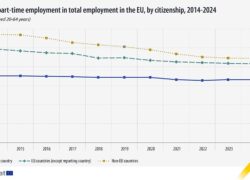
In 2024, non-EU citizens living in the European Union were more likely to work part-time compared to both EU nationals and EU citizens residing in other member states, according to data published by Eurostat.

Non-EU citizens represented 22.2% of part-time workers among the employed population aged 20 to 64. EU citizens living in a different EU country followed closely at 20.8%, while nationals residing in their own country had a lower share of 16.6%.

This pattern has remained consistent over the past decade. Between 2014 and 2024, EU nationals recorded the lowest levels of part-time employment. However, all three groups showed a gradual decline in the proportion of part-time employment over this period, particularly among non-EU citizens. Their share has moved closer to that of mobile EU citizens.

The data also highlights significant gender disparities. Women were far more likely than men to hold part-time jobs, regardless of their citizenship. Among EU citizens living in another EU country, 35.8% of women worked part-time in 2024, compared with only 7.9% of men.

For non-EU women, the figure was slightly higher at 36.8%, while 11.8% of non-EU men worked part-time. Among nationals working in their home country, 27% of women were employed part-time, compared to just 7.4% of men.

The figures underscore ongoing challenges related to employment integration and gender inequality in the EU labour market.

Source: Eurostat

Poland sees stable low registered unemployment in 2025

The registered unemployment rate in Poland continues to hover around 2.9%, the lowest level in decades, according to the Central Statistical Office (GUS) . This figure represents sustained labour market strength, marking a significant improvement from the early 1990s when unemployment peaked above 16%.

As of the first quarter of 2025, unemployment has remained consistently low, illustrating a stable job market supported by strong industrial output, rising foreign investment, and a robust services sector . The recent figure also compares favorably to the broader economic growth trend, which has maintained annual GDP growth of approximately 3.2%.

Despite fluctuations in economic activity across sectors, Poland’s unemployment rate remains one of the lowest in the European Union. This stability reflects successful alignment of the workforce with market needs and increasing labour mobility. Analysts note this low unemployment level continues to support consumer confidence and domestic demand, enhancing overall economic resilience.

Still, regional disparities persist: economically weaker areas in eastern Poland continue to experience slightly higher unemployment compared to more prosperous western regions . Experts emphasize the importance of ongoing investment in training and regional development programs to ensure balanced growth nationwide.

Looking ahead, Poland’s labour market appears well-positioned as it enters the second half of 2025. Maintaining low unemployment levels, while addressing persistent regional gaps, remains critical for sustaining inclusive economic progress.

Source: GUS

LATEST NEWS