Labor shortages in construction deepen, pressure builds on Czech market

The construction industry is facing a growing labor shortage that is beginning to affect both project timelines and overall sector performance. Despite the industry’s role as a key economic driver and its importance for housing and infrastructure development, workforce availability continues to decline. A recent analysis by McKinsey & Company warns that if productivity stagnation and labor shortages persist, the global construction sector could face a shortfall of up to $40 trillion by 2040.

In the Czech Republic, this issue is shaped by global and local factors. A survey by PlanRadar indicates that 63% of construction companies believe the sector is no longer appealing to younger generations. The decline in interest in technical careers is contributing to a shrinking pipeline of new workers. Compounding the problem, many companies lack effective systems for transferring knowledge from experienced professionals to younger employees. As older workers retire, their expertise is often lost, placing greater strain on the remaining workforce and making the sector less attractive to new entrants.

According to Adam Heres Vostarek, regional manager at PlanRadar for the Czech Republic, the situation is further complicated by rising personnel costs and delays related to permitting processes. Restrictive immigration policies are also a factor; nearly one-fifth of Czech respondents in the survey cited limited access to skilled foreign labor as a major challenge.

Despite these constraints, Czech construction companies have so far managed to maintain project schedules better than their counterparts in other countries, with nearly 43% reporting no delays. However, this may indicate that the sector is operating at maximum capacity, leaving little room for flexibility or unexpected disruptions.

Globally, 75% of construction companies reported delays due to workforce shortages, and while the Czech Republic has avoided the worst effects for now, the risk of broader disruption is growing. With demand for new construction rising and timelines tightening, the need for long-term, systemic solutions is becoming more urgent.

Vostarek argues that immediate steps must focus on increasing efficiency rather than waiting for broader labor market changes. Digitization is seen as a key enabler. Technologies that streamline workflows, improve communication, and provide real-time project visibility can help companies do more with fewer people. These tools can support higher productivity without increasing workload, allowing firms to manage demand more sustainably.

In addition to addressing current labor constraints, digital solutions may help attract younger workers. Vostarek points out that modern professionals expect a technology-enabled work environment that reflects their skills and ambitions. A clear structure, meaningful tasks, and digital tools that enhance creativity are central to meeting these expectations. Without adapting to these needs, construction companies may struggle to compete for talent.

The labor shortage in construction is unlikely to resolve quickly, but strategic investments in technology and a shift in how the sector presents itself to future workers could help stabilize the situation. In the Czech market, where resilience remains strong, these steps may be essential to sustaining performance in the years ahead.


TPA Poland extends lease at Wola Center in Warsaw

Hines has announced that TPA Poland has extended its office lease at the Wola Center building in Warsaw for an additional seven years, continuing the tenancy until 31 December 2032. The lease covers more than 2,000 square metres of office space and includes 15 dedicated parking spaces.

TPA Poland, a provider of tax advisory, accounting, payroll, and audit services, has been based in Wola Center since 2013. According to the company, the decision to renew was based on the location, building standards, and the property manager’s responsiveness to changing workplace needs.

The Wola Center property is managed by Hines on behalf of the Hines European Value Fund 1 (HEVF 1). The office space in the building is fully leased, with retail and service premises remaining available. Other tenants in the building include TATA Consultancy Services, Evolution, Cognizant, and Poland’s District and Appeal Courts.

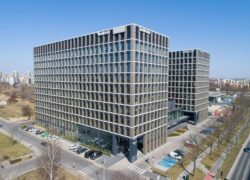
Located at 33 Przyokopowa Street in Warsaw’s Wola district, the Wola Center was designed by Kuryłowicz & Associates. It provides 35,430 square metres of space and has achieved a BREEAM In-Use certification at the ‘Outstanding’ level. The building includes amenities such as EV charging stations, bicycle infrastructure, green terraces, and a co-working area in the main lobby. It is situated near key public transport connections, including the metro and Warszawa Ochota station.

Christine Hager appointed to Management Board of Sierra Germany

Christine Hager has been appointed to the management board of Sierra Germany GmbH, succeeding Jorge Morgadinho. She will continue to report directly to the executive board of Sonae Sierra in Portugal.

Hager joined Sonae Sierra in 2022 to lead the property management division and has since been part of the company’s leadership team in Germany. Her career includes seven years as Managing Director at the Redos Group in Hamburg and previous senior roles at Jones Lang LaSalle, where she oversaw shopping centre management in Germany and Austria, as well as retail asset management.

She also holds leadership roles in industry organisations, serving as Chairwoman of the German Council of Shopping Places (GCSP) since 2018 and Vice-Chair of the European Council of Shopping Places (ECSP) since 2021. In 2021, she was named Manager of the Year by Immobilien Manager magazine.

Cristina Santos, Executive Director of Property Management at Sonae Sierra, noted that Hager’s appointment supports the company’s aim of further developing its business in Germany.

Natural gas prices and demand rise in Q2 2025 amid supply shifts

The global natural gas market recorded moderate price increases and stronger demand in the second quarter of 2025, driven by geopolitical tensions, seasonal factors, and rising liquefied natural gas (LNG) imports, according to Kamco Invest’s Q2 2025 market review.

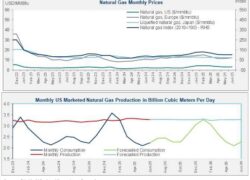
In June 2025, U.S. natural gas prices rose by 20.3% year-on-year to USD 3.02/MMBtu, while European prices increased by 13.8% to USD 12.37/MMBtu. Japan’s LNG prices saw a smaller rise of 1.1% to USD 12.26/MMBtu. The Gas Exporting Countries Forum (GECF) reported a 14% year-on-year increase in TTF spot prices, averaging USD 12.3/MMBtu in June.

Higher demand in North America and Asia Pacific, coupled with reduced Russian pipeline gas flows to Europe, contributed to these price movements. European LNG imports grew significantly, with a 9.4% annual increase in June alone—the strongest growth rate since November 2022. The European Union (EU), aiming to fill its gas storage to 90% capacity by November, has continued to replace declining domestic production and reduced Norwegian output with LNG purchases.

China, on the other hand, reduced LNG imports by relying more heavily on pipeline gas from Russia and Central Asia, as high spot prices weighed on its import strategy.

Global natural gas demand is expected to grow by 2% in 2025, supported primarily by Asia and North America. Global production is also projected to rise by 2%, led by the Middle East. In Q2 2025, the EU’s gas consumption rose by 2.5% year-on-year to 57.5 bcm, while U.S. consumption increased 0.9% to 202.5 bcm. China’s consumption rose marginally by 0.1% to 106.6 bcm between March and May.

U.S. gas production reached 271.6 bcm in Q2, a 0.6% annual increase. However, the International Energy Agency (IEA) forecasts slower global gas demand growth in 2025, at 1.3%, compared to 2.8% in 2024. Asia Pacific demand is expected to expand by less than 1%, the weakest pace in three years.

In the first half of 2025, natural gas consumption in Asia declined by 1.5%, reversing the 5.5% growth recorded in 2024. Japan and South Korea saw reductions of 1.2% and 2.5%, respectively, mainly due to lower power sector demand and increased hydroelectric output in Japan. In contrast, OECD Europe saw a 6.5% increase in gas consumption, with colder weather and lower renewable output boosting demand in the power sector, which accounted for 80% of the increase. Gas-to-power use in the region rose by 20%, while industrial use declined by 2% due to persistent high prices.

In North America, gas consumption rose by 2.5% in the first half of 2025, with a 2.8% increase in the U.S. and a 5% rise in Canada. The growth was primarily weather-driven, with colder temperatures leading to higher heating demand. Mexico, however, recorded a 4% decline in consumption due to reduced gas-fired electricity generation.

On the supply side, U.S. gas production in the first half of 2025 increased by 2.4% to 542 bcm. Canada’s output rose by 1.5% to 82.5 bcm. In Latin America and the Caribbean, production remained stable at 63.4 bcm. Asia Pacific production reached 293.7 bcm, with China accounting for over 37% of the region’s total. China’s output rose to 109.6 bcm, supported by the expansion of the Shenhai Yihao offshore gas field.

In the Middle East, which contributes 18% of global gas production and 25% of LNG supply, output is expected to reach 755 bcm in 2025, up from 736 bcm in 2024. Qatar and the UAE are expected to lead this growth. The UAE recently signed a USD 400 million LNG supply deal with Germany’s SEFE and awarded USD 5 billion in contracts for Phase I of its Rich Gas Development Project, aiming to boost production capacity and LNG export volumes.

The outlook for global gas markets in the second half of 2025 remains shaped by storage targets in Europe, geopolitical uncertainty, and varying regional weather conditions. While demand growth is moderating compared to 2024, structural shifts in energy sourcing and infrastructure investment continue to influence market dynamics.

NWD Private Equity I fund reports 36% growth in 2024

The NWD Private Equity I investment fund recorded a 36% increase in value for 2024, according to its recently completed audit. The fund focuses on private equity buyouts, with a portfolio concentrated primarily in the United States and complemented by investments in Europe. Its holdings currently span nine companies, with plans to nearly double this number in the near future.

Key companies in the fund’s portfolio include Exclusive Networks, a global cybersecurity distributor operating in 170 countries; Focus Financial Partners, which manages over USD 400 billion in client assets; MFG, the UK’s largest petrol station network; Resideo, a smart home solutions provider with products in 150 million households; and Truist Insurance, the fifth-largest insurance broker in the United States.

Štěpán Tvrdý, director of NWD investiční společnost, noted that private equity has been a core area of expertise for the company over the past decade. In addition to the NWD Private Equity I fund, the firm also manages the NWD Private Equity II fund, which was launched a year and a half ago and recently closed to new investors after reaching its target allocation.

NWD currently manages 20 funds and sub-funds covering a range of strategies, including real estate, equities, private equity, supply chain finance, physical gold, and multi-asset portfolios. The majority of the firm’s assets—around 92%—are invested outside the Czech Republic, primarily in euro and U.S. dollar-denominated assets, with the option to hedge against Czech koruna risk.

The broader private markets sector experienced a notable increase in activity in 2024. Rising interest rates influenced corporate valuations and contributed to an 18% year-on-year increase in total deal value, making 2024 the second strongest year on record. Private equity buyout transactions rose to 4,828 in the first quarter of 2025, compared to 4,462 in the same period of 2024, with total transaction value increasing from USD 354 billion to USD 495 billion.

Recent data from consulting firm McKinsey shows sustained institutional interest in private markets, with 30% of institutional investors planning to increase their allocations to this asset class over the next year.

Obermeyer Helika appoints Ing. Pavel Subally as new TECH & BIM Manager

Obermeyer Helika has announced the appointment of Ing. Pavel Subally as its new TECH & BIM Manager. The move is part of the company’s ongoing focus on strengthening its capabilities in Building Information Modeling (BIM) and integrating modern technologies into project delivery.

Subally joins Obermeyer Helika with several years of practical experience, most recently from YIT Slovakia, where he worked extensively with the Dalux Common Data Environment (CDE) platform to support digitalisation efforts in construction processes. He began his professional career as a Revit modeler at Compass studio in Bratislava and progressed to roles in construction engineering and BIM project management.

A graduate of the Brno University of Technology in civil engineering, Subally has also gained international experience through an internship at TCA Architects in California and a study program at the Technical University of Riga.

At Obermeyer Helika, Subally will be responsible for advancing BIM implementation, improving project documentation workflows, and supporting internal process development. He noted that the role represents a significant step in his career and emphasized the company’s long-standing presence in the market. His focus will include not only project execution but also exploring how emerging trends and methodologies can be meaningfully integrated into the company’s operations.

Obermeyer Helika has been active in the architecture, engineering, and consulting sectors for over 35 years and continues to adapt its practices in line with technological developments in the construction industry.

Student housing in Prague reaches full capacity ahead of fall semester

Zeitraum Student Housing has reported full occupancy across all four of its student accommodation campuses in Prague for the upcoming fall semester. With a total of 450 beds now booked, the high demand reflects both a growing student population and evolving expectations for student housing in the city.

Applications for accommodation began increasing in late February and early March, quickly filling all available spaces. According to Zeitraum’s director, Zdena Noack, students are increasingly seeking housing options that go beyond basic furnishings, with many now prioritising modern design, comfort, and access to services such as round-the-clock reception, maintenance, and communal areas for both study and social activities.

Zeitraum operates student residences in Karlín, Holešovice, and Žižkov, offering a mix of private and shared rooms. Each location is connected to public transport and provides amenities including study areas, communal kitchens, high-speed internet, laundry facilities, and welcome starter packs. These facilities are designed to meet the expectations of today’s student demographic, which values functionality alongside quality of life.

Despite the strong demand, Prague continues to face a broader shortage of student accommodation. The gap between supply and demand affects both public and private housing providers. The issue is particularly acute for students seeking modern facilities that meet current lifestyle and academic needs.

Zeitraum has plans to expand its network in Prague and other cities, but acknowledges that individual providers cannot resolve the overall shortfall alone. Noack emphasized the need for coordinated investment at the national level to increase capacity and raise the standard of student housing across the country.

For students looking to secure accommodation, early planning remains essential. Zeitraum recommends arranging housing for the fall semester no later than March, and for the spring semester by October. Delayed booking often results in limited availability and less desirable options. Early preparation is increasingly becoming a critical part of the student admission process.

Wilo joins APES as supplier of energy-efficient technologies inCzechia

WILO CS, s.r.o., the Czech branch of global pump manufacturer Wilo SE, has joined the Association of Energy Service Providers (APES). The company becomes the 35th member of the association and joins the group of technology partners contributing to energy performance contracting (EPC) in the Czech Republic.

Operating in the Czech market since 1994, Wilo CS is part of the German family-owned Wilo SE, a company with over 150 years of experience in pump technology. One of its founders is credited with inventing the circulation pump. The company has a long-standing presence in the Czech Republic and is known for its technical solutions aimed at improving energy efficiency.

Wilo CS has been active in EPC projects for several years. Its pump systems have been used in various public buildings and institutions, including the Municipal House, the Rudolfinum, Bohnice Psychiatric Hospital, and the Valdice and Pankrác prisons, helping to improve energy performance and reduce operating costs.

According to Jan Cidlinský, director of Wilo CS, the company’s contribution extends beyond technology supply to include energy efficiency consulting. He noted that understanding client needs is essential for delivering effective solutions.

The company’s membership also brings added value to APES in terms of sustainability expertise. Wilo’s main production facility in Dortmund is carbon-neutral, and the Czech branch is working toward similar environmental goals. APES chairman Miroslav Marada noted that Wilo’s practical experience with pumps in EPC projects will be a useful asset to the association.

Wilo joins other APES technology partners such as Colmark, Hoval, Lamberga, and Systherm, contributing to the association’s efforts in promoting energy-efficient technologies and sustainable building solutions.

New mural at Norblin Factory pays tribute to Wola’s industrial past

A mural titled “Wola Fabr.” has been unveiled on the eastern wall of a historic building at the Norblin Factory in Warsaw’s Wola district. Created by graphic designer and local historian Jarosław Zuzga, the artwork highlights the district’s industrial history through a visual composition of historical logos and trademarks from former factories and workshops that once operated in the area.

Covering 33.5 square metres, the mural is installed on a structure dating back to the 1920s–1930s, which previously served as a measurement and laboratory facility until the Norblin Factory ceased operations in 1981. The graphic elements are arranged within an outline of the modern Wola district, forming a visual map that connects past industrial activity with present-day urban development.

Zuzga, who has documented the district’s history through his blog Okno na Warszawę and his book “Wola. People and Stories,” describes the work as more than a visual homage. He sees it as a narrative about the workers and industries that shaped Wola and a reflection on the evolution of a district still undergoing transformation.

The mural was commissioned as part of the Norblin Factory Museum’s cultural programme and produced by the Warsaw-based studio IDEAMO, known for public art and cultural installations. It is the fourth large-format mural on the premises. Previous works include:
• A mural inspired by Edward Dwurnik’s “Norblin Works” painting, created on the southern wall of the former metallurgical laboratory, in collaboration with the Edward Dwurnik Foundation.
• A piece by Pola Dwurnik on level -1 of the Plater building, referencing historical factory products.
• A mural based on a painting by Tytus Brzozowski, located on level -2, depicting the Norblin Factory and the city in a stylized, architectural form.

The unveiling of “Wola Fabr.” took place under the honorary patronage of Krzysztof Strzałkowski, Mayor of Wola District, who welcomed the initiative as a meaningful contribution to preserving the area’s heritage.

The project aligns with the Norblin Factory Museum’s broader goal of presenting Warsaw’s industrial legacy through preserved machinery, archival materials, and architectural restoration.

Globalworth Poland introduces WasteTracker system across 11 office buildings

Globalworth Poland has implemented the WasteTracker system in 11 of its office properties as part of its efforts to improve waste management and align with circular economy principles. The initiative is aimed at enhancing data accuracy, operational efficiency, and sustainability performance across its portfolio.

Developed by a technology start-up, WasteTracker is an intelligent system that monitors and documents waste streams by weight. It combines a weighing terminal, employee access cards, and an analytical platform, enabling detailed tracking of waste generation and sorting. The tool is intended to support tenants in managing their waste output more effectively and in setting measurable sustainability goals.

In the first quarter of 2025, 2,188 waste registrations were recorded across the 11 properties—an average of 24 entries per day. The system currently supports 215 registered tenants and allows access for 377 companies, indicating a relatively high level of engagement with the tool.

According to Globalworth Poland, the adoption of WasteTracker supports the company’s compliance with new regulatory frameworks, including the Corporate Sustainability Reporting Directive (CSRD). The system provides detailed metrics on waste composition and volume, which can be used by tenants for environmental, social, and governance (ESG) reporting and internal sustainability planning.

From an operational perspective, the system allows for the analysis of waste streams by type, helping companies to adjust their practices and set targets aligned with waste reduction and recycling strategies. Globalworth has also engaged in educational efforts with tenants and managers to raise awareness about sustainable waste practices.

The project reflects the company’s broader approach to sustainable property management. According to Globalworth representatives, there are plans to extend the WasteTracker system to additional buildings within its portfolio.

The initiative has been acknowledged by sector professionals as a step toward standardising responsible waste management in office buildings. Regular monitoring of waste not only supports environmental goals but also contributes to reducing landfill use, operational costs, and carbon emissions, while encouraging greater tenant participation in sustainable practices.

LATEST NEWS