Regional office market in Poland shows mixed trends in H1 2025

Poland’s regional office markets displayed both resilience and stagnation in the first half of 2025, according to Avison Young’s latest market snapshot. Despite sluggish new development, leasing activity rebounded, particularly in Kraków, which led the market in both demand and transaction volume.

Market Overview

As of mid-2025, Poland’s modern regional office stock stood at approximately 6.75 million sqm. However, only one project was delivered in H1 2025 — the Dymka 188 development in Poznań, adding just 2,400 sqm to the market. With only 67,400 sqm of new space expected by the end of the year, the supply pipeline remains historically limited.

Development activity continues to be focused in Kraków and Poznań, where developer confidence remains relatively stronger compared to other cities.

Demand Recovery and Transaction Structure

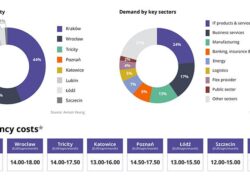
The second quarter saw a 28% quarter-on-quarter increase in leasing activity across major regional cities, with total demand reaching 387,000 sqm. Kraków dominated with a 44% share, while Wrocław and Tricity collectively accounted for over one-third of total regional demand.

A notable feature of the demand structure was the continued dominance of lease renegotiations, which made up nearly 60% of all leasing activity. New lease agreements constituted 32%, while pre-lets and owner-occupied transactions made up a small portion. The seven largest deals of the period — each exceeding 10,000 sqm — were all renewals.

Sectoral Breakdown

In terms of tenant industry, IT products and services led with 24% of the demand, followed by business services (17%) and manufacturing (13%). Flexible workspace operators, logistics, and the public sector also contributed notably to take-up across regions.

Vacancy and Rental Trends

The vacancy rate across regional markets held steady at 17.5%, with a total of 1.18 million sqm of vacant office space available. Katowice (22.7%) and Łódź (21.6%) recorded the highest vacancy rates, while Szczecin (7.3%) and Lublin (10.4%) had the lowest.

Rental rates for prime office properties showed moderate variation. Kraków and Wrocław topped the list with monthly rents ranging from EUR 13.00–18.00/sqm, followed by Tricity (EUR 14.00–17.50/sqm). Lublin remained the most affordable, with rents from EUR 10.00 to 14.00/sqm/month.

Outlook

Avison Young expects regional office markets to remain in a state of subdued development through the remainder of 2025. Limited new supply could help reduce overall vacancy over time, though lease renegotiations will continue to dominate market dynamics due to few relocation options for tenants.

“With development activity remaining low and few new office projects being delivered to the market, occupiers’ choices are increasingly constrained. As a result, starting the relocation process much earlier may become a key strategic approach,” said Przemysław Urbański, Director at Avison Young.

On the investment side, regional cities recorded 13 office transactions totaling over €195 million in H1 2025, led by Stena Real Estate AB’s acquisition of High5ive I&II in Kraków — the second-largest office deal in the country for the period.

While macroeconomic uncertainties and limited development may cap growth, steady tenant demand in select sectors and cities suggests a gradual path to stability for Poland’s regional office markets.

Source: Avison Young
Emerging economies to drive global animal-source food growth

Rising incomes in middle-income countries are expected to lead to a significant increase in both consumption and production of animal-source foods over the coming decade, according to the OECD-FAO Agricultural Outlook 2025–2034. The report, jointly released by the Food and Agriculture Organization of the United Nations (FAO) and the Organisation for Economic Co-operation and Development (OECD), highlights the complex balance between improving nutrition and mitigating the environmental impacts of food production.

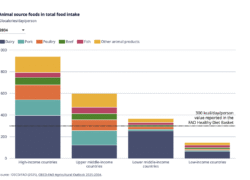
The analysis forecasts that global per capita calorie intake from livestock and fish products will increase by 6% by 2034. This growth will be driven primarily by lower-middle-income countries, where consumption is expected to rise by 24%, nearly four times the global average. However, the benefits will remain unevenly distributed. In low-income countries, average daily intake of animal-source foods is projected at just 143 kilocalories per person, well below the 300-kilocalorie threshold the FAO considers a baseline for a healthy diet.

The report underlines the need for greater investment in agricultural productivity to combat undernourishment and reduce the environmental footprint of food production. While the projected increase in nutrient-rich food consumption in developing nations is a positive sign for global nutrition, the report warns that productivity gains must be accelerated to ensure sustainable growth.

OECD Secretary-General Mathias Cormann emphasized the importance of coordinated policy measures to maintain open global food markets while promoting innovation and sustainability in agriculture. FAO Director-General QU Dongyu echoed this sentiment, noting that current trends point to nutritional improvements for many, but that further progress is needed to support the most vulnerable populations and to lower the carbon intensity of food systems.

Global production of agricultural and fish commodities is expected to grow by 14% through 2034, with the expansion largely enabled by productivity improvements in middle-income countries. This growth will include a 17% increase in meat, dairy, and egg output and a 7% rise in global livestock inventories. Although these trends will result in a 6% increase in direct agricultural greenhouse gas emissions, the emissions per unit of output are projected to decline, indicating improved carbon efficiency.

Despite gains in efficiency, the report notes that declining real prices for agricultural commodities may pose difficulties for smallholder farmers, who often lack the resources to adopt new technologies. To address this, governments are encouraged to support innovation while ensuring that farmers have access to markets and tailored support.

Scenario analysis within the report suggests that a 15% improvement in global agricultural productivity, coupled with the widespread use of emissions-reducing technologies, could eradicate undernourishment and lower direct GHG emissions by 7% compared to current levels. Technologies identified include precision agriculture, improved livestock feed, water and nutrient management systems, and practices such as crop rotation and intercropping.

Trade will continue to play a critical role in the global food system, with 22% of all calories projected to cross international borders before being consumed. A rules-based multilateral trading framework will be essential to stabilizing prices and ensuring food availability across regions.

The report also outlines key developments in crop and fuel production. Global cereal output is projected to grow at 1.1% annually, mainly through yield improvements. By 2034, 40% of cereals will be consumed as food, 33% as animal feed, and the remainder will go toward biofuels and industrial uses. Biofuel demand is expected to grow by 0.9% annually, with Brazil, India, and Indonesia leading this trend.

Sub-Saharan Africa is identified as a region with strong potential for productivity growth, given its large cattle population and low per-animal output. Meanwhile, India and Southeast Asia are expected to account for 39% of global consumption growth by 2034. In contrast, China’s contribution to growth is projected to drop to 13%, down from 32% over the previous decade.

In high-income countries, changing consumer preferences, public health policies, and concerns over diet-related diseases are expected to reduce per capita consumption of fats and sweeteners.

Overall, the OECD-FAO report calls for sustained investment in agricultural innovation, stronger food systems, and international cooperation to address the dual challenges of improving global nutrition and reducing environmental impact.

Bratislava’s housing market heats up as buyers prioritize space and security

Bratislava’s residential property market recorded a notable upswing in the second quarter of 2025, with demand reaching levels not seen in years. A total of 645 apartments were sold during the quarter, representing a 20% increase compared to the previous quarter and nearly double the volume recorded in the same period in 2024, according to Bencont Investments. The surge in activity is attributed primarily to stronger demand for larger and more expensive units, particularly in projects still under construction.

While rising inflation and concerns over household budgets have affected consumer spending in many areas, homebuyers appear undeterred. Apartments are being sold before construction is completed, and the supply of new housing has grown to its highest point in 15 years. Projects are expanding in districts such as Bratislava II and Bratislava IV, with the latter overtaking the former in sales for the first time.

This shift in buying patterns is also reflected in the type of apartments sold. The average floor space of sold units increased to nearly 60 square meters, with two-room flats accounting for nearly half of all transactions. The average sales price climbed to €4,692 per square meter with VAT, up 1% from the previous quarter, while the average overall apartment price reached €299,000—an increase of nearly 10%.

Developers have responded to the strong demand by accelerating new construction, launching nine new projects in the quarter. The total number of new-build units on the market reached 3,393, with the most significant growth seen in Bratislava IV, where available units increased by over 40% year-on-year.

Despite the rise in supply, price growth remained moderate. The average list price of new builds was €5,251.54 per square meter, a 0.73% increase from the previous quarter. This follows a sharper rise earlier in the year due to a VAT increase. Analysts believe the current stability in pricing indicates that speculation is limited, with structural factors—such as the dominance of high-end units—playing a greater role in shaping average values.

Another notable development is the growing popularity of pre-construction sales. Buyers are increasingly willing to invest in units that are months or years away from completion, drawn by more flexible payment schedules and wider selection. According to Herrys, two-room units in particular remain the most sought after, while demand for small, one-room apartments has declined.

Projects such as Cherries and Bory have fueled growth in specific areas, accounting for over 60% of all transactions in Bratislava IV during the quarter. Larger, four-room apartments have also attracted buyers, especially in completed developments and on the city’s outskirts.

Financially, the rising popularity of larger units is increasing the capital requirements for buyers. The average apartment price, including VAT, now exceeds €370,000. Buyers using mortgage financing must provide at least €74,000 in personal funds to meet minimum down payment thresholds. In high-demand projects in central Bratislava, the price premium is even more pronounced, with luxury developments accounting for nearly 40% of total inventory.

However, these dynamics pose challenges. Buyers choosing unfinished units must wait for delivery, often while continuing to pay rent or maintain temporary housing. Completed apartments are more immediately available but typically come at a higher cost. Financing constraints also play a role, particularly for those seeking to upgrade from older properties with existing mortgage burdens. In such cases, limited credit headroom can hinder the ability to secure a new loan.

Analysts caution that while the market is currently strong, broader macroeconomic risks remain. Inflation, which continues to affect building material costs and real household incomes, could influence buyer behavior. Rising construction costs are feeding into project pricing, while external risks—such as trade barriers or weakening export demand—could weigh on industrial output and employment, ultimately affecting consumer confidence.

One structural concern is the narrowing gap between the prices of new and older housing. While new construction typically commands a premium for its efficiency, design, and longevity, that difference has shrunk to under 20% in some cases. Analysts argue that such compression distorts the natural balance of the market. The issue is further compounded by a 25% drop in apartment completions in early 2025 compared to the long-term average, further constraining available inventory.

Ultimately, while Bratislava’s housing market is currently experiencing robust growth, the convergence of rising prices, shifting preferences, and macroeconomic uncertainty presents a complex environment for buyers and developers alike. Industry experts suggest that a healthy long-term market will require a sustained distinction in value between old and new properties, as well as prudent risk assessment by households and lenders.

Source: Trend.sk

European sustainable funds show resilience amid market shift and rebranding

European sustainable investment funds experienced a notable shift in Q1 2025, posting their first-ever quarterly outflows of USD 1.2 billion after a period of consistent growth. Despite the outflows, which represented less than 0.05% of the total USD 2.7 trillion in sustainable assets as of March 31, 2025, investor loyalty remains strong. The shift may reflect a recalibration of strategies and expectations rather than a retreat from sustainable investing.

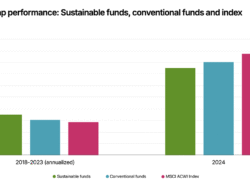
Between 2018 and 2023, sustainable global-equity funds consistently outperformed conventional peers and the broader MSCI ACWI Index. However, in 2024, these funds began to underperform — largely due to their limited exposure to defense companies, which saw strong returns. For example, companies with weapons exposure in the MSCI Europe Index posted an average annual return of 29% in 2024 and came to represent more than 10% of the index by mid-2025. This divergence in performance has prompted some asset managers to revisit exclusionary policies around weapons while seeking to uphold ethical standards.

Importantly, investors in sustainable funds appear more committed than those in conventional funds, with less sensitivity to short-term underperformance. Research indicates a weaker correlation between fund flows and three-year returns among sustainable equity and fixed-income funds, suggesting that investors remain focused on sustainability goals, impact, and regulatory alignment over immediate gains.

Contrary to concerns, widespread fund renaming in response to EU regulatory changes has not triggered significant outflows. More than 800 Article 8 and Article 9 funds underwent rebranding between May 2024 and June 2025, following new naming guidelines by the European Securities and Markets Authority. However, renamed funds did not experience greater outflows than those that retained their original titles. Only one of the six sustainability funds on the top-outflows list in Q1 2025 had been renamed, pointing to broader market or geopolitical influences as the more likely driver.

Further analysis shows that nearly 90% of renamed funds maintained a clear sustainability focus, indicating that fund managers remain committed to responsible investing regardless of branding. Investors also seem to be evaluating funds based on their actual portfolio characteristics rather than just names. In some cases, rebranded funds have attracted a broader base of investors looking for less constrained, more diversified sustainability strategies.

The commitment to sustainability is evident not only in dedicated ESG products but also in conventional funds. Among the top 25 European fund houses by assets under management, all but one — Vanguard — integrate financially material sustainability factors in their investment processes. These firms collectively manage over EUR 6.3 trillion in retail funds, showing the depth of sustainable integration across the European asset management industry.

While Q1 2025 marked a moment of correction, it may also signal maturation within the ESG space. Investors remain focused on both sustainability values and financial performance, and fund managers are adapting by balancing ethical considerations with long-term value creation. The sector’s resilience, particularly the loyalty of its investor base, suggests that sustainable investing in Europe is not in decline but rather evolving to meet more nuanced expectations.

Source: MSCI ESG Research

Asset selection remains key driver of real estate portfolio performance, study finds

An in-depth analysis of 1,086 real estate portfolios from the first quarter of 1999 through the first quarter of 2025 has revealed that asset selection was the primary driver of performance differences across portfolios. According to the study, asset selection accounted for an average of 67% of the variance between individual portfolio returns and country-level benchmarks, indicating that decisions about specific properties consistently had a greater impact on returns than broader allocations by property type or geography.

However, this dynamic began to shift around 2015 as the performance gap between property types widened. Industrial real estate began to significantly outperform other sectors, while retail and office assets struggled, leading to a temporary decline in the influence of asset selection. Between 2020 and 2022, sector allocation became increasingly important, particularly in the U.K. and U.S. markets, where asset selection contributed to less than half of overall tracking error in portfolios.

Since the onset of the post-pandemic market correction, however, the trend appears to be reversing. The dispersion of returns among individual assets within the same sector or region has widened, reaffirming the role of asset selection in driving performance. In this more volatile environment, the unique characteristics of each asset—such as quality, location, and income potential—have become increasingly important.

For institutional investors and asset managers, the findings suggest that portfolio construction must strike a balance between top-down allocation strategies and detailed, bottom-up asset analysis. In times of economic dislocation and correction, performance is increasingly tied to the ability to identify and manage assets that can maintain occupancy, drive rental income, and preserve or enhance value.

The study’s results highlight that, while market conditions can temporarily elevate the importance of broader allocation decisions, long-term performance remains strongly tied to the selection and management of individual properties.

Source: MSCI

Czech Republic sees highest number of new companies since 2017 despite rising closures

In the first half of 2025, a total of 16,944 new companies were established in the Czech Republic, marking a 9% increase compared to the same period last year and representing the highest number of new firms since 2017. According to analysis by CRIF – Czech Credit Bureau, this growth occurred despite a parallel rise in company closures. From January through June, 8,961 companies ceased operations, up 15% year-on-year, resulting in a net market gain of 7,983 companies.

Analyst Věra Kameníčková from CRIF noted that although closures are rising faster than new formations, the overall net growth for the first half of the year was 4% higher than in the same period last year. Over the past 12 months (July 2024 to June 2025), 32,360 new companies were formed—a 10% increase—while 18,237 companies shut down, 14% more than the previous year. This yielded a net gain of 14,123 firms, a 6% increase compared to the prior year-long period.

Geographically, almost half of all newly established companies in the first half of the year were based in Prague (8,806), followed by the South Moravian Region (2,091), and the Moravian-Silesian Region (1,118). The Olomouc Region experienced the highest percentage growth in new company formations at 21%, with the Pilsen and Karlovy Vary regions also seeing double-digit increases. However, the Zlín Region recorded a 14% drop in new companies compared to the first half of 2024.

Company closures followed a similar regional pattern, with Prague registering the most closures (4,312), followed by the South Moravian Region (969) and the Ústí Region (555). The Liberec Region saw the sharpest increase, with closures nearly tripling year-on-year. Other regions, including Pardubice and Vysočina, also experienced substantial increases in company dissolutions. In contrast, Prague, Central Bohemia, and Moravian-Silesia saw relatively stable figures.

Net growth remained concentrated in Prague, which accounted for 56% of all net new companies (4,494). The South Moravian Region added 1,122 companies. However, the Liberec Region saw a net loss of 259 companies, and Ústí nad Labem recorded a loss of 62.

Sectorally, the most new companies were created in trade (2,079), construction (1,806), and manufacturing (1,756). The transport and storage sector saw the fastest growth, up 19%, while services like repairs, cosmetics, and textile cleaning also recorded notable increases. However, the financial and insurance industries saw a 19% decline in new firms, and real estate management dropped by 17%.

The business and real estate sectors also saw the most company closures, with 2,730 and 1,607 closures respectively. Professional, scientific, and technical activities followed with 1,215. Sectors with the sharpest increase in closures included electricity, gas, and heating utilities (up 57%), miscellaneous services (up 46%), and cultural and recreational activities (up 45%).

Over the past year, the fastest-growing sector was “other activities,” which includes personal services, with 62 new companies for every 10 closures. Health and social care and education sectors also posted strong ratios of growth compared to closures.

The age structure of defunct companies showed a shift toward older firms. The share of companies operating for 31 to 35 years among those that closed rose from 10% to 14% year-on-year. Meanwhile, companies established after 2015 now represent a smaller share of closures, indicating a maturing business environment in the Czech Republic.

Source: CRIF

Czech association warns U.S. AI strategy may undermine national tech sovereignty

The Czech Association of Artificial Intelligence has expressed concern that the new U.S. Action Plan for Artificial Intelligence, unveiled on Wednesday by President Donald Trump, could impact the technological sovereignty of other countries, including the Czech Republic. According to the association’s director, Lukáš Benzl, the strategy marks the most extensive AI policy initiative ever presented by the U.S. government and signals a shift toward more aggressive global positioning in the field.

The American plan is structured around three central pillars: innovation, infrastructure, and diplomacy and security. Benzl noted that the strategy represents a clear ambition by the U.S. to achieve and maintain technological dominance in AI, with wide-reaching consequences. He warned that this approach, based on significant investment, industrial self-sufficiency, and regulatory flexibility, is designed to accelerate innovation by empowering the private sector and reducing restrictions on experimentation. In contrast to the EU’s regulatory-heavy model, the U.S. is prioritizing speed and geopolitical leverage.

Benzl emphasized that the document should serve as a wake-up call for Europe and the Czech Republic, not just as a signal of U.S. intent but as a challenge to develop a more robust and proactive strategy. He argued that the Czech Republic and the EU must treat AI development as a matter of strategic importance and act accordingly.

He urged full implementation of the European Action Plan for AI, calling for competitive infrastructure, stronger diplomatic engagement in AI governance, and the development of open-source European AI models. Benzl also suggested the European Commission should reassess the speed and complexity of current regulatory proposals under the AI Act, noting that the Czech Republic has taken the lead in advocating for a delay in the enforcement of inactive provisions of the legislation.

The Czech AI Association sees the U.S. plan as a geopolitical move that places additional pressure on Europe to assert its own technological and strategic independence in the evolving landscape of artificial intelligence.

Source: CTK

New rules on building heights expected to boost wooden apartment construction in Czech Republic

A forthcoming change in Czech building standards will allow for the construction of taller wooden buildings, potentially ushering in a new era for multi-storey wooden apartment blocks in the country. Starting August 1, wooden buildings up to 22.5 meters in height will be permitted under revised fire safety regulations. Until now, the height limit was capped at 12 meters, except under special conditions.

Minister of Industry and Trade Lukáš Vlček stated that this regulatory change is expected to increase the number of apartment buildings constructed using wood. While wooden single-family houses have become more common—rising from about 3% to 14–15% of new homes over the past decade—wood remains a rarity in the apartment sector, currently representing just a tenth of a percent of projects. Vlček said the ambition is to accelerate the growth of wood-based construction across all residential categories.

The fire safety standard amendment also enables the use of certain building materials for multi-storey structures that were previously not considered compliant. Vlček emphasized that this shift could lead to greater use of domestic timber resources, reducing reliance on exports and generating more value for the Czech economy. The country produces around 15 million cubic meters of wood annually, yet only processes about a third of it domestically. Much of the raw timber is exported and then reimported as finished products, which Vlček called a missed economic opportunity. He noted that greater local processing would benefit public finances, especially since much of the forest land is owned by the state and municipalities.

The potential of tall wooden buildings is already being tested. In Prague’s Řeporyje district, developer UBM recently completed the Timber Prague project, part of the Arcus City development, which includes four wooden buildings—two four-storey and two three-storey structures. Elsewhere, 34 affordable rental apartments made of wood are being built in Žďár nad Sázavou by Available Housing Česká spořitelna.

Experts in sustainable construction have welcomed the move. Marta Gellová, director of the Chance for Buildings Alliance, said that new regulations on wooden construction are an opportunity to meet environmental targets while modernizing the sector. Wooden buildings, she said, can support the shift to lower-emission development. Similarly, Simona Kalvoda of the Czech Green Building Council praised the ministry’s efforts to promote the use of alternative and recycled materials, saying multi-storey wooden buildings are poised for a “new epoch.”

The revision of the fire safety standard is seen not only as a regulatory update, but as a strategic step toward reshaping the Czech Republic’s construction industry in line with sustainability goals and resource efficiency.

Source: CTK

Unemployment concerns grow among Czechs, but fewer willing to accept lower pay

In June 2025, 42 percent of working-age Czechs expressed concern about unemployment, according to a new report by the STEM analytical institute. While this marks a slight increase from May, the figure remains among the lowest recorded since STEM began tracking in 1998. The rise in anxiety was especially notable among younger respondents, aged 18 to 29, though fears also persist among middle-aged and older workers.

STEM found that unemployment fears are more pronounced among individuals who are financially insecure, but concerns have also begun to rise among those who describe themselves as financially comfortable. While long-term trends show that older workers—especially those aged 45 to 59—routinely express higher levels of concern, the recent uptick among younger age groups reflects growing uncertainty in the labor market.

Despite the increase in concern, the survey revealed a significant shift in how people are responding to potential job loss. Willingness to accept lower wages in exchange for new employment has declined sharply. Only 55 percent of respondents said they would agree to work for reduced pay if faced with losing their job—the lowest level since STEM began collecting this data. By contrast, during the height of the COVID-19 pandemic in May 2020, 73 percent of Czechs were open to lower wages. During the economic downturn between 2008 and 2014, that figure hovered around 80 percent.

STEM analyst Kateřina Duspivová explained that this decline is likely driven by financial pressure. “The willingness to start another job for a lower wage continues to decline, because people simply cannot afford a further decrease in income,” she said.

The survey also explored other strategies people might consider in the face of unemployment. While a large majority—88 percent—said they would be willing to work in a different field, only 36 percent were open to relocating to another region for work.

According to official figures from the Czech Labour Office, unemployment stood at 4.2 percent in June, unchanged from the previous month. This remains one of the lowest rates in the European Union. At the end of June, there were 315,465 unemployed individuals registered across the country. Year-on-year, the unemployment rate rose by 0.6 percentage points.

STEM conducted the survey between June 12 and 22, gathering responses from 1,059 individuals aged 18 and over. The findings suggest that while fears about job security are slowly increasing, Czechs are becoming less willing—or less able—to accept compromises in income, signaling growing tension in the face of broader economic uncertainty.

Source: STEM and CTK

Experts warn of persistent Russian influence in the Czech Republic and post-Soviet space

Russian influence remains an ongoing threat in the Czech Republic and across the broader post-Soviet region, particularly through hybrid tactics and disinformation campaigns. Experts consulted by the Czech News Agency note that while some pro-Russian structures have been weakened—especially following the 2022 invasion of Ukraine and events like the Vrbětice affair—Moscow’s strategy has evolved rather than disappeared. Instead of overt support for Russia, the focus has shifted to dividing societies, undermining trust in democratic institutions, and spreading confusion.

According to Petr Havlíček of the Association for International Affairs, Russia’s standing in the Czech Republic has deteriorated significantly, yet anti-system movements have adjusted their messaging. Rather than openly praising Russia, many have redirected their criticism toward Ukraine and its people. Havlíček also pointed to cyber activities and financial crime, particularly money laundering, as ongoing challenges. Despite efforts, the Czech government has struggled to tackle these issues effectively. Data from the monitoring firm Datlab shows that more than 12,000 companies in the Czech Republic have links to Russian nationals, though the true number may be higher due to opaque ownership structures.

This form of influence falls within the broader scope of asymmetrical conflict, where a weaker actor uses non-military tactics such as disinformation, sabotage, and cyberattacks to destabilize stronger adversaries. As Eva Klusová of the Czech Academy of Sciences explains, the goal is to erode public trust in the state and its institutions. If citizens no longer value or believe in democracy, they are less likely to defend it, giving adversaries an advantage without direct confrontation.

Government officials and analysts have noted a concerning gap in the Czech Republic’s preparedness for hybrid threats. While there have been improvements in cybersecurity, other areas such as strategic communication and misinformation response remain underdeveloped. Havlíček warned that this vulnerability could have political consequences, especially in the lead-up to elections.

The Czech Security Information Service reported that in 2024, Russia continued efforts to re-establish intelligence operations under diplomatic cover. Although early stages of the Ukraine invasion saw a lull in activity, Russian cyber operations have returned to previous levels. While major sabotage incidents have been avoided, the intelligence services have recorded lower-level security breaches.

Experts agree that Russia’s disinformation efforts in the Czech Republic are not intended to sway public opinion in favor of Russia, but rather to create division and doubt. The strategy involves flooding the information space with contradictory messages to confuse and polarize audiences. This approach is often implemented through domestic actors who, knowingly or not, amplify Kremlin-aligned narratives.

Josef Šlerka, a specialist in information warfare, emphasized the sophisticated nature of Russian influence campaigns. He noted that while some individuals genuinely support pro-Russian views, others—including public figures and politicians—may disseminate such narratives without direct links to Russia, often gaining visibility through Russian state media. The most sensitive cases, he added, involve those with suspected connections to Russian financial networks.

Šlerka highlighted a shift in Russia’s approach to information warfare since the start of the Ukraine invasion. Before 2022, these campaigns were largely aimed at shaping Western opinion and policy, particularly in relation to sanctions. Since then, they have become a more integral part of wartime strategy, focused on weakening Western resolve. He cautioned that influence operations are long-term efforts, often playing out over years rather than months.

Analyst Roman Máca identified social media platforms such as Facebook, YouTube, and Telegram as key tools for Russian propaganda, often through channels linked to intelligence services. These messages are spread further by public profiles and politicians, amplifying their reach.

Strengthening media literacy and critical thinking is seen as a vital countermeasure. Havlíček noted that many in the Czech public remain unaware of the manipulative techniques used in propaganda, making them vulnerable to disinformation. Šlerka added that while Russia has failed to convince most Czechs of its legitimacy—the number of strong pro-Russian sympathizers remains small—the larger goal of disrupting social cohesion is showing signs of success. Kremlin-aligned narratives have begun to seep into mainstream discourse, contributing to political polarization and mistrust.

The experts conclude that while Russia’s direct influence may have diminished in some areas, its strategic objectives remain consistent. The challenge for the Czech Republic lies in recognizing and responding to these evolving tactics with resilience, coordination, and public awareness.

Source: CTK

LATEST NEWS